
Things to Do in Gori, Georgia: Day Trip Guide
Most people visit Gori for one reason: it’s where Stalin was born. My boyfriend and I were no different. Back in August 2024, we took the train out from Tbilisi specifically for the Stalin Museum, half-expecting a quick in-and-out before heading back the same evening. As an Armenian, I grew up around plenty of post-Soviet history, and it’s honestly not something I usually go out of my way to seek out. Gori was an exception. There was something interesting about how this town has held on to that history and put it on display so plainly — not hidden, not apologized for, but right in the open in a way I hadn’t quite seen anywhere else.
Beyond the museum, what we found was a small, slightly worn-down town you can see the heart of in an afternoon: a fortress on the hill, a couple of museums, a war memorial, and some very good khinkali in a restaurant we picked completely at random. Getting there costs a few lari each way by train, and you can spend the whole day quite cheaply with little planning. Here’s what’s actually worth doing in Gori, what’s worth your time, and what I’d be happy to skip.
Yes, but as a day trip, not a place you build your whole itinerary around. I want to be straight with you about that, because a lot of guides oversell it.
Gori’s real pull is two things: the Stalin Museum, and the Uplistsikhe cave town about 10 km east. The town itself is pleasant enough to walk through, but it isn’t somewhere you’ll want to spend two or three days. If you’re curious about Soviet history, or you’re already moving between Tbilisi and Kutaisi or Batumi and want to break up the ride, Gori easily earns half a day to a full day. If you’ve only got a handful of days in Georgia and neither Stalin nor ancient cave cities pulls at you, you can leave it off the list with a clear conscience. My honest recommendation: give it at least an afternoon, or a full day if you’re pairing it with Uplistsikhe.
What Is Gori Famous For?
Gori is famous, for better or worse, as the birthplace of Joseph Stalin. It’s the historic capital of the Shida Kartli region, located about 80 km west of Tbilisi, with a medieval fortress on the hill above town and the ancient Uplistsikhe settlement a short drive away.
The Stalin connection is what defines how the town presents itself, and it’s a strange one to stand inside. There’s still a museum, a park, and the main avenue all carrying his name, in the country he once ruled and treated brutally. Georgia has largely moved on from him; Gori, in places, hasn’t quite decided what to do with him. Walking through that tension is a big part of what makes a visit here interesting rather than just sightseeing.
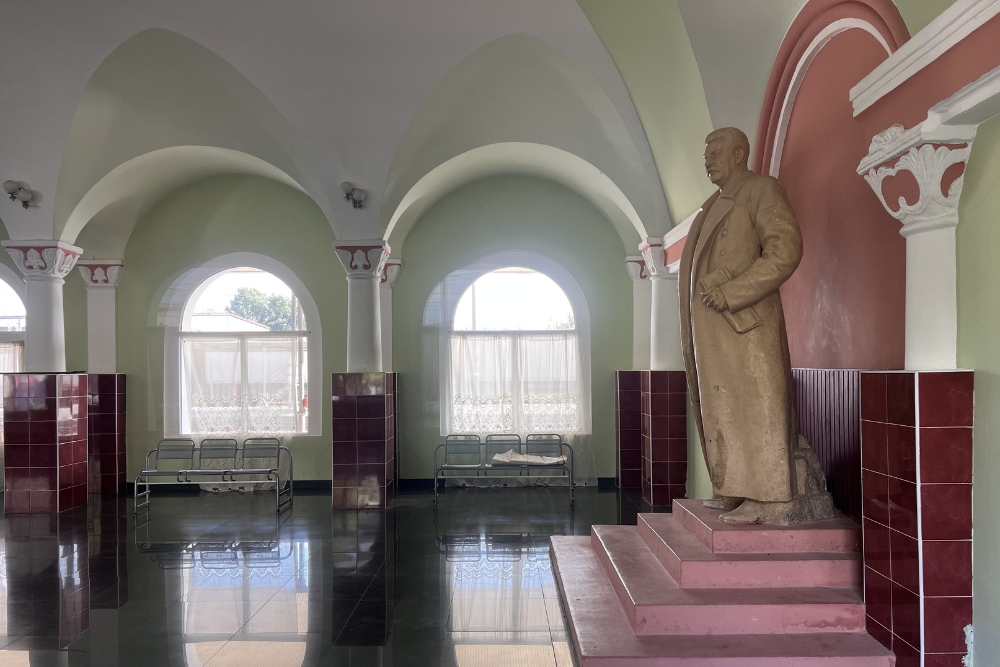
© Gayane Mkhitaryan, Stalin’s statue in Gori railway station
Must-See Attractions at a Glance
If you only have a few hours, here’s the short list. I’ve kept the details for the sections below so nothing repeats:
- Stalin Museum – the reason most people come, birth house, and armored train carriage included
- Uplistsikhe – Bronze-Age cave town just east of Gori
- Gori Fortress – a medieval citadel with views over the whole town
- Memorial of Georgian War Heroes – a quiet, affecting monument near the center
- Ateni Sioni Church – a 7th-century church in the wine valley south of town
- Stalin Park – free, central, and odd in the way only Gori can be
Historical Places and Landmarks
Gori packs a lot of history into a small footprint, from medieval fortifications to a cave city older than almost anything else in the country. These two are the anchors.
Gori Fortress
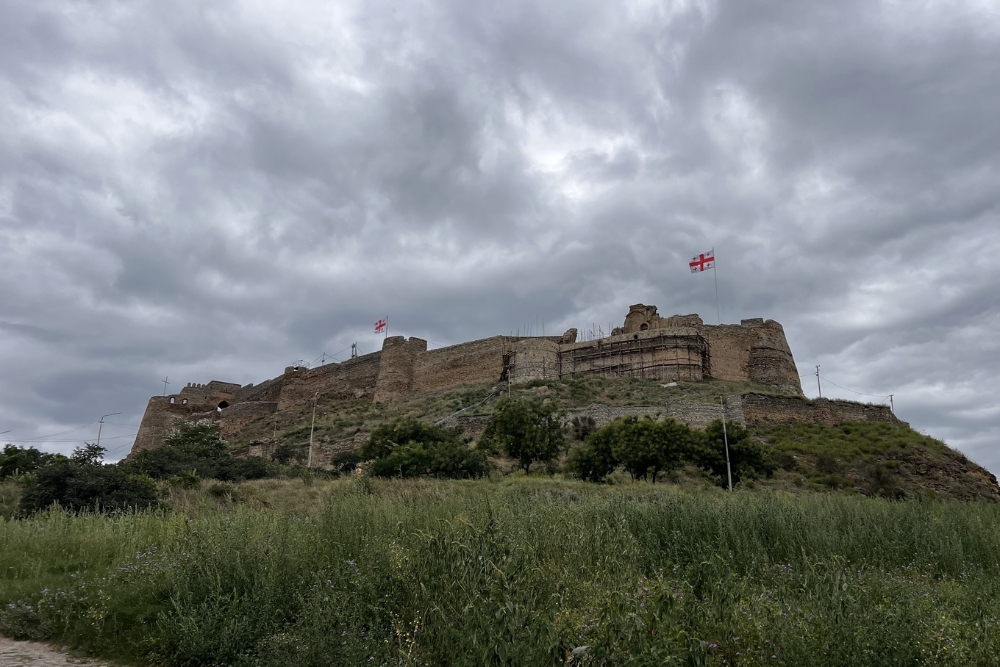
The fortress (Goris Tsikhe) sits on a rocky hill right above the town center, with origins going back to at least the 13th century. It’s free to walk up, and the reward is a full panorama over Gori and out toward the Caucasus. I’ll be honest — we ran out of time and didn’t climb it this trip, since the museum and the train schedule ate our afternoon. But it’s an easy hike straight from the center and an obvious add if you’ve got an hour and decent shoes. Go in the late afternoon for softer light over the town.
Uplistsikhe Cave Town
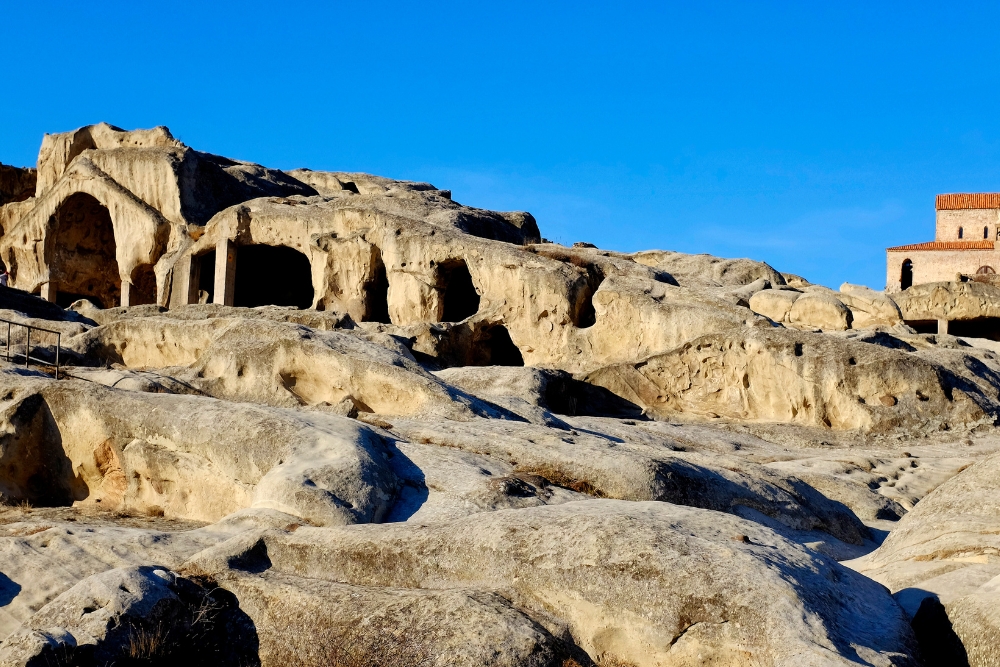
About 10–15 km east of Gori, Uplistsikhe is a rock-hewn settlement dating back to the Bronze Age — one of the oldest inhabited sites in all of Georgia, with carved streets, halls, a winery, and a tunnel down to the river. This is the one we most regret missing; we lost the daylight before we could get out there, so I’m passing this on as a strong recommendation rather than a first-hand account.
Entry is 15 GEL for adults, and children under 6 go free. It opens daily at 10:00, with closing time shifting by season (anywhere from 5 to 7 pm). From Gori, the simplest option is a taxi for around 30-40 GEL round trip, including waiting time, since getting a ride back from the site can be tricky. There’s also a marshrutka toward Kvakhvreli that drops you roughly 2 km from the entrance, leaving you a walk in each direction. Whichever way you go, bring water, sun cover, and proper footing as the site is fully exposed, and the rock is uneven.
© Canva
Memorial of Georgian War Heroes
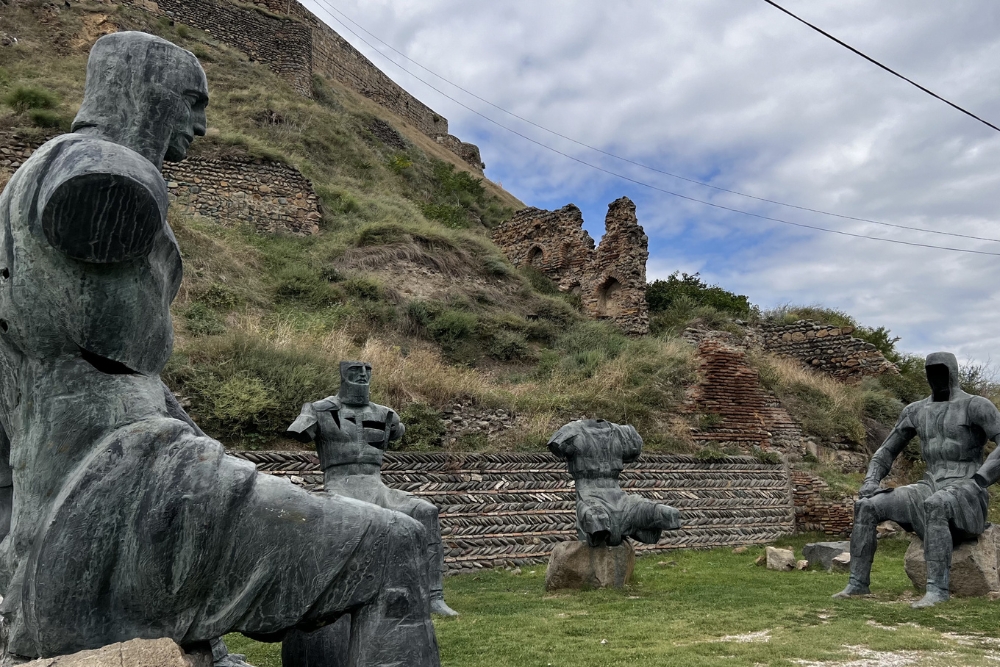
Right at the foot of Gori Fortress, this was the most quietly powerful thing we saw all day. It’s a circle of eight bronze warriors in medieval armour, seated facing each other on rough stone blocks and each one is deliberately broken. Some are missing limbs, some faces; a few grip a full sword, others only a hilt. Sculptor Gogi Ochiauri cast them between 1981 and 1985 and titled the piece “Requiem.” They originally stood in Tbilisi’s Vake Park and were moved here in 2009. It’s free, usually empty, and stays with you longer than you’d expect.
Best Museums and Cultural Sites
Gori is more of a museum town than a sightseeing town, and the museums are where the visit gets genuinely thought-provoking. The big one needs little introduction.
Stalin Museum
This is what we came for, and it deserves a separate full guide covering the halls, the birth house, the armored train carriage, and what it’s actually like to walk through a place that still treats Stalin with such reverence.
For the essentials: the full ticket is 15 GEL and includes a guided tour, a visit to the small wooden house where he was born, and his personal bulletproof railway carriage. It’s open daily except Monday, 10:00–18:00, closing an hour earlier in winter.
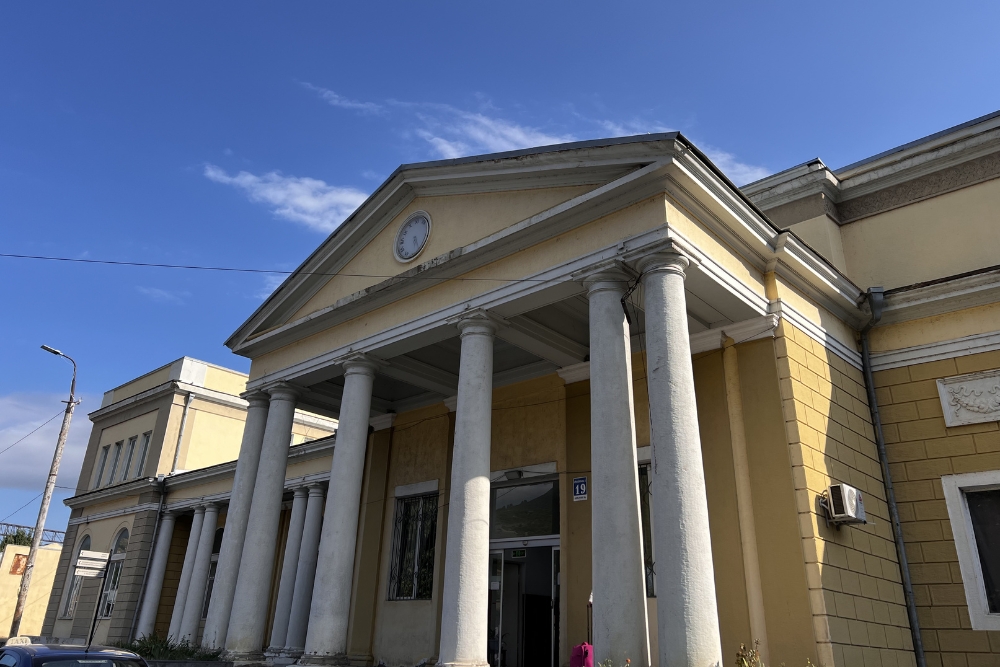
One thing that stuck with us from that day: at the railway station, there’s a Stalin statue tucked into a waiting room, but it was shut when we passed, so we only caught a glimpse through the door. From the station, we walked the rest of the way to the museum, past the municipality building and an ordinary supermarket, a reminder that for everyone who lives here, this is just a normal town with a very abnormal museum at its center.
Great Patriotic War Museum
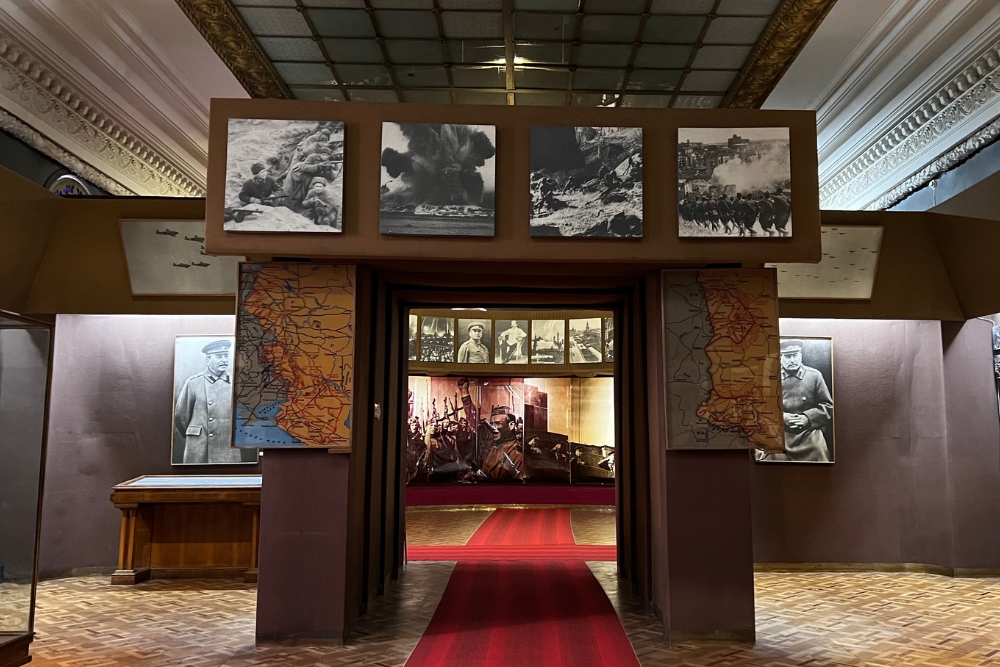
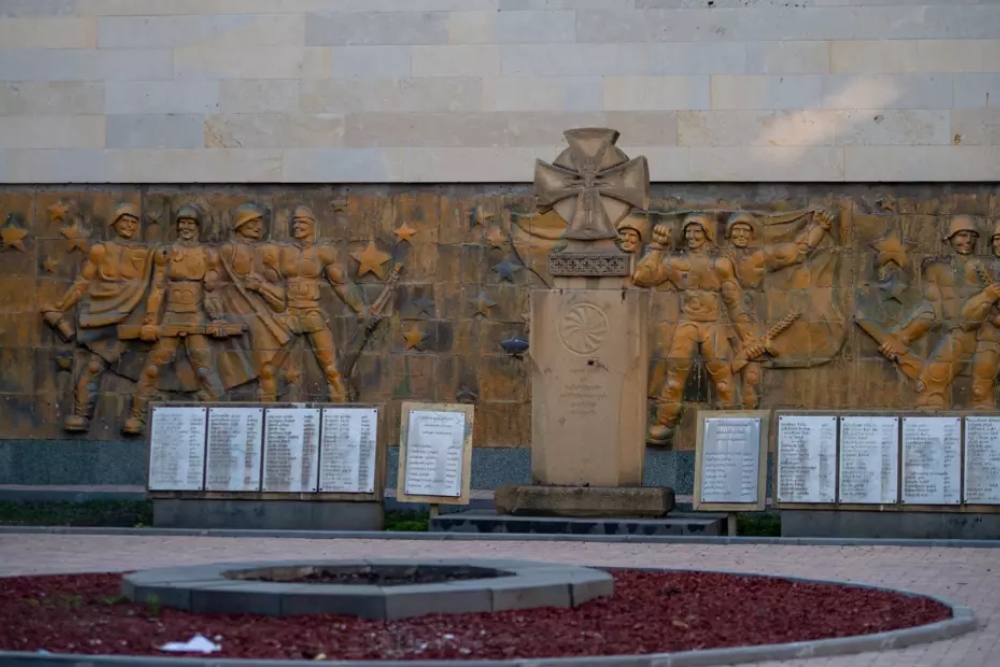
A small WWII museum in the center, often overshadowed by its famous neighbor. It leans heavily on photographs and long text panels, and reports suggest it sometimes closes earlier than its posted hours, so go earlier in the day if it’s on your list. Entry is only a few lari. It’s a worthwhile stop if you’re already in the center and want more context on the Soviet era.
© Georgia Travel
Gori Historical and Ethnographic Museum
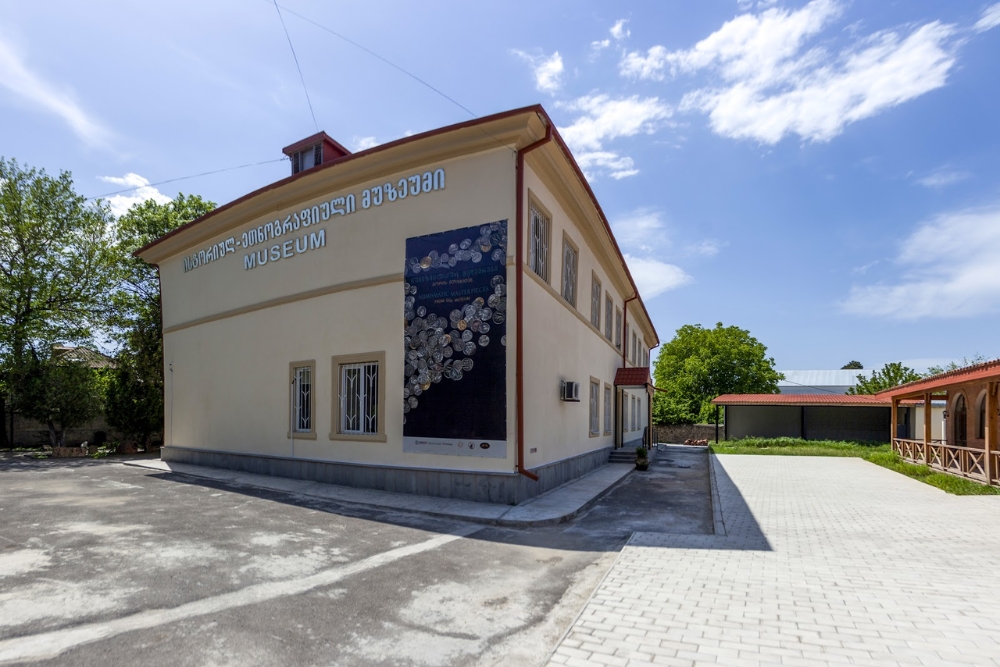
For the broader story of the region, the parts that have nothing to do with Stalin, this is the place. It covers Shida Kartli’s deeper history and local culture, and it’s a good counterweight to a day that can otherwise feel entirely about one man.
© gorimaps.ge
Most Beautiful Churches and Religious Landmarks
Gori’s most rewarding religious site isn’t in town at all, but a short drive south into the Tedzami valley, and it pairs nicely with the local wine country.
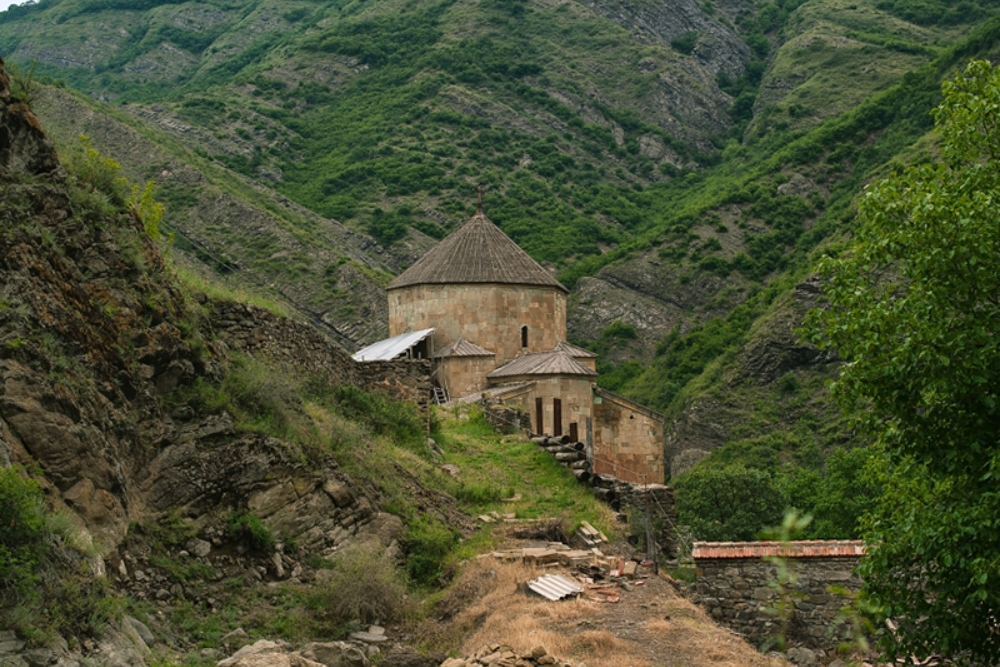
Ateni Sioni Church
This 7th-century Orthodox church sits about 10 km south of Gori and is known for its early medieval frescoes and its setting in the gorge. It’s a quiet, low-traffic spot — the kind of place you’ll often have largely to yourself. If you’re hiring a taxi for the day anyway, it folds easily into the route, especially combined with a stop in the Atenuri wine area.
© Tour to Georgia
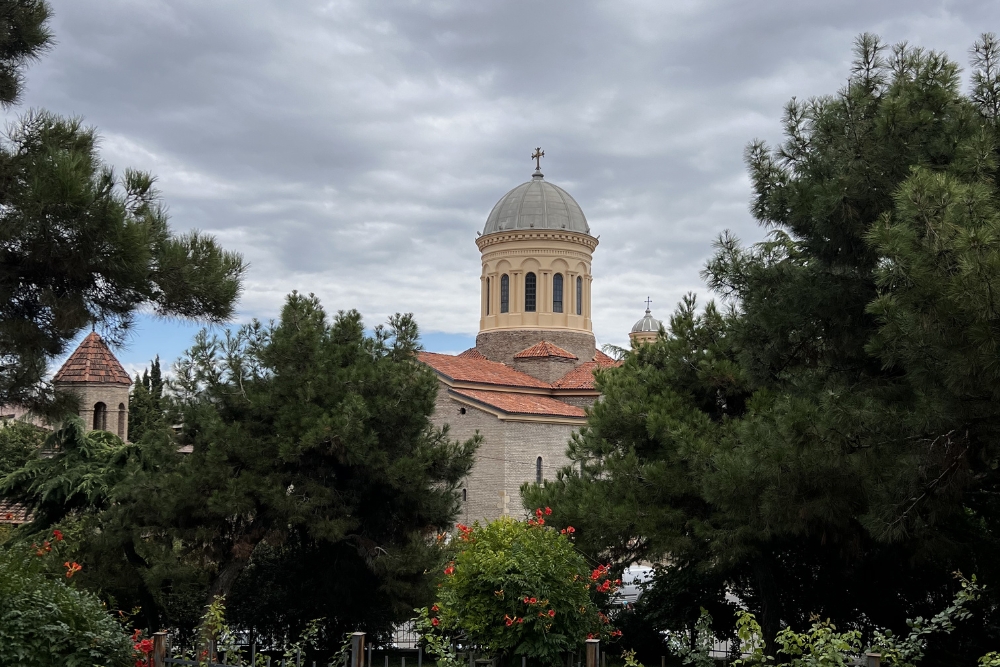
Cathedral of the Nativity of the Holy Virgin
Right opposite Gori Fortress on Lomouri Street, this is an easy add if you’re already heading up the hill. It catches people off guard: built between 1806 and 1810, it looks far more like a Catholic church than the Georgian Orthodox ones elsewhere in the country — because that’s exactly what it started as. The 1920 earthquake knocked it about, and under the Soviets it spent years as Gori’s music school before being handed back as a working Orthodox church in the 1990s. The interior is small but nicely decorated, and it’s free to step inside. We didn’t go in ourselves, but it’s a five-minute stop worth making for the history.
Free Things to Do in Gori
A surprising amount of Gori costs nothing, and the free stuff is honestly some of the most memorable. Here’s what’s worth your time without spending a lari:
- Stalin Park: a central memorial park, free to enter, and a strange thing to wander through, given who it’s named for
- Memorial of Georgian War Heroes: we walked here after the museum, and it stuck with me; a sober, well-kept monument that locals clearly care about
- Walking up to Gori Fortress: no ticket, just the climb and the view
- Wandering the Soviet-era center: the architecture, the avenue, the everyday rhythm of a town that doesn’t put on a show for tourists
Where to Eat: Khinkali and Georgian Food
Here’s the good news about eating in Gori: you don’t need to plan it. After the museum and the war memorial, we just walked into a random restaurant for khinkali, and it was genuinely good — properly juicy, hand-twisted, and cheap. That’s the experience I’d point you toward more than any single name. Georgian food is reliably good even in unremarkable-looking places.
If you’d rather go in with a name, KE&RA is a well-loved, family-friendly spot, and Chinebuli is a solid budget choice for Georgian classics in the 10–30 GEL range. Order khinkali, get a khachapuri to share, and don’t overthink it. If you want something to take home, skip the magnets, a bottle of Georgian wine or some local sweets is the souvenir worth carrying.
© Gayane Mkhitaryan, Gori railway station
How to Get to Gori from Tbilisi (and Getting Around)
Getting to Gori is easy and cheap. Getting back is the part worth thinking about in advance.
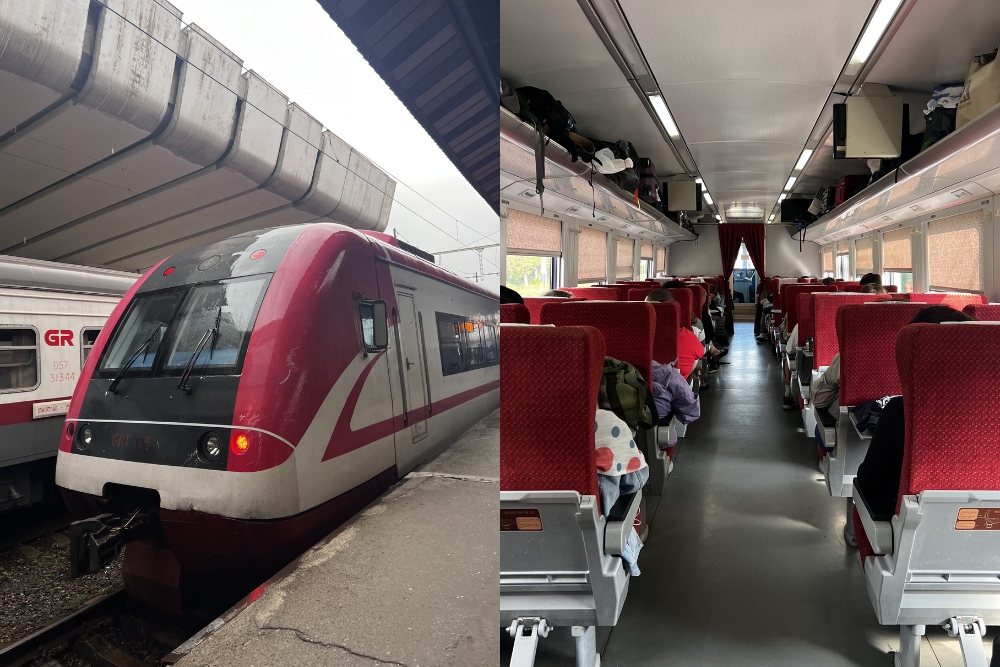
By train: this is what we did. The ride from Tbilisi takes around an hour and costs only a few lari. The catch is frequency: there are very few daytime returns, and the last train back from Gori doesn’t leave until late evening, around 10:30 pm. We didn’t love the idea of killing hours in town waiting for it, which is exactly why we ended up making a different plan to get home.
© Gayane Mkhitaryan, Tbilisi – Gori train, 2024
By marshrutka: minibuses leave Tbilisi’s Didube station roughly every 20–30 minutes, take about 1.5 hours, and cost in the range of 4–7 GEL. They’re more frequent than the train, which makes the return trip far less stressful.
The taxi reality: one thing to know: Yandex Taxi simply didn’t work for us in this part of the country, so don’t count on it the way you would in Tbilisi. Outside the railway station, there was a driver waiting, and I got talking to him and turned out he was Armenian, like me. Rather than gamble on that late train, we arranged for him to drive us back to Tbilisi at the end of the day. My practical tip: line up your return option early. Chat to a driver when you arrive, agree a price, and you’ll spend the day relaxed instead of clock-watching.
Getting around town: Gori is small and flat enough to do entirely on foot. The station, the museum, the war memorial, and the center are all an easy walk apart. The only thing you’ll want wheels for is the trip out to Uplistsikhe or Ateni Sioni, and a taxi handles both.
Gori isn’t a place that tries to impress you, and that’s part of why I’d say go. You come for one man’s museum, and you leave having walked an ordinary Georgian town carrying a very heavy piece of history — at a cost of barely more than the train fare. It’s real, and it stays with you.
