
Day Trips from Vienna by Public Transport: Local and International
Here’s something I love about Vienna: you can wake up in the Austrian capital, eat breakfast, and be standing in a different country before lunch – without ever renting a car. Two countries, a UNESCO river valley, an imperial spa town, and a fortress on a hill are all sitting at the end of a train line. You just need to know which platform to stand on.
This guide is built entirely around public transport. Every trip below is one you can reach by train or scheduled bus that you book yourself, the way I travel – no rental car, no full-day coach tour with a guide counting heads. I’ve split it into local Austrian options and cross-border ones, added a comparison table so you can plan at a glance, and flagged which trips work best in winter. Let’s get you out of the city.
Almost everything starts at Wien Hauptbahnhof (Vienna Central Station), with a few regional trains leaving from Wien Meidling or the old Westbahnhof. Austria’s national rail operator is ÖBB, and its fast Railjet trains cover the long-distance routes (Salzburg, Graz, Budapest). For shorter local hops, you’ll use regional trains (marked R or REX) or, for Baden, a tram.
A few things I’d tell a friend before they go:
- Buy ÖBB tickets in advance through the ÖBB app or website. Booking a day or two in advance can significantly reduce fares on Railjet routes thanks to their Sparschiene advance fares.
- Cross-border trains are often cheaper than they look. Bratislava and Sopron in particular have low regional fares.
- Check return times before you leave. Regional lines thin out in the evening, and you don’t want to be stranded in a small town at 9 p.m.
- For groups, ask about the Einfach-Raus-Ticket, a flat-rate day ticket for regional trains that splits well between several people.
A note on prices: the fares and opening hours below are approximate and subject to seasonal change. Treat them as planning numbers and double-check before you go.
One app worth knowing if you don’t fancy bouncing between the ÖBB, Slovak, Hungarian, and Czech booking sites for the cross-border trips: Omio lets you search and book trains, buses, flights, and ferries across all of them in one place. I reach for it when I can’t be bothered to check each local operator separately. If you want to try it, here’s €10 toward your first booking — sign up with this link to claim it, or enter the code gayanm3x4g7f at checkout.
| Destination | Country | Travel Time | Best For |
|---|---|---|---|
| Baden bei Wien | Austria | 35 mins | Spa & parks |
| Bratislava | Slovakia | 1 hour | Quick Euro-hopping |
| Melk Abbey | Austria | 1 hour | History & wine |
| Sopron | Hungary | 1 hr 15 mins | Medieval streets |
| Brno | Czech Republic | 1 hr 30 mins | Food & architecture |
| Salzburg | Austria | 2 hrs 20 mins | Mountains & Mozart |
| Graz | Austria | 2 hrs 35 mins | Scenic rail & food |
| Budapest | Hungary | 2 hrs 40 mins | Grand city sights |
Travel times approximate at time of writing — check current ÖBB and operator schedules before traveling.
Local day trips from Vienna (within Austria)
Melk Abbey and the Wachau Valley
If you only do one local trip, make it this one. A direct regional train from Vienna gets you to Melk in around an hour, and the golden Baroque abbey is visible on its rock almost before you leave the station. The abbey’s library and frescoed hall are the headline, but the real reward is the Wachau Valley stretching east along the Danube; terraced vineyards, apricot orchards, and small wine villages like Dürnstein and Spitz.
The classic way to link it together is to tour Melk Abbey in the morning, then take a Danube river cruise downstream to Krems and catch the train back to Vienna from there. The boats run seasonally (roughly spring through autumn), so check sailing dates if you’re going outside of summer.
Best for: history, wine, and river scenery in one easy loop.

© Wikipedia
Baden bei Wien
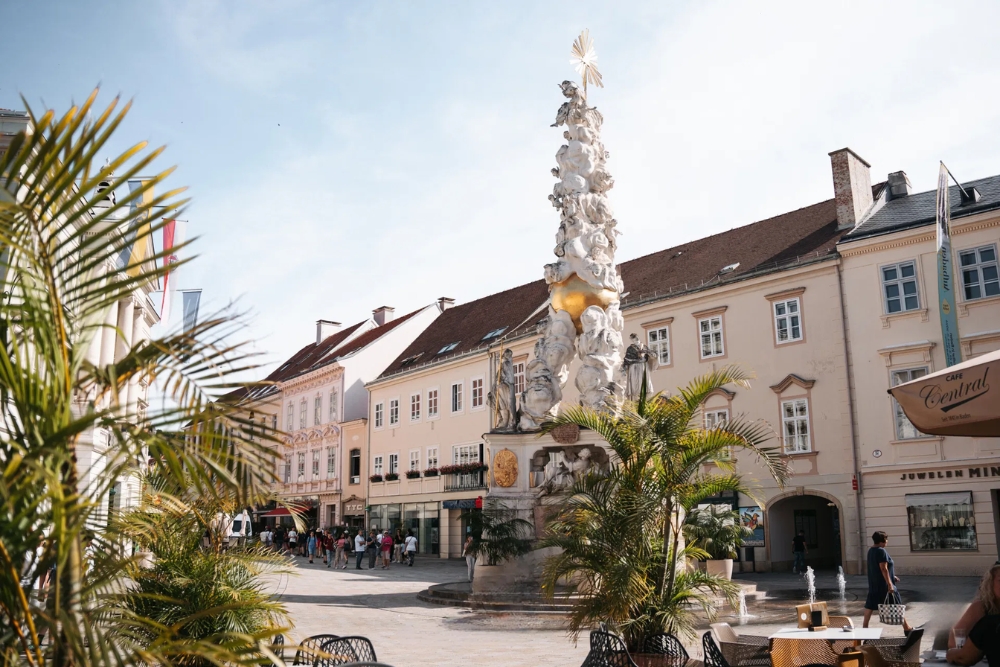
This is the trip for a slow day. Baden is an imperial-era spa town just south of the city, and the lovely part is how you get there: the Badner Bahn, a blue-and-white tram that leaves from near the Vienna State Opera and trundles out in about 35 to 45 minutes. No big station, no stress; you basically hop on a tram and end up at a thermal bath.
In town, the Römertherme is the obvious soak, with its sulfur-rich waters under a big glass roof, and the Kurpark behind it is made for an aimless wander between dips. It’s the easiest half-day trip on this list and a genuinely good antidote to a few intense days of city sightseeing.
Best for: spa relaxation and green parks without having to go far.
© 1000things Magazine
Salzburg
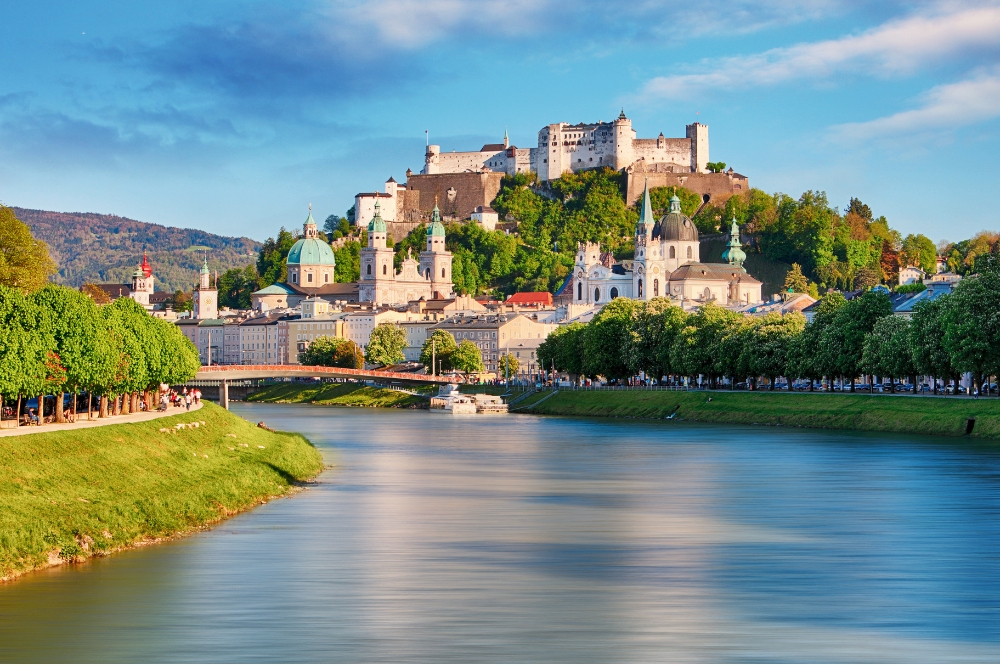
Yes, you can do Salzburg in a day – it’s a direct ÖBB Railjet of about 2 hours 20 minutes from Vienna. It’s a long-ish day, but an honest one: the old town is compact, and the highlights cluster together. Walk the Mirabell Gardens (the Sound of Music fountains, if that’s your thing), cross the river into the Altstadt, and ride the funicular up to Hohensalzburg Fortress for the Alpine backdrop that makes every photo look staged.
My honest advice: book the Railjet early to keep the fare down, leave on a morning train, and don’t try to add the lakes or Eagle’s Nest in the same day- that’s where a one-day Salzburg trip falls apart. Save those for an overnight.
Best for: Alpine scenery, Mozart, and a hilltop fortress.
© Canva
Graz
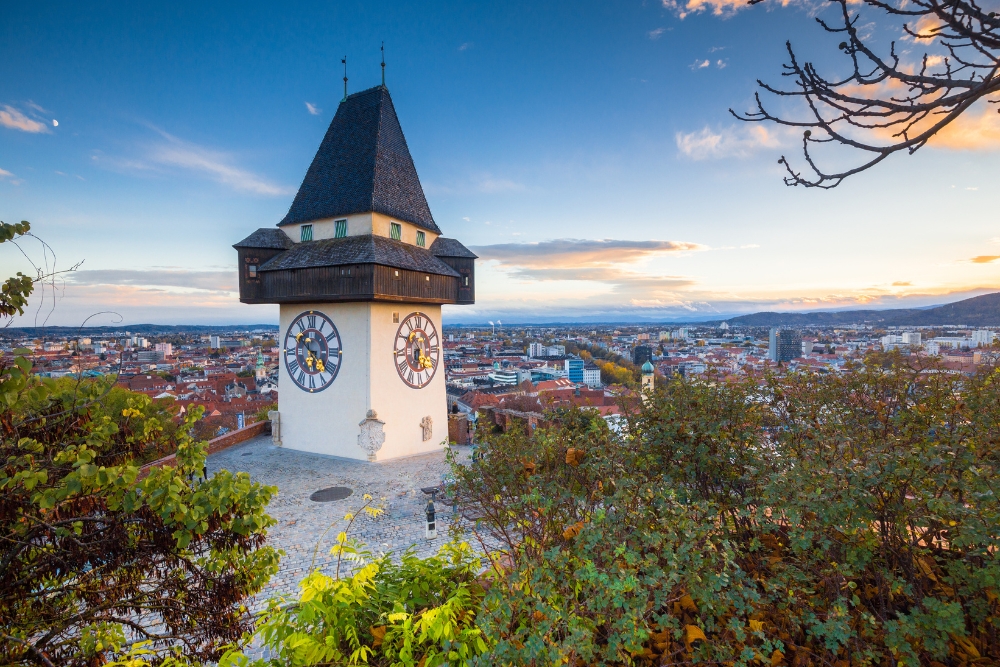
Austria’s relaxed second city sits about 2 hours 35 minutes away by direct train, and the ride itself is part of the appeal; the line climbs over the Semmering, the world’s first true mountain railway and a UNESCO World Heritage route. In Graz, ride the funicular up the Schlossberg for the panorama, then come back down to a city known for good food and a friendly student energy. The bug-shaped modern art museum (the “Friendly Alien”) and the courtyards of the old town round it out.
Best for: a scenic rail journey and a laid-back food city.
© Canva
International day trips from Vienna (cross-border)
Bratislava, Slovakia
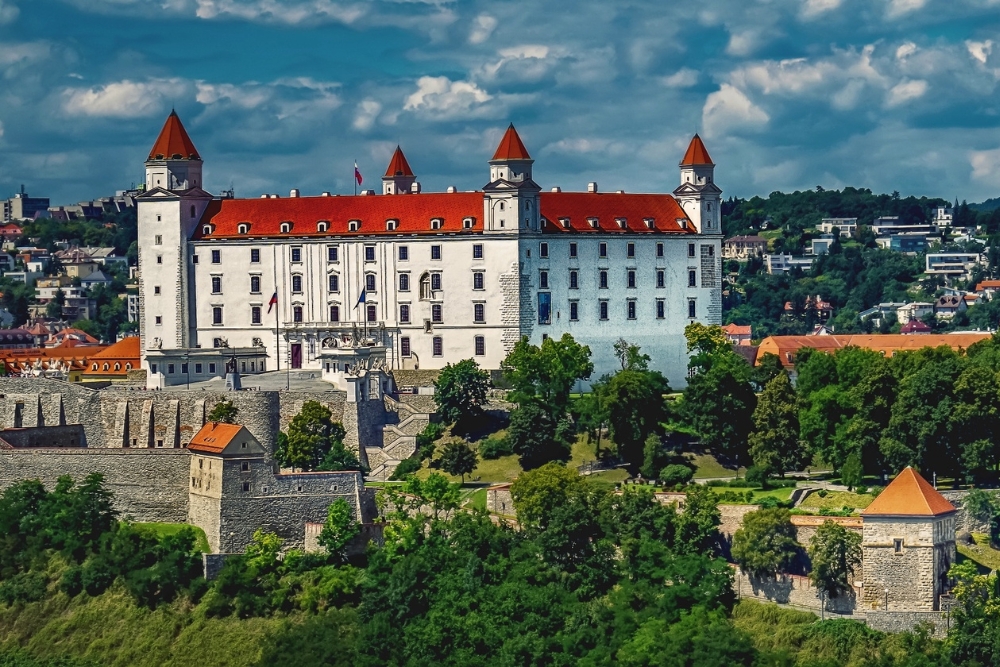
Bratislava is the easiest “second country in a day” in Europe. A direct train reaches the Slovak capital’s main station, Bratislava Hlavná Stanica, in about an hour, and it’s one of the cheapest border hops you’ll find anywhere. The Old Town is small, walkable, and a little offbeat- look for the bronze statue of a man peeking out of a manhole, and the UFO observation deck on the bridge over the Danube gives you the whole city in one sweep.
It’s compact enough that half a day is plenty, which makes it a great pairing if you want a relaxed morning in Vienna first.
Best for: quick, budget-friendly country-hopping.
© Canva
Brno, Czech Republic
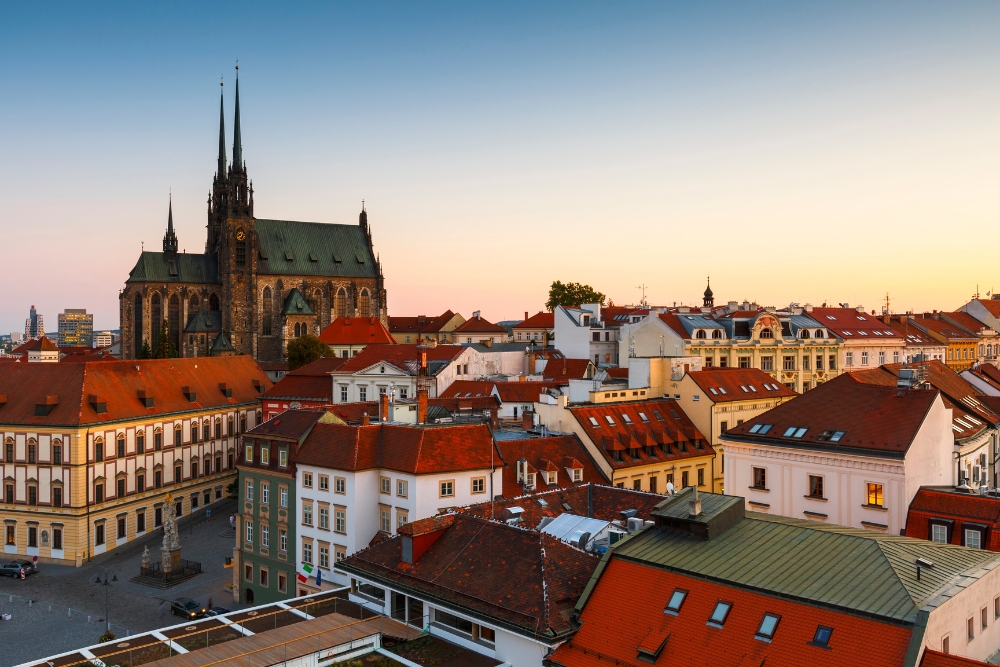
Underrated and worth the slightly longer ride. A direct EuroCity train reaches Brno in about 1 hour 30 minutes, and the Czech Republic’s second city rewards anyone curious about design and architecture. The standout is Villa Tugendhat, a 1930s functionalist landmark and UNESCO site; you’ll need to book your timed entry well ahead, as tickets sell out. Beyond the villa, Brno is a café city with a young, unhurried feel and prices noticeably lower than Vienna’s.
Best for: modernist architecture and great coffee.
© Canva
Budapest, Hungary
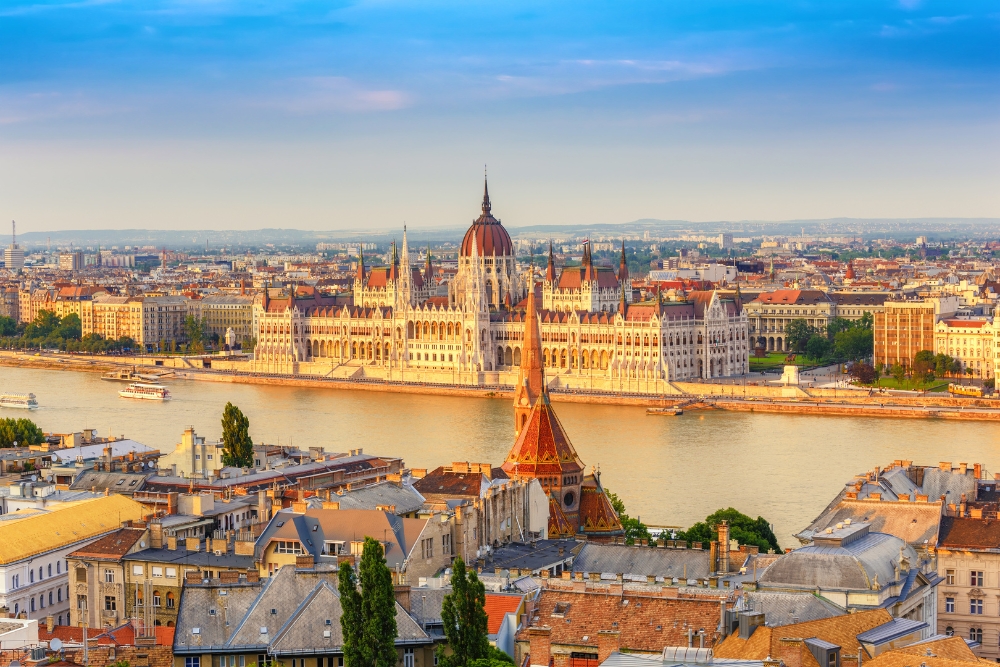
The longest day on this list, but for many people, the most rewarding. A direct Railjet runs to Budapest in around 2 hours 40 minutes. The Hungarian capital is grand in a way that’s hard to overstate; the Parliament building along the Danube, the views from the Buda side, the thermal baths, and the ruin bars after dark.
I’ll be straight with you: it’s a lot of city for one day, and you’ll only scratch the surface. Pick a lane: riverside landmarks, or baths and ruin bars; rather than trying to see everything. If you can spare a night, do. But as a single big day out, it absolutely works.
Best for: grand architecture, thermal baths, and Danube views.
© Canva
Sopron, Hungary
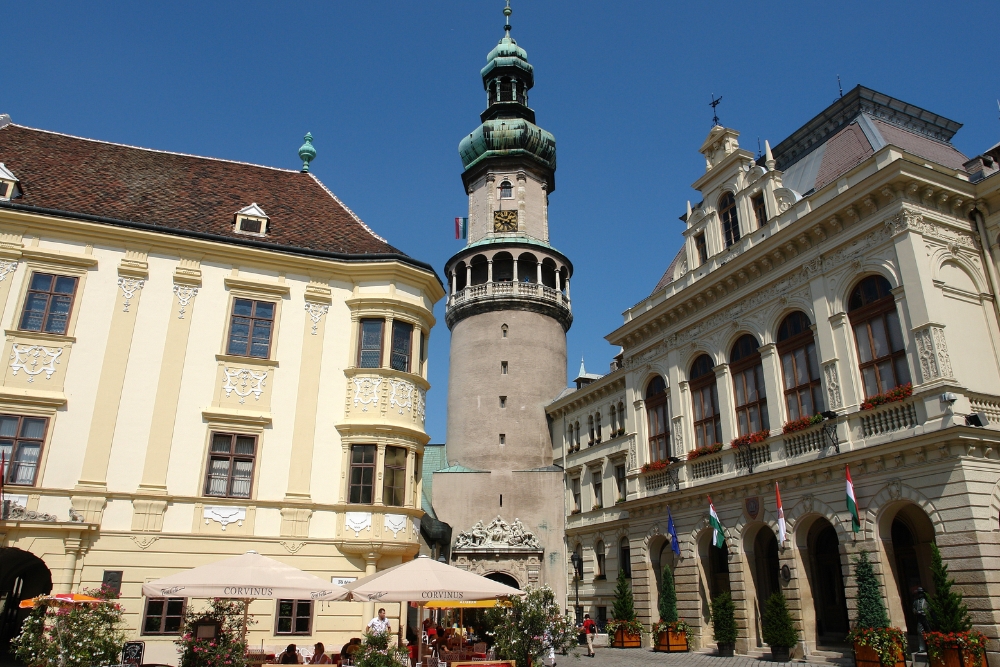
The quiet surprise. Just over the border, Sopron is reachable by direct regional train in about 1 hour 15 minutes, and it feels worlds away from Budapest’s scale. This is a small medieval town of stone streets and a famous Firewatch Tower you can climb for views back toward the Austrian border. It’s also wine country, so a glass of local red with lunch is the move here. Because it’s so close and so calm, Sopron makes a lovely half-day for anyone who’s done the big hitters and wants something gentler.
Best for: medieval streets and small-town wine.
© Wikipedia
Best Day Trips from Vienna for Nature and Hiking
If you’d rather trade cobblestones for fresh air, a few of these lean outdoorsy. The Wachau Valley around Melk is laced with vineyard walking paths between villages, easy to pick up and leave at a train station. The Semmering railway on the Graz line drops you at trailheads for ridge walks with wide Alpine views- you can ride out, hike a section, and train back. And Baden sits right on the edge of the Vienna Woods (Wienerwald), so the forest trails start almost at the tram stop. None of these needs a car or a guide; just decent shoes and a return ticket.
Day Trips from Vienna in Winter
Plenty of these work in the cold months; you just have to choose well. Salzburg, Budapest, Bratislava, Brno, and Graz are all cities that shine in December, when Christmas markets fill the squares. Salzburg and Budapest are some of the prettiest cities in Europe. Budapest has the added winter trick of its thermal baths, which are bliss in the cold.
What I’d be cautious about in deep winter: the Wachau cruise stops running outside the warmer season, so a Melk trip becomes abbey-only, and short daylight hours make the longer trips feel rushed. Catch an early train and accept that you’ll be heading home in the dark.
Do you need a guided tour?
Short answer: No, for the trips in this guide. You’ll see “day trips from Vienna” packaged as full-day bus tours on platforms like Viator, and for these routes, they’re usually more expensive and less flexible than simply buying a train ticket and going at your own pace. Trains here are frequent, direct, and easy.
Where a booking does earn its place is timed entry to a specific attraction, Villa Tugendhat in Brno, for example, or a skip-the-line ticket to a popular site you know you want to see. For those, advance tickets through a platform like GetYourGuide can save you from the queue. But the trip itself? Do it yourself. It’s cheaper, and it’s more fun.
Final thoughts
The beauty of basing yourself in Vienna is how much it all sits within a single train ride. Want mountains and Mozart? Salzburg. A cheap passport stamp and a quirky old town? Bratislava. A slow soak and a green park? Baden. Grand-scale city sights? Budapest. You don’t need a car, you don’t need a tour – you just need to pick a platform and go. Buy your ticket the night before, check the last train home, and let the railways do the rest.
