
Inside La Casa Azul: My Frida Kahlo Museum Experience (and How to Actually Get In)
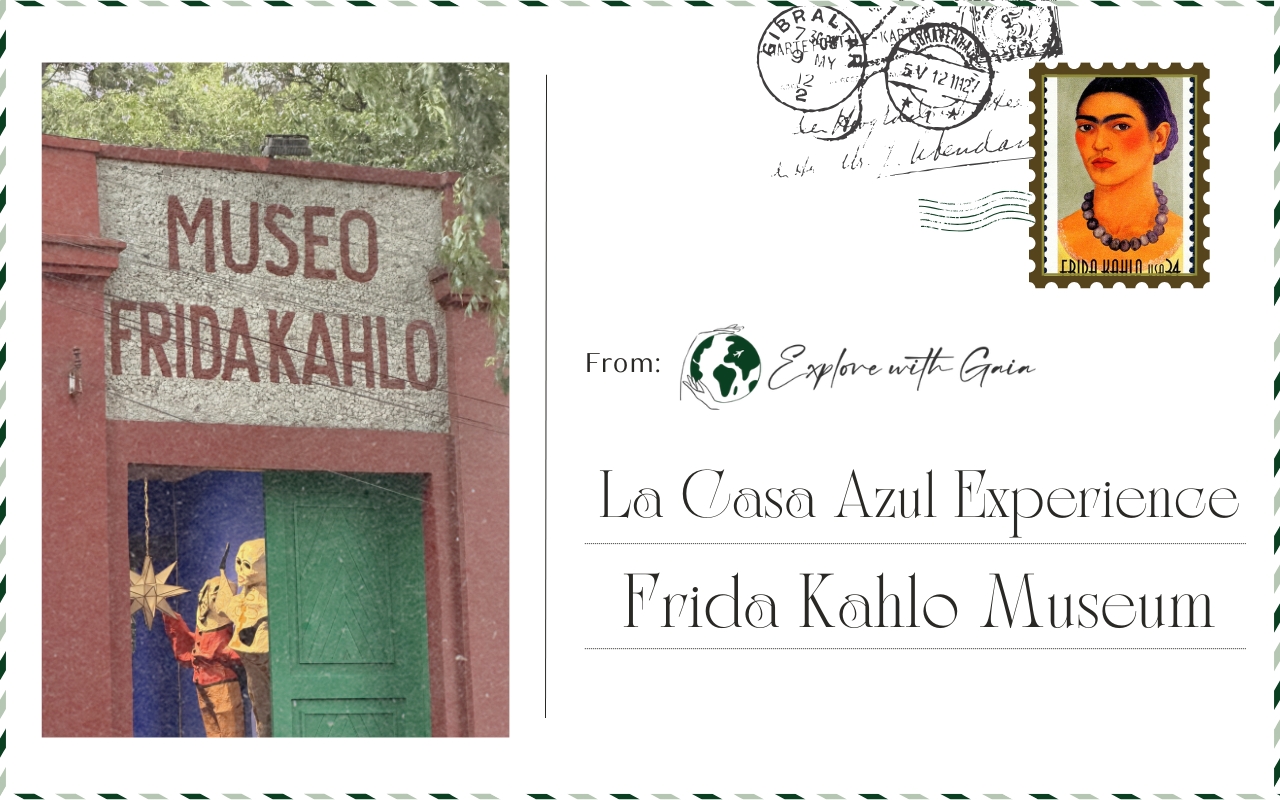
Visiting the La Casa Azul (Blue House) of Frida Kahlo in Mexico City was something I was genuinely excited about — seeing the place where she lived, created, and kept going despite everything life threw at her. But honestly, the saddest part was how commercialized it felt. I just wish fewer people were allowed inside at the same time, so you could actually feel the atmosphere of her home instead of it feeling like a nonstop tourist machine. Frida is very special to me, and I’m happy I got to see her personal belongings in the house where she used to live and create — but it hurts to see her home turned into a nonstop tourist machine.
So here’s the honest version. The museum is worth it, but only if you go in prepared. This is how it actually works, what you’ll see inside, and the things I wish someone had told me first.
Casa Azul is in Coyoacán, a quiet, tree-lined neighborhood in southern Mexico City, at Londres 247. Most people arrive by Uber, taxi, or metro and walk in from there. Give yourself extra time from the center — traffic here can double your journey without warning.
Frida Kahlo Museum Tickets: Book Months Ahead
This is the single most important thing I can tell you: book early. Tickets sell out fast, and I mean fast — I bought mine a few months in advance. There’s no ticket office at the door anymore, so you can’t just turn up and pay. Everything is sold online through the official site, https://boletos.museofridakahlo.org.mx/en/tickets/museo-frida-kahlo-cdmx. Standard entry is around 320 pesos, with a small service charge added when you book directly.
What to Do If the Tickets Are Sold Out
If your dates are already gone on the official site, you have two realistic options. You can book through a reseller like GetYourGuide, Tiqets, or Viator — they cost more, but they hold slots when the official site has none. Or join a guided Coyoacán walking tour that includes entry, which solves the ticket problem and gives you the neighborhood too.
Don’t Be Late: How the Timing and Queue Work
Your ticket is for one exact hour, and the scanner checks for that hour. Don’t be late — they will not let you in. There’s no early entry either; turning up ahead of time won’t move you forward. A new queue forms every 15 minutes, so it’s busy but keeps moving. One thing that almost caught me out: if you don’t see your time slot on the board out front, check the corner — there’s a second list there, and I nearly missed it.
What You’ll See Inside La Casa Azul
The house runs as a one-way route, and the crowd carries you along with it. You get only a few seconds at each stop before the flow nudges you on, which is exactly why I wish they let fewer people in. The rooms are still extraordinary, though — here’s what to look out for.
The Family Photos and Childhood Portraits
The first rooms set up who Frida was before the world knew her: family photographs, portraits of her parents, and work tied to her father, Guillermo Kahlo, a professional photographer. Look for her painted family-tree piece, where she maps her grandparents and parents around herself — a moving way to start the visit.
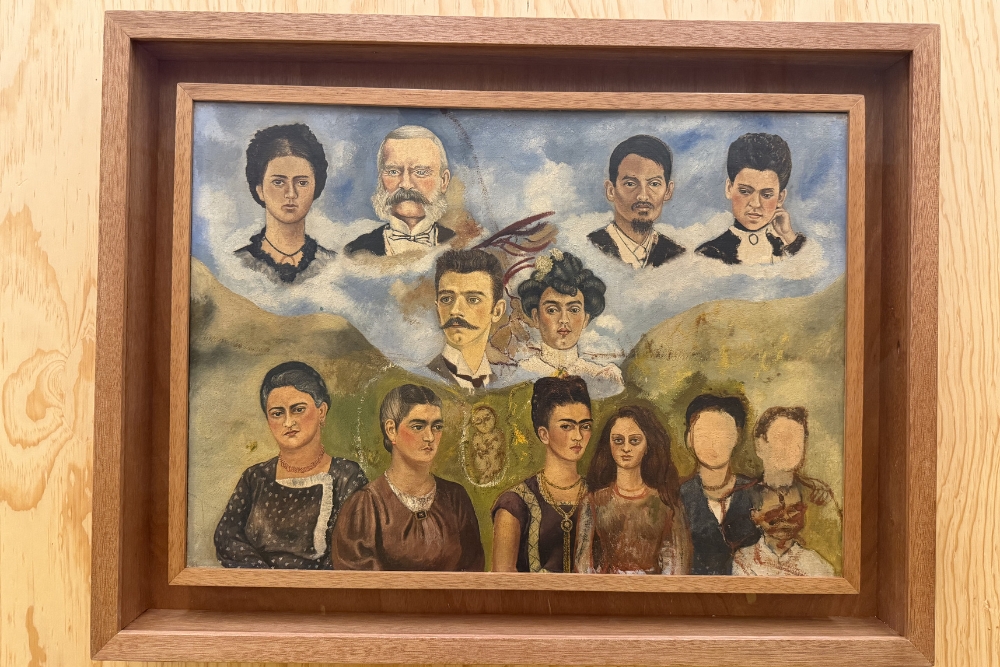
© Gayane Mkhitaryan, Portrait of Frida’s Family (1950–1954), an unfinished work by Frida Kahlo featuring a family tree representation
The Kitchen
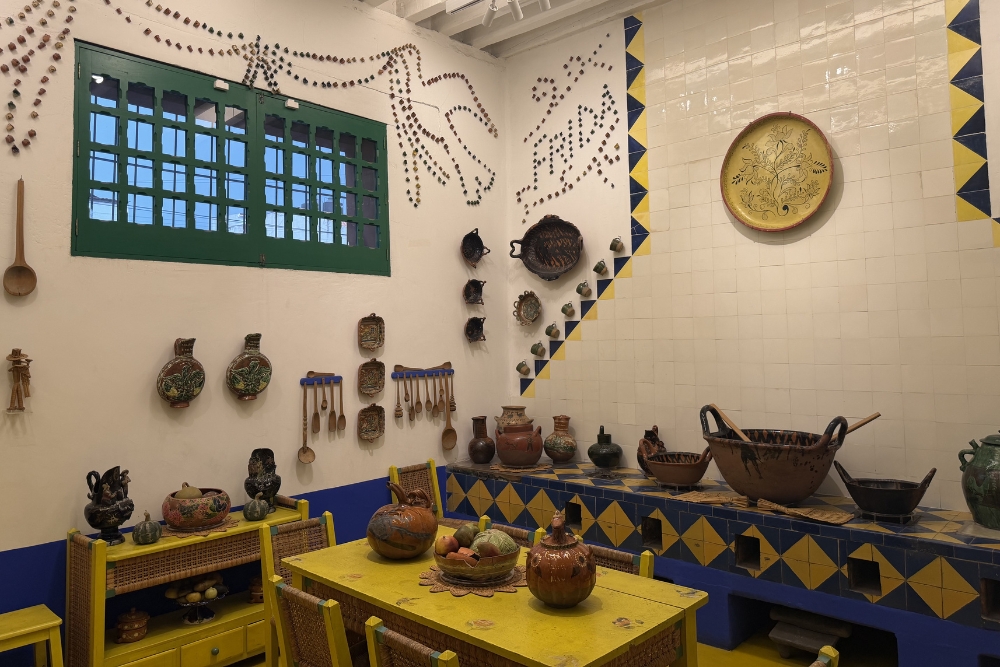
One of the brightest, happiest spaces in the house: yellow and blue tilework, traditional clay pots and folk pottery, and little ceramic mugs arranged to spell out “Frida” and “Diego” on the wall. It feels lived-in, like someone just stepped away from the stove.
The Bedrooms
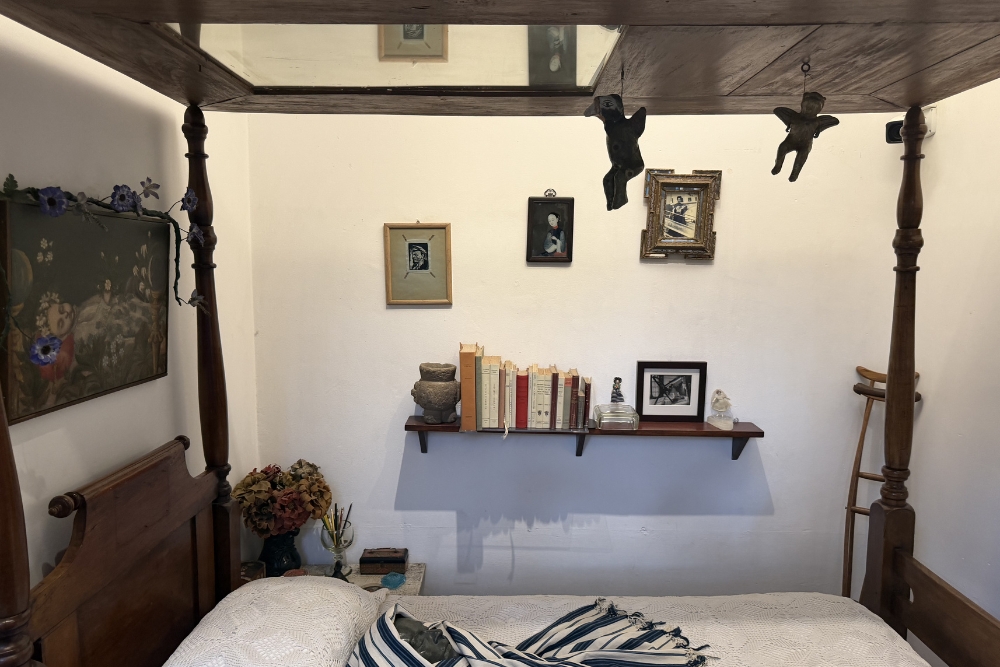
This is where her illness and her art sit side by side. In her day bedroom, you’ll find the canopy bed with a mirror fixed above it — placed there so she could paint her own reflection while bedridden after her accident. Her death mask rests on the bed, and a small pre-Hispanic urn nearby is said to hold her ashes. It’s the quietest, heaviest room in the house.
Her Studio
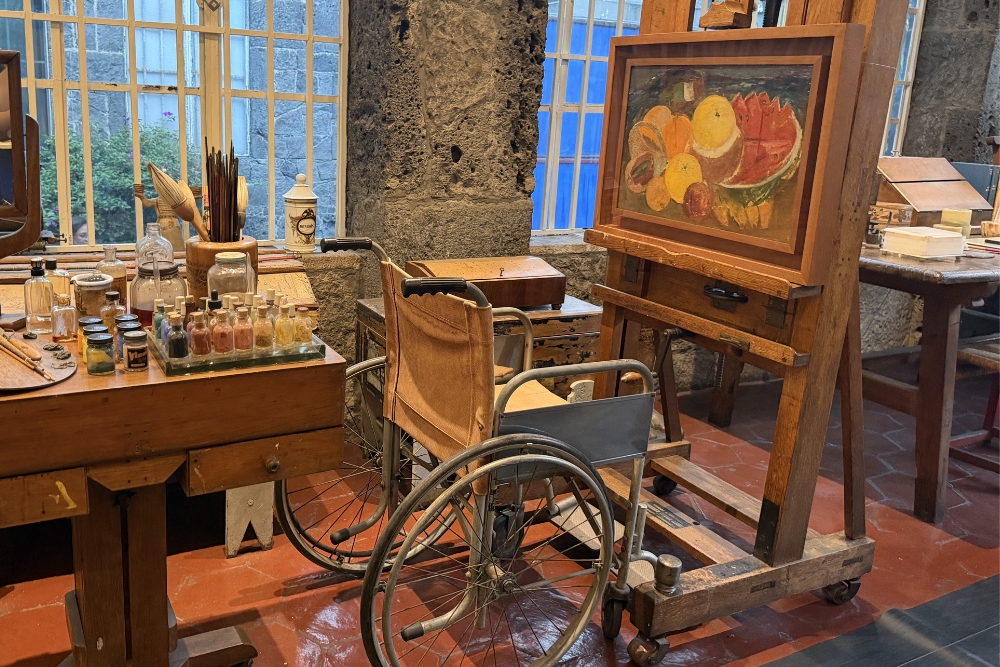
Her studio looks out over the garden and still holds her wheelchair pulled up to the easel, with her brushes, pigments, and books left as if mid-work. Standing here, you feel that this was a working artist’s home, not a set built for visitors.
The Paintings
Casa Azul holds a handful of her works, along with a few by Diego Rivera and others, including her watermelon painting “Viva la Vida” and the unfinished “Frida and the Cesarean.” Be honest with yourself going in, though: this house is about her life and surroundings more than her masterpieces. Most of her major paintings live in other museums, so come to the home.
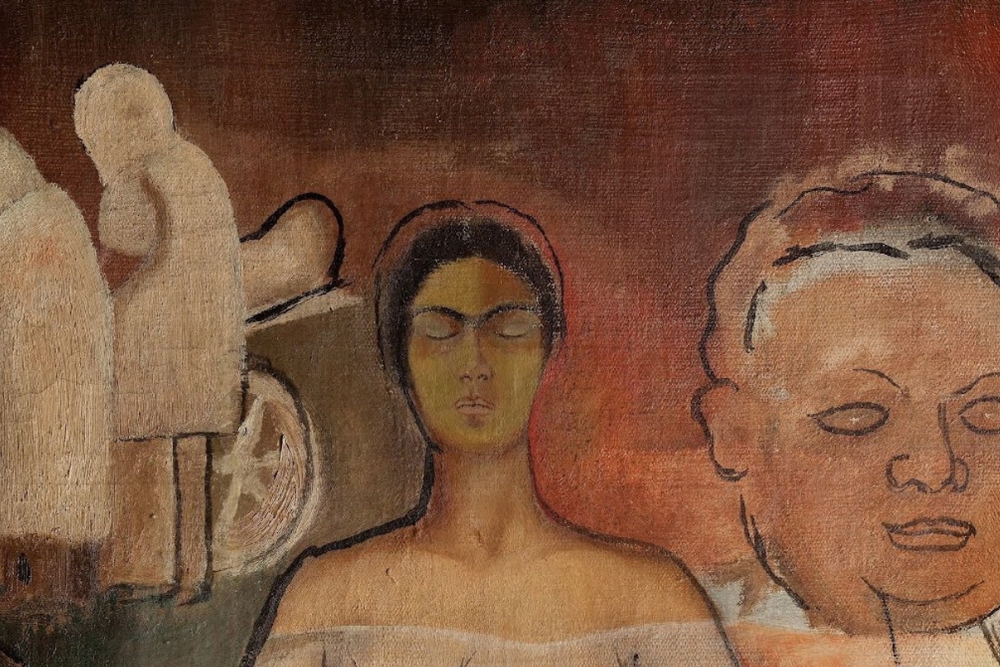
© Gayane Mkhitaryan, Frida and the Cesarean
Her Corsets, Clothes and Accessories
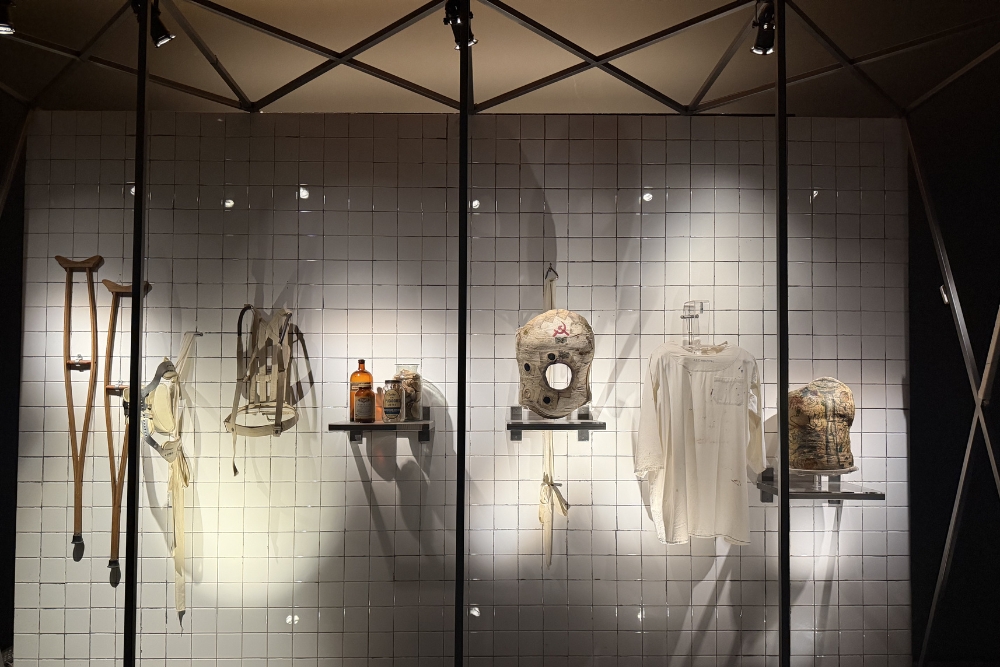
For me, this was the most powerful section. After her death, her wardrobe was locked away for around 50 years and only rediscovered in 2004. It’s now displayed here: her Tehuana dresses, rebozos, and jewelry, alongside the plaster body corsets she wore and painted herself, and her prosthetic leg finished with a bright red embroidered boot. Seeing the objects she used to hold her broken body together, decorated in her own hand, says more than any wall text could.
The Garden and Rotating Exhibition
The visit ends in the courtyard garden, with its small stone pyramid stacked with pre-Hispanic pieces Frida and Diego collected. There’s usually a rotating exhibition space too, often showing Frida-inspired or contemporary work, so it’s worth checking what’s on when you go.
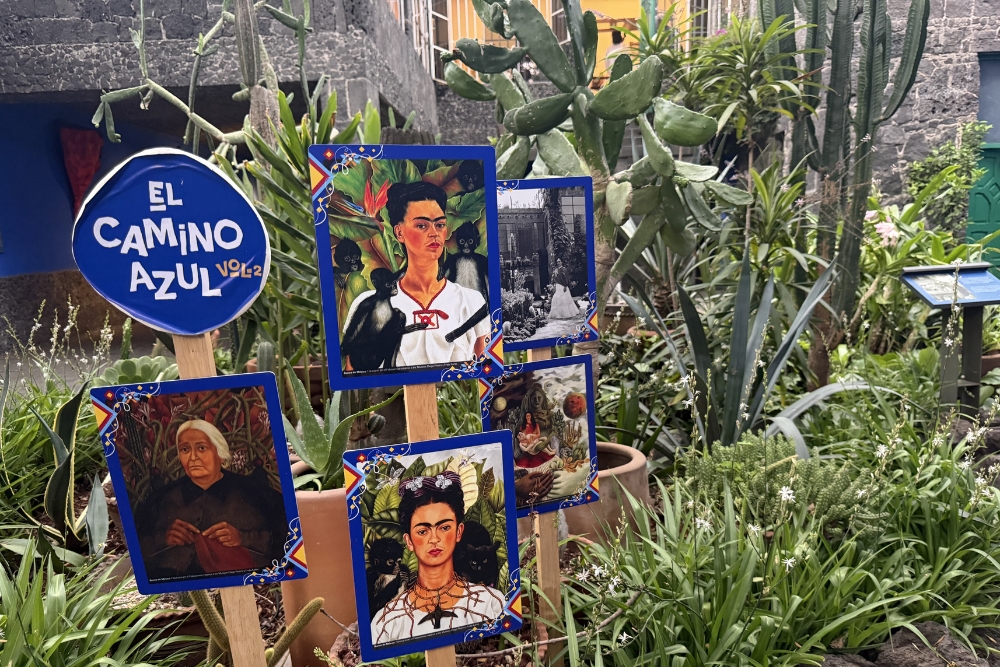
Photo and Video Rules
Photos are allowed, but video isn’t. With the crowd flow, clean indoor shots are genuinely hard to get — your best chances are the garden, the courtyard, and the blue exterior walls before you go in.
The Thing No One Warns You About
There’s nowhere to wait if you’re not visiting. My boyfriend wasn’t going in, so he ended up waiting outside in the rain (the one upside was that there were a few street vendors he could stand with). The setup just isn’t friendly to anyone tagging along, so either plan a café for them nearby or have both of you buy tickets.
Opening Hours
The museum is open Tuesday to Sunday from 10:00 to 18:00, and Wednesday from 11:00 to 18:00, with last entry at 17:00. It’s closed on Mondays.
Is La Casa Azul Worth It?
Yes — with a condition. It’s worth it for what you see and for who she was, but only if you book well ahead and walk in knowing it’ll be crowded and fast. Treat it as a visit to her home, manage your expectations on the pace, and you’ll come away glad you went.
Is This the New Frida Kahlo Museum?
No. The new family-run Museo Casa Kahlo, also called Casa Roja, opened in September 2025, just a few doors away, and focuses on Frida’s childhood and family. If you have time, you can easily pair the two in one Coyoacán morning.
Quick Questions Before You Go
Where to have lunch near the Frida Kahlo Museum?
Coyoacán is full of options within a short walk. The Mercado de Coyoacán is the classic, cheap choice — go for the tostadas — and there are plenty of cafés and restaurants around Jardín Centenario if you want to sit down properly after the visit.
Which museum has Frida Kahlo's paintings?
Casa Azul has a few, but her major works are spread across other museums in Mexico City and beyond. More information in the Frida Kahlo Places You Should Visit article.
Did Van Gogh meet Frida Kahlo?
No. Van Gogh died in 1890, and Frida was born in 1907, so they never crossed paths.
Can you bring food into the Frida Kahlo Museum?
No — eat before you go or save it for a Coyoacán spot afterward.
