
Things to Do, See and Experience in Hwange National Park, Zimbabwe

When I first heard about Hwange National Park, I pictured a quiet corner of Zimbabwe with a few elephants and dusty trails. I found something else entirely: a massive, wild, and wildly underrated safari destination that took me by surprise in the best way. Imagine elephants wandering past your lodge, a giraffe crossing your path on a self-drive, and campfire dinners under starlit skies.
If you’re wondering whether Hwange is worth the trip, especially if you’re a solo or budget traveler, let me give you the honest, no-fluff answer based on my adventure.
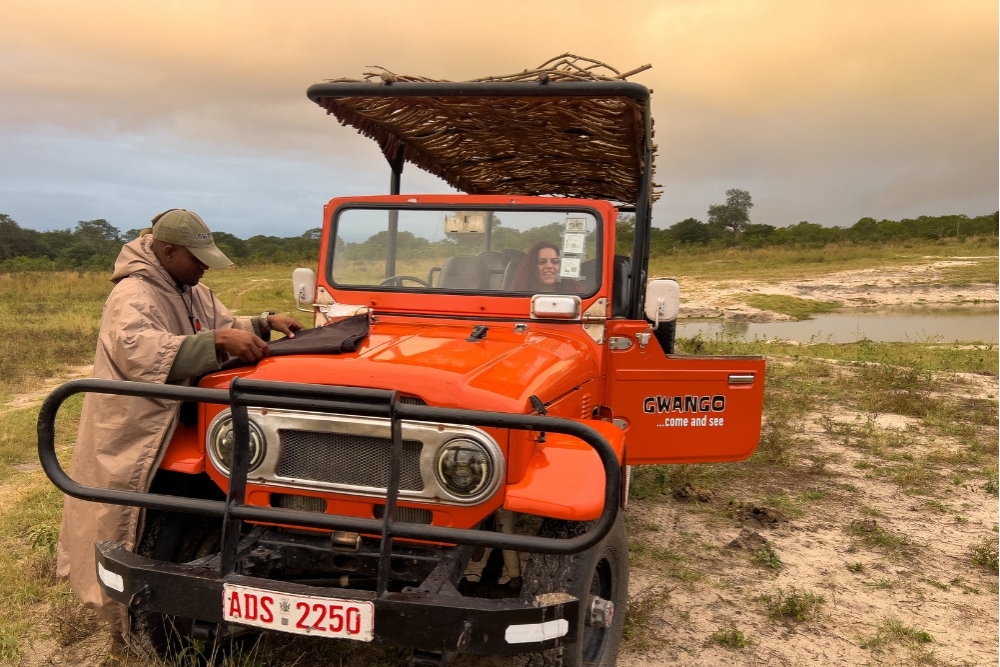
© Gayane Mkhitaryan, Sunset Safari tour in Hwange National Park, Zimbabwe
Absolutely—Hwange National Park is 100% worth visiting. If you’re seeking real wilderness, unforgettable animal encounters, and the freedom to explore off the beaten path, Hwange delivers. It’s raw, rewarding, and absolutely worth every minute.
Here’s why, based on my firsthand experience and everything I learned along the way:
- It’s a smooth and scenic 1.5–2 hour drive from Victoria Falls to the park gate near Dete. The roads are paved, and the area around Hwange is easy to navigate, especially with a self-driving vehicle like our Toyota Hilux. For solo or budget travelers, it’s one of the most accessible safari experiences in Southern Africa.
- Hwange isn’t a zoo or a fenced reserve—it’s wild and unfenced. That means wildlife wanders into nearby lodges and towns, such as Dete.
- Hwange is one of Africa’s top elephant sanctuaries, with around 45,000 elephants roaming freely. But it’s not just about elephants—Hwange is home to lions, leopards, zebras, giraffes, buffaloes, hyenas, and endangered painted dogs.
- Whether you join a guided game drive or explore in your own 4×4, every sighting feels like a gift, especially when a leopard appears out of nowhere like it did for us!
- If you love the thrill of planning your route, self-driving in Hwange is a dream. The park is large and has many roads and waterholes, so there’s always somewhere new to explore.
- Plus, you’ll meet like-minded travelers doing the same—we swapped stories with visitors from the Netherlands, Germany, Spain, and the UK.
- Hwange isn’t just about wildlife. It’s a hub for conservation efforts, like the Painted Dog Conservation Centre near Dete. And being near local communities means you can learn about Zimbabwean traditions and support eco-tourism initiatives.

Can you see the Big 5 in Hwange?
Technically, no, because rhinos are not currently in Hwange National Park. But you can still see 4 of the Big 5. Zimbabwe’s rhino conservation efforts are focused on other areas, like Matobo National Park and private conservancies.
The Big Five refers to lion, leopard, elephant, buffalo, and rhino—a term originally coined by big-game hunters to describe the five most difficult animals to hunt on foot, but now more commonly associated with wildlife viewing.
How much does it cost to go to Hwange National Park?
The cost of visiting Hwange National Park is based on nationality and vehicle type.
- Foreign Nationals: $20 per person per day.
- SADC Citizens: $15 per person per day.
- Zimbabwean Citizens: $5 per person per day.
- Foreign-Registered Vehicles: $10 per day.
- Locally-Registered Vehicles: $5 per day.
- Children under 12: Usually half-price or free, depending on status
You must pay these fees at the Main Camp gate or any official park entrance. Keep your receipt—it’s valid for 24 hours. More information here: Hwange Safaris
The Journey: Victoria Falls to Dete
We hit the A8 road early, and it was a scenic ride – just under 2 hours through teak forests and scattered villages. The drive was mostly smooth, with a few potholes here and there, but nothing our Toyota Hilux couldn’t handle.
At Dete, we turned off toward Gwango Heritage Resort, our base for the next two nights, just minutes from Hwange’s main gate.
Staying at Gwango Heritage Resort
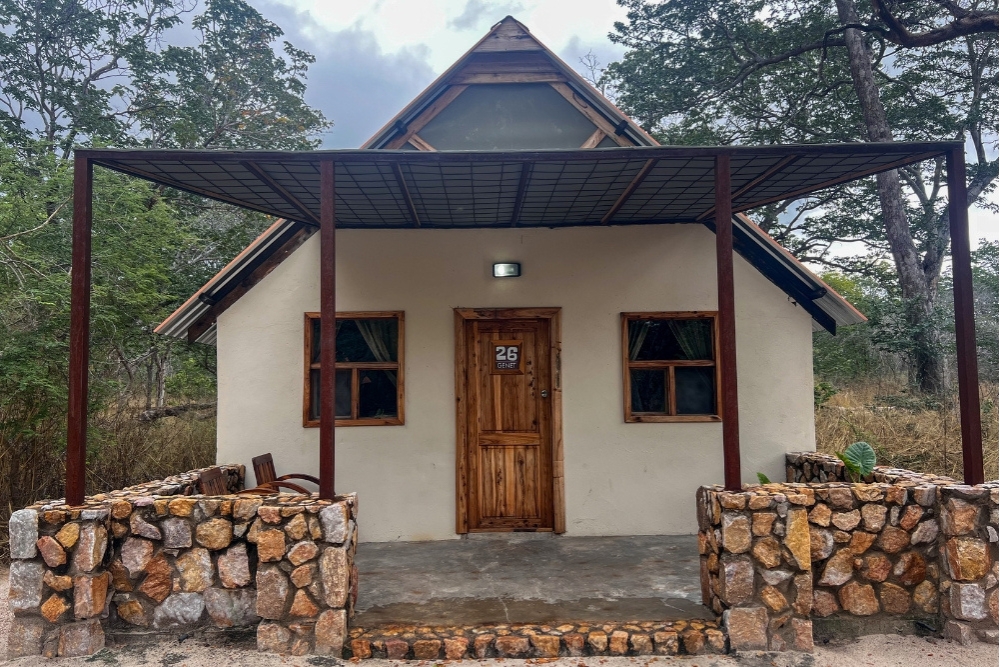
Our chalet at Gwango was rustic and cozy, with a thatched roof, mosquito nets, and bush charm that makes you feel close to nature. And you are, because the wildlife doesn’t stay in the park here. Elephants, kudu, and even the odd hyena roam the grounds with no fences. Don’t be surprised if you spot a giraffe casually munching on a tree near your window.
Also worth noting, we met some incredible fellow travelers from Spain, Germany, and the UK. One German guy was backpacking solo, mostly by bus. The Spanish couple shared horror stories of getting stuck in the mud near Kariba during heavy rains. It’s a good reminder that rainy-season travel can get tricky, so plan accordingly.


First Sunset Safari: A Wild Welcome
That evening, when we arrived at Gwango Heritage Resort, a group was about to head out on a sunset game drive organized by the lodge. They offer various safari packages, including morning drives, full-day safaris, sunset tours, and more. We were initially tempted to book the full-day experience, which costs around $150, but decided to test the waters with a shorter sunset drive first. It felt like a good way to see what landscape they cover, how the car handles, and what kind of wildlife sightings we might expect.
So we hopped into the safari vehicle and set off. The first animal we spotted was a giraffe, tall and graceful, followed by some antelope species—likely kudu. As we drove deeper into the park, we encountered an elephant quite close to the road, a breathtaking moment, even though we weren’t far from the lodge. We met the sunset right there, in the middle of nowhere. It felt wild, but we later realized we weren’t far from the hotel. Still, it was a beautiful experience.
Some light snacks and cold drinks—Coca-Cola, Fanta, and even a Hunter’s Gold cider were also included in the package. After about two hours, we returned to the lodge. While we weren’t fortunate with sightings that evening, it was enough to give us a taste of what Hwange could offer. We decided then that the next day, we’d venture into the park on our own with our 4×4 and see where the road would take us.
Day 2: DIY Safari (Because Why Not?)
It was the best decision. Self-driving gave us the freedom to explore at our own pace. We focused on waterholes, where animals congregate, and luck was on our side: we spotted a leopard in the wild just near the park’s entrance.
That said, spotting big cats during the rainy season, such as April, can be challenging. The grass is tall, the trees are thick with foliage, and the predators are well-camouflaged. Still, the park’s shifting landscapes—from semi-desert in the south to mopane forests in the north—make the drive worth it.


Travel Tips for Hwange National Park
- Self-Drive or Guided? Both have perks. Guided drives are educational and great for first-timers. But self-driving is an adventure if you have a 4×4 and some confidence.
- Wildlife Hotspots: Don’t miss Nyamandhlovu Pan and other waterholes. These are your best spots for sightings.
- Timing: The Dry season (May to October) is better for visibility. April was lush and beautiful, but it was harder to spot predators.
- Where to Eat: There are several options nearby, so consider stocking up on snacks and drinks in Victoria Falls or Hwange town. We asked the hotel to prepare lunch bags for us.
- Clothing: It gets cold on morning and evening drives, so bring layers and a windbreaker.
- Binoculars: Essential for spotting animals, especially in tall grass.
Cultural & Conservation Highlights
Just near the park gate is the Painted Dog Conservation Centre. We didn’t make it this time, but fellow travelers said it’s a must-visit. It offers insight into efforts to protect the endangered African wild dogs.
Final Thoughts
Whether chasing bucket-list wildlife, road-tripping through Zimbabwe, or just curious about less-traveled places, Hwange National Park delivers a safari experience that feels raw, real, and deeply rewarding. It may not have the shiny game lodges of other African parks, but what it offers is far more special: space, solitude, and the thrill of never knowing what you’ll see around the next bend. For us, it started as a spontaneous stop on the way to Binga—and became one of our trip’s most memorable parts.
