Bruges, often called the Venice of the North, is a city straight from a fairytale. With its charming canals, medieval architecture and rich cultural heritage, it’s a must-visit for travellers of all kinds, and it’s small, walkable and about an hour from Brussels by train.
This guide is everything I’d tell a friend before their first trip: how long to stay, how to get there and around, what to skip, where to sleep and eat, and every Bruges guide on the blog.
Currency Euro; cards and contactless almost everywhere
Time needed 1–2 days, 3 with a day trip
Best months April, May, September and December
From Brussels About 1 hour by direct train
Emergency 112 (police 101)
How Many Days in Bruges?
2–3 days is generally enough to enjoy what Bruges offers at a comfortable pace.
1day
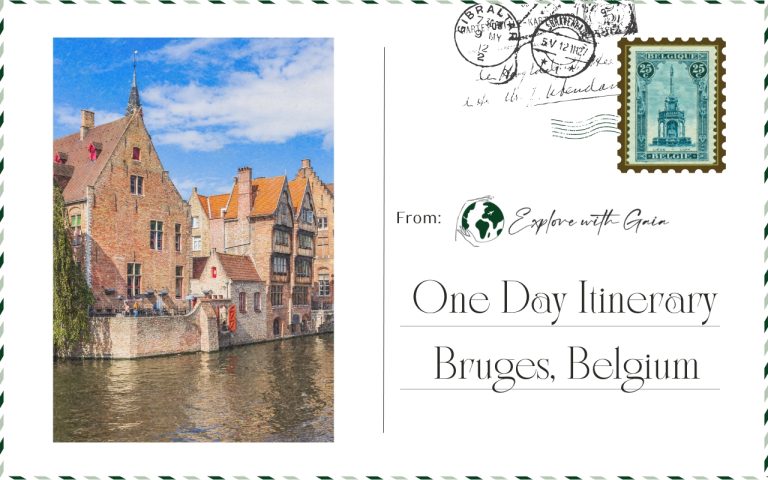
One Day
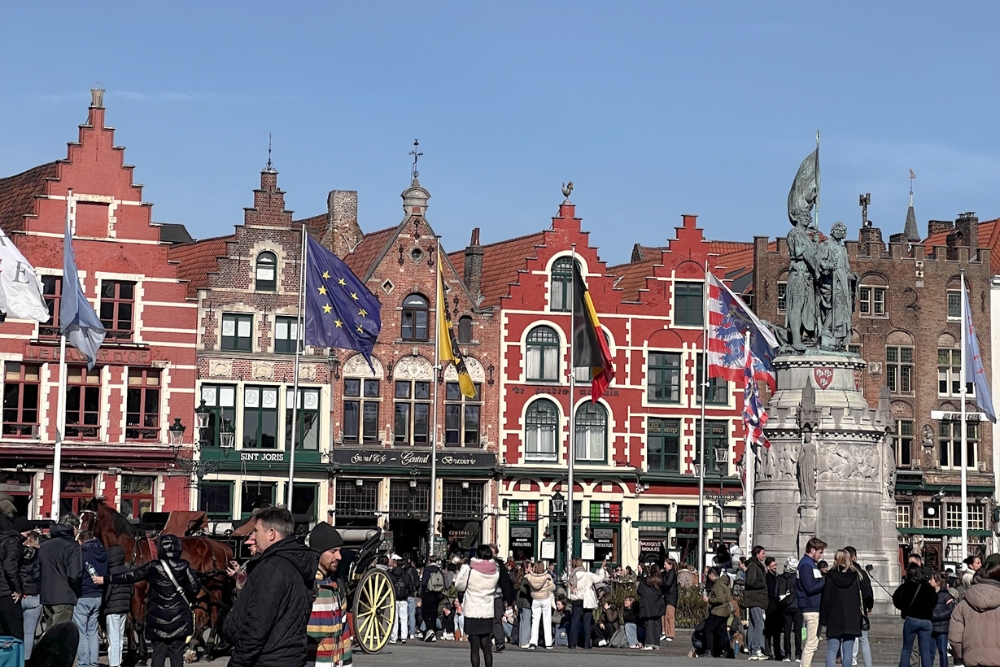
If you’re short on time, you can see the main highlights in one day, such as Markt Square, the Belfry and a canal boat ride, but it will be a fast-paced visit.
2days
Two Days
You can add the Groeningemuseum and the Basilica of the Holy Blood, and enjoy the charming streets and local food without feeling rushed.
3days
Three Days
Ideal for a deeper dive: lesser-known churches, a chocolate workshop, or a day trip to Ghent, Brussels or the coast.
How to Get to Bruges
Bruges station is about a 20-minute walk from the Markt. Every route below ends there, except the car.
Train · direct
Brussels Airport Bruges
Airport supplement €6.90 included in the fare
Belgian Railways (SNCB/NMBS) runs direct trains from Brussels Airport-Zaventem to Bruges. Buy your ticket at the airport station (level -1), in the SNCB app or online.
Take Eurostar to Brussels-South (the former Thalys trains are now Eurostar too), then change to the direct train to Bruges. FlixBus is the budget alternative from many European cities.
From the port, take the coastal tram (Kusttram) to Blankenberge and the train from there to Bruges. Cruise lines and tour companies also sell shuttle transfers.
The centre isn’t made for cars. Park at the station car park, and the free P+Bus takes you and up to three passengers into the centre on the day you arrive.
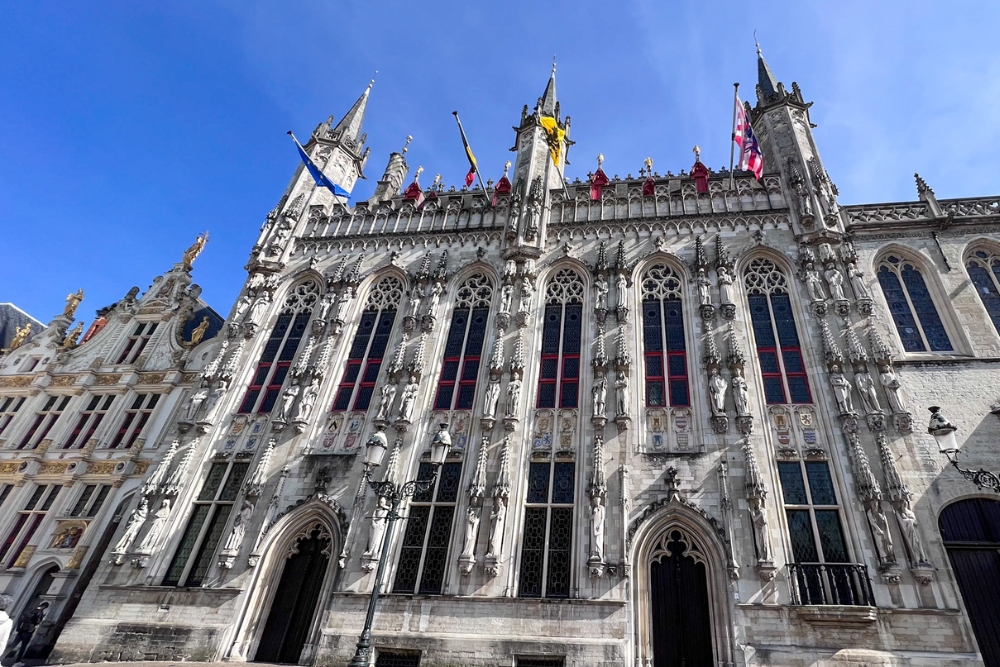
Two minutes from the Markt, Burg Square is home to the Gothic City Hall and its richly painted Gothic Hall.
On Burg Square
Basilica of the Holy Blood
A Romanesque lower chapel and a richly painted upper chapel, home to the relic that gives the basilica its name.
Best at sunset
Rozenhoedkaai
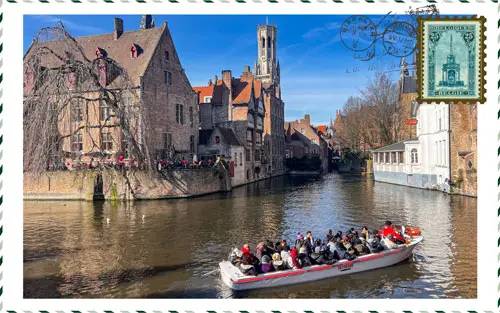
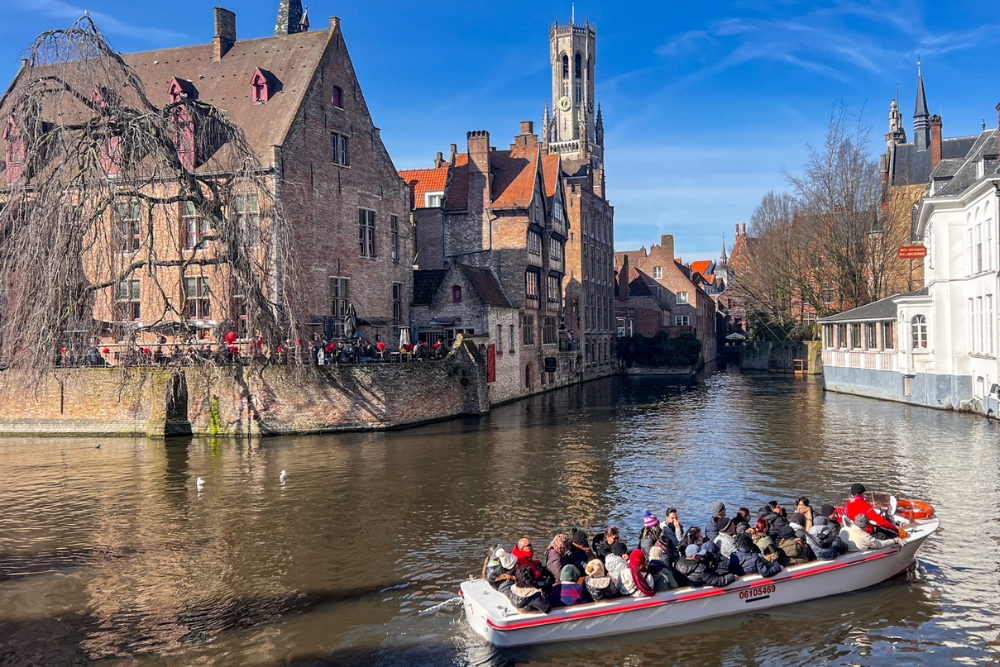
The most photographed corner of Bruges, where the canal bends towards the Belfry. Come early or at sunset to have it almost to yourself.
Rainy day
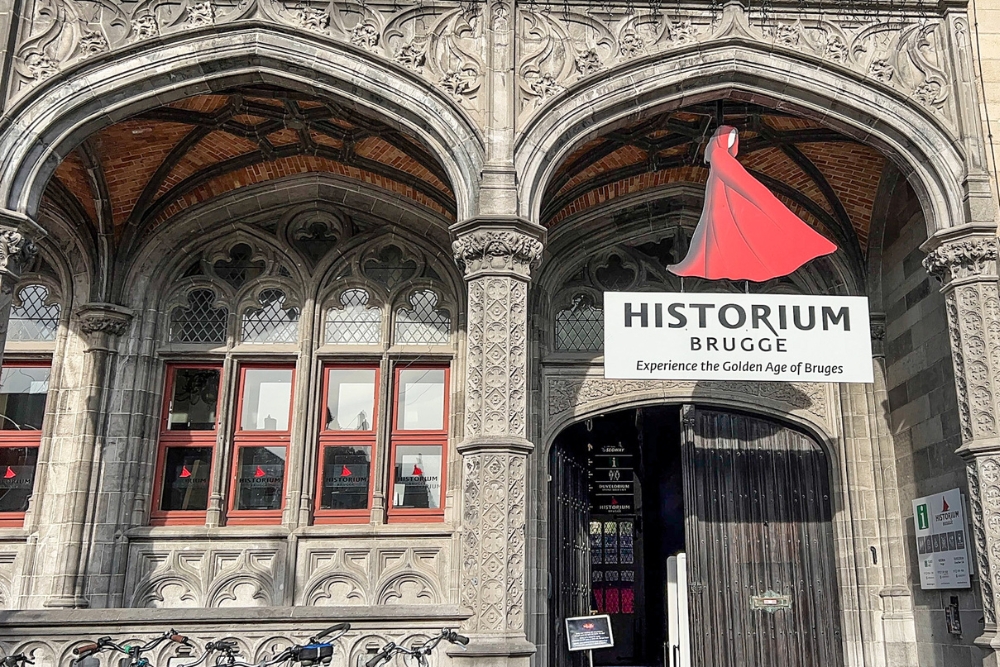
Historium Brugge
An immersive history museum on the Markt that takes you back to Bruges’ golden age, good on a rainy day.
Save on museums
Musea Brugge Card
€3372 hours · under 26: €25
One ticket for 12 Musea Brugge locations, including the Belfry, Groeningemuseum, Gruuthusemuseum and City Hall. Book your Belfry time slot online either way.
Month-by-month ideas, plus Bruges in the rain, with kids, at night and on a Sunday.
Read the full guide
What to Skip in Bruges (and What to Do Instead)
Skip
Eating on the Markt terraces
You pay for the view.
Instead
Walk a few streets away for better food at fairer prices.
Skip
Rozenhoedkaai and the Belfry between 10:00 and 16:00
That’s when day-trippers and cruise groups arrive.
Instead
Come early or in the evening, and book your Belfry time slot.
Skip
Driving into the centre
The streets are narrow and many are one-way.
Instead
Park at the station car park and take the free P+Bus in.
Skip
Waffle stands piled with toppings
Instead
Order a proper waffle, plain with sugar or with a little chocolate, at a waffle bar or tearoom.
Skip
Bruges as a rushed half-day trip
Instead
Give it at least a full day, ideally a night: the city is quiet and lovely once the day-trippers leave.
Where to Stay in Bruges
The Historic Centre is compact: you can walk from one end to the other in about 25 minutes. But where you base yourself still makes a difference.
Around Markt Square
The very centre
The most central you can get. Everything is on your doorstep, but it’s also the noisiest area, especially on weekend evenings when the restaurants and bars around the square run late. If you’re a light sleeper, ask for a room facing away from the square.
Best for
First-timers, short stays, anyone prioritizing convenience over quiet
From my hotel guide
Hotel du Théâtre, Hotel Boterhuis, The Black Swan Hotel
The Southern Centre
Sint-Salvatorskathedraal, Church of Our Lady, Minnewater
Feels noticeably calmer. Streets are prettier, there are fewer tourist groups wandering past at 9pm, and prices tend to be marginally lower. If you want genuine quiet, the southern edge near Minnewater is your best bet.
Best for
Couples, return visitors, anyone who wants a quieter base
From my hotel guide
Hotel Karel de Stoute, Hotel Boterhuis, Hotel Salvators
’t Zand & the Station
Western edge of the centre
The train station is around 850–950 m away: not a long walk, but a useful one if you’re arriving or departing by rail. A few good-value hotels cluster here.
Best for
Budget travellers and anyone connecting through Bruges by train
From my hotel guide
Hotel Maraboe
Sint-Anna Quarter
North-east of the centre
A quiet, local experience: residential streets a short walk from the Markt, with the windmills on the Kruisvest along its edge.
Both offices offer multilingual help, free city maps, walking tours, brochures, event information and tickets. Opening hours change, so check the official pages before you go.
Lockers at the railway station, directly across from the tourist office, from €5 a day for a small bag to €14.50 for a big suitcase (minimum one day). Pay by card at the terminal; you can reserve online.
Yes. Its historic centre is a UNESCO World Heritage Site, and it’s small enough to enjoy without a car or a big budget. Come early or stay the night to see it without the crowds.
How many days do you need in Bruges?
2–3 days is generally enough to enjoy Bruges at a comfortable pace. One day covers the main highlights, such as Markt Square, the Belfry and a canal boat ride, but it’s a fast-paced visit.
Can you visit Bruges as a day trip from Brussels?
Yes. Direct trains take about an hour and run roughly every 30 minutes. If you can, stay the night: the evenings, after the day-trippers leave, are the quietest and prettiest time.
Should I visit Bruges or Ghent?
If you can, do both: they’re less than half an hour apart by train. Bruges is smaller and more picture-perfect; Ghent is a bigger, livelier student city.
Is Bruges expensive?
It can be, mostly around the Markt. Hotels in the centre start at around €50–€150 a night and hostel beds at €20–€40, a canal boat tour is €15 and a bus ticket €3. Eating a few streets away from the main squares saves a lot.
Do I need cash in Bruges?
Rarely. Cards and contactless payments work almost everywhere, including on De Lijn buses. The exception is the canal boats, which take cash or Payconiq only.
What language do they speak in Bruges?
Dutch, with the local West Flemish dialect. English is widely spoken, especially in hotels, restaurants and shops.
When is the Bruges Christmas market?
It’s part of Winter Glow, which runs from 20 November 2026 to 14 February 2027. The Christmas market itself is on the Markt and Simon Stevinplein during the festive weeks.
Boarding pass
Hello, and welcome to Gayane Mkhitaryan’s (Gaya or Gaia) blog on travel and exploring the World! I’m the traveler behind Explore with Gaia – an Armenian wanderer who caught the travel bug in 2014 and never looked back. So far, I’ve traveled through 30+ countries across Asia, Europe, Africa, North America, and beyond, mainly as a solo, budget-conscious traveler.
Whether you’re an experienced traveler or just beginning, join me at “Explore with Gaia” for reliable travel guides, tips and recommendations, and endless inspiration to discover the world, one unforgettable trip at a time.
I’d like to use Google Analytics to count which guides are read, and to let YouTube videos play right here. Both set cookies, so both stay off until you choose.