
Things to Do, See, and Experience in Urgench, Uzbekistan

Let’s be honest, Urgench is the transit hub you pass through on your Silk Road journey, the place guidebooks tell you to skip entirely in favor of staying in Khiva, the fairy-tale walled city instead.
But here’s what happened. After arriving from Khiva, dropping our luggage at the hotel, and spending the day exploring the ancient desert fortresses (the Kalas), we had two free hours the next morning before our train to Nukus. Just enough time to wander the streets near our hotel, grab some breakfast, and maybe see what this “skip-it” city actually looked like.
What I found in those two hours completely shifted my perspective on what makes a place worth experiencing. Standing in front of the Khorezm Regional Drama Theater with its dramatic Soviet-era entrance, photographing the imposing Jaloladdin Manguberdi Monument, spotting Soviet murals hidden between buildings flying dual flags—Uzbekistan and Karakalpakstan side by side—I realized that Urgench isn’t trying to be anything it’s not. It’s not competing with Khiva’s turquoise tiles or Samarkand’s grand monuments. It’s just a working Uzbek city that happens to preserve layers of Soviet history most tourists never bother to notice.
And the best part? Exploring it costs exactly nothing. No entrance fees, no tourist infrastructure markup, just authentic daily Uzbek life happening around you while you walk through neighborhoods the guidebooks don’t mention.
The short answer: No, not as a destination. But yes, absolutely, if you have a few hours between connections or if you’re curious about authentic Soviet-Central Asian urban life.
Urgench exists on tourist itineraries for one reason—it’s where you catch transport to Khiva and the desert fortresses. It’s the modern regional capital, with a train station, an airport, and bus connections.
But here’s what I learned during my brief morning exploration: sometimes the places that aren’t “worth visiting” in the traditional sense of the guidebook offer the most genuine cultural experiences. Urgench showed me daily Uzbek life without any tourist polish. I saw locals going about their morning routines, photographed Soviet-era architecture that hasn’t been converted into hotels or restaurants, and experienced a city that simply exists for its residents, not for visitors with cameras.
Must-See Attractions: My Two-Hour Reality Check
Let me set realistic expectations. This isn’t a list of world-class monuments competing with Samarkand’s Registan or Khiva’s Itchan Kala. These are the genuine discoveries I made during my morning walk—the things that revealed Urgench’s real character as a Soviet-planned Central Asian city.
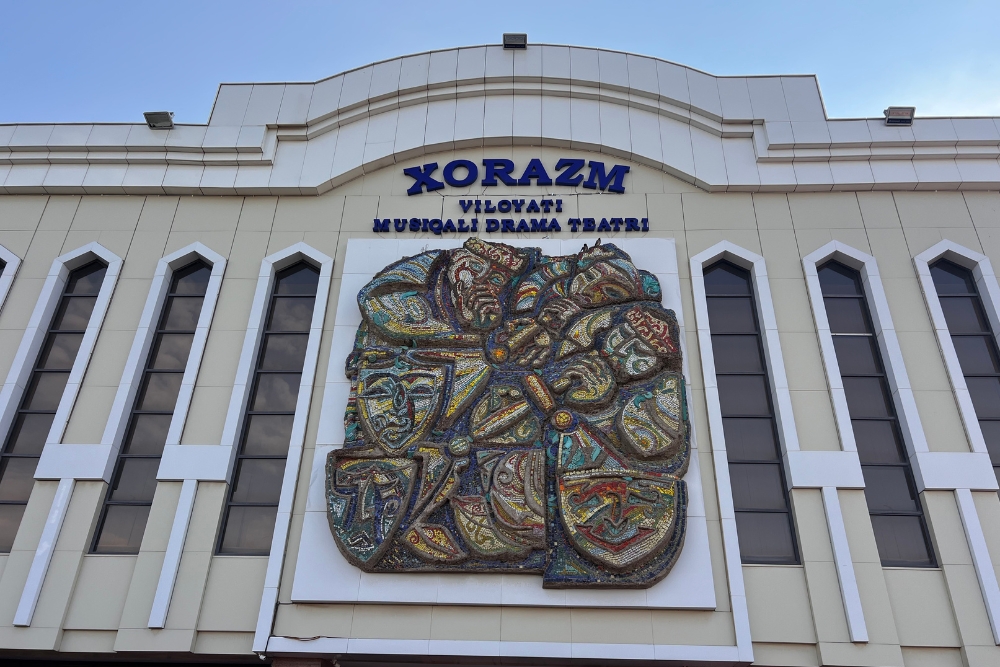
- Khorezm Regional Drama Theater – Striking Soviet-era architecture with a dramatic entrance that perfectly captures the grandiose public building style of that period; the building itself is worth photographing even if you’re not attending a performance.
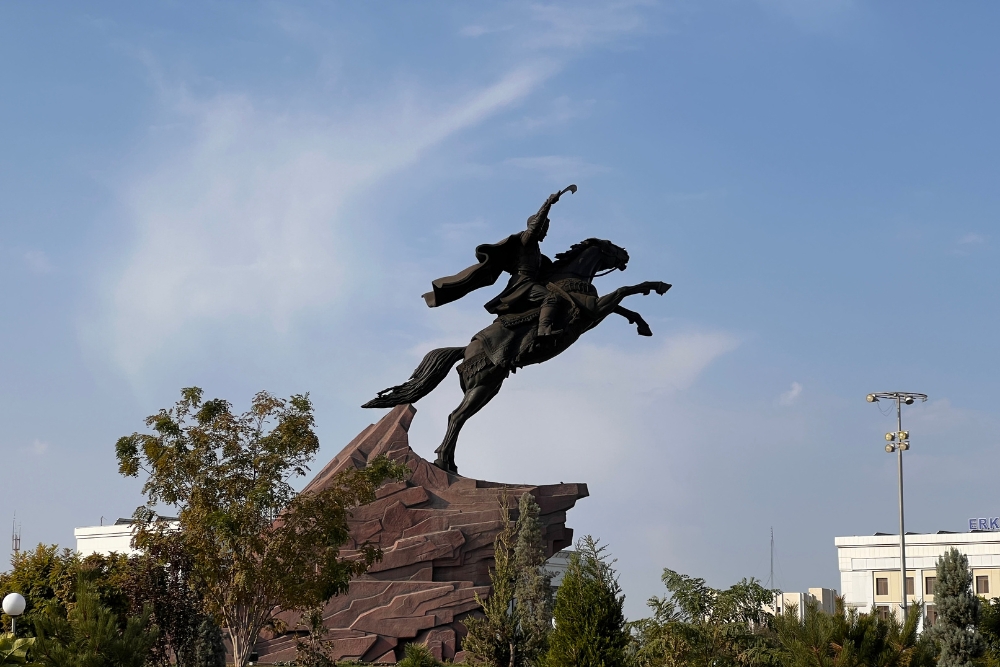
- Jaloladdin Manguberdi Monument – Impressive equestrian statue of the 13th-century Khwarezmian ruler in a large central park next to the theater, representing one of the last defenders against the Mongol invasion; locals gather here, and it’s a peaceful green space in the city center.
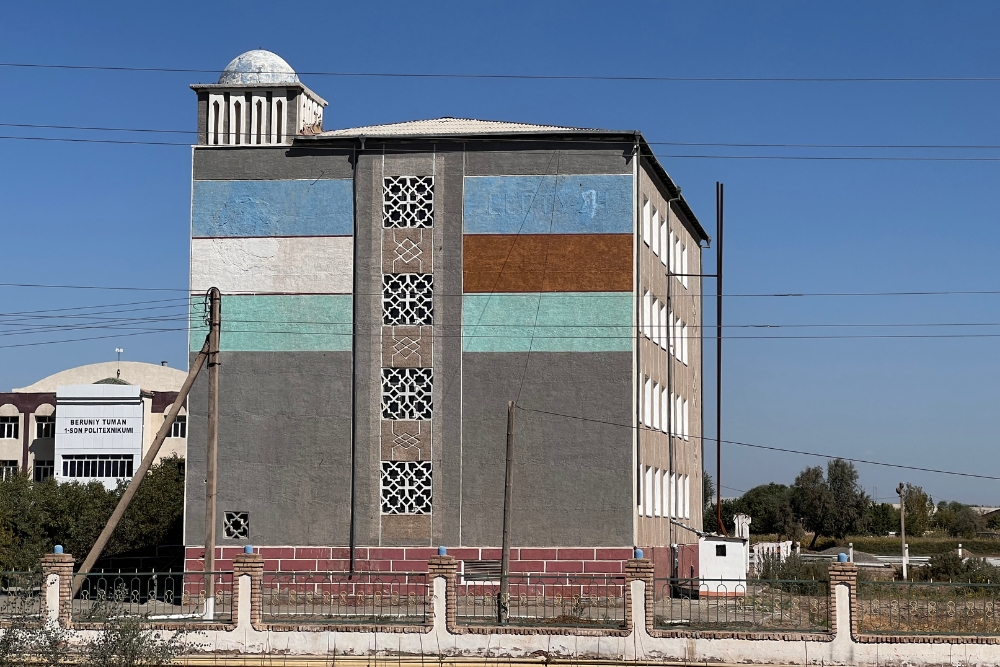
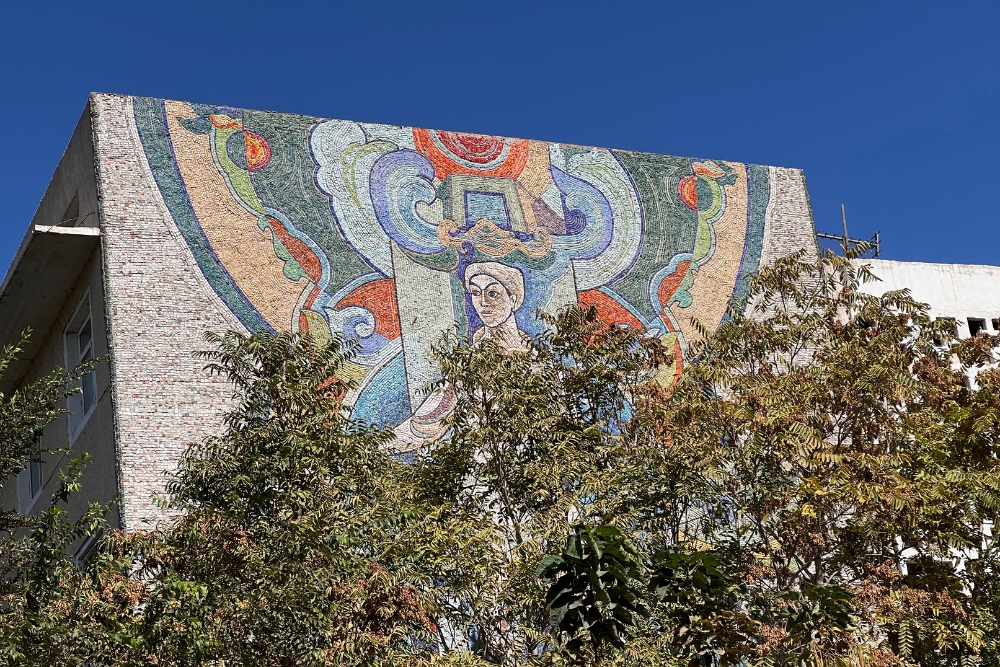
- Soviet Mosaics – Hidden throughout the city on building facades, spotted from taxis and on walks, these propaganda-style artworks offer glimpses into Central Asia’s Soviet past, which is slowly disappearing.
- Dual Flag Buildings – Structures displaying both the Uzbekistan and Karakalpakstan flags side by side, representing Karakalpakstan’s unique status as an autonomous republic within Uzbekistan; visible throughout the city and especially on official buildings.
- Local Markets – Working bazaars where locals actually shop, not tourist-oriented markets with inflated prices; perfect for experiencing authentic daily life and buying snacks at local prices.
- Soviet Residential Areas – Authentic apartment blocks that showcase the urban planning legacy of the Soviet era, where real families live in architecture that defines much of Central Asia’s modern cities.
© Gayane Mkhitaryan, Flags of Uzbekistan and Karakalpakstan
Historical Places and Landmarks
Urgench isn’t about ancient monuments—if you want those, you’re 30 kilometers from Khiva’s medieval fortress. What Urgench offers is a different kind of history: the Soviet-era modernization of Central Asia and the contemporary reality of a regional capital in Uzbekistan.
The city itself was established as the administrative center of the Xorazm Region in 1929, though settlement in the area dates back much further. The modern city layout reflects Soviet urban planning principles—wide boulevards, monumental public buildings, green parks, and residential blocks designed to accommodate rapid population growth.
Khorezm Regional Drama Theater
This is the building that caught my attention immediately during my morning walk. The theater exemplifies Soviet public architecture—imposing, dramatic, designed to inspire civic pride and showcase cultural importance. The entrance features bold geometric lines and that unmistakable Soviet grandeur that feels both heavy and magnificent at the same time.
I didn’t have time to attend a performance (and honestly wasn’t sure what was showing), but the exterior alone is worth stopping for. The building sits prominently in the city, surrounded by green space and connected to the central park area where the Jaloladdin Manguberdi Monument stands.
Jaloladdin Manguberdi Monument
This imposing equestrian statue in the park next to the Drama Theater honors Jaloladdin Manguberdi, the last Khwarezmshah (ruler of the Khwarezm Empire) who fought against the Mongol invasion in the 13th century. He’s a significant historical figure in Central Asian history—a symbol of resistance against Genghis Khan’s conquest that devastated the region.
The monument shows him on horseback in full military regalia, capturing the warrior-ruler image that resonates with Uzbek historical pride. The surrounding park provides a peaceful setting, with locals using the space for morning walks and gatherings.
I spent about 15 minutes here, trying to capture the statue from different angles while locals passed by on their way to work. It’s one of those monuments that means more when you understand the history—this wasn’t just another ruler, but someone who represented the last stand of a Central Asian empire before the Mongol conquest changed everything.
Soviet Heritage and Modern Urbanism
This is what fascinated me most about my brief Urgench experience—the visible layers of Soviet planning and post-Soviet Uzbek identity coexisting throughout the city.
On our taxi ride from Khiva, I noticed buildings flying dual flags: the Uzbekistan flag alongside the Karakalpakstan flag. Karakalpakstan is an autonomous republic within Uzbekistan, occupying the northwestern portion of the country (where we were heading toward Nukus and the Aral Sea). Urgench sits at the edge of this region, and the dual flags symbolize its unique political and cultural status. It’s a visual reminder that modern Central Asian nations contain multiple ethnic and regional identities within their borders.
The Soviet murals scattered throughout the city caught my eye repeatedly. These aren’t carefully preserved tourist attractions—they’re just there, fading on building facades, remnants of an era when public art served ideological purposes. Some celebrate agriculture and industry, others show workers in heroic poses, still others depict abstract geometric patterns in that distinctive Soviet style. They’re slowly disappearing as buildings are renovated, which makes spotting them feel like discovering vanishing history.
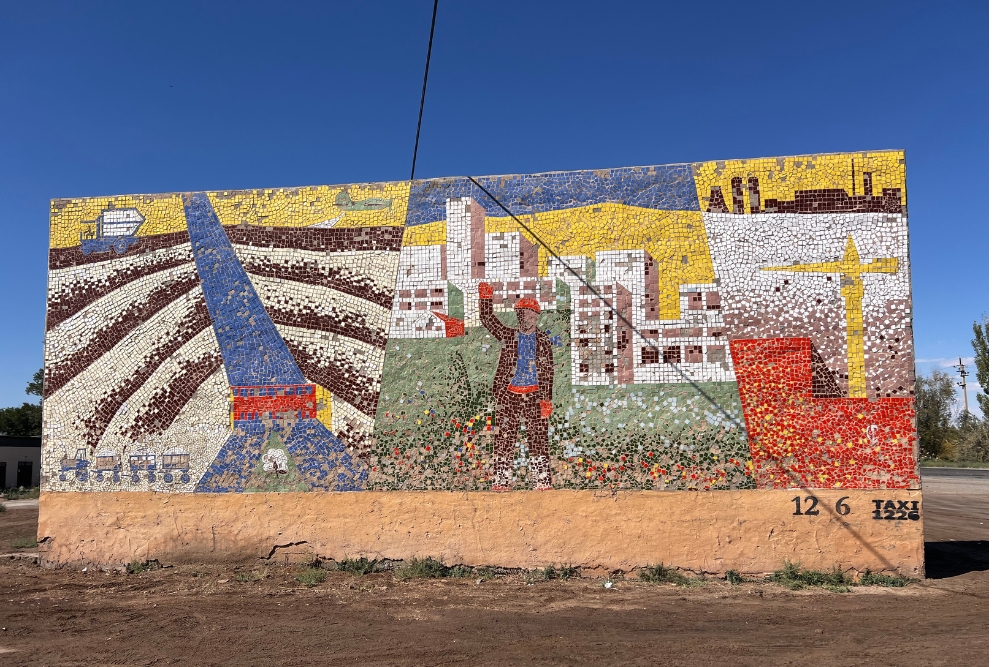
© Gayane Mkhitaryan, Soviet Mosaic – VVCM+G2W, Akshakul, Republic of Karakalpakstan, Uzbekistan
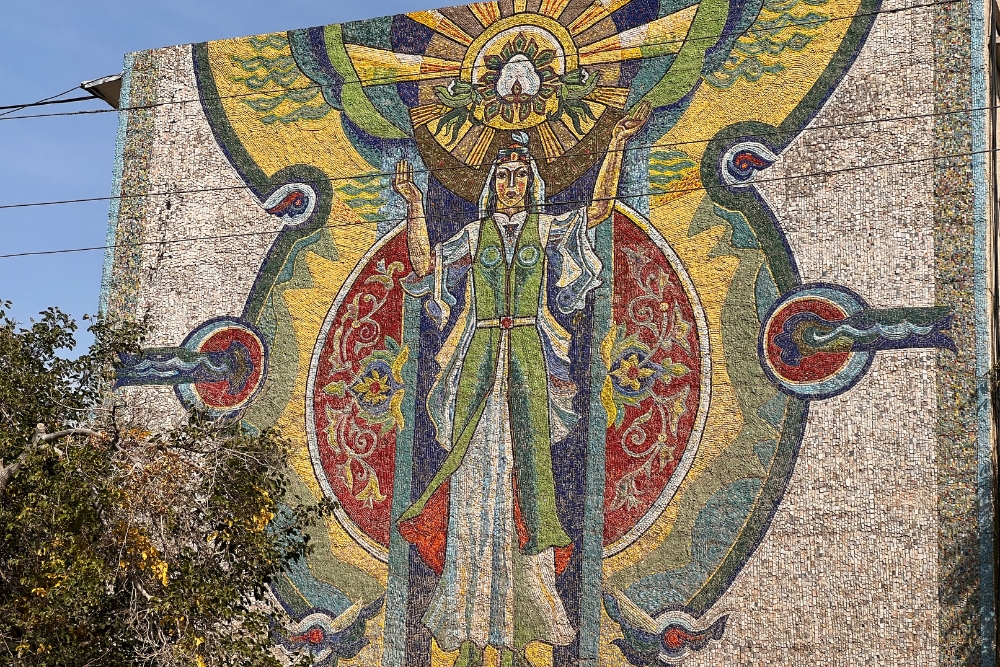
© Gayane Mkhitaryan, Woman with a cotton mural, Urgench
Day Trips from Urgench: The Ancient Desert Fortresses
This is actually the main reason most travelers end up in Urgench or Khiva—to access the remarkable ancient fortresses scattered across the Kyzylkum Desert northwest of the city. These are the Kalas: Ayaz-Kala, Toprak-Kala, and Kyzyl-Kala, among others.
We arranged our Kalas trip through the taxi driver who brought us from Khiva to Urgench. Smart move, actually—instead of finding a new driver in Urgench, we agreed with him to book him for the full-day trip. After dropping our luggage at the hotel, we headed straight out to the desert.
The Kalas are ancient Khwarezmian fortresses dating from roughly the 4th-6th centuries CE, built long before the Silk Road cities we associate with medieval Central Asia. These were defensive structures and settlements of the Khwarezm civilization, which thrived in this region for centuries before the Arab conquest brought Islam to Central Asia.
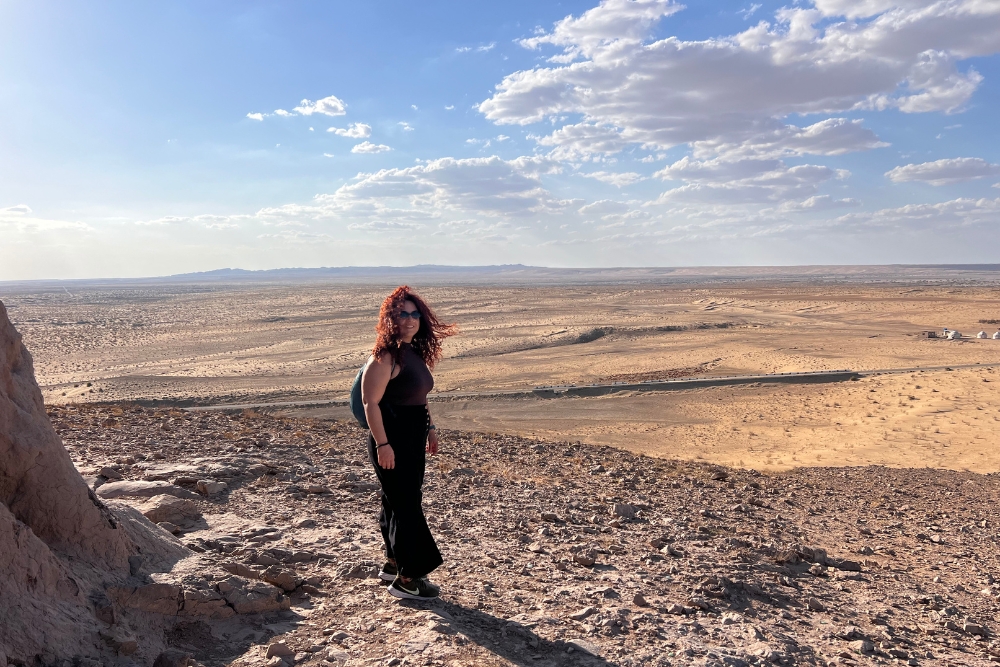
© Gayane Mkhitaryan, Ayaz Kala Fortress, Kyzylkum Desert
Ayaz-Kala is the most dramatic—actually, three separate fortress complexes perched on a hilltop overlooking the desert, offering sweeping views that make you understand precisely why they chose this location. The walls still stand impressively tall, and you can scramble up to explore the ruins and imagine what life was like defending this position.
Toprak-Kala was the largest ancient city in the region, an urban center with palace complexes, residential areas, and defensive walls. The ruins spread across a vast area, giving you a sense of the scale of pre-Islamic Central Asian civilization, which is often overshadowed by later Silk Road history.
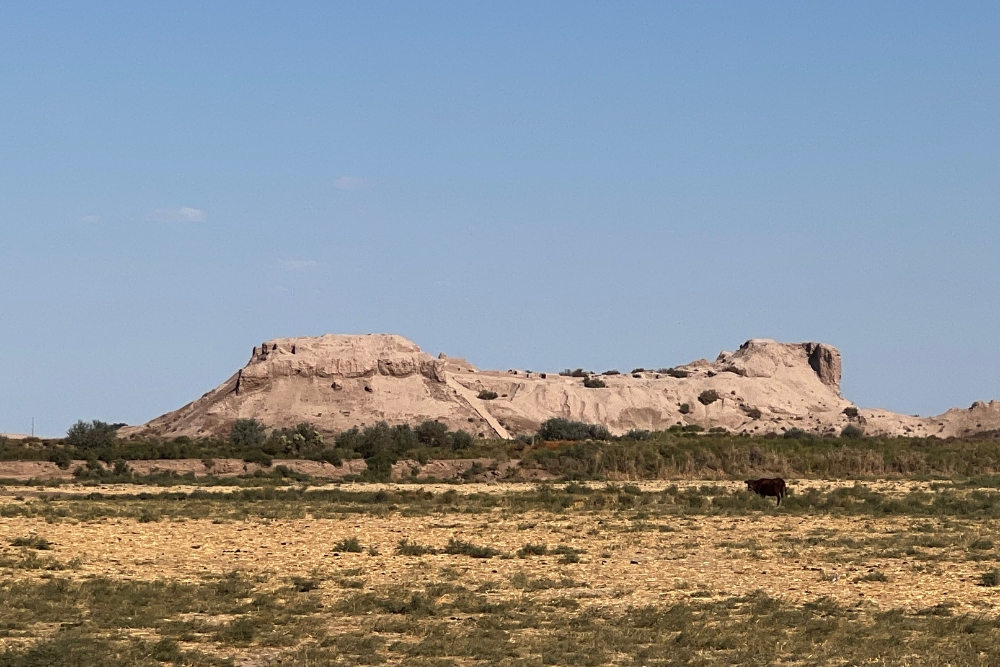
© Gayane Mkhitaryan, Toprak Kala
Kyzyl-Kala (“Red Fortress”) is named for the reddish color of its mud-brick walls. It’s particularly beautiful at sunset, when the desert light makes the ancient walls glow.
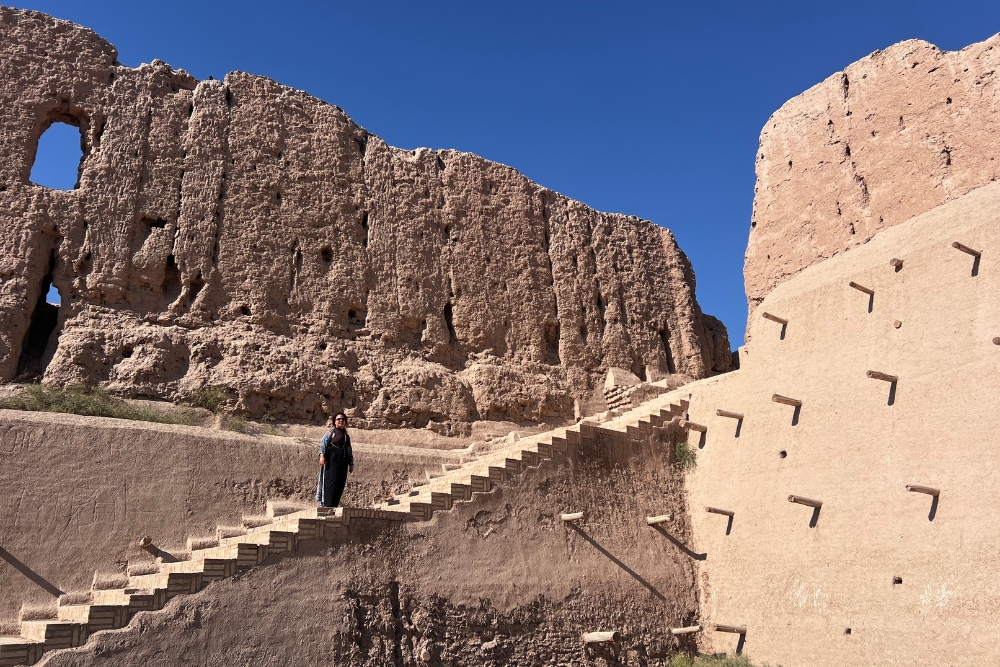
© Gayane Mkhitaryan, Kyzyl Kala
Practical information:
- Tour booking: Arrange through hotels in Urgench or Khiva, or book directly with taxi drivers (as we did). Expect to pay around €40-60 per person for a full-day group tour, or €80-120 for a private taxi.
- Time needed: Full day (roughly 8-10 hours, including travel time from Urgench/Khiva).
- What to bring: Sun protection (it’s brutally hot in summer), water, sturdy shoes for climbing ruins, and layers if traveling in spring or autumn. Also, bring some sandwiches and fruits with you. There are two small so-called restaurants on the way, where, to be honest, I’d not recommend eating. Horrible food, dirty, and also different prices for tourists vs locals. The best thing there was the cold beer.
- Best time: Spring (April-May) or autumn (September-October) for comfortable temperatures. Summer is scorching, and winter can be cold and windy.
Getting to and from Urgench: The Transport Reality
This is the section I wish I’d read before my journey, so I’m giving you the complete, honest picture of what actually happened.
From Khiva to Urgench
We took a taxi after leaving Khiva as the distance is only 30 kilometers, and a taxi costs around €5-10 (50,000-100,000 som) depending on your negotiation skills and whether you arrange it through your hotel or flag one down.
Alternative: Trolleybus – Yes, there’s a trolleybus connecting Khiva to Urgench, and it’s significantly cheaper (just a few thousand som). But here’s the reality: it takes forever because it stops at every turn. If you have luggage and a schedule to keep, the taxi is worth every som. We made the right choice by going with the taxi.
The Urgench-Nukus Train Disaster
This is where things got complicated, and this experience taught me more about traveling in Central Asia than any guidebook could.
We had booked tickets on the Volgograd Express from Urgench to Nukus for the morning of September 28th. The plan was simple: spend a couple of hours exploring Urgench in the morning, catch the train to Nukus, and continue our journey toward the Aral Sea.
The train was delayed. Not slightly delayed—four hours delayed.
When I went to the ticket counter to ask about compensation (because by then we’d be arriving in Nukus too late to organize our Aral Sea tour properly), they offered two options: a full refund or an alternative route. We took the refund—136,100 som per ticket—and immediately started looking for alternatives.
The solution: Shared taxi. We found a driver willing to take us to Nukus for 400,000 som total. Yes, it was more expensive than the train tickets we’d just refunded, but it got us to Nukus on our original schedule without the stress of a four-hour delay.
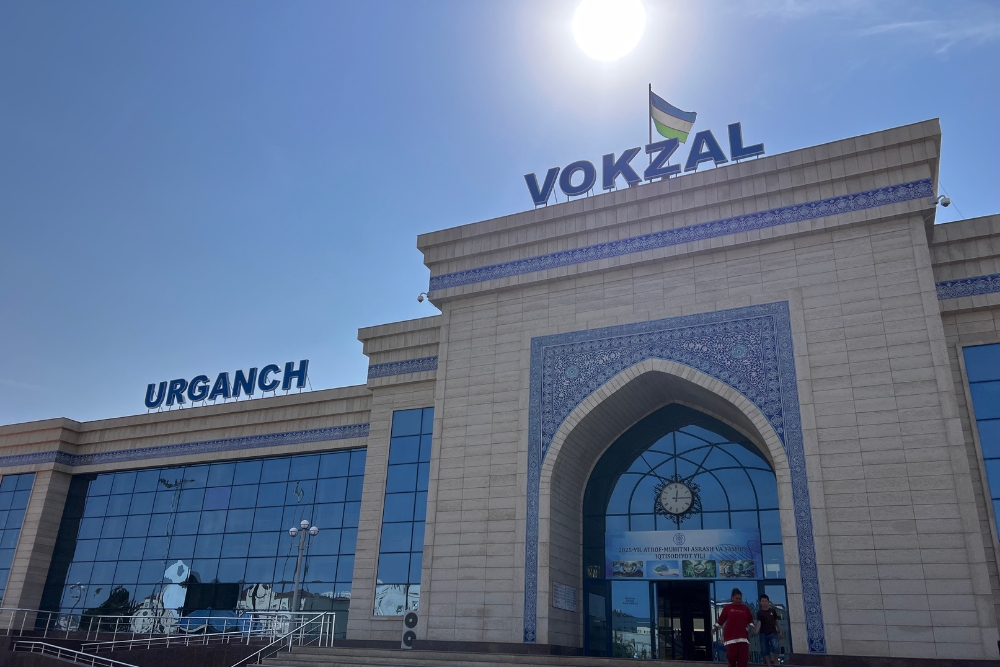
Other Transport Options to/from Urgench
By Train:
- Connections from Bukhara (I took this route on September 26th—the 7:12 AM passenger train that arrived in the afternoon in Urgench, but we got off at Khiva Vokzal)
- Connections within the region
- Book through the Uzbekistan Railways website or at the station
By Bus/Shared Taxi:
- Regular buses and shared taxis (marshrutkas) connect Urgench with Khiva, Nukus, and other regional cities
- Cheaper than private taxis but less comfortable and flexible
- Depart when full, not on fixed schedules
By Air:
- Urgench International Airport has domestic flights to/from Tashkent
- Useful if you’re skipping other Silk Road cities and just want to reach Khiva quickly
- The airport is about 5km from the city center
Taxi costs within Urgench: Minimal—maybe €2-3 (20,000-30,000 som) to get around the city center.
Traditional Uzbek Food: The Budget Reality
I’ll be honest—we didn’t have many dining experiences in Urgench because most of our time was spent either on the Kalas trip or on train-to-taxi logistics. But here’s what I observed: Urgench has plenty of local chaikhanas (teahouses) and cafes serving traditional Uzbek food at local prices. Unlike Khiva’s tourist-oriented restaurants with English menus and higher prices, Urgench restaurants cater to residents. That means authentic food and real local pricing.
We ate at a small restaurant called Bavaria Craft House, which also had a live concert. And to my surprise, I was the only female there besides the second singer. Weird for me, but my boyfriend enjoyed it a lot, especially the lovely atmosphere and the small kartoshkas (fried potato balls).
What I Learned From Two Hours in Urgench
If you have a few hours between trains or before heading to Khiva or Nukus, walk around Urgench’s center. You’ll find mosaics, Soviet monuments, and public buildings that nobody’s written about because they’re not “spectacular”—they’re just normal. And sometimes normal Soviet Uzbekistan is exactly what you need to see to understand the country beyond tourist highlights.
