Most Beautiful Tashkent Metro Stations: Soviet Art, Architecture & Hidden Masterpieces
Tashkent’s metro system is a spectacular hidden gem in Central Asia, featuring 29 stations adorned with Soviet-era mosaics, chandeliers, and marble that rival museum displays—all available at an affordable price.
If I had to choose one thing I liked most about Tashkent, it would definitely be the metro, as it completely transformed my experience of the city. I started riding the metro not because I needed to get anywhere, but because I couldn’t stop exploring these underground museums that cost 1,400 UZS (about $0.11 USD) to enter. Yes, you read that right—eleven cents for access to some of the most stunning Soviet-era art and architecture in Central Asia.
The Tashkent metro opened in 1977, making it the first metro system in Central Asia and the seventh in the Soviet Union. Here’s what makes it unique: it was designed to double as a nuclear bomb shelter, which meant no expense was spared in its construction. The stations had to be deep underground, built to withstand enormous pressure, and capable of housing the city’s population during an emergency.
Each of the 29 stations tells a different story through mosaics, chandeliers, ceramics, and marble that would make European palaces jealous—but unlike those European palaces, you don’t need a €20 ticket or a timed entry slot, just a metro token and a willingness to miss your stop because you’re too busy photographing the ceiling.
I spent entire mornings station-hopping, my total “admission fee” to this underground museum costing less than a cappuccino back home.
The official metro hours are from 5:00 AM to midnight. Passengers must go through a security check similar to an airport. You don’t need to purchase a ticket; simply tap your bank card to enter.
The Most Spectacular Stations: My Personal Rankings
What started as casual curiosity became a proper obsession. I’d find myself taking the metro instead of walking just to pass through certain stations again, noticing how afternoon light hit the chandeliers differently than morning sun, or discovering tiny mosaic details I’d walked past a dozen times without seeing.
Here are the stations that made me stop mid-stride, forget my destination entirely, and pull out my camera despite the crowds giving me curious looks.
Remember: you can take pictures, but ensure the police are not included in the photos.
Kosmonavtlar (Космонавтлар) – “The Space Station”
Kosmonavtlar opened in 1984 during the height of Soviet space exploration glory, and every square centimeter celebrates humanity’s journey to the stars. This station functions as both a metro stop and a tribute to Soviet cosmonauts, featuring some of the most intricate mosaic work in the entire system. The walls and ceiling are covered in thousands of blue, white, and gold ceramic tiles, creating a cosmic landscape that feels like floating through space itself.
The centerpiece murals depict key moments in space history: Yuri Gagarin, the first human in space, is shown in his iconic orange spacesuit and helmet; Valentina Tereshkova, the first woman in space, appears in a detailed mosaic portrait; and various cosmonauts are depicted performing spacewalks with Earth visible in the background. The mosaics show extraordinary detail—you can see individual equipment pieces, the texture of spacesuits, cables, and tethers floating in zero gravity, and even the reflection of stars in helmet visors. The ceiling features a massive circular representation of Earth as seen from orbit, surrounded by satellites, rockets, and orbital paths rendered in gleaming tiles.
The color scheme is predominantly deep space blue with white stars scattered throughout and golden accents highlighting spacecraft and cosmonauts. The chandeliers are designed as planetary systems—central spheres representing planets with smaller orbiting lights on curved metal arms, creating the illusion of celestial bodies floating above the platform. Even the marble columns are dark blue with white veining that resembles distant galaxies. The terrazzo flooring contains tiny metallic flecks that sparkle like stars underfoot.
What makes Kosmonavtlar truly special is how it transforms a utilitarian metro station into an immersive artistic experience celebrating one of humanity’s greatest achievements—reaching beyond our planet into the cosmos.
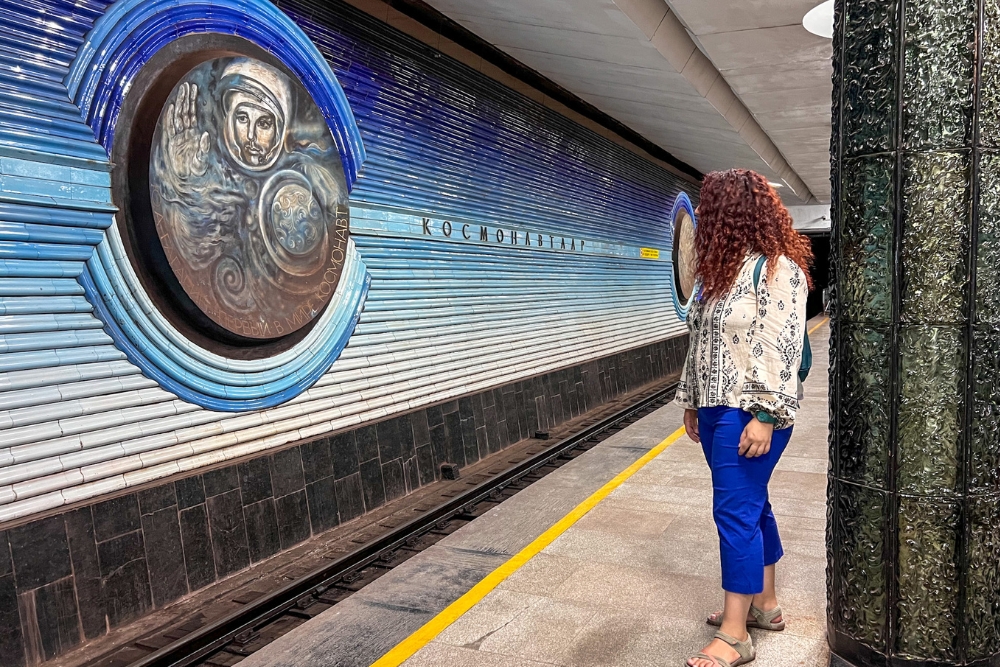
© Gayane Mkhitaryan, Kosmonavtlar (Космонавтлар) – The Space Station
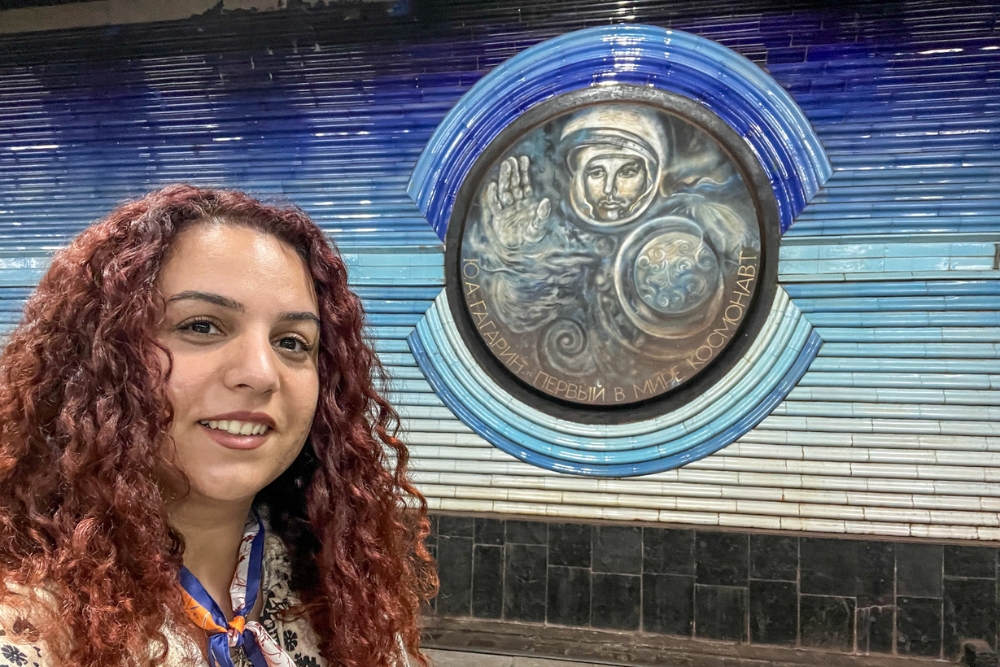
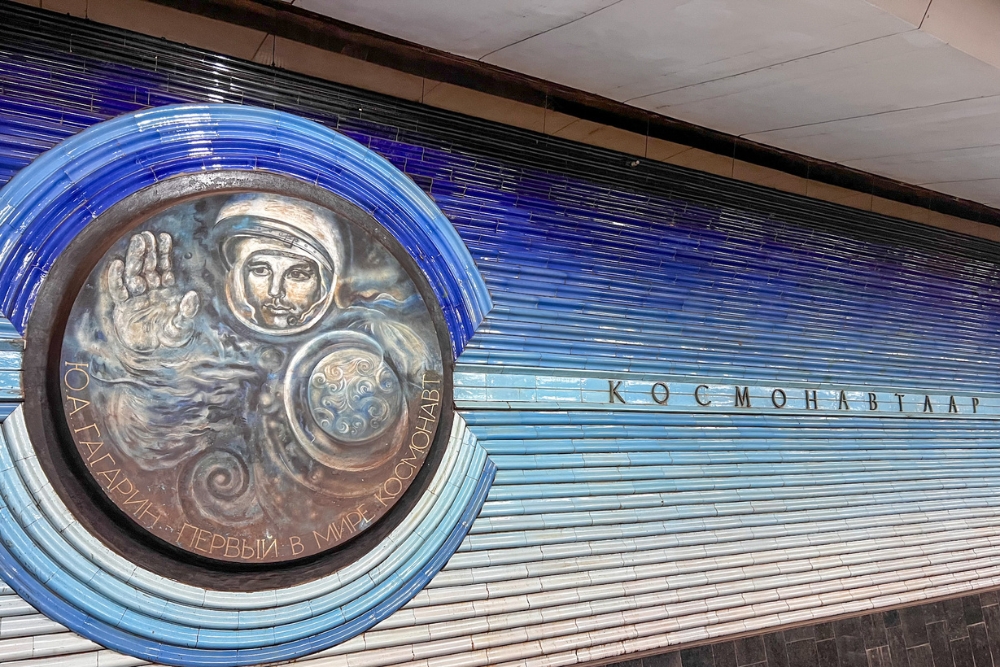
© Gayane Mkhitaryan, Yuri Gagarin
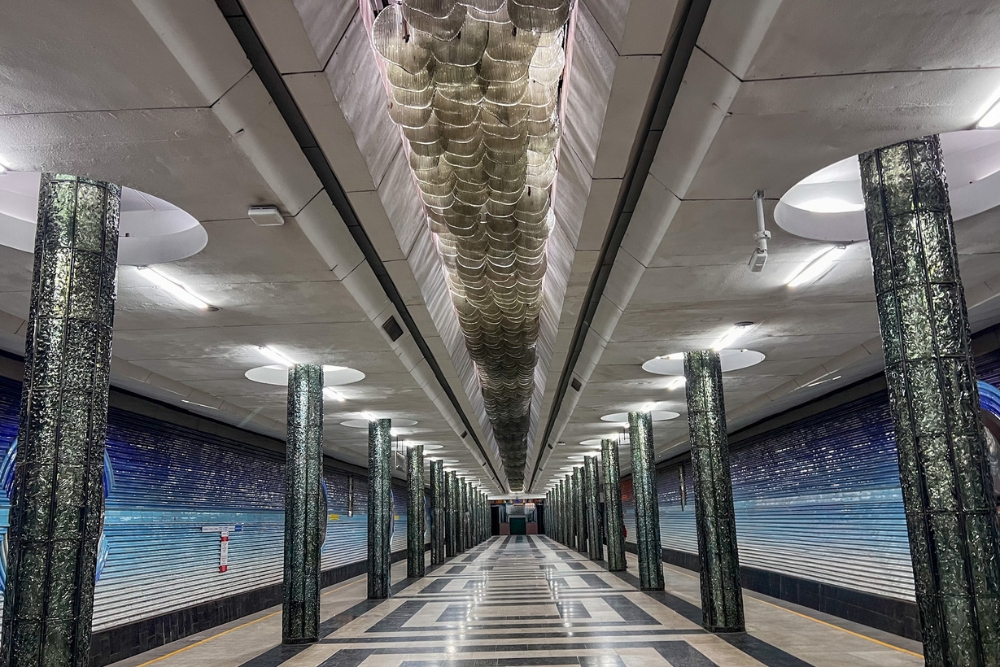
Alisher Navoiy (Алишер Навоий)
Named after Uzbekistan’s greatest poet and philosopher, this station opened in 1977 as part of the original metro line. Alisher Navoiy is where Soviet architecture meets traditional Uzbek artistry in the most beautiful way possible. The entire station is covered in ganch (carved plaster) and ceramic panels depicting scenes from Navoiy’s literary works—scholars gathered in study, musicians with traditional instruments, lovers in gardens.
The color palette is stunning: rich teals, deep blues, warm terracottas, and gold accents that seem to glow under warm lighting. What makes it unique is the ganch work on the vaulted ceilings—intricate Islamic geometric patterns that flow and repeat with mathematical precision, a traditional Uzbek craft technique dating back centuries that you’d typically only see in madrasas and palaces.
The ceramic panels along the walls tell visual stories, each one hand-crafted with incredible detail. The pillar capitals are particularly special—each features unique ganch patterns and small ceramic tiles in turquoise and gold. This station was designed to celebrate Uzbek cultural identity during an era when local traditions were often suppressed, making it not just beautiful but culturally significant.

© Gayane Mkhitaryan, Alisher Navoiy (Алишер Навоий) station

© Gayane Mkhitaryan, Alisher Navoiy (Алишер Навоий) station
Gafur Gulom (Ғафур Ғулом)
Gafur Gulom opened in 1977 as part of the original metro line and honors Gafur Gulom, one of Uzbekistan’s most beloved 20th-century poets known for his works celebrating Uzbek identity and nature. The station’s design reflects literary and natural themes through elegant simplicity.
The color palette is calm and contemplative—soft creams, gentle greens, and touches of blue that create a peaceful atmosphere appropriate for honoring a poet. What makes it distinctive is the integration of verses and poetic motifs into the architectural elements.The pillars are wrapped in cream-colored marble with subtle green veining. The lighting is warm and indirect, creating an intimate gallery-like atmosphere.
Unlike grandiose stations that celebrate military or political themes, Gafur Gulom feels personal and human-scaled, honoring literature’s quieter power to capture ordinary life with extraordinary beauty.
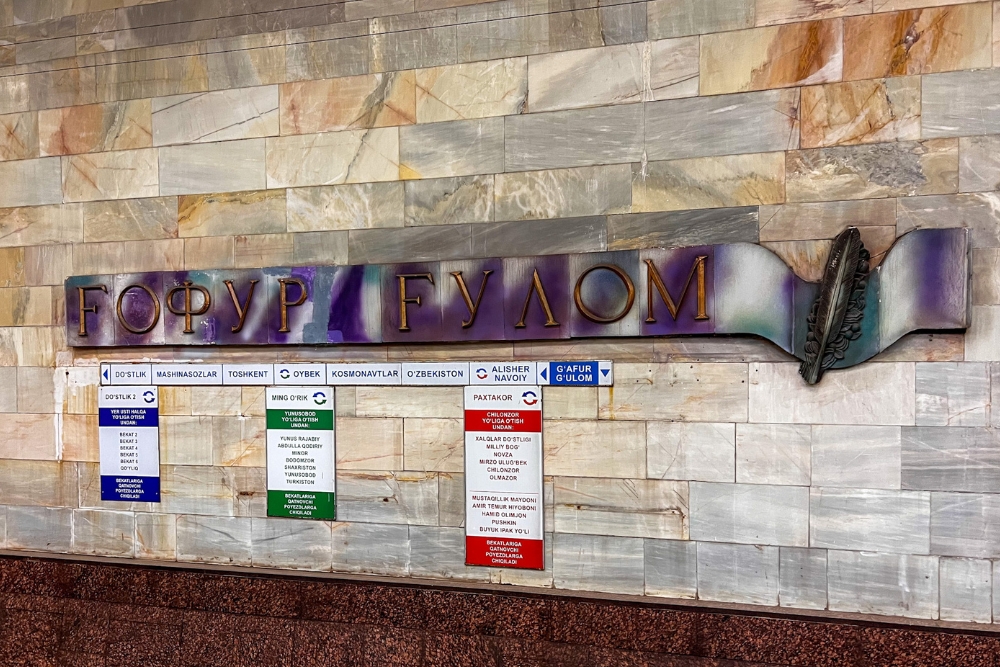
© Gayane Mkhitaryan, Gafur Gulom (Ғафур Ғулом) metro station
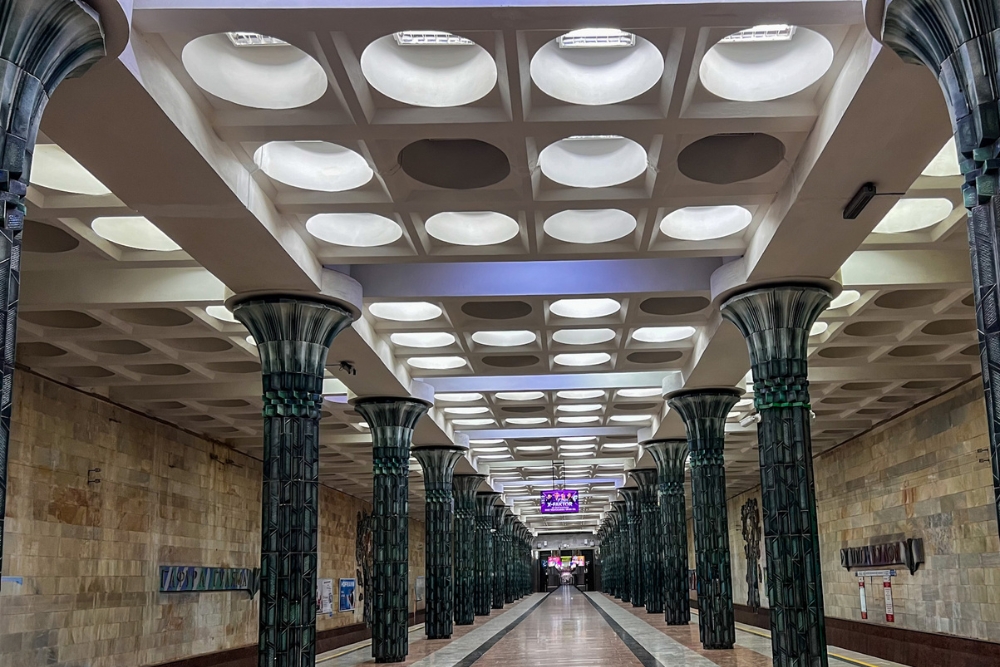
© Gayane Mkhitaryan, Gafur Gulom (Ғафур Ғулом) metro station
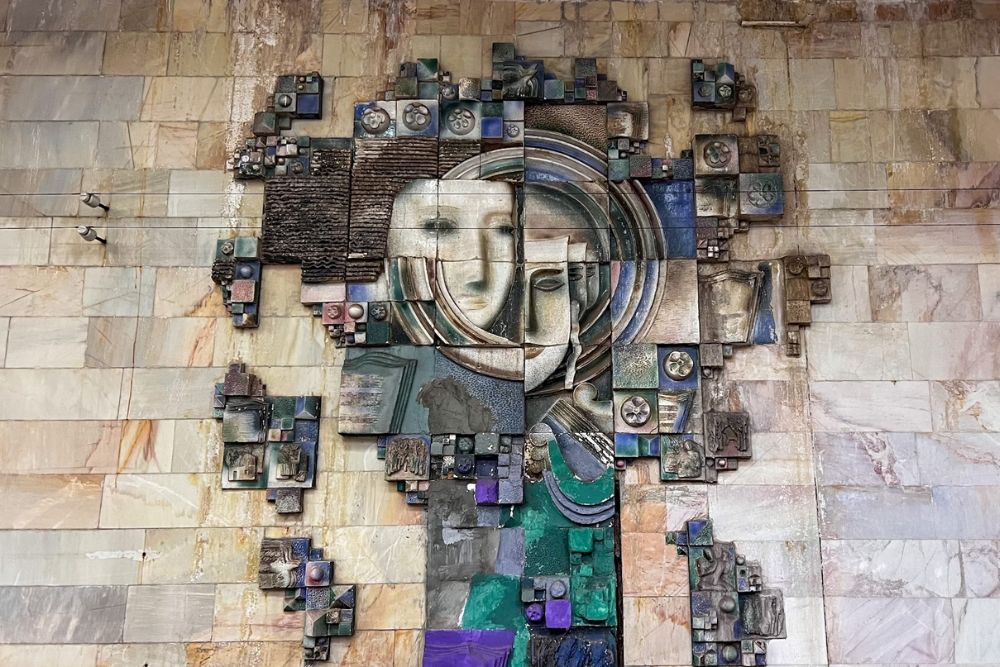
© Gayane Mkhitaryan
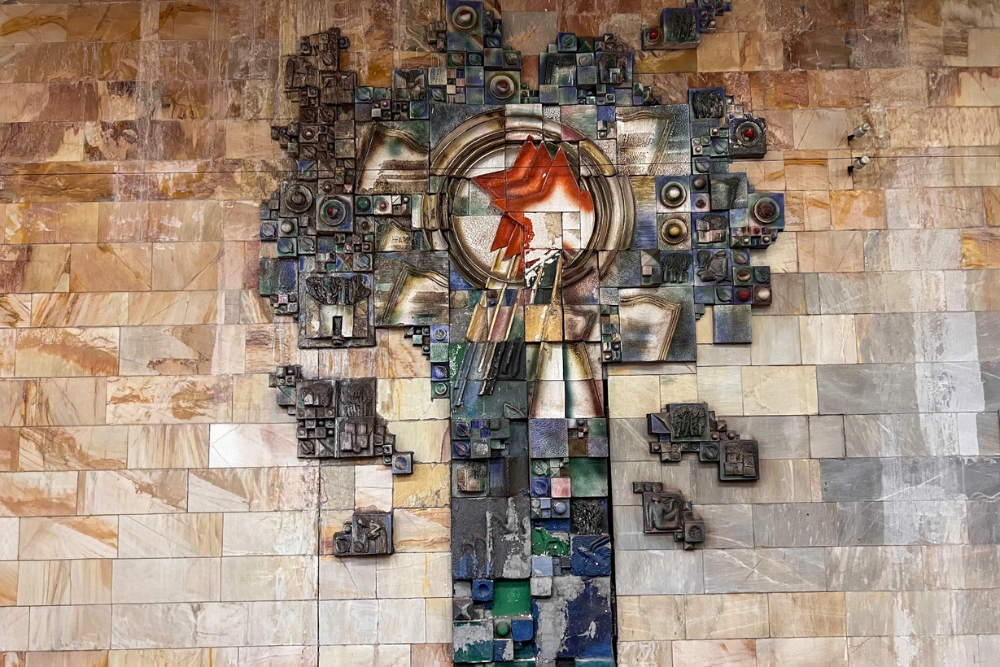
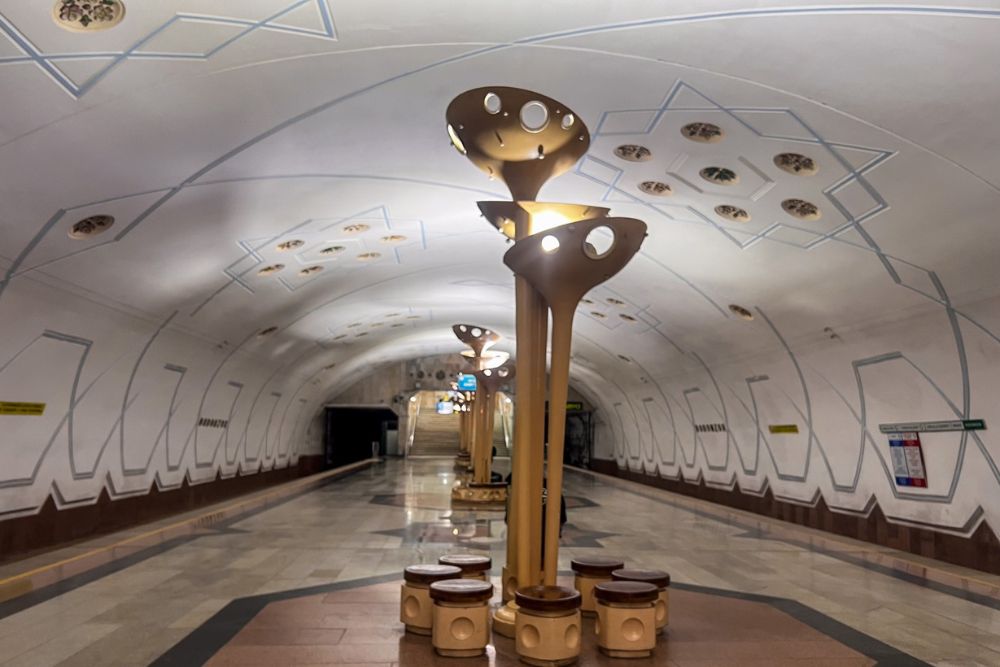
O’zbekiston (Ўзбекистон) / Uzbekistanskaya
O’zbekiston station opened in 1991, perfectly timed with Uzbekistan’s independence, and serves as a powerful celebration of national identity and cultural heritage. The station’s design is a comprehensive visual journey through Uzbek history, culture, and achievements. Here is what I liked most in this station:
- The famous cotton-boll-shaped lamps, a key design element of the station. They represent Uzbekistan’s main agricultural product, cotton, and were custom-made in the 1980s to reflect national motifs. The metal frames resemble cotton stems, while the glowing globes evoke fluffy bolls.
- Marble mosaic panel decorating the station’s walls. This circular, floral-like pattern combines shades of blue, brown, and green, symbolizing water, land, and fertility — common themes in Uzbek art. It is crafted from locally sourced marble and onyx.
- A large mural with the Emblem of Uzbekistan, featuring the Huma bird—symbol of happiness and freedom—spreading its wings over a rising sun. It is framed by wheat stalks (prosperity) and cotton branches (the country’s main crop), with the banner reading “Oʻzbekiston.” This composition was added after independence to replace the original Soviet-era imagery, making it one of the earliest examples of post-Soviet artistic restoration in the Tashkent Metro.


Toshkent (Тошкент) / Tashkent
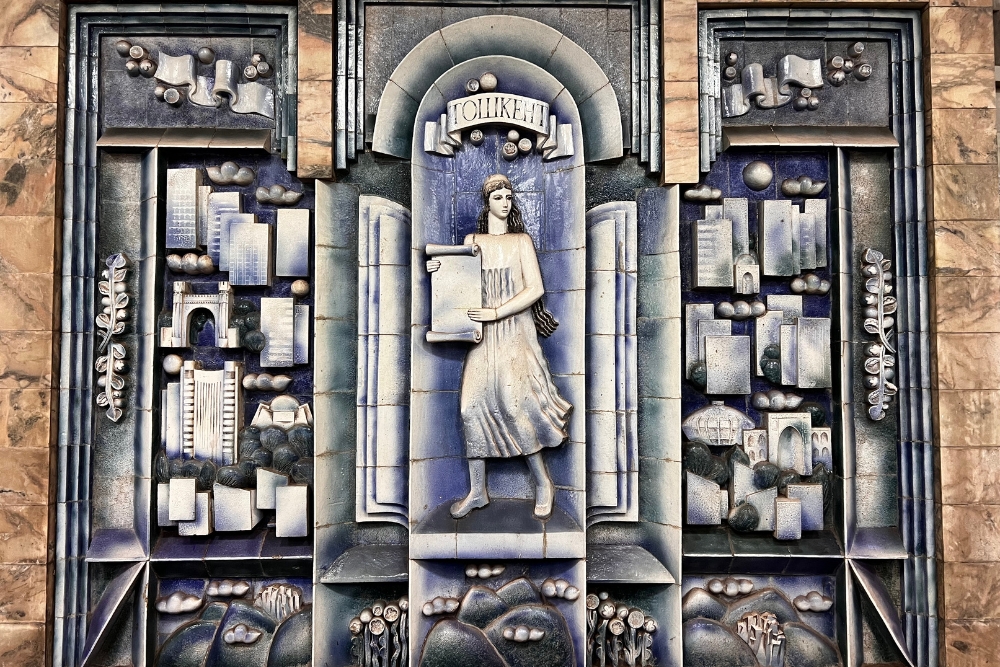
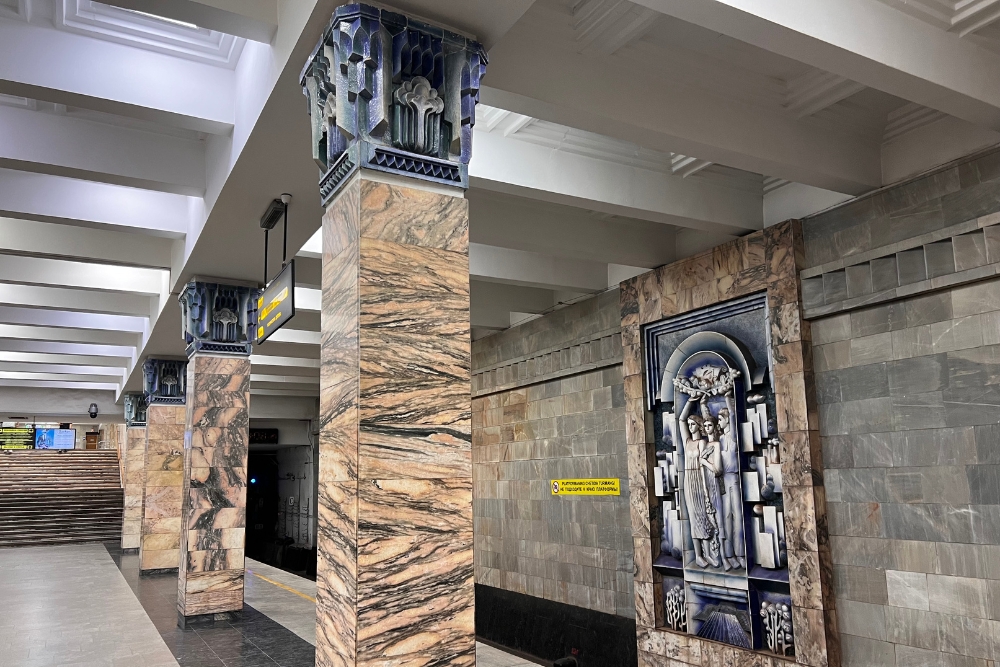
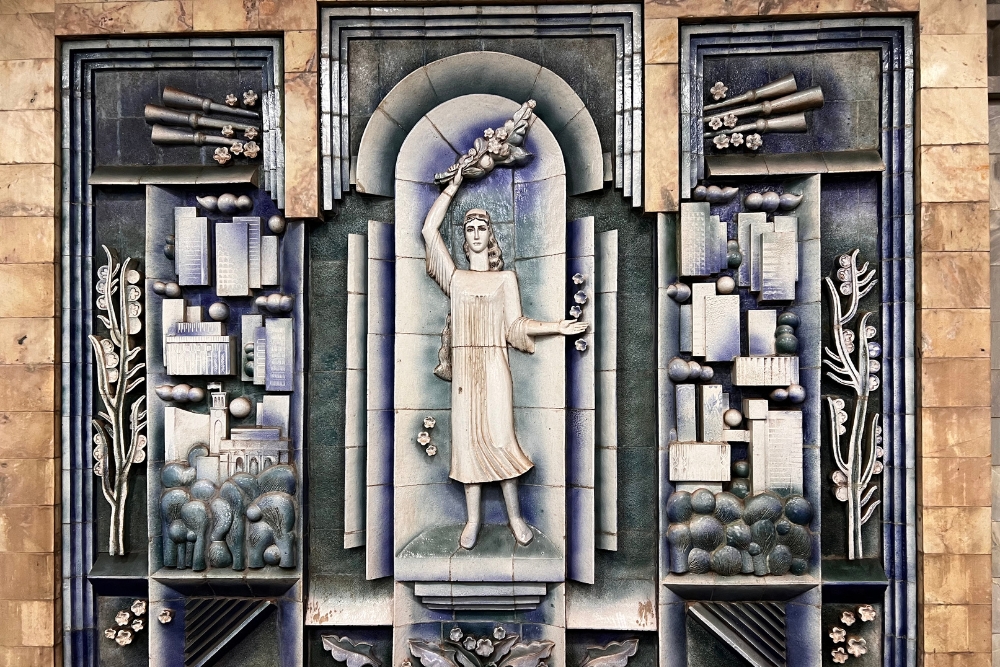
Toshkent station opened in 1984 and stands as a powerful memorial to the city’s resilience and rebirth following the devastating 1966 earthquake that destroyed much of the capital.
The design centers on themes of reconstruction, hope, and urban pride. The architectural features include soaring marble columns topped with distinctive blue ceramic capitals that reference traditional Uzbek architectural elements while maintaining Soviet grandeur. The walls are decorated with sculpted bas-reliefs and ceramic panels featuring elegant female figures symbolizing peace, progress, and creativity—allegorical representations of the city rising from destruction. These female figures are rendered in fine detail, their flowing forms embodying grace and determination.
Surrounding these central figures are scenes depicting both modern and historic Tashkent architecture—contrasting the ancient structures that survived with the new Soviet-era buildings constructed after the earthquake, showing the city’s evolution and continuity.
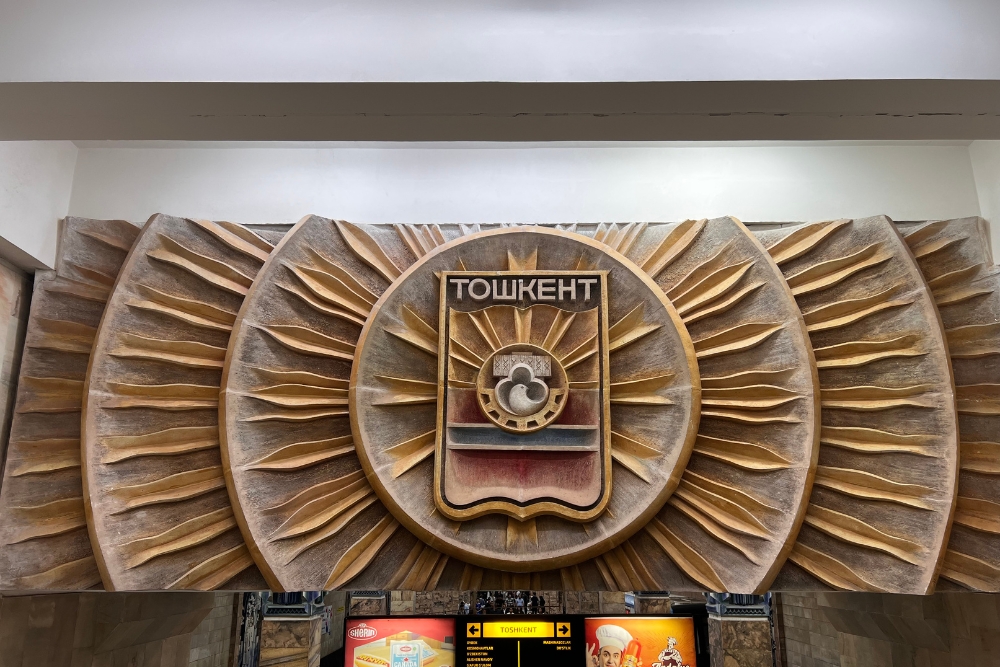
At the station entrance, a prominent mosaic features Tashkent’s city emblem glowing like a rising sun in warm yellows and golds—a proud declaration that Tashkent is not just Uzbekistan’s capital but its enduring heart and spirit.
Pakhtakor (Пахтакор) – “Cotton Picker”
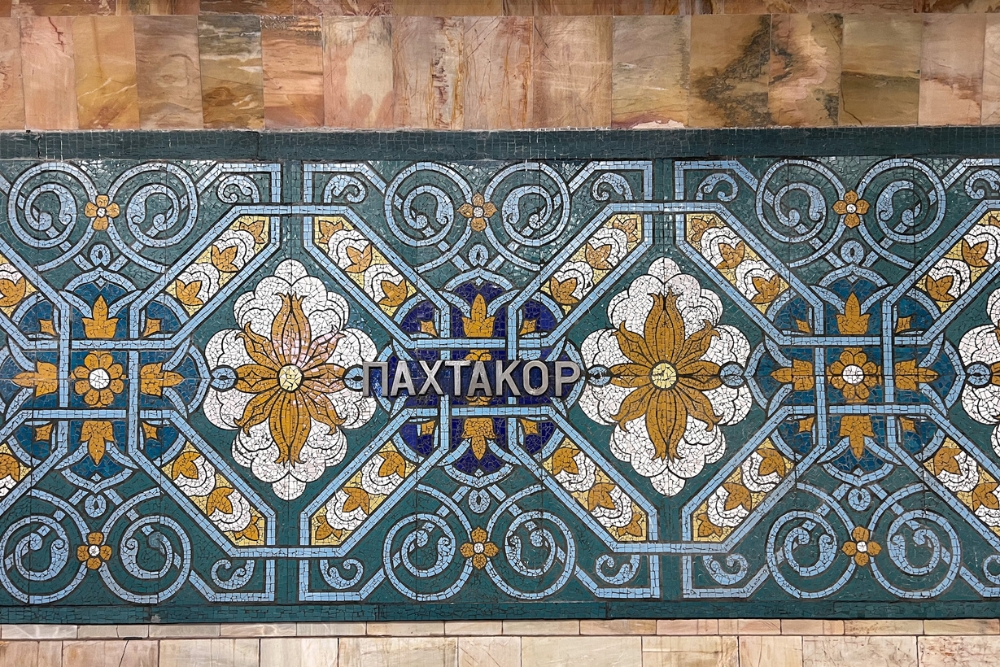
Stepping into Pakhtakor Station feels like entering an art gallery that celebrates Uzbekistan’s soul. Opened in 1977, the name Pakhtakor — meaning cotton picker — honors the country’s “white gold,” the cotton that has shaped its culture and economy for centuries. Every part of the station reflects this theme of growth, energy, and pride.
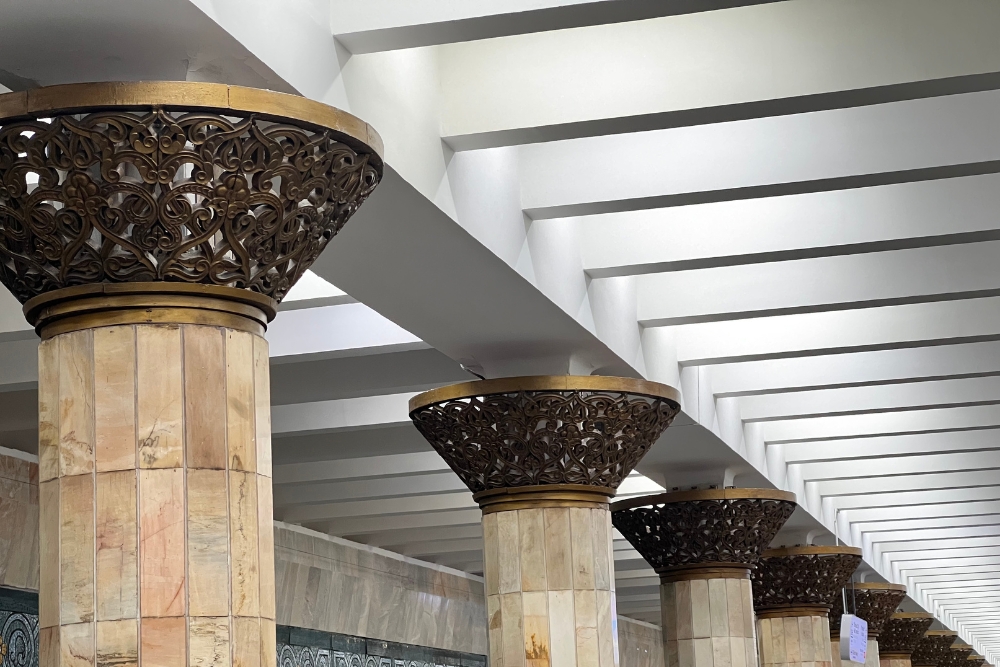
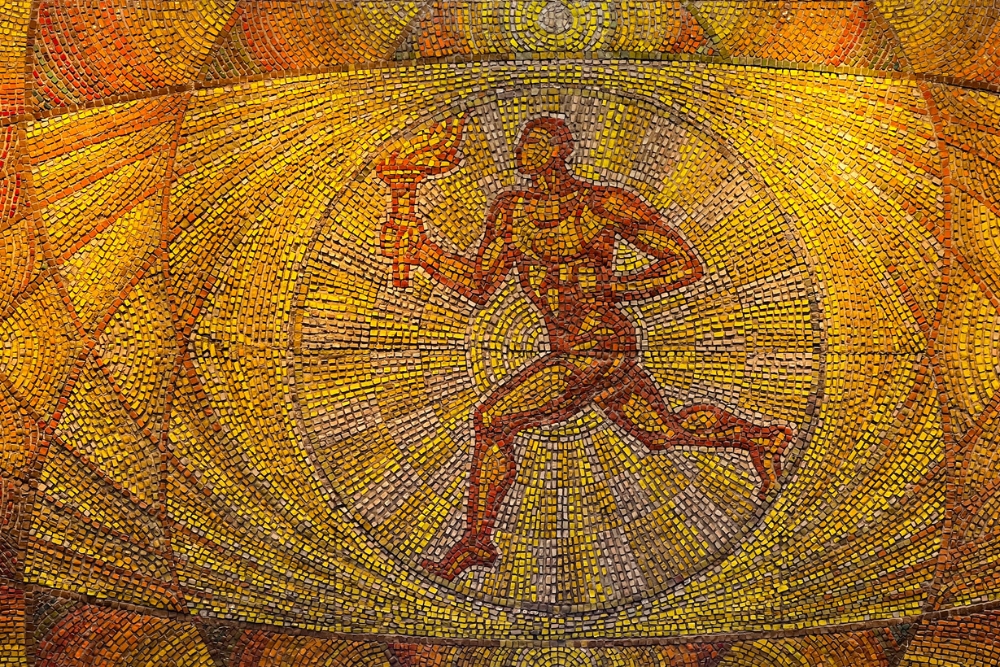
The marble columns are topped with detailed bronze latticework, inspired by the fine patterns of Uzbek wood carving. Along the walls, bright turquoise and golden mosaics burst with floral designs reminiscent of traditional suzani embroidery, framing the station’s name in Cyrillic. But the true highlight is the glowing mosaic mural of a torch-bearing athlete, illuminated in warm shades of red and gold — a powerful symbol of endurance and progress.
Pakhtakor is more than just a stop between trains; it’s a moment in time. Its design merges Soviet monumental art with timeless Uzbek craftsmanship, transforming an ordinary commute into a moment of reflection. As the light strikes the marble and mosaic tiles, the entire station seems to shimmer — a tribute to the spirit and resilience of the Uzbek people, forever linked to the story of cotton.
Xalqlar Do’stligi (Халқлар Дўстлиги) – “Friendship of Nations”
Xalqlar Do’stligi station opened in 1991 and represents the Soviet ideal of international unity and brotherhood among different peoples and republics. The name literally means “Friendship of Nations,” and the station is designed as a celebration of cultural diversity and cooperation. Its historical significance lies in capturing a specific moment in Soviet ideology—the belief in internationalism and unity—just as that era was ending, preserved in ceramic and marble as a 1991 time capsule.
The station’s design is a striking blend of Soviet monumental art and Uzbek craftsmanship. The first image shows the famous mosaic mural of two clasped hands, symbolizing friendship and unity among the former Soviet republics, with fiery reds, golds, and ambers radiating like sunlight—evoking warmth, energy, and solidarity. Each tile appears to vibrate with motion, emphasizing that friendship, like peace, must be actively nurtured.
The second image features a bronze wall relief depicting stylized doves and a globe, symbols of harmony and cooperation. The smooth lines and symmetrical composition suggest balance and hope for a peaceful, interconnected world. Collectively, these artworks turn the station into a monument to international unity and cultural harmony. Today, surrounded by marble, mosaic, and bronze, you can sense how this space preserves not only Soviet ideals but also a universal human aspiration for peace and friendship across borders.


Mustakillik Maydoni (Мустакиллик Майдони) – “Independence Square”
Mustakillik Maydoni opened in 1991, the same year Uzbekistan gained independence from the Soviet Union, and it reflects a completely different design philosophy. This is post-Soviet Uzbekistan celebrating national pride and looking toward the future. The station’s centerpiece is a massive dome covered in gold mosaic tiles that create a sunburst pattern—standing beneath it feels like standing in a modernized Registan.
The entire space is finished in pristine white marble with subtle blue veining, evoking a sense of purity and new beginnings. What makes it unique is how it blends heritage and modernity: the design elements are distinctly Uzbek (the dome, blue ceramics, geometric patterns), but interpreted through contemporary aesthetics instead of historical reproduction. The chandeliers are large geometric fixtures hanging at varying heights, angular and modern rather than ornate and classical.


Yunus Rajabiy (Юнус Ражабий)
Yunus Rajabiy station opened in 2001 and honors one of Uzbekistan’s most celebrated composers and musicologists who dedicated his life to preserving and reviving traditional Uzbek classical music, particularly the ancient Shashmaqam repertoire. The station’s design celebrates music, culture, and artistic heritage through elegant and refined aesthetics. The walls feature marble relief panels and ceramic artwork depicting traditional Uzbek musical instruments—the dutar (long-necked lute), doira (frame drum), rubab, and nay (flute)—rendered in beautiful detail that shows the craftsmanship of these instruments.
The color palette is sophisticated and cultural—cream and beige marbles combined with touches of blue, gold, and terracotta that evoke traditional concert halls and cultural centers. The ceiling treatment incorporates decorative patterns inspired by musical notation and the geometric designs found in historic Uzbek musical manuscripts. Some panels feature stylized representations of sound waves and musical motifs abstracted into decorative elements. The lighting is warm and atmospheric, creating the feeling of an intimate concert venue rather than a busy metro station.

Bodomzor (Бодомзор) – “Almond Grove”
Bodomzor station opened in 2001 and is named after the district, which literally means “almond grove”—referring to the almond orchards that historically thrived in this area. The station showcases nature, springtime renewal, and the beauty of blooming trees through a light and elegant design approach. The walls and ceiling are decorated with ceramic panels depicting almond trees in full spring bloom, featuring delicate white and pink blossoms rendered in fine detail against backgrounds of soft greens and blues that evoke clear spring skies.