
Soviet Mosaics & Public Art in Uzbekistan: My Accidental Urban Art Hunt
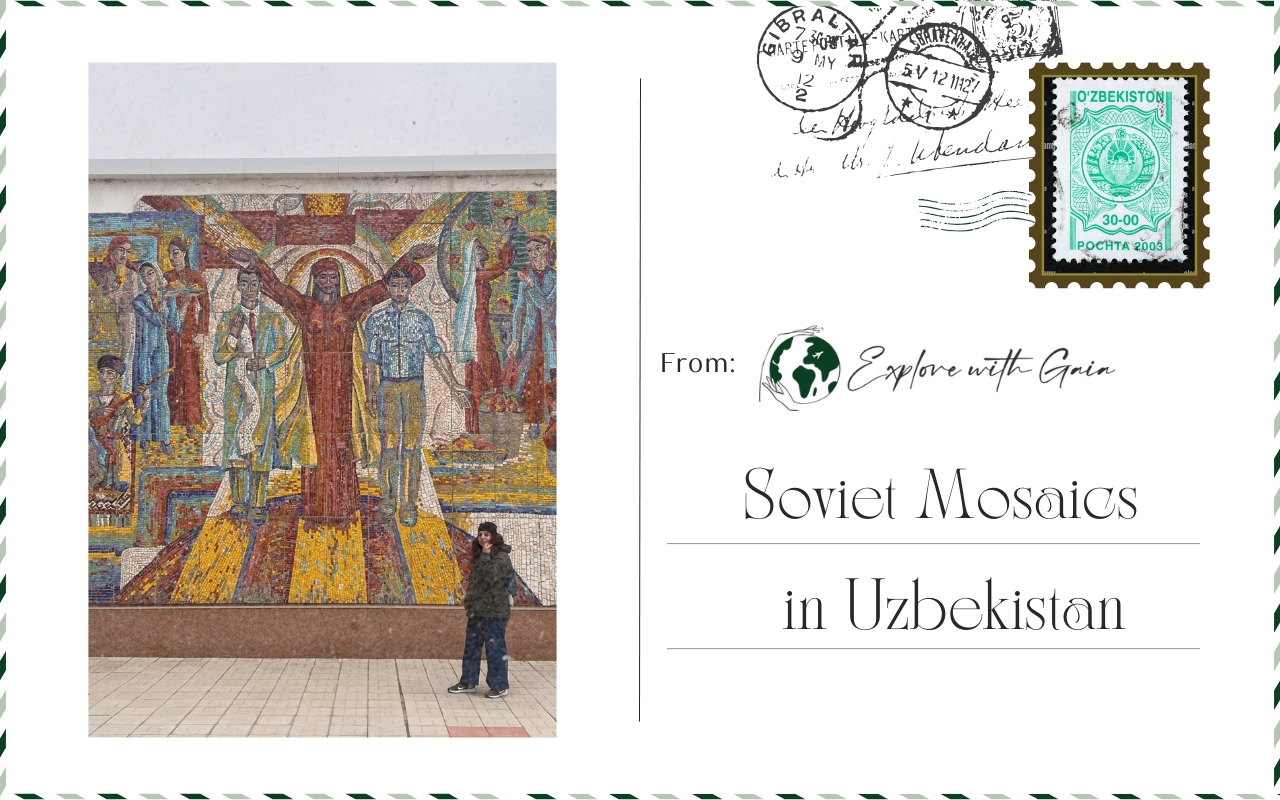
I came to Uzbekistan for the turquoise domes, not the Soviet mosaics. My boyfriend was the one who wanted to find Soviet art—he’d been researching Tashkent’s metro stations for months. I nodded along politely while secretly planning which angles I’d photograph Registan Square from. But somewhere between our first metro ride and standing in front of a massive residential building decorated with ceramic tiles celebrating cotton harvests, his obsession became mine.
What started as supporting his architectural interest turned into a full-blown hunt across every city we visited. Over two weeks traveling from Tashkent to the Aral Sea, I found myself craning my neck at residential buildings, photographing bus stations, and getting genuinely excited about discovering a well-preserved mosaic on a random apartment block. These Soviet mosaics, murals, and public art installations are everywhere once you start looking: metro stations that rival Moscow’s grandest, residential buildings decorated with tilework celebrating collective farms, monuments to Soviet heroes standing awkwardly near medieval madrasahs.
This art tells the story of 70 years of Soviet rule that fundamentally shaped modern Uzbekistan—yet it’s almost absent from travel guides focused on Silk Road romanticism.
Here’s what actually happens when you accidentally become obsessed with Soviet public art in Uzbekistan, and where to find the most spectacular pieces in every major city.
Uzbekistan was a showcase Soviet republic from 1924 to 1991, and that 70-year period physically shaped the cities you’re walking through today. After the devastating 1966 earthquake flattened much of Tashkent, Soviet urban planners rebuilt the capital as a propaganda masterpiece, featuring wide boulevards, grand public buildings, and decorative mosaics that celebrated industrial progress, space exploration, and the friendship between Soviet peoples.
What fascinated me was how Soviet artists drew inspiration from Islamic tilework traditions intentionally. The same turquoise and cobalt blue, the geometric patterns, the ceramic materials—but instead of calligraphy and arabesques, you get cosmonauts and cotton plants. They’re layers of the same country, both authentically Uzbek in their own complicated way.
The Soviet Mosaic Aesthetic: What You’re Actually Looking At
Before I started noticing Soviet mosaics everywhere, I didn’t understand what made them distinct. Now I can spot them from a block away. The themes are predictable once you know what to look for: space exploration (Uzbekistan produced several Soviet cosmonauts), cotton cultivation (the republic’s main industry), industrial progress, and “friendship between nations” imagery showing Uzbek cultural elements through a Soviet lens.
What surprised me was how beautiful they often are, even when the propaganda is obvious. There’s something about the craftsmanship, the scale, the way sunlight hits ceramic tiles at different angles throughout the day. I stopped to photograph a mosaic celebrating collective farming and found myself genuinely moved by the artistry, even as I was aware of the complicated history it represented.
The preservation is inconsistent. Tashkent’s metro stations are maintained beautifully—they’re tourist attractions now. But residential building mosaics are crumbling in some neighborhoods, pristine in others, seemingly at random. Some have been painted over. Others have been carefully restored. This inconsistency itself tells a story about how modern Uzbekistan relates to its Soviet past.
Tashkent: The Soviet Mosaic Capital of Uzbekistan
Tashkent has the highest concentration of Soviet public art in Uzbekistan, which makes sense—the entire city center was rebuilt after 1966 as a showcase of Soviet urban planning. The metro stations are spectacular, but don’t stop there. I spent days walking through residential neighborhoods, looking up at building facades, and finding mosaics that nobody else was photographing.
The Tashkent Metro deserves its reputation. Opened in 1977, it was designed as an underground museum where every station has a different theme rendered in elaborate mosaics, marble, and chandeliers. Some stations rival Moscow’s most famous ones. I have a dedicated article about exploring Tashkent’s metro art, but here are the stations you absolutely shouldn’t miss:
- Kosmonavtlar (Cosmonauts): Space exploration theme with portraits of cosmonauts and stars
- Alisher Navoi: Uzbek cultural figures and literature celebrated in brilliant blue mosaics
- Mustaqillik Maydoni: Independence theme mixing Islamic and modern elements
- Pakhtakor: Cotton theme (pakhtakor means cotton grower)—appropriately Soviet
- Chorsu: Market and trade imagery near the famous Chorsu Bazaar
- Xalqlar Do’stligi (Халқлар Дўстлиги) – “Friendship of Nations”
Beyond the metro, Chorsu Bazaar itself is Soviet architecture—that distinctive blue dome was built in the 1980s to echo Islamic architecture while serving a very Soviet purpose.
But my favorite discoveries were the residential mosaics scattered throughout Soviet-era apartment blocks. Walk any microdistrict built between 1966 and 1991, and you’ll find building entrances decorated with mosaics. No tourist maps mark these. You just have to walk and look up.
For example, there are three buildings on Shayhontohur ko’chasi (between Ramada by Wyndham Tashkent and Anhor Park entrance).
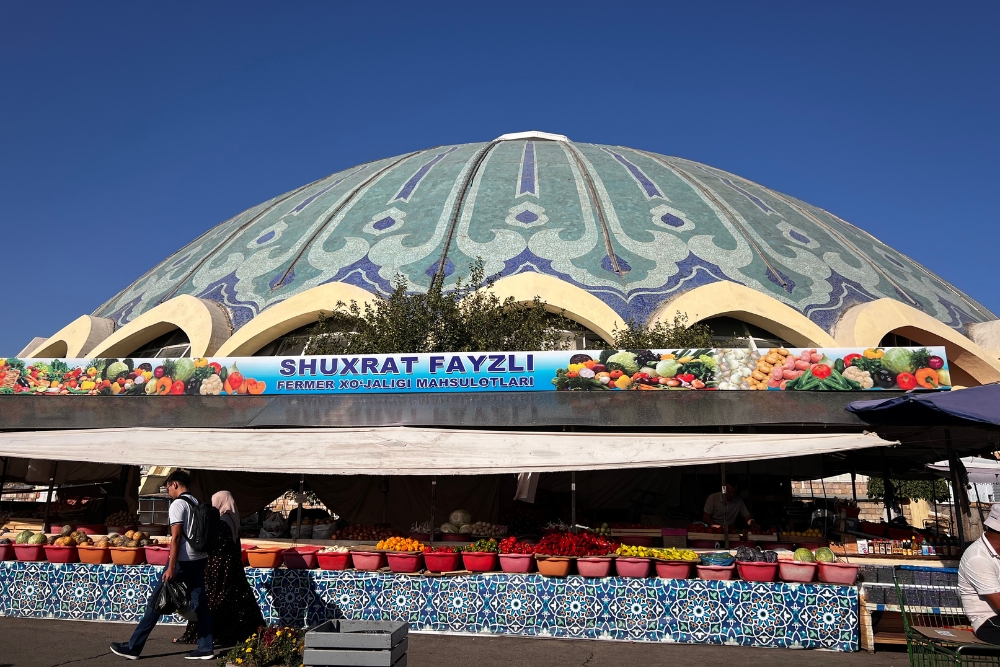
© Gayane Mkhitaryan, Chor-Su Ovqat Bozor, Tashkent
© Gayane Mkhitaryan, Pakhtakor (Пахтакор) – Cotton Picker metro station, Tashkent

© Gayane Mkhitaryan, Xalqlar Do’stligi (Халқлар Дўстлиги) – Friendship of Nations
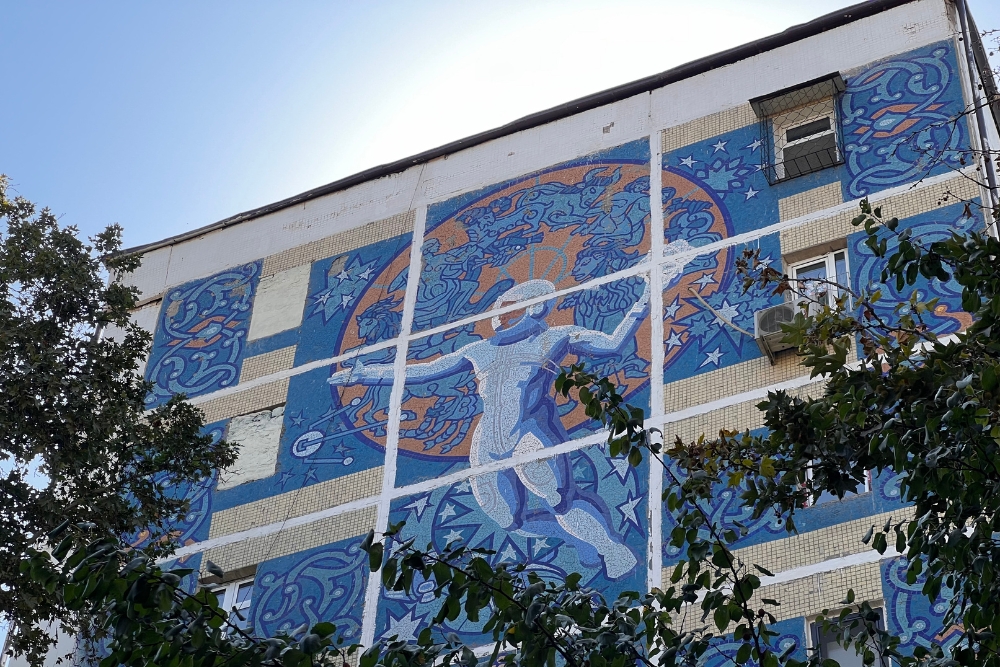
© Gayane Mkhitaryan, soviet mural on a residential building
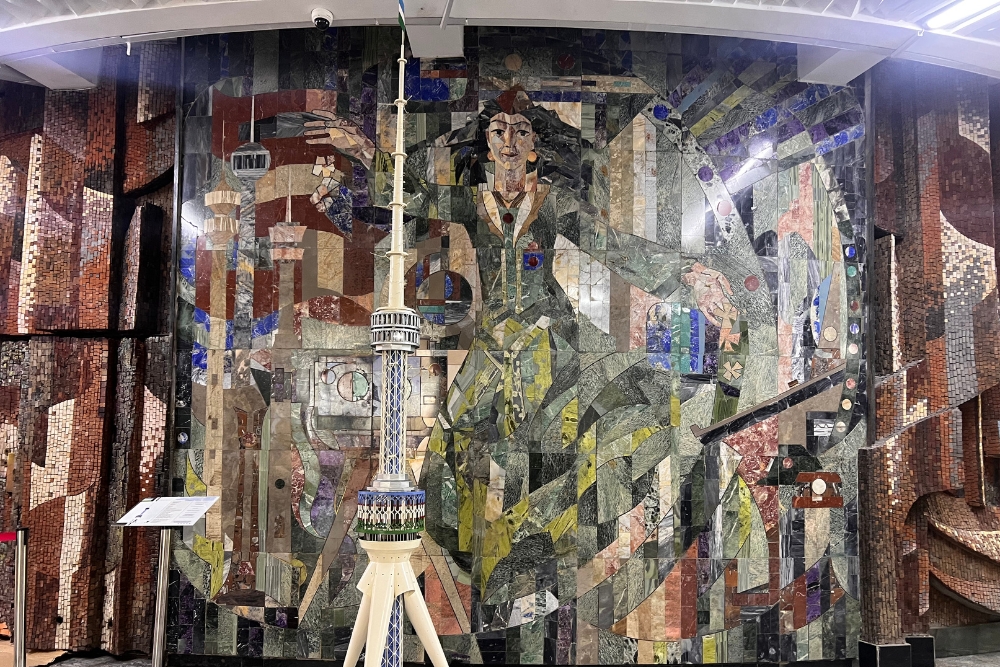
© Gayane Mkhitaryan, inside the TV Tower, Tashkent
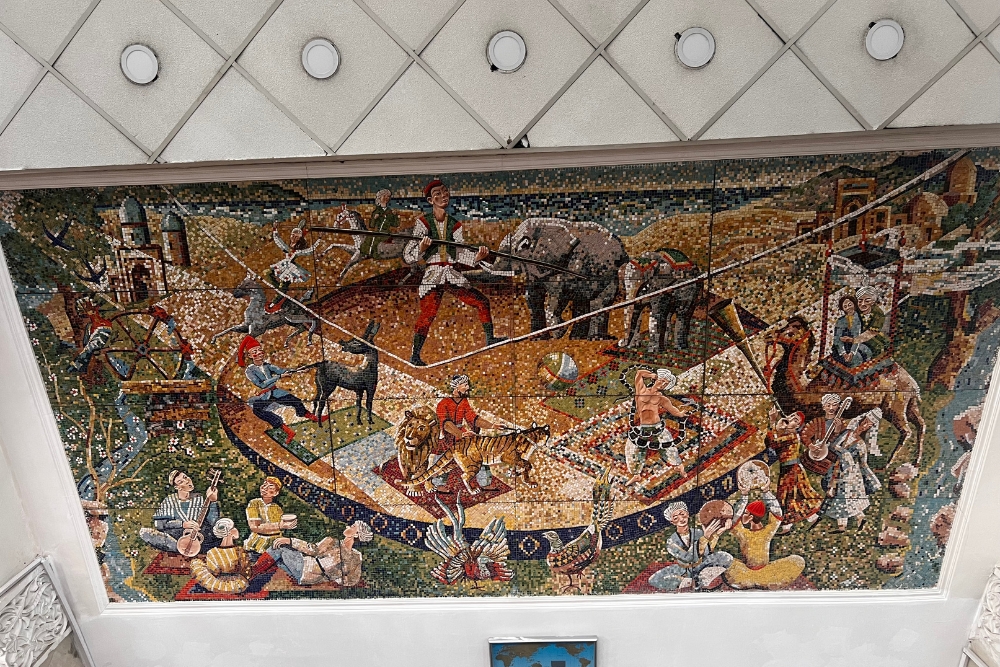
© Gayane Mkhitaryan, Tashkent circus mural
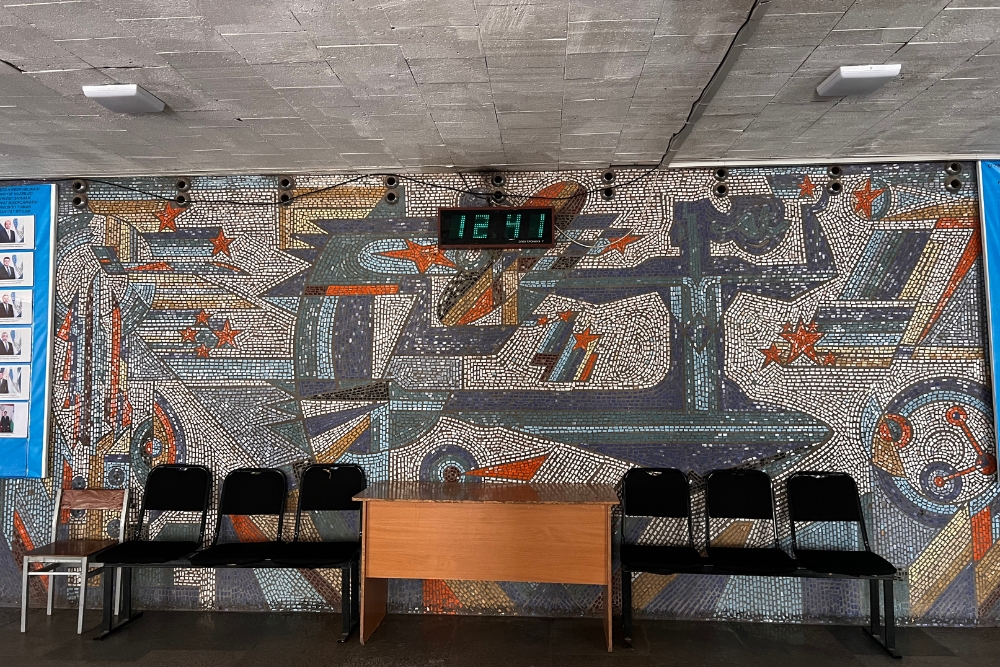
© Gayane Mkhitaryan, Mosaic inside Palace of Culture for Aircraft Workers
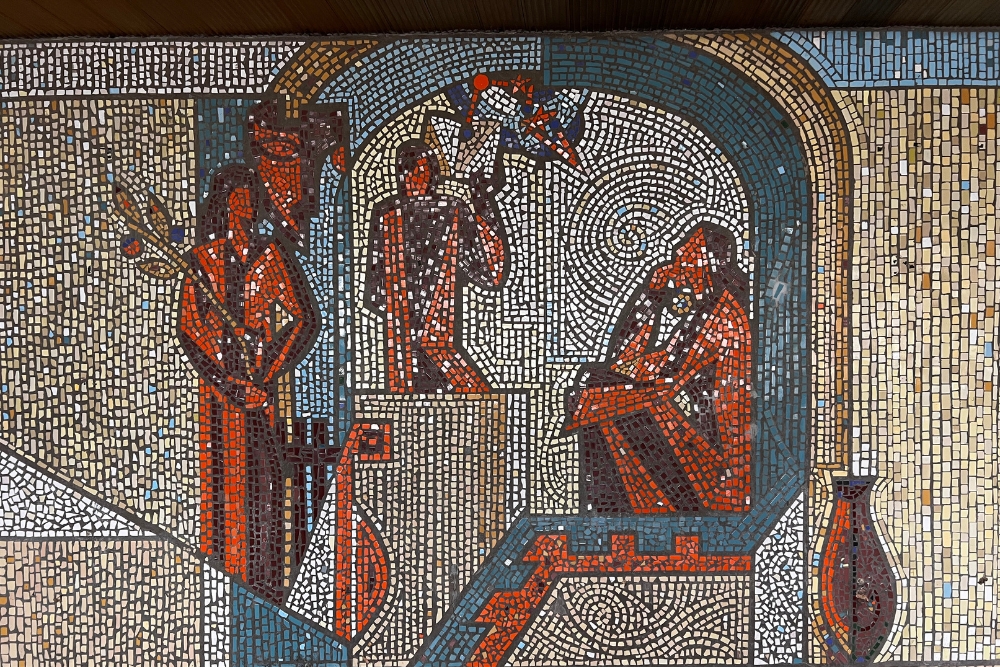
© Gayane Mkhitaryan, Mosaic inside Palace of Culture for Aircraft Workers
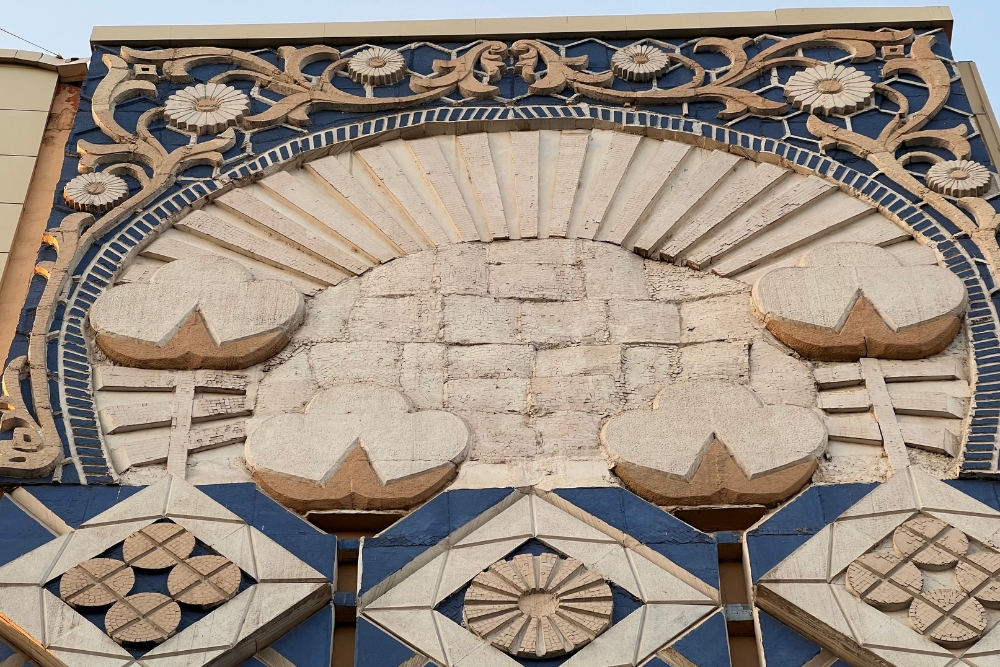
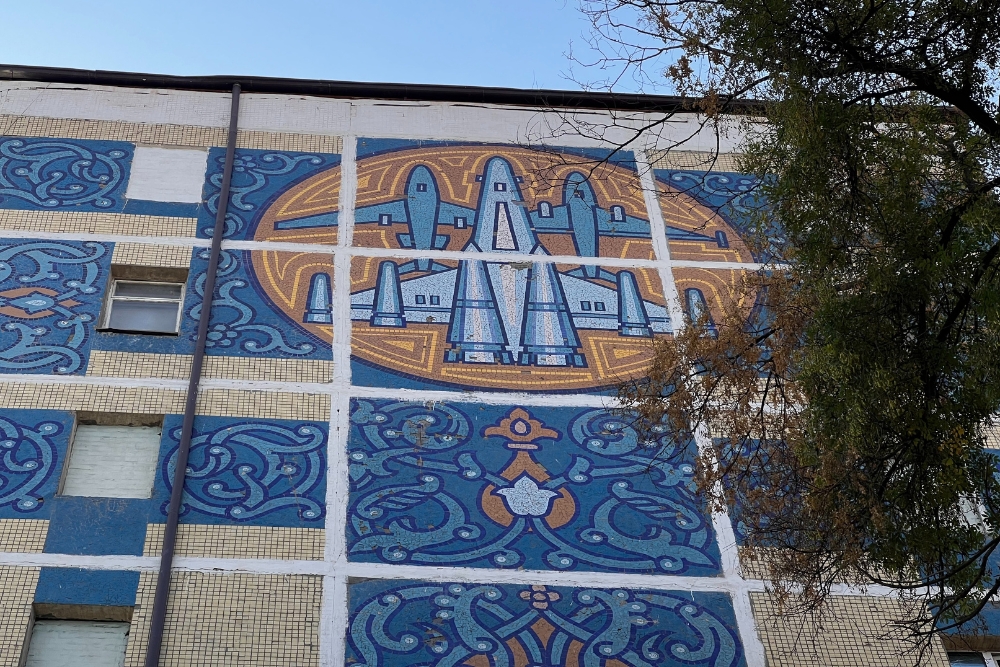
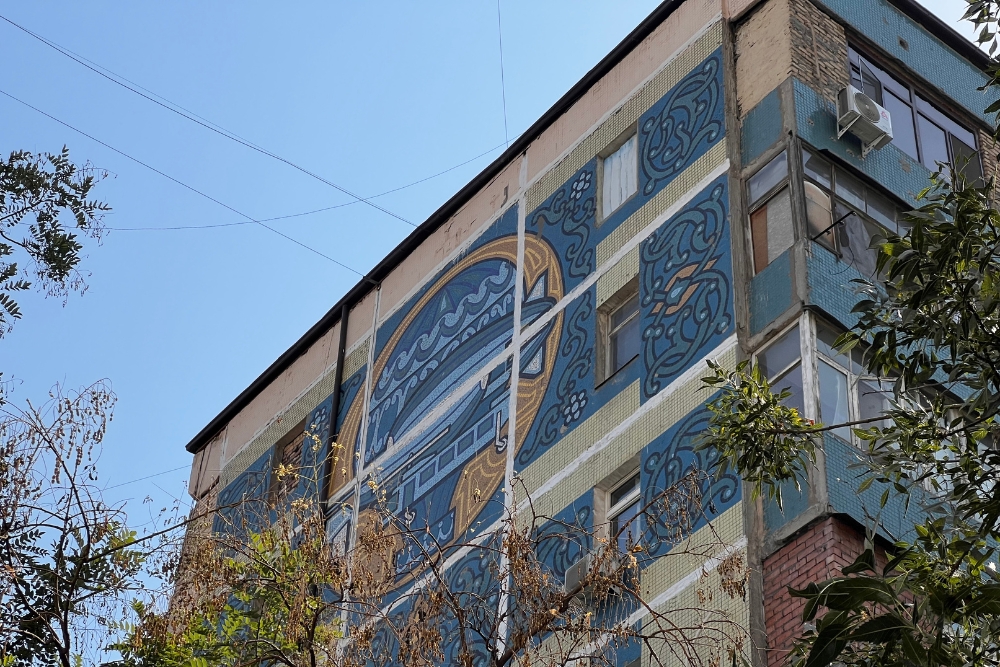
© Gayane Mkhitaryan, Residential building near Tashkent airport
Samarkand: Where Soviet Meets Silk Road
Samarkand surprised me. Everyone goes for Registan Square and Shah-i-Zinda—rightfully so, they’re spectacular. But walk 15 minutes from those turquoise domes into residential areas, and you’ll find Soviet apartment blocks with their own turquoise mosaics celebrating very different things. Local residents gave us curious looks, but no one seemed bothered by tourists photographing apartment buildings.
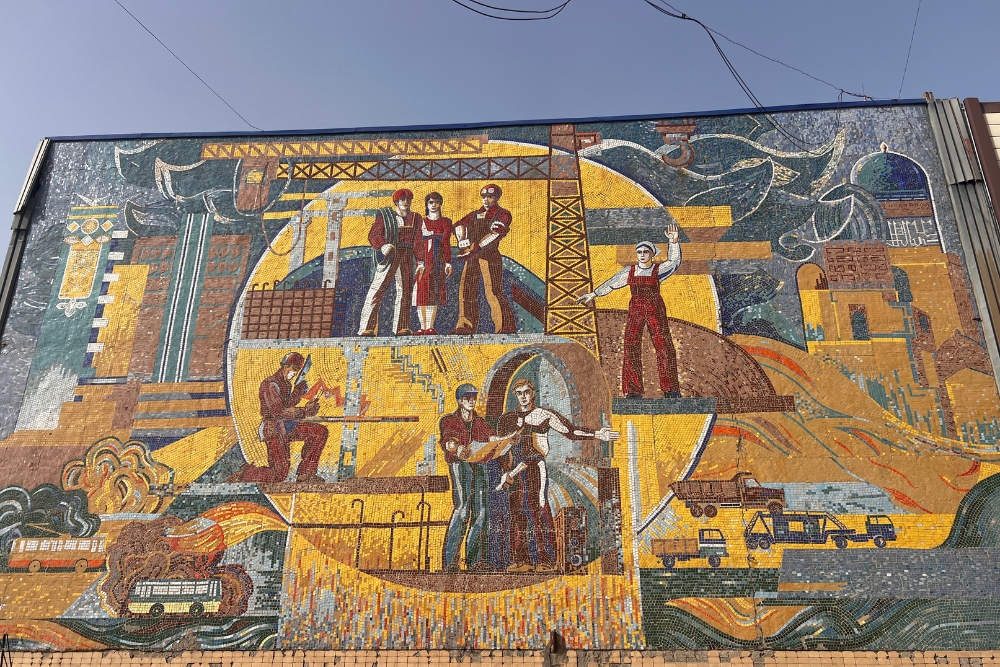
© Gayane Mkhitaryan, Industrial Progress Soviet Mosaic
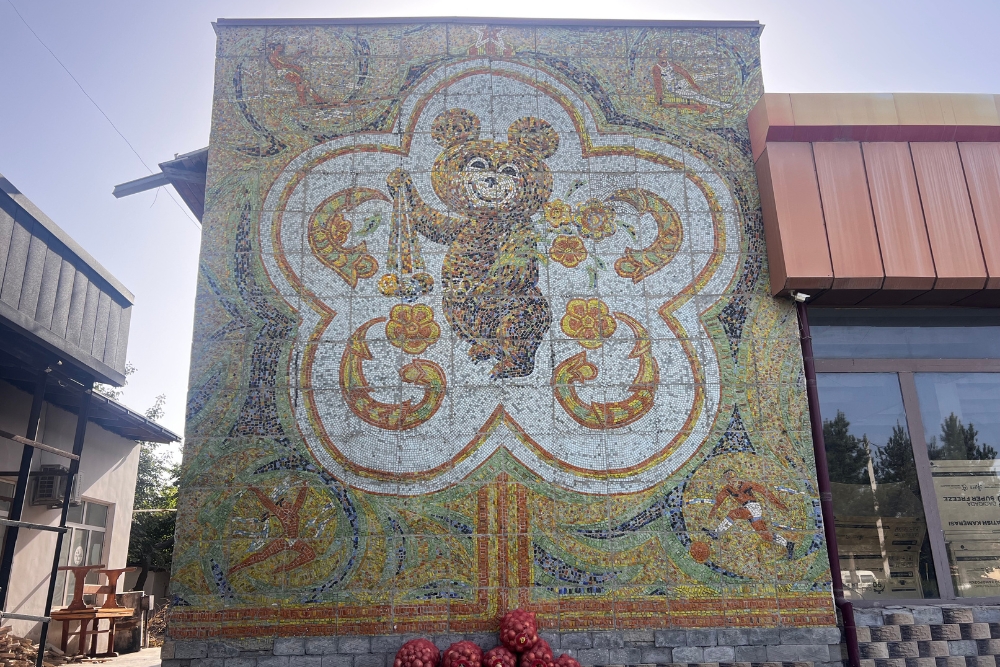
© Gayane Mkhitaryan, 1980’s Olympic Bear near Samarkand
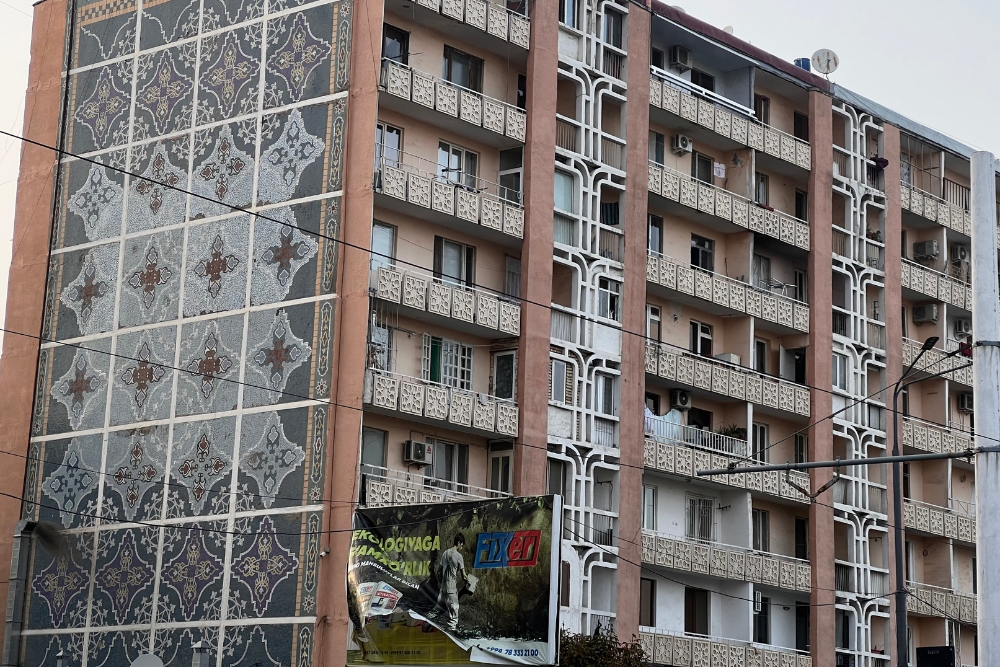
© Gayane Mkhitaryan, Soviet Residential Buildings in Beruniy Street

© Gayane Mkhitaryan, Soviet Mural on UZTelecom’s Building (Mirzo Ulugbek Street)
Bukhara: Subtle Soviet Layers
Bukhara is where the division between the Soviet/Silk Road routes becomes most apparent. The old town (the walled historic center) was largely preserved, designated as a museum city. But the Soviets built an entirely new city around it—standard residential blocks, Soviet-style public buildings, wide streets designed for cars rather than donkeys.
The visual whiplash of walking from medieval madrasahs to Soviet brutalist apartment blocks in five minutes never stopped being surreal. Inside Bukhara’s old town, you’re in the 16th century. Step outside the historic boundaries, and you’re in 1975.
I found the most interesting Soviet mosaics in the residential areas north and west of the old town. Nothing as grand as Tashkent’s metro or residential buildings, but enough to mark this as distinctly Soviet urban planning.
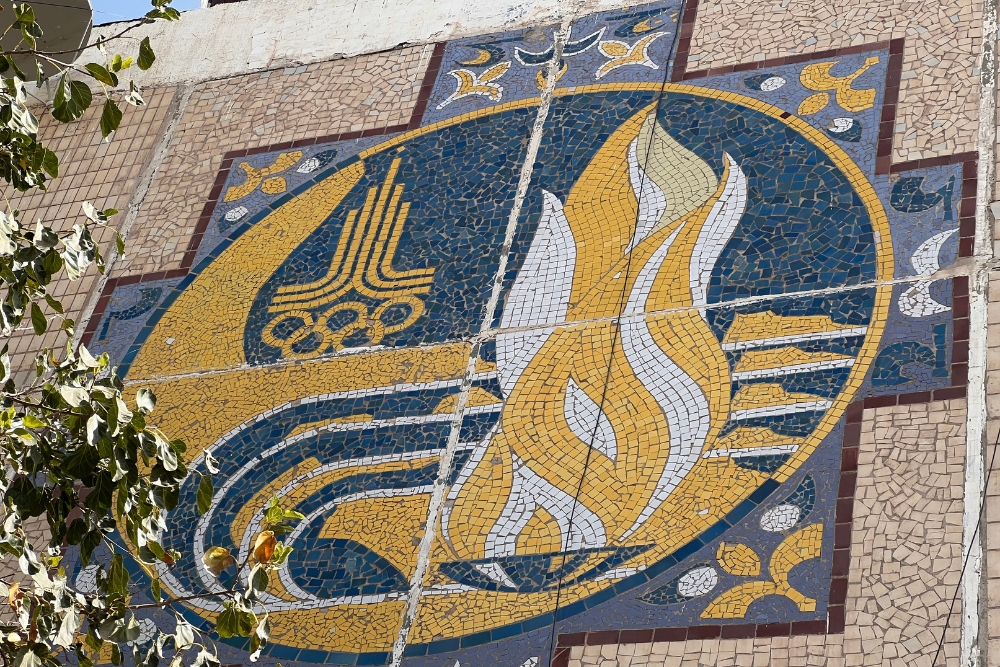
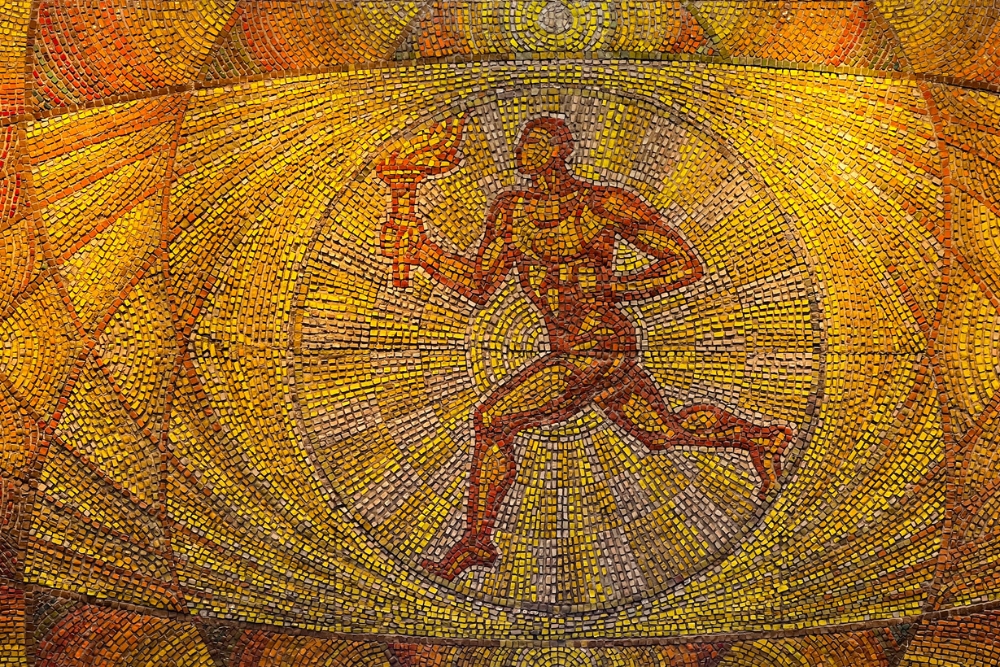
© Gayane Mkhitaryan, Olympic fire mural Bukhara
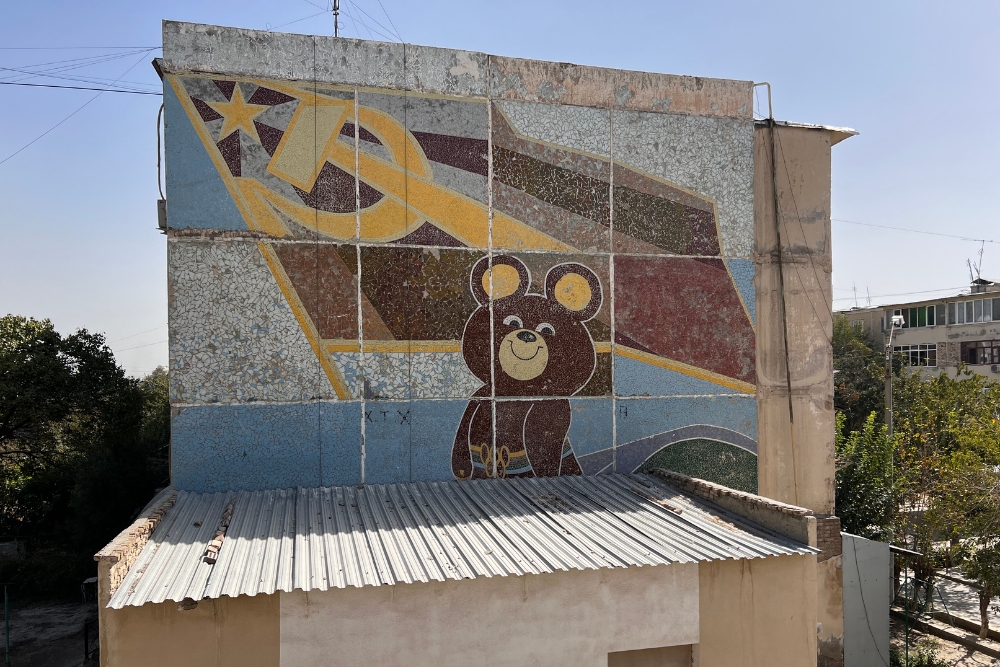
© Gayane Mkhitaryan, Olympic bear mural Bukhara
Khiva: The Intentional Exception
Khiva is the extreme version of Bukhara’s preservation approach. The entire walled city of Itchan Kala is a museum—carefully preserved, deliberately protected from modern development. There are virtually no Soviet-era additions inside the walls.
But step outside Itchan Kala, and you find standard Soviet residential neighborhoods. The contrast is even starker than in Bukhara because Khiva is smaller, more concentrated. You can stand at the wall and see a medieval minaret in one direction, Soviet apartment blocks in the other.
I didn’t find significant Soviet public art in Khiva (only near Школа №12,им.С.А.Оруджева – Pioneers mosaic )—not because it doesn’t exist, but because the city’s small size and strict preservation policies meant less Soviet construction overall.

© Gayane Mkhitaryan, Школа №12,им.С.А.Оруджева – Pioneers mosaic
Urgench: Soviet Transit Hub Reality
Urgench is a pure Soviet working city – no medieval monuments, no preserved old town for tourists, no careful balance between Islamic and Soviet aesthetics. It’s just a functional Soviet-planned city that happens to be near a UNESCO World Heritage site, and that authenticity has its own value.
The train station area has classic Soviet public architecture—monumental, utilitarian, decorated with mosaics that celebrate agriculture and industry. I found some interesting residential mosaics walking between the station and our hotel, the kind of everyday Soviet decorative art that exists for residents, not tourists.
On our way to Ayaz Kala, we came across a mural on the road, next to a car wash
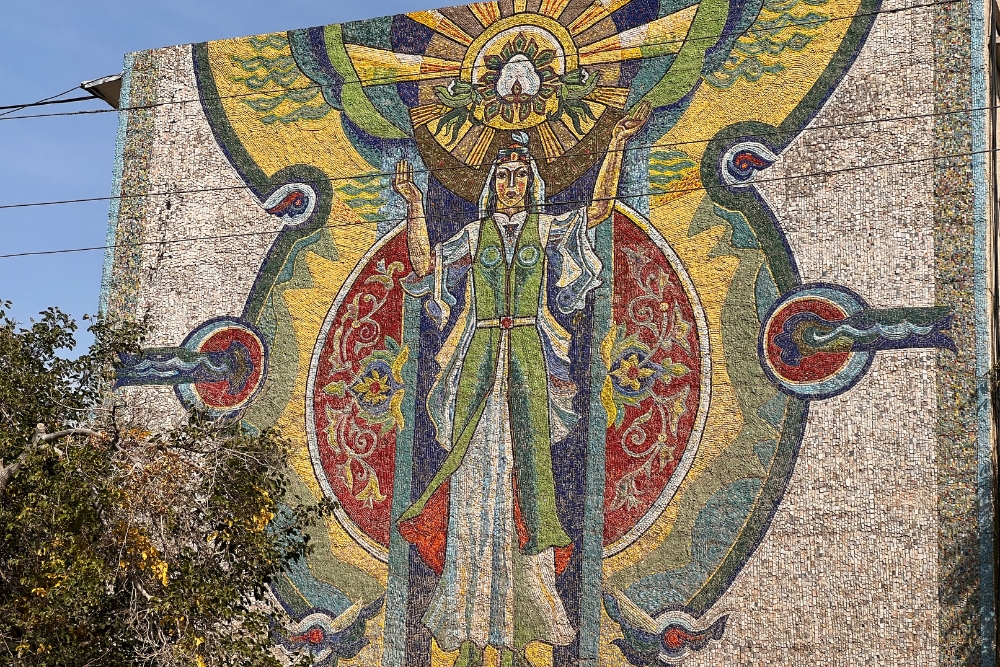
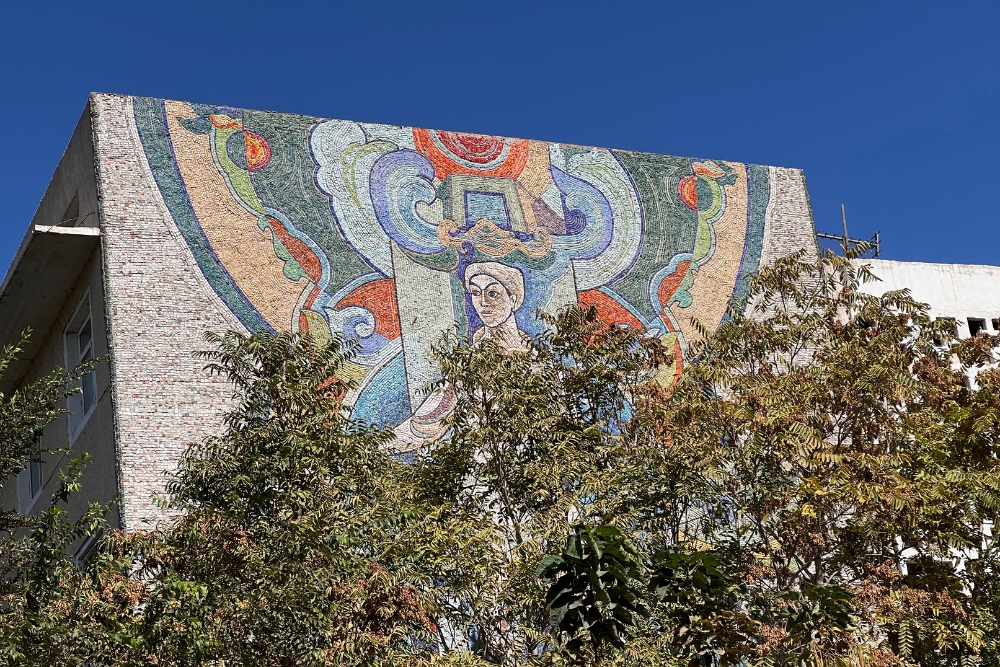
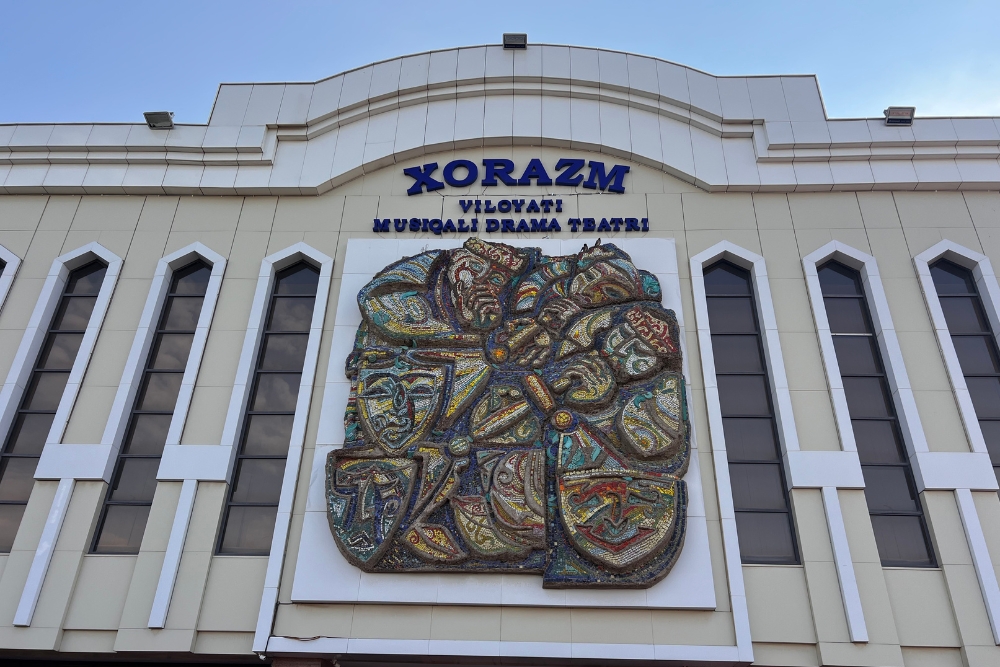
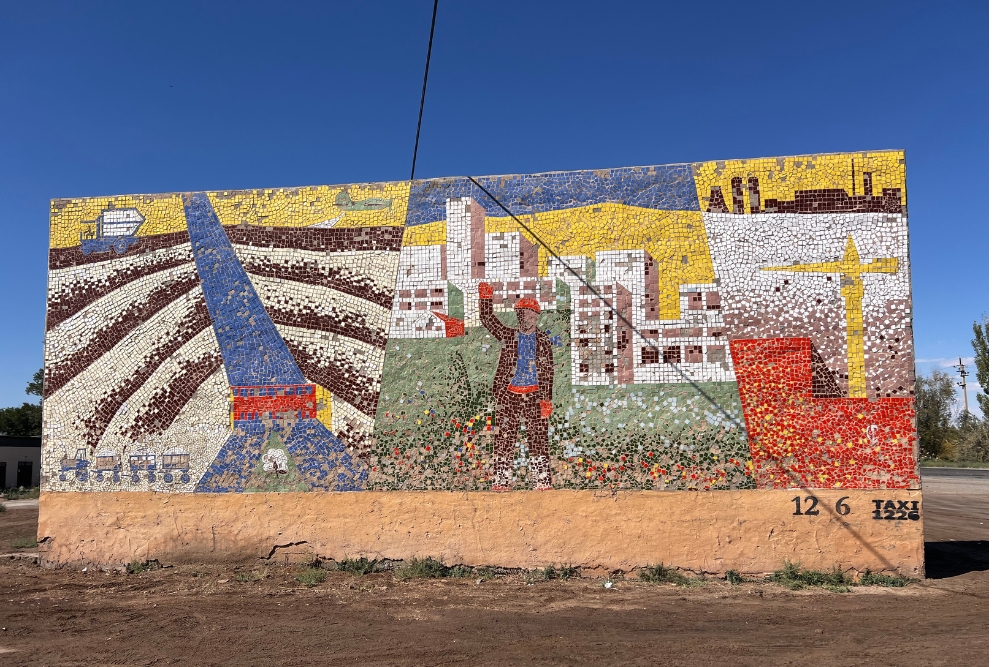
© Gayane Mkhitaryan, Soviet Mosaic – VVCM+G2W, Akshakul, Republic of Karakalpakstan, Uzbekistan
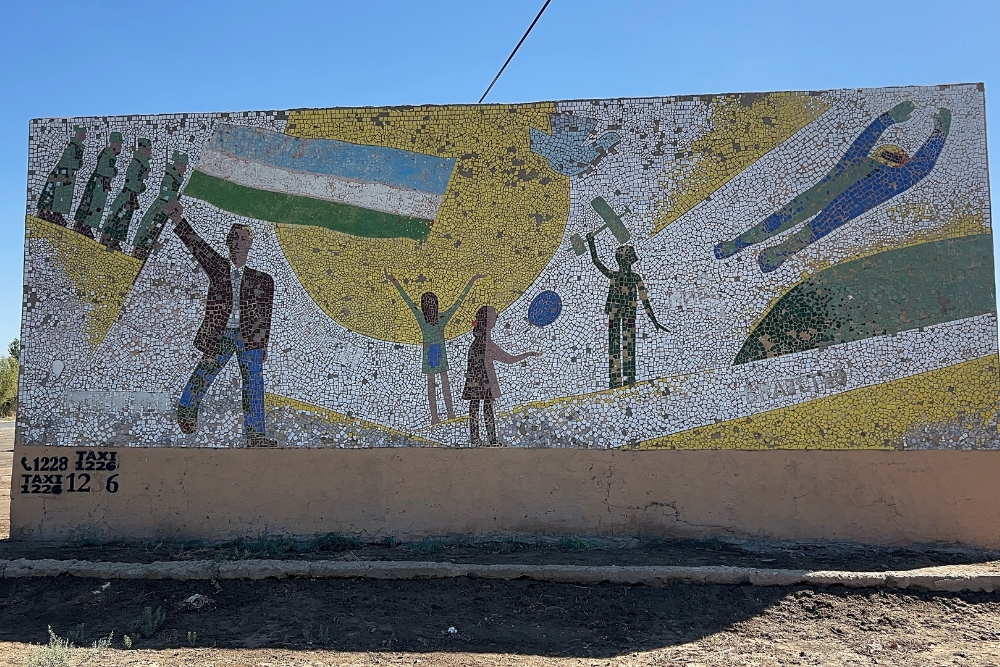
© Gayane Mkhitaryan, Soviet Mosaic – VVCM+G2W, Akshakul, Republic of Karakalpakstan, Uzbekistan
Nukus: Soviet Planning on Full Display
Nukus is entirely a Soviet creation. There’s no medieval old town, no pre-Soviet core. The entire city was planned and built during the Soviet era as the capital of the Karakalpakstan Autonomous Republic. It’s a grid of wide boulevards and public buildings that makes Soviet urban planning philosophy extremely visible. You can find the Savitsky Museum, famous for its collection of Soviet-era avant-garde art, as well as numerous Soviet murals on educational institutions and public spaces.
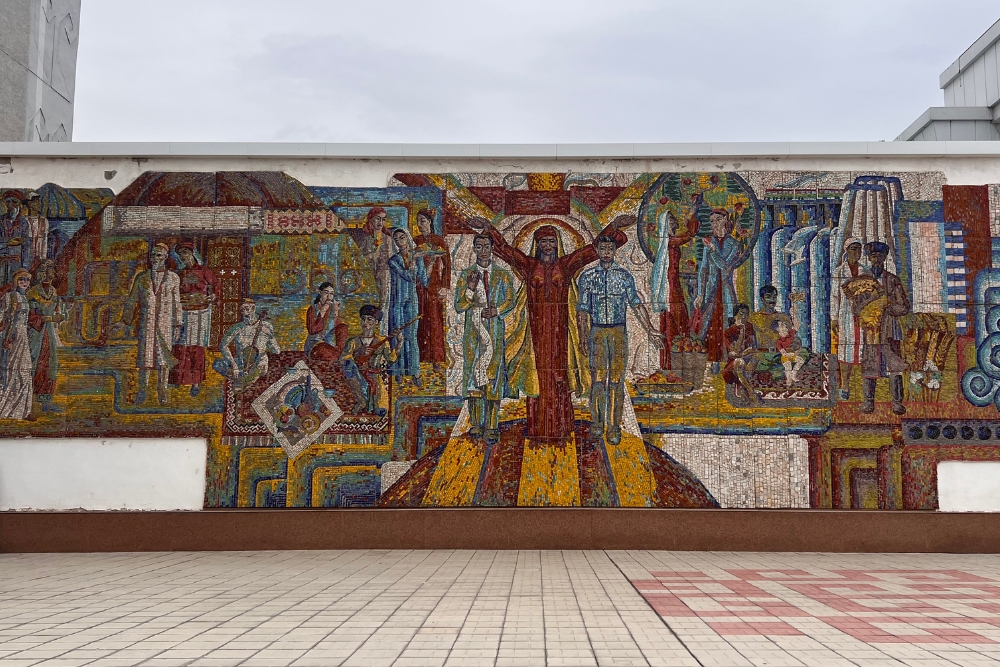
© Gayane Mkhitaryan, soviet mosaic of Karakalpak people near hotel Tashkent, Nukus
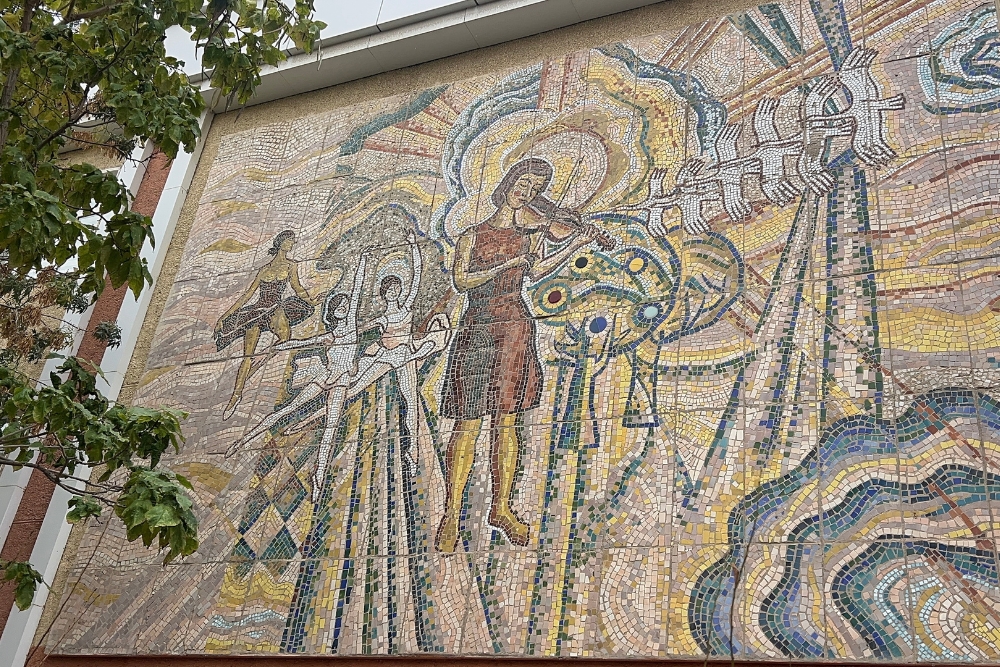
© Gayane Mkhitaryan, Music school Nukus
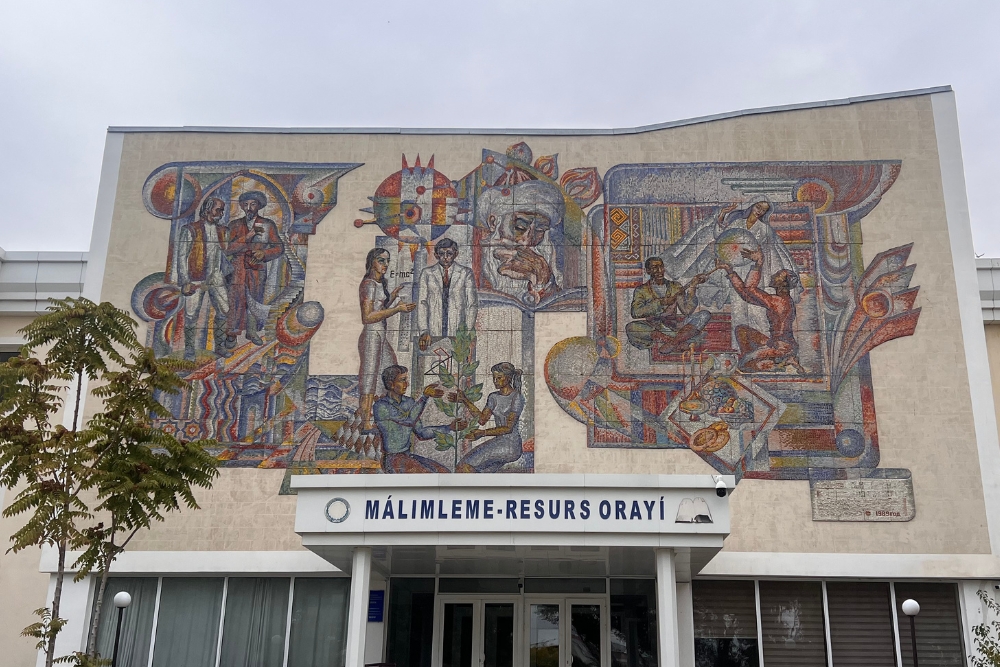
© Gayane Mkhitaryan, Karakalpakstan University Mosaic

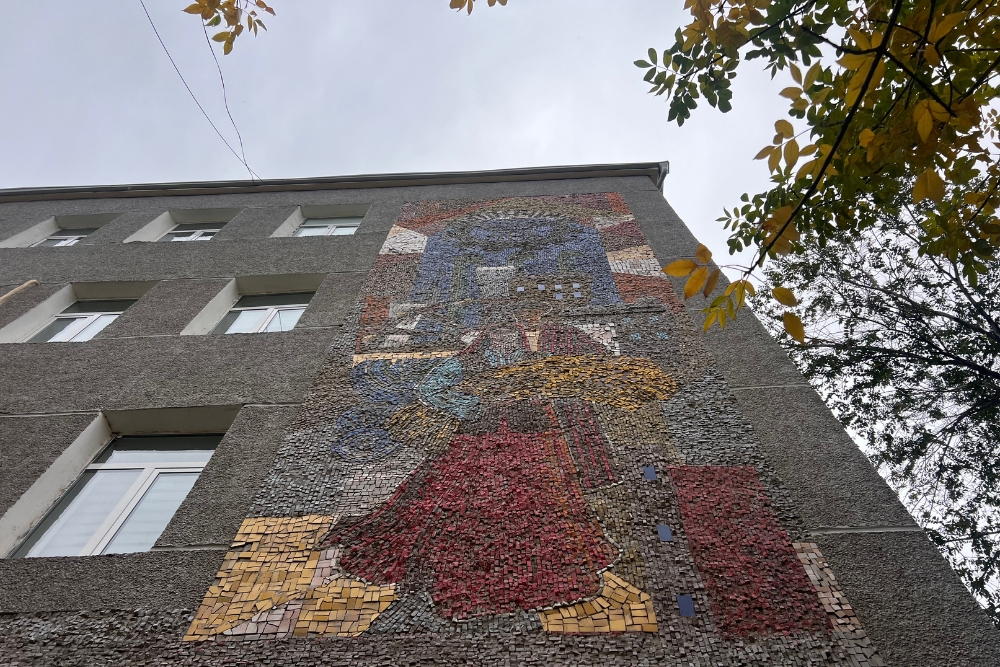
© Gayane Mkhitaryan, residential building mosaic Nukus
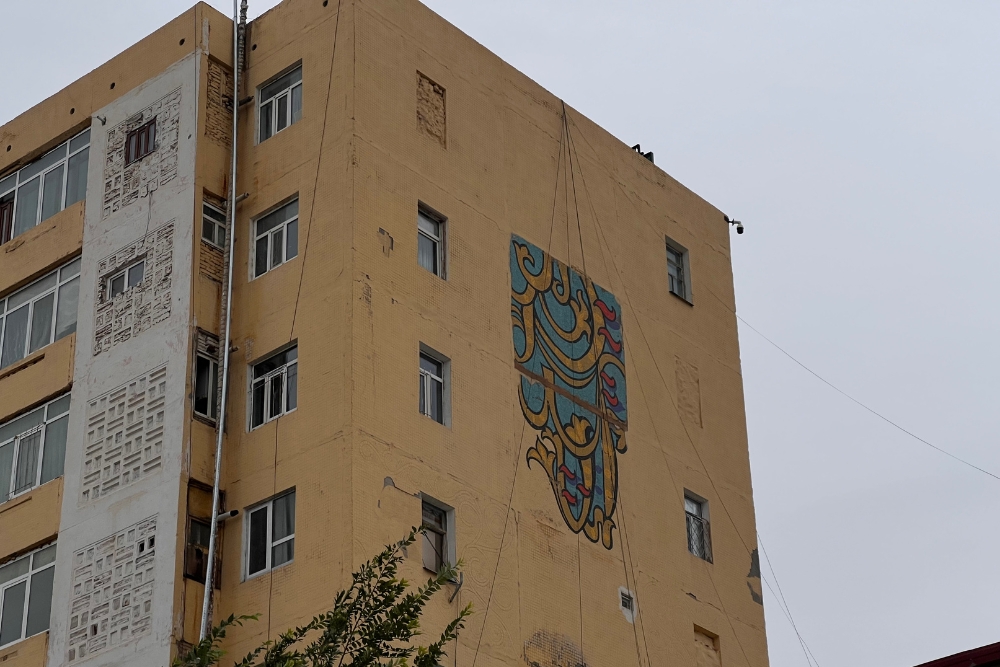
© Gayane Mkhitaryan, apartment block facade mosaic Nukus
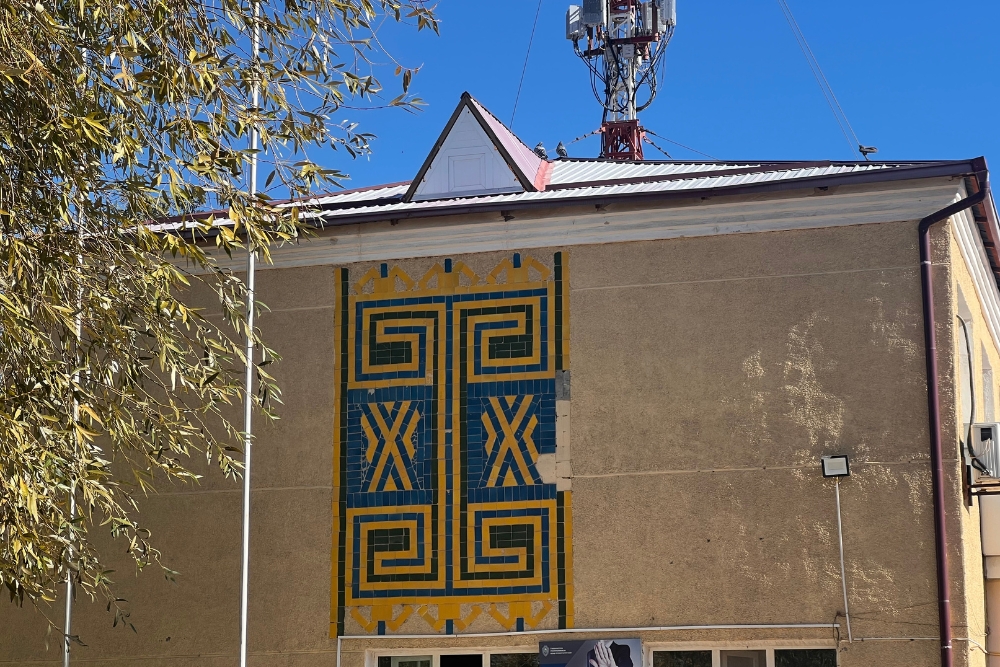
© Gayane Mkhitaryan, school facade mosaic Nukus
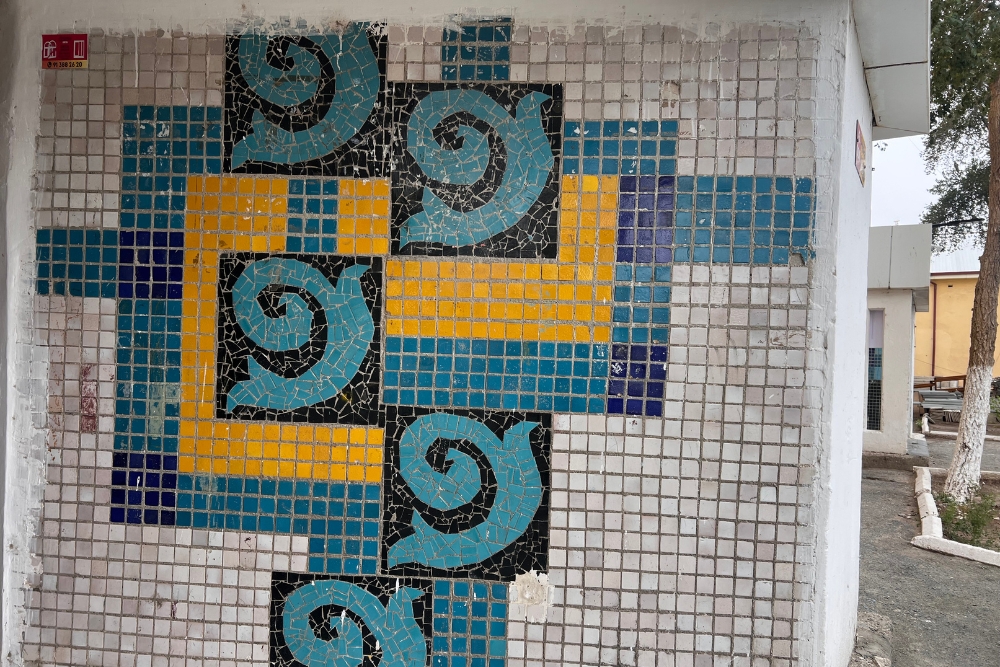
© Gayane Mkhitaryan, apartment block entrance Nukus
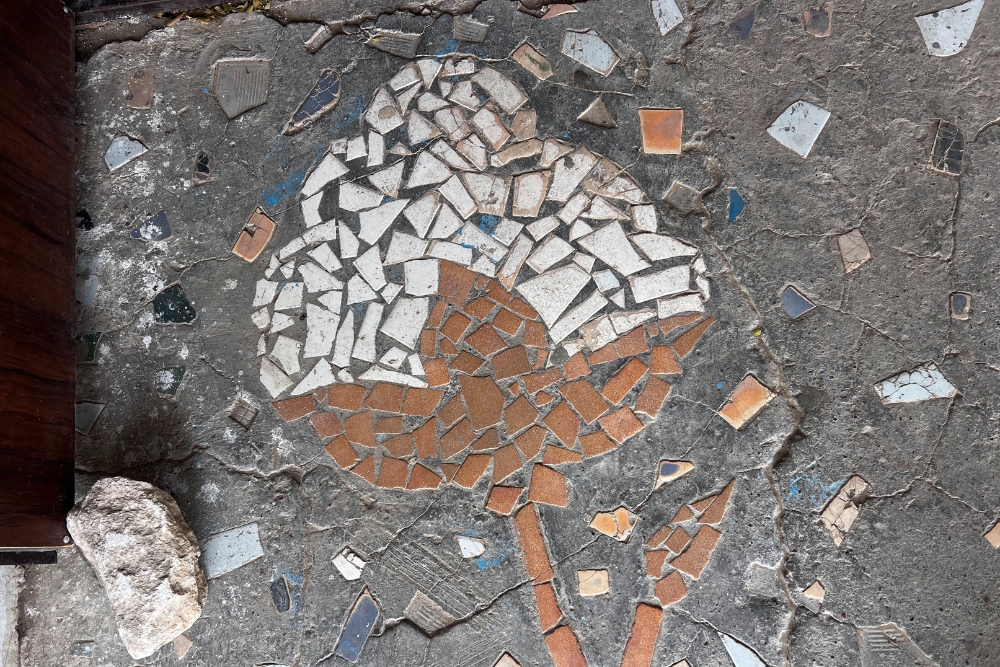
© Gayane Mkhitaryan, cotton mosaic, apartment block Nukus
How to Hunt for Soviet Mosaics: My Practical Strategy
After two weeks of accidentally becoming obsessed with Soviet public art, here’s what I learned about actually finding it:
Where to Look:
- Metro stations in Tashkent (obviously, but genuinely worth extensive time)
- Residential building entrances and facades (look up while walking through any Soviet-era neighborhood)
- Bus stations and train stations
- Universities and schools
- Former Soviet administrative buildings (often repurposed, but the architecture remains)
- Parks and public squares
- Areas rebuilt after the 1966 earthquake in Tashkent
My strategy evolved from following my boyfriend’s research to developing my own eye for likely locations. Soviet-era residential buildings from the 1970s to the 1980s most often feature decorative mosaics. Buildings that housed important Soviet functions—such as schools, cultural centers, and administrative offices—received more elaborate treatments. And, obviously, anything meant to be a public showcase, such as metro stations, received maximum artistic investment.
The hunt itself became addictive. I’d be walking to lunch and spot a mosaic on a random building three blocks away. We’d detour to photograph it.
Why This Matters for Understanding Modern Uzbekistan
Here’s what changed for me over the two weeks of Soviet mosaic hunting: I stopped seeing Uzbekistan as “Silk Road country with some Soviet remnants” and started seeing it as a place where multiple layers of history actively coexist and shape daily life.
The metro system that moves millions of people every day is Soviet infrastructure. The apartments most urban Uzbeks live in are Soviet buildings. The city layouts, the public spaces, the relationship between old towns and new development—all of this comes from Soviet urban planning decisions. Even the preservation of Islamic architectural masterpieces like Registan involved Soviet archaeologists, Soviet funding, and Soviet decisions about what to save and how.
Understanding Soviet public art isn’t just about appreciating cool mosaics (though they are genuinely beautiful). It’s about understanding why Uzbekistan looks and functions the way it does today. Why Tashkent feels different from Samarkand. Why Bukhara’s old town exists as a preserved museum while the working city sprawls around it. Why you can ride a metro decorated with cosmonauts to a 15th-century madrasa.
The tourists who only photograph Islamic architecture are missing half the story. The architecture nerds who only hunt Soviet brutalism are missing the other half. Uzbekistan’s power is in the layering, the juxtaposition, the way 14th-century madrasahs and 1970s metros share the same color palette and coexist on the same streets.
Resources for Soviet Architecture Enthusiasts
For diving deeper into Soviet Central Asian architecture:
- Instagram accounts documenting Soviet modernist architecture across the former USSR (search #sovietarchitecture #sovietmosaic)
- Мозаики Узбекистана– Facebook Group
- Photography projects focused on Soviet Central Asia
- Academic sources on Soviet urban planning in Uzbekistan (particularly post-1966 reconstruction)
- The Atlas Sovieticus– you can check their interactive map for the exact location
I wish I’d found more comprehensive resources before going. Most information is scattered across blog posts, Instagram accounts, and academic papers, rather than being compiled in accessible guidebooks. That gap is precisely why Soviet public art remains an under-explored aspect of Uzbek tourism—and why it’s so rewarding to seek out.
References:
- Tashkent Metro official documentation
- UNESCO World Heritage Sites in Uzbekistan
- Academic sources on Soviet urban planning in Central Asia
- Individual city tourism portals and historical resources
- Photography documentation of Soviet modernist architecture in the former USSR
FAQs on Soviet Art & Mosaics in Uzbekistan
Is it safe to photograph Soviet mosaics in Uzbekistan?
Yes, with some common sense. Metro photography in Tashkent is technically restricted but widely practiced—be discreet, avoid using flash, and follow the lead of other passengers. For residential buildings, I photographed from public streets without issues. If you want to photograph building entrances up close, it is respectful to ask permission from the residents. I never felt unsafe, just occasionally conspicuous as a tourist photographing random apartment buildings.
Are Soviet mosaics being preserved?
Inconsistently. Metro stations are actively maintained—they’re now tourist attractions. But residential building mosaics vary wildly. Some neighborhoods have pristine mosaics, while others are crumbling or have been painted over. There doesn’t seem to be a systematic preservation approach for residential Soviet art, which means finding well-maintained examples feels like discovering small treasures.
Where are the best Soviet mosaics in Tashkent?
Start with the metro—Kosmonavtlar and Alisher Navoi stations are the most spectacular. Then, explore residential neighborhoods, particularly microdistricts built between 1970 and 1985. The area around the Earthquake Memorial and neighborhoods near universities tend to have good examples. But honestly, just walk through any Soviet-era residential area and look up. You’ll find them.
Is there Soviet art in Samarkand and Bukhara?
Yes, but you have to look beyond the tourist-focused old towns. In Samarkand, explore the residential areas northeast of Registan, heading toward the university. In Bukhara, walk the neighborhoods outside the walled old town. It’s not as concentrated as Tashkent, but it exists and provides a fascinating contrast to the Islamic architecture everyone comes to see.
How long should I spend hunting for Soviet art?
Depends entirely on your interest level. If you’re genuinely into Soviet architecture and public art, you could spend days in Tashkent alone. If you’re casually curious, dedicate a few hours in each major city to exploring beyond tourist zones. I’d recommend spending at least one full day in Tashkent for metro and residential exploration, followed by 2-3 hours each in Samarkand and Bukhara if you want to explore more than just the highlights.
Do I need a guide to find Soviet mosaics?
No, though it helps to have some research beforehand. The metro stations in Tashkent are easy to navigate independently. For residential mosaics, offline maps with areas marked (based on construction dates) help you know which neighborhoods to explore. I did it entirely independently and found plenty of information. A local guide who appreciates Soviet architecture could provide historical context, but it’s absolutely DIY-feasible.
