
Things to Do, See, and Experience in Samarkand, Uzbekistan

If you’re traveling solo on a budget and wondering whether Samarkand is worth the detour, absolutely yes. I only had two days in Samarkand—but what a two days they were. Two days that completely shifted my perspective on what travel can be.
This isn’t just another stop on the map; it’s the crown jewel of the Silk Road, where camel caravans once paused on their way from China to Europe, and where you can still feel that hum of exchange between worlds.
Samarkand’s turquoise domes shine in the sunlight just as they did in Timur’s day, and its mix of Persian, Arabic, Turkic, and Mongol influences creates a cultural cocktail you won’t find anywhere else. Locals call it The Garden of the Soul, Pearl of the East, and Mirror of the World—names that might sound dramatic until you’re standing in Registan Square at sunset, feeling the centuries press close.
What’s even better? You can see the world’s most magnificent Islamic architecture, eat incredible meals for under $5, and stay in decent accommodation without breaking the bank. The best part? This isn’t luxury travel—it’s something better. It’s real.
The journey from Tashkent to Samarkand is straightforward, with several options available to cover the 300km distance.
- Option 1 Trains: We took the Tashkent to Samarkand train—specifically the modern Sharq departing around 12:30 PM—which took roughly 2.5 hours and cost about €10-15.
- Option 2 Planes: If you prefer flying, it takes 50 minutes but costs significantly more when you factor in airport transfers.
- Option 3 Buses: This is the cheapest option (€5-8) but takes 5-6 hours and isn’t particularly comfortable.
- Option 4: Shared Taxis: This option costs €15-20 per person and takes approximately 4 hours; however, please note that the driving style may be aggressive.
Book train tickets a few days ahead through the Uzbekistan Railways website or at the station—trains fill up during peak season.
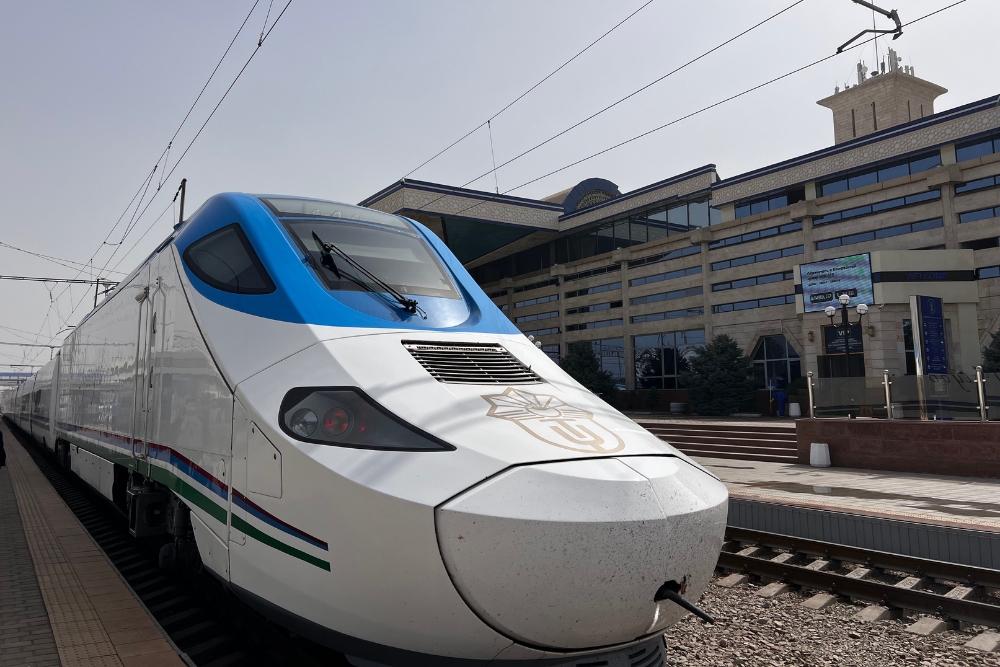
© Gayane Mkhitaryan, Afrosiyob (High-Speed Train) in Samarkand Station
Is Samarkand Worth Visiting for Tourists?
Absolutely, without question! Samarkand is often considered the single most spectacular destination in all of Central Asia and the highlight of any Uzbekistan itinerary. This is the Uzbekistan that travelers dream of—the true glory of the Silk Road days brought to life through architectural masterpieces that seem to defy both time and imagination.
Best time to visit: April to June and September to October, when temperatures are comfortable (20-30°C) and the lighting is perfect for photography, especially during the golden hours at sunrise and sunset.
When is the Best Time to Visit Tashkent?
The best time to visit Tashkent is between March and June, when temperatures range from 15 °C to 30°C, making it perfect for exploring outdoor attractions, scenic parks, and vibrant bazaars. Summer months can be quite hot, while winters are mild but can be cool in the evenings.
© Gayane Mkhitaryan, Night Lights at Registan Square, Samarkand
Samarkand Must-See Attractions: My Recommendation
Samarkand’s attractions represent the pinnacle of Islamic architecture and Timurid artistic achievement. Each monument tells a story of empire, ambition, and artistic genius that shaped the course of history.
- Registan Square – The world’s most magnificent public square framed by three stunning madrasahs (Ulugbek, Sher-Dor, Tilya-Kori) with intricate tilework and soaring minarets
- Shah-i-Zinda Necropolis – Stunning avenue of mausoleums containing some of the richest tilework in the Muslim world, known as the “Living King”
- Bibi-Khanym Mosque – Once one of the Islamic world’s largest mosques, built by Timur from the spoils of his Indian campaign, with a massive 41m high cupola
- Gur-e-Amir Mausoleum – “Tomb of the King” where Timur himself is buried, featuring exquisite interior decoration with gold leaf and precious stones
- Ulugbek Observatory – Remains of the medieval world’s largest astronomical instrument, built by Timur’s astronomer grandson
- Afrosiab Museum – Built around important 7th-century Sogdian frescoes showing Samarkand’s pre-Islamic history
- Siab Bazaar – Traditional market next to Bibi-Khanym offering spices, dried fruits, nuts, and the famous Samarkand bread
- Hazrat-Khizr Mosque – Historic mosque on a hill overlooking the ancient Afrosiab site, where Uzbekistan’s first president is buried
- Rukhabad Mausoleum – Simple yet elegant 14th-century tomb, possibly the city’s oldest surviving monument
- Jewish Quarter Synagogue – Working 19th-century synagogue built in 1891 representing Samarkand’s diverse cultural heritage
- Samarkand Wine Factory – Historic Hovrenko Winery established in 1927, producing acclaimed dessert wines from local grape varieties
- Regional Studies Museum – Housed in an old Jewish merchant’s house with extensive exhibits on the city’s multicultural history.
Silk Road Heritage Sites
Samarkand’s position as the heart of the Silk Road trade network for over two millennia has left an extraordinary legacy of cultural exchange and architectural achievement, representing the pinnacle of medieval Islamic civilization.
Registan Square – The Ultimate Silk Road Monument
The Registan, meaning “sandy place” in Persian, was the medieval center of commerce in Samarkand, where the plaza was likely a wall-to-wall bazaar. All the main roads of the Silk Road led to this square, making it the beating heart of international trade. The three madrasahs that frame the square represent different periods of Samarkand’s glory:
- Ulugbek Madrasah (1417-1420) – The original madrasah built by Timur’s astronomer grandson, where Ulugbek himself taught subjects including mathematics, astronomy, theology, and philosophy.
- Sher-Dor Madrasah (1619-1636) – “Lion-Bearing” madrasah decorated with roaring felines that violate Islamic artistic conventions, showing Persian cultural influence.
- Tilya-Kori Madrasah (1646-1660) – “Gold-Covered” madrasah featuring a mosque with intricate blue and gold decoration symbolizing Samarkand’s wealth, with a flat ceiling designed to look domed from inside.

© Gayane Mkhitaryan, Sherdor Madrasa

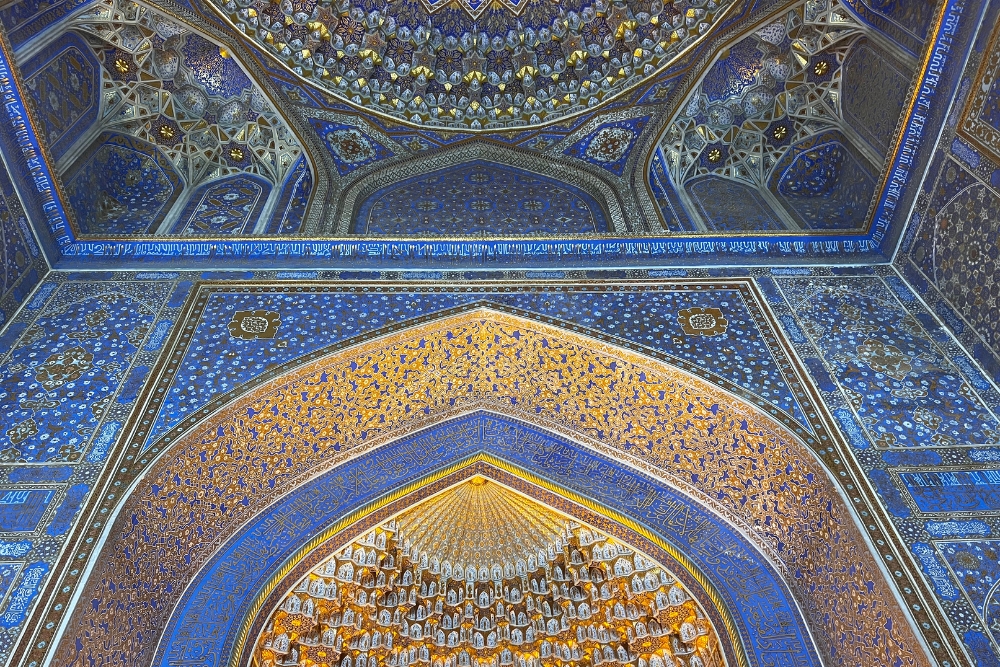
© Gayane Mkhitaryan, inside of Tilya-Kori Madrasa
Ancient Afrosiab – Pre-Islamic Silk Road Capital
The archaeological site of Afrosiab in northeast Samarkand preserves the remains of the original city founded in the 7th century BC. This was ancient Maracanda, conquered by Alexander the Great in 329 BC, who reportedly said it was “more beautiful than I expected.”
- Historical Significance: Capital of the powerful Sogdian kingdom, whose merchants served as the primary intermediaries in Silk Road trade between China and Persia. The Sogdians were renowned as the world’s most skilled international traders.
- Afrosiab Museum: Built around a remarkable 7th-century fresco showing King Varkhuman receiving diplomatic missions from China, Iran, and India—a unique depiction of Silk Road diplomacy.
Bibi-Khanym Mosque – Monument to Silk Road Wealth
Timur built this colossal mosque from the spoils of his invasion of India (1398-1399) and represents the ultimate expression of Silk Road wealth transformed into architectural grandeur. At its completion, it was one of the largest mosques in the Islamic world.
- Silk Road Connection: The mosque’s construction materials and artisans were gathered from across Timur’s empire—200 stonemasons from conquered countries, precious stones from India, and 100 elephants to transport materials.
- Architectural Innovation: Featured the revolutionary double-dome construction where the internal dome differs completely from the external dome, allowing for both perfect interior proportions and maximum external visual impact.
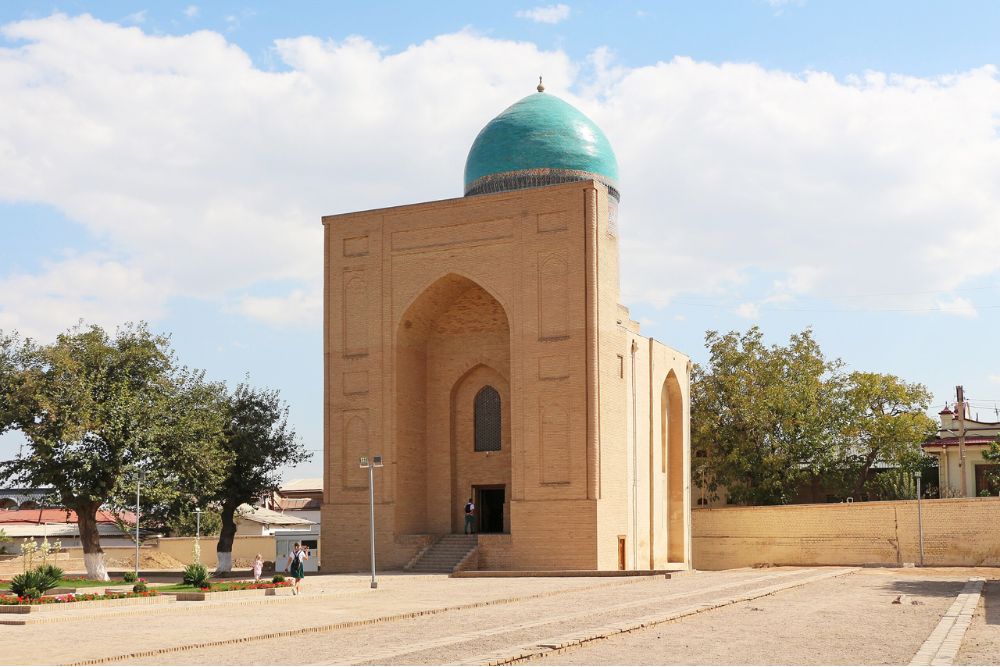
© Wikipedia, Bibi-Khanym Mausoleum in front of the mosque
Shah-i-Zinda – Silk Road Necropolis
This stunning avenue of mausoleums represents a virtual catalog of Islamic architectural evolution from the 11th to 19th centuries. The name means “Living King” and refers to Qusam ibn Abbas, cousin of Prophet Muhammad, whose tomb attracts pilgrims from across the Islamic world.
Three Groups:
- Upper group: Oldest tombs from 11th-13th centuries
- Middle group: 14th-15th century mausoleums of Timur’s relatives and nobles
- Lower group: 15th-19th century tombs showing architectural evolution

© Wikipedia
Modern Silk Road Legacy
Samarkand continues its historic role as a crossroads through:
- High-speed Afrosiyob train connecting Tashkent and Bukhara
- Silk Road Samarkand – New international resort complex recreating the ancient city atmosphere
- Traditional craft workshops in old madrasahs continue centuries-old techniques
- International festivals celebrating Silk Road cultural heritage

© Gayane Mkhitaryan, Samarkand train station
Timurid Empire Legacy
Samarkand reached its greatest glory under Timur (Tamerlane) and his descendants from 1370 to 1507, when it served as the capital of an empire stretching from Turkey to China. This period created most of the monuments visitors see today.
Timur’s Vision
Timur envisioned Samarkand as the most magnificent city in the world, commissioning architectural projects that pushed the boundaries of medieval engineering and artistry. His motto was “If you want to know about us, see our buildings.” Here are some notable architectural innovations:
- Double dome construction allowing different interior and exterior designs
- Massive scale that dwarfed all contemporary Islamic architecture
- Integration of spoils from conquered territories into building decoration
- Advanced engineering to resist the region’s frequent earthquakes
Ulugbek’s Scientific Legacy
Timur’s grandson Ulugbek (1394-1449) transformed Samarkand into a center of learning and scientific achievement. His astronomical observations were among the most accurate before the invention of the telescope.
- Ulugbek Observatory: Once housed the world’s largest astronomical instrument—a massive sextant with a 40-meter radius. His star catalog remained the most accurate for centuries.
- Educational Reforms: Ulugbek personally taught mathematics and astronomy at his madrasah, making Samarkand a university city that rivaled medieval Baghdad or Córdoba.

© Gayane Mkhitaryan, Ulughbek Memorial Museum

© Gayane Mkhitaryan, Memorial monument to Mirzo Ulugbek
Architectural Elements and Symbolism
Timurid architecture developed a distinctive style combining:
- Persian artistic traditions with Central Asian building techniques
- Geometric patterns representing the Islamic cosmic order
- Calligraphy integrating Quranic verses with decorative elements
- Color symbolism using turquoise (representing sky/heaven) and gold (representing earth/prosperity)
Historical Places and Landmarks
Samarkand’s historical monuments span over two millennia, creating an unparalleled architectural timeline from ancient Sogdian remains to Timurid masterpieces.
The “Sandy Place” that served as Samarkand’s heart for centuries, surrounded by three magnificent madrasahs representing the pinnacle of Islamic educational architecture. The square was used for royal proclamations, public executions, and served as a massive marketplace where goods from across the known world were traded.
- Photography tip: Visit during golden hour (sunrise/sunset) for the best lighting and fewer crowds
- Sound and light show: Free evening projection mapping when large groups book performances

© Gayane Mkhitaryan, Registan Square Observatory
“Tomb of the King” in Persian, this mausoleum houses Timur himself along with his sons and grandsons. Originally built for Timur’s grandson Muhammad Sultan, it became the family tomb when Timur died unexpectedly in 1405 while marching toward China.
- Interior highlights: Jade tombstone over Timur’s grave, intricate geometric patterns, gold leaf decoration
- Historical significance: Inspired the design of the Taj Mahal in India
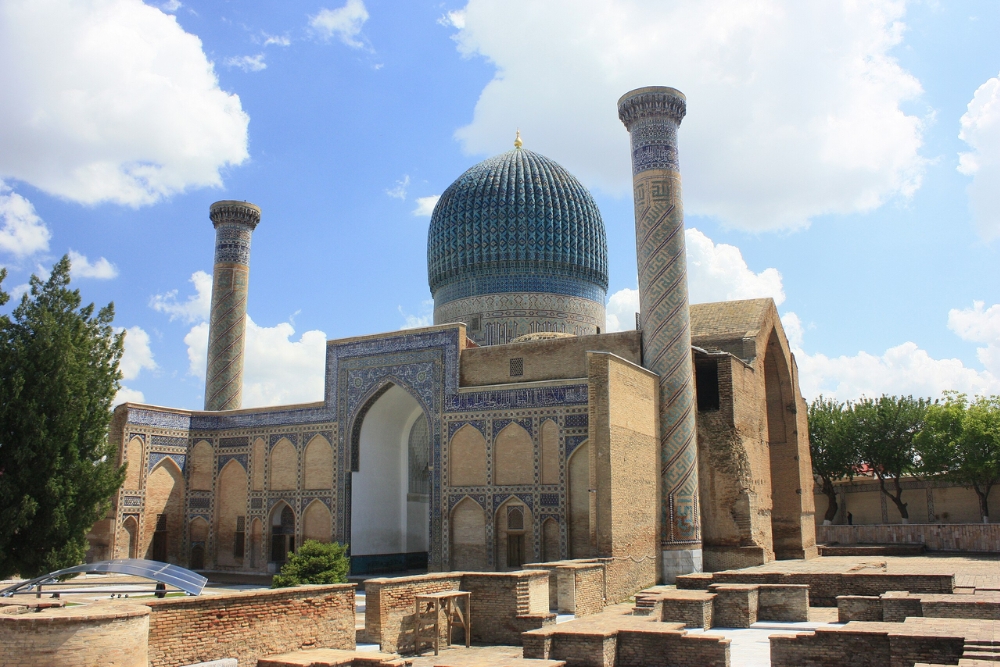
© Wikipedia
This brick mausoleum, dated 1380 and possibly the city’s oldest surviving monument, was renovated in 2015 and now serves as a souvenir and craft shop. The simple yet elegant structure represents the early Timurid architectural style.
- Historical significance: Possibly the city’s oldest surviving monument from the Timurid period
- Current use: Functions as a traditional craft shop and cultural site
Most Beautiful Churches/Mosques & Religious Landmarks
Samarkand’s religious architecture reflects its role as a crossroads of faiths, featuring magnificent Islamic monuments alongside the places of worship of smaller communities.
Perched on a hill overlooking the ancient Afrosiab site, this historic mosque dates to the 8th century and holds special significance as the first mosque of Samarkand. The current structure reflects various periods of reconstruction.
- Historical importance: Site of the first Islamic conversion in Samarkand
- Presidential tomb: Final resting place of Uzbekistan’s first president Islam Karimov
- Views: Panoramic vistas over the ancient Afrosiab archaeological site

Located 25 kilometers from Samarkand, this modern complex honors one of Islam’s most important scholars, the compiler of the most authentic collection of the Prophet Muhammad’s sayings (hadith).
- Significance: Major pilgrimage site for Muslims worldwide
- Architecture: Modern interpretation of traditional Islamic design
- Pilgrimage: Significant for religious tourism
- Transportation: Accessible by bus from Shah-i-Zinda
This working 19th-century synagogue, built in 1891, represents Samarkand’s historically diverse religious community. Hidden in the old Jewish quarter, it serves the small remaining Jewish population.
- Architecture: Traditional Central Asian style adapted for Jewish worship
- Community: Serves descendants of Bukharian Jews who settled in Samarkand
- Cultural significance: Symbol of Samarkand’s multicultural heritage
- Location: Hidden on unmarked Denau Street in the Old Town
Best Museums and Cultural Sites
Samarkand’s museums provide in-depth insights into the city’s important role as a crossroads of civilizations, from ancient Sogdian culture to the Timurid Empire. We ran out of time to explore them properly—there’s only so much you can pack into a few days when you’re chasing Soviet mosaics and getting lost in bazaars—but these museums are worth adding to your itinerary if you have the time.
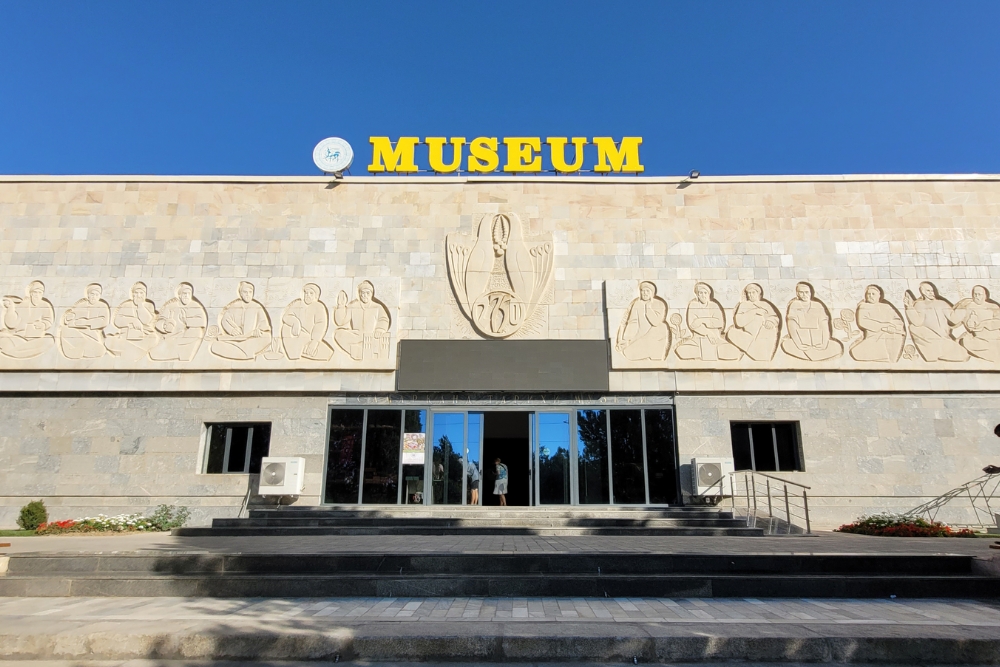
Built around one of Samarkand’s most important archaeological discoveries, this museum showcases a remarkable 7th-century fresco depicting Sogdian King Varkhuman receiving diplomatic missions from across the known world.
- Highlights: Original Sogdian wall paintings showing Silk Road diplomacy, artifacts from pre-Islamic Samarkand
- Historical context: Evidence of Samarkand’s role as a diplomatic center before the Islamic conquest
- Archaeological significance: One of the finest examples of Sogdian art in existence
© Wikipedia
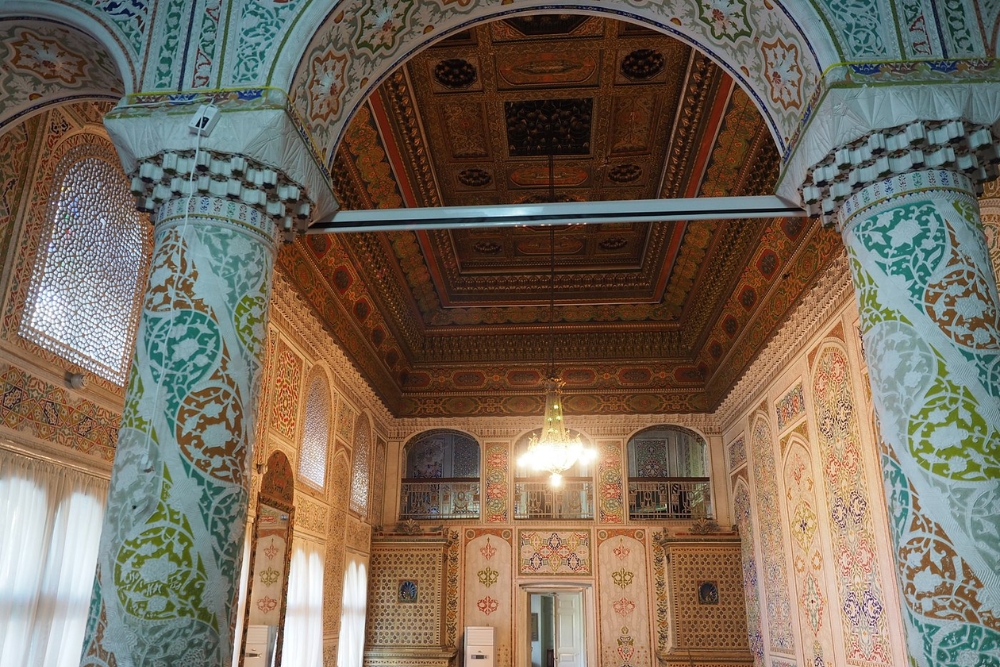
Housed in a former Jewish merchant’s mansion, this museum offers comprehensive coverage of Samarkand’s multicultural history, with a particular focus on the city’s Jewish heritage.
- Collections: Jewish history wing with old photographs, ethnographic exhibits, and cultural artifacts
- Architecture: Traditional merchant’s house showcasing residential architecture
- Cultural focus: Emphasis on Samarkand’s diverse religious and ethnic communities
© ViktoriaS, TripAdvisor
The remains of the medieval world’s most advanced astronomical facility, built by Timur’s grandson Ulugbek in the 1420s. The observatory’s massive underground sextant was the largest astronomical instrument of its time.
- Scientific achievement: Ulugbek’s star catalog remained the most accurate for centuries
- Astronomical instrument: Remains of a 40-meter radius sextant used for celestial observations
- Historical impact: Contributed significantly to medieval Islamic astronomy
- Educational role: Demonstrates the scientific achievements of the Timurid period


© Gayane Mkhitaryan, Astronomical instrument: Remains of a 40-meter radius sextant used for celestial observations
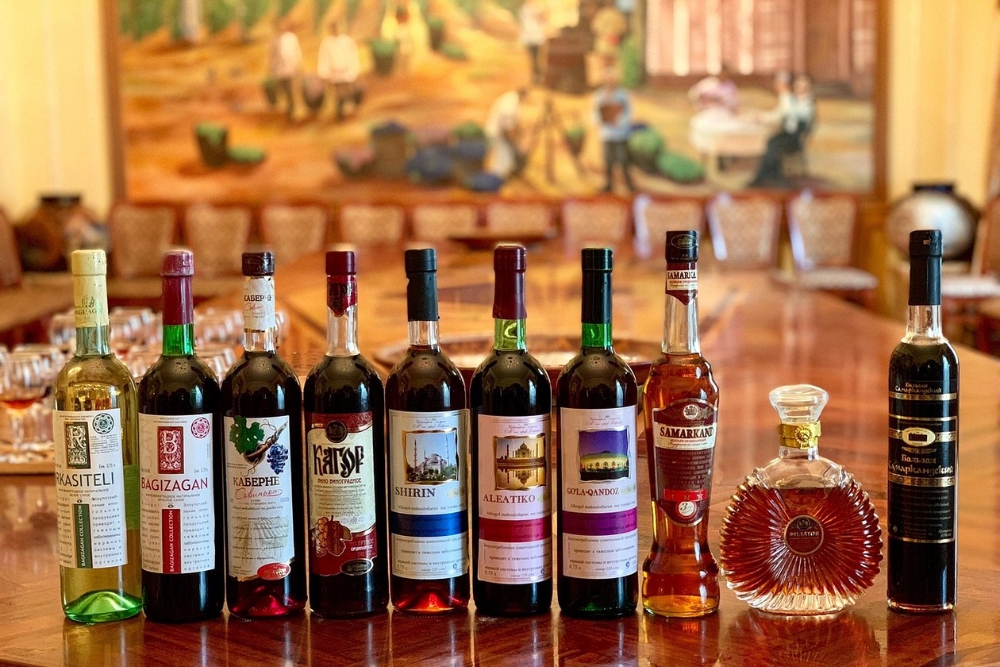
Established in 1927, this historic winery produces internationally awarded dessert wines from local grape varieties, including Gulyakandoz, Shirin, Aleatiko, and Cabernet dessert wines.
- Wine tasting: Eight wines, balzams, and cognacs available for sampling
- Historical significance: Oldest and most famous winery in Uzbekistan
- Local varieties: Unique Central Asian grape cultivars adapted to the local climate
- International recognition: Wines exported to Russia and Central Asian countries
© Vladimir Vinogradov, TripAdvisor
Samarkand’s Soviet Architecture and Heritage
Unlike Tashkent, which features impressive Soviet modernist architecture such as the metro system, Hotel Uzbekistan, and many brutalist buildings, Samarkand’s Soviet influence is more subtle and mainly seen in residential neighborhoods, urban planning, and infrastructure. The city has always focused on preserving its Silk Road heritage rather than highlighting Soviet modernism. Still, we noticed some notable residential districts, apartment buildings, and murals.
Industrial Progress Soviet Mosaic
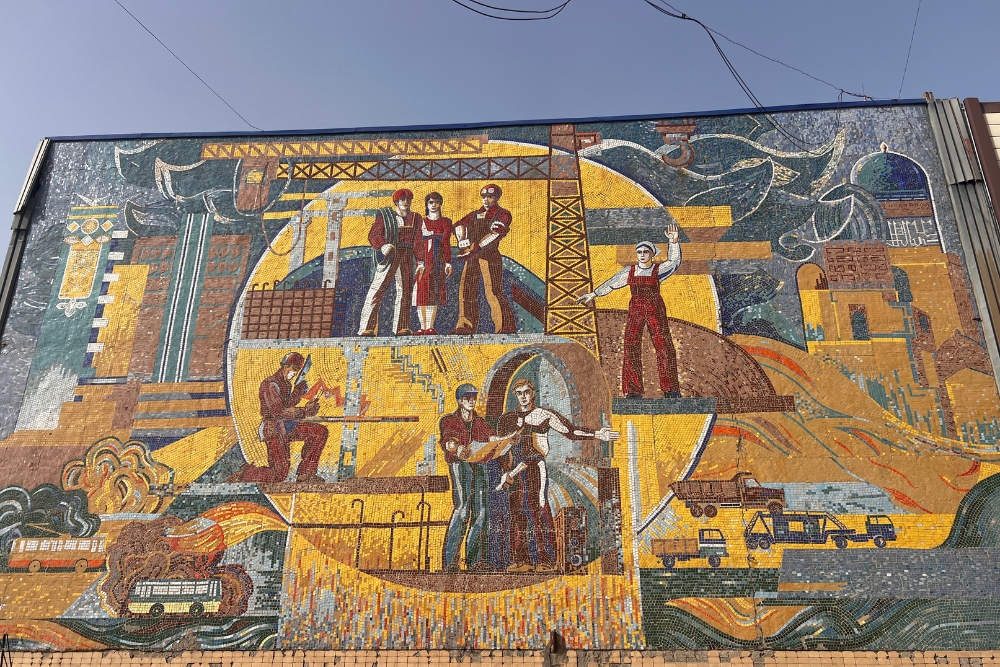
We found this enormous Soviet-era mosaic at the former Samarkand House-Building Plant (DSK Samarkand)—and “massive” doesn’t even do it justice. This golden-colored mural, covering an entire building wall, celebrates industrial progress with images of construction workers, engineers, cotton fields, and Soviet vehicles, all created with thousands of tiny ceramic tiles. While locals claim it’s one of the largest Soviet mosaics ever made, the size is truly impressive—standing in front of it, we felt tiny in comparison to this grand vision of socialist modernization.
It’s classic Soviet propaganda art: optimistic, larger-than-life, and depicting the story of industrialization through labor and technology. Unlike the well-preserved Silk Road monuments, this mosaic is gradually fading and cracking, located in an industrial area most tourists never visit—making it an authentic piece of Samarkand’s Soviet history that’s slowly disappearing.

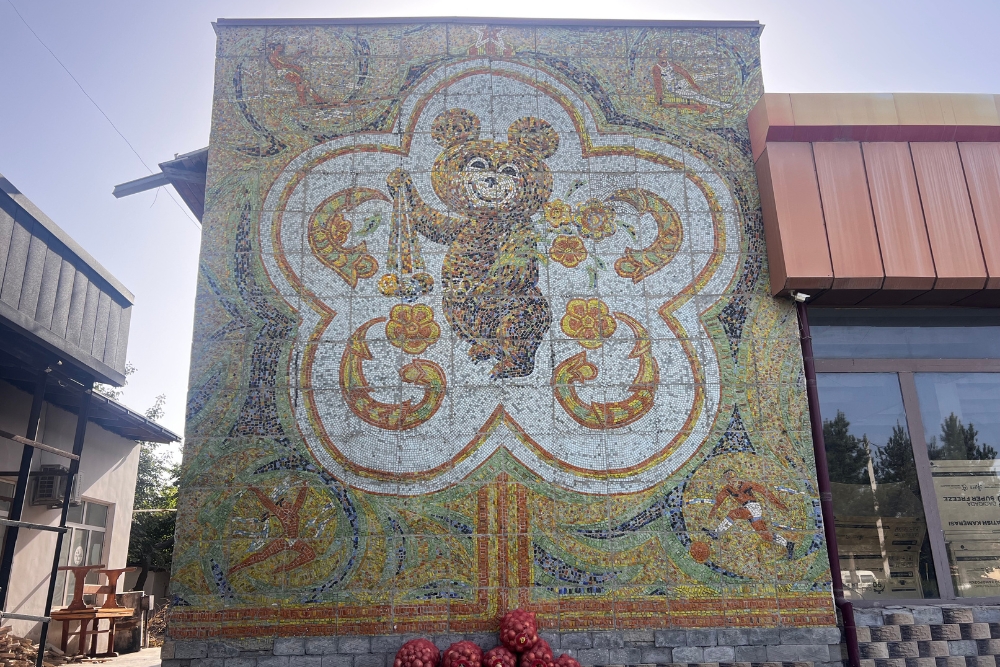
© Gayane Mkhitaryan, 1980s Olympic Bear near Samarkand
Soviet Residential Buildings in Beruniy Street
Beyond the tourist trail, Samarkand’s Soviet-era residential neighborhoods tell a very different story. We wandered through streets lined with prefabricated apartment blocks—the typical Soviet housing that was mass-produced across the USSR from the 1960s to the 1980s. These aren’t architectural landmarks like Tashkent’s decorated buildings, but they offer authentic glimpses of Soviet urban planning. Wide boulevards, concrete apartment buildings, corner shops, and the occasional faded mosaic panel—this is where most Samarkand residents actually live, in a city shaped as much by Soviet planners as by Timurid emperors. The contrast is clear: turn one corner and you’re facing turquoise Islamic domes; turn another and you’re in a purely Soviet residential area that could be anywhere from Minsk to Vladivostok.
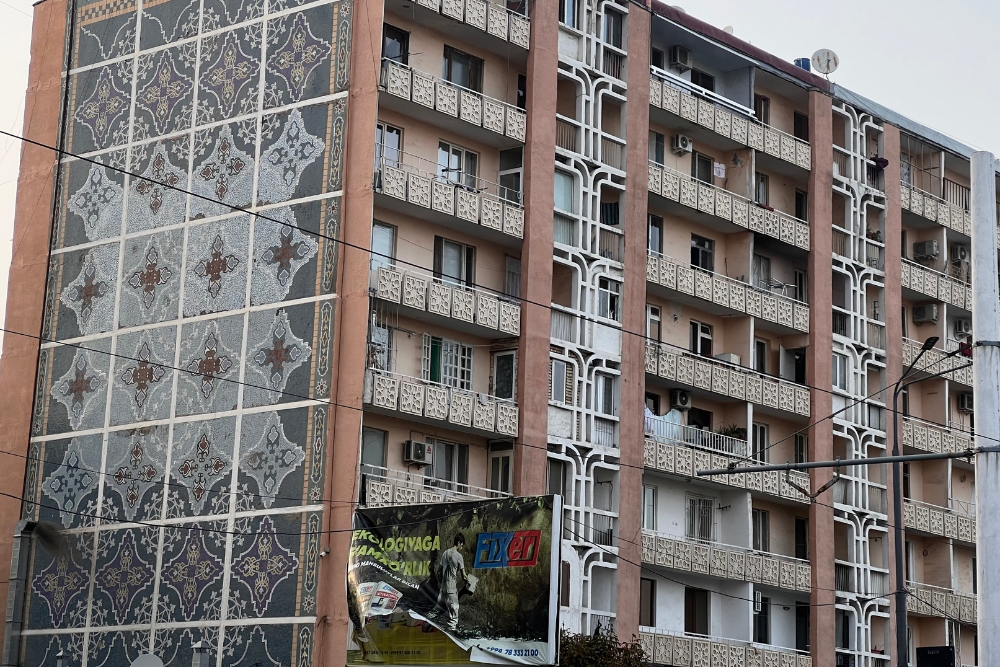
© Gayane Mkhitaryan, Soviet Residential Buildings in Beruniy Street

© Gayane Mkhitaryan, Soviet Residential Buildings in Beruniy Street

© Gayane Mkhitaryan, Soviet Residential Buildings in Narpay Street
Haydar’s Antique Shop & Flea Market
If you want to see what Soviet Samarkand left behind, beyond crumbling mosaics and apartment blocks, find Haydar’s Antique Shop. Located in a private courtyard and home, this chaotic thrift-style shop is a treasure trove of Soviet memorabilia—medals, enamelware, old textiles, and even vintage bottles of Georgian wine hidden among the jumble. We spent nearly an hour sifting through boxes of Soviet badges, propaganda posters, and household items that tell the story of everyday life under the USSR. It’s not organized or polished (half the charm is the treasure hunt through stacked boxes and cluttered shelves), but that’s exactly what makes it special. This is where Soviet nostalgia endures in dusty boxes and forgotten corners, a true time capsule run by collectors rather than curated for Instagram.


© Gayane Mkhitaryan, Traditional Uzbek Skullcaps

Facade of the Water Management Department of the Samarkand Region
We nearly walked past this towering Soviet-era relief sculpture before looking up and realizing what we’d found—a massive concrete figure of a muscular worker in traditional Uzbek dress, arms raised in a gesture of triumph and labor. This is classic Soviet monumental propaganda: the idealized working man, strong and proud, built on a scale meant to inspire awe and obedience.

Soviet Mural on UZTelecom’s Building (Mirzo Ulugbek Street)
Hidden on the facade of UZTelecom’s building on Mirzo Ulugbek Street, this striking Soviet-era mosaic celebrates the space race and technological progress that shaped the USSR’s identity. The blue and gold tiles show a cosmonaut or astronaut floating through space, surrounded by satellites and celestial imagery—highlighting the Soviet focus on space exploration after Yuri Gagarin’s historic flight in 1961. The mosaic’s color scheme is distinctly Soviet: deep blues, golds, and that characteristic iridescent quality of glass tiles that shimmer as you walk past.

Unique Experiences and Guided Tours
Discover Samarkand through specialized experiences that reveal layers of history, culture, and artistic achievement beyond standard sightseeing.
- Registan Evening Photography Tours – Professional guided sessions capturing the square’s transformation from day to illuminated night, with tips for avoiding tourist crowds
- Shah-i-Zinda Spiritual Walks – Guided tours focusing on the necropolis’s religious significance and pilgrimage traditions with local Islamic scholars
- Traditional Bread-Making Workshops – Learn to bake legendary Samarkand bread in traditional tandoor ovens with master bakers
- Silk Road History Tours – Comprehensive walks tracing ancient trade routes and visiting sites connected to historical merchants and diplomats
- Sogdian Culture Explorations – Specialized tours of Afrosiab and the museum focusing on pre-Islamic Samarkand and Sogdian merchant culture
- Timurid Architecture Masterclasses – Expert-led tours explaining Islamic architectural techniques, symbolism, and artistic innovations
- Traditional Craft Workshops – Visits to artisan workshops in old madrasahs where craftsmen continue centuries-old techniques in ceramics, textiles, and metalwork
- Wine and Culture Tours – Combined tastings at Hovrenko Winery with cultural discussions about Samarkand’s role in ancient trade.
- Booking: Local tour operators or certified travel agencies, plus convenient online platforms like GetYourGuide, Headout, and Tiqets for advance booking with instant confirmation, flexible cancellation, and often skip-the-line access to popular attractions
- Duration: Range from 2-hour specialized walks to full-day comprehensive experiences
Free Things to Do
Experience Samarkand’s magnificence without spending a som through these free activities that showcase the city’s architectural and cultural treasures.
- Explore Registan Square exterior – Marvel at the three madrasahs from the public square, though entry inside requires tickets (the exterior views are spectacular)
- Wander the Old Town Jewish Quarter – Discover hidden mosques, traditional architecture, and glimpses of multicultural Samarkand
- Visit Hazrat-Khizr Mosque surroundings – Enjoy panoramic views over Afrosiab archaeological site and the city beyond
- Browse Siab Bazaar atmosphere – Experience traditional market life, sample dried fruits, and see traditional bread-making (buying optional)
- Walk the ancient Afrosiab site – Explore the archaeological remains of pre-Islamic Samarkand where the original city stood
- Photograph Soviet-era mosaics – Hunt for beautiful Soviet murals and architectural elements scattered around the city center
- Enjoy evening Registan illumination – Watch the monuments light up at sunset, sometimes with free sound and light shows
- Explore residential neighborhoods – Walk through traditional mahallas (neighborhoods) to see daily life and traditional architecture
- University Boulevard strolls – Modern tree-lined avenue perfect for evening walks and people-watching
Outdoor Activities and Nature
While Samarkand is primarily known for its architectural wonders, the surrounding region offers several outdoor experiences and natural attractions.
- Nurota Mountains day trips – Ancient petroglyphs, natural springs, and hiking trails in the mountains 2 hours from Samarkand
- Aydarkul Lake excursions – Large artificial lake offering fishing, swimming, and desert camping experiences
- Zaamin National Park visits – Mountain park with hiking trails, juniper forests, and cooler climate for escaping summer heat
- Traditional horse riding – Explore the countryside around Samarkand on horseback, following ancient caravan routes
- Desert camping near Kyzylkum – Overnight experiences in the vast Kyzylkum Desert with traditional yurt accommodation
- Botanical garden walks – Peaceful gardens perfect for relaxation and escaping the intensity of monument visiting
- Cycling tours – Guided bike tours through rural areas and traditional villages surrounding the city
- Photography expeditions – Sunrise and sunset shoots at optimal viewpoints around the city and surrounding landscape
Best seasons: Spring (April-May) and autumn (September-October) for comfortable outdoor temperatures
Best Neighborhoods to Explore
Each district of Samarkand offers different perspectives on the city’s rich history and contemporary life.
- Old Town (Historic Center) – UNESCO World Heritage area containing Registan, Bibi-Khanym, and traditional residential quarters with centuries-old architecture
- Afrosiab District – Archaeological area with museum and remains of ancient pre-Islamic Samarkand, offering insights into Sogdian civilization
- Siab Bazaar Area – Traditional market quarter showcasing authentic daily life, food culture, and traditional commerce continuing ancient bazaar traditions
- Jewish Quarter – Historic neighborhood with traditional architecture, working synagogue, and glimpses of Samarkand’s multicultural past
- University District – Modern area with educational institutions, parks, and contemporary Uzbek urban planning
- Russian Quarter – Area developed during the colonial period with different architectural styles and restaurant scene
- Airport Road (Modern Samarkand) – Contemporary business district showing the city’s modern development and international connections
Getting around: Most historic sites within walking distance; taxis and marshrutkas for longer distances
Best Panoramic Viewpoints in Samarkand
Experience Samarkand’s architectural magnificence from these spectacular vantage points offering sweeping views of the historic city.
- Hazrat-Khizr Mosque hilltop – Panoramic views over the Afrosiab archaeological site and the historic city center, with Registan visible in the distance
- Registan viewing platform – Free elevated platform providing perfect views of all three madrasahs and the famous square from above
- Shah-i-Zinda upper terraces – Views down the sacred avenue of mausoleums and across the city from the necropolis’s highest points
- Bibi-Khanym Mosque entrance – Elevated position offering views of the massive mosque complex and the surrounding old town
- Modern hotel rooftops – Several hotels offer rooftop restaurants and bars with views over the historic monuments
- Afrosiab Museum surroundings – Elevated archaeological site providing views over both ancient and modern Samarkand
- University Boulevard bridges – Modern vantage points offering different perspectives on the city’s layout and development
Best times: Golden hour (one hour before sunset) for optimal lighting and dramatic shadows across the monuments
Traditional Uzbek Souvenirs and Where to Buy Them
Take home authentic pieces of Samarkand’s artistic heritage through traditional crafts that continue centuries-old techniques.
- Samarkand ceramics – Traditional blue and white pottery, decorative plates, and tilework replicas (Siab Bazaar, workshop cooperatives in old madrasahs)
- Silk suzani embroidery – Handwoven decorative wall hangings with traditional patterns unique to Samarkand region (Registan area shops, traditional craft centers)
- Samarkand paper products – Made from mulberry bark using 10th-11th century techniques at Meros paper mill (Meros factory shop, cultural centers)
- Traditional musical instruments – Handcrafted doira drums, rubab string instruments (Music instrument workshops, cultural centers)
- Samarkand bread (non) – Famous flatbread that allegedly never goes stale, perfect for gifts (Siab Bazaar, traditional bakeries)
- Miniature architectural models – Detailed replicas of Registan, Gur-e-Amir, and other monuments (Souvenir shops around major monuments)
- Traditional textiles – Handwoven fabrics, traditional clothing, and accessories (Traditional workshops in old madrasahs)
- Local wine and spirits – Hovrenko Winery products, traditional fruit wines (Samarkand Wine Factory, specialized shops)
- Best shopping areas: Siab Bazaar for an authentic market experience, Registan area for quality crafts, and old madrasahs for traditional workshops
- Bargaining: Expected in bazaars, fixed prices in official shops, and cooperatives
Bonus: Traditional Food & Drink + Best Places
Samarkand’s cuisine represents the pinnacle of Uzbek culinary traditions, influenced by the city’s position as a crossroads of cultures and enhanced by local specialties.
Must-Try Traditional Dishes
- Samarkand Plov – The legendary version where ingredients are layered rather than mixed during cooking, resulting in distinct strata of rice, meat, and carrots. Served with a choice of how much meat and vegetables you want
- Samarkand Non (Bread) – Legendary flatbread that reportedly never goes stale or moldy, with distinctive patterns and sesame seeds baked in traditional tandoor ovens
- Karakhan – Mysterious local specialty of lamb cubes stewed with dried apricots and served with rice, found nowhere else in Uzbekistan
- Samsa – Samarkand’s version of the traditional pastry filled with meat and onions, baked in tandoor ovens rather than fried
- Mastava – Traditional soup with rice, vegetables, and meat, perfect for cooler weather
- Shurpa – Hearty soup with large pieces of mutton, vegetables, and fresh herbs
- Manti – Large steamed dumplings filled with meat and onions, often served with sour cream
- Lagman – Hand-pulled noodles in rich broth with meat and vegetables, showing Chinese Silk Road influence
Best Traditional Restaurants
- Samarqand Osh Markazi N1 – Widely regarded as having the best plov in the city, located halfway between Shah-i-Zinda and the airport. Portions range from 40,000-70,000 som, with half portions recommended per person
- Platan – One of Samarkand’s most famous restaurants serving traditional Uzbek cuisine in romantic surroundings with traditional decor. Known for excellent atmospher,e but can have slow service
- Old City Restaurant – Rare find offering robust vegetarian options alongside traditional dishes, including excellent pumpkin manti
- Shokhrukh Nur – Near Registan Square, serving authentic Uzbek fare without premium tourist pricing, excellent for traditional lagman and shashlik
- Registan Restaurant – Directly across from the Registan, surprisingly good quality despite tourist location, known for traditional dishes and friendly service
- Karimbek – Popular option in the newer Russian quarter offering both Uzbek and international cuisine with outdoor seating and private dining areas.
Traditional Drinks
- Green tea (kok choy) – Essential part of every meal, served in small ceramic bowls (piyola) throughout the day
- Samarkand wine – Hovrenko Winery’s acclaimed dessert wines made from local grape varieties like Gulyakandoz and Shirin
- Shoh Tut – Fresh mulberry juice, considered healthy for blood circulation
- Ayran – Refreshing salted yogurt drink perfect for hot weather
- Traditional fruit compotes – Made from dried apricots, raisins, and local fruits
Food culture tips: Meals are communal experiences with shared dishes, bread is sacred and never wasted, and the tea ceremony is a central part of Uzbek hospitality. Traditional restaurants are very affordable, with hearty meals costing 50,000-100,000 som per person.
FAQs: The Answers I Needed Before Planning My Trip
How many days do I need in Samarkand?
A minimum of 2 days is required for the main attractions, but 3-4 days is ideal for a relaxed pace without feeling rushed. Two days lets you see Registan Square, Shah-i-Zinda, Gur-e-Amir, and Bibi-Khanym Mosque, plus have time for Siab Bazaar and Ulugbek Observatory. With 3-4 days, you can also do day trips to Shakhrisabz or simply enjoy the city at a more leisurely pace with time for wine tasting and traditional craft workshops.
What's the best time to visit Samarkand?
- April and May, as well as September and October, offer the best weather, with comfortable temperatures (20-30°C) and perfect lighting for photography.
- Spring (April-May) brings blooming flowers and longer daylight hours, while autumn (September-October) has pleasant temperatures after the summer heat subsides.
- Winter (November-March) is ideal for budget travelers—fewer crowds, lower hotel prices, and flight savings, plus most attractions remain open year-round with rare snowfall.
How much does it cost to visit Samarkand per day?
Samarkand is incredibly budget-friendly. Total daily budget: $30-40 for budget travelers, including everything:
- Accommodation: $25-35/night for guesthouses, $50-80/night for mid-range hotels
- Food: $6-15/day total (breakfast $5, lunch $5-8, dinner $8-12)
- Attraction tickets: $3-5 each (40,000-60,000 UZS) – Registan Square costs about $5
- Transportation: $2-5/day for taxis via the Yandex app
- Drinks: Beer $1.50, soft drinks $0.70
Is Samarkand expensive?
No, Samarkand is one of Asia’s most affordable destinations. You get incredible value—world-class UNESCO World Heritage architecture, amazing meals under $8, and decent accommodation without breaking the bank. Compared to European or other Asian historic cities, Samarkand offers luxury experiences at budget prices. Even 5-star hotels cost around $80 to $ 150/night.
Is Samarkand safe for solo travelers?
Absolutely yes, including for solo female travelers. Uzbekistan has introduced tourist police at major attractions, locals are helpful and friendly, and crime against tourists is extremely rare. I traveled solo as a woman and felt completely safe. The city center is well-lit and patrolled, most younger locals speak English, and there’s a strong culture of hospitality. Standard travel precautions apply, but safety shouldn’t be a concern.
Is it easy to travel independently in Samarkand?
Yes, independent travel is straightforward. Key tips:
- Download the Yandex taxi app for reliable, affordable transportation
- Most major attractions have English signage and information
- Maps.me works better than Google Maps offline in Uzbekistan
- Shared taxis cost about 50 cents per seat for local routes
- Main attractions are within walking distance of each other in the historic center
How do I get around Samarkand?
Multiple budget-friendly options:
- Yandex Taxi: Most convenient, about $2 for 5km rides with upfront pricing
- Shared taxis: 50 cents per seat, depart when full from taxi stands near stations
- Walking: Most historic attractions are within 15-20 minutes of each other
- Local buses: Very cheap but can be crowded and confusing for tourists
The historic center is compact enough to explore on foot.
Can I pay with credit cards in Samarkand?
Mostly a cash economy, but getting easier. Visa cards are most widely accepted at hotels and upscale restaurants. ATMs available at major hotels and banks dispensing both US dollars and Uzbek som. Bring cash for:
- Siab Bazaar and street vendors
- Small restaurants and cafes
- Attraction entrance fees
- Taxi drivers (though Yandex accepts cards)
Exchange US dollars for the best rates, and you can now pay with US dollars or Euros at many shops and restaurants.
Is Samarkand worth visiting? Is it better than Bukhara?
Absolutely worth visiting—it’s the crown jewel of the Silk Road. Samarkand offers:
- More impressive architecture than Bukhara with grander scale monuments
- The famous Registan Square – arguably Central Asia’s most iconic sight
- Better preservation of major monuments (though some feel over-restored)
- More international atmosphere with diverse dining and accommodation options
Bukhara feels more authentic with its living old town, while Samarkand is more spectacular architecturally. If you only visit one, choose Samarkand for the “wow factor.”
Do I need to book accommodation in advance?
Recommended for mid-range and upscale hotels, especially during peak season (April-May, September-October). Budget options like guesthouses are sometimes available for walk-ins, but don’t risk it during:
- Spring (April-May) – Peak tourist season
- Major holidays – Navruz (March), Eid celebrations
- Weekends – Friday-Saturday are busiest
Book platforms: Local guesthouses, international chains, or travel agencies. Winter travel (November-March) offers more flexibility and lower rates.
Final Thoughts on Visiting Samarkand
Samarkand isn’t just a destination—it’s a revelation. Standing in Registan Square as the call to prayer echoes off those turquoise domes, you’ll understand why this place has captivated travelers for over two millennia. Yes, it’s touristy now, and yes, much has been restored, but the magic remains utterly real. For solo budget travelers, it offers something precious: the chance to witness humanity’s greatest architectural achievements without breaking the bank. Two days here changed how I see travel—and I’m confident it’ll do the same for you. Samarkand delivers on every promise the Silk Road ever made.
