
Things to Do, See, and Experience in Khiva, Uzbekistan

I’ll be completely honest with you—when I first stepped through the massive Ata Darvaza gate into Khiva’s Itchan Kala, I thought I’d made a terrible mistake. I’d spent ten days exploring Uzbekistan, and after the grandeur of Samarkand and the authentic bustle of Bukhara, Khiva looked like a tourist trap. The entrance ticket cost 250,000 som (about $20), vendors were everywhere, and tour groups clustered around every monument. But by sunset that first day, as I watched the golden light hit those turquoise-tiled walls from the Kuhna Ark’s watchtower, I realized I was completely wrong. Khiva isn’t just another Silk Road city—it’s something better. It’s real.
Absolutely, yes. Khiva fought off competition from the likes of Abu Dhabi, Lagos in Nigeria, and Urfa in Turkey to be named 2024 Tourism Capital of the Islamic World, and after spending two days exploring every corner of this living museum, I understand why. With its ancient city so well preserved, Khiva’s a spectacular open-air museum offering plenty of incredible things to do.
What makes Khiva special isn’t just its preservation—it’s that people actually live here. There are over 50 historical sites and monuments, more than 350 houses inside the old city center, and around 2,500 people still live here.
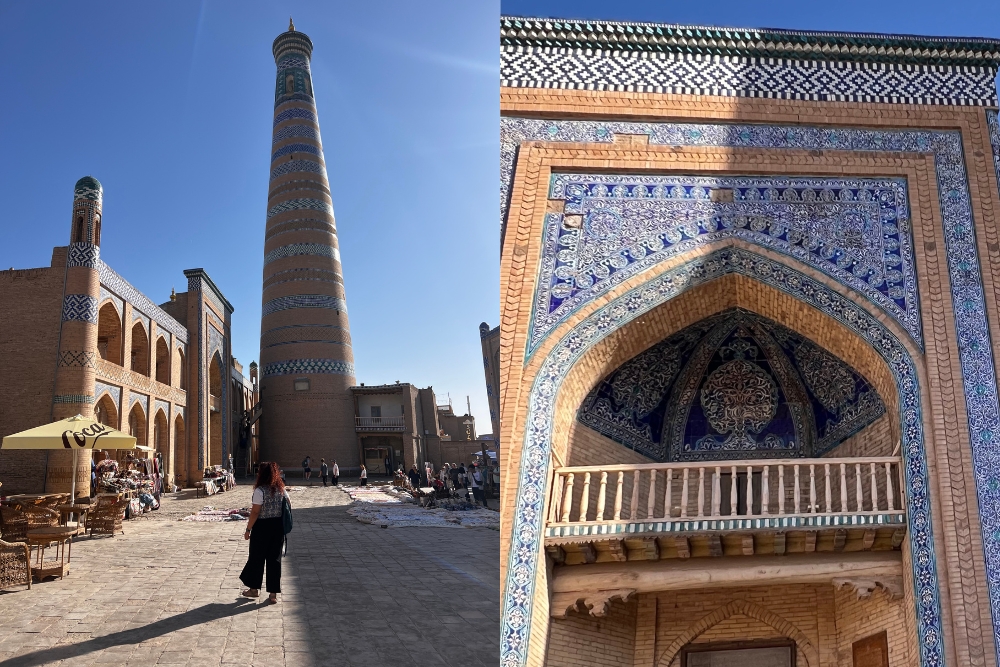
© Gayane Mkhitaryan, Islam Khoja Minaret & Complex

What is Special about Khiva?
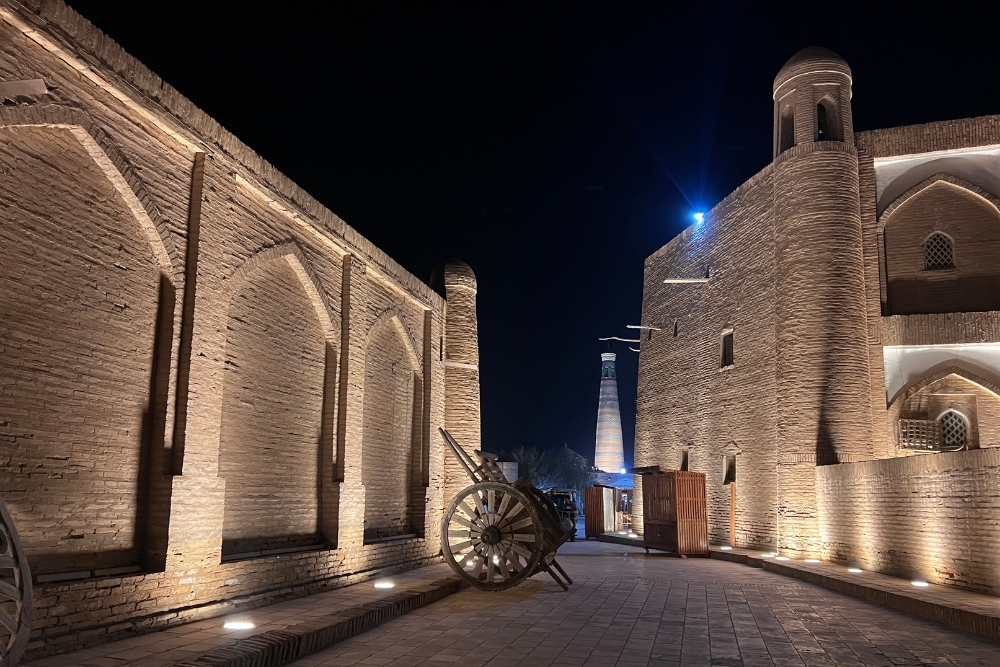
What makes Khiva unique is its compact scale and the absence of crowds compared to places like Samarkand and Bukhara. What surprised me most: How quiet it feels. Unlike Bukhara, where the old town is full of working shops and restaurants, Khiva has fewer businesses, giving it an almost eerie, preserved-in-amber quality. Some people find this makes it feel less “authentic,” but I found it peaceful and photogenic.
The architectural concentration is unmatched—you can walk across the entire walled city in 15 minutes, yet it contains over 50 historic monuments.
How Long to Spend in Khiva
Entrance tickets are valid for 24 hours; however, you can still explore more of the city after that. The 250,000 som fee covers access to all the museums, madrassas, and historic monuments within Itchan Kala—essentially, you’re paying for the preservation and maintenance of this UNESCO World Heritage Site.
My honest recommendation? Two days is perfect. Day one: the major paid attractions with your ticket; day two: free explorations, hidden courtyards, shopping, and that incredible sunrise walk I keep mentioning. Plus, if you’re staying inside Itchan Kala (which I highly recommend), you don’t need to buy an entrance ticket to enter or re-enter the old city through your hotel.
Also, we were there on Friday, and they said it’s free on Fridays and Sundays.

© Gayane Mkhitaryan, Khiva entrance to the city
Must-See Attractions: My Recommendations
After exploring every paid and free attraction in Khiva, here are the absolute must-sees that justify your visit:
- Kalta Minor Minaret – The unfinished turquoise masterpiece that defines Khiva’s skyline
- Islam Khoja Minaret & Complex – Climb Uzbekistan’s tallest minaret for breathtaking city views
- Kuhna Ark Citadel – The fortress palace with the best sunset viewpoint in the city
- Juma Mosque – Marvel at 213 ancient wooden columns spanning different centuries
- Tash Khauli Palace – Explore the Khan’s luxurious three-courtyard residence
- Pakhlavan Makhmud Mausoleum – The patron saint’s shrine with stunning blue tilework
- Itchan Kala Walls – Walk the ancient fortifications for aerial city views
- Allakuli Khan Madrasah – One of Central Asia’s finest examples of Islamic architecture
- Mohammed Amin Khan Madrasah – Now a beautiful heritage hotel you can actually stay in
- Isfandiyar Palace (also called the Palace of Nurullabay) – The only major attraction outside the walls, showcasing 20th-century royal life
Places to Visit in Khiva + Images
The beauty of Khiva is that the vast majority of Khiva’s sights are located within the walls of the Itchan Kala, the walled city for which Khiva is known. Unlike sprawling Tashkent or Samarkand, you can see everything on foot.
For photos, the money shot is from inside the main square at sunrise, with the Kalta Minor Minaret in the foreground and the Islam Khoja Minaret in the background. But the hidden gem? The view from the northern walls at dawn, when the entire city glows golden, and you’ll have it entirely to yourself.

© Gayane Mkhitaryan, Pahlavan Mahmoud Mausoleum
Historical Places and Landmarks
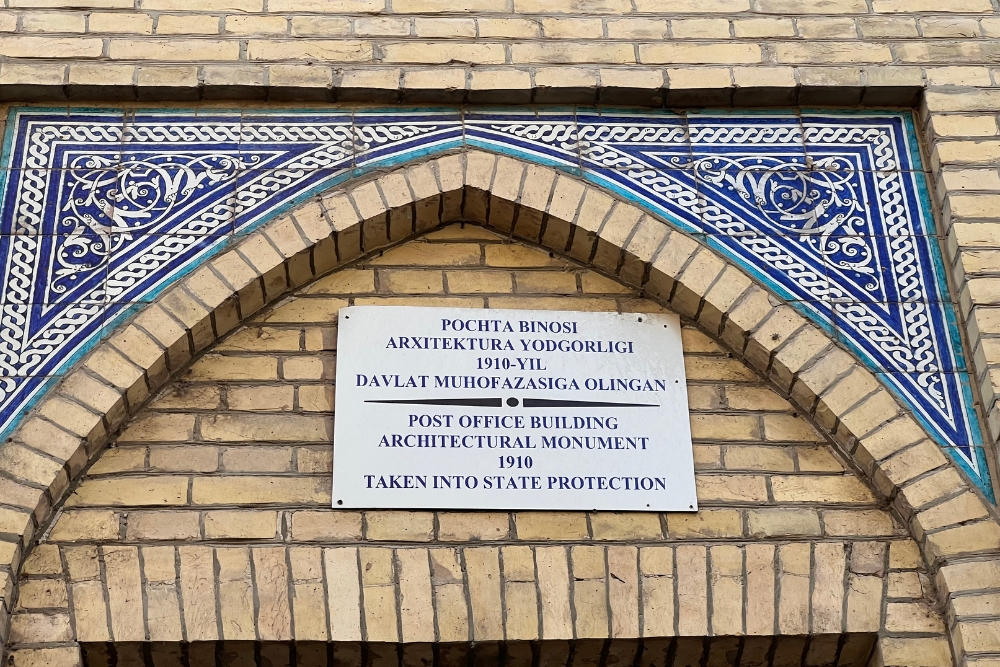
© Gayane Mkhitaryan, Post office Building 1910 Khiva

© Gayane Mkhitaryan, Post office Building 1910 Khiva
Itchan Kala (Inner City)
The ancient city of Khiva is listed on UNESCO’s World Heritage List. It means that the worldwide organization protects all the attractions. What struck me most wasn’t the individual monuments, but walking these streets at dusk when the crowds disappear, and locals emerge for their evening routines.The walls themselves tell the story—this impressive clay brick structure averages 5-6 meters in thickness and reaches 10 meters in height.
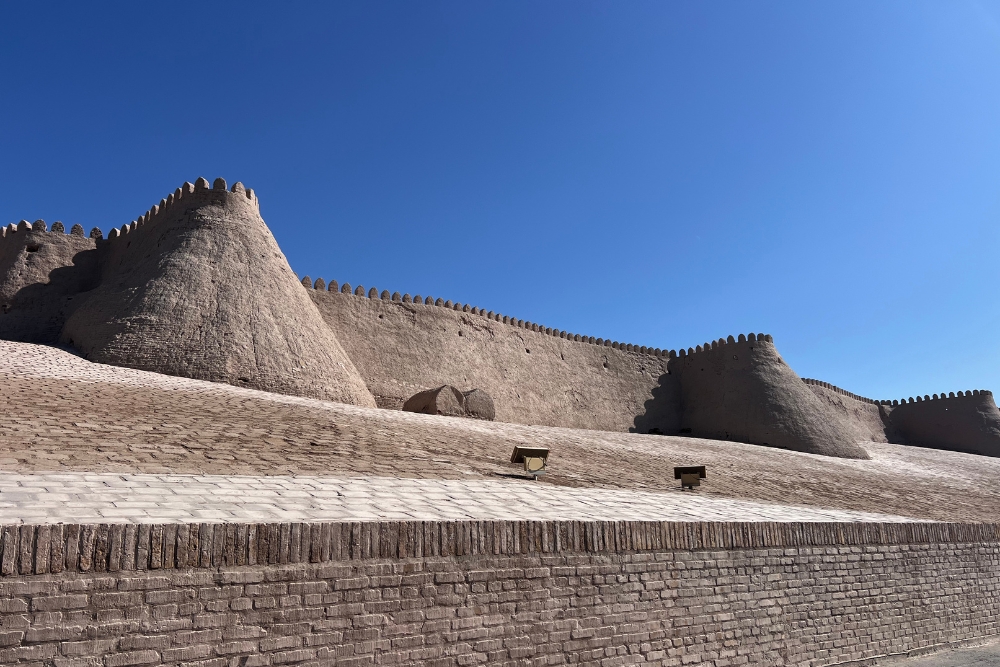
Kuhna Ark Citadel
This isn’t just another fortress—it’s where the Khans actually lived and ruled. Built in the 12th century, it contained the khan’s harem, mint, stables, barracks, mosque, and jail. In effect, there was almost no need to leave its walls.
The Summer Mosque inside is beautiful, but the real draw is the watchtower. The view from the top is arguably the best in the city, with golden light illuminating the city’s rooftops and mud-brick walls. I spent over an hour here at sunset, watching the entire town transform from beige to gold to deep purple.
Entry: Included in main ticket
Watchtower climb: 100,000 som extra (I didn’t do it but there were lots of enthusiasts)

© Gayane Mkhitaryan, Shutterstock
Tash Khauli Palace (Stone Palace)
The Tash Khovli Palace, meaning Stone Palace, was built by order of the Khan of Khiva, who resided there with his relatives and brothers for about 40 years in the mid-nineteenth century.
The harem courtyard completely blew me away—not because of any prurient interest, but because the tilework is so intricate you could spend hours studying each panel. The harem is beautiful, definitely not to be missed (and the only museum of the collective ticket is really, really worth seeing).
Entry: Included in main ticket

© Gayane Mkhitaryan, Uzbek Travel
Most Beautiful Churches & Religious Landmarks

© Gayane Mkhitaryan, Kalta Minor minaret and the adjacent Muhammad Aminkhan Madrasah
Islam Khoja Complex & Museum of Applied Arts
The Islam Khodja Madrasa is another stunning piece of architecture in Khiva’s Ichan Kala. The outer gate is adorned with some rather lovely tilework. Inside, you will find the applied arts museum, displaying pieces of Khorezm woodcarvings and metalwork alongside Uzbek and Turkmen carpets.
But the real attraction is climbing the minaret. Rising to record-breaking heights as the tallest minaret in all of Uzbekistan, Islam Khodja Minaret is a postcard-worthy city symbol of Khiva’s Itchan Kala. The climb up the narrow, winding staircase isn’t for the claustrophobic – at some points, the passageway is barely wider than your shoulders!
Entry: Museum included in main ticket
Minaret climb: 100,000 som extra

© Gayane Mkhitaryan, Islam Khoja Minaret & Complex
Khorezm Silk Museum
Interactive silk museum housed in an old mosque, featuring hands-on silk spinning, weaving, and dyeing activities, alongside masterclasses in silk production. This was unexpected—instead of just looking at displays, you actually get to try spinning silk from cocoons and working on a traditional loom. Rather than just watching how it’s done, you actually get to try it yourself, which makes you appreciate how difficult it is!
Entry: Around $3, includes tea and sweets
Website: https://khorezmsilkmuseum.com/
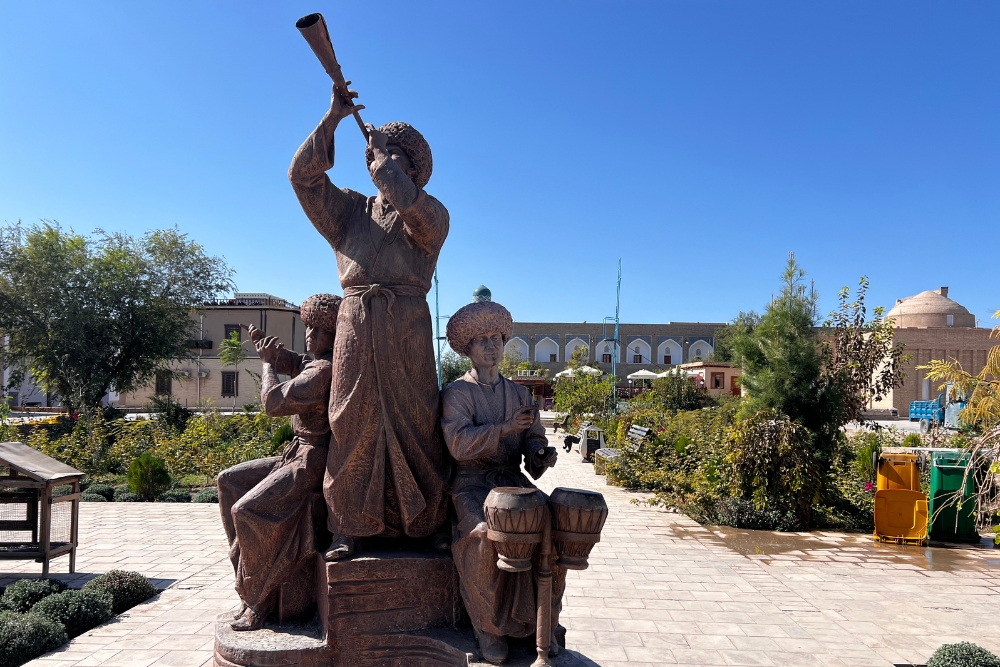
Soviet Monuments and Public Art
Like the one you photographed, there are several Soviet-era monuments scattered around Khiva’s modern districts:
- Worker/farmer heroic monuments
- WWII memorials (located in Square of Rememberance and Honor)
- Busts of local Soviet heroes
- Mosaic panels on building facades
These are mostly ignored by tourists who never venture beyond Itchan Kala’s gates.
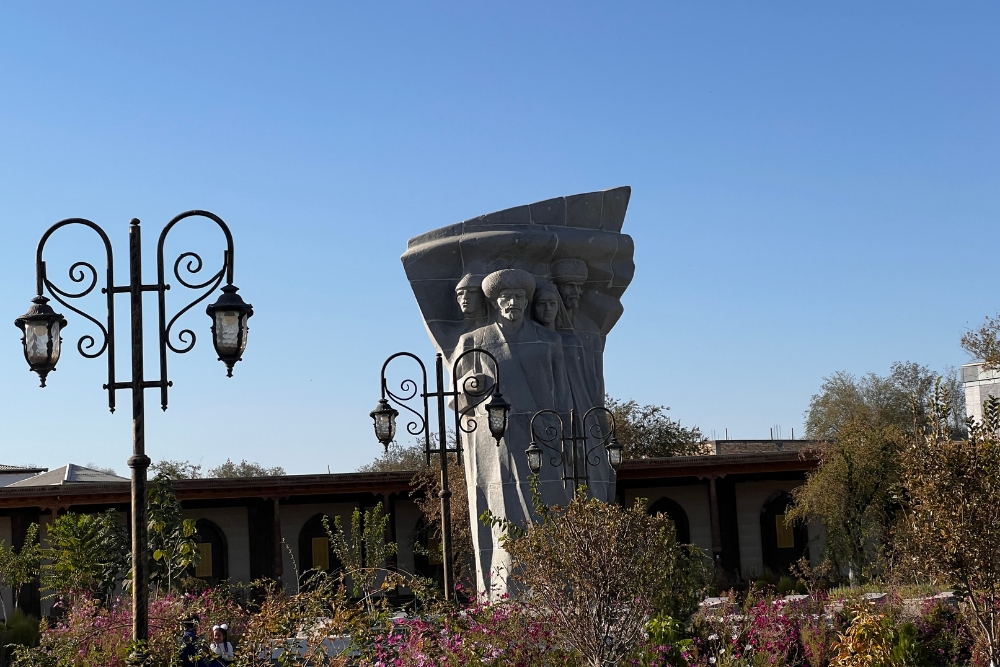

© Gayane Mkhitaryan, Школа №12,им.С.А.Оруджева – Pioneers mosaic

FAQs on Visiting Khiva
Where is the best place to see the sunset in Khiva?
Islam Khoja Minaret is hands down the best sunset spot, as this is the tallest minaret in the old town at 57 meters, and climbing it gives you 360-degree views over the entire walled city with the desert stretching beyond. The turquoise domes and tiled monuments glow in that golden hour light, and you can see how compact and perfectly preserved Itchan Kala really is from above.
Alternative sunset spot: The city walls themselves, particularly along the western or northern sections. You can walk sections of the walls (free access in some areas) and watch the sun set over the desert without the minaret crowds. Or you can combine it with a nice dinner, there are lots of places that offer a panoramic view over the city.
Is Khiva walkable?
Absolutely, and that’s one of its best features. The walled city of Itchan Kala is tiny—you can walk from one end to the other in roughly 15 minutes. Everything you want to see is within this compact area: mosques, madrasas, minarets, palaces, all connected by cobblestone lanes and easily navigable without a map (though I used Maps.me offline just to mark the monuments I wanted to prioritize).
The entire old town is pedestrian-only—no cars can navigate the narrow medieval streets and low gates. This makes exploring on foot not just possible but the only real option, which I loved. No dodging taxis or motorcycles like in Tashkent or Bukhara.
Is 1 day in Khiva enough?
If you only have one day, yes, it’s enough to see the monuments. But if you have two nights in your itinerary, you won’t regret the extra time.
The honest assessment:
- Minimum time needed: 6-8 hours to hit the main highlights if you’re efficient
- Ideal time: 1.5 days (arrive afternoon, full next day, leave following morning) to experience it at different times of day
- Perfect if you have time: 2 full days lets you explore nearby Ayaz Kala yurt camps or just move at a truly relaxed pace
Can Khiva be skipped?
Honestly? If you’re doing the classic Uzbekistan Silk Road route, I’d say no, don’t skip it—but with caveats.
Skip Khiva if:
- You’re really short on time and can only do one historic city (choose Bukhara instead—it feels more lived-in and has better atmosphere)
- You’ve already done Samarkand and Bukhara and are experiencing “turquoise dome fatigue.”
- The logistics genuinely don’t work (trains to/from Khiva are long and awkward, especially from Bukhara)
- You prefer bustling, authentic city life over museum-like preservation
Don’t skip Khiva if:
- You want the most photographable, Instagram-perfect Silk Road experience
- You appreciate open-air museum vibes and architectural preservation
- You have 10+ days in Uzbekistan and want the complete experience
- You’re planning to visit the Aral Sea (Khiva is a natural stopping point en route to Nukus)
If you only have a week in Uzbekistan, the classic Tashkent-Samarkand-Bukhara route is more practical. If you have two weeks like I did, Khiva adds another dimension to understanding Silk Road cities.
What to wear in Khiva?
Practical clothing essentials:
Khiva requires the same modest dress standards as other Uzbek cities, but with some specific considerations I learned during my September visit:
For everyone:
- Comfortable walking shoes with good grip (those cobblestones are uneven and can be slippery)
- Sun protection: Hat, sunglasses, sunscreen (the desert sun is intense, and there’s limited shade in some courtyards)
- Layers: Even in September, mornings were cool but afternoons got warm. I wore light pants, t-shirt, and brought a light jacket for evening
For women:
- Covered shoulders and knees at minimum for mosque visits and respectful general exploration
- Lightweight scarf or shawl for your head at active mosques (most monuments in Khiva are museums now, so head covering isn’t always required, but have one ready)
- Breathable, loose clothing works best in the heat—I wore loose linen pants and cotton tops
- Comfortable sandals or closed-toe shoes (I switched between both depending on how much walking I was doing)
For men:
- Long pants and covered shoulders for mosque visits
- Closed-toe shoes recommended for climbing minarets (those spiral stairs are narrow)
What NOT to wear:
- Tank tops, shorts, or revealing clothing at religious sites
- Brand-new white sneakers (the dust and sand will destroy them—learned this the hard way)
- Flip-flops for serious exploring (cobblestones will kill your feet)
