
Things to Do, See, and Experience in Bukhara, Uzbekistan: A Budget Traveler’s Guide
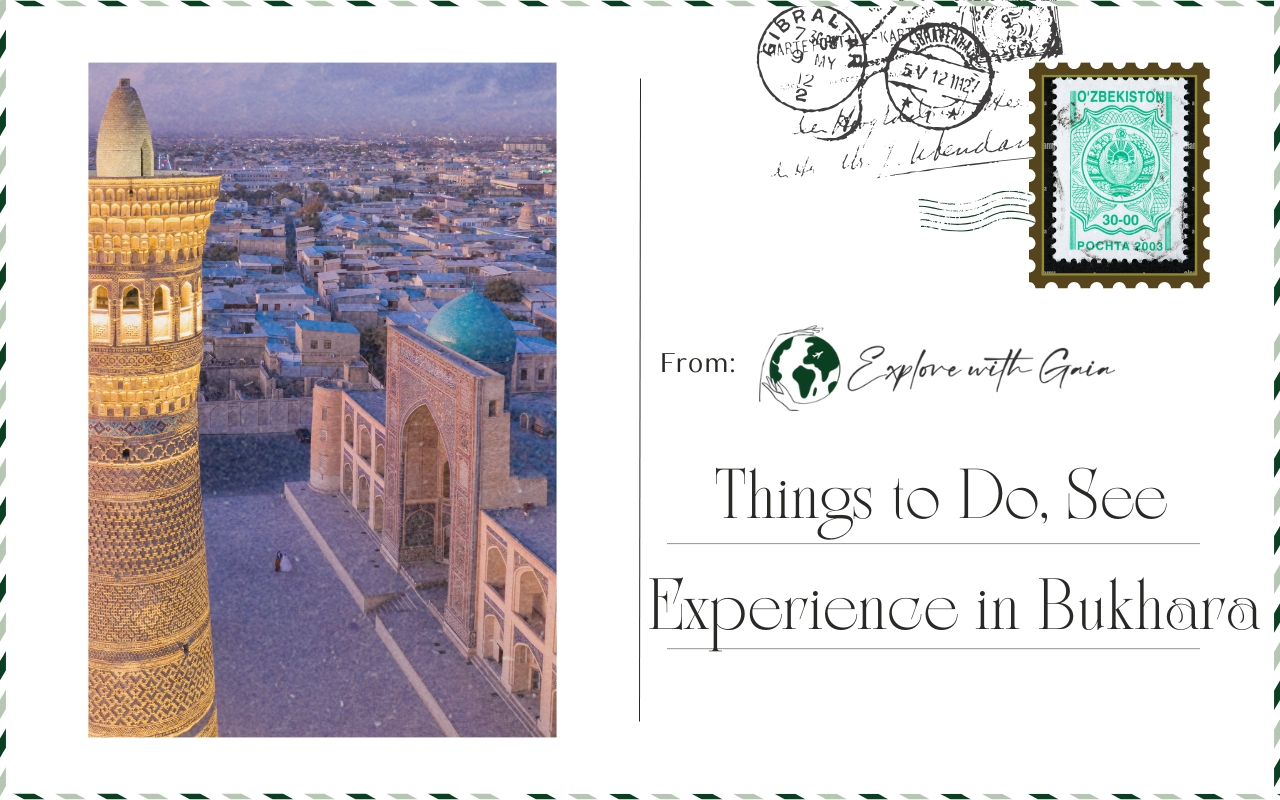
I thought Tashkent was impressive with its Soviet grandeur. Then Samarkand blew me away with Registan Square’s impossible turquoise domes. But when I arrived in Bukhara on September 24th—my third stop on a two-week Uzbekistan journey—something shifted. Each city had been better than the last, and Bukhara? Bukhara was different in a way I hadn’t expected.
After exploring the city for two days and standing in Lyab-i-Hauz square at sunset, watching elderly men play chess while the call to prayer echoed from a dozen minarets, I finally understood why this city survived conquests by Alexander the Great, Genghis Khan, and countless others. It wasn’t just the stunning architecture or strategic location—it was something deeper. Where Samarkand felt like a showpiece and Tashkent felt like a modern capital, Bukhara felt lived-in. Real people working in ancient workshops, families living in centuries-old courtyards, traditions continuing unbroken despite empires rising and falling around them.
Here’s everything you need to know about experiencing Bukhara’s wonders on a budget—plus the mistakes I made so you don’t have to.
Absolutely yes, but with realistic expectations. Bukhara isn’t an undiscovered gem—it’s Uzbekistan’s most visited historical city for good reason. What makes it special isn’t the absence of tourists, but how seamlessly 2,500 years of history blend with everyday Uzbek life.
The reality check: expect crowds at major sites between 10 AM and 4 PM. Expect aggressive carpet sellers (learn to say “No, thank you” firmly in Russian: “Net, spasibo”). Expect to pay tourist prices at restaurants near the main square. But also expect moments of genuine wonder that justify every som you’ll spend.
Bukhara Must-See Attractions: My Recommendation
After two days of exploration, here are the attractions that genuinely impressed me:
- Ark Fortress – The Emir’s ancient citadel with stunning city views and fascinating museums
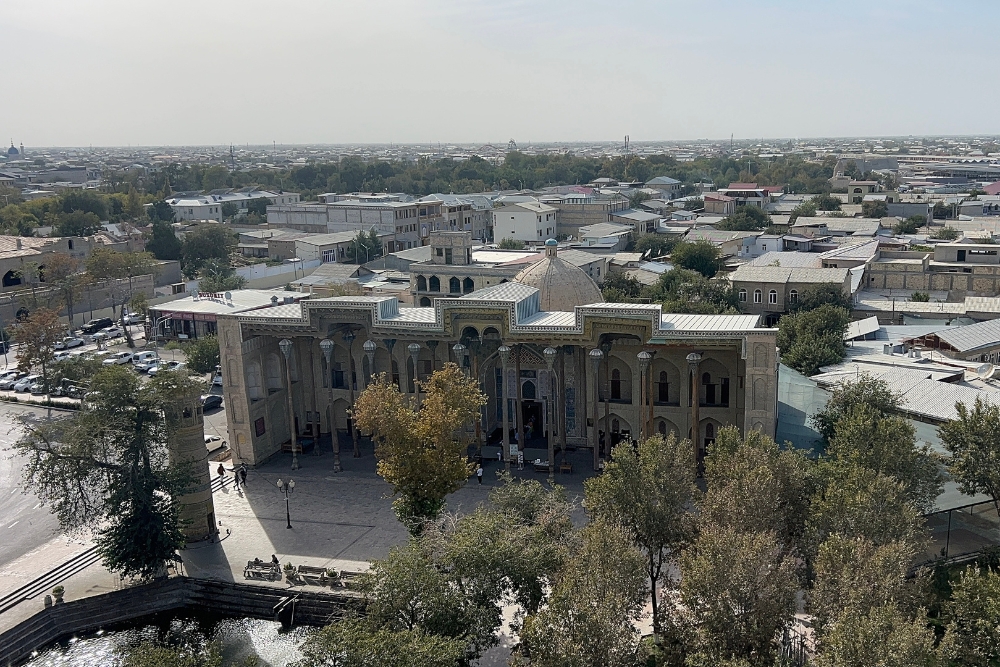
- Bolo Hauz Mosque – Active mosque with incredible wooden pillars and a peaceful atmosphere
- Kalon Minaret – The 47-meter “Tower of Death” that dominates Bukhara’s skyline
- Kalon Mosque – a massive Friday mosque that can hold 12,000 worshippers
- Mir-i-Arab Madrassa – Still-functioning Islamic school with stunning blue tilework
- Chor-Minor – a four-minaret structure that looks like something from a fairy tale
- Abdulaziz Khan Madrassa – Less crowded with a beautiful interior courtyard
- Nadir Divan-Begi Madrassa – Features rare depictions of living creatures in Islamic art
- Maghoki-Attar Mosque – Built on pre-Islamic temple foundations, with fascinating cultural layers
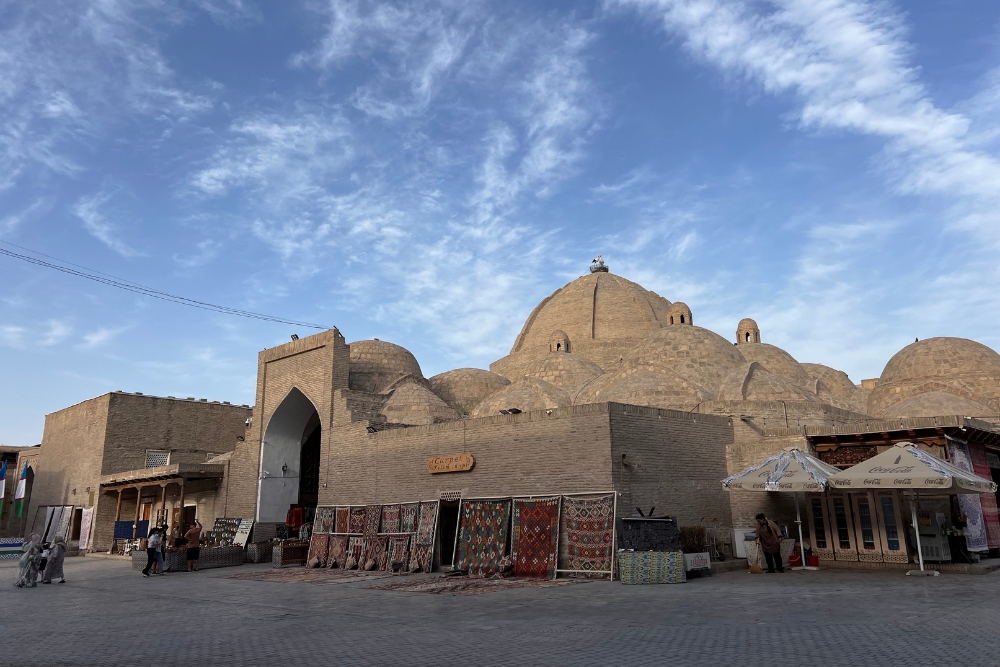
- Trading Domes– Three historic bazaars perfect for souvenir hunting
- Sitorai Mokhi-Khosa Palace – The last Emir’s summer residence with European influences
- Bahauddin Naqshband Mausoleum – Important Sufi pilgrimage site outside the city
- Chashma-Ayub Mausoleum – Biblical spring with local legends
- Ismail Samani Mausoleum – 10th-century masterpiece of early Islamic architecture
Places to Visit in Bukhara, Uzbekistan + Images
Historical Places and Landmarks
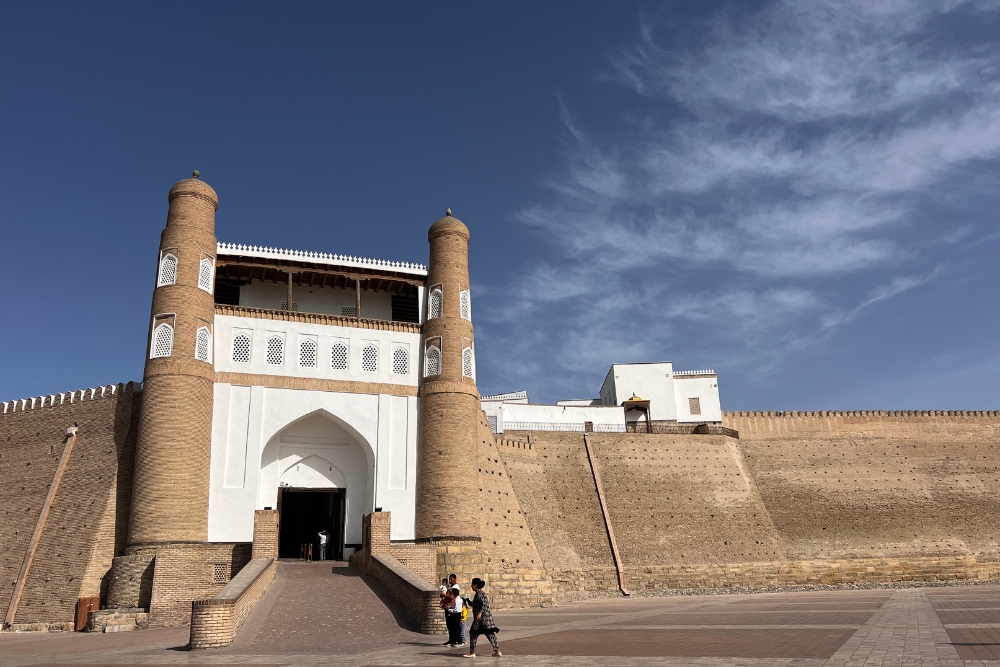
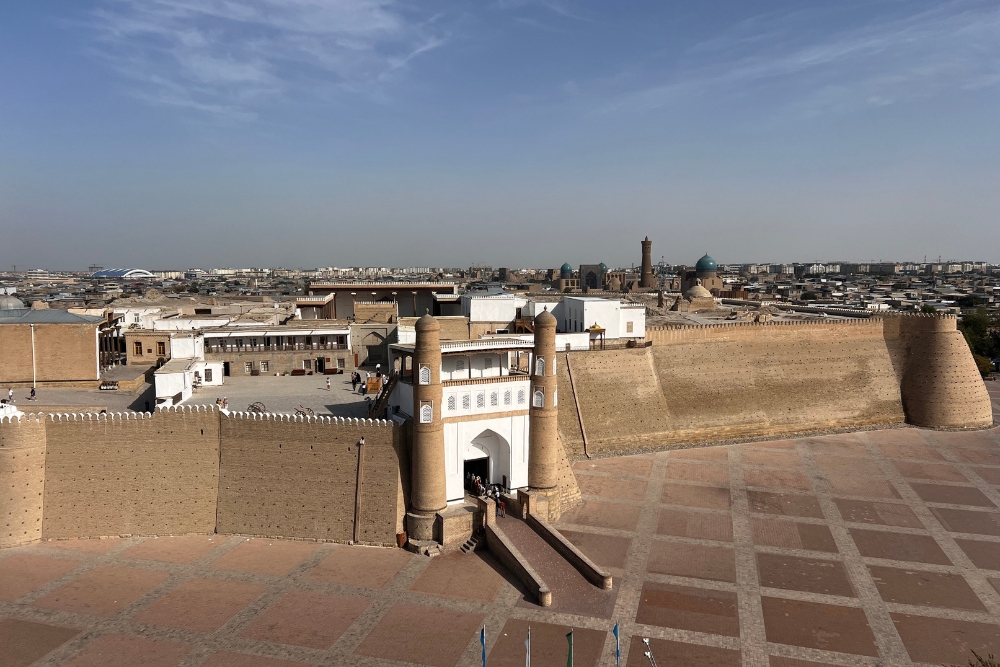
This massive clay fortress served as the seat of Bukhara’s emirs for over a millennium. I spent three hours here and barely scratched the surface. The fortress houses several museums, including a surprisingly good archaeological collection and rooms that recreate royal life.
What stood out most to me was standing in the execution courtyard where thousands met their end, then walking to the ramparts for sweeping views of modern Bukhara. The stark contrast between the fortress’s brutal history and the city’s current peacefulness was striking.
Tickets: https://www.bukhara-museum.org/information/visitor-information/
- Ark – $2
- Museum of Decorative-Applied Arts, Mohi Khosa – $3
- Romitan Museum of History – $0.5
- Abu Ali ibn Sino Memorial Museum – $0.5
- Fayzullo Khodjaev House-Museum – $1.5
- Fine Arts Museum – $0.5
- One-hour tour fee – $1
- Ticket price for amateur photo shooting – $1
- Ticket price for amateur video shooting – $2
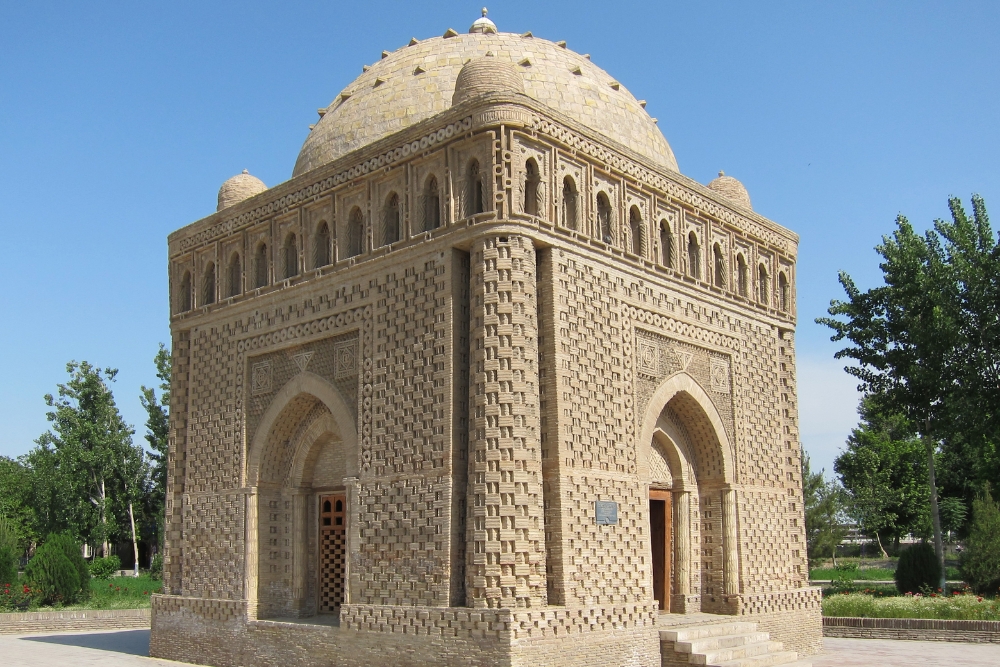
This 10th-century tomb revolutionized Islamic architecture with its innovative brickwork patterns that create changing shadows throughout the day.
Built for the founder of the Samanid dynasty, it’s considered one of the finest examples of early Islamic architecture in Central Asia. The mathematical precision of the brick patterns amazed me; no two sections are identical, yet the overall harmony is perfect.
© Wikipedia
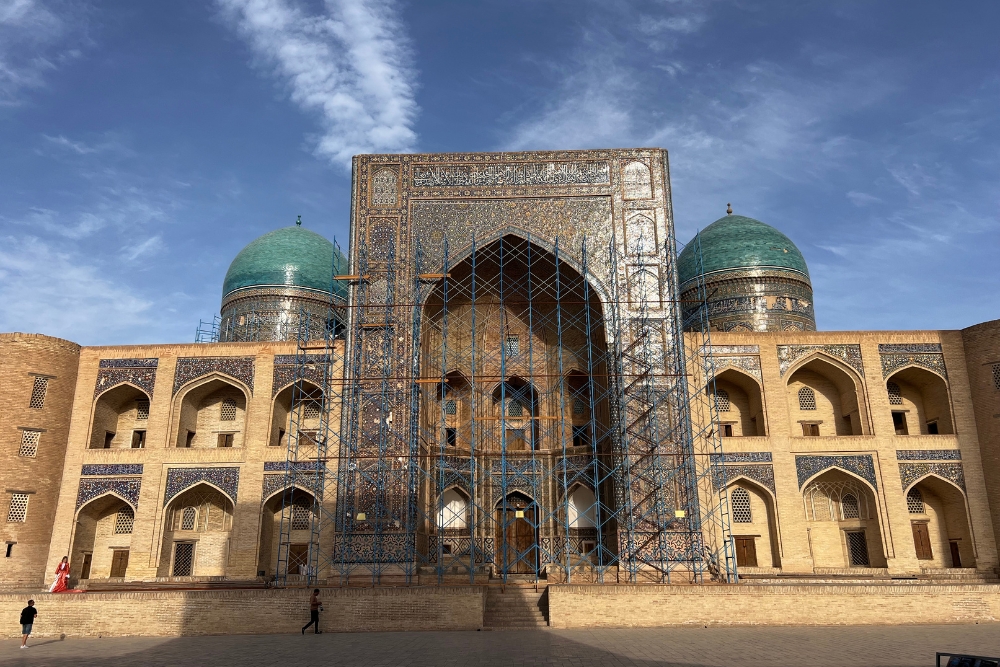
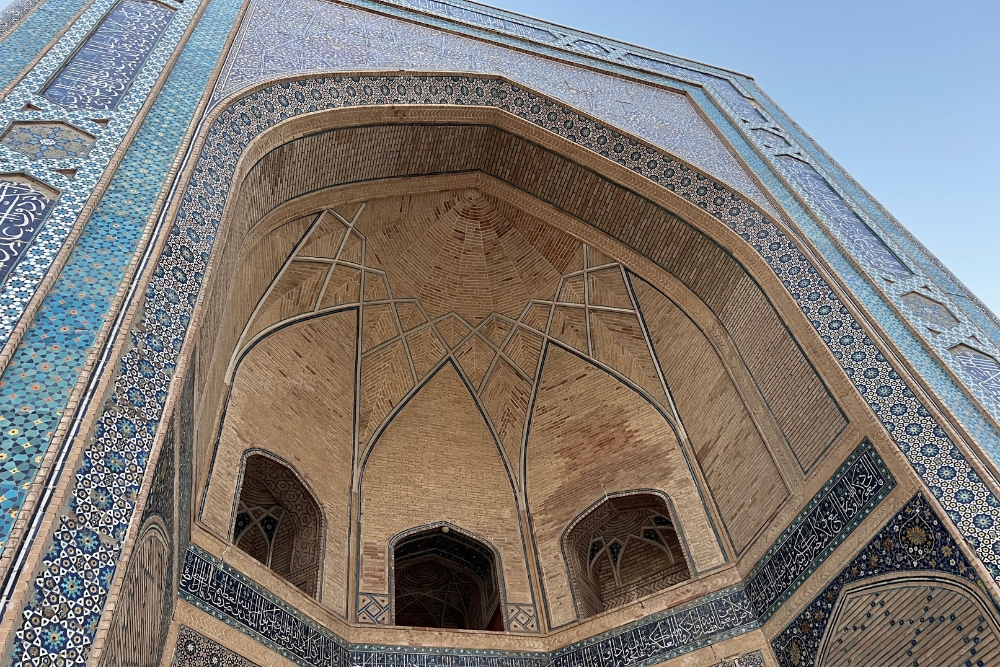
One of the most iconic landmarks of Bukhara, the Mir-i-Arab Madrasa stands proudly opposite the Kalyan Mosque in the Po-i-Kalyan complex. Built in the 16th century during the reign of Ubaydullah Khan, it remains an active Islamic seminary to this day — a rare example of a madrasa still used for its original purpose. Its grand blue domes, intricate mosaic patterns, and elegant Persian-style architecture make it a masterpiece of Central Asian Islamic art.. While entry inside is restricted to students, visitors can admire its majestic façade and beautifully tiled portal — especially stunning at sunset, when the colors glow with golden light.
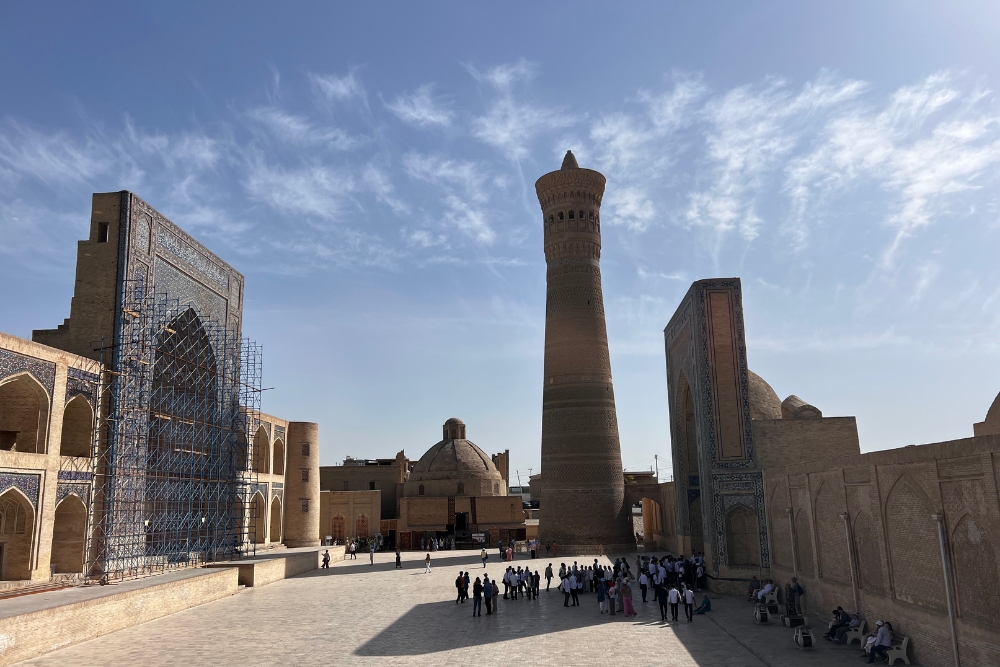
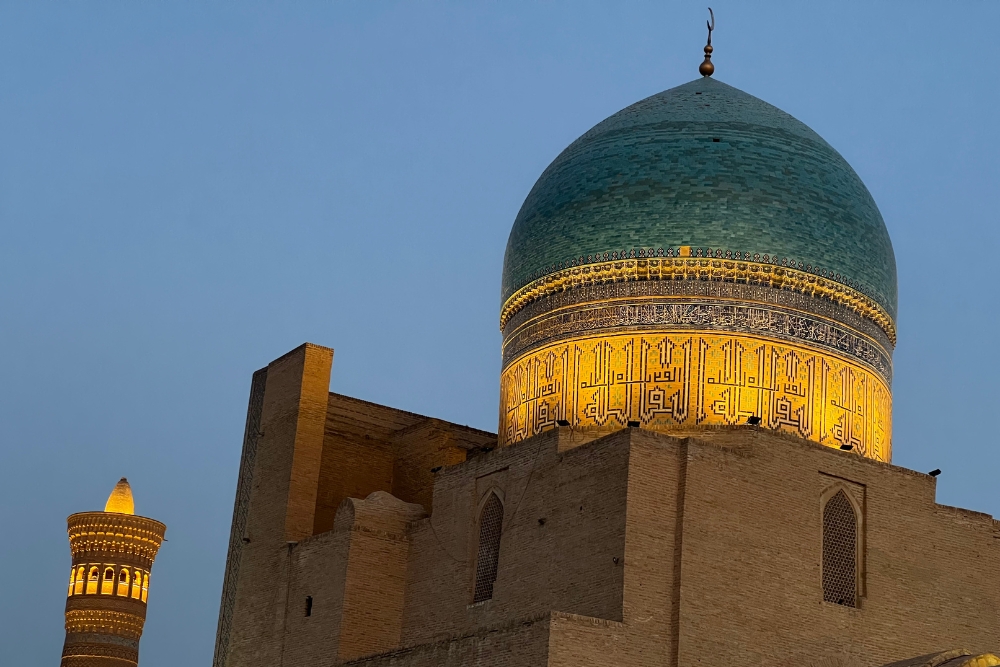
Kalyan Mosque was completed in 1514 under Ubaidullah Khan, replacing a 12th-century mosque destroyed by Genghis Khan (who famously spared only the adjacent minaret). The scale is massive—130 x 80 meters—capable of holding 12,000 worshippers, making it Central Asia’s second-largest mosque after Samarkand’s Bibi-Khanym.The rectangular courtyard is surrounded by covered galleries with 288 domes, supported by 208 columns — walking through those repeating arches creates a hypnotic perspective effect.
What impressed me most was how it’s still functioning. Except during Soviet times, it’s operated as Bukhara’s main Friday mosque for 500 years. Visited between prayer times and had the vast courtyard almost to myself, which felt surreal given its size. The blue dome rising above everything catches that Central Asian light perfectly. Part of the Poi-Kalyan complex. Entry is 10,000 som.
This is where I spent most of my evenings in Bukhara, and honestly, where you’ll probably spend yours too. Lyab-i-Hauz—meaning “by the pool” in Persian—is a plaza built around a large rectangular pond (46 x 36 meters) dating from 1620. Ancient mulberry trees shade the edges, and there’s a statue of Hoja Nasruddin, the semi-mythical ‘wise fool’ from Sufi teaching-tales, where I watched locals and tourists alike gather every sunset.
What most people don’t realize is how rare this place is. Until the Soviet period, Bukhara had many such pools which served as the city’s principal source of water, but they were notorious for spreading disease and were mostly filled in during the 1920s and 1930. This one survived because it’s the centerpiece of a magnificent architectural complex created during the 16th and 17th centuries.
The Lyab-i-Hauz ensemble consists of three buildings surrounding the pool: Kukeldash Madrasah (1568-1569, the largest madrasa in the city) on the north side, and two religious edifices built by Nadir Divan-Beghi – a khanqah (1620) and a madrasah (1622).
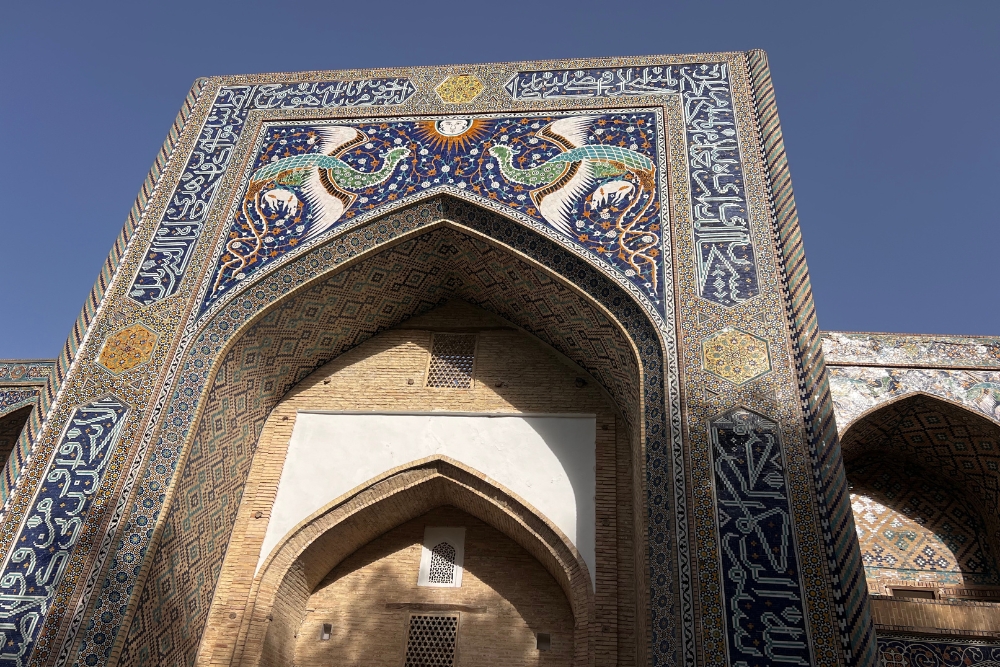
© Gayane Mkhitaryan, Nadir Devanbegi Madrasah
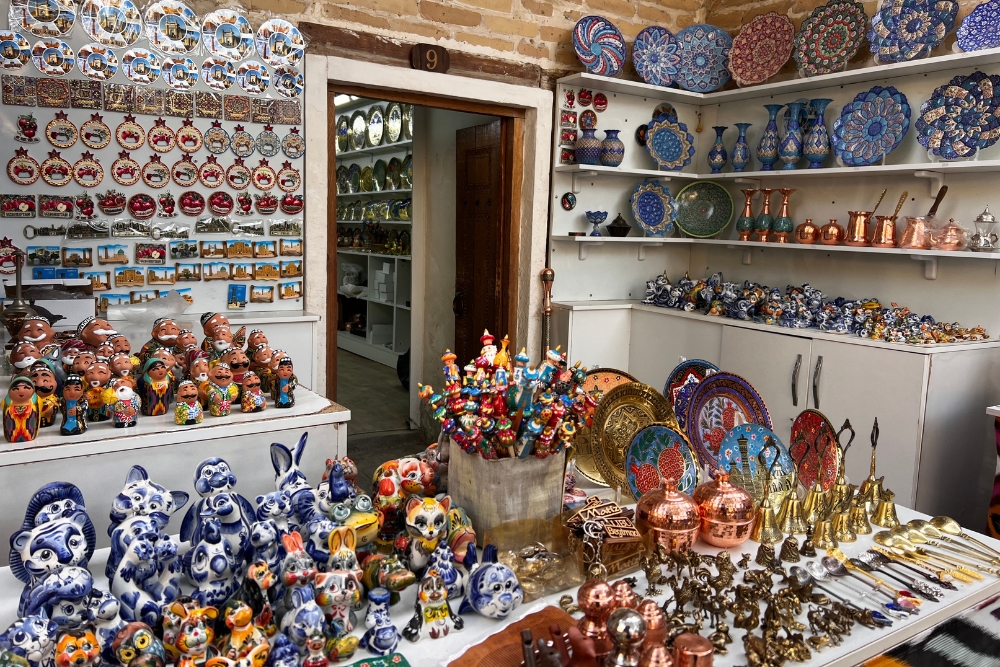
Taqi-Telpakfurushon Market
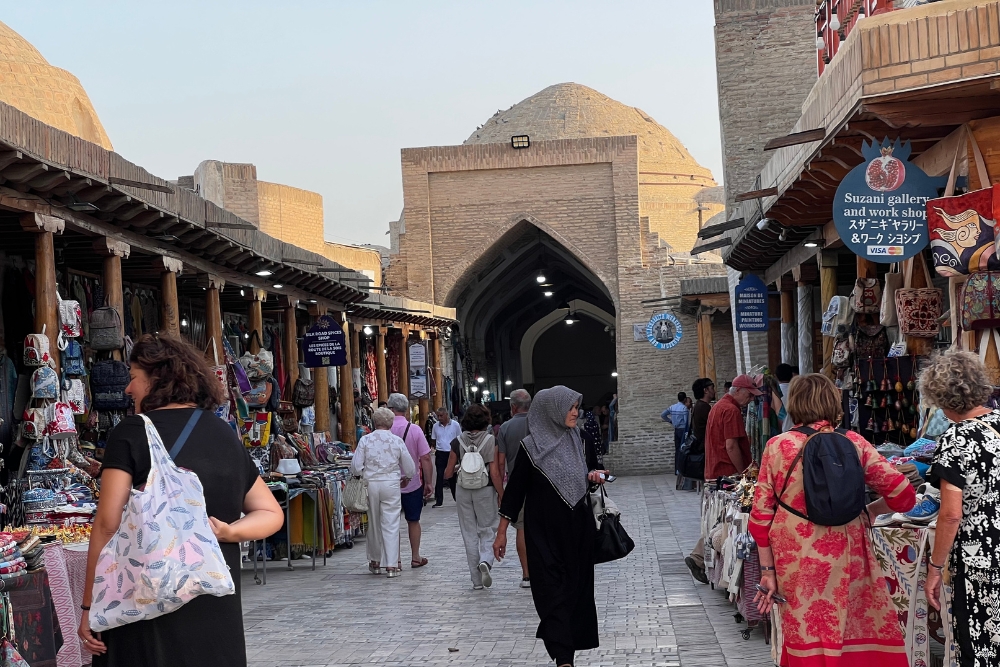
Taqi-Telpakfurushon was built in 1570-1571, a hexagonal trading dome where five streets awkwardly converge under a 14.5-meter dome. The name’s a mouthful, but the story’s simple: it started as Kitab-Furushon—a book market—then pivoted to selling telpaks (those traditional fur hats), embroidered skullcaps, and turbans, earning its current name, which basically means “the hat sellers’ dome”.
What struck me? This place has been continuously operating for 500 years. Same building, same purpose, different merchants. Unlike what you might expect from “tourist market,” I actually found beautiful pieces here—traditional jewelry that didn’t feel mass-produced. I ended up buying rings and pendants I still wear, negotiating prices with sellers who seemed genuinely proud of their craftsmanship rather than just pushing sales.
The covered arcades create a perfect cool shade, making browsing actually enjoyable rather than exhausting. Take your time here—there’s real quality mixed in with the standard souvenirs if you look carefully.
Most Beautiful Mosques & Religious Landmarks
This “Children’s Mosque” features twenty wooden columns supporting an intricately painted ceiling that took my breath away. Unlike many of Bukhara’s tourist-focused sites, this remains an active place of worship where I observed genuine spiritual devotion.
The wooden craftsmanship represents traditional Uzbek artistry at its finest. Each column is unique, carved with different patterns that create a forest-like effect inside the prayer hall. I spent an hour here just absorbing the peaceful atmosphere.
Practical info: Free entry. Remove shoes before entering.
Built on the foundations of a pre-Islamic temple, this mosque represents Bukhara’s religious evolution for two millennia. The archaeological layers visible in the foundation walls tell the story of Buddhism, Zoroastrianism, and Islam coexisting and competing for influence in the region.
Standing here, I felt the weight of history—this spot has been sacred to multiple civilizations. The current mosque dates back to the 12th century, but excavations have revealed much older religious structures beneath.
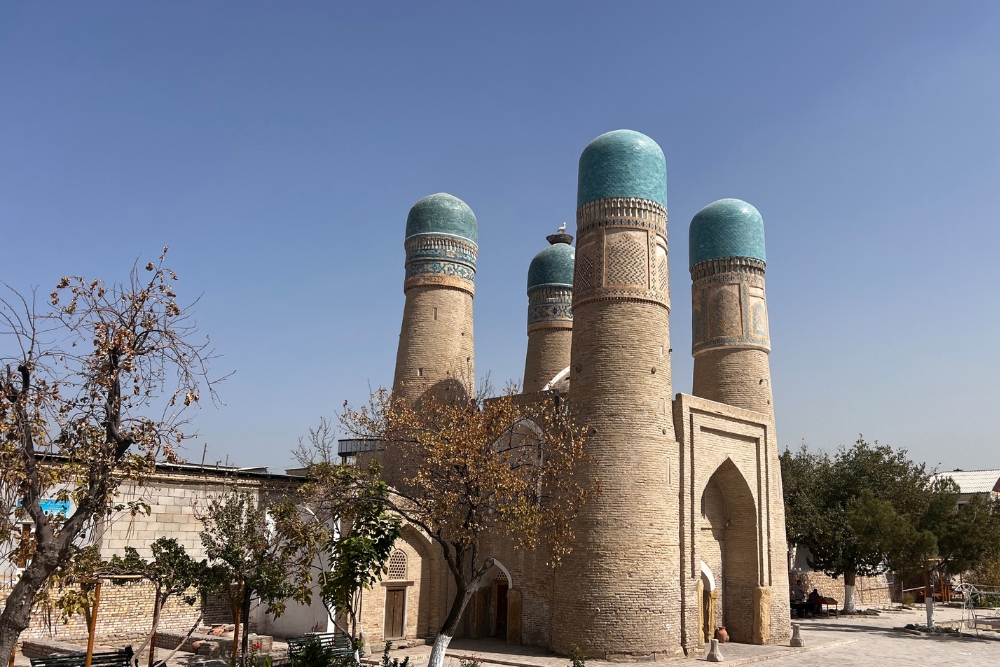
Chor Minor (meaning “four minarets”) might be Bukhara’s most Instagram-famous building, and honestly, I get it. Built in 1807 by Khalif Niyaz-kul, a wealthy Turkmen merchant, it’s actually a gatehouse for a now-destroyed madrasah. Here’s the thing: those four 17-meter towers aren’t actually minarets—three were used for storage, one has a staircase, and none has the open gallery needed for the call to prayer. They’re purely decorative, topped with turquoise-blue domes.
Legend has it that the merchant had four daughters and dedicated a tower to each, which explains why each dome features unique decorations. Some claim the decorative motifs reflect four world religions—you can spot elements resembling crosses, Christian fish symbols, Buddhist prayer wheels, alongside Islamic and Zoroastrian designs. The style is completely un-Bukharan, with an Indian influence, which makes it stand out. A small entry fee is required to climb to the roof, which, to be honest, is not worth it.
Best Museums & Cultural Sites
The Ark houses several specialized museums that showcase Bukhara’s diverse history. The archaeological museum showcases artifacts spanning from the Paleolithic era to the Islamic period. The ethnography museum recreates traditional Uzbek life with impressive attention to detail.
What impressed me most was the numismatic collection—coins from across the Silk Road trade network that illustrated Bukhara’s role as a commercial hub. Seeing Chinese, Persian, and Byzantine coins together drove home the fact that this city was once cosmopolitan.
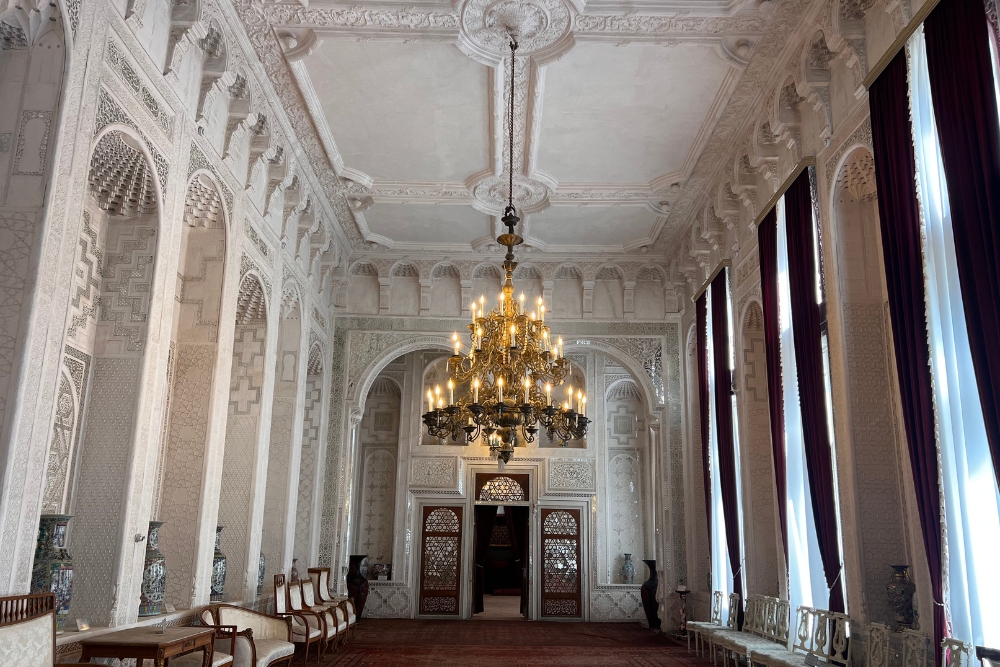
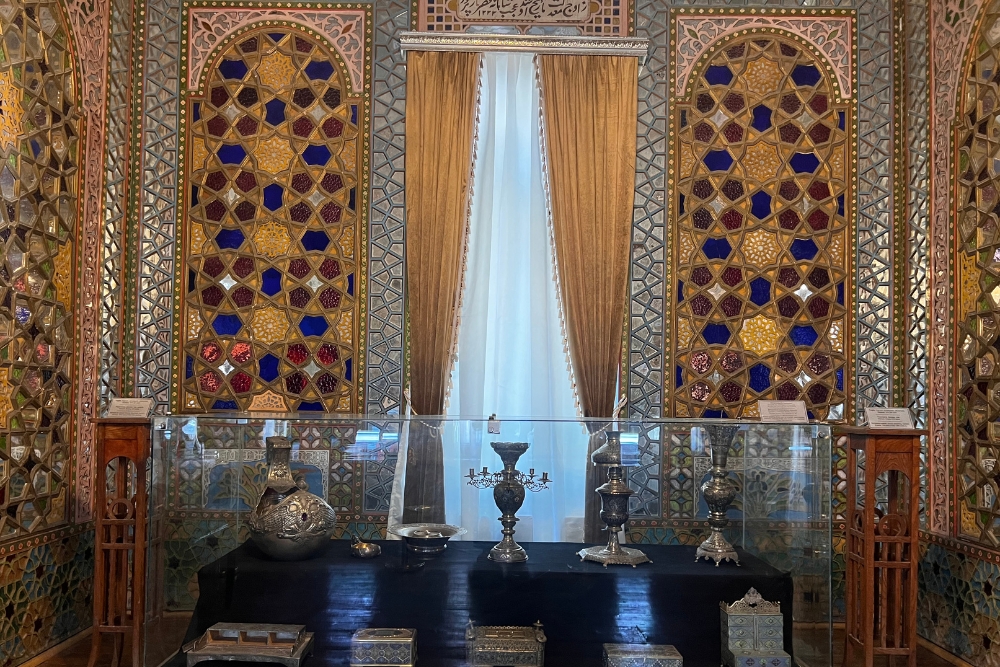
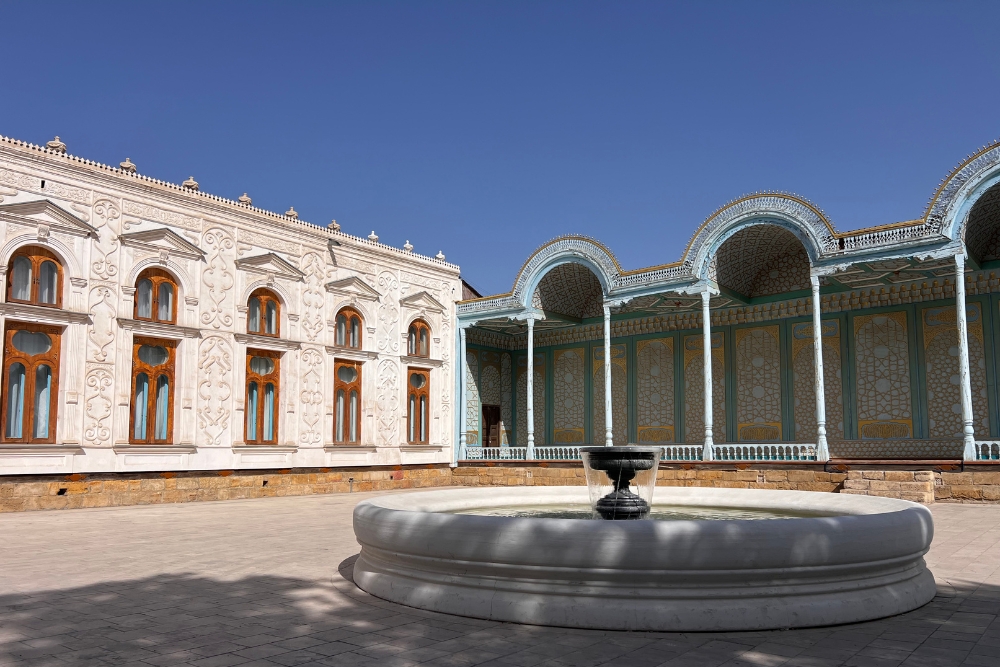
The taxi ride out here felt unnecessary until I walked through those gates. Sitorai Mokhi-Khosa—meaning “Palace Like the Stars and the Moon”—was the summer residence of Bukhara’s last emirs, built between the late 19th and early 20th centuries. What makes it fascinating is how Bukharan master builders, trained in Russia, created this bizarre architectural fusion: European facades hiding rooms decorated with traditional Uzbek ornaments, with Russian engineering meeting Central Asian aesthetics.
The last emir, Sayyid Mir Muhammad Alim Khan, completed the palace in 1918 but enjoyed it for only three years before the Red Army conquered Bukhara in 1920, and he fled to Afghanistan.. Today it houses a museum of decorative and applied arts, opened in 1927, displaying everything from Chinese porcelain to the famous Bukhara gold embroidery that made the region wealthy.
Practical info: Entry 15,000 som. Located 4 km from the city center—taxi costs around 10,000 som each way. Open 9 AM-5 PM. Give yourself at least 1.5 hours to explore properly. Worth the trip if you’re interested in how Central Asian rulers tried to balance tradition with European modernity. But it is smaller than it seems in the pictures; it’s more like a few rooms rather than a big palace.
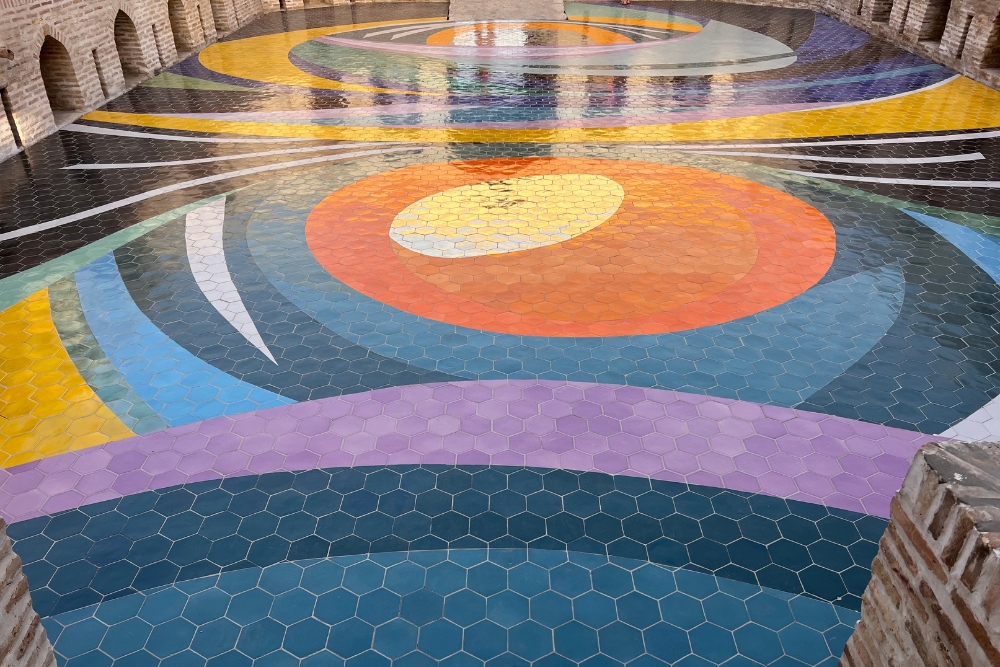
Located in the heart of Bukhara’s old city, Ayozzhon Karvonsaroyi is a stunning recreation of a traditional Silk Road caravanserai. Once serving as a rest stop for traders traveling between Persia, India, and Central Asia, it now operates as a cultural venue that brings history to life. Guests can enjoy authentic Uzbek live folk music and traditional dance shows inside beautifully decorated halls featuring arched brick ceilings and ornate tilework.
Caravansarai Ulugbek Tamakifurush, Samarkand — Located near the famous Registan Square, this historic building once served as a caravansarai, a roadside inn for Silk Road travelers and merchants. Built during the reign of Ulugbek, the scholar and astronomer grandson of Timur, it was a place where traders could rest, exchange goods, and share stories from distant lands. Today, the restored structure houses local craft shops and traditional tea houses, preserving its authentic charm. The intricate brickwork, arched corridors, and oriental atmosphere make it a must-visit stop for anyone exploring Samarkand’s old town and its Silk Road heritage.
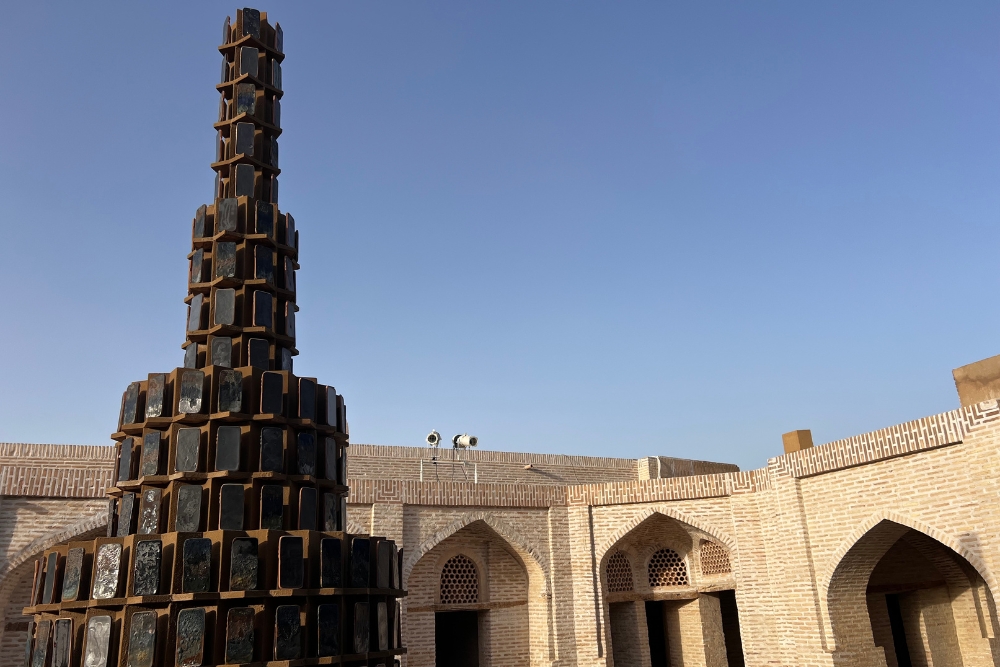
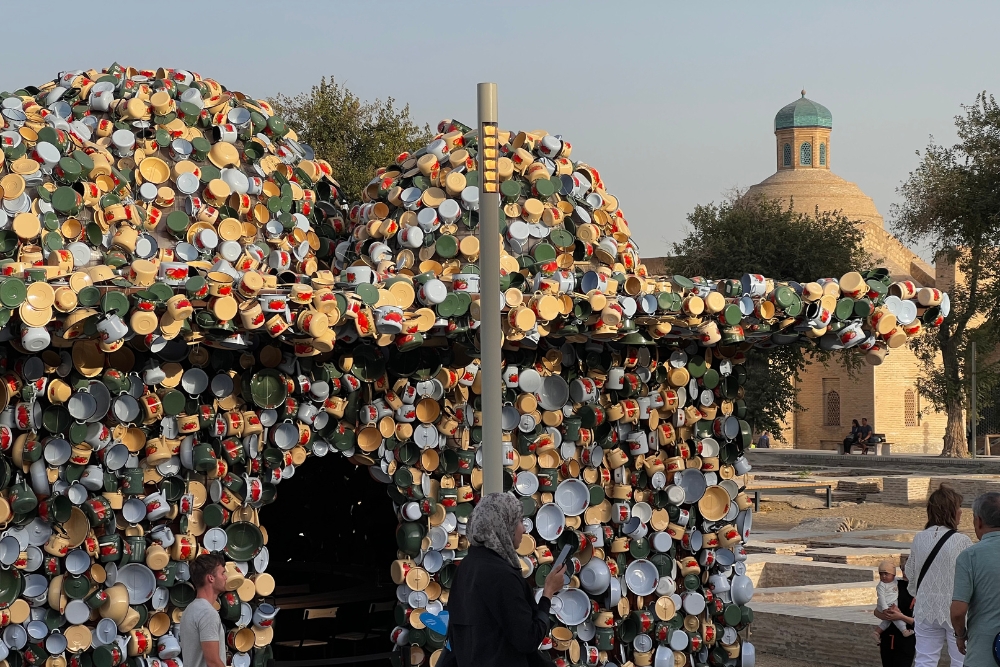
An art installation by artist Subodh Gupta
The“Salt Carried by the Wind” installation is a dome-shaped pavilion constructed from numerous inexpensive enamelware and ceramic utensils. It is situated on the former site of a spice market, near the archaeological excavations, referencing the history of trade along the ancient Silk Road. The artwork highlights themes of cultural exchange and memory, with the utensils holding stories of the past.
As part of the biennial event, the installation was also used for live cooking sessions, adding an interactive element to the artwork.
Soviet Legacy: Murals
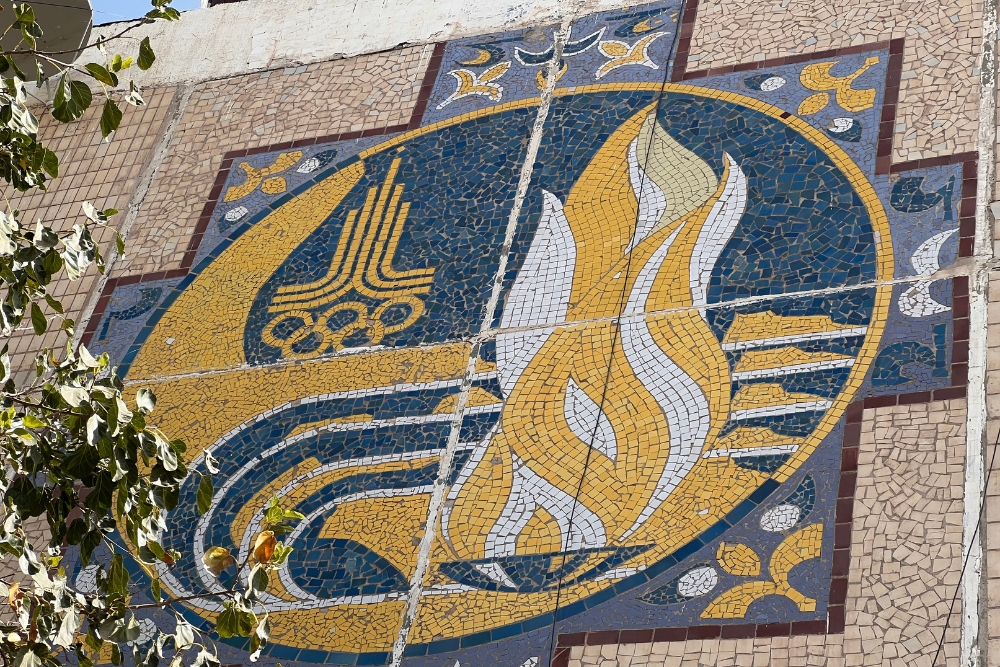
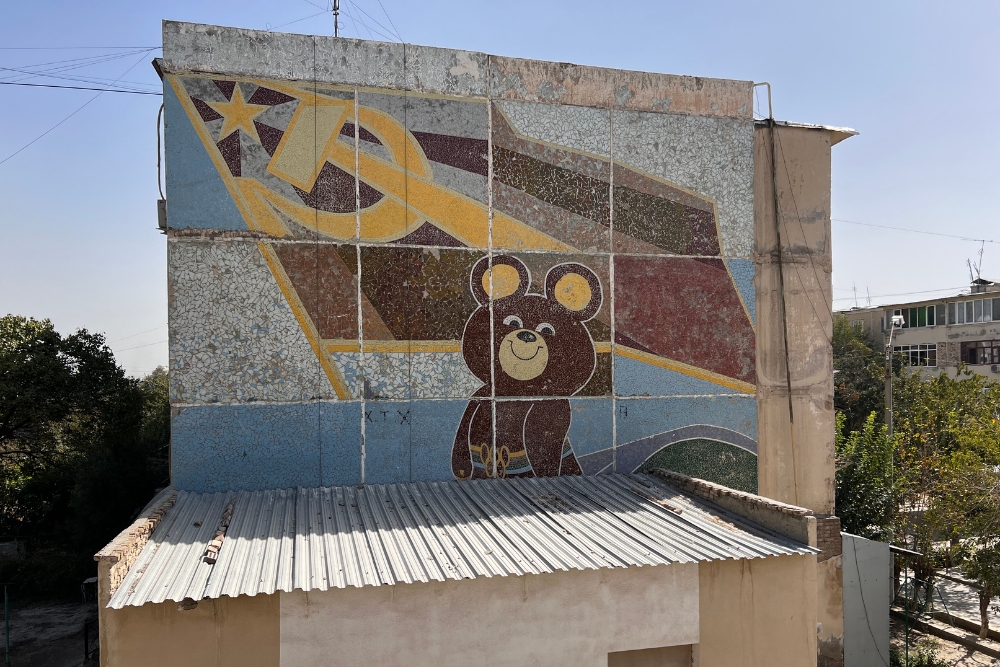
We had to take a taxi and search for these murals outside the old town, as not many Soviet buildings, murals, and monuments remain in Bukhara. A colorful reminder of the Soviet era, this mural captures the spirit of the 1980 Moscow Olympics through the image of Mishka the Bear, the beloved Olympic mascot, holding the Olympic torch. Faded but still vibrant, it reflects a time when art was used to inspire unity, pride, and progress across the USSR.
You can find similar murals across Uzbekistan, painted on schools, sports halls, and cultural centers. The Olympic Fire and Mishka mural stands today as both a nostalgic relic of Soviet optimism and a fascinating piece of street art history in Bukhara.
Fun fact: We visited the second store of a furniture store to capture the Olympic bear. So if you’re nearby don’t be shy to ask and get your nice shot.
Antique Store near Chor Minor Monument
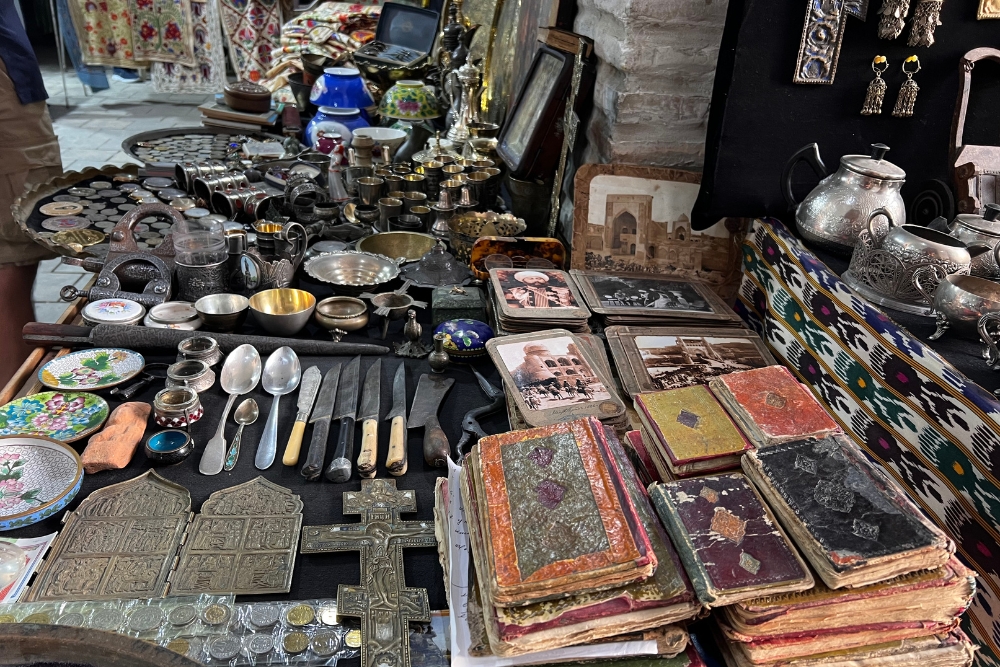
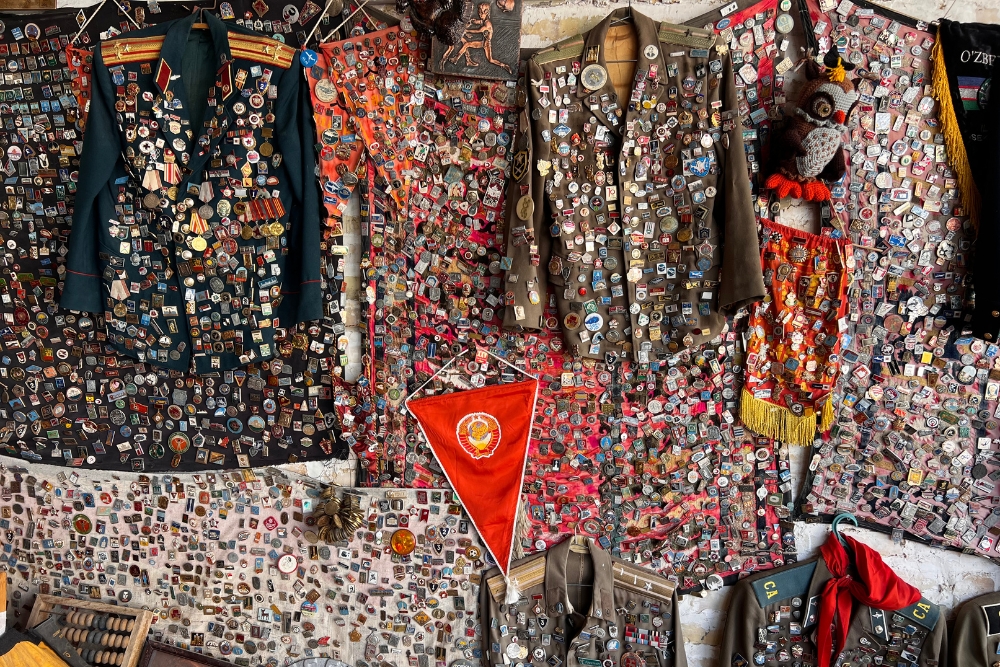
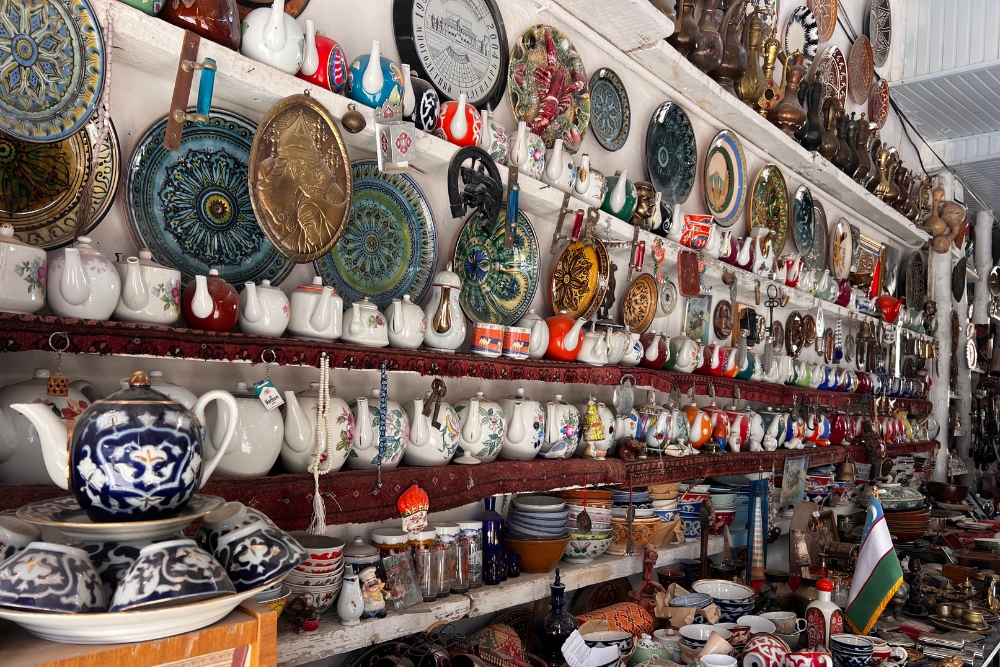
Right across from Chor Minor, there’s an antique shop that goes on and on, packed with Soviet-era memorabilia. This is what several TripAdvisor reviewers mentioned, and I had to visit it, and honestly, it’s become part of the Chor Minor experience itself.
The shop sells Soviet badges and medals—I’ve never seen so many badges for sale in one place.
The vendor sells antiques and items from the Russian and Soviet-era periods, including coins, old currency, souvenirs, lamps, watches, toys, plates, small statues, and more – everything you can think of and even more. However, I need to warn you that it’s quite pricey, but you can negotiate with them.
Unique Experiences and Guided Tours
The most authentic experiences in Bukhara happen when you step away from the main tourist circuit:
- Traditional craft workshops – Watch carpet weaving, metalwork, and pottery in family-run studios
- Cooking classes with local families – Learn to make plov and manti in home kitchens (arranged through guesthouses)
- Sunrise photography at Kalon Complex – Empty courtyards and golden light on ancient brickwork
- Tea ceremony at traditional chaikhana – Proper Central Asian tea culture with local chess players
- Evening stroll through residential mahallas – See how Bukharans actually live beyond the tourist zone
Booking: Local tour operators or certified travel agencies, plus convenient online platforms like GetYourGuide, Headout, and Tiqets for advance booking with instant confirmation, flexible cancellation, and often skip-the-line access to popular attractions.
Free Things to Do
Bukhara offers surprising opportunities to experience the city without spending money:
- Wandering the Trading Domes – Browse without buying; the architecture alone is worth the visit at Taki-Sarrafon, Taki-Zargaron, and Taki-Telpak Furushon
- People-watching at Lyab-i-Hauz – Bring a book and observe daily life in the historic center
- Exploring residential neighborhoods – Traditional mud-brick houses and local life away from tourists
- Sunset views from the park near Samani Mausoleum – Free panoramic photos of the old city
- Attending Friday prayers at Kalon Mosque – Respectful observation welcome (dress appropriately)
- Walking the ancient city walls – Partially preserved fortifications circle the old town
- Visiting local parks and gardens – Pleasant green spaces for picnics and rest
Best Neighborhoods to Explore
Historic Center (UNESCO Zone)
This is where you’ll spend most of your time—the dense concentration of madrassas, mosques, and monuments within walking distance. I recommend staying here for its convenience, although you can expect higher prices and tourist crowds.
Residential Mahallas
The traditional neighborhoods surrounding the historic center offer glimpses of authentic Uzbek life. I loved walking these quiet streets in the early morning, watching families tend their gardens and children play in courtyards that had remained unchanged for generations.
Modern Bukhara
The Soviet-era city, located beyond the old town, reveals a different side of Bukhara. Wide boulevards, planned neighborhoods, and modern bazaars show how the city adapted to 20th-century life while preserving its ancient heart.
Outdoor Activities and Nature
- Bahauddin Naqshband Complex – Peaceful gardens surrounding an important Sufi shrine, 12 km from the city
- Hiking in Kyzylkum Desert – Day trips to experience the Central Asian landscape (arrange through local guides)
- Cycling tours – Rent bikes to explore the oasis settlements around Bukhara
- Picnicking in city parks – Several green spaces offer respite from sightseeing
Best Panoramic Viewpoints in Bukhara
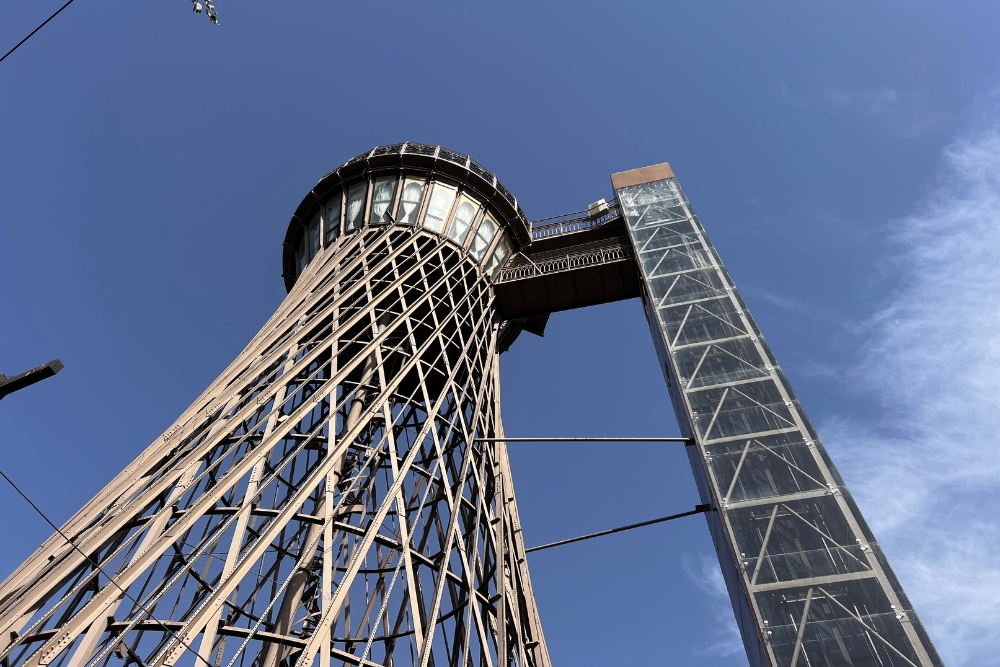
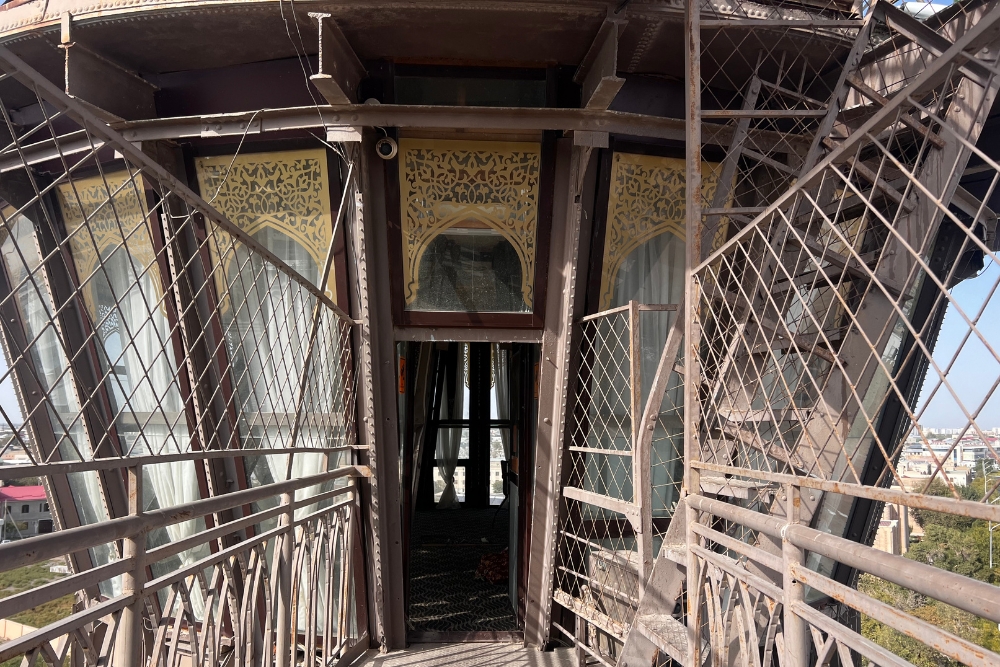
For the most breathtaking views of Bukhara’s old city, head to the Bukhara Tower, one of the newest and most impressive observation points in the city. Standing 45 meters tall, it offers a 360° panoramic view of the ancient skyline — from the Kalyan Minaret and Ark Fortress to the maze of traditional mudbrick houses and domes below. The best time to visit is during sunset, when the golden light reflects off the city’s historic landmarks, creating a magical atmosphere.
Currently, there is a glass elevator, a paid observation deck with binoculars (on the 3rd floor), small French restaurants (on the ground floor), and a tourist information center with a small museum with some paintings and information about a former water reservoir.
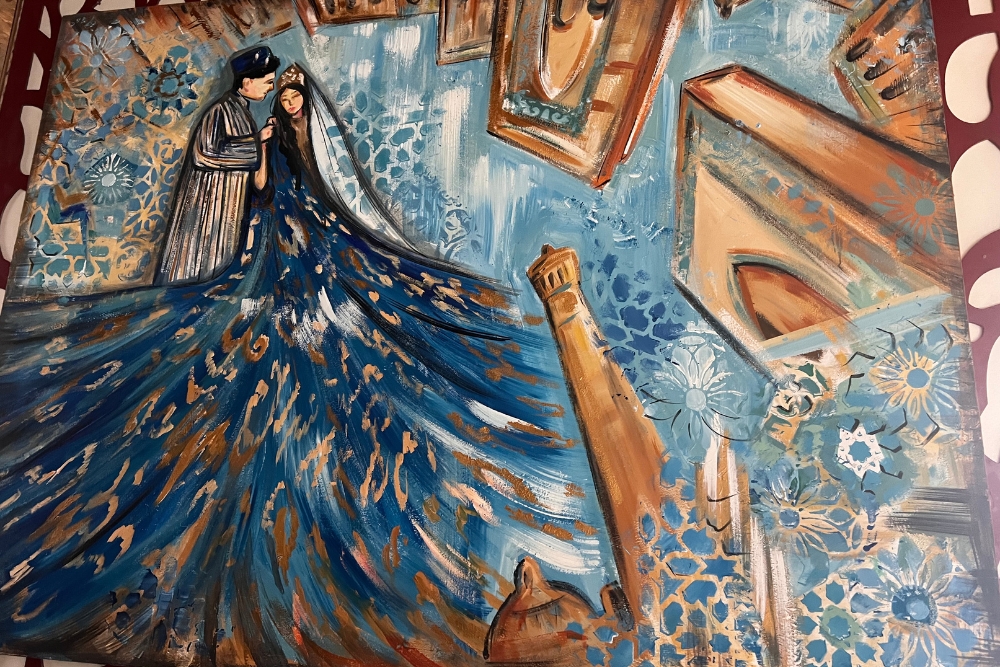
Traditional Uzbek Souvenirs and Where to Buy Them
The three Trading Domes offer the best selection, but prices are negotiable and often inflated for tourists:
- Suzani embroidery – Traditional textiles at Taki-Sarrafon dome
- Carpets and rugs – Hand-woven pieces at Taki-Telpak Furushon (expect aggressive sales tactics)
- Ceramic work – Blue and white pottery inspired by traditional patterns
- Miniature paintings – Detailed artwork depicting Silk Road scenes
- Traditional knives – Handcrafted blades (check customs regulations for your country)
- Spices and dried fruits – Covered bazaar near Lyab-i-Hauz offers better prices than tourist shops
- Pavillon Kalon shop and cafe: leather good, clothes and handmade jewelry
Tip: Visit local workshops in residential areas for authentic pieces at fair prices. Ask your guesthouse owner for recommendations.
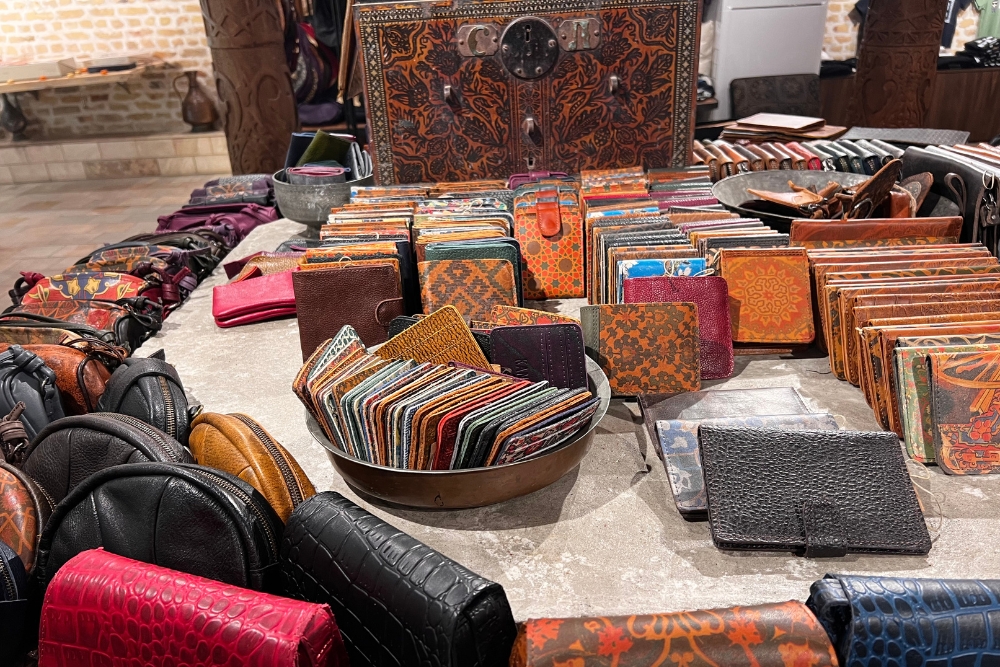
© Gayane Mkhitaryan, Pavillon Kalon shop and cafe
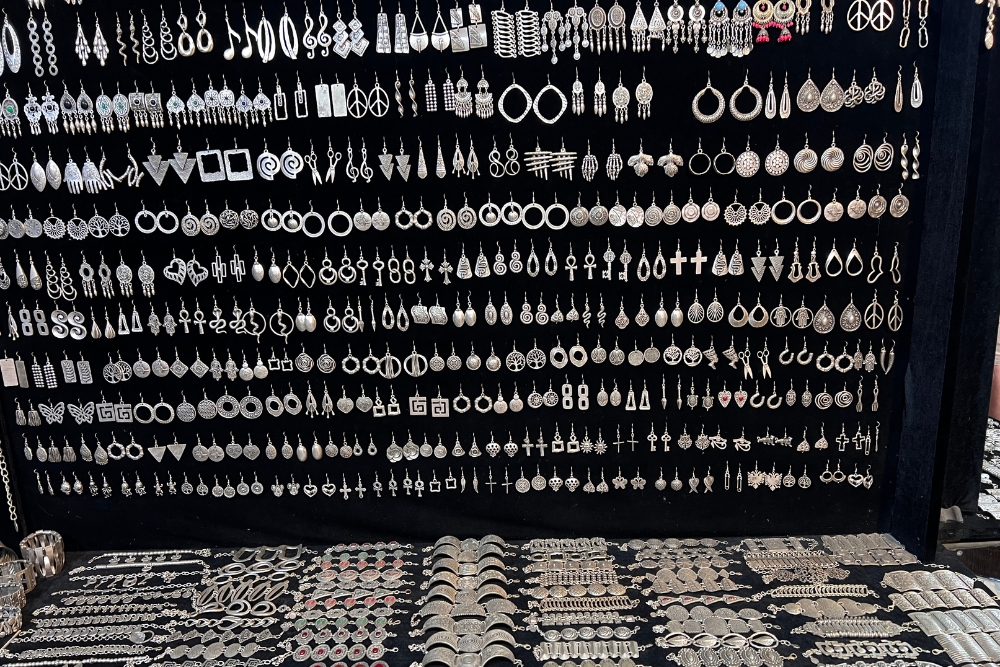
© Gayane Mkhitaryan, silver jewelry Taqi-Telpakfurushon Market
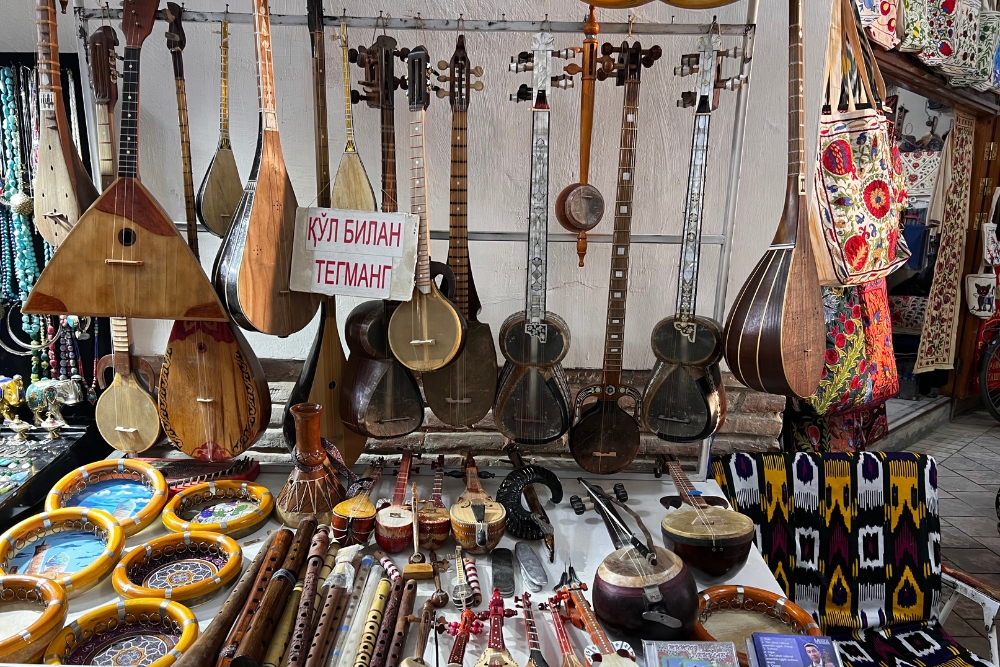
© Gayane Mkhitaryan, national music instruments Taqi-Telpakfurushon Market
Bonus: Traditional Food & Drink + Best Places
Uzbek cuisine in Bukhara ranges from street food to refined restaurant dining:
- Plov (pilaf) – National dish best at Osh Markazi, local favorite near central bazaar
- Manti – Steamed dumplings at family-run Fayzulla Restaurant
- Lagman – Hand-pulled noodle soup at Chashma House near Lyab-i-Hauz
- Non-bread – Fresh from tandoor ovens at any neighborhood bakery
- Green tea – Traditional preparation at Minzifa or Khanaka chaikhanas
- Somsa – Baked meat pastries from street vendors (3,000 som each)
- Fresh fruits – Seasonal produce at the central market is much cheaper than in tourist areas
Budget reality: Street food 5,000-15,000 som per meal, local restaurants 25,000-40,000 som, tourist restaurants 50,000+ som.
FAQs: The Answers I Needed Before Planning My Trip
How many days do you need in Bukhara?
Most travelers recommend 2-3 days in Bukhara. As experienced travelers note, “1.5 days could be enough, usually people take 3 days in Bukhara; one day for sightseeing in the old town, it can take the whole day. However, if you want to properly absorb the atmosphere without rushing, 2 full days is ideal.
How much does it cost to visit Bukhara per day?
Budget travelers can explore Bukhara for $35-$ 50 USD per day, while mid-range travelers should budget $55-$ 75 USD per day. Food is incredibly affordable – a full meal at local chaikhanas costs $2-3 USD, and even tourist restaurants rarely exceed $10 per person. Dorm beds start at $5 USD, while private rooms begin around $15-20 USD.
How do you get from Tashkent to Bukhara?
The best option is the Afrosiyob high-speed train, which takes approximately 4 hours and costs around $16-$ 20 USD. The slower train takes approximately 6 hours and costs around $12 USD. Buses take 8 hours or more and cost around $7, while flights take 1 hour and 10 minutes but cost $40-$ 60 USD. The train station is located in Kagan, approximately 10 minutes from Bukhara’s historic old town. More information here https://railway.uz/en/.
How do you get from Samarkand to Bukhara?
Again, the train is the best option. The Afrosiyob high-speed train is perfect – it takes just 2 hours and costs around $7-8 USD. Shared taxis take 3-4 hours and cost around $5-7 USD. The slower train takes 4 hours for about $6 USD, while buses take 5 hours for similar prices.
Is Bukhara safe for solo travelers?
Yes, Bukhara is very safe. “Couples and even female travelers can explore the city in peace.” The biggest annoyance is the pushy taxi drivers around Lyab-i-Hauz Square, but violent crime against tourists is virtually nonexistent.
How do you get around Bukhara?
The old town is entirely walkable, as most attractions are within a 15-minute walk of each other. For longer distances, taxis cost 2,000-8,000 sum ($0.15-0.60 USD) depending on distance. Use the Yandex taxi app for fixed pricing, or with local drivers (avoid the overpriced ones at Lyab-i-Hauz).
What should you eat in Bukhara?
Try authentic Bukharan plov at “The Plov” restaurant – it’s where locals eat and very budget-friendly. Traditional Bukharan dishes include bichak (samsa with squash), bakhsh (plov with lamb and cilantro), and local flatbread. Don’t miss tea and sweets at Silk Road Tea and Coffee House.
How much do attractions cost in Bukhara?
Many sites are free or very cheap. The Ark Fortress costs around 15,000 sum ($1.20 USD), Chor Minor is 4,000 sum ($0.30 USD), and most madrasas charge 5,000-8,000 sum ($0.40-0.60 USD). The observation tower near the Ark costs 40,000 sum ($3 USD) and offers great sunset views.
Can you visit Bukhara's attractions in one day?
Yes, all the main sites in the old town can be covered in one full day since they’re within walking distance of each other. Start with the Ark, visit the Kalyan complex, explore the trading domes, see the madrasas around Lyab-i-Hauz, and end at Chor Minor. However, you’ll miss the relaxed atmosphere that makes Bukhara special.
What's the best time to visit Bukhara?
Spring (April-May) and autumn (September-October) offer the best weather. Summer is extremely hot (40°C+), but hotel prices are lower. Winter can be cold, but it has fewer crowds. If visiting in the summer, plan indoor activities during the midday heat and explore early in the morning or in the evening.
How do you get to the Bukhara train station from the old town?
Take marshrutka bus #268 or #378 from Lyab-i-Hauz to Kagan train station for 500-700 sum ($0.05 USD). A taxi costs $1.50-2.50 USD (20,000-30,000 sum). Use the Yandex app for fair pricing or ask your hotel to book one to avoid overcharging.
Are there any day trips from Bukhara?
Yes! Visit the Emir’s Summer Palace (Sitorai Mokhi-Khosa), the Bahauddin Naqshbandi mausoleum (Central Asia’s Mecca), and the Chor Bakr necropolis. A full-day tour costs around $40 USD, or you can hire a taxi for the day and visit multiple sites together. You can check more options on GetYourGuide.
Final Thoughts on Visiting Bukhara
Bukhara will challenge everything you think you know about Central Asia. Yes, it’s popular with tourists. Yes, some experiences can feel commercialized. But beneath the surface, there’s something extraordinary—a city that has outlasted empires and ideologies while staying true to its soul. I arrived expecting ancient buildings and left with real friendships, a deeper appreciation for Islamic art, and stories I’ll share for years. Spend at least three days in Bukhara, keep your expectations realistic, and get ready to be surprised. This isn’t just another UNESCO site—it’s a living piece of the Silk Road that will change the way you see history.
