
Lost Paradise Experience: My 2-Day Journey to the Aral Sea from Nukus

I spent two days exploring what remains of the Aral Sea region, camping in a yurt on the dried seabed and witnessing the consequences of Soviet-era irrigation projects that drained an entire sea during my lifetime. It was haunting and strangely beautiful—and it completely changed how I think about human impact on the environment. This wasn’t the travel experience I expected when planning my Central Asia trip, but it turned out to be the most meaningful.
At €353 per person, this tour of the Aral Sea is a significant investment, especially when considering the typical budget-friendly travel experiences in Central Asia, where meals often cost under $5 in Uzbekistan. But this tour offers something you can’t find anywhere else: the chance to witness the consequences of environmental destruction on a scale that’s hard to comprehend until you’re standing on what used to be seafloor.
Here’s everything you need to know about visiting the Aral Sea, from what you’ll actually see to whether it’s worth the emotional and financial cost.

© Gayane Mkhitaryan, Aral Sea, Karakalpakstan, Uzbekistan
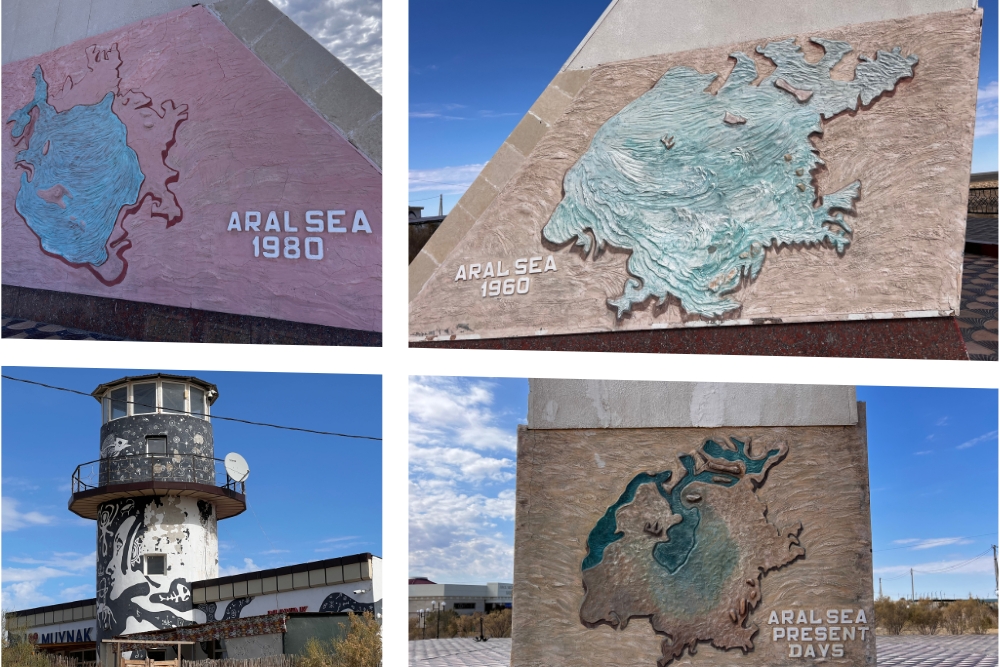
© Gayane Mkhitaryan, Size of the Aral Sea Before and After
Is it unusual? Yes. Is it worth it? Definitely, but you need to understand what you’re signing up for. This is textbook dark tourism—you’re traveling to witness disaster, and there’s no sugarcoating that reality. The Aral Sea catastrophe happened in our lifetime, driven by Soviet irrigation projects that diverted the rivers feeding the lake. What was once the world’s fourth-largest lake has shrunk by 90%, leaving behind toxic dust, abandoned ships, and communities that lost their livelihoods.
This isn’t for everyone. You’ll be sleeping in basic yurt accommodation on what used to be seafloor, driving hours through a desolate landscape, and confronting uncomfortable truths about what happens when humans ignore environmental consequences. There’s no mobile internet, limited facilities, and the emotional weight of what you’re witnessing can be heavy.
- Who should go: Anyone interested in environmental issues, adventure travelers comfortable with basic accommodation, those wanting to understand Central Asia beyond Silk Road tourism, photographers looking for unique landscapes, and anyone else who believes witnessing history matters.
- Who should skip: Comfort seekers, those wanting a lighthearted vacation, anyone uncomfortable with disaster tourism, travelers with mobility issues (lots of walking on uneven terrain), or anyone expecting Instagram-worthy beach vibes.
- My verdict: Yes, absolutely worth it! This is a once-in-a-lifetime and truly unique experience, possibly the best two days I have had in Uzbekistan.
To give you a better feel for each stop on this tour, I’ll share my personal take—what I loved, what wasn’t my favorite, and what you can expect —all with photos to show you what I mean.
How I Booked This Tour: GetYourGuide vs Aral Sea Discovery Company
I originally booked the “Lost Paradise – Aral Sea Tour 2 days/1 night” tour on GetYourGuide for around €700 (private tour for two people). This was a special birthday gift for my boyfriend, so I wanted to have some security vs booking it with local guides when we are in Nukus.
Asli Travel, the organizer of the GetYourGuide Aral Sea tour, has received poor reviews on both GetYourGuide and TripAdvisor. Despite the high cost, confirmation details, itinerary, driver contact, and license plate number were not provided until hours before departure, and only after my boyfriend called from a Belgian number and I spoke Russian directly with them. This caused significant stress before a once-in-a-lifetime trip for sure.
However, it turned out that they had outsourced the actual tour to Aral Sea Discovery Company, which was absolutely fantastic. The driver, Kuanish, was professional and knowledgeable, and I have zero complaints about the actual experience.
I highly recommend you book directly through Aral Sea Discovery Company’s Instagram page rather than going through third-party platforms like GetYourGuide. You’ll get the same excellent tour without the communication headaches, and you’ll save money, too.
The tour includes:
- Meals 4x during the tour (1 Breakfast, 2 Lunch, 1 Dinner)
- 1 Night in the Yurt Camp (separate yurt with two beds)
- 4×4 Vehicle with a Russian speaking driver
- Entry tickets to the Aral Sea Museum
NOT Included:
- Medical insurance
- Alcoholic beverage
- Other and personal expenses which is not specified in the program

© Gayane Mkhitaryan, Ship Cemetery, Muynak, Karakalpakstan, Uzbekistan
How to Get to the Aral Sea: Transportation Options and Tips
To reach the Aral Sea, you must first travel to Nukus, the capital of Karakalpakstan. Our Uzbekistan itinerary included a visit to the Aral Sea at the end of our trip; therefore, we traveled from Urgench to Nukus, then returned to Nukus, and concluded our journey with an overnight train to Tashkent.
Alternatively, you can take a daily flight available from Tashkent to Nukus via Uzbekistan Airways, typically lasting 1 hour and 45 minutes and costing approximately $50-70 USD. Due to potential schedule irregularities, early booking is recommended.
Booking a Tour vs Traveling on Your Own
I strongly recommend that you book a guided tour rather than an independent trip. The road is extremely challenging: a 4×4 is essential for the rough terrain, navigation is difficult due to a lack of phone signal and limited road signs, and accommodation is only available through organized camps. Furthermore, emergency assistance would be hours away.
While renting a car and driver independently might offer a 10-15% cost savings, you would need a guided experience and crucial support. It’s not worth the risk.
Day 1: Nukus to Aral Sea—Journey Through Karakalpakstan
The driver picked us up at 7 AM sharp from our hotel in Nukus. As we left the city behind, the landscape transformed from Soviet-era apartment blocks to endless golden steppe that stretched to the horizon. Within an hour, I understood why this region feels like another world—it’s remote in a way that’s hard to grasp until you’re in it. This would be our home for the next two days: a journey into one of the world’s greatest environmental disasters.
Mizdakhan Necropolis
Our first stop was Mizdakhan Necropolis, an ancient ‘city of deaths’ with dozens of mausoleums spread across desert hills. The site contains architecture from both the pre-Islamic and Islamic periods, creating layers of Central Asian history visible in crumbling walls and weathered domes. Walking through the complex, I was struck by how the desert has slowly reclaimed these structures—sand drifting into doorways, wind eroding intricate tile work.
We spent about 20 minutes here, which was enough time to explore the main mausoleums and climb to the viewpoint overlooking the valley.

© Gayane Mkhitaryan, Map of Mizdakhan Necropolis in Karakalpakstan, Uzbekistan
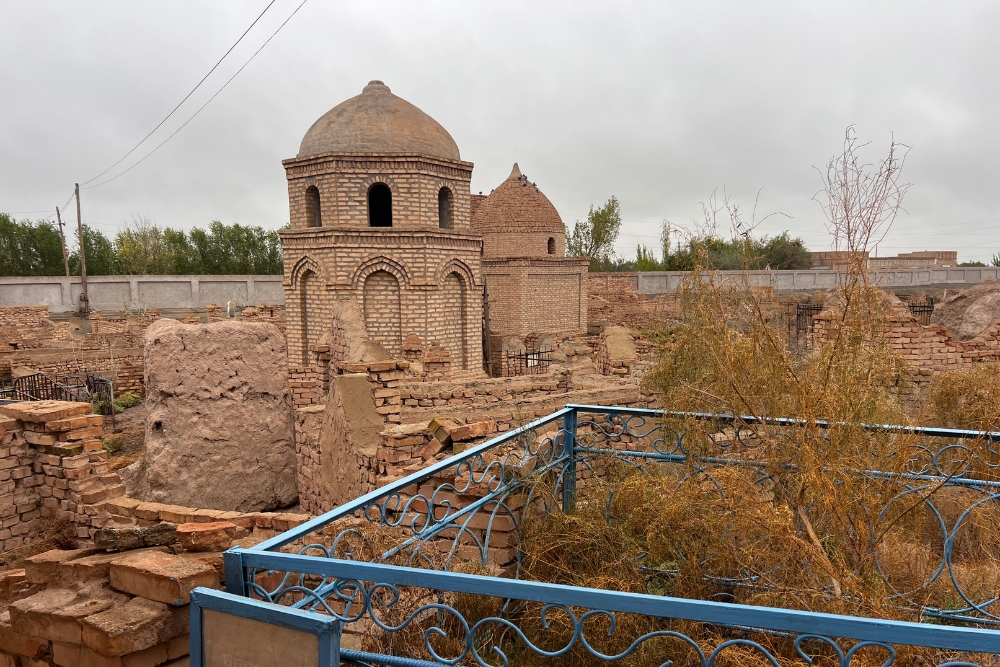
© Gayane Mkhitaryan, Mizdakhan, Nukus, Karakalpakstan, Uzbekistan
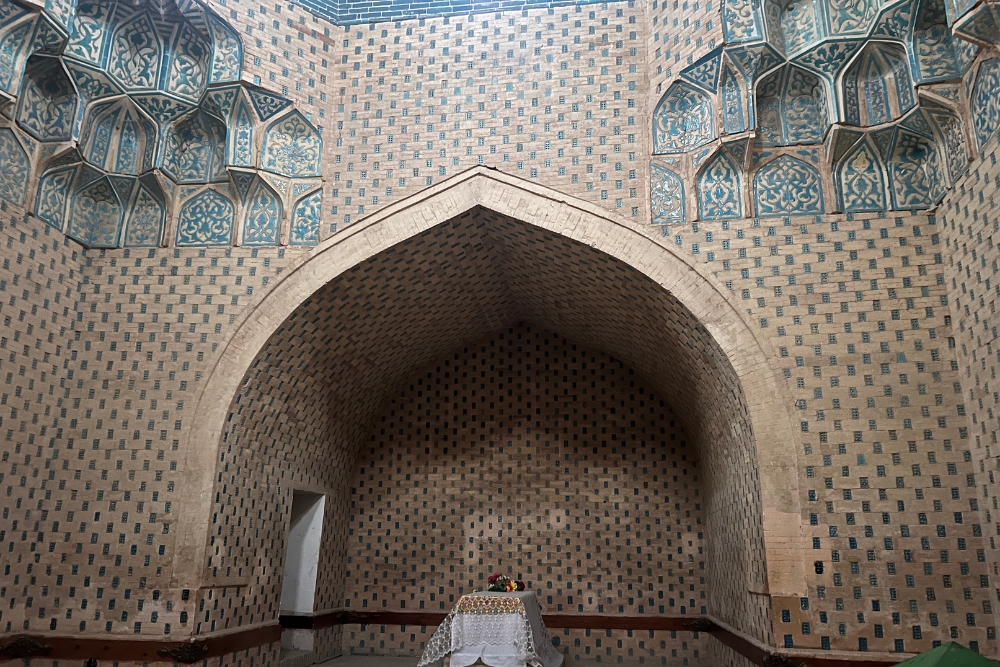
© Gayane Mkhitaryan, Mizdakhan, Nukus, Karakalpakstan, Uzbekistan
Moynaq Lunch Experience
Around 1 PM, we stopped at a local family’s home in Moynaq for lunch. The meal was traditional Karakalpak home cooking. It wasn’t just plov — we were served a full spread: a light vegetable soup, fresh salads, and manti (dumplings filled with seasoned meat).
What made this lunch special wasn’t just the food — it was the atmosphere. There’s a warm sense of community in this house – the locals and all the tourists under the same roof. The family cooks, guides pass through, travelers sit together and talk about what they’ve seen and what moved them. It felt like being welcomed, not serviced.

© Gayane Mkhitaryan, Moynaq old entrace sign
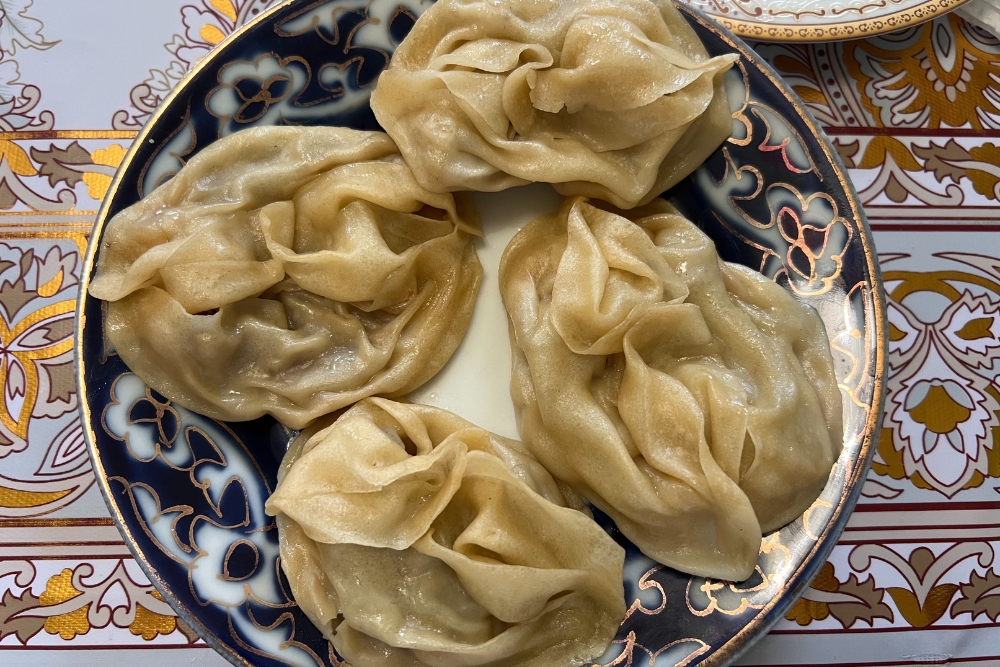
© Gayane Mkhitaryan, dumplings filled with seasoned meat

© Gayane Mkhitaryan, Beef soup with vegetables

© Gayane Mkhitaryan, Lunch with locals (barefoot)
Moynaq Ship Cemetery
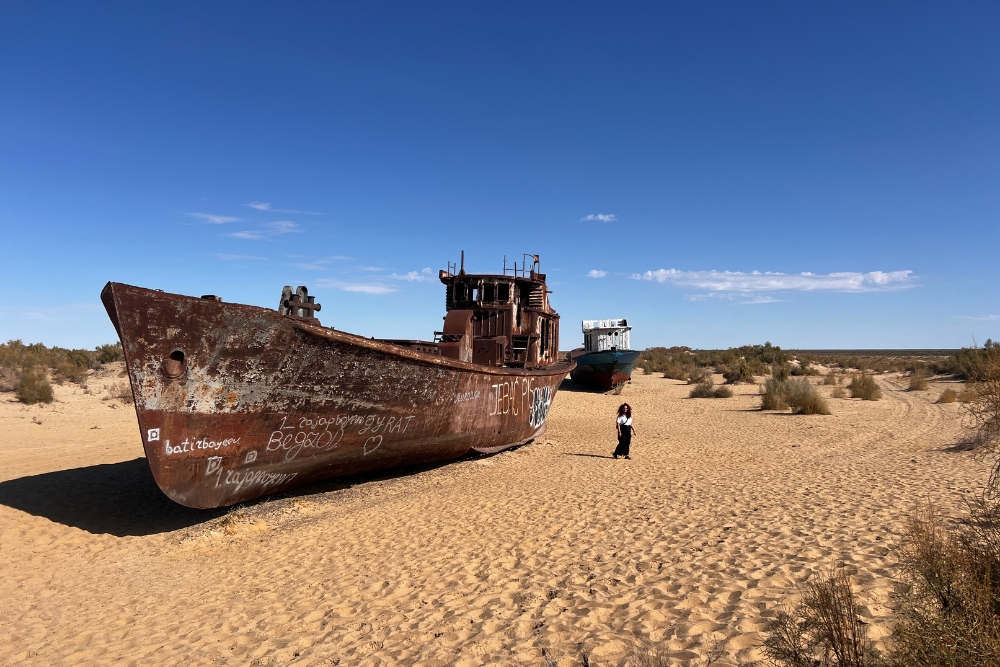
This is one of the main reasons we booked this tour. The ship cemetery at Moynaq is surreal in a way that photos cannot capture. Rusted fishing vessels sit scattered across the desert sand, 200 kilometers from the nearest water. It’s pretty dangerous, but you can climb into the hull of one ship and stand where fishermen once hauled in their catch, looking out at endless dunes instead of waves.
© Gayane Mkhitaryan, Moynaq Ship Cemetery

© Gayane Mkhitaryan, Moynaq Ship Cemetery
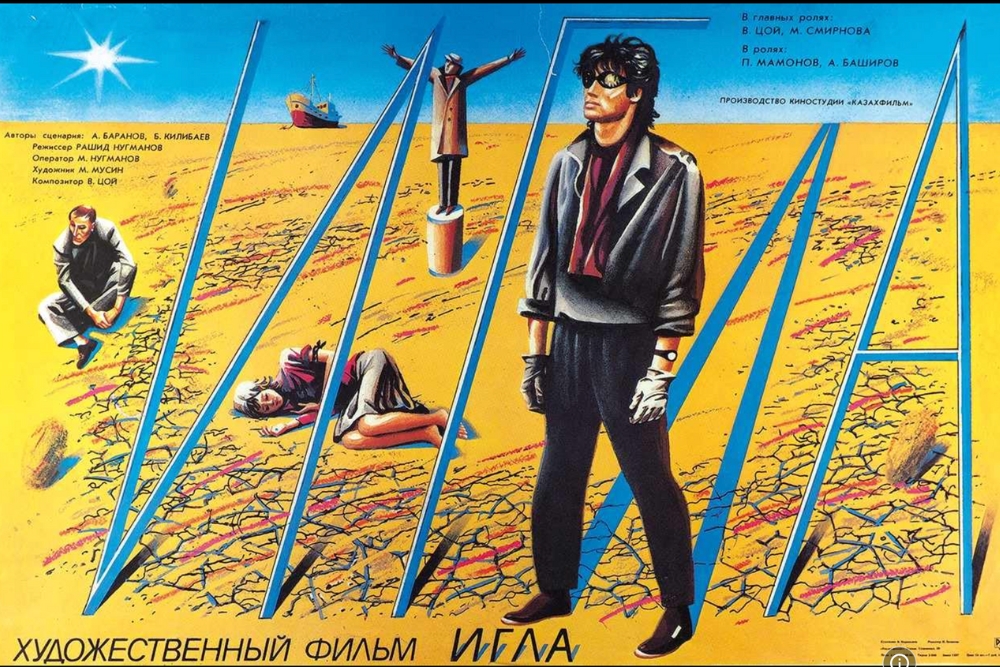
For fans of Viktor Tsoi, the Soviet rock icon and frontman of Kino, this place holds even deeper meaning. While the film The Needle (Игла), starring Tsoi, was mainly shot in Almaty, Kazakhstan, it showed scenes of the environmental destruction of the Aral Sea, which Moynaq powerfully represents. Walking across the sandy plain where the sea once shimmered makes the lyrics of “A Star Called the Sun” (Звезда по имени Солнце) hit home with emotional truth: time moves forward, history changes, and entire worlds can disappear.
© IMDB, Film The Needle (Игла), starring Viktor Tsoi
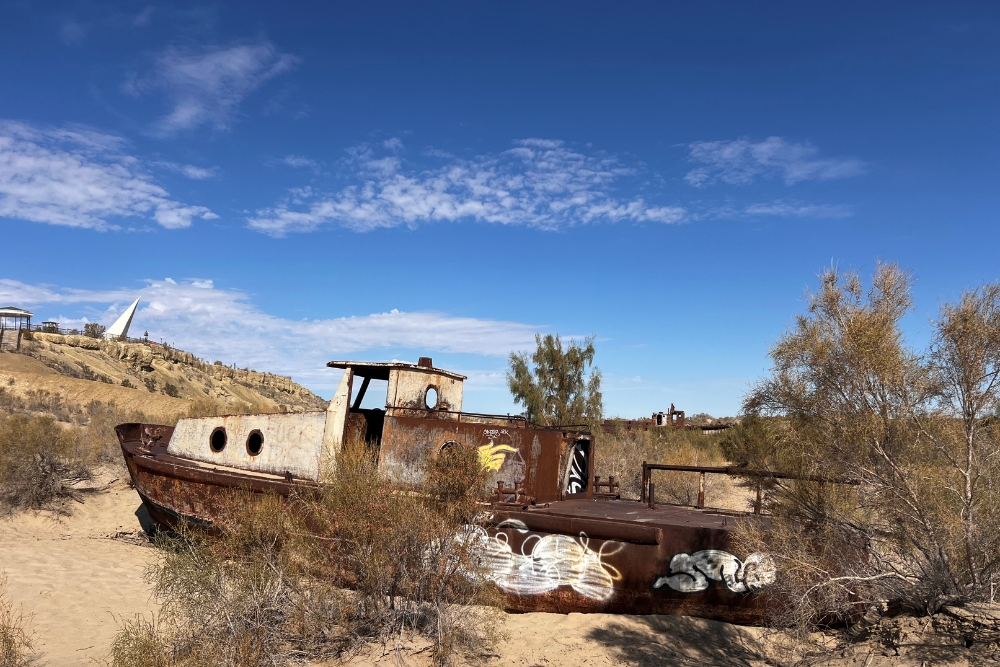
The ecological museum in Moynaq provides the context you desperately need to understand what happened. Through photos, maps, and exhibits, the story becomes clear: Soviet irrigation projects diverted the Amu Darya and Syr Darya rivers to grow cotton in the desert. Without these rivers feeding it, the Aral Sea began shrinking in the 1960s. By the 1990s, Moynaq’s fishing industry was dead, and 60,000 people lost their livelihoods.
© Gayane Mkhitaryan, Moynaq Ship Cemetery and the Aral Sea Museum
We spent 2-3 hours here, and I needed every minute of it. Walking among the ships, you can’t help but feel the weight of what was lost.

© Gayane Mkhitaryan, Life for this – Moynaq Ship Cemetery

© Gayane Mkhitaryan, Aral Sea in 1960s
Aral Sea Seabed
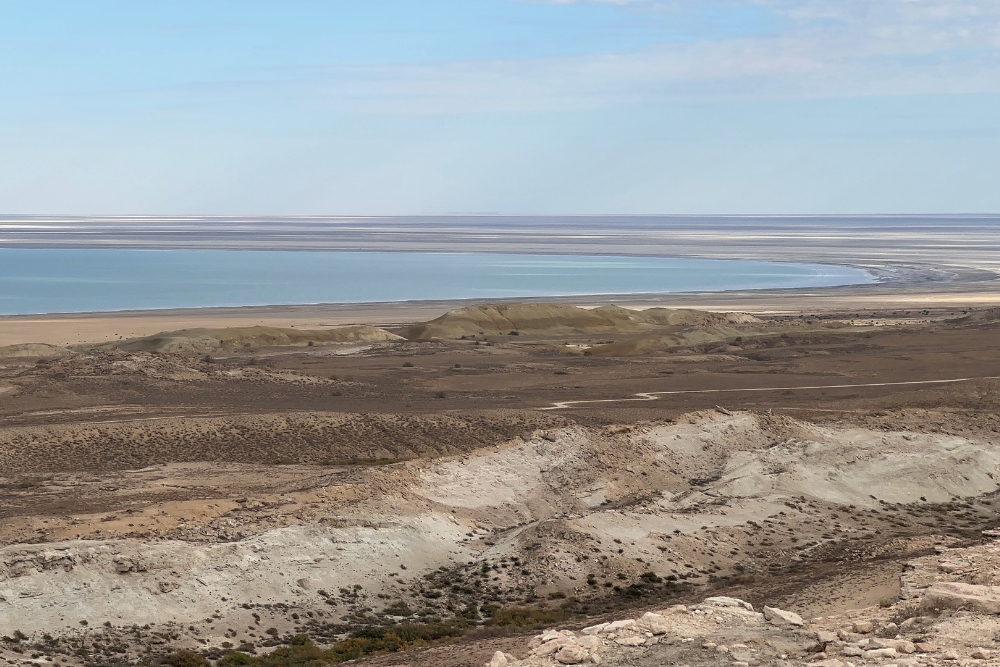
After Moynaq, we drove toward where the Aral Sea used to be. Eventually, the road simply ends, and you’re walking on what was once seafloor. The ground crunches beneath your feet—salt crystals and dried mud mixed with shells from when this was underwater. The landscape is called ‘Chaos,’ and the name fits. It’s flat, featureless, and deeply unsettling.

© Gayane Mkhitaryan, Road to Ustyurt Plateau
Understanding the scale of disaster requires being here. This isn’t a lake that dried up—it’s 26,000 square miles of environmental destruction. The dried seabed releases toxic dust storms that cause health problems for people living nearby. Cotton farming still consumes the rivers that once fed this sea. Nothing about this feels resolved or past tense.
© Gayane Mkhitaryan, Aral Sea Shore from Ustyurt Plateau
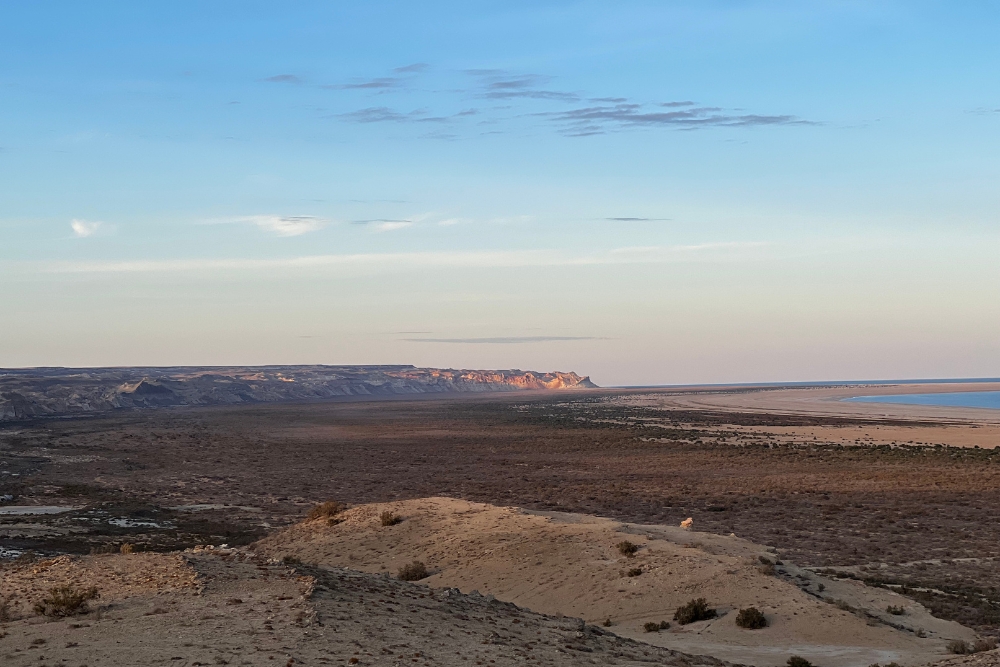
© Gayane Mkhitaryan, Aral Sea from Ustyurt Plateau
Davlatgirey Caravanserai (Kurgancha Kala)
We stopped at Davlatgirey Caravanserai, an abandoned Silk Road trading post that dates back centuries. This is where merchants traveling between Central Asian cities would rest, trade goods, and shelter from the harsh desert conditions. The structure is crumbling now, walls slowly dissolving into sand, but walking through the arched doorways, you can imagine the activity this place once saw.
The historical significance is powerful—this caravanserai connected ancient trade routes, and standing here reminded me that this region was once thriving, connected, vital to global commerce. Now it’s remote and forgotten, just as the Aral Sea fishing industry is. We spent about 10 minutes exploring, which was enough for photos and reflection.
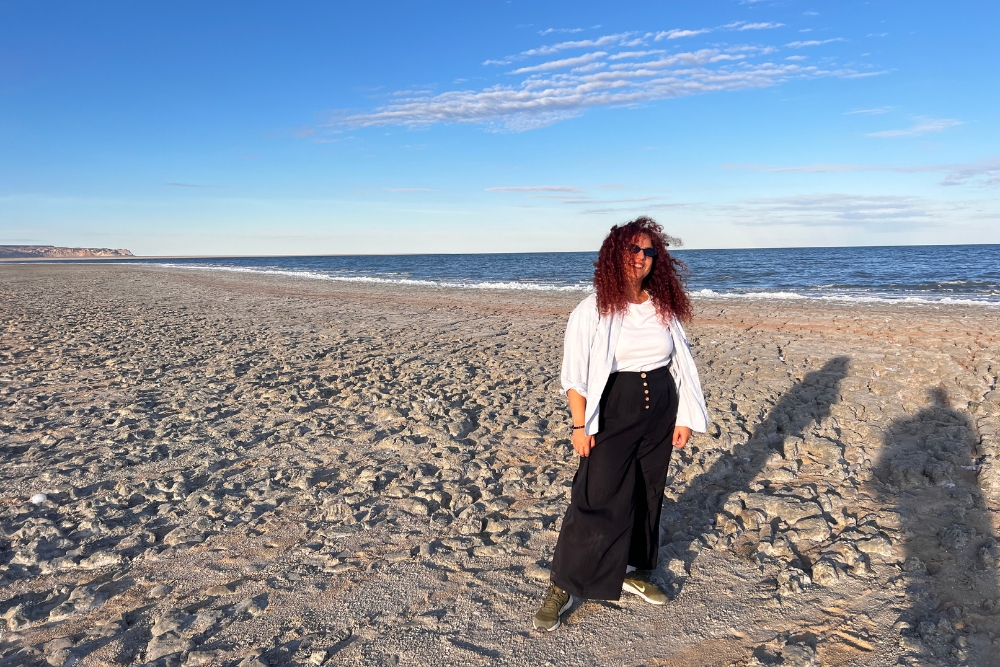
© Gayane Mkhitaryan, Aral Seashore
Aral Sea Discovery Yurt Camp Experience
As the sun began setting, we arrived at the yurt camp on the edge of the dried seabed. The camp is basic but functional: traditional yurts with beds and blankets, a shower with fresh water (cold but refreshing after the dusty day), and device charging powered by solar panels. There’s no internet, no mobile signal, and honestly, that’s perfect.

© Gayane Mkhitaryan, Aral Sea Discovery Yurt Camp

© Gayane Mkhitaryan, Inside the yurt
Dinner was cooked over an open fire—grilled meat, vegetables, bread, and tea. After eating, I climbed a nearby dune to watch the sunset turn the desert gold. The silence out here is absolute. Later, the stars appeared in numbers I’d never seen before, the Milky Way a bright band across the sky.
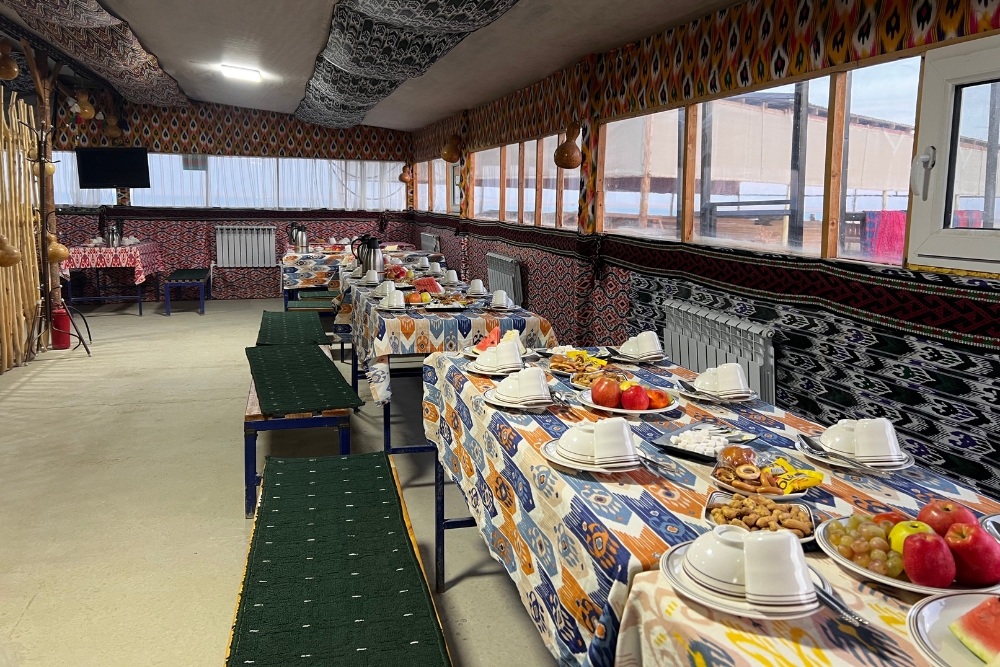
© Gayane Mkhitaryan, Dinner place in Aral Sea Discovery Yurt Camp

© Gayane Mkhitaryan, Traditional Uzbek Plov
The temperature dropped dramatically after dark. I’m talking from 18°C during the day to maybe 5°C at night. Bring warm layers—the blankets in the yurt aren’t quite enough. I slept poorly because the mattress was thin and uncomfortable, but waking up to the desert sunrise made it worthwhile.
Reality check: This isn’t glamping. The facilities are basic, and the sleeping conditions are rough, and you’ll have sand in places you didn’t know sand could reach. But the experience of camping on the Aral Sea seabed, under those stars, with the weight of environmental history around you—that’s something you can’t get anywhere else.
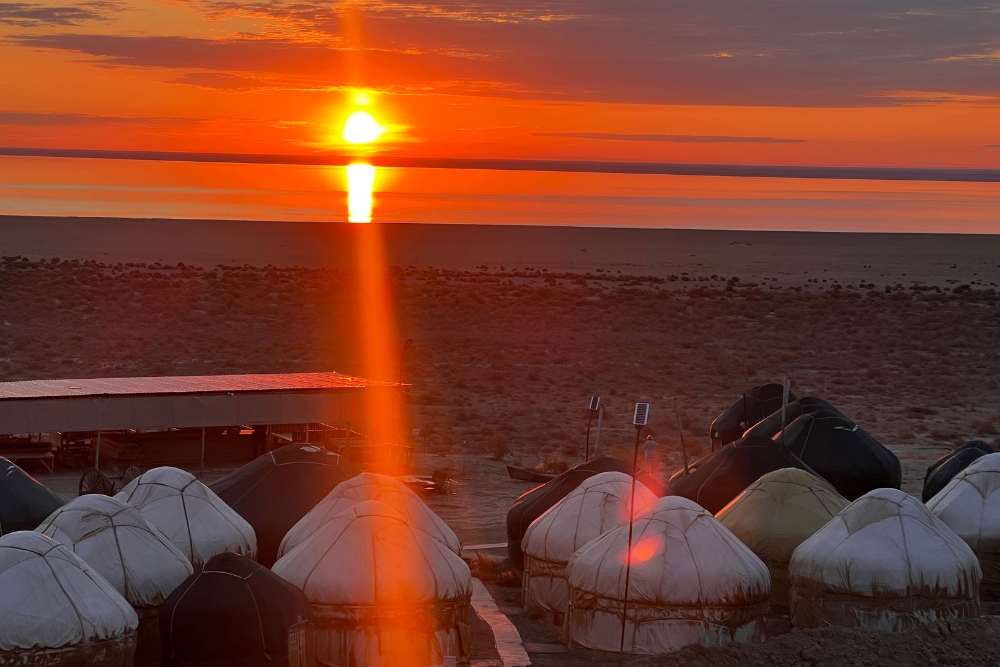
© Gayane Mkhitaryan, Sunrise over the Aral Sea Discovery Yurt Camp
Day 2: Return Journey—Ustyurt Plateau to Nukus
Waking up in a yurt to the desert sunrise was worth the uncomfortable mattress. The morning light turned everything golden, and for a moment, the landscape felt peaceful rather than tragic. After breakfast cooked over the dying embers of last night’s fire—more bread, cheese, jam, and very strong tea—we packed up and headed back through a different route. This route would show me the region’s unexpected beauty, proving there’s more to this area than environmental disaster.
Ustyurt Plateau
Our two-day visit to the Aral Sea offered unique perspectives from different locations. We explored the Ustyurt Plateau, often called the ‘Grand Canyons of Uzbekistan,’ which offered a striking contrast to the flat desert we had traversed. Here, dramatic white limestone cliffs and deep canyons dominate the landscape, showcasing unique white-and-gold striped rock formations. These layers are a testament to millions of years of geological processes.
Standing on the edge of these cliffs, looking out over the canyon, I felt my perspective shift. Yes, the Aral Sea disaster is an environmental catastrophe. But this landscape also contains stunning natural beauty that has nothing to do with human intervention. The plateau has existed for millions of years, and it will be here long after we’re gone.
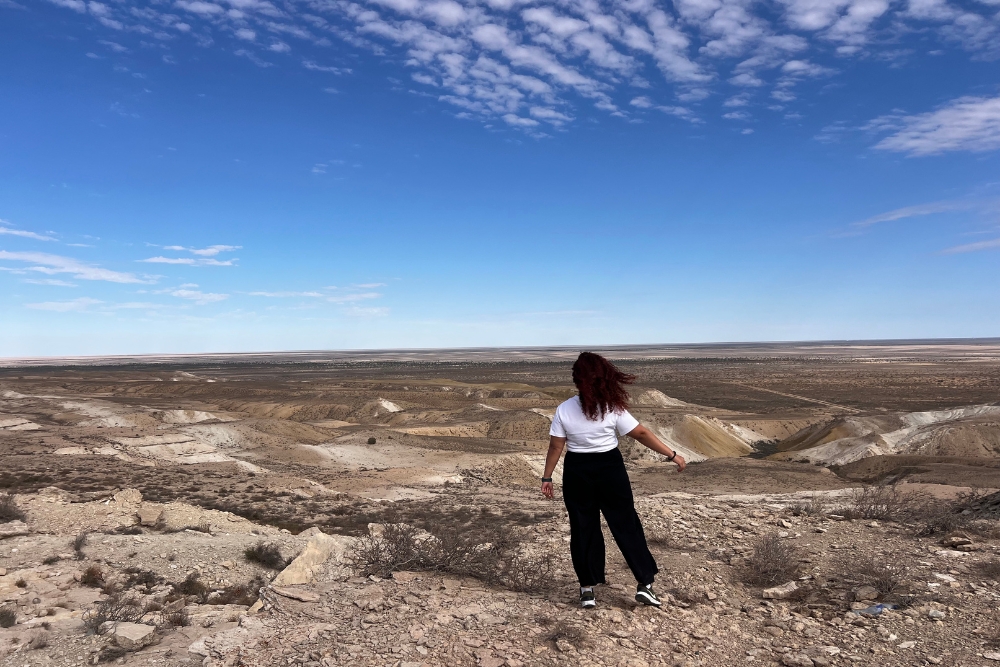
© Gayane Mkhitaryan, Ustyurt Plateau
We passed nomad cemeteries along the route—small collections of graves in the middle of nowhere, marking where people once lived and died in this harsh environment. For photography, morning light on the white cliffs is spectacular. Bring water and stay away from cliff edges—there are no safety barriers.
Sudochie Lake (Sudočje)
Our final stop before returning to Nukus was Sudochie Lake, a wetland ecosystem that attracts migrating birds. After two days of desert and disaster, seeing water and wildlife felt almost surreal. If you’re lucky, you can see pink flamingos, white swans, and various duck species—proof that life still thrives in this region despite the Aral Sea catastrophe.
The lake is popular with birdwatchers and, apparently, hunters, though I didn’t see any hunting during our visit. We spent 30-45 minutes here, watching the birds and enjoying the relative coolness near the water. The best time to view is early morning or late afternoon, when birds are most active.
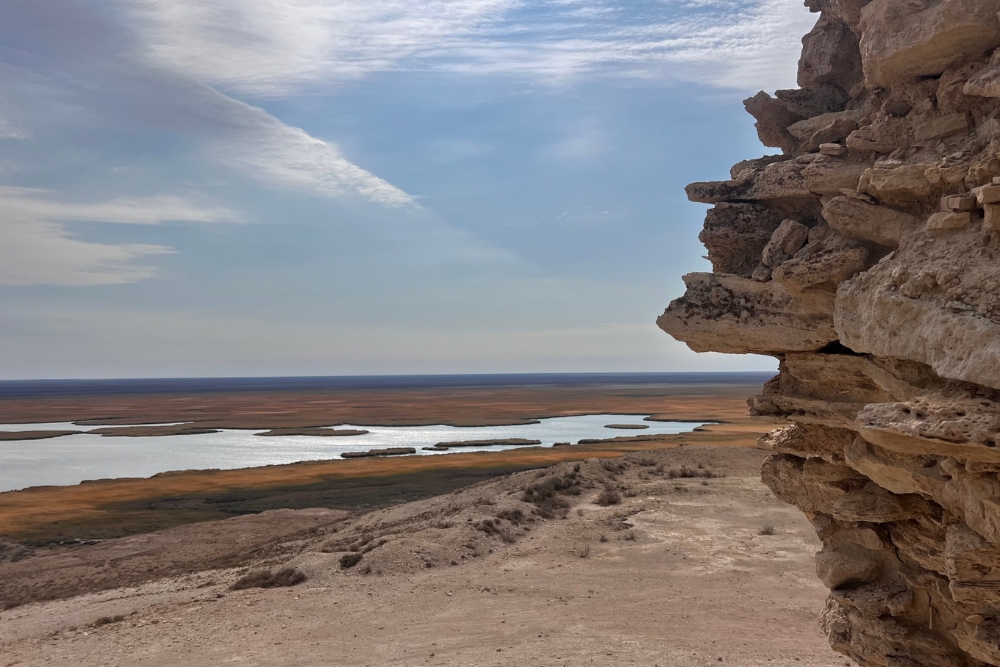
© Gayane Mkhitaryan, Sudochie Lake

© Gayane Mkhitaryan, Former lighthouse near Sudochie Lake
Former Urga Fishing Town
Near the lake, there once was a thriving fishing town — families, markets, boats, life. Today, it’s a ghost town. Only one fisherman still returns sometimes, holding onto the memory of what this place used to be. It’s heartbreaking to see how entire communities disappeared when the Aral Sea dried up. Walking through these empty streets, you truly understand the human cost of this disaster.

© Gayane Mkhitaryan, Urga fish town


© Gayane Mkhitaryan, random camels on our way to Kungrad
Kungrad Lunch & Return
We stopped for lunch in the Kungrad area, which wasn’t fancy, but eating warm beef noodle soup after two days in the desert felt right. The final drive back to Nukus took about 3 hours and arrived around 4 PM. Our driver also stopped on the way so we could see cotton fields and dropped us at our hotel in Nukus, and we said goodbye.
Back in Nukus, after a warm shower, I felt like I’d returned from another planet.
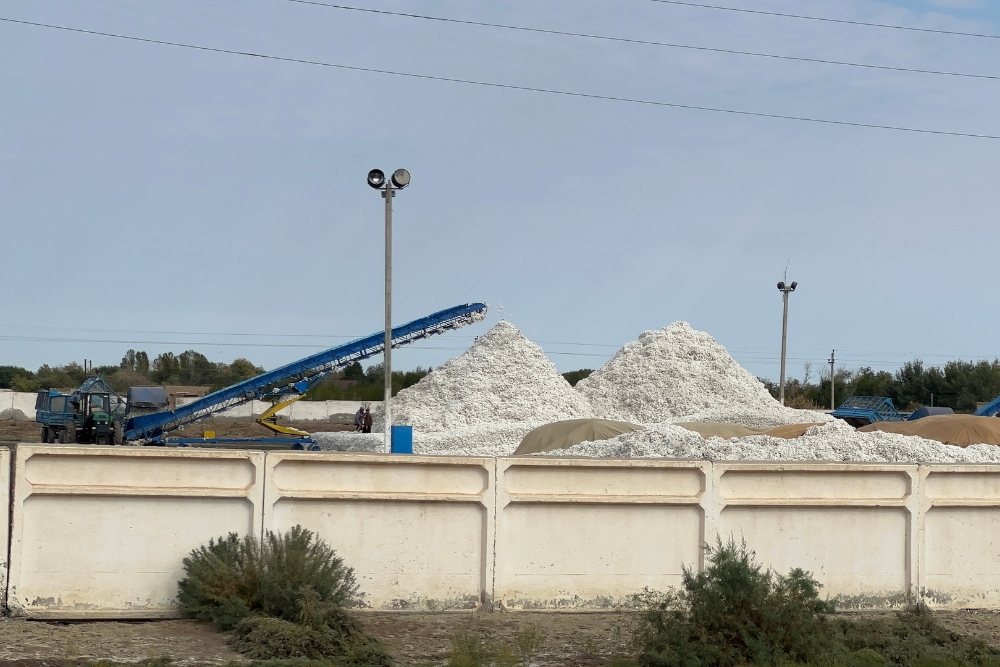
© Gayane Mkhitaryan, People collecting cotton with a machine

© Gayane Mkhitaryan, People collecting cotton

© Gayane Mkhitaryan, Cotton filed
Essential Packing & Practical Tips
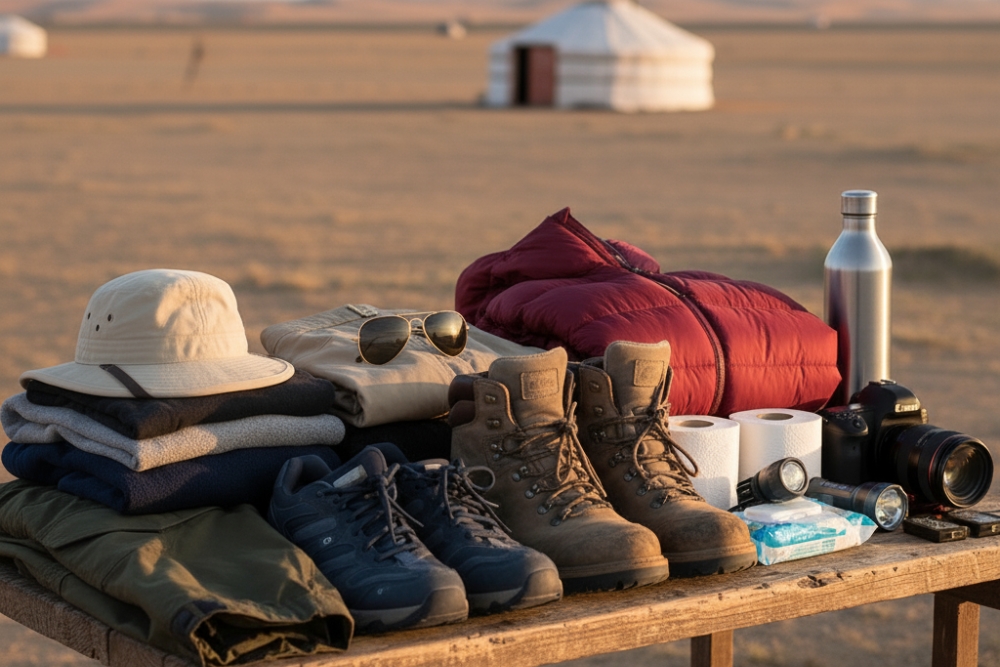
© Gayane Mkhitaryan, What to pack for Aral Sea tour
Must-Bring Items:
- Sturdy closed shoes: Hiking boots or good sports shoes. You’ll be walking on uneven desert terrain, salt flats, and climbing into ships. Sandals won’t cut it.
- Long trousers: For desert terrain and respect at cultural sites. The sun is brutal on exposed skin.
- Sun protection: Hat, sunglasses, and high SPF sunscreen. I wore SPF 50 and still got a bit sunburned.
- Warm jacket: Night temperatures drop dramatically, even in September. I’m talking 10-15-degree swings.
- Layers: Temperature swings are extreme. Morning cold, midday scorching, evening pleasant, night freezing.
- Headlamp or flashlight: The yurt camp has limited lighting. You’ll need this for nighttime bathroom trips.
- Reusable water bottle: Stay hydrated. The desert is unforgiving.
- Toilet paper and wet wipes: Facilities are basic, so bring your own supplies.
- Personal medications: There are no pharmacies on this route.
- Camera with extra batteries: While you can charge devices at camp, bring backups. This landscape should be photographed.
Cultural & Safety Notes:
- Dress modestly at the Mizdakhan necropolis and other cultural sites. Cover shoulders and knees.
- No mobile internet in the desert. Download offline maps of the region before leaving Nukus.
- Bring cash. There are no ATMs on the route, and you can tip or buy small items.
- No alcohol is included in the tour package, so we bought it in a small shop for 20.000 UZS; otherwise, it costs 50.000 UZS in the camp.
- Respect at environmental disaster sites. This isn’t a theme park—people’s lives were destroyed here.
- Follow your guide’s advice about the terrain. Salt flats can be unstable, and there’s no medical help nearby.
- Stay hydrated. The desert is unforgiving, and dehydration happens faster than you think.
My Final Thoughts
The Aral Sea taught me something I couldn’t learn from documentaries or articles: the experience of witnessing environmental destruction in person.
To stand on what was once the seabed, to wander through the rusted remains of ships that once navigated deep waters, and to sleep beneath a canopy of stars where fish once swam – these are the experiences that reshaped my understanding of humanity’s impact on our planet.
If you’re ready to confront uncomfortable truths about environmental destruction while experiencing Central Asia’s remote beauty, this €353 journey will stay with you long after you leave. It’s not an easy trip—physically, emotionally, or financially for budget travelers. But it’s an important one.
FAQs: The Answers I Needed Before Planning My Trip
Is the Aral Sea completely dried up?
No, but it’s shrunk by about 90% since the 1960s. The North Aral Sea in Kazakhstan has partially recovered thanks to a dam project, while the South Aral Sea in Uzbekistan continues shrinking. What you visit on this tour is the dried-up southern portion, where Moynaq used to be a port city. Some water remains about 200km from Moynaq’s current position, but it’s inaccessible and continues recedin
How much does an Aral Sea tour cost?
The standard 2-day, 1-night tour costs around €353 per person through most operators. This includes 4×4 transportation, yurt accommodation, four meals, museum entry, and a guide. Single-day tours are cheaper at around €150-200, but skip the camping experience. Private tours cost more, especially for solo travelers.
Three to four-day extended tours run €500-700. For budget travelers in Central Asia, where daily costs average $20-30, this is quite costly but definitely worth every cent.
Is it safe to visit the Aral Sea?
Yes, with proper precautions. The main safety concern is the remote location— medical help is hours away. The dried seabed contains toxic dust from pesticides and fertilizers, which can cause respiratory irritation during dust storms. Wear a mask if it’s windy. The terrain is challenging with uneven ground, salt flats, and rusted metal hazards at the ship cemetery. Going with a reputable tour operator and guide is essential—don’t go on your own.
How do I get to Nukus from Tashkent and vice versa?
By air, Uzbekistan Airways operates daily flights that take about 1 hour 45 minutes and cost $50-70 USD. Book early for better prices. By train, the journey takes approximately 20 hours, with overnight sleeper options available. Platskart (shared sleeping car) costs $15-25 USD, while kupe (private compartment) is $40-60 USD.
I personally was already in Nukus, so it was easy for me to book the tour. After the trip, I took the night train from Nukus to Tashkent.
What's the best season to visit?
The ideal time to visit is September to October and April to May. We visited on September 28-29.
September to October offers ideal conditions with comfortable daytime temperatures (20-25°C) and manageable nighttime temperatures (10-15°C), clear skies, and suitable camping weather.
April to May also provides excellent mild conditions, coinciding with bird migration.
Avoid June to August due to extreme heat (over 40°C), which makes camping uncomfortable and increases the risk of dehydration.
Similarly, avoid November to March as it is very cold, especially at night, with limited heating options at camps, even with snow.
Is the tour suitable for children or elderly travelers?
It depends on fitness level and comfort with basic conditions. The tour involves long drives (3-4 hours at a stretch), walking on uneven desert terrain, climbing into ships, and rough yurt sleeping. There’s limited medical access and basic toilet facilities.
Active teenagers who enjoy adventure travel will probably love it. Young children may struggle with the heat, long drives, and uncomfortable sleeping. Elderly travelers with good mobility and camping experience should be fine, but those who need comfort or medical assistance should skip it.
Distance from Nukus to the Aral Sea
Here’s what I learned after booking my trip: when people ask about “the Aral Sea,” they’re usually referring to one of three different destinations, and the distances between them vary greatly.
It takes about 200 kilometers and 3-4 hours by car from Nukus to Moynaq, the famous ship graveyard, according to Backpack Adventures. But what surprised me is that Moynaq isn’t actually on the water anymore—the current shoreline of the Aral Sea is now 150 kilometers away from this former port town, as reported by Backpack Adventures.
If you want to reach the actual water, the trip from Nukus to the Aral Sea shoreline takes around 8 hours, as noted by Wikivoyage, and you’ll need another 3-4 hours in a four-wheel-drive vehicle from Moynaq to reach the current shoreline, per Backpack Adventures. That’s right—the sea that once touched Moynaq’s docks has retreated so far that you’re looking at an all-day trip just to see water.
Can the Aral Sea Be Saved?
The short answer: parts of it, yes. The full answer: it’s complicated, and I wish someone had explained this to me before I arrived.
Here’s what’s actually happening: The Northern Aral Sea in Kazakhstan has shown remarkable recovery, with water volume increasing from 18.9 billion cubic meters at the beginning of 2022 to 22.1 billion cubic meters, and is projected to reach 23.4 billion cubic meters by the end of 2025 according to The Times Of Central Asia and The Astana Times. That’s genuinely impressive—when I saw the statistics, I was surprised anyone was succeeding at all.
But—and this is important—the South Aral Sea, half of which lies in Uzbekistan, was essentially abandoned to its fate, with most of Uzbekistan’s part completely dried up. When I visited Moynaq on the Uzbek side, this became painfully clear. The ships sit in sand, not water, and there’s no real plan to bring the water back here.
The bottom line: if you’re visiting the Kazakh side, you might see genuine environmental recovery. If you’re visiting the Uzbek side like I did, you’re witnessing an ongoing disaster with some attempts at damage control through tree planting.
Size of the Aral Sea Before and After
The numbers are almost impossible to comprehend until you see the desert that used to be water.
In 1960, before the disaster began, the Aral Sea covered approximately 68,000 square kilometers (26,300 square miles) and was the fourth-largest lake in the world according to Encyclopedia Britannica. To put that in perspective, that’s bigger than the U.S. state of West Virginia.
By 2007, the Aral Sea had declined to just 10% of its original size. Between 1960 and 2018, the area shrank by approximately 60,156 square kilometers (about 87.85%), with a total water volume loss of about 1,000 cubic kilometers.
When I stood on the Ustyurt Plateau looking down at what used to be the seafloor, trying to imagine 90% of this desert covered in water, my brain couldn’t quite process it.
Before 1960, the Aral Sea contained 1,062 cubic kilometers of water with a salinity of 10-11 grams per liter according to Central Asia Program. In comparison, by 2021, the Northern Aral Sea had a volume of about 20 cubic kilometers with a salinity of 10-14 grams per liter, while the Western Aral Sea held 42.5 cubic kilometers with a salinity of 170 grams per liter.
The most striking thing I learned is that only 10% of the Aral Sea’s original size remains in Uzbekistan, and the salinity is so high that marine life is nearly impossible. What was once a thriving freshwater ecosystem is now saltier than the ocean in many areas.
Standing in Moynaq, looking at rusty ships sitting in sand 150 kilometers from the nearest water, these statistics suddenly became very, very real.
