
What to Do in Beira, Mozambique: A City That Surprised Me
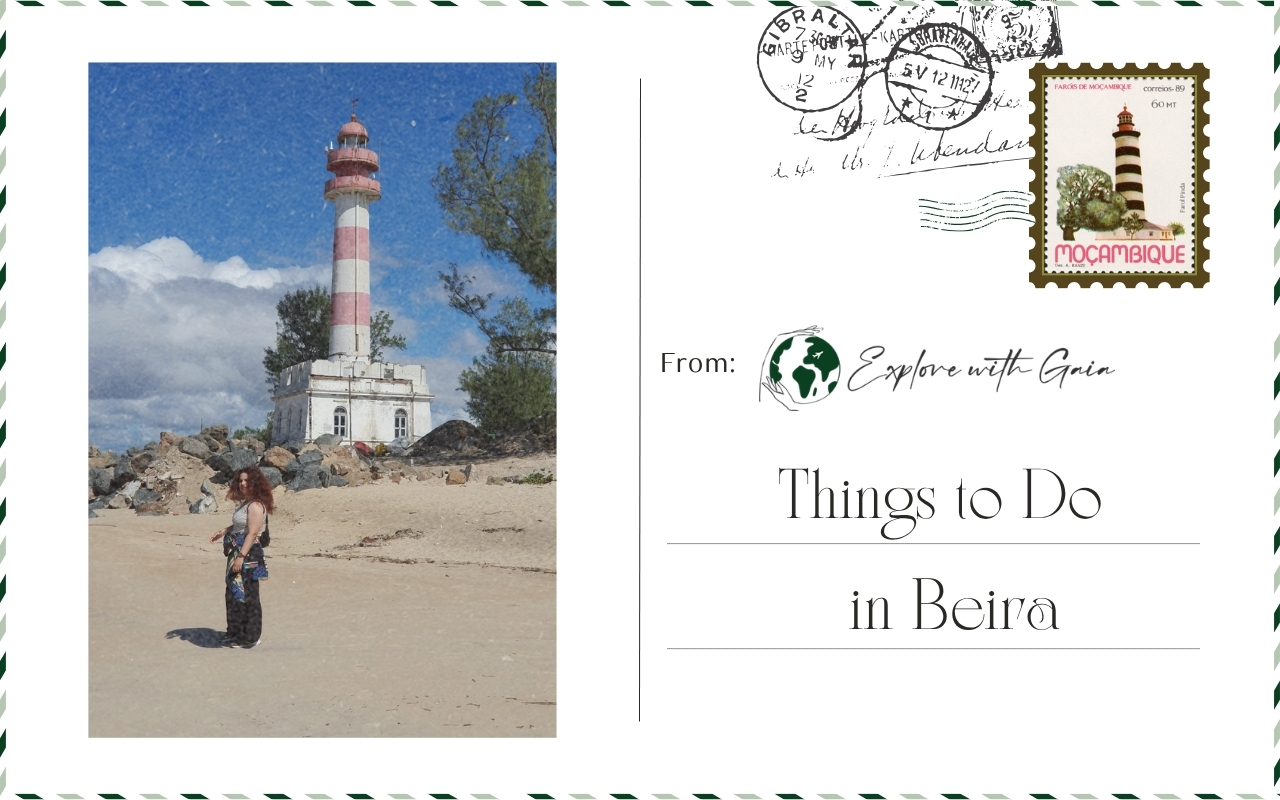
When we crossed the border from Zimbabwe into Mozambique at Juliasdale–Forbes, the border guard looked at my passport, paused, and said: “You are the fifth Armenian to cross this border.” Not the fifth today. Not the fifth this week. The fifth. Ever. That is the kind of place Beira is — somewhere that most people don’t go, and that makes the ones who do feel like they’ve stumbled onto something unscripted.
I was traveling with my boyfriend and his parents, covering Zimbabwe and Mozambique by car, and eventually the long road east to Beira. It wasn’t on anyone’s “top Mozambique” list. It didn’t have a GetYourGuide page full of curated experiences. What it had was a lighthouse standing over a ship graveyard, a railway station that somehow operated as if it were decades ahead of the building’s facade, and staff who gave us a personal tour because we were the only tourists who had ever bothered to ask. But the most important of all – it had a special vibe.
Quick Facts Before You Go
Language: Portuguese is the official language of Mozambique. On the streets of Beira, you’ll also hear Sena and Ndau. English is not widely spoken — don’t count on it outside of larger hotels. We got further with French than with English at the railway station, where the HR manager came to show us around and spoke to us entirely in French. If you have any Portuguese or French, use it. Locals appreciate the effort.
Currency: The Mozambican Metical (MZN) is the local currency. US dollars are accepted in some hotels and larger restaurants, but you’ll need metical for markets, local food, and transport. ATMs exist in Beira but can be unreliable — ideally withdraw cash before crossing from Zimbabwe, or do so as soon as you arrive. Don’t rely on card-only.
Time: Beira runs on CAT (Central Africa Time), UTC+2 — the same as Zimbabwe, so no adjustment needed if you’re crossing from there.
Best time to visit: June to September, the dry season, gives you the most comfortable conditions. December falls in the wet season — humidity is high, rain is possible, and Beira sits in a cyclone-prone zone. That said, it’s not impossible to visit in December; just temper expectations for beach time and outdoor exploration.
Beira Must-See Attractions: My Recommendation
Beira doesn’t have the polished monument trail of a classic tourist city — and that’s exactly what makes it interesting. What it has are layers: colonial architecture in various states of beautiful decay, a working port that shaped a continent’s trade routes, a beach with a view of a shipwreck, and locals who are genuinely surprised to see you.
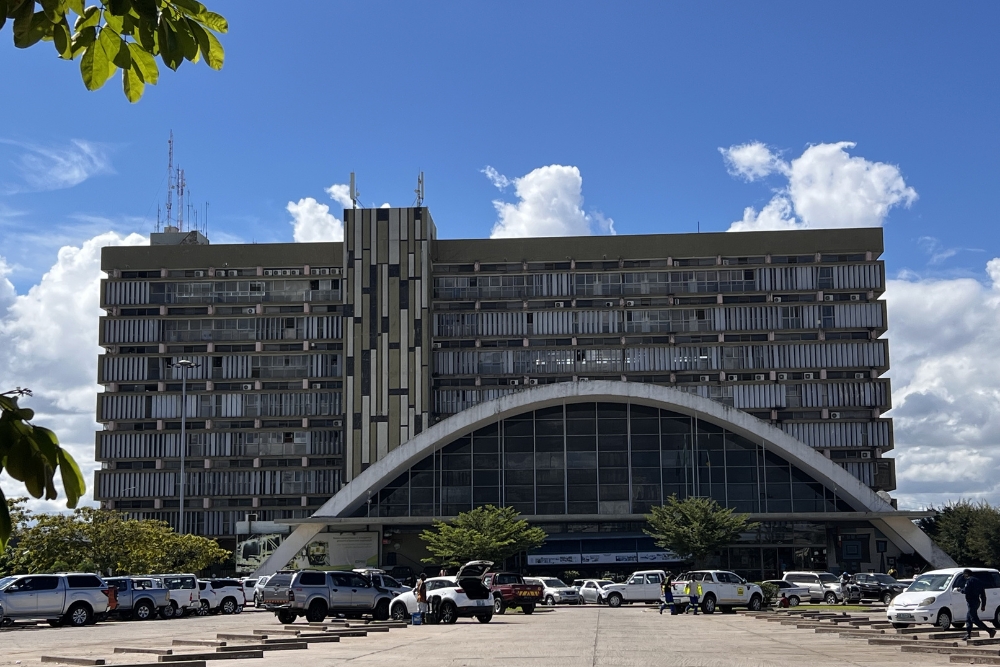
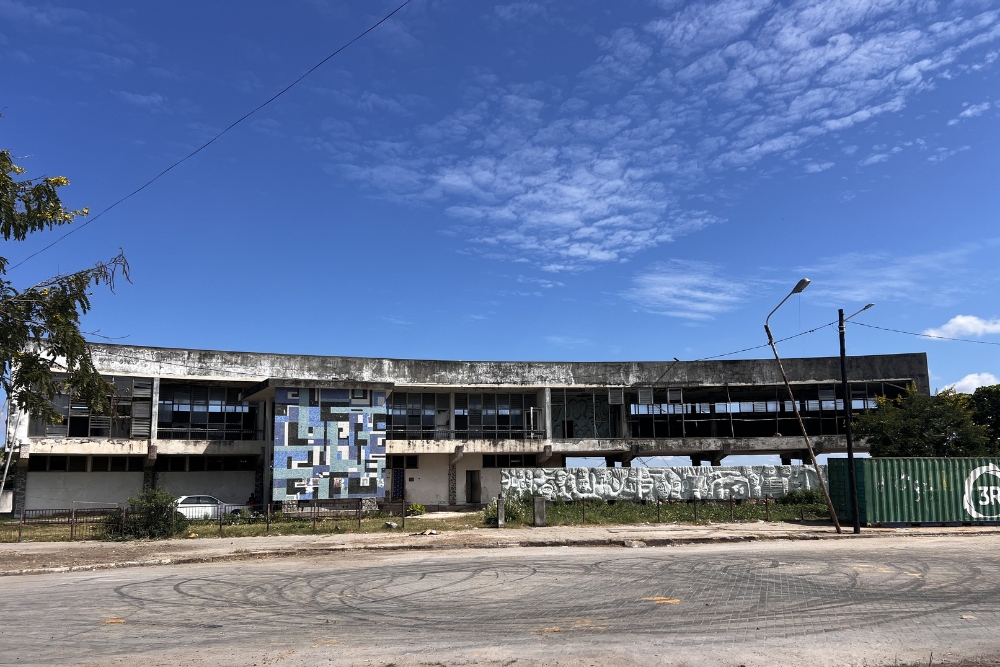
- Beira Railway Station – A bold 1960s avant-garde building hiding a surprisingly modern interior; ask to see inside, and you might get a personal tour from staff who are proud of what they run
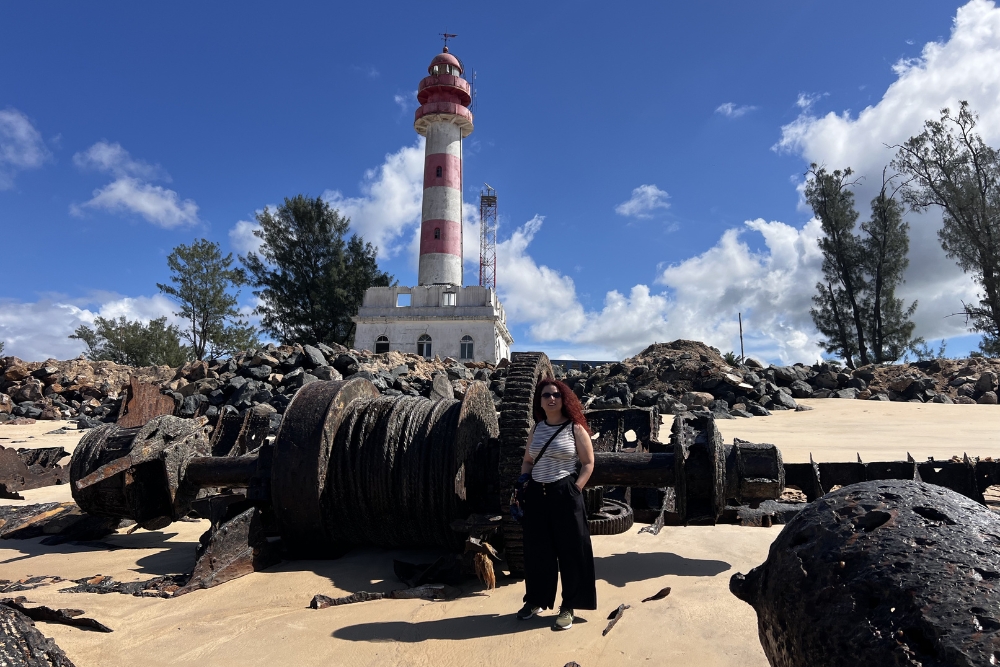
- Macuti Lighthouse – The city’s iconic red-and-white striped lighthouse, standing above the beach, best combined with a walk along the shore
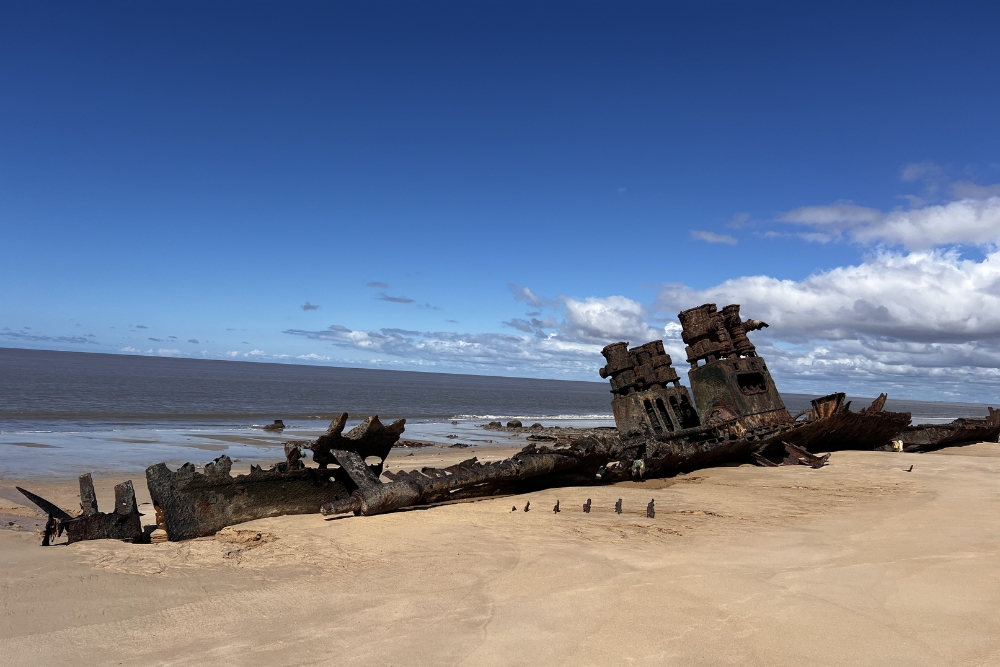
- Ship Graveyard – Rusted hulks of abandoned vessels along the Púngoè River bank near Macuti, eerie and photogenic in equal measure
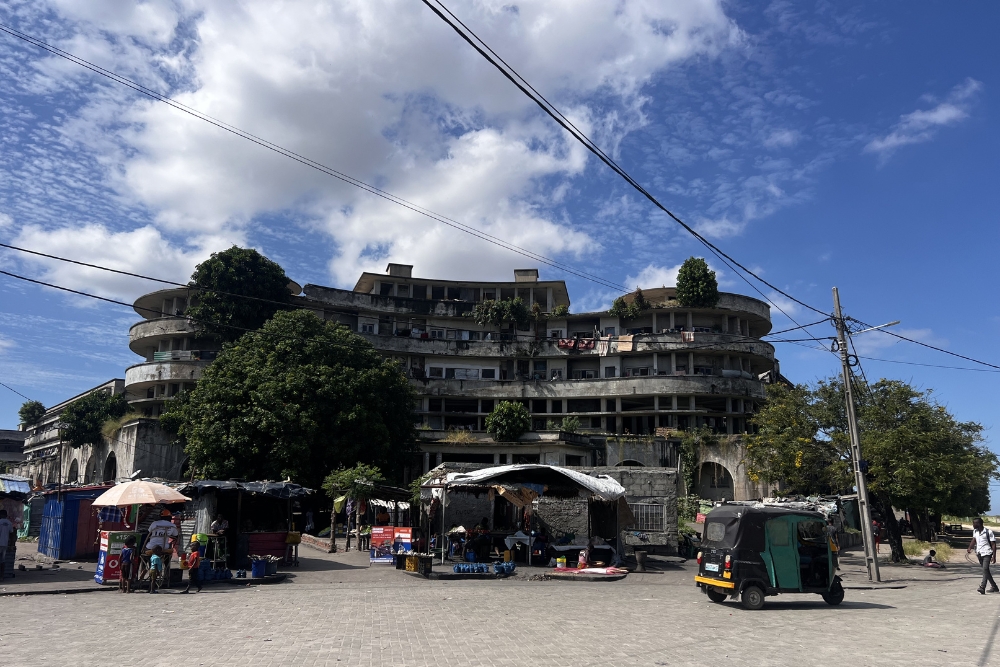
- Grand Hotel Ruins (Grande Hotel) – A 1950s showpiece hotel now inhabited by thousands of residents, one of the most complex and memorable sights in the city
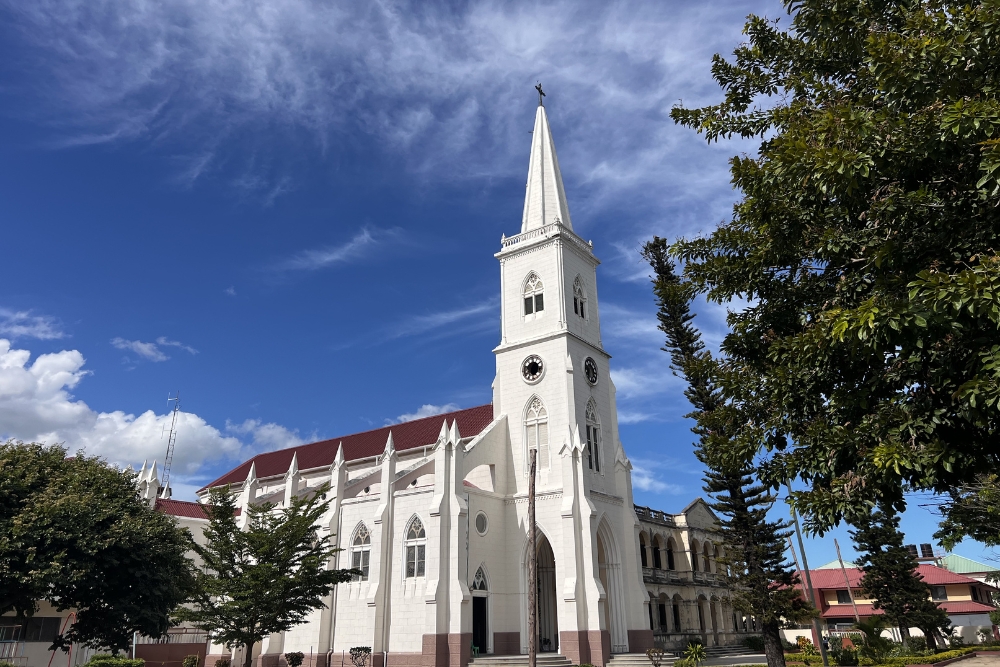
- Beira Cathedral – Early 1900s Catholic cathedral built with stones from the demolished San Caetano Fort, still active and well-maintained
- Casa de Ferro – A prefabricated iron house with reported links to Gustave Eiffel’s workshop, one of the more unusual colonial relics in the city
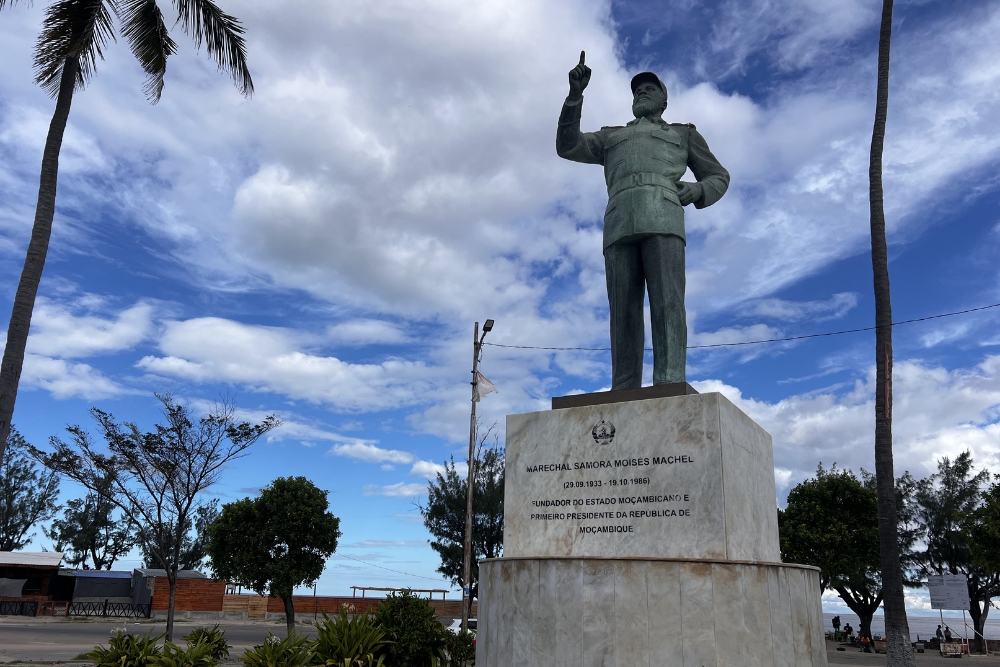
- Samora Machel Statue – Monument to Mozambique’s first president, a good anchor point for exploring the city center on foot
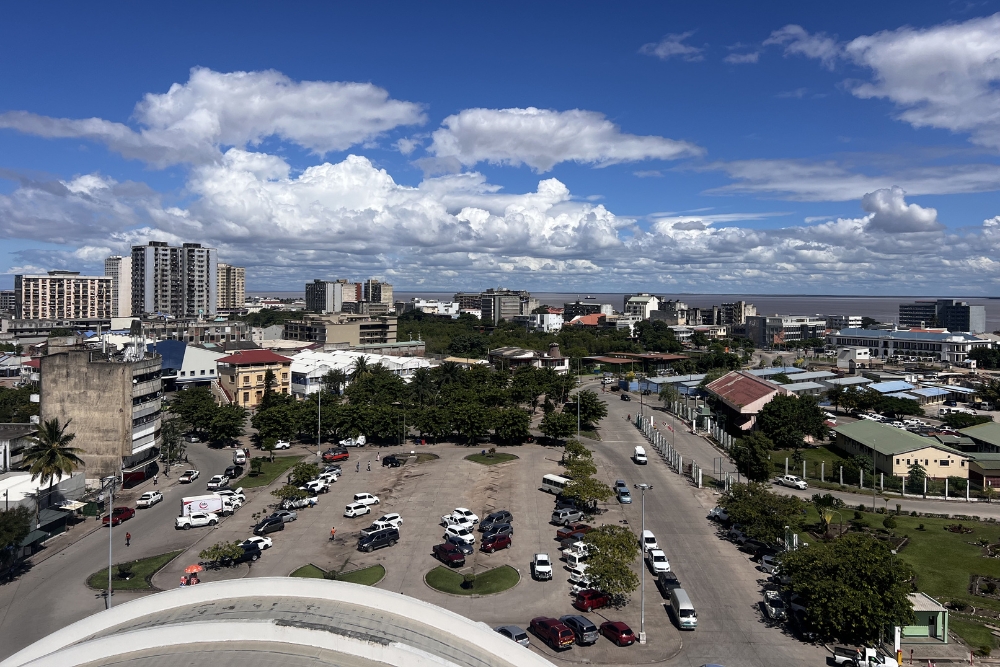
© Gayane Mkhitaryan, View from Beira Railway Station, Beira, Mozambique
Beira Railway Station
I want to start here because this was genuinely the most unexpected thing we did in Beira, and it cost us nothing except the confidence to ask.
The building itself is worth a stop from the outside — a bold, angular 1960s structure that feels like someone dropped a piece of European avant-garde architecture into central Mozambique. But we were the only tourists there, and on impulse, we asked if we could see inside. They said yes.
The HR manager came out to meet us. He spoke French and was genuinely delighted to show us around. What we found inside was startling — not a crumbling relic, but an operation running on modern technology, with organized management and visible institutional pride. The contrast between the aged exterior and the efficient interior was completely unexpected. Old trains sat on the tracks outside. The building’s interior halls had a quiet grandeur. He told us the history of the line, how it connects Beira to Zimbabwe and beyond, and the port’s role in regional trade.
We spent nearly an hour there. No guidebook was sent to us. We just asked.
If you visit Beira and do nothing else on this list, go to the railway station and ask to look inside. You might get a no. You might get what we got.
Macuti Lighthouse
The red-and-white striped lighthouse at Macuti is Beira’s most photographed landmark, and it earns that status. It stands above the beach, visible from a distance, and has the kind of weathered, photogenic quality that more polished destinations spend money trying to manufacture.
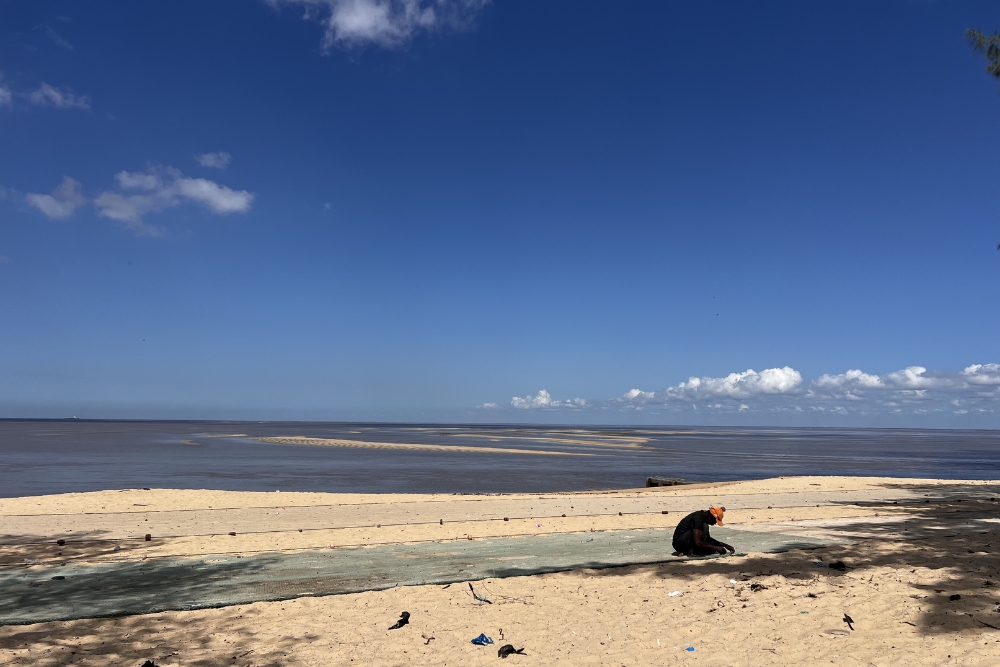
The beach below — Macuti Beach — is the main city beach and a genuine local gathering spot, especially on weekends. It’s not the pristine white-sand Indian Ocean beach of the Mozambican south. It’s urban, lively, palm-lined, and real. Families, fishermen, and couples all share the same stretch of sand. For that reason, it’s worth an hour or two.
Ship Graveyard
Close to Macuti, along the banks of the Púngoè River, the rusted hulks of old ships sit at odd angles in shallow water — abandoned, salt-weathered, and quietly spectacular. It’s one of those sights that appears in no official itinerary and yet lingers in your memory longer than most things you’d pay to see. Combine this with the lighthouse visit; they’re close together.
Grand Hotel Ruins (Grande Hotel)
The Grande Hotel was once considered one of the finest hotels in Africa — a gleaming mid-century showpiece built in the 1950s. Today, it stands as a shell of its former self, now home to thousands of people who moved in after it closed and never left. It’s an inhabited ruin: laundry lines hang from balconies, children play in the courtyards, and the swimming pool has long since been repurposed.
You can visit — approach respectfully, and don’t photograph people without permission. It’s a complex, layered place: beautiful and sad, uncomfortable and fascinating. Go with awareness of what you’re walking into, rather than as a spectacle-seeker.
© Gayane Mkhitaryan, public pool ruins near Grand Hotel
Beira Cathedral
Built in the early 1900s using stones salvaged from the old San Caetano Fort, the Cathedral of Beira is compact but atmospheric. It’s one of the few colonial-era buildings in the city that has been well-maintained and is still actively used. Worth a brief stop, especially if you’re already exploring the city center.
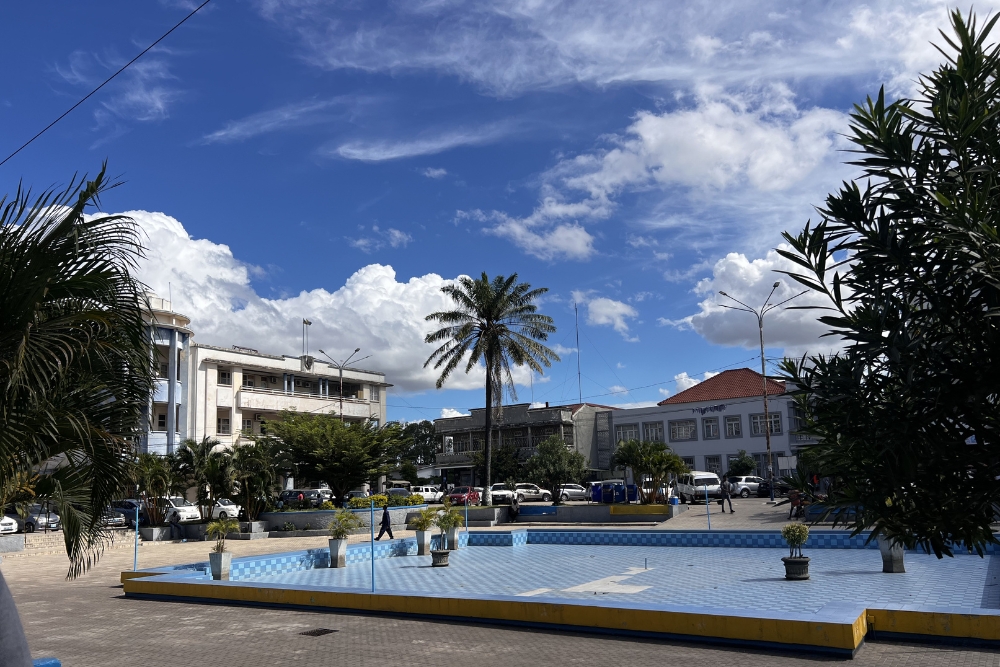
City Square and Colonial Architecture
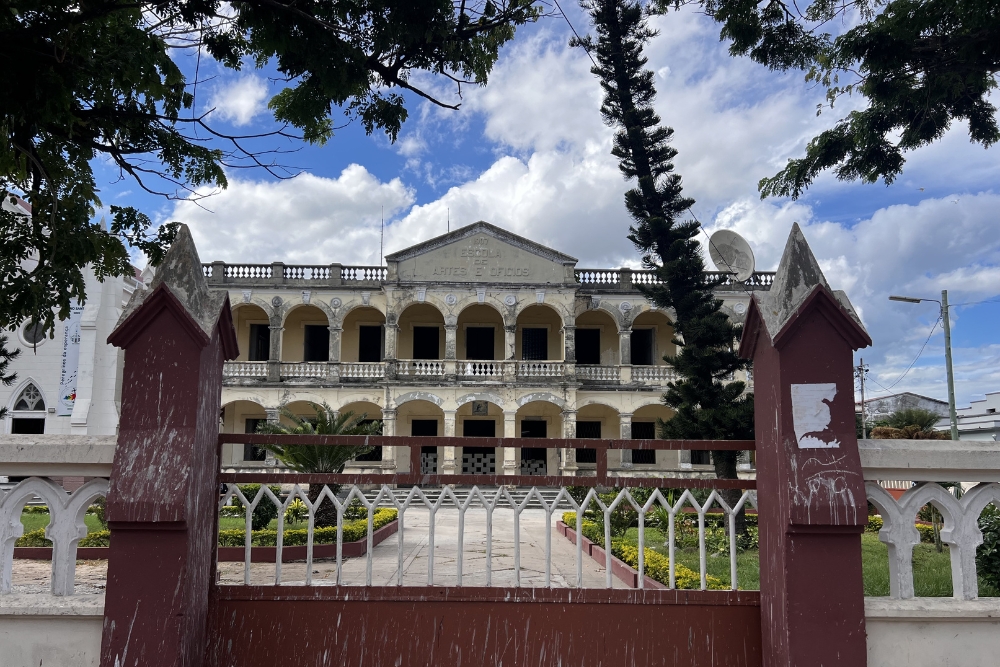
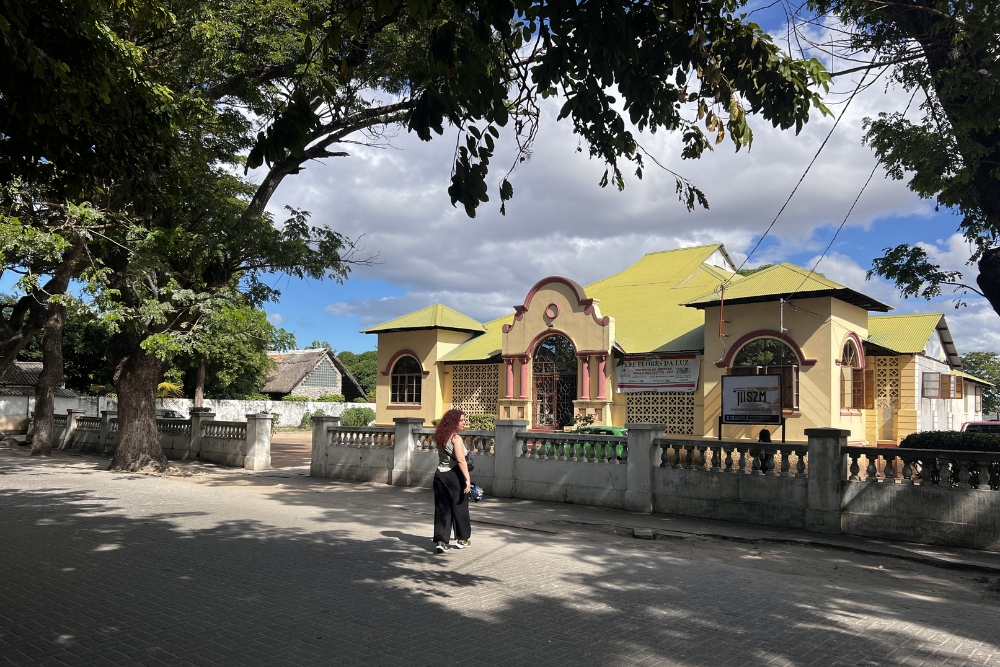
The area around Praça dos Heróis Moçambicanos is where Beira’s architectural history concentrates. The Marble Municipality Building, Casa Portugal, and Casa Infante de Sagres cluster around the city center — all in Portuguese colonial architecture, in various states of faded grandeur.
Don’t miss Casa de Ferro nearby — a prefabricated iron house designed in the late 19th century, reportedly connected to Gustave Eiffel’s workshop. The building is more interesting as a curiosity than as a spectacle, but it’s a quick stop and one of the more unusual colonial relics in the city.
The Samora Machel Statue — honoring Mozambique’s first president — is also in this area and marks a good anchor point for exploring on foot.
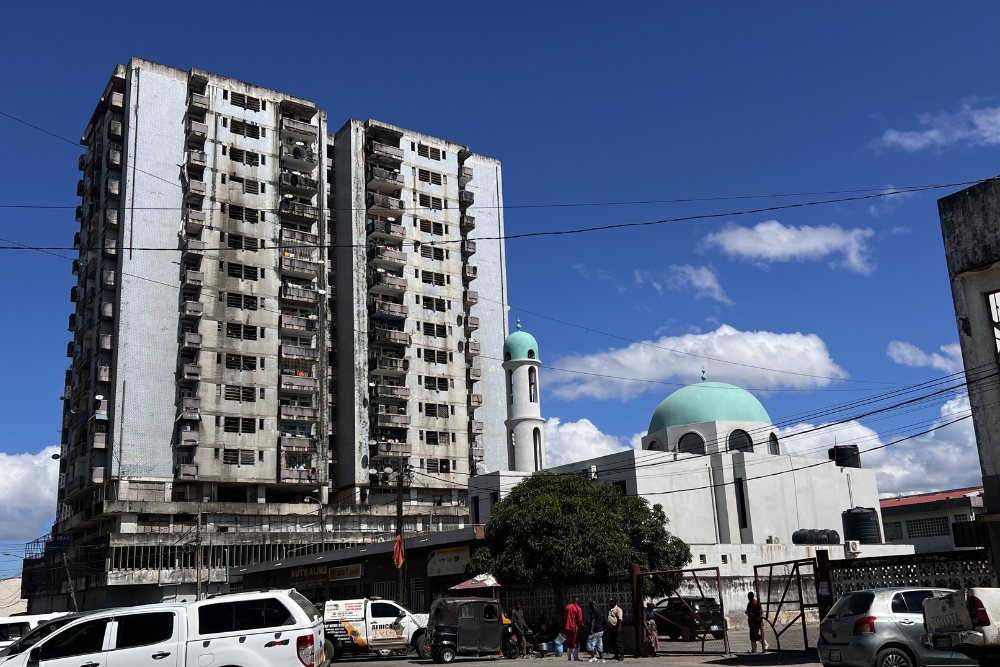
© Gayane Mkhitaryan, Hotel Mocambique
Local Markets
Beira’s markets are busy, loud, and worth spending time in. For fabric and textiles, Casa Elefante is the local reference point — a fabric store that locals actually use rather than a tourist shop. The central market area gives you the full Beira sensory experience: fish, produce, second-hand goods, and a lot of noise.
Bargain politely. Smile first. Don’t start negotiating unless you intend to buy.
Experiences Worth Having in Beira
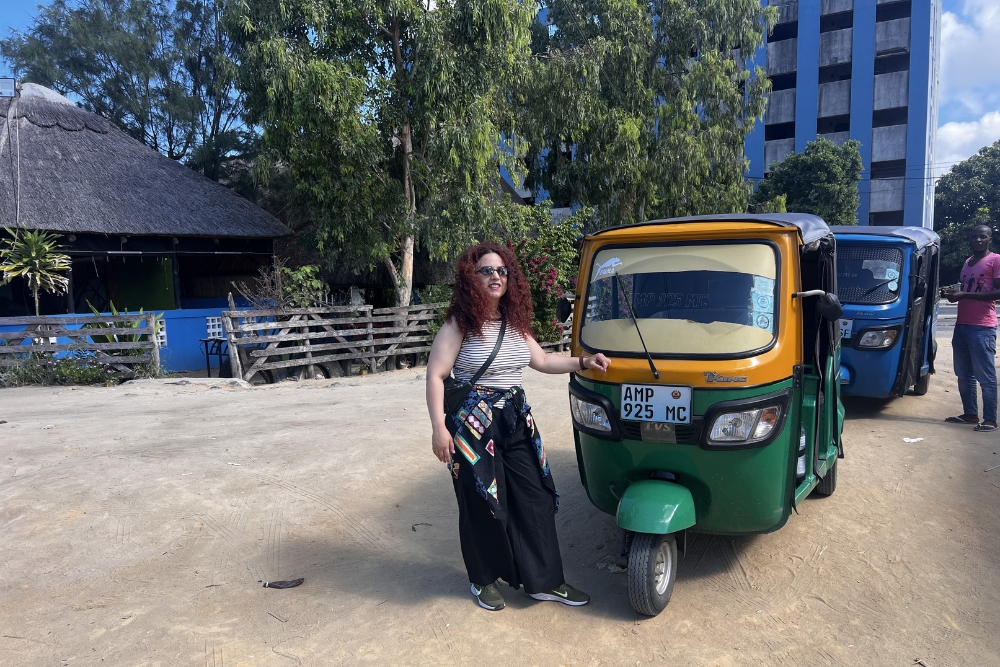
Tuk-tuk rides: The most fun and practical way to move around the city. Flag one down or arrange through your accommodation. Agree on a price before you get in.
Boat trips on the Púngoè River: The mangrove areas around the river are worth exploring if you have time. Local operators, including African Echo Safaris and Moz Outdoor Adventures, can arrange trips — ask at your hotel for current contacts, as availability varies.
Nightlife and music: Beira has a lively weekend scene. Ask at your accommodation for where things are actually happening when you’re there — the scene shifts.
Where to Eat in Beira
We ended up at The View twice — once for dinner, once for lunch the next day, which tells you everything. It’s a restaurant with an ocean-facing outlook, Portuguese cuisine, big portions, and prices that won’t make you wince. The food was genuinely good: the kind of meal where you order more than you planned because the first thing that arrives resets your expectations. For a city that doesn’t have a long list of reliable dining options, The View stands out. If you’re in Beira for even one night, eat here.
Is Beira, Mozambique Safe?
Beira is not as dangerous as people sometimes fear African port cities are. It’s not a place you wander through obliviously, but neither is it somewhere requiring constant attention. We moved around the city as a group of four — two women, two men — with a car, and at no point did we feel threatened.
What you do need to know: petty crime exists. Don’t flash your phone, don’t wear expensive jewelry, and be switched on around busy markets. The city has high levels of poverty and the visible aftermath of Cyclone Idai, which devastated Beira in 2019. Some areas still show the damage. This isn’t something to be afraid of — it’s something to be respectful about.
At night, stick to areas around restaurants and your accommodation. Avoid walking unfamiliar streets after dark. During the day, Beira is very manageable, and the people we met were curious and warm rather than predatory toward tourists.
Solo female travelers should apply the same street sense they’d use in any unfamiliar city. Traveling in a group, as we were, made everything easier.
Is Beira, Mozambique Worth Visiting?
Not for everyone — and that’s the honest answer. If you want resort beaches and tourist infrastructure, or a city where English is widely spoken, Beira will frustrate you. But if you want a real African port city with colonial layers, unexpected encounters with locals, and the kind of experience that doesn’t exist in a listicle — yes. It surprised all four of us. We went in with low expectations and left with good stories.
