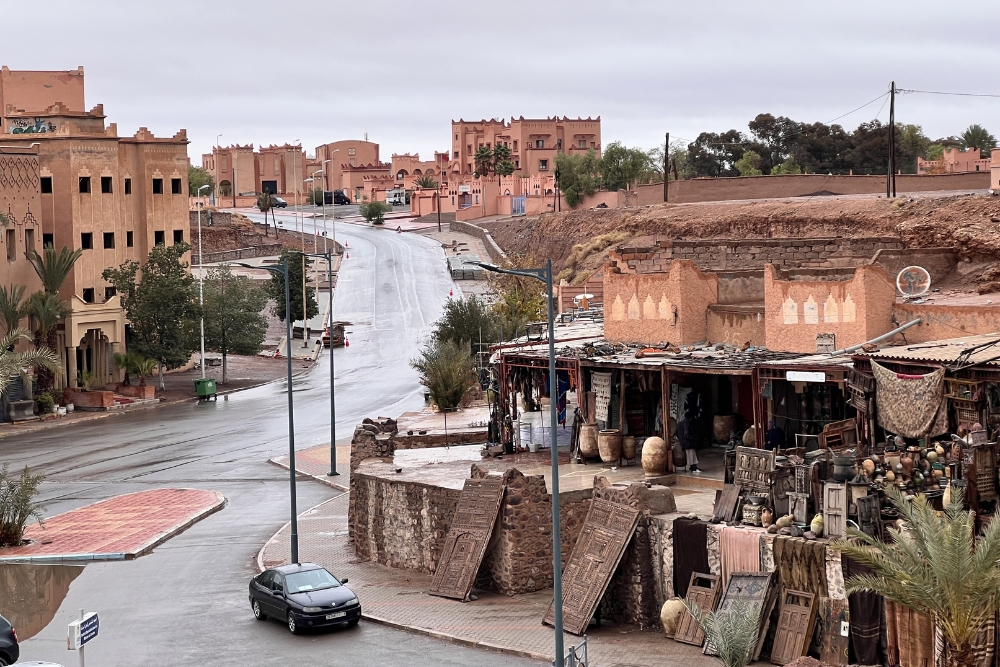
What to Do in Ouarzazate, Morocco: An Authentic Desert Gateway Experience
If someone told me the highlight of my Morocco trip wouldn’t be Marrakech but a dusty desert town called Ouarzazate, I would’ve laughed. But after spending two days exploring this gateway to the Sahara, I realized I’d stumbled onto something most tourists miss. After visiting all the cities, Ouarzazate was honestly the best experience I had. It was very authentic.
Yes, absolutely—but not for the typical tourist reasons. Ouarzazate isn’t pretty in the conventional sense, and it won’t compete with Marrakech’s drama or Fes’s maze-like medina. What makes it worth visiting is exactly what it lacks: crowds, tourist traps, and pretense. This is real Morocco, where strict architectural regulations ensure even modern buildings maintain a traditional desert style, creating an aesthetic that feels genuinely cohesive rather than staged for Instagram. If you’re a solo budget traveler seeking authenticity over postcards, Ouarzazate deserves 1-2 days of your time. The local life, film studios, and nearby kasbahs offer substance without the hassle.
What to Do Around Ouarzazate
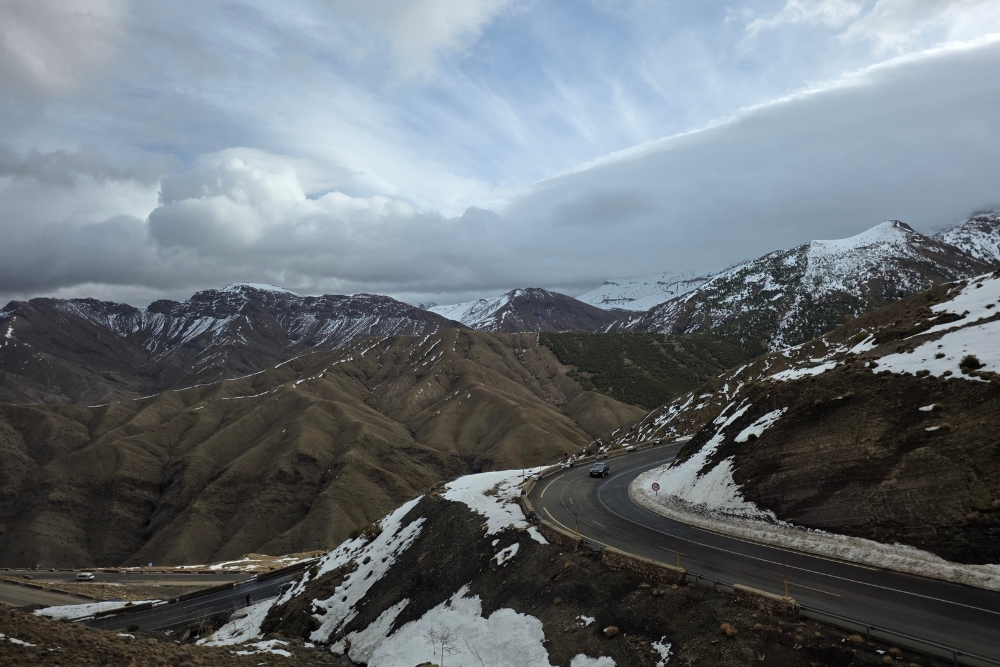
The five-hour bus journey from Marrakech to Ouarzazate through the Atlas Mountains is an experience in itself. I never expected to see snow in Morocco, but there it was, dusting the peaks as we wound through the Tizi n’Tichka Pass. The sunrise painted the horizon in shades I didn’t know existed, and the wild landscapes—mountains, rivers, scattered villages—made waking up at 6 am completely worth it. The Atlas Mountains surrounding Ouarzazate offer incredible hiking, Berber village visits, and mountain scenery that deserves its own article. For now, just know that the journey to Ouarzazate is half the adventure.
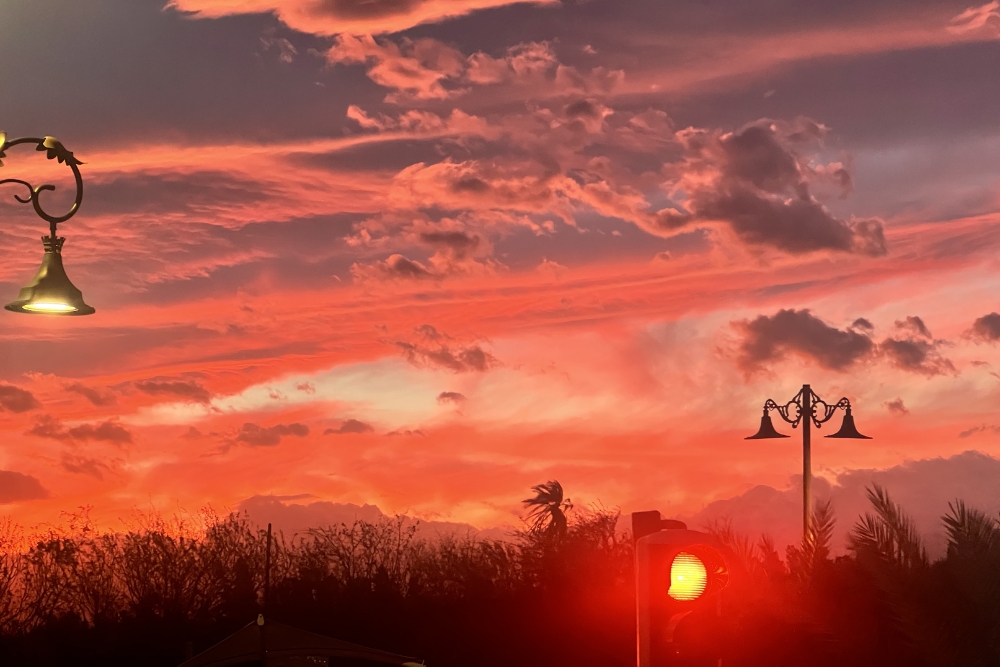
© Gayane Mkhitaryan, 6am, from Marrakech to Ouarzazate
Top Things to Do in Ouarzazate
When we arrived in Ouarzazate, we didn’t have a detailed plan, but since it had snowed the night before, we decided to visit Aït Benhaddou first and leave Ouarzazate and Atlas Studios for the next day. I can now confirm that the two days were the best of my trip to Morocco.
There are many things in Ouarzazate itself worth visiting; here are my favorites.
Visit Taourirt Kasbah
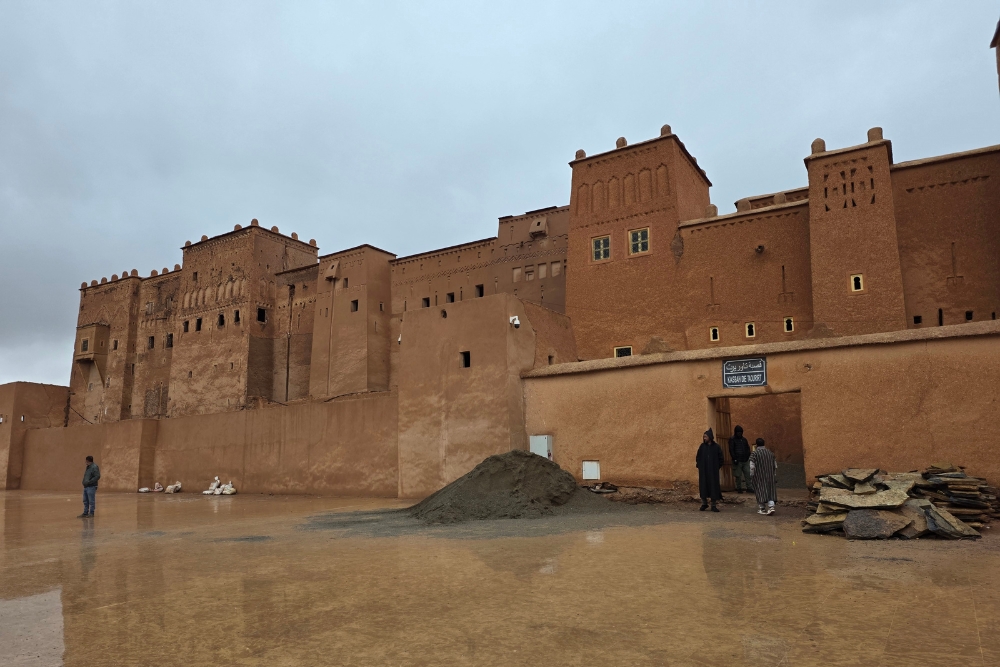
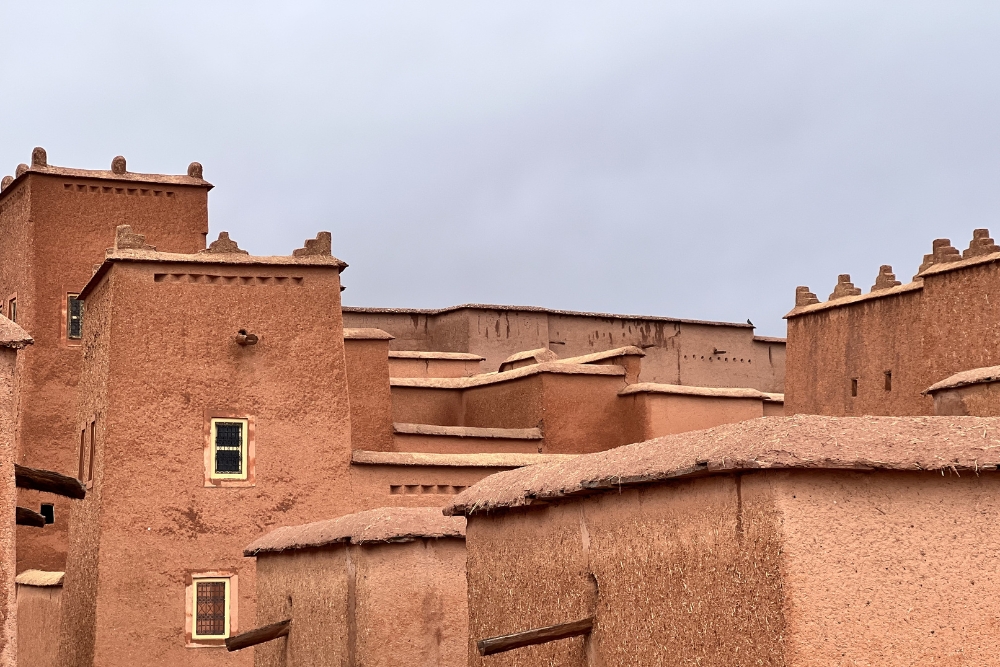
The morning we visited Taourirt Kasbah, it was raining—not ideal for photography, but perfect for seeing the kasbah without crowds. Even soaked and under scaffolding in places, this 17th-century fortress completely captivated me. What struck me most was how the renovation retained the exact traditional style. The Glaoui family’s former palace, with its 300 rooms and geometric patterns carved into mud-brick walls, represents everything unique about Ouarzazate: a commitment to architectural heritage that you can actually see being practiced today.
Only about a third of the kasbah is open to visitors, but that’s plenty to understand the grandeur of how the Glaoui family once controlled southern Morocco. The rooms are empty now—no furniture, no artifacts—but the decorated ceilings, narrow passages, and panoramic views from the upper levels tell their own story. Local guides offer tours for around 100-150 MAD, and honestly, they’re worth it for the historical context. What I didn’t like: the fixers (as always), they are just annoying.
Practical Info:
- Entry fee: 50 MAD
- Hours: 8:00-18:00 daily
- Allow 45-60 minutes
- Best time: Early morning or late afternoon
Explore Atlas Film Studios
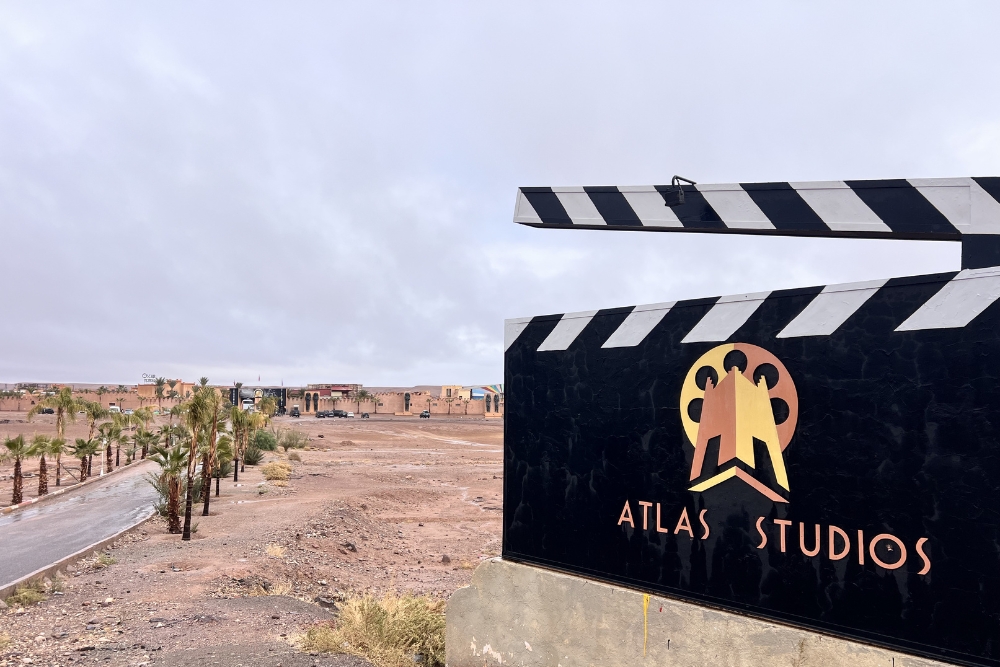
Walking through Atlas Film Studios feels surreal—suddenly you’re surrounded by Egyptian temples, Roman coliseums, and Tibetan monasteries, all in the middle of the Moroccan desert. At 433,000 square feet, this is the world’s largest film studio, and the list of productions filmed here reads like a Hollywood greatest hits: Gladiator, Game of Thrones, The Mummy, Lawrence of Arabia, Kingdom of Heaven, Prince of Persia. Some sets remain preserved while others get built and demolished for new productions, giving you a behind-the-scenes look at how movie magic actually happens.
The giant Egyptian statues guarding the entrance set the tone. Inside, you can wander through sets that looked convincing enough to fool millions of moviegoers. The tour lasts about an hour and provides insight into why Ouarzazate became Morocco’s Hollywood: cheap production costs, incredible desert landscapes, and reliable sunshine.
Discover the Old Town & Local Markets
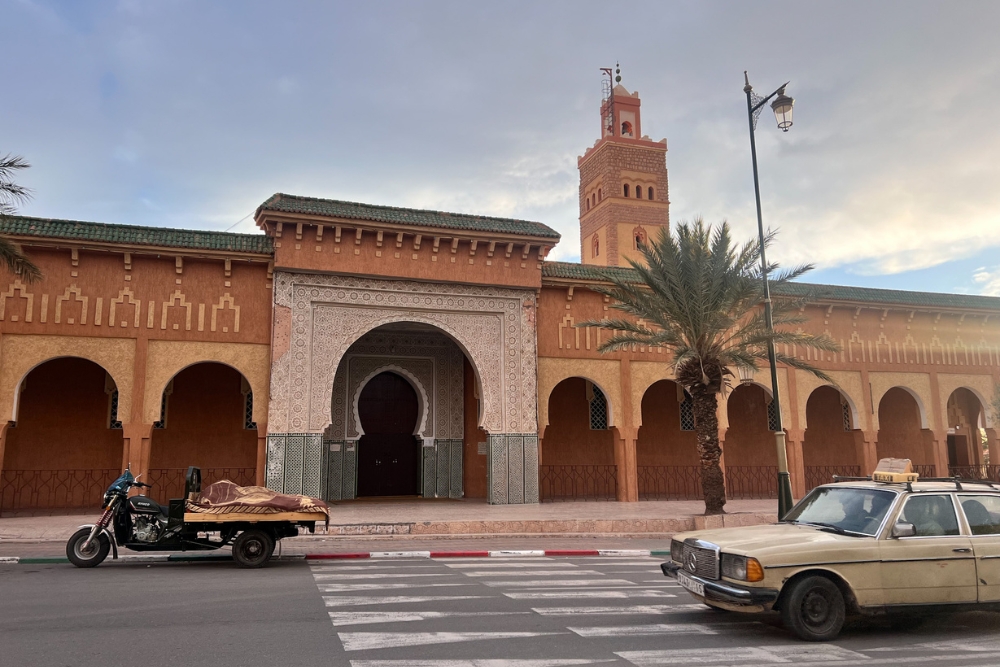
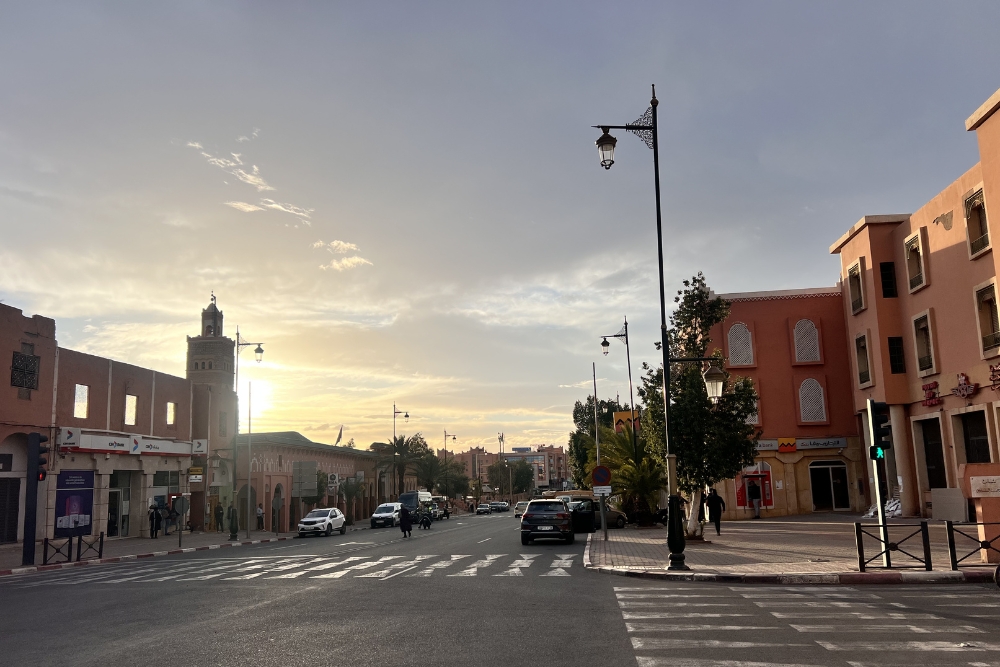
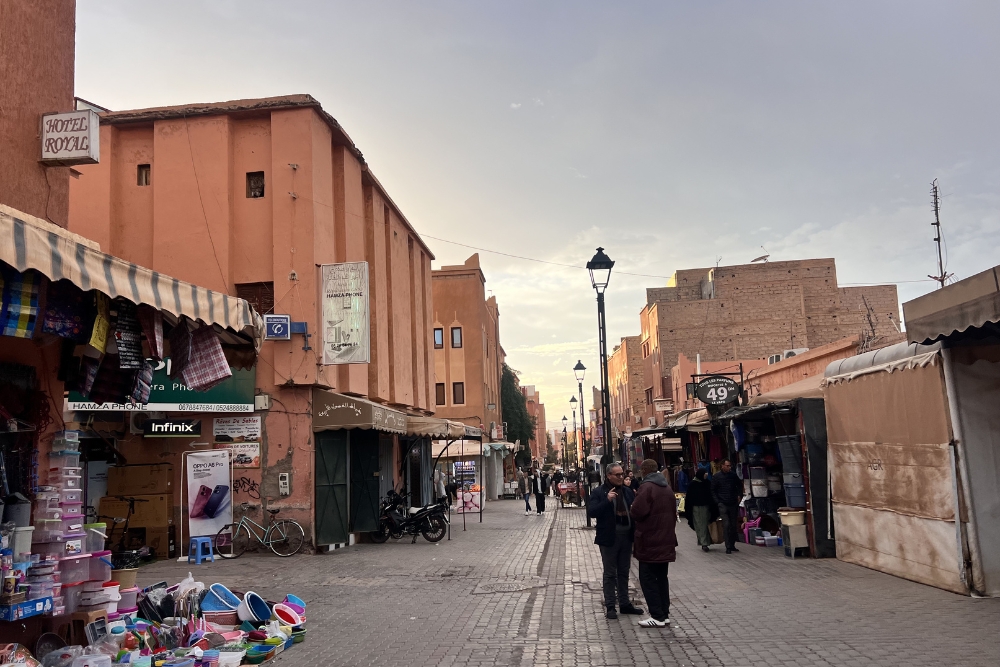
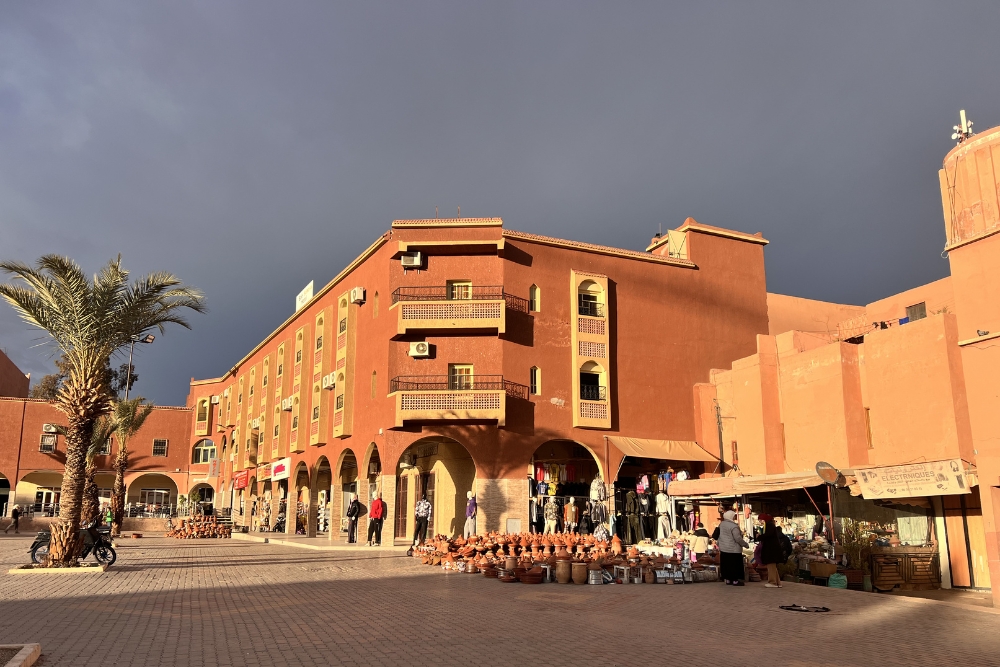
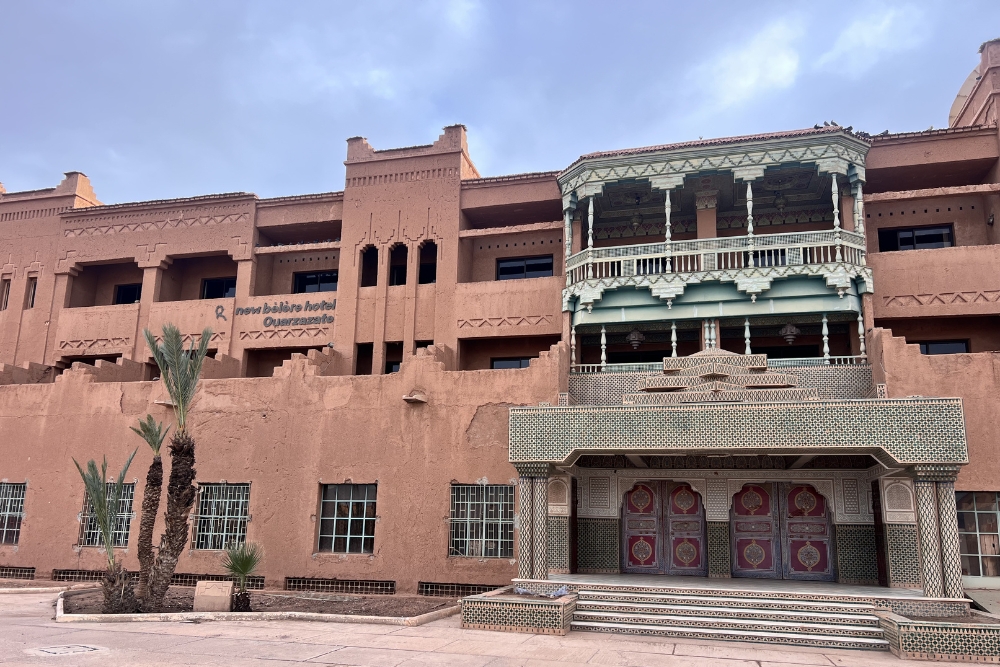
We spent our spare time just walking. No tour, no guide, just wandering through Ouarzazate’s old town, main square, and markets—and this is when I really understood why this place felt different. The architecture regulations I’d noticed at the kasbah weren’t just for historic buildings; they apply to everything. Hotels, shops, and even the Ibis where we stayed—all maintain the traditional desert aesthetic with mud-brick colors and geometric patterns. It creates this unified feeling you don’t get in cities where modern concrete towers compete with ancient medinas.
Place Al-Mouahidine, the main square, looked pretty boring during the day—just a wide-open space with palm trees. But after dinner, it transformed into a gathering spot for local families. Kids played, street musicians performed, and the central market nearby stayed open late into the evening. Next to it, the craft market offered pottery, traditional babouches (slippers), and jewelry, with less aggressive selling than you get in larger tourist cities.
We bought water, fruits, chips, and snacks at Carrefour to save money on the road. Smart budget move: a meal at a restaurant costs 40-80 MAD, but stocking up on supplies at the supermarket cuts costs significantly for day trips.
Hidden Gem: Fint Oasis
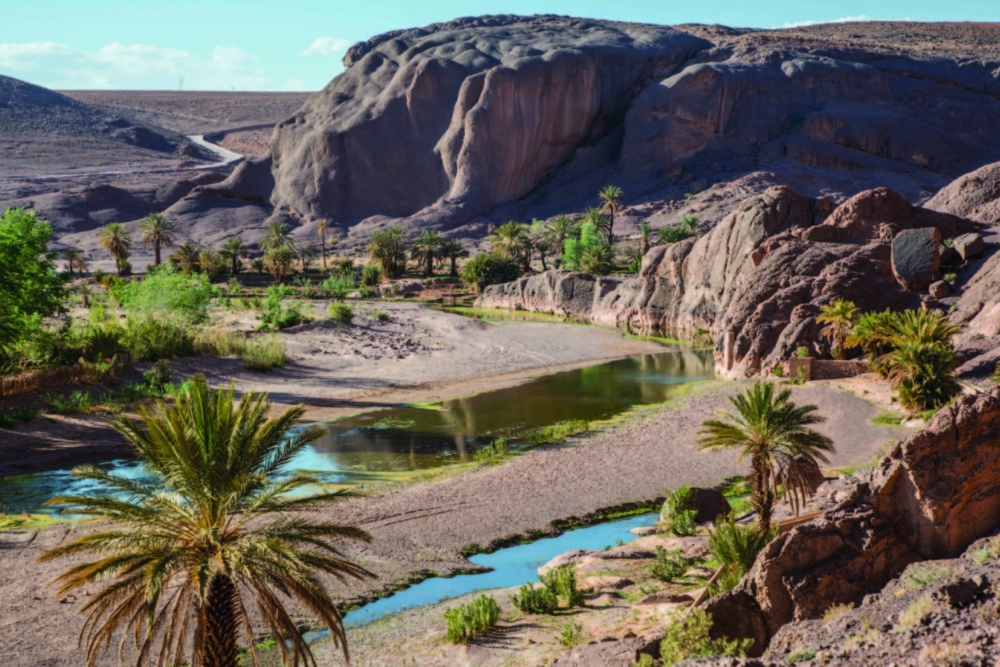
About 15km from Ouarzazate, tucked behind dry rocky hills, lies Fint Oasis—a completely unexpected landscape of palm trees, streams, and adobe villages. I didn’t visit in person (my guide package focused on Aït Ben Haddou), but several travelers mentioned it as their favorite surprise discovery. The contrast is dramatic: you’re driving through an arid desert, then suddenly you’re surrounded by green palm groves and flowing water.
Locals treat Fint Oasis as a family gathering spot—somewhere to sip mint tea by the river, wash clothes, and escape the desert heat. Tourists can reach it by taxi, bicycle, or rental car, though the bumpy access road requires careful navigation. La Terrasse des Delices, a family-run hotel and restaurant in the oasis, serves excellent lamb tagine and offers one of the best views in the area.
Practical Info:
- Distance: 15km from Ouarzazate
- Access: Taxi (negotiate return), bicycle, rental car, or organized tour
- Best time: Morning or late afternoon
- Often combined with film studios and Aït Ben Haddou tours
- Free to explore, bring cash for tea/food
© Discover Ouarzazate
Cinema Museum (Musée du Cinéma)
Located right across from Taourirt Kasbah, the Cinema Museum offers a more intimate look at Ouarzazate’s film industry than the sprawling Atlas Studios. It’s small, dusty, and honestly feels more like someone’s abandoned storage room than a proper museum, but that’s part of its charm. Old camera equipment, props from Aladdin, The Mummy, and Babel, and various film sets create this wonderful sense of stumbling into hidden treasure.
The museum lacks formal signage and professional curation, but if you approach it as a quirky exploration rather than a polished attraction, you’ll find interesting relics from Ouarzazate’s decades as a filming location. The Gladiator cell, an Egyptian palace set, and vintage cinematography equipment all sit waiting to be discovered by curious visitors.
Practical Info:
- Entry: 30 MAD
- Hours: 8:00-18:00 daily
- Location: Opposite Taourirt Kasbah (easy to combine)
- Duration: 30-45 minutes
- https://ouarzazate.city/attractions/cinema-museum/

© Ouarzazate.city
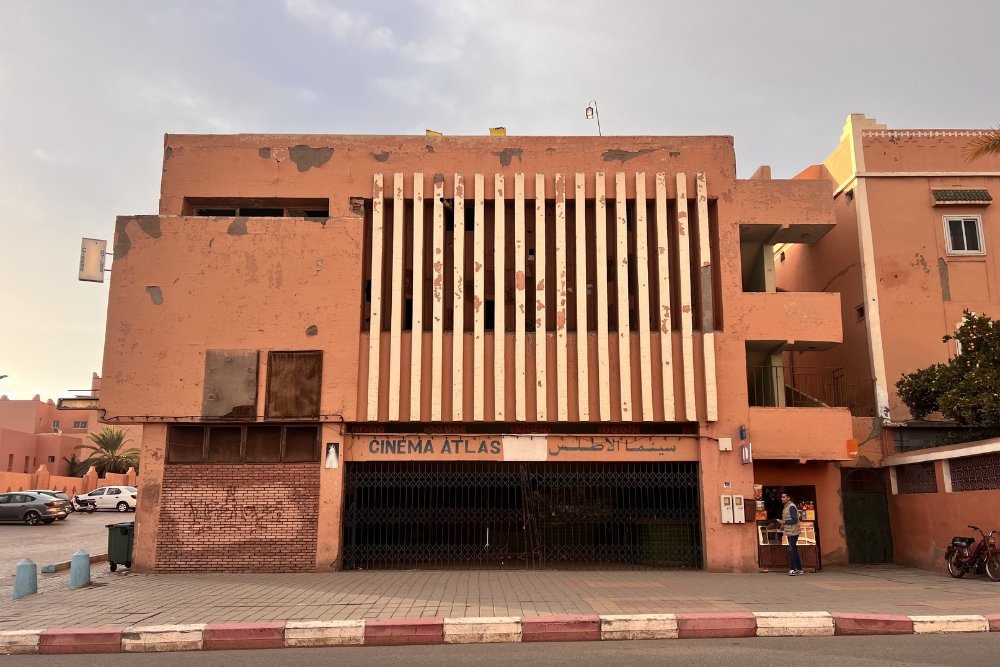
© Gayane Mkhitaryan, abandoned Cinema Atlas, Ouarzazate city, Morocco
The Old Synagogue
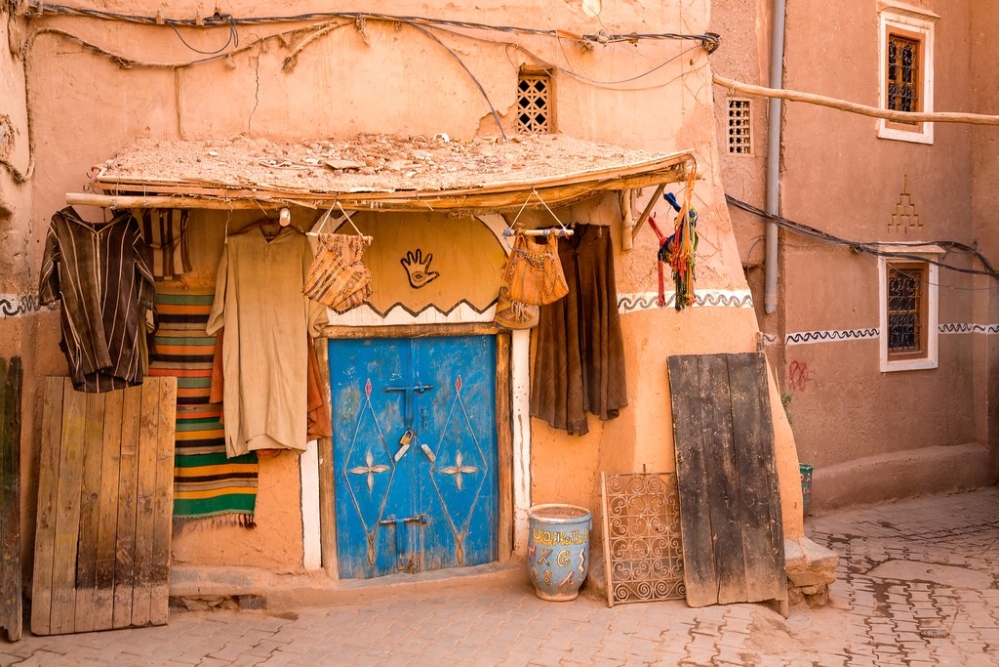
Hidden in the Mellah (old Jewish quarter) near Taourirt Kasbah, the Old Synagogue stands as a testament to Morocco’s diverse cultural heritage. This nearly 300-year-old building now serves as a museum showcasing Jewish artifacts, historical books, photographs, and relics that tell the story of Ouarzazate’s once-thriving Jewish community. In 1954, about 170 Jewish families lived here harmoniously alongside Muslim and Berber neighbors, many of whom worked as skilled craftsmen and artisans.
The guide takes visitors through all the rooms on each floor, explaining their uses—religious schools, a wedding chapel, and a rabbi’s quarters—and sharing stories about the connections among Ashkenazi Jews, Berber Jews, and other Moroccan communities. The rooftop terrace offers beautiful views of the kasbah and the surrounding area.
Important note about pricing: The entrance works on a donation/tip system, which some visitors find unclear. Expect to pay around 100 MAD total (50 MAD per person for “entry” plus a small tip for the guide’s explanation). Some travelers feel this isn’t communicated clearly upfront, so knowing what to expect helps avoid awkwardness. We didn’t visit because I didn’t like the guides’ attitude; they were very pushy. Additionally, it was raining, and the ground was muddy and slippery.
© kimkim
Kasbah Tiffoultoute
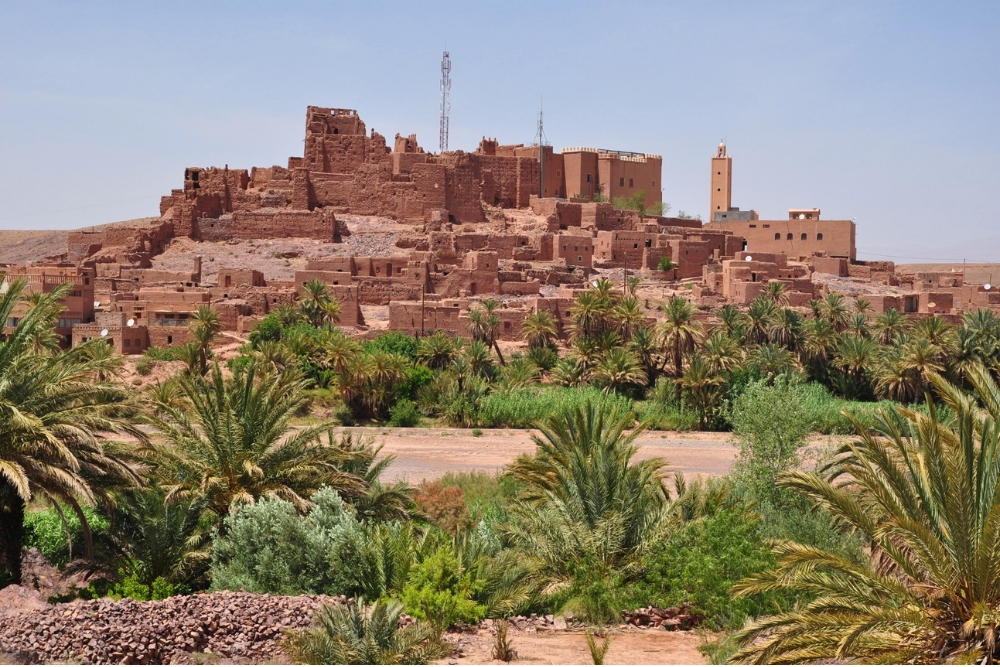
Eight kilometers west of Ouarzazate sits another Glaoui family fortress that most visitors miss: Kasbah Tiffoultoute. While Taourirt Kasbah receives all the attention, Tiffoultoute offers something different—it has been converted into a guesthouse while maintaining its traditional character. Even if you’re not staying overnight, you can visit for the day, explore the architecture, enjoy the views over the surrounding valley, and have a meal in the atmospheric restaurant.
The kasbah’s location offers excellent sunset views, and the combination of historic architecture and modern hospitality creates an interesting middle ground between a museum and an active building. The gardens and courtyards offer peaceful spaces to rest, making it a good escape from Ouarzazate’s desert heat.
© wikipedia
Lake El Mansour Eddahbi
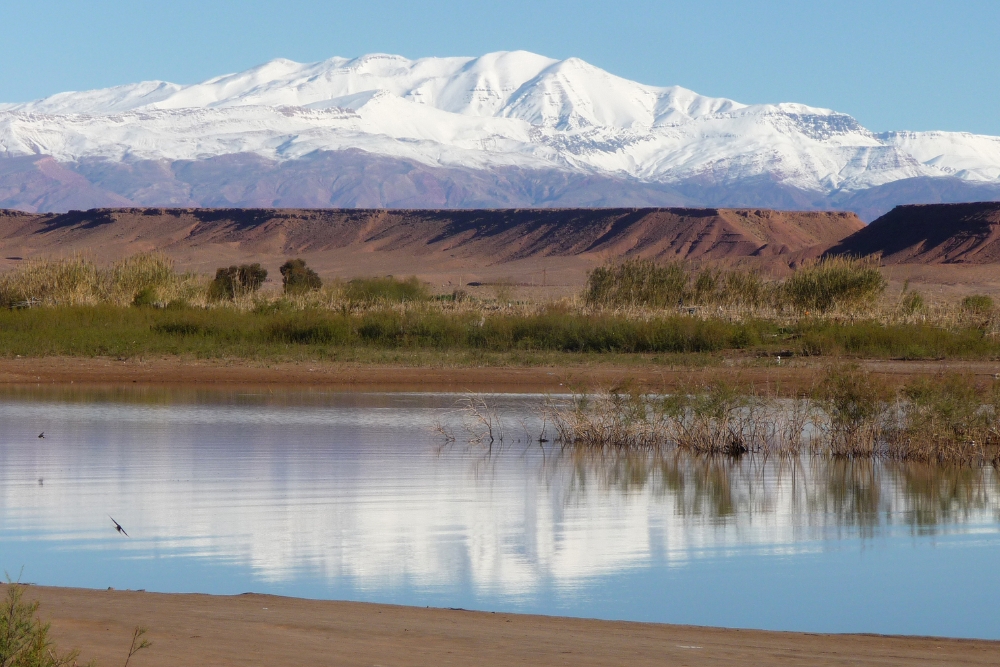
East of Ouarzazate, this massive reservoir creates an unexpected landscape in the middle of desert terrain. Built in 1971 to regulate the Draa River and combat desertification, the lake stretches about 16km long and 5km wide, creating a surprising body of water that shifts from deep blue to golden at sunset.
The lake attracts birdwatchers year-round—herons, flamingos, storks, and various migratory species find sanctuary here. During winter rains, the lake fills to capacity, while summer reveals sandy islets as water levels drop. Locals have built villas along the shores, and fishing is permitted (though motorboats are not).
For budget travelers, the lake makes a good scenic drive or bicycle route, with small villages appearing every 5-10 kilometers along the shore. It’s not a major attraction requiring half a day, but if you have rental transportation, the contrast between desert landscape and sudden water creates memorable views.
© wikipedia
Day Trip to Aït Ben Haddou
The local guides we met in Ouarzazate offered a package deal that included transportation to Aït Ben Haddou, lunch, drop-off at my hotel, and a return trip the next day. It cost around 400-600 MAD per person and solved the logistics problem perfectly. Aït Ben Haddou, a UNESCO World Heritage Site about 30km from Ouarzazate, is everything the photos promise: a fortified ksar (village) of red mud-brick buildings climbing a hillside above the Ounila River.
Hollywood has filmed here for decades—Lawrence of Arabia, Gladiator, Game of Thrones, Prince of Nazareth—and you’ll recognize it immediately. Beyond its film fame, Aït Ben Haddou represents 17th-century Moroccan architecture at its finest. Walking through the narrow alleyways between buildings in various states of preservation and reconstruction, you get a real sense of how these fortified villages functioned.
Many buildings now house artisan stalls and small cafes, which some travelers complain about, but I found the mix of ruins and active commerce more interesting than a sterile museum piece. The climb to the top takes about 30 minutes and rewards you with panoramic views worth every step.

What to Do in Ouarzazate at Night
Here’s the honest truth: Ouarzazate is quiet at night, and that’s not a complaint—it’s part of why the place feels authentic. This isn’t a party city, and if you’re looking for nightlife in the Western sense, you’ll be disappointed. But if you want to experience how locals actually spend their evenings, you’ll find something much more interesting.
Place Al-Mouahidine transforms after sunset. What appears to be a boring, empty square during the day becomes the social hub of Ouarzazate. Families gather, kids run around laughing, street musicians play, and everyone enjoys the cooler evening air. The markets near the square stay open late, giving you a chance to browse without midday heat or tourist crowds.
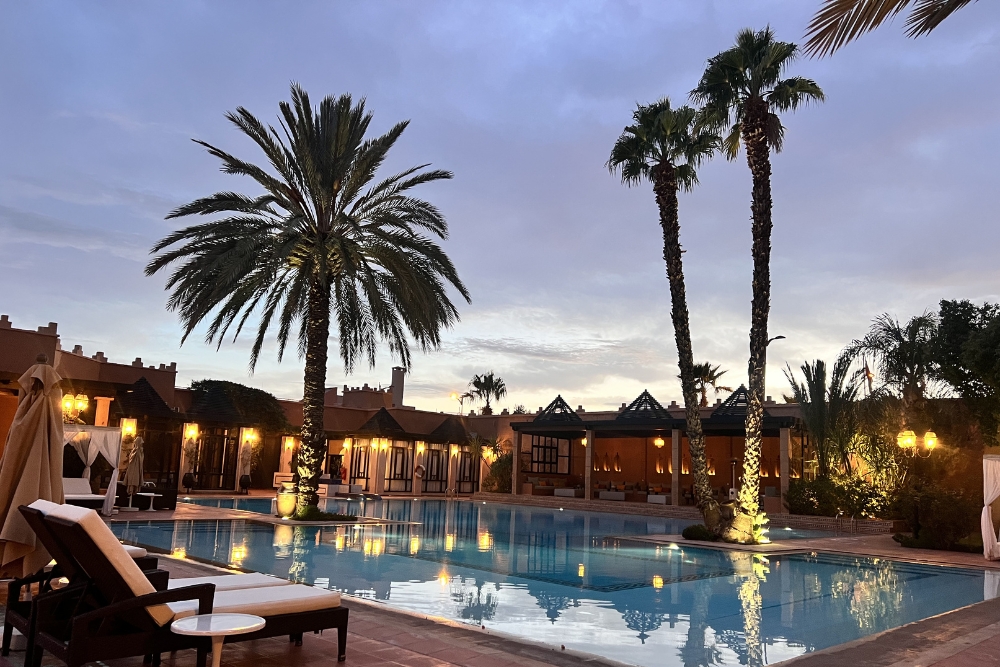
For dinner, we chose Berber Palace Hotel rather than risk street food or unknown restaurants—not because I’m particularly cautious, but because getting sick wasn’t part of my two-day Ouarzazate plan. The hotel restaurant served excellent tagine in comfortable surroundings, and while it cost more than a local hole-in-the-wall (80-120 MAD vs. 40-60 MAD), the peace of mind felt worth it for a solo traveler.
Most places close by 22:00, streets empty out, and the town settles into genuine quiet. The desert location means incredible stargazing if you step away from street lights—something impossible in Marrakech’s light pollution.
How to Get to Ouarzazate
From Marrakech (My Route)
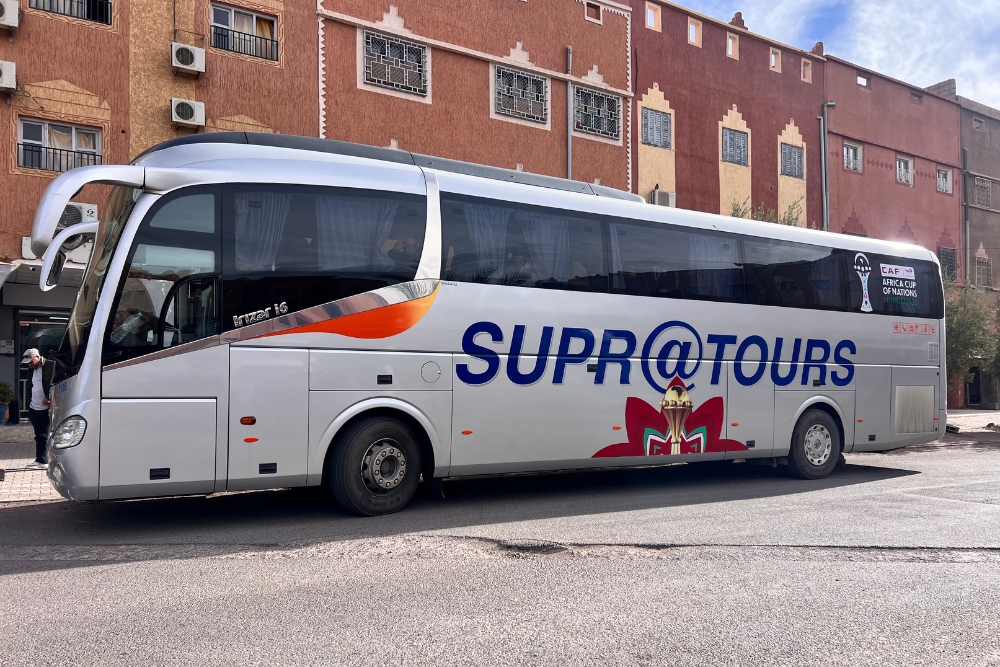
Our bus journey from Marrakech to Ouarzazate remains one of my favorite travel memories in Morocco. We booked tickets after arriving in Marrakech—CTM and Supratours both run this route.
Important tip: Bus tickets don’t include luggage. You need to buy a separate luggage ticket from the small kiosk outside the bus station before boarding. Nobody mentioned this when we bought our tickets, but the kiosk operators resolved it quickly. Budget around 10-20 MAD extra for luggage.
Other Transportation Options
Private Taxi/Driver: Faster and more flexible (3.5-4 hours), costs 600-800 MAD but can be split among 4 passengers. A good option if you want to stop at viewpoints or Aït Ben Haddou en route.
Grand Taxi (Shared): Cheaper than private (100-150 MAD per person) but departs only when full. Can involve waiting at the taxi station.
Rental Car: Gives complete freedom to stop at Tizi n’Tichka viewpoints, explore at your own pace, and visit nearby sites. Roads are well-maintained, but mountain passes need attention.
Organized Tours: Multi-day desert tours from Marrakech almost always include a stopover in Ouarzazate. Convenient, but limits independent exploration.
FAQs: Questions I had Before Visiting Ouarzazate
Where is Ouarzazate, Morocco?
Ouarzazate is located in south-central Morocco at an elevation of 1,160 meters, positioned between the High Atlas Mountains to the north and the Sahara Desert to the south. This strategic location makes it the gateway to Morocco’s desert regions and the starting point for many Sahara expeditions.
Is Ouarzazate Safe for Solo Travelers?
Ouarzazate felt notably safer than the larger Moroccan cities I visited. We walked around during the day without any concerns, and even evening walks to the main square felt comfortable. The low crime rate, tourism-dependent economy, and conservative culture create an environment where locals are generally welcoming and protective of visitors.
How far is Ouarzazate from Marrakech?
Approximately 200km (125 miles), about 4-5 hours by bus through the Atlas Mountains via Tizi n’Tichka Pass. The scenic journey through mountain landscapes makes the travel time worthwhile. Private transport takes slightly less time (3.5-4 hours) but costs significantly more.
Do I need a guide for Aït Ben Haddou?
Not required, but helpful for historical context and navigating the ksar. Local guides charge 100-150 MAD and can provide insights about the architecture, film history, and traditional life. Alternatively, package deals from Ouarzazate (such as the one I used) include transport, a guide, and sometimes lunch for 400-600 MAD per person.
Can I do Ouarzazate as a day trip from Marrakech?
Technically yes, but not recommended. The 4-5 hour journey each way leaves only 2-3 hours for actual exploration, making it an exhausting and unsatisfying experience. Better to stay 1-2 nights, experience the evening atmosphere, and explore without rushing.
What language do they speak in Ouarzazate?
Arabic and Berber are spoken locally. French is widely understood and spoken, especially in hotels, restaurants, and tourist areas. English is common at film studios, hotels, and tour operators, but basic French phrases prove helpful in markets and with taxi drivers.
Is Ouarzazate expensive?
No, Ouarzazate is notably budget-friendly compared to Marrakech or other major Moroccan cities. Accommodation, food, and activities cost significantly less while maintaining good quality. Expect to spend 400-600 MAD per day for comfortable budget travel, including accommodation, meals, and entrance fees.
How many days should I spend in Ouarzazate?
1-2 days is ideal for most travelers. One day covers the main city attractions (Taourirt Kasbah, Atlas Studios, markets), while two days allow time to visit Aït Ben Haddou and Fint Oasis, and to experience the evening atmosphere without rushing.