
Morocco Train Travel: Complete Guide to Routes, Booking & Real Costs
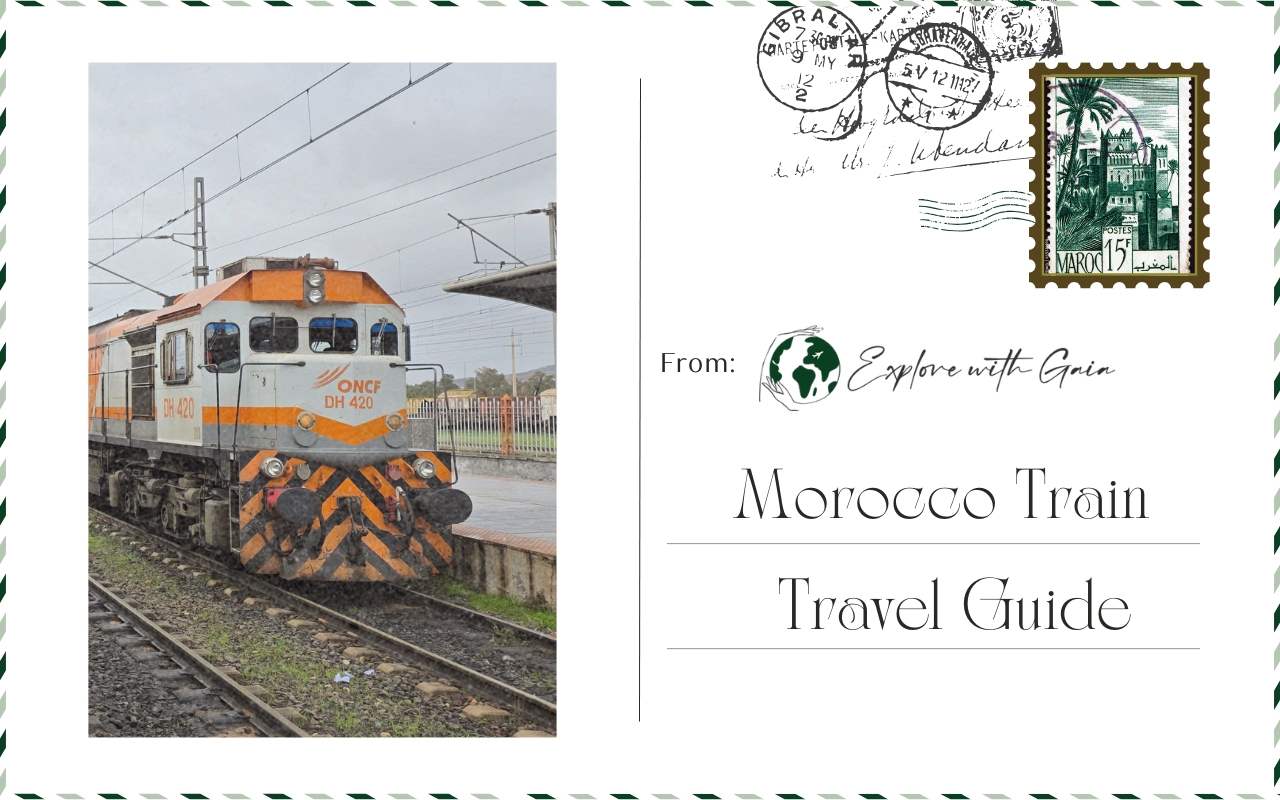
Morocco surprised me with its extremes: it has Africa’s first high-speed train that competes with European rail standards, yet I also took one of the most uncomfortable train journeys of my entire travel life on a regional second-class service. After taking four different train routes across Morocco in late 2025—from Nador to Fes, Fes to Rabat, Rabat to Casablanca, and Casablanca to Marrakech—I learned exactly when Morocco’s trains are brilliant and when they’re absolute nightmares.
This guide covers everything you need to know about traveling by train in Morocco: the routes that work, the honest reality of different classes, how to actually book tickets, and the real costs based on my recent journeys. If you’re an independent traveler planning to explore Morocco by rail, this is the practical, unfiltered advice I wish I’d had before boarding that disastrous second-class train from Rabat to Casablanca: always book the first-class ticket.
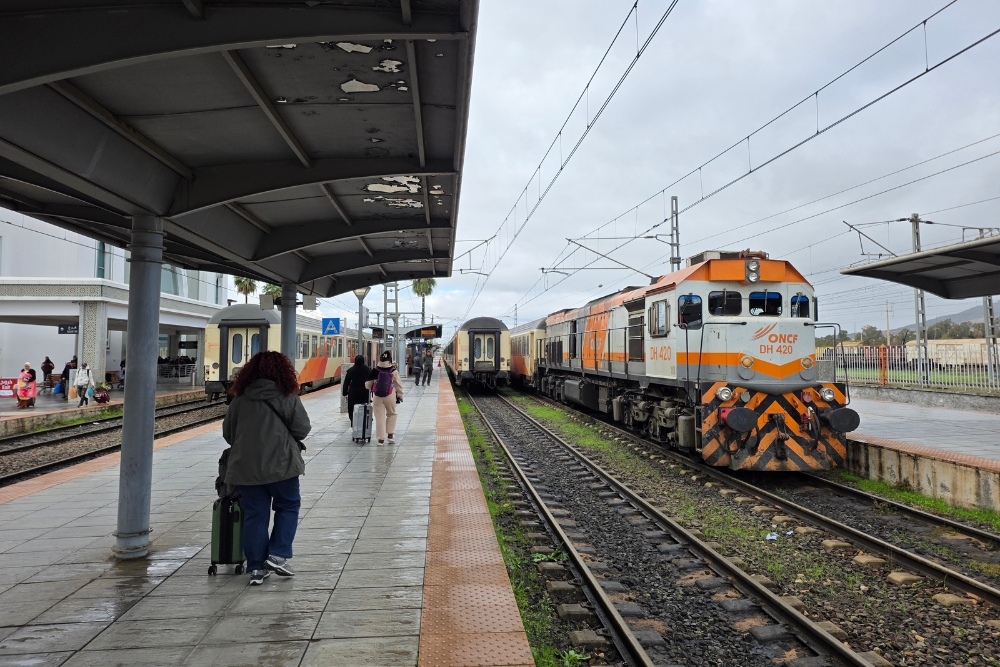
© Gayane Mkhitaryan, Gare de Fes
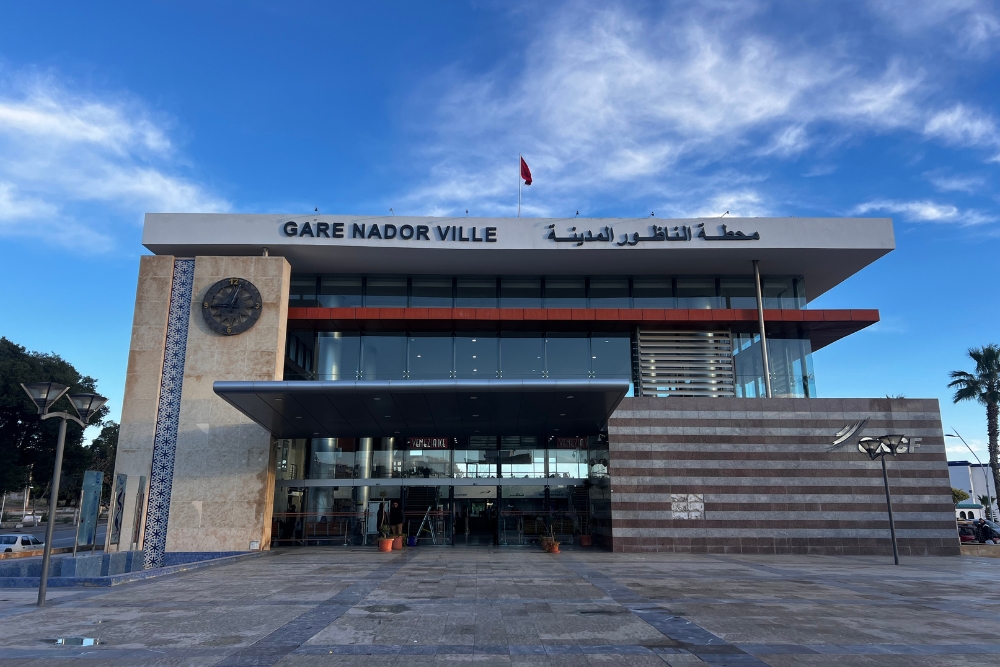
© Gayane Mkhitaryan, Gare Nador Ville, railway station
ONCF: Morocco’s National Railway
Morocco’s trains are operated by ONCF (Office National des Chemins de Fer), the national railway company that’s been steadily modernizing and expanding the country’s rail infrastructure. The network connects Morocco’s major cities along the Atlantic coast and into the interior, making it one of the most developed railway systems in Africa.
However, ONCF doesn’t connect everywhere. There’s no train from Marrakech to Agadir, no rail service to the Sahara desert towns, and mountain destinations like Chefchaouen require buses. The train network works brilliantly for the main tourism corridor—Tangier, Casablanca, Rabat, Fes, and Marrakech—but you’ll need to combine trains with buses or taxis for a complete Morocco itinerary.
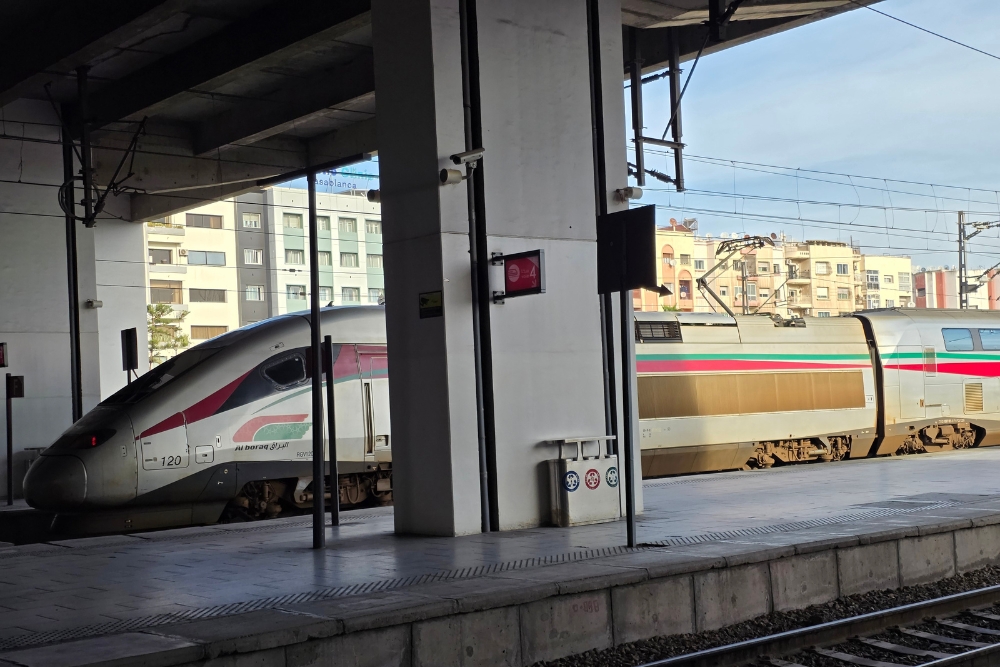
The Moroccan rail experience splits into two distinct categories: the modern Al Boraq high-speed trains connecting Tangier, Casablanca, and the airport, and the regional services covering everything else. These are fundamentally different experiences in terms of speed, comfort, and reliability.
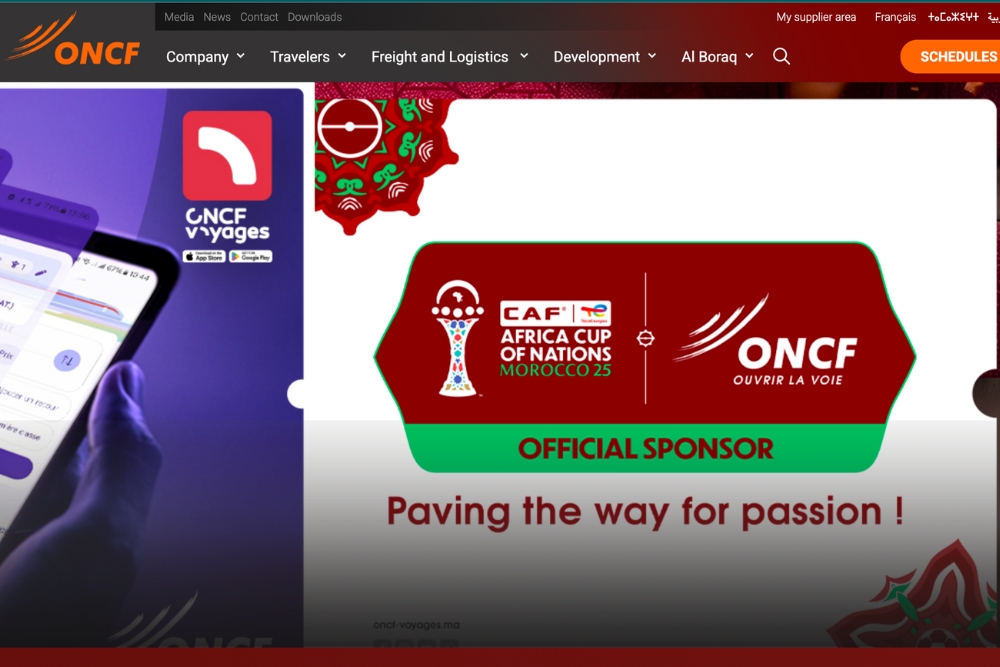
© Gayane Mkhitaryan, Morocco railways/ONCF official website
Key Routes and Journey Times
The main routes I traveled:
- Nador Ville to Fes (1st class): Approximately 6 hours, connecting the Mediterranean coast with the ancient imperial city. This regional service winds through dramatic landscape transitions from coastal areas to the Rif Mountains.
- Fes to Rabat (1st class): Around 3.5 hours through Morocco’s heartland, connecting two of the country’s most important cities.
- Rabat to Casablanca (2nd class): Just 1 hour, but it was the longest hour of my Morocco trip—more on this nightmare later.
- Casablanca to Marrakech (1st class): Approximately 2 hours 40 minutes on the high-speed Al Boraq service, comfortable and efficient.
Other major routes include:
- Tangier to Casablanca (Al Boraq high-speed): 2 hours 10 minutes
- Casablanca to Rabat (frequent regional and high-speed options): 1 hour
- Fes to Meknes: Around 45 minutes
The high-speed Al Boraq trains only operate on specific routes (primarily Tangier-Casablanca-Rabat), while regional trains cover the rest of the network.
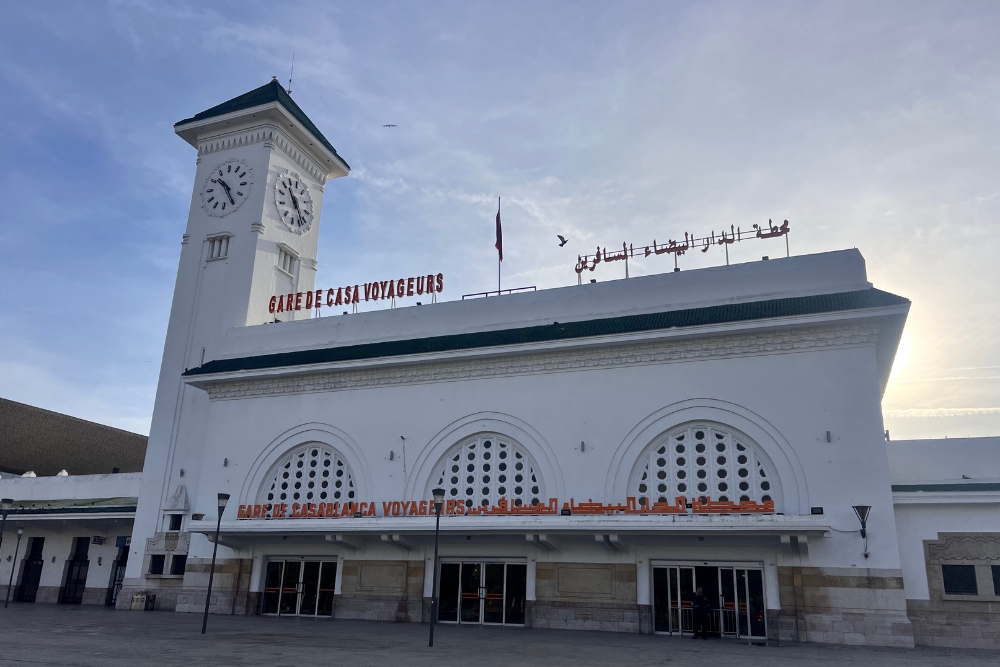
The Reality of Train Classes: What You Actually Get
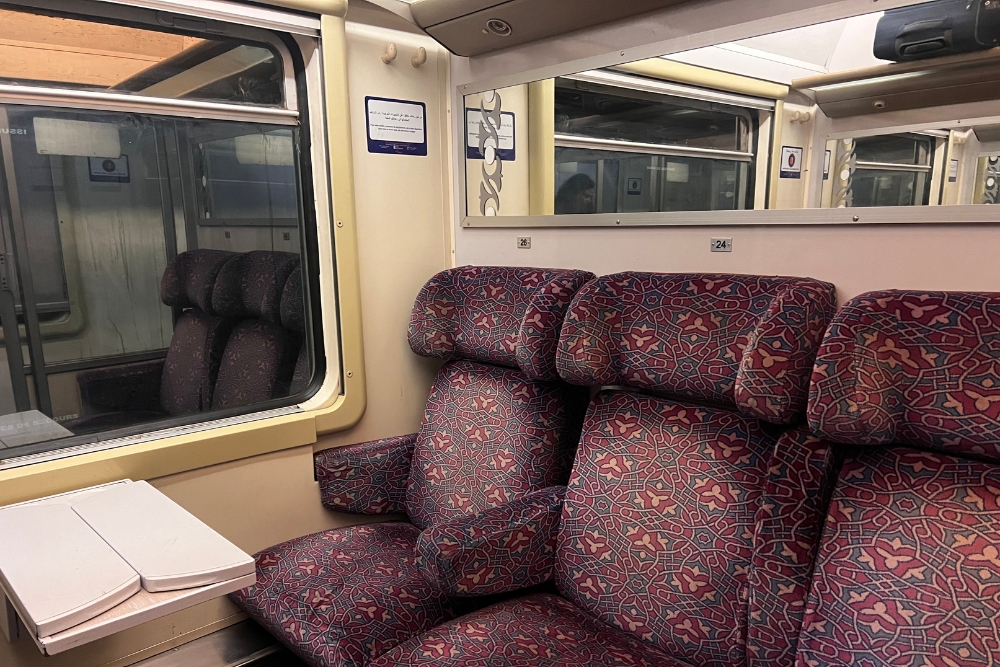
1st Class: Worth Every Dirham
After traveling first class on three of my four journeys, I can confidently say this is how you should travel in Morocco if you value your sanity and comfort. Here’s what first class actually provides:
Reserved seating is the game-changer. Your ticket has a specific seat number, meaning you’re guaranteed a place to sit. No fighting for space, no standing in corridors, no anxiety about whether you’ll even get on the train. But you can’t choose where to sit; the only option is to appear in the same wagon.
Space and comfort: The seats are cushioned, reasonably spacious (though not luxury-level), and arranged in compartments or open-plan carriages. There’s adequate legroom for most travelers, and overhead luggage racks with space available. On my Nador-Fes journey, the six-hour trip was comfortable enough to doze off—something unthinkable in second class.
Air conditioning that mostly works. On the Casablanca-Marrakech high-speed service, the climate control was excellent. On older regional trains like Fes-Rabat, it was adequate if not perfect. Either way, you won’t be sweating and pressed against dozens of other passengers.
Fellow passengers tend to be other tourists, business travelers, and middle-class Moroccans. The atmosphere is generally quiet and respectful. People keep to themselves, use headphones, and respect personal space.
The carriages are clean—not spotless, but well-maintained. Windows are reasonably clean for viewing the landscape. Bathrooms are available and usable, though I’d recommend going before boarding if possible.
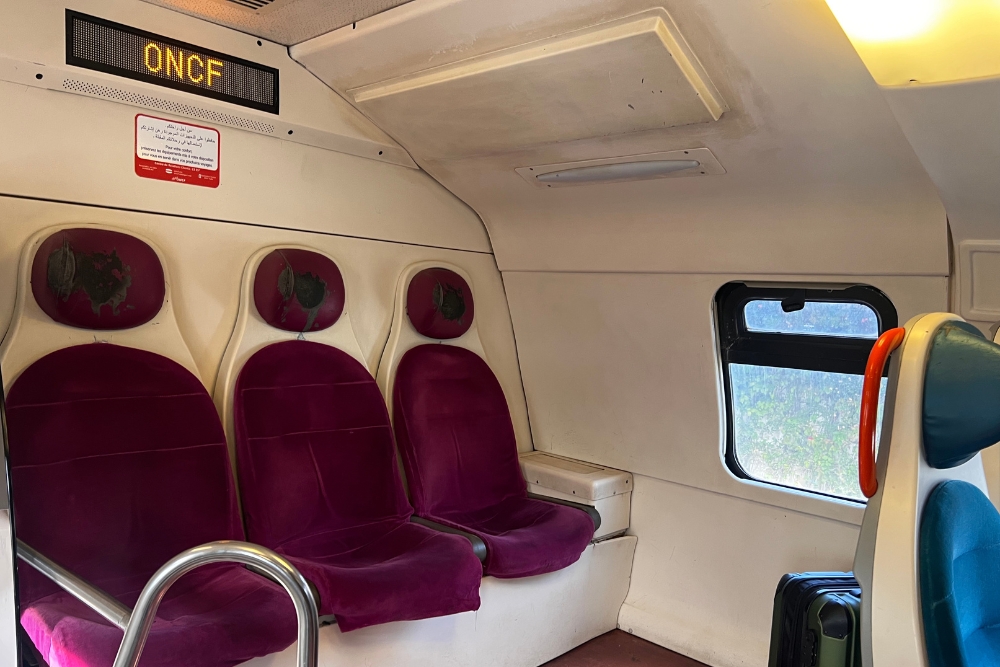
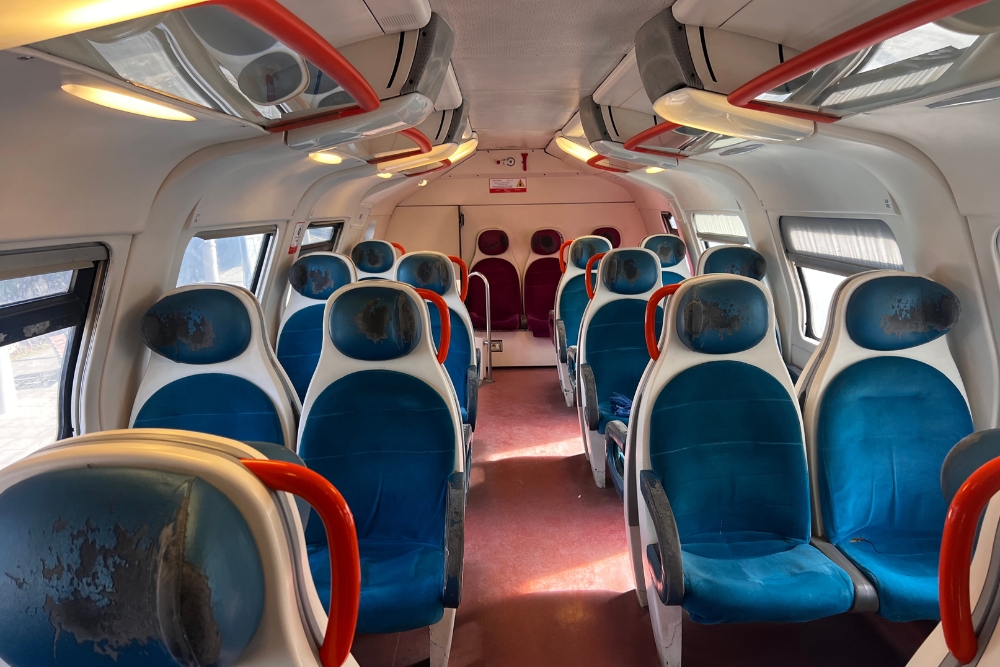
2nd Class: The Brutal Truth
Let me paint you the picture of my Rabat to Casablanca journey in second class, because this is the reality most travel guides won’t tell you about.
We arrived at Rabat station thinking, “It’s only an hour, how bad can second class be?” The answer: spectacularly bad.
The train was already completely packed when it pulled in. There were no reserved seats in second class—it’s first-come, first-served. Every single seat was taken. The aisles were crammed with people standing, pressed against each other. The areas near the doors and stairs between carriages became storage zones for luggage, with passengers literally standing on the steps.
We could barely squeeze onto the train. Once aboard, we stood for the entire hour in the small space near the doors, surrounded by other standing passengers and piles of luggage. The heat was intense—no effective air conditioning, bodies pressed together, and the summer air making it almost unbearable.
The atmosphere wasn’t dangerous or threatening—everyone was just enduring the same miserable situation. But it was deeply uncomfortable, claustrophobic, and completely avoidable had we spent the extra few euros for first class.
Al Boraq High-Speed Trains
Morocco’s Al Boraq trains (named after the mythical flying creature) are Africa’s first high-speed rail service, and they’re genuinely impressive. Operating at speeds up to 320 km/h on dedicated tracks, these trains feel like traveling in Spain or France.
First class on Al Boraq is spacious, quiet, and smooth. Large windows, comfortable seats with good legroom, reliable air conditioning, and a quiet carriage atmosphere.
Premium/Business class is available on these trains, with even more space and services, but I find first class perfectly adequate. Unless someone else is paying, standard first class offers excellent value.
The high-speed network currently connects Tangier, Kenitra, Rabat, and Casablanca. Plans exist to extend to Marrakech, but as of 2025, the Casablanca-Marrakech segment still uses regular track with slightly slower speeds.
Booking Morocco Train Tickets: The Actual Process
Official ONCF Website & App
The easiest and most reliable way to book train tickets in Morocco is directly through ONCF’s official website at https://www.oncf.ma/en. This is important to note because there are several unofficial booking sites that can be confusing or charge markups.
Step-by-step booking process:
- Go to oncf.ma/en for the English version (also available in French and Arabic)
- Enter your departure and arrival stations, date, and whether it’s one-way or return
- The site displays available trains with departure times, journey duration, and prices
- Select your train and class (1st or 2nd)
- Create an account or continue as a guest
- Enter passenger details
- Payment: ONCF accepts international credit and debit cards (Visa, Mastercard)
- Receive e-ticket by email and SMS
Important note about schedules: Always check the official ONCF website for timetables. I found that some third-party sites, like moroccotrains.com, have confusing or outdated schedule information. The official https://www.oncf.ma/en site is updated in real time and shows exactly which trains are running on your chosen date.
You can book tickets up to 30 days in advance for most routes. E-tickets are valid—you can show them on your phone when boarding. I also took screenshots as backup since internet connectivity isn’t perfect everywhere.
The ONCF mobile app exists, but the website is more user-friendly, especially for international travelers.
Booking at the Station: Surprisingly Easy
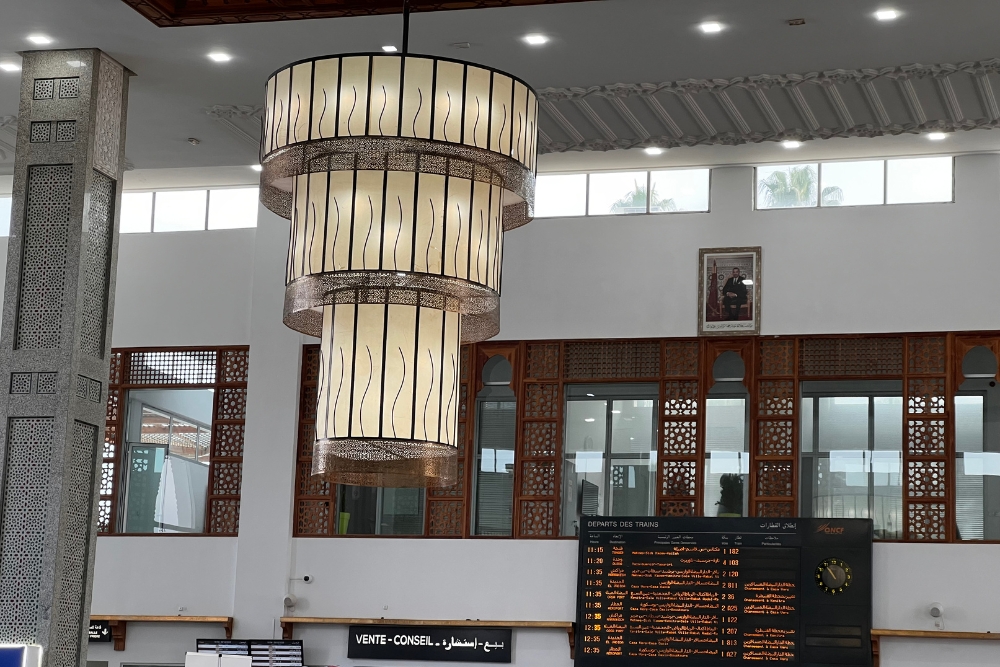
Morocco’s train stations have very friendly, helpful staff who assist with ticket purchases. At every station I visited—Nador, Fes, Rabat, Casablanca, Marrakech—there were staff members ready to help travelers navigate the ticket machines or queue at the desk.
Ticket machines are available at major stations with touchscreen interfaces in multiple languages. They accept both cards and cash (Moroccan dirhams). If you’re confused, station staff will literally walk you through the process step by step.
Ticket desks have agents who speak French and usually some English. You can pay by card or cash. The process is straightforward: tell them where you’re going, when you want to travel, and which class you’re in. They’ll show you available options.
ATMs are available in all the train stations I visited, which is helpful if you need cash for other travel expenses or prefer to pay for tickets in cash.
Each station also has a few cafés where you can grab a sandwich, coffee, and pastries while waiting for your train. Nothing fancy, but decent for a quick pre-journey snack.
Our Booking Strategy: Buy Next Leg in Advance
Here’s what worked for us: whenever we arrived in a new city by train, we’d immediately go to the ticket desk or machine and book our next train journey before leaving the station. This way, my boyfriend and I secured first-class seats, avoided sold-out situations, and didn’t have to stress about tickets later.
For example, when we arrived in Fes from Nador, we immediately booked our Fes-Rabat tickets for three days later. When we got to Rabat, we bought our tickets to Casablanca. This strategy ensures you get the trains and times you want, especially during busy travel periods.
Should You Book Trains in Advance?
Here’s when you need to book ahead versus when you can be flexible:
High-speed Al Boraq routes (Tangier-Casablanca-Rabat): Book 1-2 weeks ahead. These trains are popular with business travelers and tourists. They can sell out, especially on weekends and holidays. First class fills up faster than you’d expect. Book in advance to secure your preferred departure time and guarantee first-class seats.
Regional trains, 1st class: Book 2-3 days ahead. For routes like Fes-Rabat, Casablanca-Marrakech (non-high-speed), or Nador-Fes, booking a few days in advance is usually sufficient. You’ll get your seat, your preferred departure time, and the comfort of first class.
Regional trains, 2nd class: Flexibility matters more than advance booking. Since there are no reserved seats in second class anyway, booking in advance doesn’t guarantee you a seat—it only guarantees you can board the train. If you’re willing to risk standing or arriving very early to grab a seat, you can buy these tickets on the same day. But honestly, just pay for first class instead.
When Trains DON’T Make Sense
While Morocco’s trains are excellent for connecting major cities, there are routes and destinations where buses or other transport make more sense:
Chefchaouen: No train service. You’ll take a bus from Fes or Tangier (CTM or other companies).
Sahara Desert towns (Merzouga, Zagora, M’Hamid): No rail service. These require buses or private transport from Marrakech or Fes.
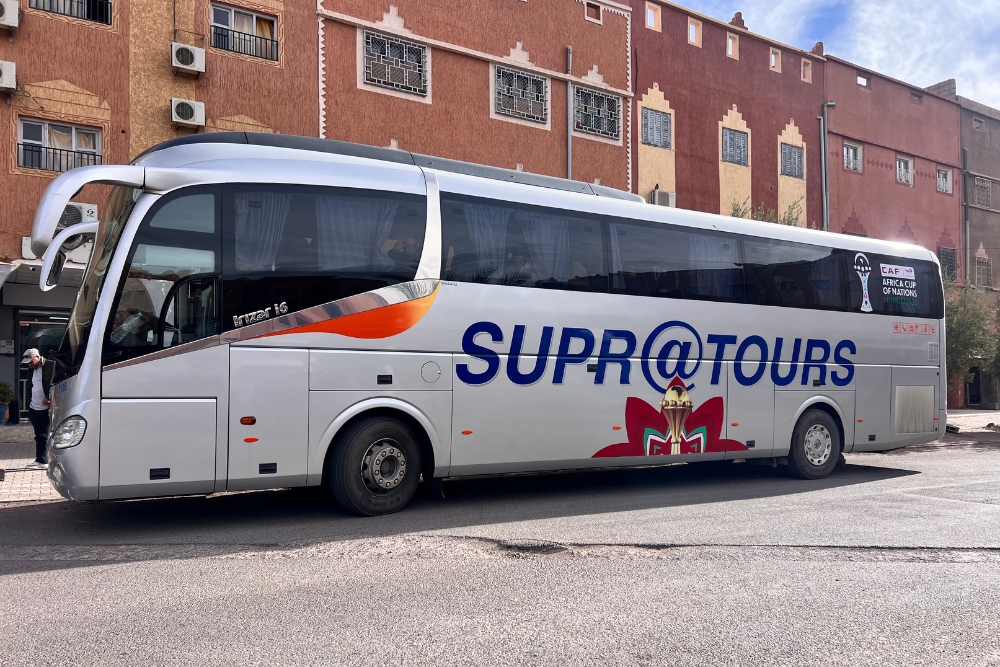
Essaouira from Marrakech: No train. Take the Supratours bus (about 3 hours) or arrange shared/private transport.
Mountain destinations in the Atlas or Rif: No train service to most mountain areas. Local buses, grands taxis, or private transport are necessary.
Agadir from anywhere: No trains. Buses from Marrakech or Essaouira.
CTM buses are comfortable and reliable for routes where trains don’t go. They’re comparable to first-class train comfort, sometimes with better legroom. Grand taxis (shared taxis that leave when full with 6 passengers) are faster but less comfortable—good for shorter routes when trains aren’t available.
For the main tourist circuit of Nador-Fes-Meknes-Rabat-Casablanca-Marrakech, trains are definitely the way to go. For everywhere else, research your bus options.
Practical Information for Morocco Train Travel
Here is what you need to know before travelling by train in Morocco.
Station Arrival and Security
Unlike Uzbekistan (where I encountered airport-style security before boarding trains), Morocco has no security screening at train stations. You simply arrive, go to your platform, and board. This makes the process quick and easy, but you should still arrive at least 15 minutes before departure.
Why? Station staff check tickets before letting you onto the platforms. At busy stations, there might be queues. You need time to find the right platform (announcements are in French and Arabic, which may not be clear to non-French speakers). And if there’s any confusion about your ticket or seat assignment, you want buffer time to sort it out.
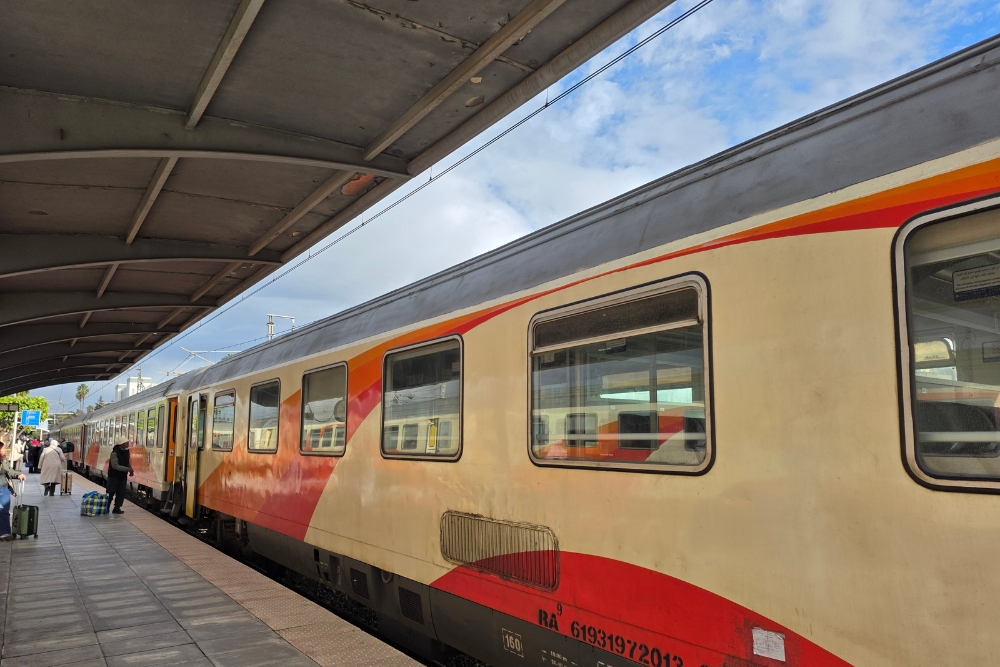
© Gayane Mkhitaryan, train from Nador Ville to Fes
Costs and Budgeting
Based on my actual journeys and observations, here’s what Moroccan train travel costs:
- First class regional trains: Typically 100-200 MAD (€9-18) for 3-6 hour journeys
- Second class regional trains: Usually 30-50 MAD less than first class
- Al Boraq high-speed first class: 200-300 MAD (€18-27) for 2-3 hour journeys
- Short routes (under 1 hour): 50-100 MAD first class
This is incredibly reasonable compared to European rail travel or even compared to hiring private drivers for the same routes.
Safety and Reliability
Are Moroccan trains safe? Yes, completely. I never felt unsafe on any train journey, in any class, at any time of day. The worst I experienced was discomfort, not danger.
Moroccan families travel by train. Women travel alone regularly. Fellow passengers were respectful. I saw no aggressive behavior, no harassment, no theft attempts. Keep your valuables secure as you would anywhere, but the trains themselves are safe.
Reliability and punctuality: In my experience, trains mostly ran on time. Regional trains had minor delays (5-15 minutes) occasionally but nothing major. This is significantly better than bus services, which can be delayed by traffic.
Solo female travelers: The first-class environment feels particularly safe and comfortable. Compartments and carriages are generally quiet and respectful. Station staff are helpful. I’d feel confident recommending Morocco’s trains to any solo female traveler—just stick to first class for the added comfort and space.
Onboard Experience Details
WiFi: There’s no consistent WiFi on Moroccan trains. The internet worked via my phone data (I use a Velo eSIM) in some areas but cut out completely in others, especially in tunnels or remote sections.
Bathrooms: Available on all trains I took. Cleanliness varied from “acceptable” to “use only if necessary.” Bring hand sanitizer. They’re squat toilets on some older trains, Western-style on Al Boraq trains.
Charging ports: Al Boraq high-speed trains have power outlets at seats. Older regional trains don’t have them reliably. Bring a fully charged phone and a power bank.
Food and drink: There’s no restaurant car, but you might get lucky with a trolley vendor selling snacks and drinks—like a Moroccan version of the Hogwarts Express trolley. They sell cookies, chips, soft drinks, and sometimes sandwiches at reasonable prices (not the huge markup you’d expect). However, don’t rely on this. Many trains don’t offer any food service.
Luggage: Overhead racks in first class are usually available. Large backpacks and suitcases can go in dedicated luggage areas at the ends of carriages or compartments. I never had issues storing my 40L backpack. In second class, luggage becomes chaotic with bags blocking aisles and piled near doors—another reason to avoid second class.
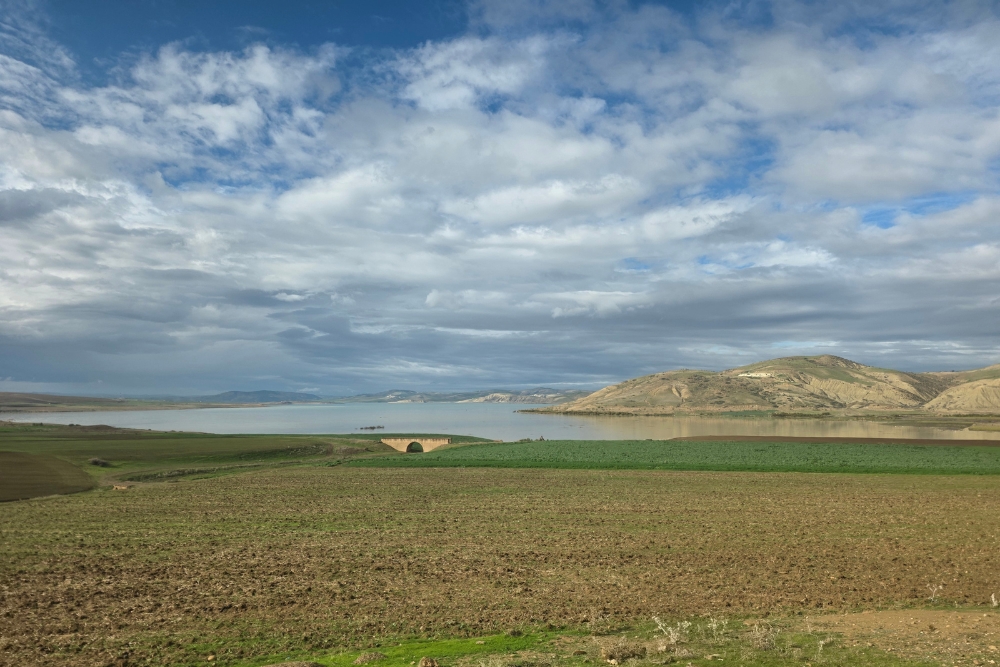
© Gayane Mkhitaryan, view from Nador Ville to Fes
Night Trains in Morocco
While I didn’t take any night trains during my trip, they do exist on certain long-distance routes. The main overnight service runs between Tangier and Marrakech (departure around 10 pm, arrival around 8 am).
These trains have couchette compartments (sleeper berths) and regular seated options. From what I’ve researched, they’re functional rather than luxurious—you get a bed in a shared compartment (usually 6 berths), basic bedding, and you save a night’s accommodation while covering ground.
FAQs on Train in Morocco
Are trains good in Morocco?
Yes, Morocco’s trains are good for connecting major cities. First-class service is comfortable and reliable; high-speed Al Boraq trains are excellent; and the network efficiently covers the main tourism routes. However, avoid second class on busy routes.
Is it safe to take a train from Marrakech to Casablanca?
Completely safe. This is one of Morocco’s main routes served by modern Al Boraq high-speed trains. Book first class, and you’ll have a comfortable, quick journey with no safety concerns.
What is the most scenic train ride in Morocco?
Based on my experience, the Nador to Fes route offers the most dramatic scenery, transitioning from the Mediterranean coast through the Rif Mountains to the interior plains. The approach to Marrakech from Casablanca, with the Atlas Mountains visible, is also beautiful.
Is there a high-speed train from Marrakech to Casablanca?
Yes, the Al Boraq high-speed service operates this route in approximately 2 hours and 40 minutes. It’s modern, comfortable, and the best way to travel between these cities.
Is there a train from Marrakech to Agadir or Ouarzazate?
No, there is no train service; you’ll need to take a CTM or Supratours bus (about 3.5-4 hours) or arrange private transport. Just don’t forget to buy the bus ticket beforehand and pay for the luggage separately. (6 MAD per piece)
How long is it from Casablanca to Marrakech by train?
The Al Boraq high-speed train takes approximately 2 hours and 40 minutes. Regular trains on this route take longer (around 3.5 hours).
Is there a sleeper train from Tangier to Marrakech?
Yes, overnight trains run between Tangier and Marrakech with couchette (sleeper) compartments and seated options. The journey takes about 10 hours overnight.
Do Moroccan trains run on time?
Generally yes. High-speed Al Boraq trains are very punctual. Regional trains occasionally experience minor delays (5-15 minutes), but are significantly more reliable than buses. Even for buses, we didn’t have any delays.
Conclusion
Morocco’s trains are genuinely good—when you choose the right class. The Al Boraq high-speed services are world-class, comfortable, and efficient. First-class regional trains are perfectly adequate for long journeys. The network connects all major cities along the tourism route, making independent travel easy and affordable.
Based on my 2025-2026 experience traveling from the Mediterranean to Marrakech by rail, I’d absolutely recommend Morocco’s trains for independent travelers—just choose your class wisely.
