
2-Day Itinerary in Fes: New City and Medina
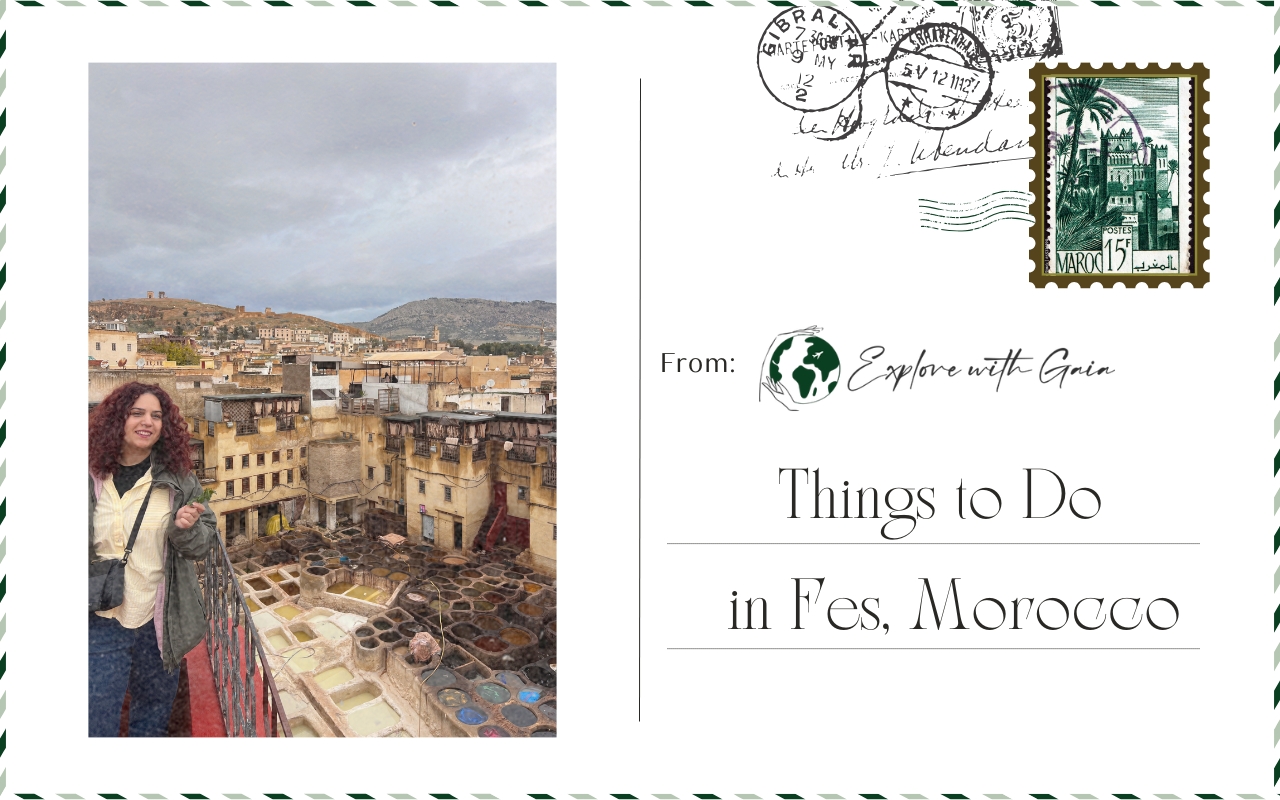
When someone mentions Morocco, Fes immediately comes to mind. As a child growing up in Armenia, I was captivated by the Brazilian telenovela O Clone, which beautifully showcased Moroccan culture and made me fall in love with this world before I ever set foot in it. Years later, my boyfriend and I traveled from Nador to Fes, staying at Riad Darif—a place that felt like stepping directly into those childhood TV memories. We spent two days exploring the city, which turned out to be just enough time. Fes was chaotic, carried a distinctive smell I wasn’t fond of, and during our visit coincided with the Africa Cup, making the tourist crowds even more intense.
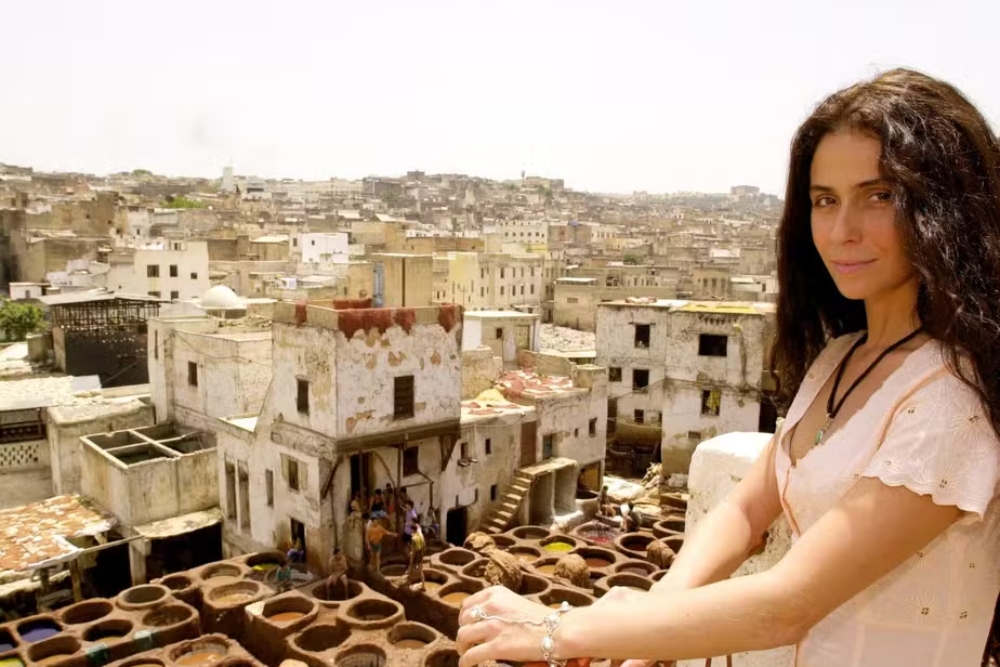
© Memoriaglobo
Both spellings are correct and refer to the same city. “Fes” is the French spelling (Morocco was a French protectorate, and French remains an official language), while “Fez” is the English spelling. You’ll see both used interchangeably in guidebooks, maps, and signage. Locally, in Arabic, it’s “Fās.” Use whichever spelling you prefer—everyone will know what you mean.
Is Fes Worth Visiting? Old Medina vs. New City
This is the question I asked myself throughout our stay. Honestly, Fes is worth visiting for the experience and cultural immersion, but it’s not for everyone. The old medina (Fes el-Bali) is a UNESCO World Heritage site and undeniably impressive, with its medieval architecture and labyrinthine alleys, but it can be overwhelming due to its chaos, aggressive vendors, and sensory overload.
The New City (Ville Nouvelle), on the other hand, was a breath of fresh air—literally. I found myself preferring the wide boulevards, French colonial architecture, and more relaxed atmosphere. If you’re someone who thrives on organized spaces and appreciates a slower pace, you might share my preference. That said, you can’t truly say you’ve experienced Fes without diving into the medina, despite its challenges. Each area offers something different: the medina provides raw authenticity and historical depth, while the New City offers comfort and a glimpse into modern Moroccan life.
Where We Stayed: Riad Darif Highlights
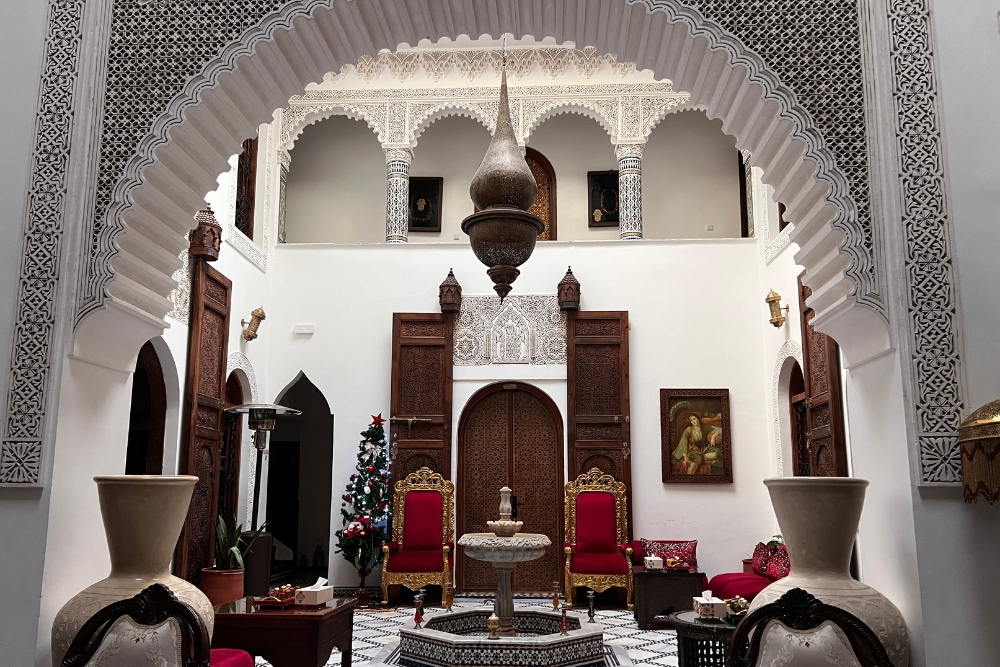
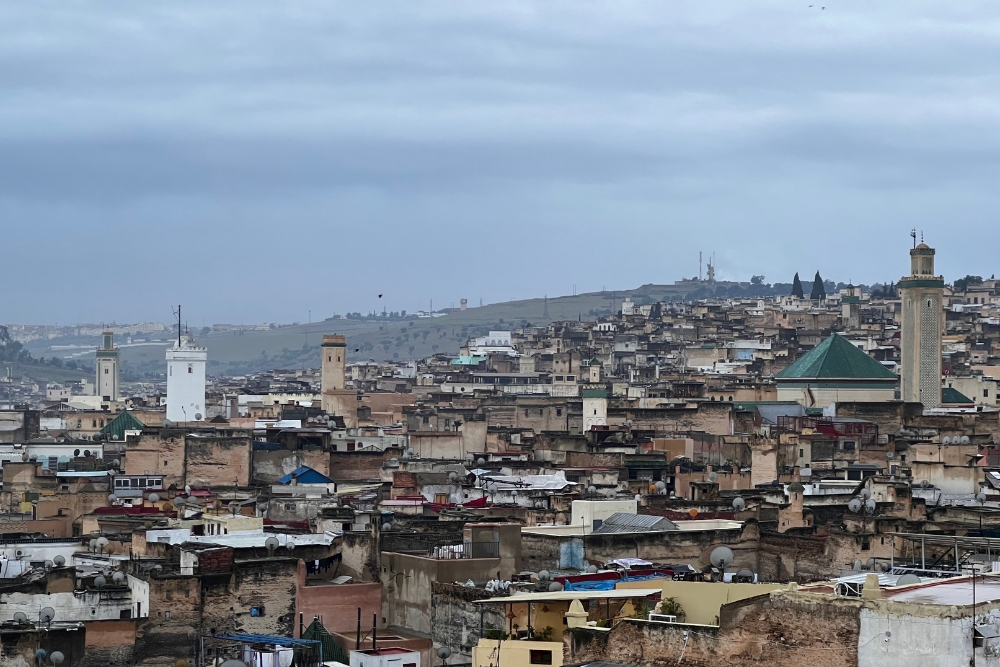
We stayed at Riad Darif, and its location alone made our trip significantly easier. Positioned just a five-minute walk from the nearest medina gate, it was incredibly convenient, especially when dragging luggage through narrow alleyways. The riad itself captured that traditional Moroccan charm I’d imagined since childhood, complete with intricate tilework and peaceful courtyards. The highlight was undoubtedly the rooftop terrace, where we enjoyed panoramic views over the medina—terracotta rooftops stretching endlessly, minarets punctuating the skyline, and the Atlas Mountains visible in the distance. It was the perfect spot for morning coffee or evening reflection after long days of exploring.
Day 1 Evening – First Impressions of the Medina
After settling into our riad, we took a petit taxi to the nearest gate—a quick, affordable ride that saved our energy for the exploration ahead. The taxi driver dropped us off, and from there, it was a short walk through the medina’s outer edges to reach our accommodation. Even this brief introduction gave us a taste of what was to come: narrow passages, endless doors hiding private worlds, and the constant hum of city life.
Evening Souk Walk
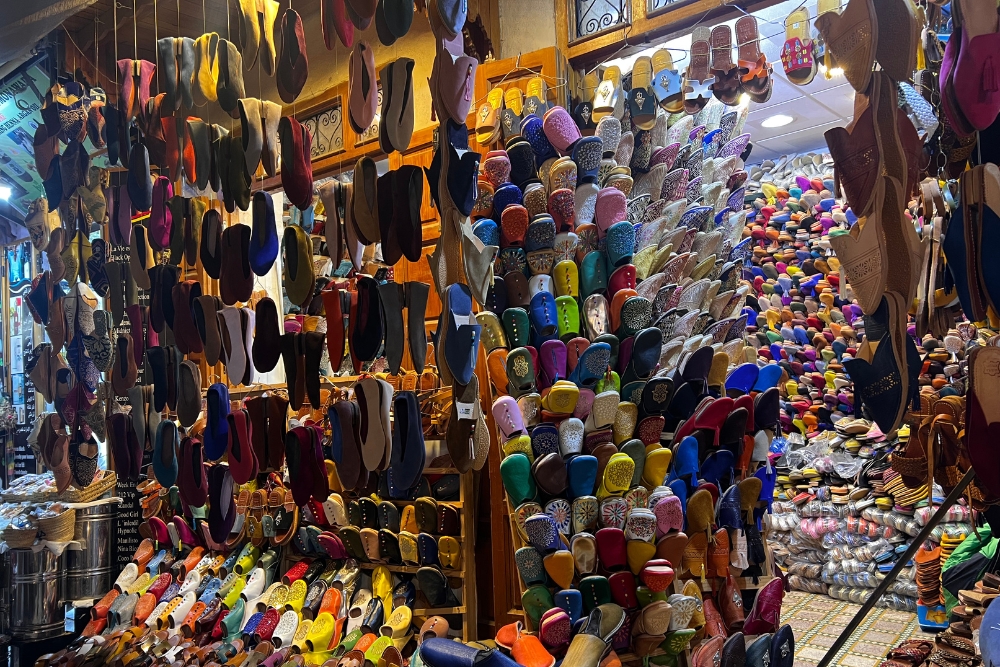
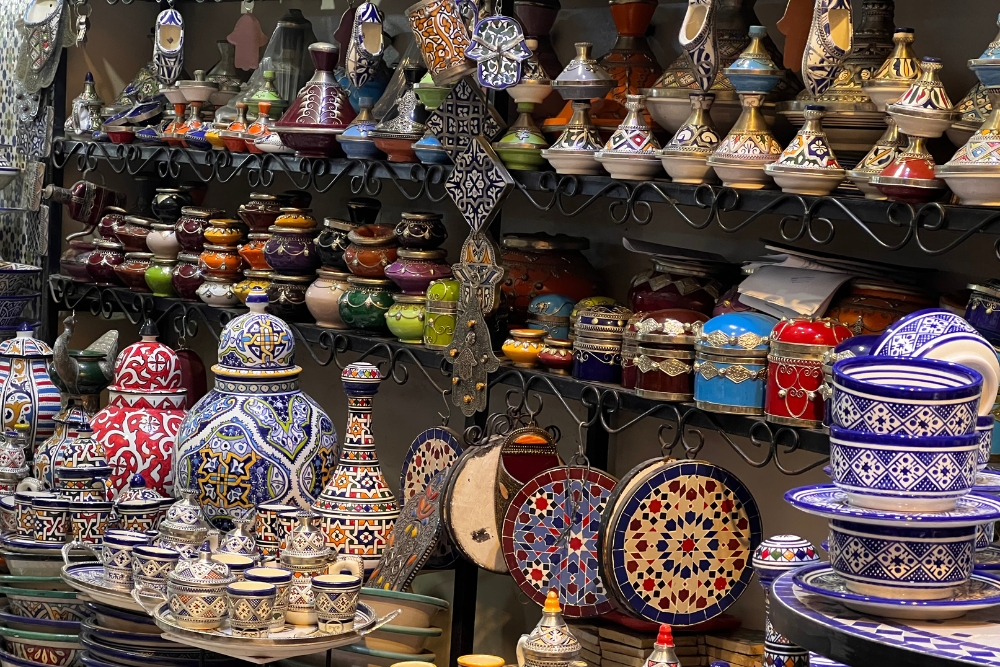
That evening, we went into the souk for our first real experience with Fes’s commercial heart. The atmosphere was electric but exhausting—vendors calling out from every direction, the press of bodies in confined spaces, and an underlying tension that comes from being visibly foreign in such crowded quarters. The vendors were notably pushy, some following us for several minutes despite repeated polite refusals. We kept our bags close and our phones secure, very aware that pickpockets thrive in these conditions. It wasn’t quite the romanticized souk experience I’d imagined, but it was authentic and eye-opening.
Bab Boujloud (Blue Gate)
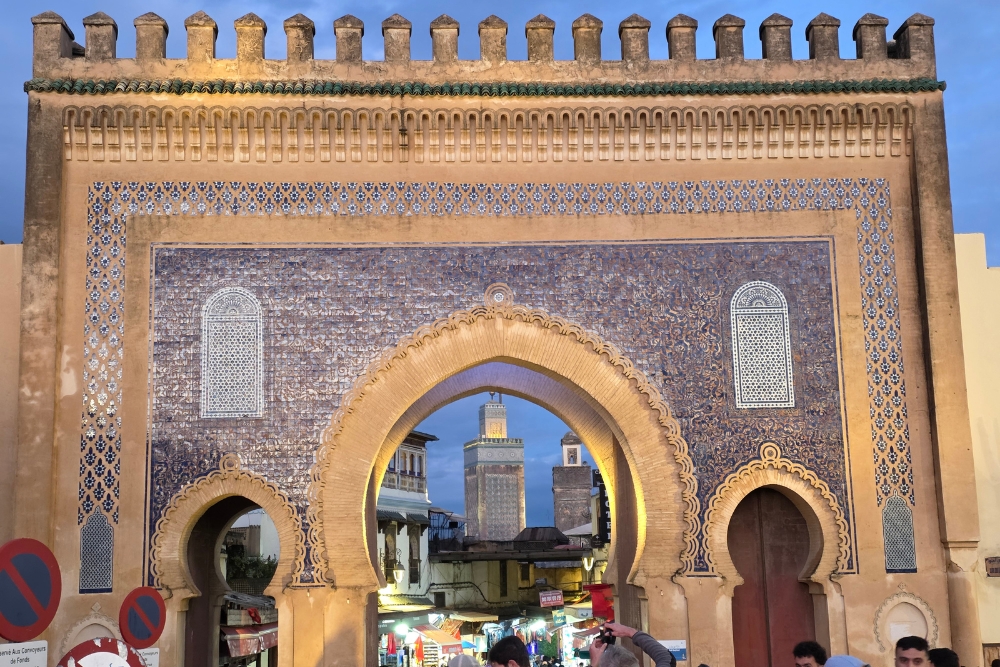
We made our way to Bab Boujloud, the famous blue gate that serves as one of the main entrances to Fes el-Bali. The gate is stunning, its blue and green tiles shimmering in the fading light. It’s one of those iconic landmarks that looks exactly like the photos, yet somehow more impressive in person. The area around the gate was bustling with locals and tourists alike, with several restaurants offering outdoor seating.
Day 2 – Deep Dive into Fes el-Bali
After breakfast at the riad, complete with Moroccan bread, fresh jam, and mint tea enjoyed on that panoramic rooftop, we set out to properly explore the medina. The morning light transformed the city, making the narrow alleys less intimidating and highlighting the architectural details we’d missed in the evening rush.
Getting Lost in the Medina
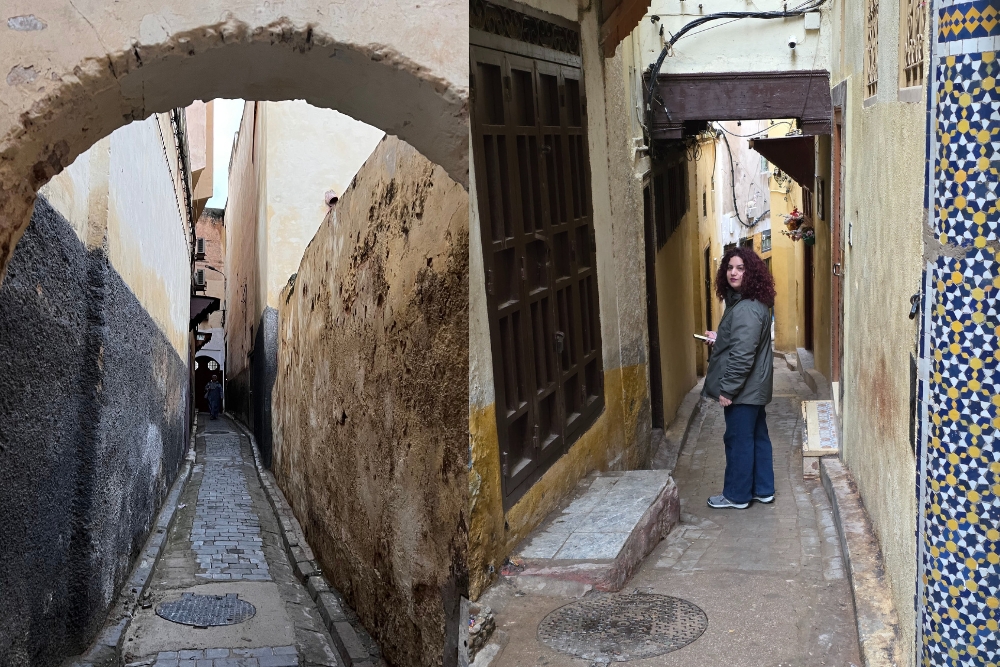
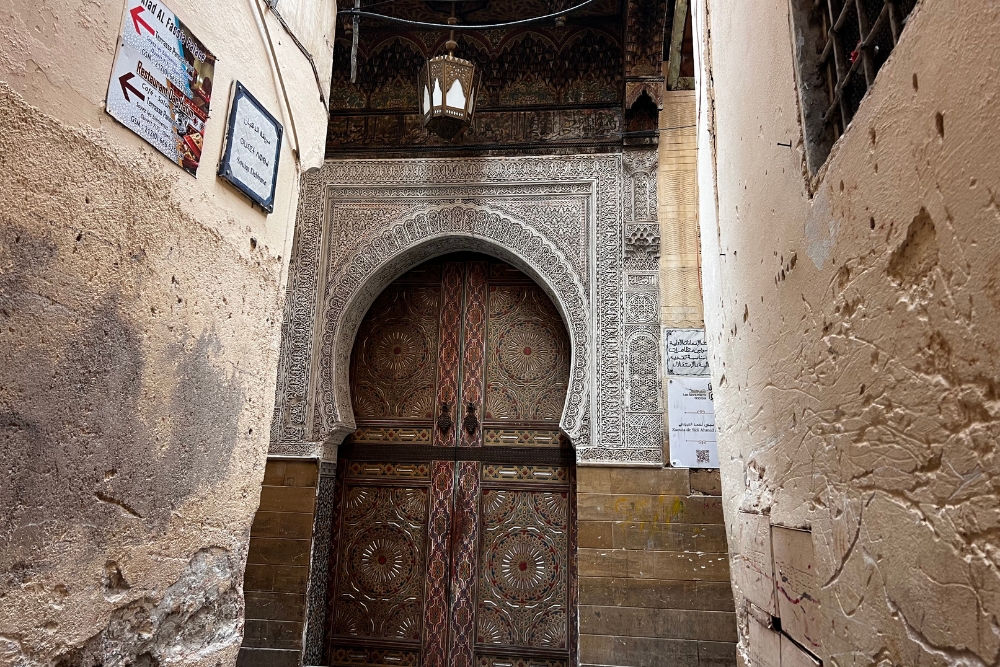
Getting lost in Fes’s medina is almost inevitable, and we certainly wandered into dead ends and circled back more times than I can count. Surprisingly, Google Maps worked remarkably well, even in the deepest parts of the maze. The blue dot would occasionally jump around as GPS signals bounced off the tall walls, but it generally kept us oriented. My advice: embrace getting lost as part of the experience. Some of our best discoveries—a quiet fountain courtyard, a cat-filled alley with perfect lighting, a tiny door revealing an incredibly ornate interior—happened when we stopped stressing about navigation and just wandered.
Jewelry Shopping Experience
We stumbled upon several jewelry shops tucked into the medina’s commercial areas, each displaying intricate silver work in glass cases. Unlike some of the aggressive vendors in the main souks, these shopkeepers were more relaxed, allowing us to browse without constant pressure. My boyfriend ended up buying me a beautiful silver ring with traditional Moroccan geometric patterns—a piece I still wear regularly and cherish as a tangible memory of this trip. If you’re interested in purchasing jewelry in Fes, take your time, compare quality across multiple shops, and don’t be afraid to bargain. (This is something I’m not really good at, though)
Al Attarine Madrasa
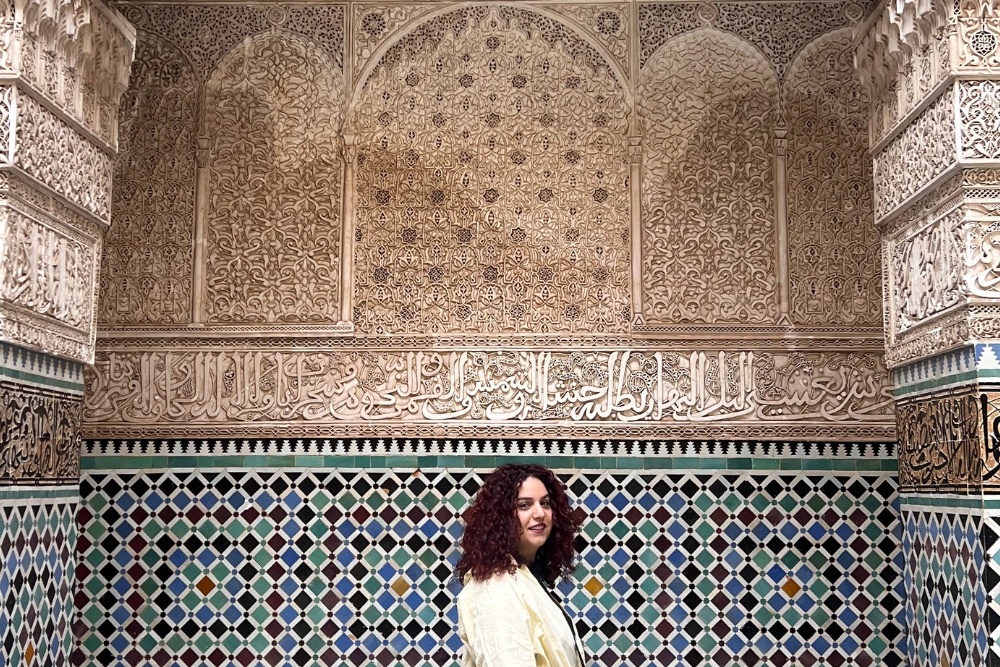
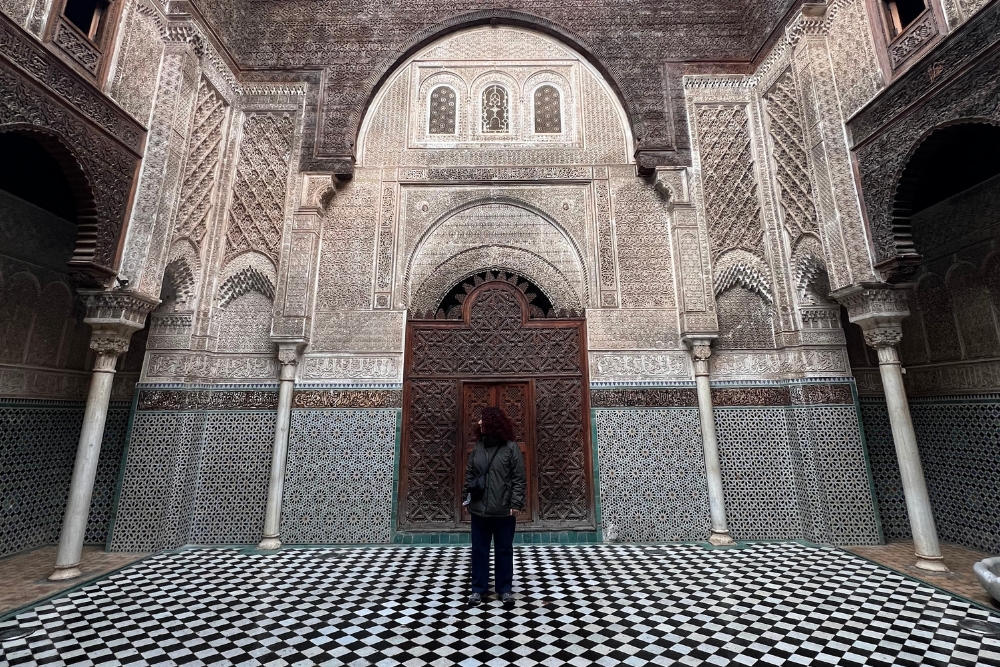
Al Attarine Madrasa was a highlight of our Fes trip, despite crowds. Arriving early, we found a line of visitors and quickly understood why—its courtyard is a masterpiece of Islamic architecture, with carved cedar wood, zellige tilework, and delicate stucco. Getting photos without tourists required patience, but it was worth the wait. The second floor offers rare views of Al-Qarawiyyin University and Mosque, showcasing green roofs and architectural harmony. Though small, every inch is spectacular; plan for 30-45 minutes.
Mosque and University of Al-Qarawiyyin
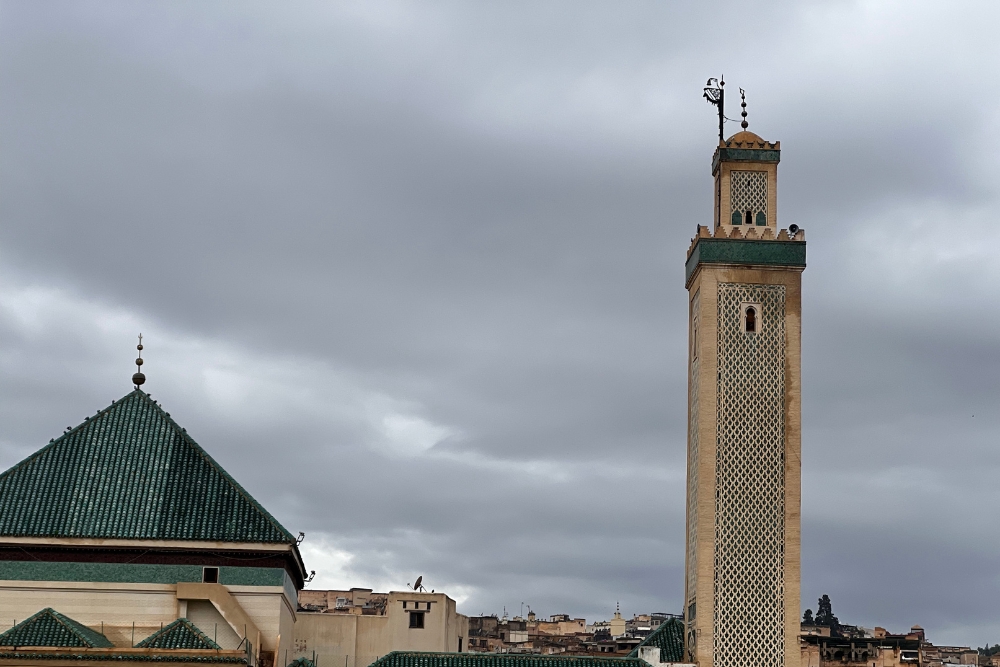
Founded in 859 CE, the University of Al-Qarawiyyin is the world’s oldest continuously operating university, according to UNESCO and the Guinness Book of World Records. While non-Muslims cannot enter the mosque or university buildings, viewing them from Al Attarine Madrasa and the surrounding streets still conveys their significance. The complex is massive, occupying a substantial portion of the medina, and its architectural influence is visible throughout Fes. Even as exterior observers, the cultural and educational importance of Al-Qarawiyyin is palpable—this was a center of knowledge when many European universities didn’t yet exist.
Chouara Tannery
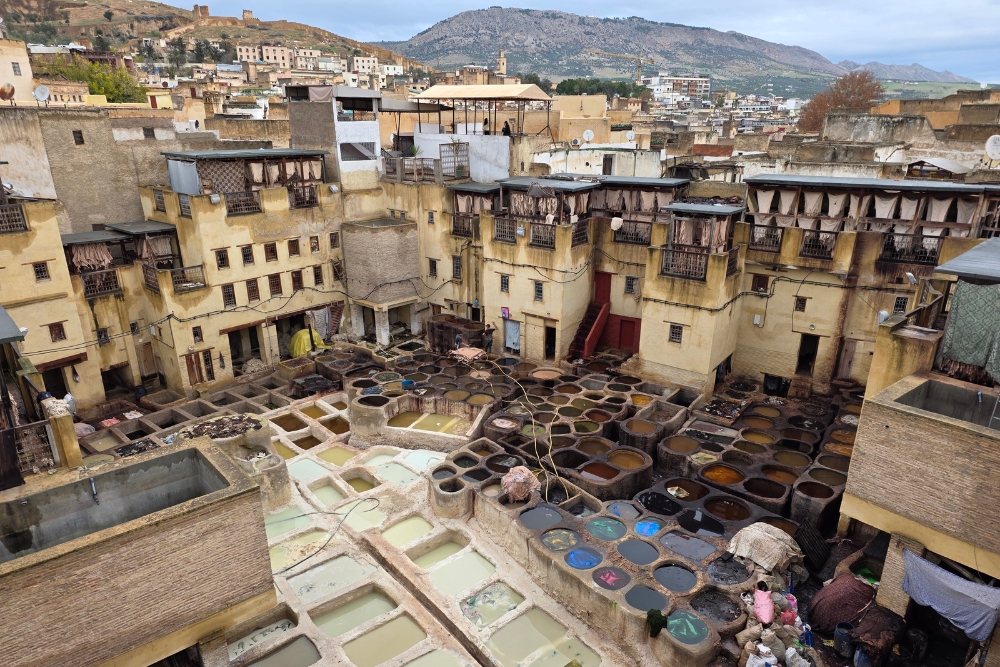
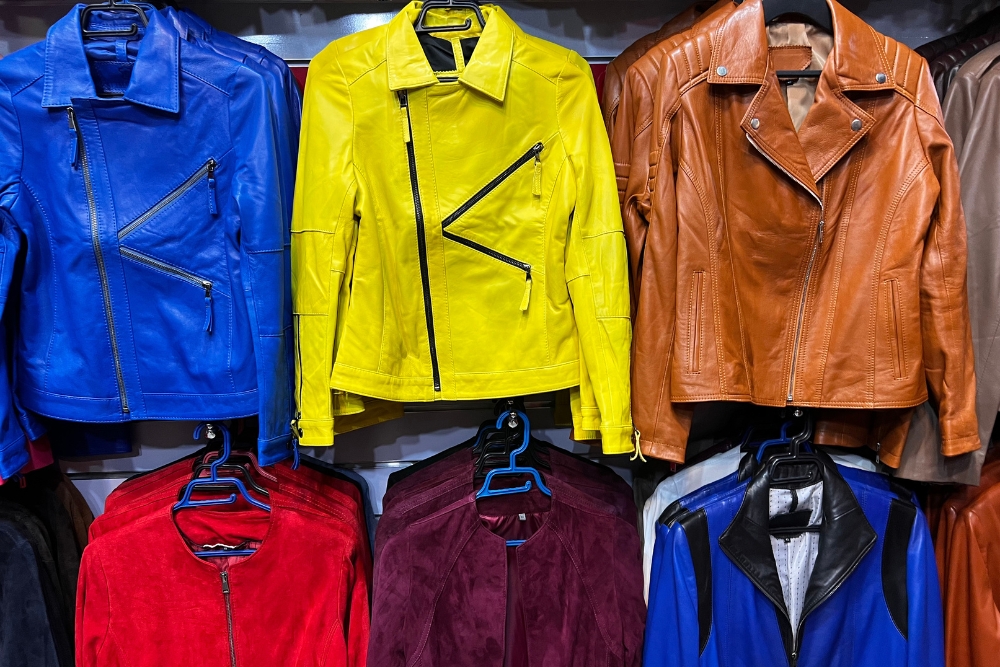
No visit to Fes is complete without seeing the famous leather tanneries, and we made our way to Chouara, the largest and oldest. We checked out several rooftop viewpoints—many shops offer terrace access in hopes you’ll buy leather goods afterward—and here’s a crucial tip: try to find the viewing spot with the red rooftop. It offers the best angle and least obstructed view of the honeycombed dyeing vats below, where workers still use centuries-old techniques to process leather.
The sight is remarkable: circular stone wells filled with vibrant dyes—yellows, reds, browns, blues—with workers standing knee-deep in the solutions, treading hides with their feet. It’s the exact scene I remembered from O Clone, and seeing it in person was surreal.
However, prepare yourself for the smell. It’s overwhelming—a pungent mix of ammonia (from pigeon droppings used in the tanning process), animal hides, and dyes. Shopkeepers offer mint leaves to hold under your nose, which helps somewhat. Unfortunately, our tannery experience was soured by aggressive fixers and sellers who followed us, pressed us relentlessly, and refused to accept our polite refusals.
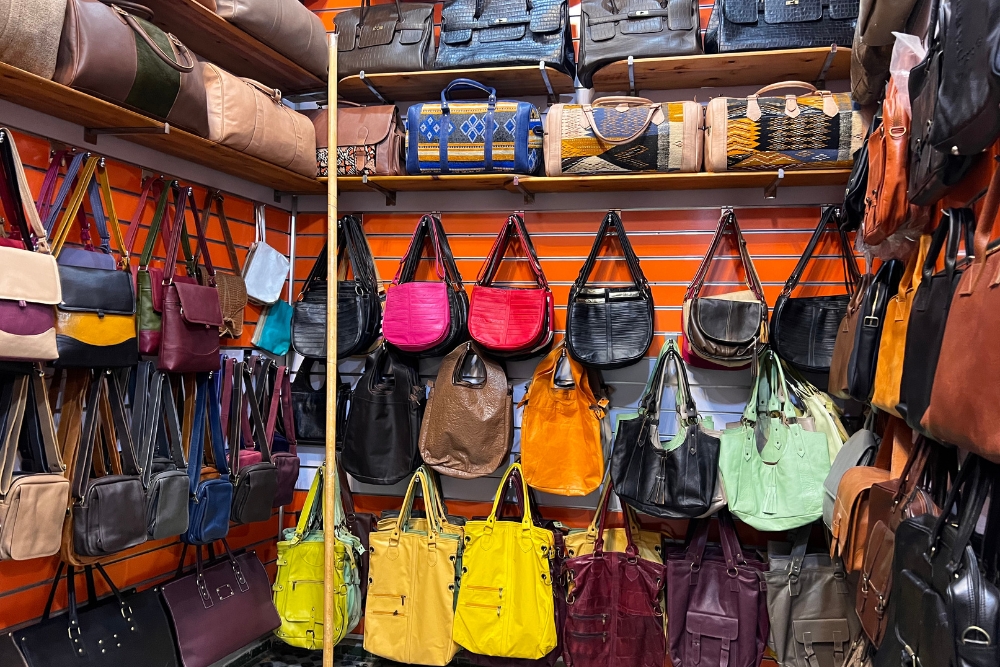
Walking Toward the Gates
Between major attractions, we simply walked, observing daily life unfold in the medina. We passed donkeys carrying goods through impossibly narrow alleys (they’re still the primary means of transport in many areas), watched craftsmen hammering copper, and smelled fresh bread wafting from communal ovens where locals bring dough to be baked.
El Glaoui Palace
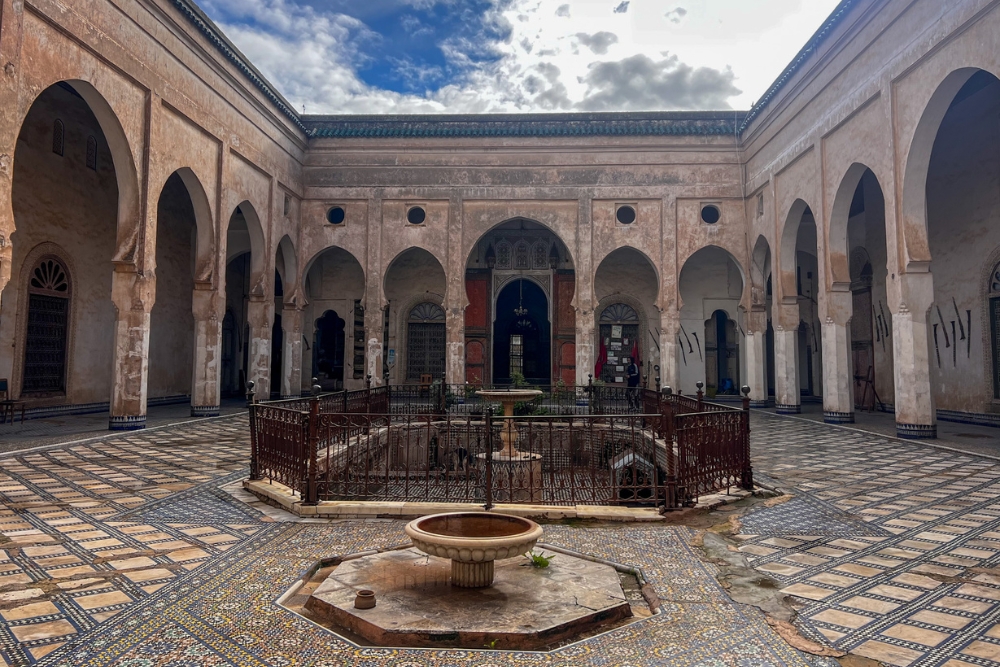
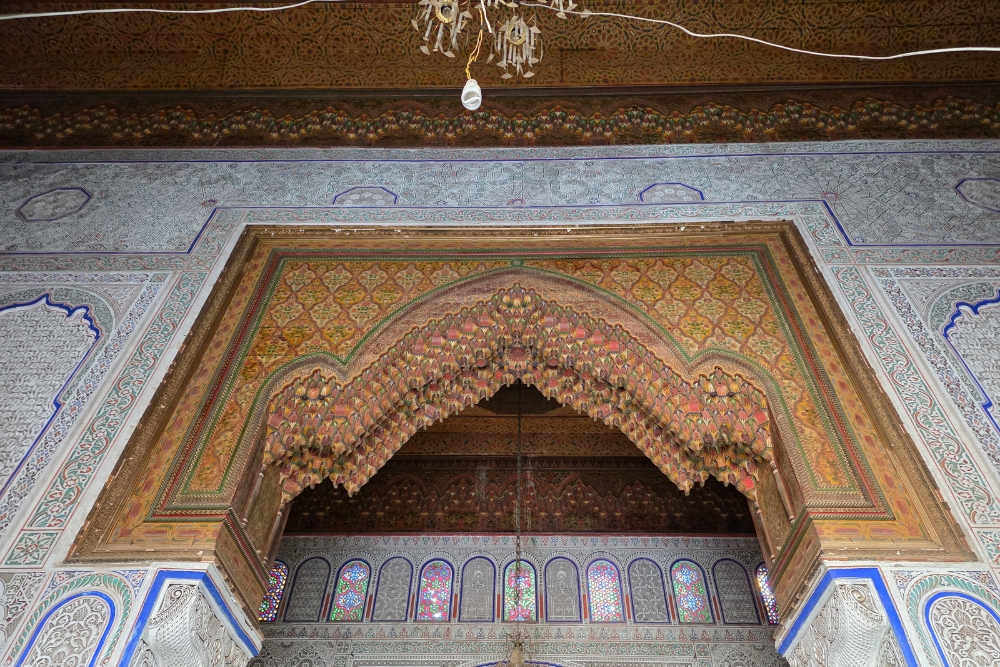
El Glaoui Palace was a bittersweet discovery. This early-20th-century palace once belonged to Thami El Glaoui, the powerful Pasha of Marrakech, but has since fallen into serious disrepair. When we visited, there were disappointingly few other tourists—perhaps because it’s less promoted than other sites, or because its current state is somewhat depressing.
Parts of the structure showed beautiful tilework and carved wood, hints of former grandeur, but other sections had crumbling walls that looked genuinely unsafe. You could see where pieces had fallen away, exposing underlying brick and threatening further collapse. Despite its neglected state, there’s something compelling about El Glaoui Palace—it feels like a hidden gem, offering a more authentic, less polished glimpse into Fes’s history.
Mall and Carrefour Visit
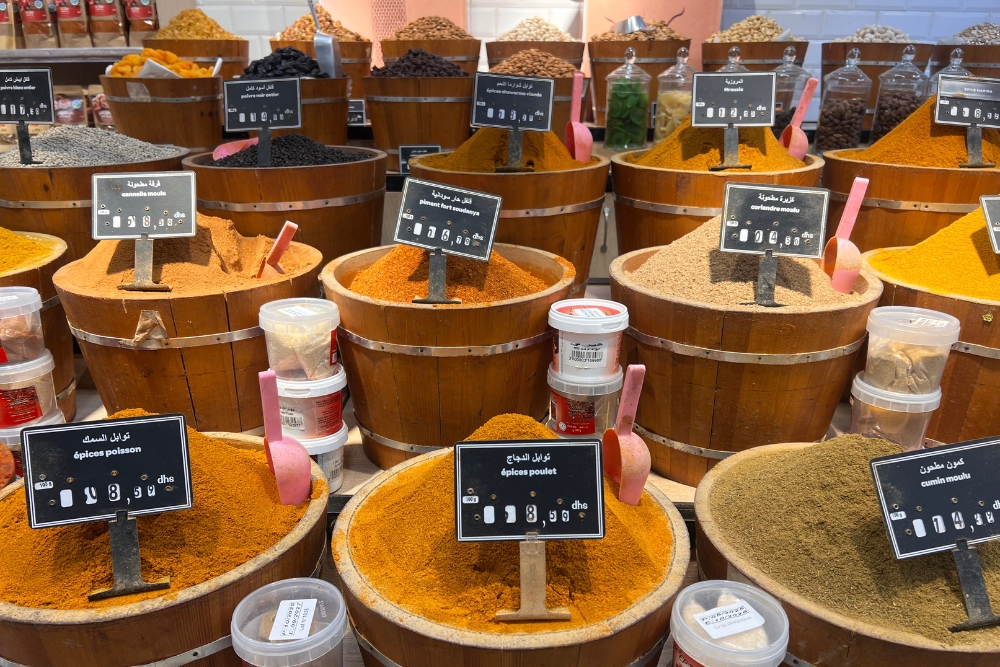
I’m one of those travelers who genuinely enjoys visiting local supermarkets as a cultural experience, and Carrefour didn’t disappoint. Walking through the aisles, we saw products we recognized alongside Moroccan specialties—argan oil products at prices far cheaper than tourist shops, local spice blends, Moroccan cookies and pastries, and an impressive selection of olives.
The mall itself was modern and clean, filled with Moroccan families shopping, teenagers hanging out, and a food court offering everything from Moroccan fast food to international chains. It was a stark reminder that Morocco isn’t just riads and medinas—it’s a modern country with shopping malls, smartphones, and contemporary life existing alongside ancient traditions.
New City Boulevard Stroll
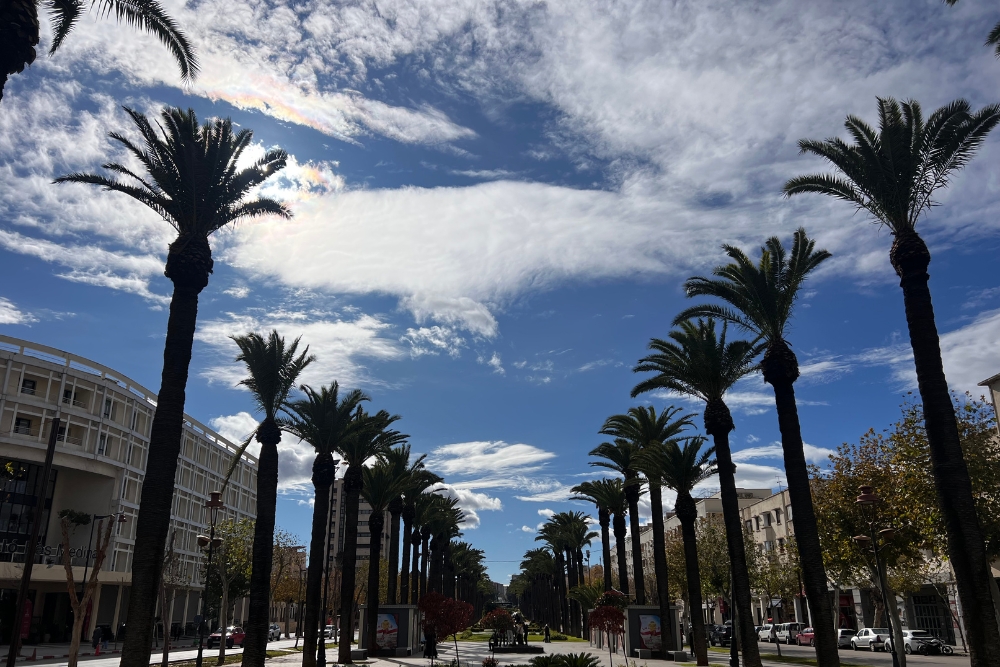
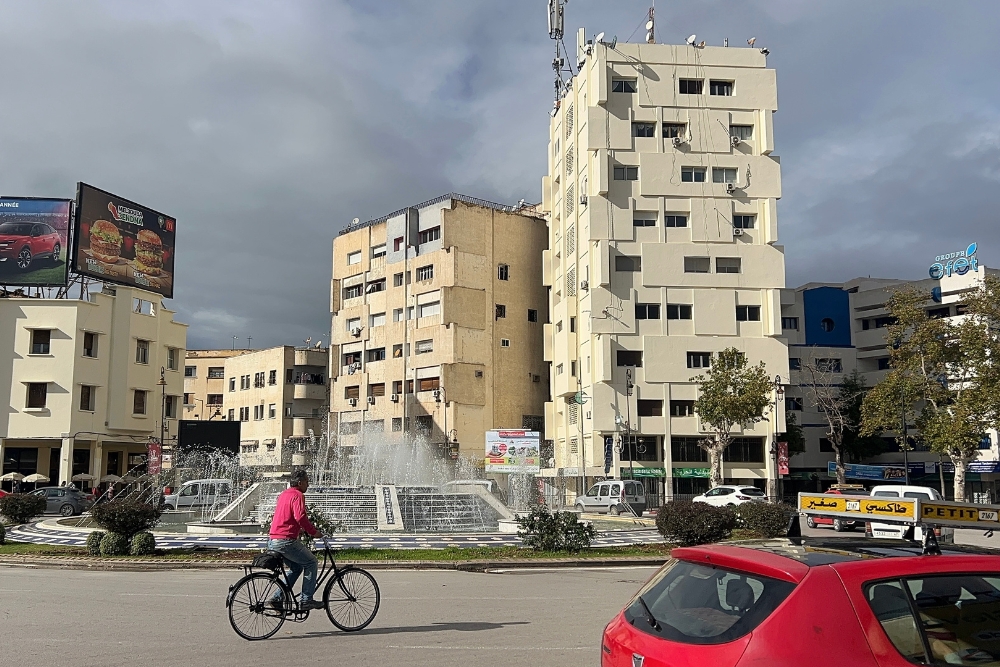
The New City, built during the French protectorate, is organized around a grand avenue, with tree-lined boulevards radiating from it. We walked along these wide streets, admiring the French colonial architecture—buildings with wrought-iron balconies, symmetrical facades, and a European elegance that feels worlds away from the organic chaos of the medina.
There were modern cafés where locals sipped espresso, boutiques selling contemporary fashion, and a generally calmer, more spacious atmosphere that finally let us relax. I preferred this area, honestly. After the constant sensory assault and navigation challenges of the medina, these organized streets felt like a relief. It reminded me of French cities with Moroccan touches—the best of both worlds.
Grand Hotel Exterior
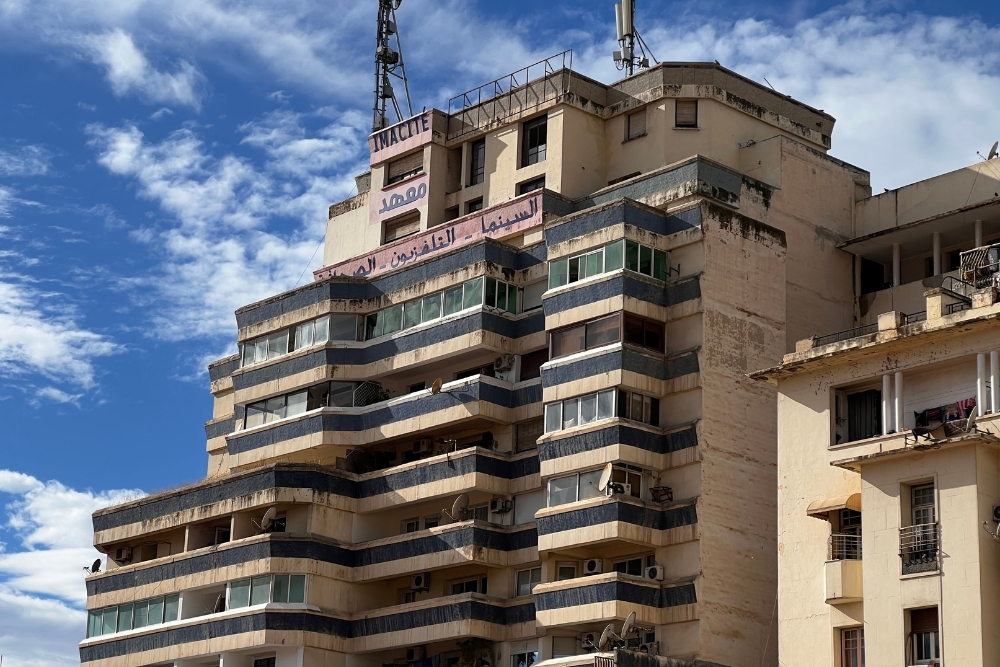
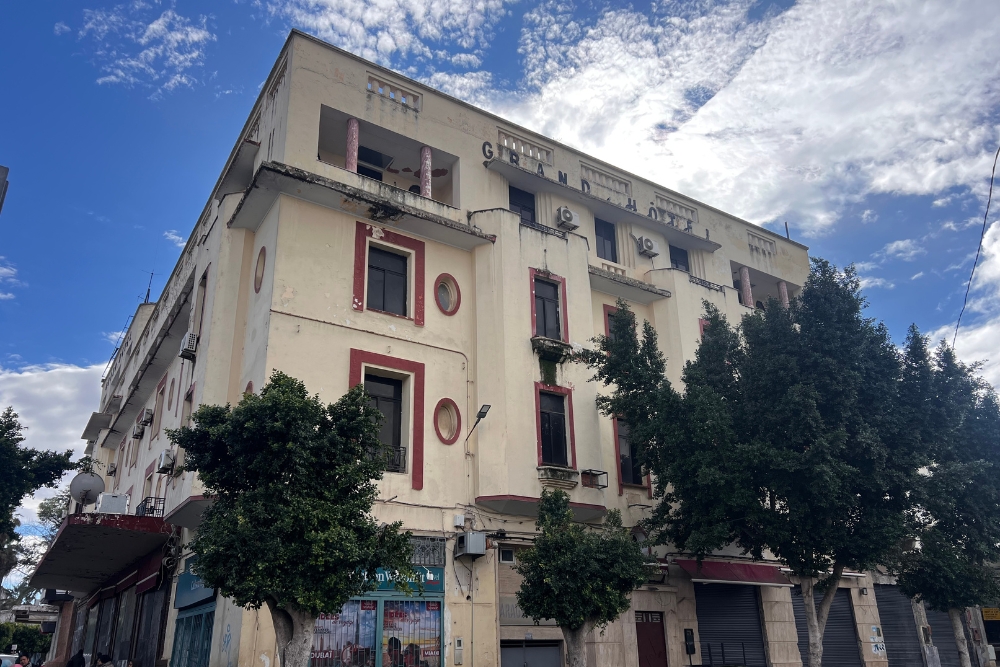
We stopped to admire the Grand Hotel, a beautiful example of early-20th-century architecture from Fes’s colonial era. The building showcases Belle Époque influences with ornate details, large windows, and an elegant facade that speaks to an era when Fes was establishing itself as a modern city alongside its ancient medina.
While we didn’t go inside, the exterior alone is worth photographing, and it stands as a reminder of the New City’s relatively recent but historically significant development. The hotel has hosted notable guests over the decades and represents the aspirations of colonial-era urban planning—wide streets, grand public buildings, and European architectural styles transplanted to North Africa.
Catholic Church Visit: Saint Francis of Assisi Catholic Church
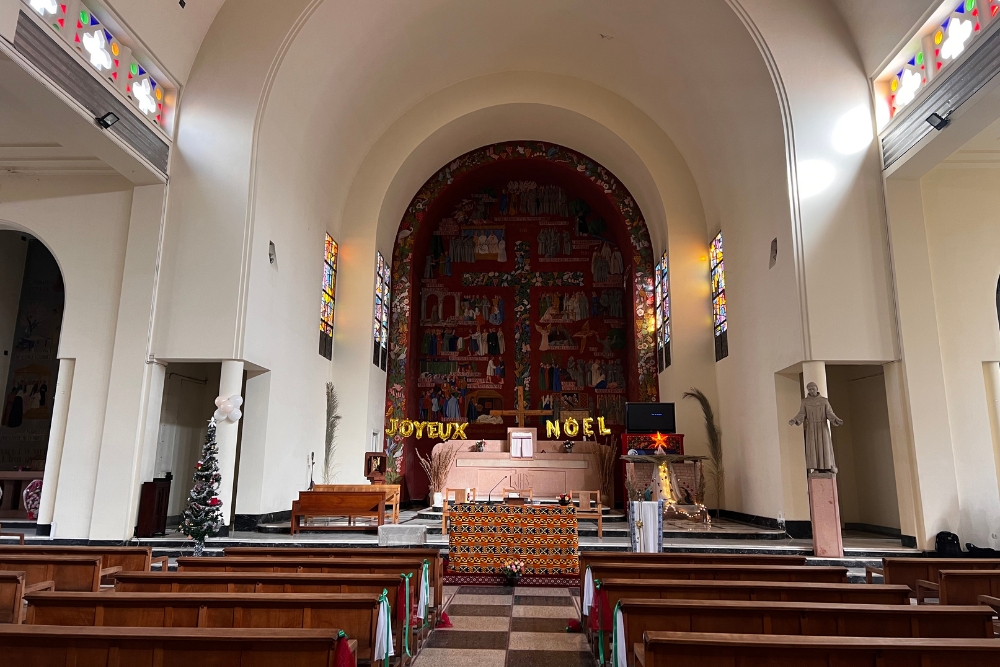
We came across a Catholic church—Saint Francis of Assisi Catholic Church—and initially found the main doors closed. However, we heard a beautiful choir singing drifting from inside, so we found an open side entrance. Stepping inside was like entering a different world: quiet, cool, and filled with the echo of voices in harmony. The church interior was simpler than European cathedrals but still lovely, with stained glass casting colored light across the pews. This unexpected moment of peace was genuinely moving after days of chaos and noise.
Dinner at Riad Darif
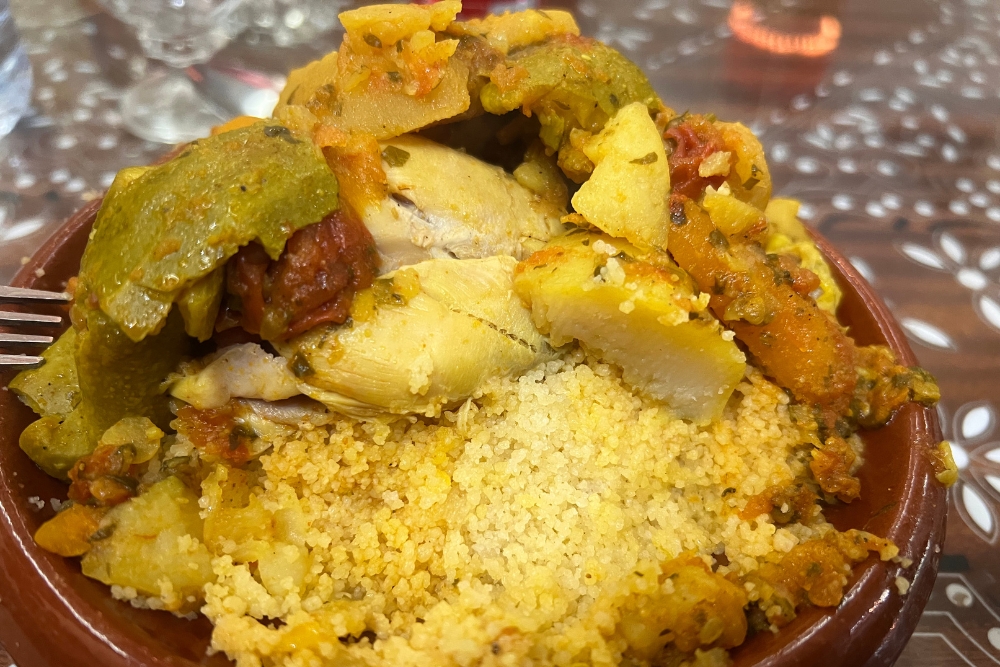
We returned to our riad completely exhausted from a full day of exploration. The riad staff prepared couscous with vegetables and chicken for our dinner—a home-cooked meal that felt infinitely more authentic than any restaurant experience. We were finally able to reflect on everything we’d seen and experienced. The couscous was perfectly steamed, the vegetables tender and flavorful, and the chicken seasoned with Moroccan spices that had become familiar over our journey.
Dining at the riad felt intimate and special, as if you were being welcomed into someone’s home rather than just another tourist. By the time we finished dinner, we were ready to collapse into bed, our feet aching but our minds full of the day’s impressions.
Day 3 Morning – Departure to Rabat
On our third morning, after one final rooftop breakfast overlooking the medina, it was time to pack up and head to Rabat, our next destination. Leaving Fes, I had mixed feelings—relief at escaping the chaos and pressure, but also appreciation for having experienced such a unique, historically significant city. Fes isn’t easy, but it’s undeniably authentic.
Other Notable Places in Fes
If you have more time, you can also consider the following places:
Royal Palace (Dar el-Makhzen) – You can admire the stunning golden doors and gates from outside, but entry is not permitted as it’s still used by the monarchy. The craftsmanship on the entrance alone is worth the visit for photos.
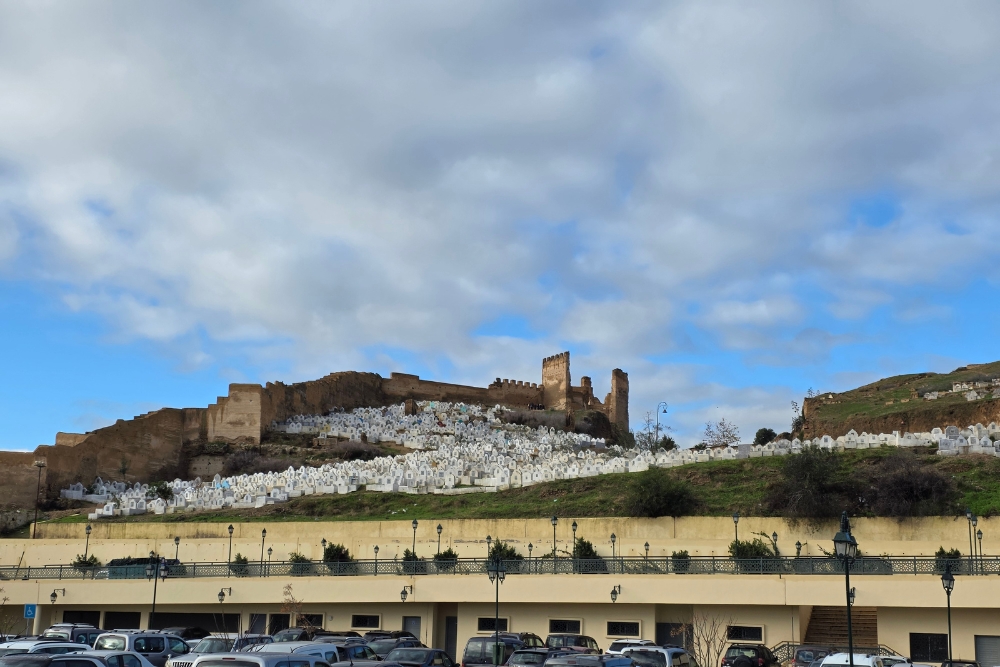
Merenid Tombs – Located on a hill overlooking Fes, these 14th-century ruins offer spectacular sunset views over the entire medina and are particularly beautiful during golden hour.
Nejjarine Museum of Wooden Arts & Crafts – Housed in a beautifully restored fondouk (inn), this museum showcases traditional Moroccan woodworking with impressive carved pieces and a lovely rooftop café.
Batha Museum – Set in a former palace, this museum displays traditional Fes crafts, including ceramics, embroidery, and carved wood, giving context to the artisan work you see throughout the medina.
Jewish Quarter (Mellah) – Established in the 15th century, the Mellah features a distinct architectural style, with balconied buildings, and offers insight into Morocco’s Jewish heritage, including an old cemetery and a synagogue.
Jardin Jnan Sbil – These beautiful Andalusian gardens offer a peaceful green escape from the medina’s intensity, with fountains, flowerbeds, and shaded pathways perfect for a relaxing break.
Should I Go Alone or With a Guide?
My boyfriend and I prefer to organize our own trips, and we successfully explored Fes independently using Google Maps. However, we noticed most other visitors had guides, and I understood why.
A guide in Fes serves two purposes: protection and information. They shield you from aggressive vendors and fixers who can make the medina stressful. They also provide historical context that you’d miss exploring alone.
That said, you can absolutely explore on your own if you’re comfortable with chaos. We managed fine with offline maps and patience. A guide makes sense for first-time visitors to Morocco, those with limited time, anyone concerned about language barriers (French and Arabic are the main languages), or travelers seeking deeper cultural insights. You can arrange guides through your riad or at the tourist office for around 200-400 MAD ($20-40 USD) for a half-day.
If you change your mind, tour operators throughout the city offer last-minute walking tours, cooking classes, and day trips to nearby sites like Volubilis and Meknes.
Practical Tips for Visiting Fes
How Long to Spend: Two days is perfect for Fes’s main highlights without feeling rushed. One day works if you’re short on time but you’ll miss the atmosphere. Three days is ideal for a leisurely pace or adding day trips to nearby sites.
When to Visit: Avoid major events—we visited during the Africa Cup and crowds were intense. Spring (March-May) and fall (September-November) offer the best weather. Summer (June-August) is extremely hot, especially in the medina. During Ramadan, many restaurants close during the day, though tourist spots stay open.
Getting Around: Petit taxis cost 15-30 MAD and are perfect for reaching medina gates. Inside the medina, you’ll walk everywhere. The New City has wider streets suitable for cars but is also walkable.
What to Expect: Prepare for sensory overload—narrow alleyways, vendor calls, pressing crowds, and that distinctive Fes smell from tanneries, spices, and street food. Some find it fascinating; I found it off-putting but manageable.
Vendors can be aggressive. Practice firm refusals, avoid eye contact if not shopping, and don’t feel obligated to buy after using shop terraces for tannery views (though tips are appreciated).
Safety: Fes is generally safe, but watch for pickpockets in crowded areas. Keep valuables secure, stay together with your group, and firmly decline unofficial guides who expect payment. Stick to main areas after dark.
Money: Bring cash for the medina—cards rarely work in small shops. Bargaining is expected; start at 50-60% of asking price. ATMs are available in the New City and near medina gates.
Why Fes Stays with You
Fes is not an easy city, and I won’t pretend it is. The chaos, the smells, the aggressive vendors, and the sensory overload are real challenges that can make the experience exhausting. But it’s also incredibly authentic, historically significant, and visually stunning in ways that more tourist-friendly cities can’t match. Whether you’ll love it or merely tolerate it depends largely on your travel style and expectations.
For me, Fes was that childhood dream from watching O Clone made real—not exactly as I’d imagined, but real nonetheless. The tanneries I’d seen on TV existed in actual life, with actual workers using centuries-old methods. The narrow alleyways and hidden riads were there to discover. Would I return? Probably not as a priority, but I’m genuinely glad I went.
Fes taught me that some places are worth experiencing once for their historical and cultural significance, even if they’re not places you’d choose to visit repeatedly. It’s a city that demands something from you—patience, flexibility, resilience—but offers in return a window into a way of life that’s increasingly rare in our modern, sanitized world.
