
Day Trips from Naples: Why I Spent More Time Leaving Than Staying

I’ll be honest—I didn’t fall in love with Naples the way I expected to. After reading countless articles about its “authentic chaos” and “gritty charm,” I arrived excited to embrace the madness. Instead, I found myself overwhelmed by the traffic, stressed by the constant vigilance against pickpockets, and exhausted by the noise. By day one, I realized something: Naples wasn’t going to be my base for soaking in southern Italian life. It was going to be my launchpad for everywhere else.
My actual itinerary told the story: Naples arrival, immediate escape to the Amalfi Coast, on to Positano, ferry to Capri, back to Naples for one night, morning trip to Pompeii, then straight to the airport. I spent more time leaving Naples than being in it, and you know what? That turned out to be exactly the right call.
If you’re reading this and feeling guilty about not loving Naples, or if you’re planning your trip and wondering whether it’s okay to use the city purely as a jumping-off point—yes. Absolutely yes. Naples’ greatest gift isn’t necessarily Naples itself. It’s everything you can reach from it.
Here are all the day trips from Naples that turned my disappointing arrival into an unforgettable week in Campania.
- Best by Boat/Ferry: Capri, Procida, Ischia, Positano (seasonal), Amalfi (seasonal)
- Best by Train: Pompeii, Herculaneum, Sorrento, Paestum, Caserta Royal Palace, Rome (if you must)
- Best by Bus: Amalfi Coast (Positano, Amalfi, Ravello), Sorrento to coastal towns
- Best by Car/Private Driver: Amalfi Coast (multiple towns), Mount Vesuvius + Pompeii combo, Paestum + mozzarella farms
- Best for Budget Travelers: Pozzuoli & Campi Flegrei, Herculaneum, Pompeii
- Best for Avoiding Crowds: Procida, Paestum, Pozzuoli & Campi Flegrei, Herculaneum
- Best for History: Pompeii, Herculaneum, Paestum, Mount Vesuvius, Pozzuoli & Campi Flegrei
- Best for Scenery: Positano/Amalfi Coast, Capri, Mount Vesuvius
- Best Half-Day Trips: Pozzuoli & Campi Flegrei, Herculaneum, Caserta Royal Palace
- Best Full-Day Trips: Amalfi Coast, Capri, Pompeii, Ischia
- Best for First-Time Visitors: Pompeii, Capri, Positano/Amalfi Coast
- Best for Cruise Port (Limited Time): Pompeii (3-4 hours), Naples city, Capri (8+ hours needed)
The Amalfi Coast: Where Naples’ Chaos Meets Mediterranean Perfection
The Amalfi Coast is a 50km stretch of dramatic coastline where vertical towns cling to cliffs, lemon terraces cascade down impossibly steep slopes, and the Mediterranean gleams turquoise far below. It’s one of Italy’s most famous destinations, a UNESCO World Heritage site, and the reason thousands of travelers use Naples as their base. The towns—Positano, Amalfi, Ravello—each have their own character, from jet-set glamour to medieval charm.
Why you should consider visiting: This is postcard Italy at its most dramatic. The coastal road itself is an experience; the towns are genuinely beautiful despite the crowds, and the meeting of mountains and sea creates scenery you won’t find anywhere else in Italy. If you’ve seen photos of colorful buildings stacked vertically above blue water, this is where they came from.
How to Get from Naples
- Best option: Train to Salerno + SITA bus to Amalfi/Positano
- Timing: 2.5-3 hours total (1 hour train + 1.5 hours bus)
- Cost: €15-20 total (€8 train + €8-10 bus)
- Alternative route: Train to Sorrento (€3.60, 75 minutes) + SITA bus to Positano (€4-5, 50 minutes)
- Seasonal ferry option: Direct ferries from Naples to Amalfi/Positano (April-October), 90 minutes, €20-25 each way. Check schedules carefully—outside peak season, they run only once daily in the morning. Direct Ferries
- Private driver: €200-300 for a full day, handles multiple towns, takes photos at viewpoints.
Organized tours: €60-120 per person, including transport and guide: GetYourGuide, Viator
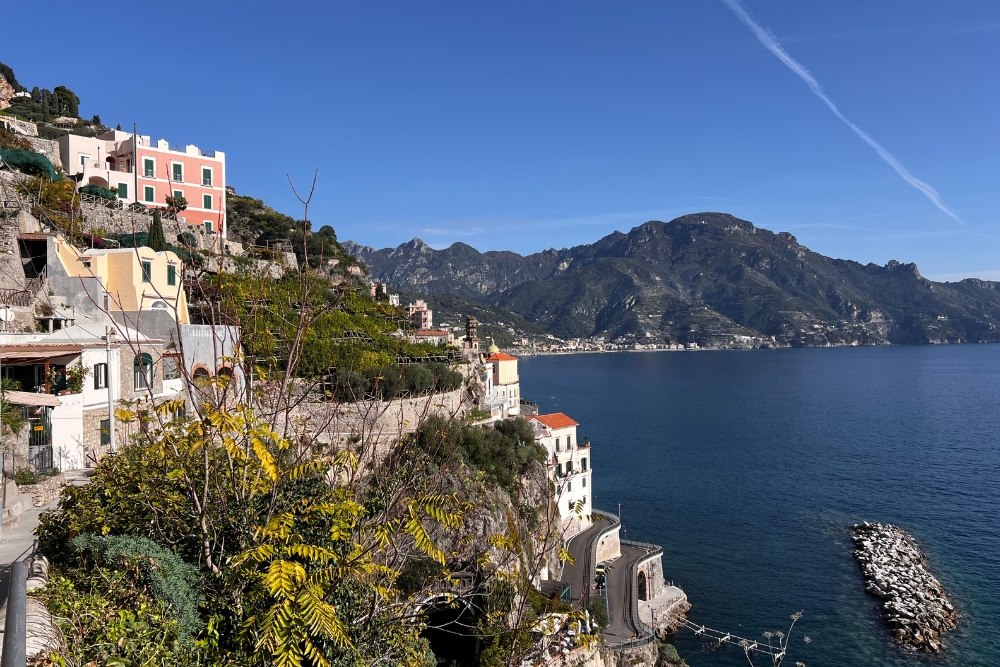
© Gayane Mkhitaryan, Panoramic view over the Amalfi coast
What Actually Happened
I took the train from Naples to Salerno, then caught the SITA bus to Amalfi—though getting there became its own adventure. I’d planned to take the ferry (the scenic, easy option everyone recommends). Still, when I arrived at Naples port, I discovered the seasonal reality: outside peak summer, ferries run only once daily in the morning. I’d missed it.
Plan B meant train to Salerno, then the coastal bus. I caught the last bus of the day, only to discover at the door that they don’t accept cash or cards—only the Unicall app.
The driver saw my confused face and waved me on anyway. “Sit, sit. You buy on the app.” I fumbled with my phone downloading an Italian transit app while the bus wound along those cliff roads. By the time we reached Amalfi, I’d managed to purchase the ticket and showed it to him. He smiled and nodded—clearly not a problem.
After the stress of Naples and the logistics scramble, that small kindness hit differently. When I finally walked into Amalfi as the sun was setting, I felt like I’d actually arrived in southern Italy.
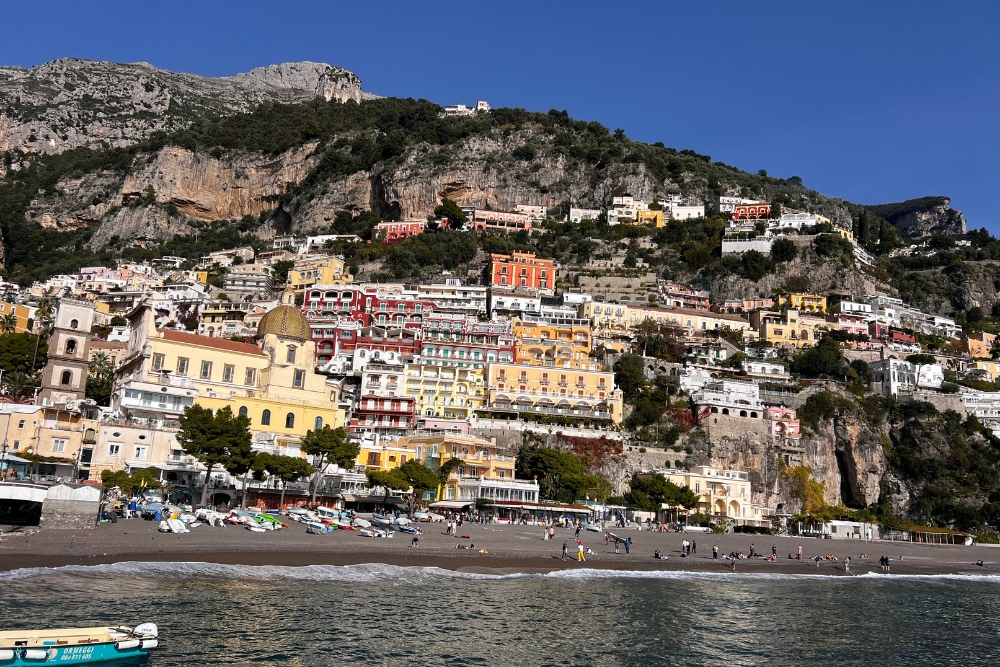
© Gayane Mkhitaryan, Positano
Salerno: The Practical Gateway to the Amalfi Coast
Salerno is a working port city on the southern end of the Amalfi Coast—less famous than Naples, less touristy than Sorrento, and often overlooked entirely by visitors rushing toward the coastal towns. It’s a real Italian city with a medieval old town, a long waterfront promenade, and excellent transport connections. Most importantly, it’s the southern gateway to the Amalfi Coast via the SITA bus, offering an alternative route that avoids the crowded Circumvesuviana train.
Why you should consider it: You probably won’t visit Salerno as a destination, but you should absolutely know about it as a strategic transport hub. The train from Naples to Salerno is modern, comfortable, and actually pleasant (unlike the Circumvesuviana). From Salerno, SITA buses run along the Amalfi Coast, stopping in Amalfi, Ravello, and eventually Positano—often with more space and better schedules than buses from Sorrento.
How to Get from Naples
- Best option: Trenitalia regional or high-speed train from Naples Centrale
- Timing: 40-75 minutes depending on train type
- Cost: €5-15 (regional trains €5-8, faster trains €10-15)
- Book tickets: At station or online Trenitalia, Omio
Trains run frequently (every 20-30 minutes) from Naples Centrale station. Take ANY train heading toward Salerno—some are local regional trains (slower, cheaper), some are faster Intercity trains. Both work fine.
Capri: The Island That Lives Up to the Hype (Barely)
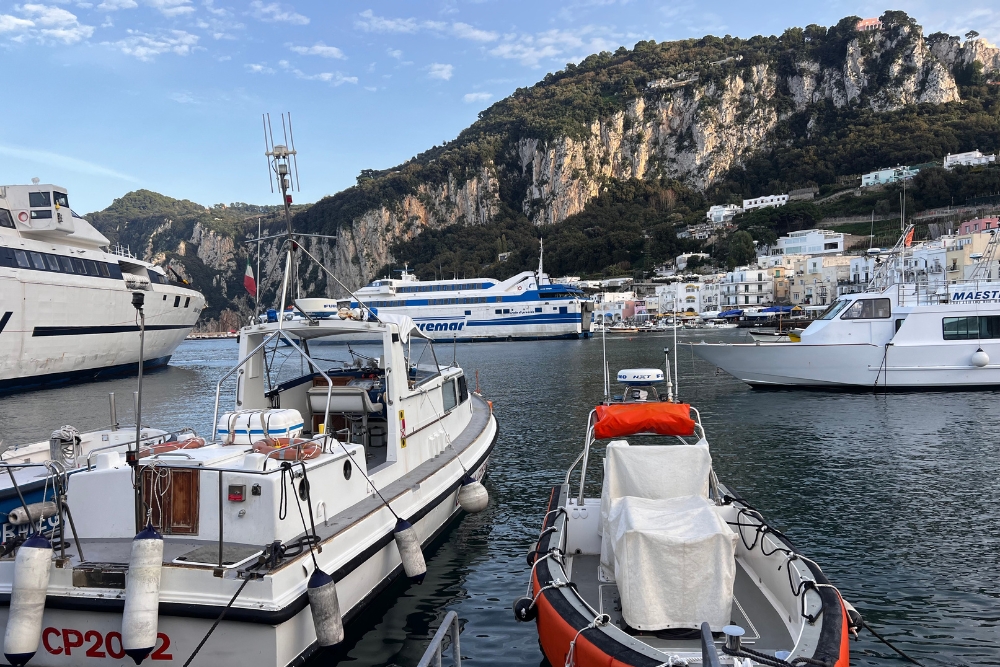
Capri is a small island in the Bay of Naples famous for its dramatic cliffs, the Faraglioni rock formations, luxury boutiques, and the Blue Grotto sea cave. It’s been a retreat for Roman emperors, Russian revolutionaries, and modern jet-setters. The island has two main areas: Capri town (the main hub) and Anacapri (the quieter, higher area), connected by bus.
Why you should consider visiting: This is the iconic Bay of Naples experience. The views genuinely live up to photos; the island is compact enough to see in a day, and despite being touristy, it maintains a certain polished beauty. If you only have time for one island day trip from Naples, this is the one that delivers the classic experience.
How to Get from Naples
- Best option: Hydrofoil from Molo Beverello port
- Timing: 50 minutes
- Cost: €20-25 each way (€40-50 return)
- Ferry companies: Caremar, SNAV, and NLG—all use the same port, similar prices
- Book online: Direct Ferries, Caremar, SNAV
Ferries depart frequently (every 30-60 minutes in peak season, less frequently in winter). Buy tickets at the port or book online—I bought at the port 30 minutes before departure with no issues in November.
Pompeii: The Day Trip That Justified the Whole Trip
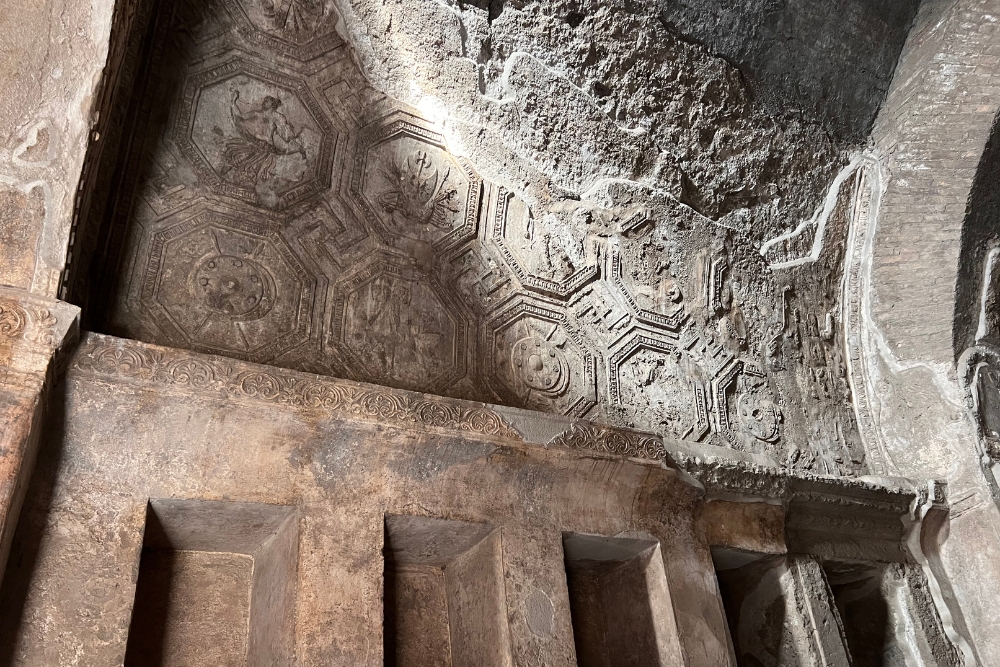
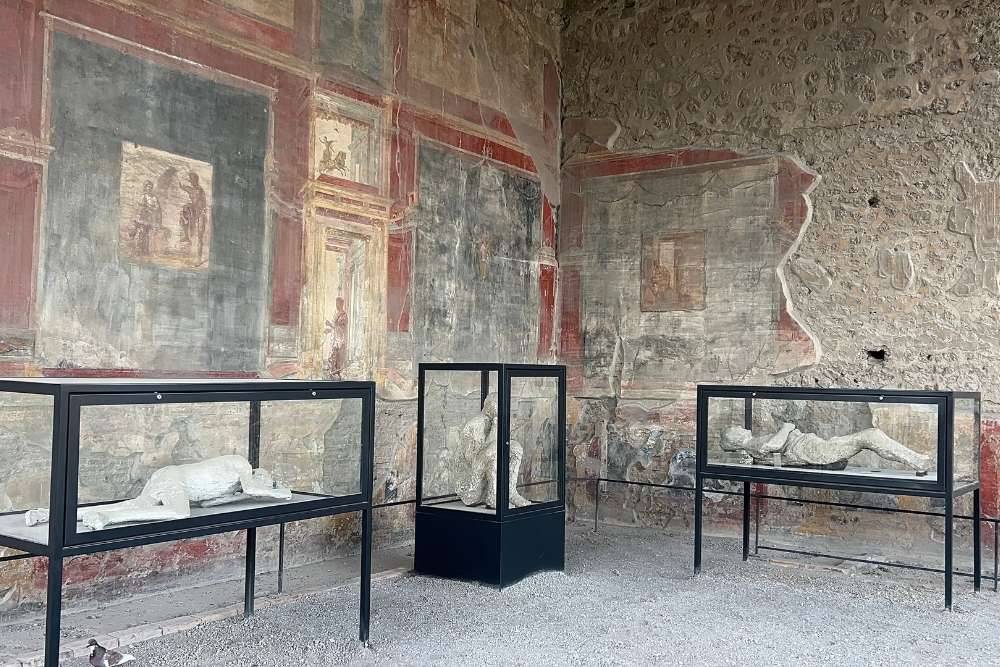
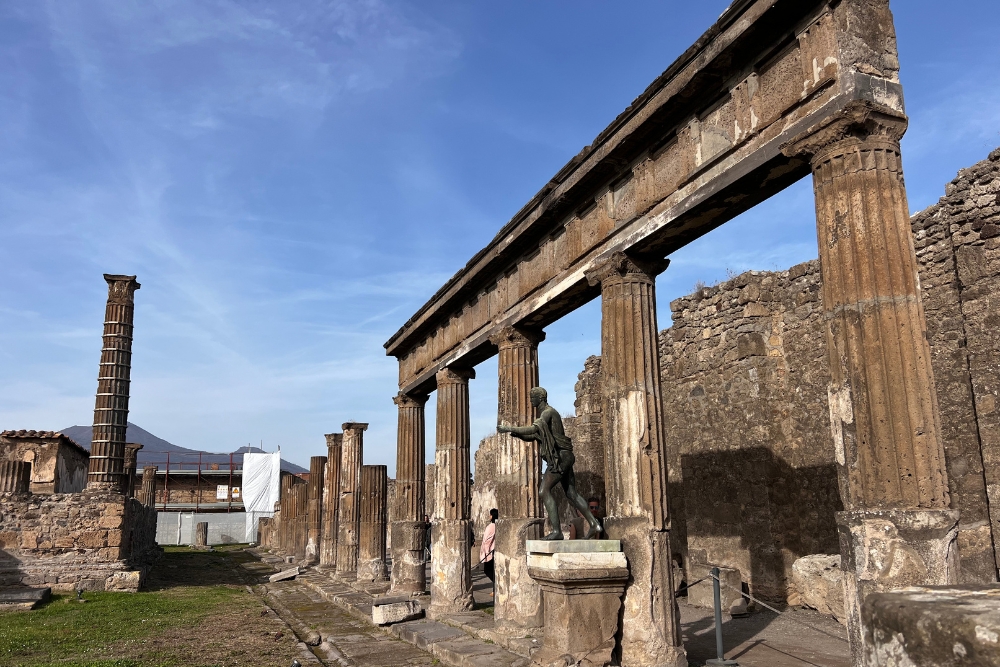
Pompeii is an ancient Roman city buried by Mount Vesuvius’ eruption in AD 79 and rediscovered in the 18th century. It’s the best-preserved Roman city in the world—streets, homes, shops, theaters, brothels, even bakeries with bread still in the ovens, all frozen exactly as they were 2,000 years ago. The site covers 110 acres, with about two-thirds excavated and open to visitors.
Why you should consider visiting: This isn’t just another pile of old stones. Pompeii lets you walk through an actual Roman city, see graffiti on walls, read election campaign slogans, and understand exactly how people lived. It’s the most powerful historical site I’ve ever visited—the moment you realize you’re standing in someone’s kitchen, looking at their preserved food, understanding their daily life, it becomes time travel.
How to Get from Naples
- Best option: Circumvesuviana train from Naples Garibaldi
- Timing: 35-40 minutes (but the trains are overcrowded)
- Cost: €3.60 each way
- Alternative: Organized tour from Naples (€60-90) includes transport, guide, skip-the-line entry: GetYourGuide Pompeii tours, Viator Pompeii trips
- Book train tickets: At the station (easy) or online at Trenitalia
Take the train to Pompei Scavi-Villa dei Misteri station (note: “Pompei” is the modern town, “Pompeii” is the ancient site, and yes, the spelling matters). Exit the station, walk 2 minutes to the Porta Marina entrance.
Trains run approximately every 30 minutes starting around 6 AM. Take the 7:45 AM or 8:15 AM train to arrive at the site when it opens at 9 AM—this is crucial for beating crowds and the heat.
Important: The Circumvesuviana is notorious for pickpockets. Keep bags in front, phones in front pockets, and valuables secured. I watched someone’s bag get unzipped during my ride.
Sorrento: The Gateway I Passed Through (Twice)
Sorrento is a clifftop town on the Sorrentine Peninsula, famous for limoncello production, lemon groves, and as a base for access to the Amalfi Coast. It’s a pleasant, tourist-friendly town with good infrastructure, English-speaking staff, and proximity to both coast and islands. The historic center has narrow streets, a central square (Piazza Tasso), and views across to Vesuvius.
Why you should consider visiting: Honestly? You shouldn’t, unless you’re staying overnight as a base for exploring the region. Sorrento’s main value is convenience and infrastructure—it’s where package tourists stay to day-trip everywhere else. The town itself is fine, but not memorable compared to other destinations in this guide.
How to Get from Naples
- Best option: Circumvesuviana train from Naples Garibaldi
- Timing: 60-75 minutes
- Cost: €3.60 each way
- Alternative: Private transfer (€80-120) if you’re going to the Amalfi Coast and want to skip the train
Direct trains run frequently (every 30-60 minutes). Same warnings apply as Pompeii train—watch for pickpockets, expect crowds, no air conditioning.
Herculaneum: The Ruins That Might Be Better Than Pompeii
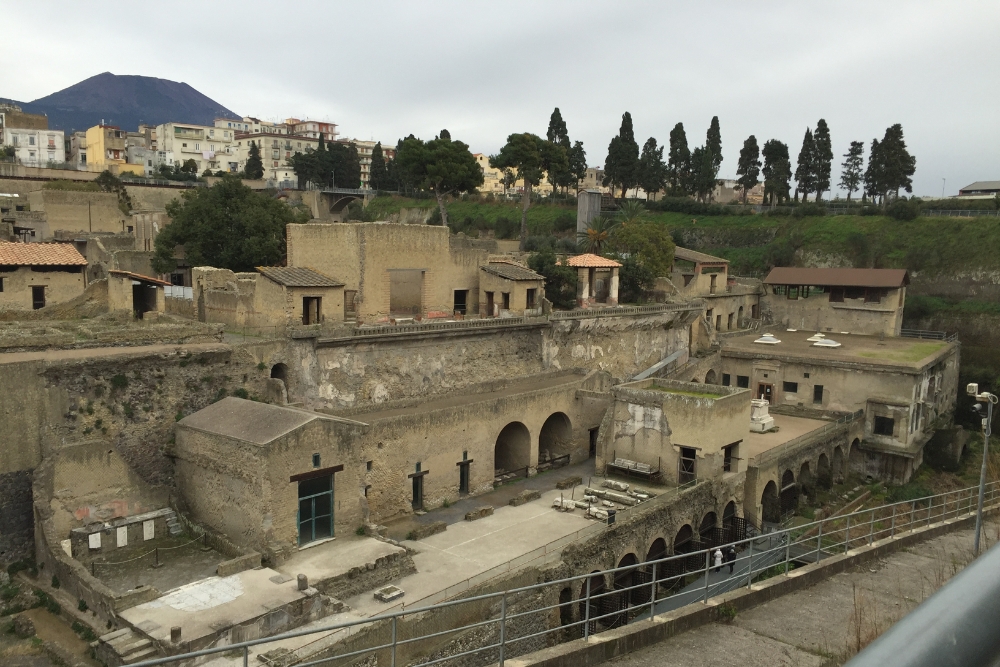
Herculaneum is a smaller ancient Roman town also destroyed by Mount Vesuvius in AD 79, but buried by volcanic mud rather than ash. This mud flow preserved organic materials—wooden structures, food, fabric, even an intact library—that didn’t survive in Pompeii. The site is one-quarter the size of Pompeii, far less crowded, and more manageable for visitors with limited time or energy.
Why you should consider visiting: If Pompeii overwhelms you with size, or if you want better-preserved details in a more intimate setting, Herculaneum delivers. The multi-story buildings still stand (Pompeii’s are mostly ground level), you can see wooden beams and upper floors, and the smaller scale means you actually process what you’re seeing instead of wandering exhausted through endless ruins.
How to Get from Naples
- Best option: Circumvesuviana train from Naples Garibaldi
- Timing: 20 minutes
- Cost: €2.80 each way
- Alternative: Combine with Vesuvius (they’re close) via tour: GetYourGuide Herculaneum tours, or take a taxi from the train station to the Vesuvius base (€20-30)
Take the train toward Sorrento, get off at Ercolano Scavi station (not Ercolano Portico—different station). Exit the station, walk 10 minutes downhill following signs to the archaeological site.
Trains run every 20-30 minutes. Same Circumvesuviana warnings apply—pickpockets, crowds, watch belongings.
© Wikipedia
Mount Vesuvius: The Volcano That’s Still Smoking
Mount Vesuvius is an active volcano that destroyed Pompeii and Herculaneum in AD 79 and last erupted in 1944. It’s one of the most dangerous volcanoes in the world, given that millions of people live nearby. Visitors hike to the crater rim (1,281m elevation) for views into the still-active crater (with steam vents) and panoramic vistas across the Bay of Naples.
Why you should consider visiting: Where else can you peer into an active volcano crater that destroyed cities? The hike is challenging but short; on clear days, the views are spectacular, and standing on top of Vesuvius, looking down at Pompeii below, creates a powerful connection to the history you’ve learned.
How to Get from Naples: Challenging logistics—no easy public transport:
- Option 1: Circumvesuviana to Ercolano Scavi station (20 min, €2.80) + taxi to Vesuvius parking area (€20-30 each way) + hike (30-40 min up)
- Option 2: Circumvesuviana to Pompeii station + EAV bus (seasonal, limited schedule) to parking area
- Option 3 (EASIEST): Book an organized tour from Naples that includes transport + entry: €50-70 per person, or €90-130 combined with Pompeii: GetYourGuide Vesuvius tours, Viator Vesuvius trips
- Entry at crater: €10 park entrance (pay at top)
- Total timing from Naples: 3-4 hours, including transport, hike, and crater time

© Canva
Procida: The Island Tourists Skip (And Locals Love)
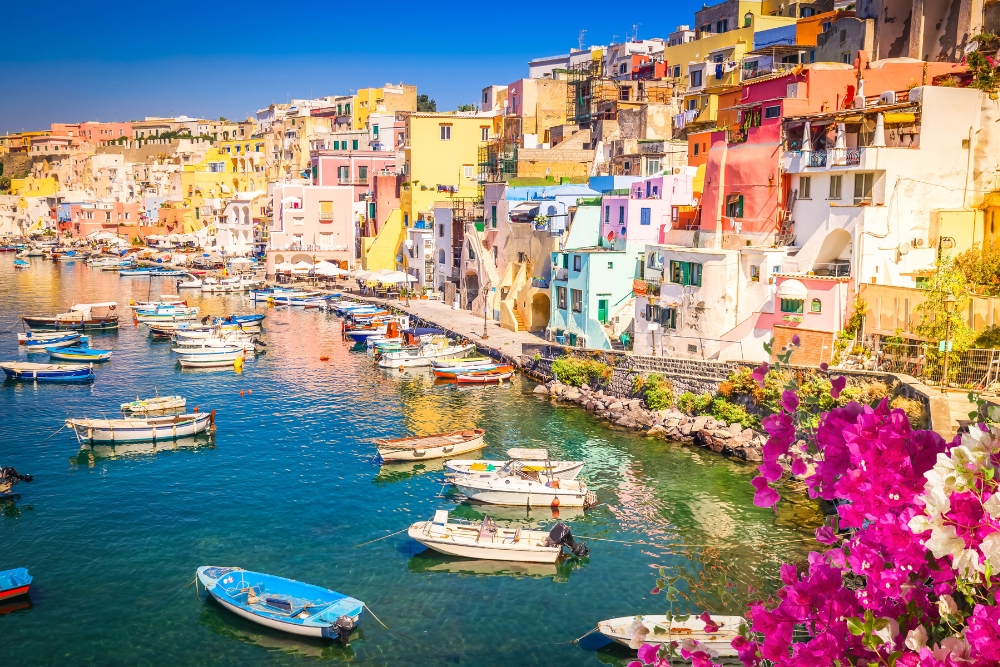
Procida is the smallest and least developed of the Bay of Naples islands—just 4 square kilometers of pastel fishing villages, quiet beaches, and narrow streets. It was the filming location for “The Talented Mr. Ripley” and “Il Postino,” but remains remarkably untouched by tourism compared to Capri. The island has no luxury boutiques, no cruise ship crowds, just working fishermen, authentic trattorias, and locals going about daily life.
Why you should consider visiting: This is what Mediterranean islands feel like without tourism infrastructure—raw, real, beautiful in an unpolished way. If Capri felt too manufactured, if you want to experience island life rather than just photograph it, Procida delivers authenticity that’s increasingly rare.
How to Get from Naples
- Best option: Ferry/hydrofoil from Molo Beverello port
- Timing: 40 minutes (hydrofoil) or 60 minutes (slow ferry)
- Cost: €15-20 each way depending on boat type
- Getting around island: Walking is doable (island is small), or rent scooter/bike at port. Public buses connect main areas.
Ferries depart regularly but less frequently than Capri—check schedules ahead, especially off-season: Direct Ferries, Caremar
© Canva
Ischia: The Spa Island
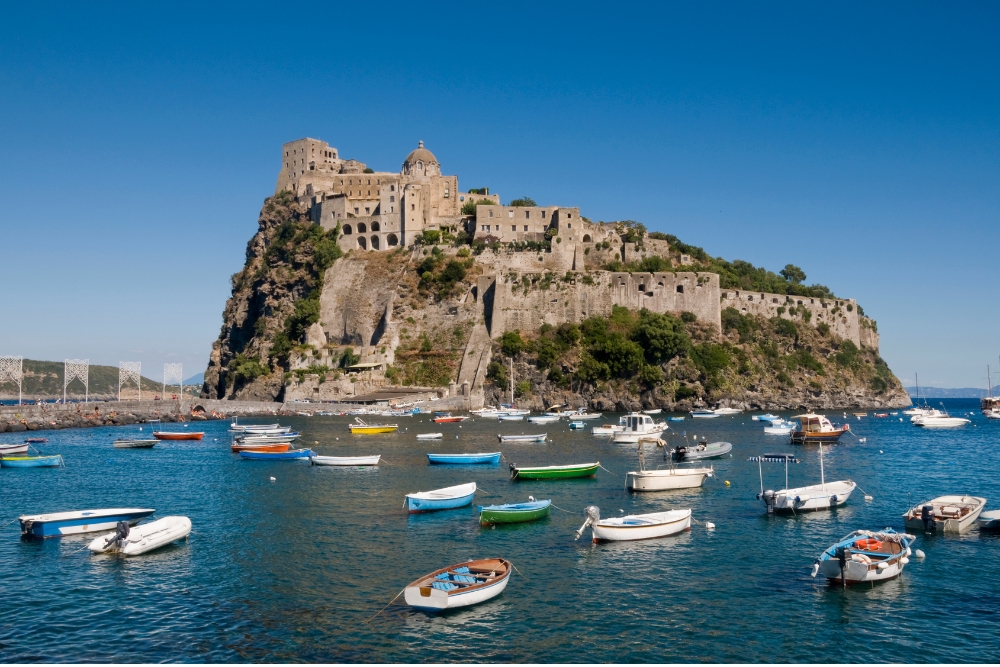
Ischia is the largest Bay of Naples island (46 square kilometers), famous for natural thermal springs, beach resorts, the Aragonese Castle, and being less international-touristy than Capri. The island has several distinct areas: Ischia Porto (main town), Ischia Ponte (old quarter), Forio (western beaches), and Sant’Angelo (prettiest village). It’s where Italians come for spa weekends and beach holidays.
Why you should consider visiting: If you want beaches and thermal experiences rather than dramatic sightseeing, Ischia delivers better than any other island. The thermal parks are genuinely beautiful (not just functional spas), beaches are better than Capri’s, and the island feels more like a vacation than a day trip.
How to Get from Naples
- Best option: Ferry/hydrofoil from Molo Beverello or Porta di Massa ports
- Timing: 50 minutes (hydrofoil) to 90 minutes (slow ferry)
- Cost: €20-30 each way depending on boat type and port
- Book tickets: Direct Ferries, Medmar, Caremar
- Getting around island: Island is large—rent scooter, use buses (decent network), or taxis. Walking between areas isn’t realistic.
Multiple ferry companies serve Ischia with frequent departures. Check which Ischia port your ferry uses—some go to Ischia Porto, some to Casamicciola, some to Forio.
© Canva
Useful Tips Before Planning Your Trips
- Weather and Seasonal Reality: November was nearly perfect for these day trips—warm but not extreme, manageable crowds, calm seas for ferries. July-August is brutal (40°C+ at Pompeii, packed everywhere, expensive), November-March reduces options (some coastal sites close, ferries run limited schedules, weather unpredictable).
- Monday Closures and Timing: Many archaeological sites close on Mondays or have reduced hours on certain days. Check before planning. Pompeii and Herculaneum are open daily, but some smaller sites aren’t.
- The Circumvesuviana Pickpocket Reality: I mentioned this earlier, but it bears repeating: the Circumvesuviana trains to Pompeii, Sorrento, and Herculaneum are notorious for pickpockets. Keep your bag in front of you, don’t use your phone near doors, watch for distractions, and keep valuables in your front pockets or a money belt.
I saw two attempted thefts in 90 minutes of riding these trains. It’s real, it’s common, and it’s preventable if you’re aware.
Booking Strategy: Tour vs. Independent
I did everything independently except hiring a Pompeii guide on-site. This saved money but added stress (figuring out buses, timing connections, navigating Circumvesuviana chaos).
Book tours when:
- You’re on a cruise with limited time
- You want to combine multiple sites (Pompeii + Vesuvius, Amalfi Coast multi-town)
- You have mobility concerns (tours handle logistics)
- You value convenience over cost
Go independent when:
- You’re flexible with timing
- You’re comfortable with some chaos
- You want to save money
- You like figuring things out as you go
Viator day trips from Naples and GetYourGuide offerings are comprehensive—browse options before deciding: GetYourGuide Naples day trips, Viator Naples tours
Language Needs
Naples and major day-trip destinations have reasonable English-speaking staff in tourist areas (Pompeii, Capri, Positano). But SITA buses, Circumvesuviana trains, and smaller towns—expect Italian only. Download Google Translate offline and learn basic phrases (biglietto = ticket, quanto costa = how much, dov’è = where is).
What to Pack for Day Trips
- Water bottle: Fill before leaving, refill at fountains (Italian tap water is safe)
- Sunscreen + hat: Italian sun is strong, sites like Pompeii are shadeless
- Good walking shoes: Cobblestones, archaeological sites, coastal stairs—sandals aren’t enough
- Layers: Ferries can be windy, some sites get chilly
- Day pack: For water, sunscreen, layers, snacks
- Cash: Small towns and transport often don’t take cards
- Portable charger: For maps, photos, translation apps
FAQs on Naples Day Trips
What's the best day trip from Naples?
Depends entirely on your interests:
- History lovers: Pompeii (add Herculaneum if you have time)
- Scenery seekers: Amalfi Coast, specifically Positano
- Island fans: Capri for famous views, Procida for authenticity
- Beach/spa enthusiasts: Ischia
- Crowd avoiders: Paestum, Pozzuoli, Procida
My personal ranking: Pompeii first (it’s that good), then Positano/Amalfi Coast, then Capri.
Can you do Pompeii and the Amalfi Coast in one day?
Technically yes, practically no. The logistics would be: train to Pompeii (35 min) + 3-4 hours exploring + train to Sorrento (30 min) + bus to Positano (50 min) + brief time there + reverse journey = an exhausting 12+ hour day with minimal time at each place.
If you only have one day for both, choose one and do it properly. If you have two days, do them separately.
How do I get to Pompeii from Naples?
Circumvesuviana train from Naples Garibaldi (also called Napoli Porta Nolana) to Pompei Scavi-Villa dei Misteri station (35-40 minutes, €3.60). Trains run every 30 minutes approximately. Exit the station, walk 2 minutes to the Porta Marina entrance.
Buy tickets at the station (machines or ticket office) or online at Trenitalia. Keep your valuables secure on the train—pickpockets target this route.
Is Capri or Positano better for a day trip?
Different experiences:
- Capri: Island, requires ferry, more contained, famous viewpoints, very touristy, easier logistics
- Positano: Coastal town, requires train + bus, part of larger Coast area, vertical town with stairs, expensive, more challenging logistics
For first-time visitors with one choice: Capri is easier and hits more “must-see” boxes. For people who’ve been before or want dramatic coastal beauty: Positano.
I’d choose Positano now, but Capri was the right choice for my first visit.
What's the cheapest day trip from Naples?
- Pozzuoli/Campi Flegrei: €1.60 metro + €7-10 entries = under €20 total
- Herculaneum: €2.80 train + €13 entry = under €20 total
- Pompeii: €3.60 train + €18 entry = under €25 total
Most expensive: Capri (€ 23,5 + ferry alone) and the Amalfi Coast (€ 100 transport + expensive meals around €70).
Do I need to book day trips from Naples in advance?
Advance booking essential:
- Pompeii in peak season (April-October) to skip ticket office lines
- Ferries to Capri/Ischia/Procida in summer weekends
- Tours that include transport (they sell out)
- High-speed trains to Rome
Fine to book same-day:
- Circumvesuviana trains to Pompeii/Sorrento/Herculaneum
- SITA buses on the Amalfi Coast (though you might wait for space)
- Regional trains to Paestum/Caserta
- Entry to most smaller sites
I booked nothing in advance except Capri ferry tickets (bought the morning of at the port), and it worked fine in November. July-August would require more planning.
Can you visit Mount Vesuvius and Pompeii in one day?
Yes, and it’s a popular combination. The logistics: visit Pompeii in the morning (3-4 hours), take a bus/taxi to the base of Vesuvius (30-40 minutes), hike the crater (1.5 hours, including rim time), and return to Naples.
Book a combination tour for easiest logistics: GetYourGuide Pompeii + Vesuvius, Viator combined tours
Independent option: take the Circumvesuviana to Ercolano Scavi, then take a bus or taxi to the base of Vesuvius (€15-25).
Be realistic about the physical demands—Pompeii requires 5-10km of walking, and Vesuvius is a steep uphill hike. That’s a lot for one day in the heat.
What's the best time to visit Pompeii?
- Time of day: 9 AM when it opens (before tour bus crowds) or after 2 PM (when tours leave). Avoid 11 AM-1 PM peak crowds.
- Time of year: April-May or September-October. Summer (June-August) is dangerously hot with no shade—I saw people getting sick from heat. Winter is quieter but some sections may be muddy or closed.
- Day of week: Weekdays are slightly less crowded than weekends, though Pompeii is busy every day.
How much does it cost for day trips from Naples?
My actual costs:
- Amalfi Coast: €200 (ferries + lunch)
- Capri: €100 (ferries + meals + gelato)
- Pompeii: €49 (train + entry ticket + water)
Budget range: €20-30 for closest sites (Herculaneum, Pozzuoli), €50-70 for train destinations (Pompeii, Paestum), €90-120 for islands/coast (Capri, Amalfi).
Add tours and prices increase by €30-80, depending on tour type. And if you decide to stay overnight, you should add the hotel price as well, which is at least €100 per night.
Is the Amalfi Coast worth a day trip from Naples?
Yes, the best day trips from Naples to the Amalfi Coast are rushed but beautiful. You’ll spend significant time in transit (2.5 hours each way to Positano), everything costs more than on the mainland, and you won’t have time to visit multiple towns.
- Worth it if: You accept that day trips are always a bit rushed, you’re okay with tourist crowds, and you want those specific views.
- Skip if: You have the budget/time for an overnight stay on the Coast (infinitely better), you’re on a tight budget (it’s expensive), you hate crowds (Positano is mobbed May-September).
- Alternative: Day ferry trips from Naples to destinations on the Amalfi Coast let you arrive directly at Positano/Amalfi from Naples port seasonally. Slightly more expensive but skips the Sorrento-bus connection: check Direct Ferries for schedules.
Are there guided day-trip tours available from Naples?
Extensively. Major booking platforms offer hundreds of options:
- GetYourGuide: Excellent selection, clear descriptions, good cancellation policies: GetYourGuide Naples day trips
- Viator: Similar to GetYourGuide, often slightly cheaper, wide range: Viator day trips from Naples
- Headout: Focuses on skip-the-line tickets and popular sites: Headout Naples tours
- Tiqets: Good for entry tickets rather than full tours: Tiqets Naples
Tours range from €50 (basic Pompeii group tour) to €200+ (private Amalfi Coast with driver). Book at least 2-3 days ahead in peak season.
Which German or international destinations are close to Naples?
Naples isn’t particularly close to Germany, but international one-day trips from Naples are possible:
- Rome: 70 minutes by train (but needs a full day, see earlier section)
- Sicily: 5-9 hours by ferry or 1 hour by flight (too far for day trips)
- Bari: 2.5 hours by train (possible day trip to a different Italian region)
For non-Italian destinations, you’re looking at flights—Naples has connections to most European cities, but there’s no same-day return.
What are easy day trips from Naples for families or limited mobility?
Easiest logistics:
- Herculaneum: Short train ride, smaller site, more manageable than Pompeii
- Caserta Palace: Simple train, flat palace interior (though gardens require walking)
- Capri: Ferry is easy, but the island has many stairs (chairlift helps)
Avoid with mobility issues:
- Pompeii (massive site, uneven ancient paving)
- Vesuvius (steep hike, loose gravel)
- Positano (relentless stairs)
- Amalfi Coast SITA bus (cramped, no facilities, long journey)
What are the best day boat trips from Naples?
Ferry day trips from Naples work for:
- Capri: 50-minute hydrofoil, most frequent connections
- Ischia: 50-90 minutes depending on ferry type
- Procida: 40-60 minutes
- Positano/Amalfi: Seasonal direct ferries (April-October), beautiful but more expensive than train-bus combo
Book ferry tickets: Direct Ferries, Caremar, NLG
Day boat trips from Naples to the Amalfi Coast are my preferred method over the train-bus combination—you arrive refreshed, see the Coast from the water, and skip the stressful SITA bus. Just check seasonal schedules (winter service is minimal).
Final Thoughts: When Not Loving Naples Is Okay
I started this article by admitting I didn’t love Naples. A few days later, having explored Pompeii’s frozen city, navigated Positano’s impossible stairs, taken that terrifying/beautiful SITA bus, and ferried to Capri’s blue waters, I can say this: Sometimes a place’s greatest value is in where it lets you go.
Naples gave me access to some of the most incredible experiences in Italy—ancient cities preserved in ash, coastal towns defying gravity, and islands where Roman emperors vacationed. I wouldn’t have any of those memories without Naples as my base.
So if you arrive and feel overwhelmed by the chaos, if the noise and grit aren’t charming to you, if you find yourself planning escape routes before you’ve unpacked—that’s completely fine. Use these day trips. See Pompeii at sunrise, ride that ridiculous coastal bus, climb to Capri’s highest point, and hire that guide who brings ancient history to life.
Some travel destinations are the journey itself. Some are the doorway to the journey. Naples was my doorway, and that was enough.
References:
- Official Pompeii Archaeological Site
- Herculaneum Official Site
- Trenitalia – Train schedules and booking
- Italo – High-speed trains
- SITA Sud – Amalfi Coast buses
- Direct Ferries – Ferry schedules and booking
- Reggia di Caserta – Royal Palace official site
- Paestum Archaeological Site
- GetYourGuide – Tours and activities
- Viator – Tours and experiences
- Headout – Skip-the-line tickets and tours
- Tiqets – Museum and site tickets
