
Things to Do, See, and Experience in Nukus, Uzbekistan
I woke up to rain in Nukus, and honestly, I was relieved. After days of intense desert sun on the Aral Sea tour, the gray sky felt like permission to slow down. This worked out perfectly because Nukus isn’t really an outdoor exploration kind of city anyway—it’s a place where the real discoveries happen inside museums and on the facades of Soviet-era buildings.
Nukus exists because the Soviet Union decided it should. There’s no medieval old town, no ancient Silk Road history, no turquoise domes competing with the desert sky. The entire city was planned and built during the Soviet era as the capital of the Karakalpakstan Autonomous Republic, and that Soviet urban planning DNA is visible in every wide boulevard and grid-pattern street.
Most people arrive in Nukus for one reason: it’s the jumping-off point for Aral Sea tours. But dismissing the city itself means missing something surprisingly interesting—world-class Soviet avant-garde art hidden in the middle of nowhere, Soviet mosaics that rival anything in Tashkent, and the chance to see what pure Soviet city design looks like without layers of medieval history complicating things.
Here’s what actually happens when you spend a rainy day (or two) exploring Nukus, and why this unlikely city deserves more than just a transit stop on your Uzbekistan itinerary.
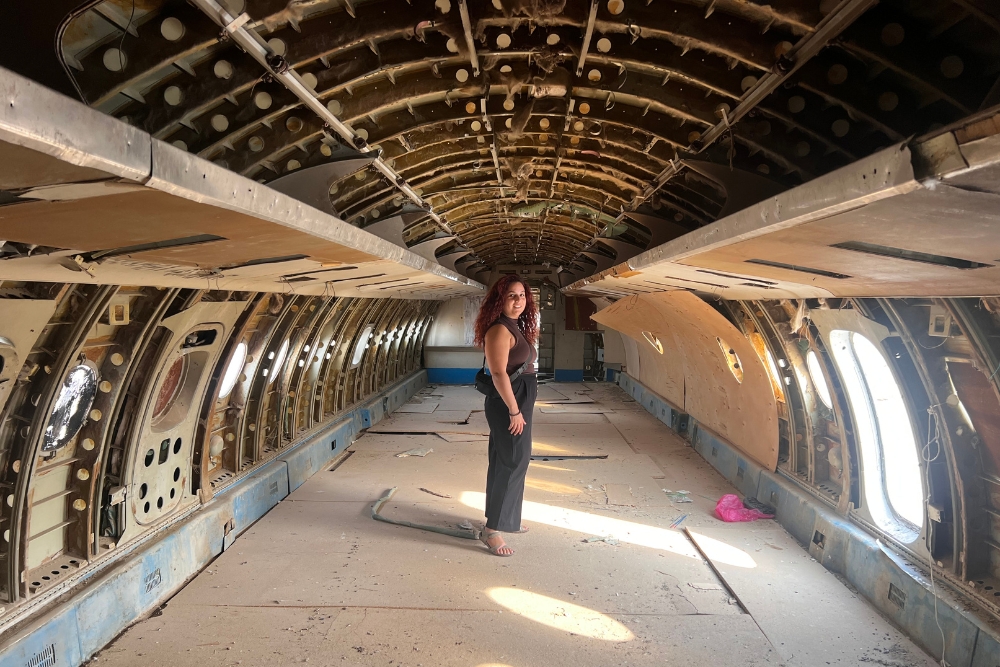
On the drive from Urgench to Nukus, you’ll spot an abandoned Soviet-era aircraft sitting in the desert—a surreal sight that perfectly captures the region’s post-Soviet decay. This derelict plane, visible from the main road, has become an unofficial roadside attraction. It’s a quick photo stop that costs nothing and adds to the collection of Soviet relics scattered across this region. Our taxi driver stopped without us even asking.
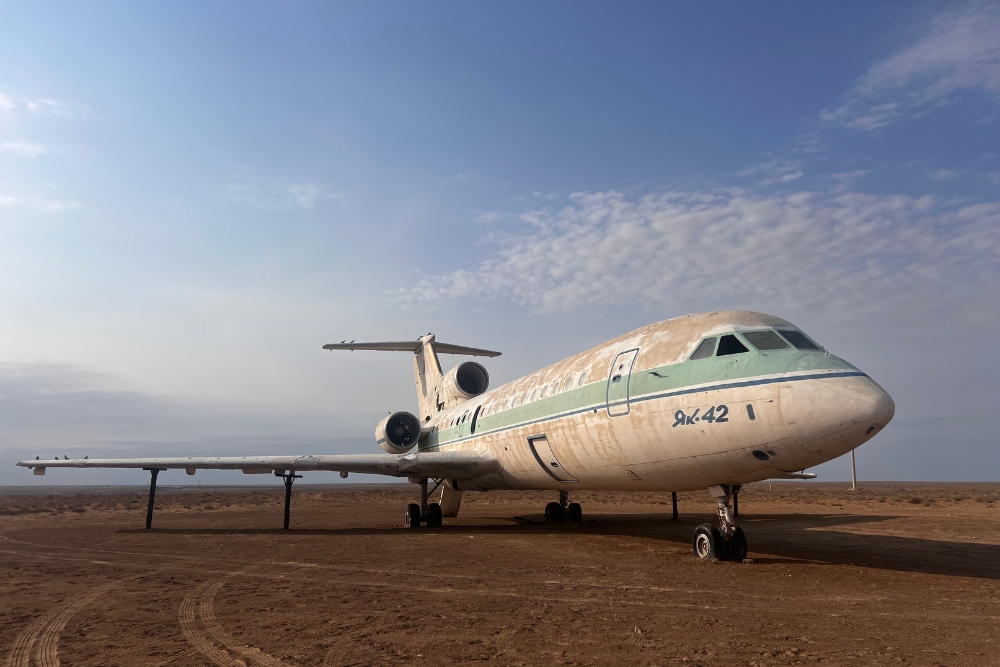
© Gayane Mkhitaryan, Abandoned Soviet Plane Near Nukus
Is Nukus Worth Visiting for Tourists?
Yes, but you need realistic expectations.
Nukus won’t charm you with picturesque old towns or surprise you with hidden alleys leading to centuries-old madrasahs. It’s not beautiful in the traditional sense. But if you’re interested in Soviet Central Asia, world-class art collections in unexpected places, or understanding how the Aral Sea disaster shaped this region, Nukus is absolutely worth your time.
The Savitsky Museum alone justifies the journey—it houses the world’s second-largest collection of Russian avant-garde art, saved from destruction by one determined collector who recognized that remote Nukus was the perfect place to hide forbidden artwork.
Perfect for: Art lovers, Soviet architecture enthusiasts, people doing Aral Sea tours who actually look around during their Nukus stopover, and travelers who find meaning in places shaped by 20th-century history rather than medieval glory.
Must-See Attractions: My Recommendations
Here’s what actually deserves your time in Nukus:
- Savitsky Museum – World-class Russian avant-garde art collection in the middle of the Karakalpak desert, saved from Soviet destruction
- Soviet mosaics – Astronauts, cotton harvests, and Karakalpak cultural themes rendered in ceramic tiles on residential buildings throughout the city
- Karakalpak State Museum – Regional history, archaeology, and ethnography explaining this unique semi-autonomous republic
- Hotel Tashkent panoramic viewpoint – Ask to go upstairs for surprisingly good city views from this Soviet-era hotel
- Two giant flags monument – Impossible-to-miss landmark near the museums
- Lake Kvadrat and Miniature Uzbekistan – Neglected but interesting Soviet-era attempt at a cultural park
- Ajiniyaz statue – Monument to the founder of modern Karakalpak literature
- Music school and university mosaics – Some of the best-preserved Soviet public art in the city
Best Museums and Cultural Sites
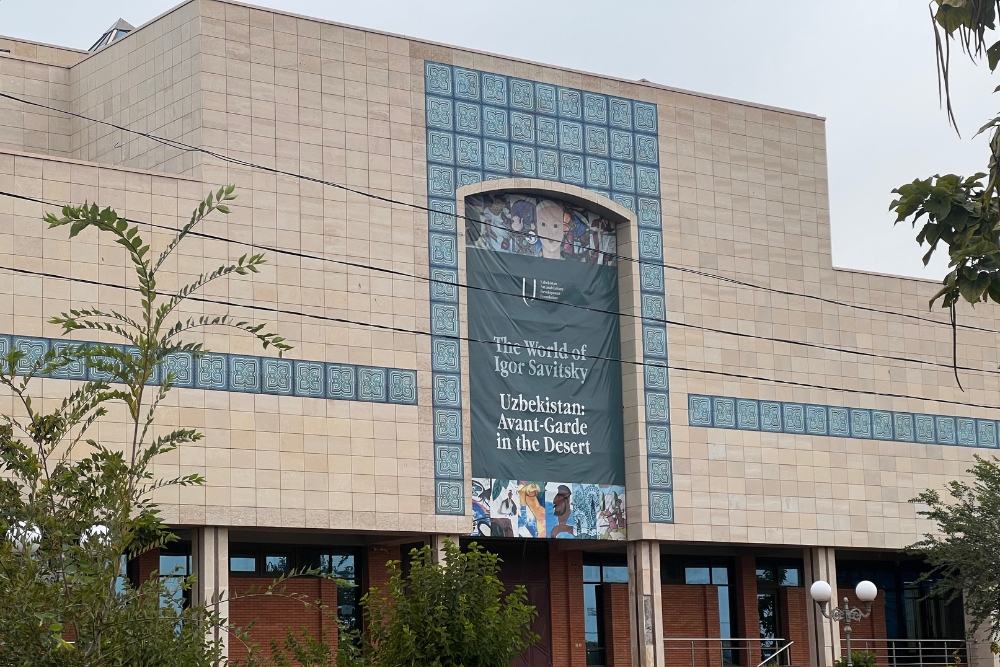
Savitsky Museum (Igor Savitsky Karakalpakstan State Museum of Art)
The rain made this decision easy. I’d been planning to visit the Savitsky Museum anyway, but the weather turned it from “important museum to see” to “perfect rainy day refuge,” and I spent hours getting lost in galleries I hadn’t expected to find in a remote Central Asian city.
Here’s what makes this museum extraordinary: Igor Savitsky, a Russian artist and archaeologist, arrived in Karakalpakstan in 1950 for an archaeological expedition and became obsessed with preserving art that the Soviet authorities wanted destroyed. During the Stalin era, avant-garde art was banned—artists were arrested, imprisoned, exiled, or worse. Their paintings were supposed to be destroyed. Savitsky recognized the artistic and historical importance of these works and spent decades secretly collecting them, bringing them to remote Nukus, where Moscow’s censors would overlook them.
The museum now holds over 82,000 items, including the world’s second-largest collection of Russian avant-garde paintings (only Saint Petersburg’s Russian Museum has more).
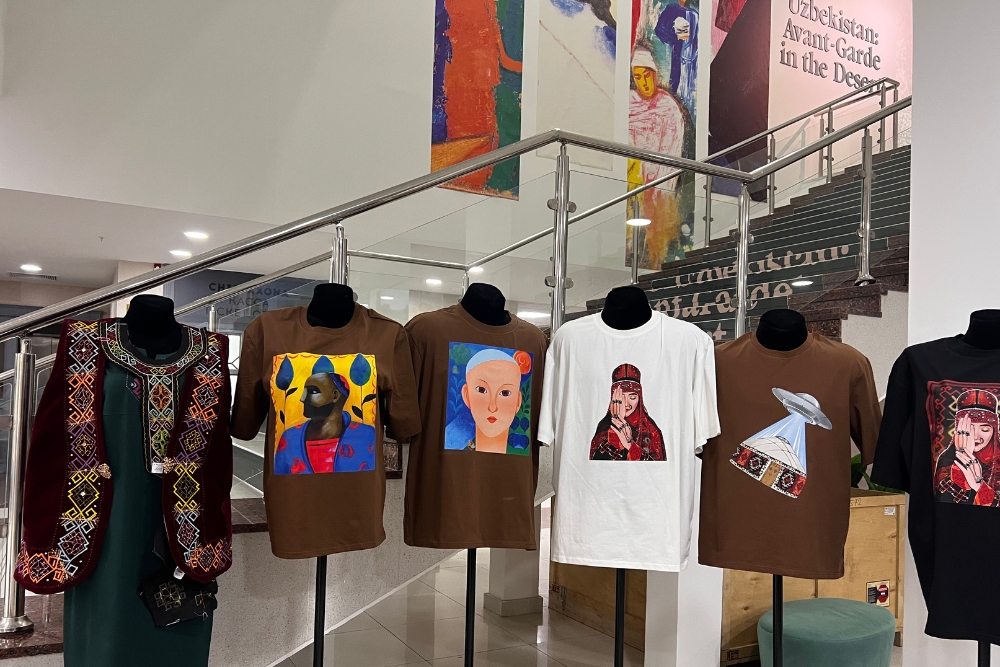
Beyond the avant-garde collection, the museum houses impressive Karakalpak folk art—jewelry, textiles, and traditional yurts with their distinctive nomadic aesthetic.
Practical Information:
- Address: 116, Rashidov Street, Nukus, Karakalpakstan, Uzbekistan
- Website: museum.kr.uz
- Booking: Advance tickets available through GetYourGuide


Karakalpak State Museum of History and Culture
After the emotional intensity of the Savitsky Museum, I walked next door to the Karakalpak State Museum—a more traditional regional museum covering natural history, archaeology, and ethnography. It’s one of Central Asia’s oldest museums, with roots going back to 1929.
What surprised me here was the environmental tragedy documented in the natural history section. There are specimens of animals and birds from the Aral Sea region that are now extinct or critically endangered—physical evidence of what was lost when the sea dried up. The “Last Turan Tiger” exhibit particularly stuck with me. These tigers once roamed from the Altai Mountains to the Black Sea. They were hunted to extinction for their beautiful pelts, with the last one killed in 1949 in the Amu Darya delta. Standing in front of that display after seeing the dried seabed, I felt the weight of human impact on this landscape.
The archaeological section covers ancient Khorezm, and the ethnographic displays showcase traditional Karakalpak culture—the distinctive clothing, jewelry, and nomadic heritage that makes this semi-autonomous republic culturally distinct from the rest of Uzbekistan.
Practical Information:
- Address: Nukus city, S.Kamalov 24
- Website: https://historical-museum.uz/
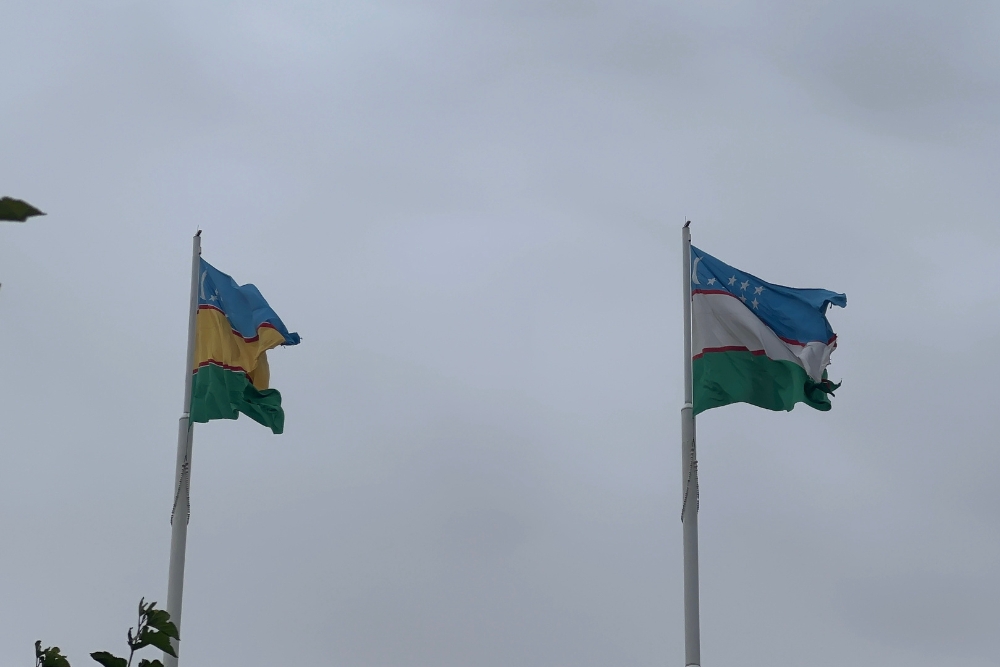
Right outside both museums, you’ll see the two giant flags monument—massive flagpoles with Uzbekistan and Karakalpakstan flags that are impossible to miss. They’re worth a photo, especially on a clear day when the flags actually fly (on my rainy day visit, they hung limp and soggy).


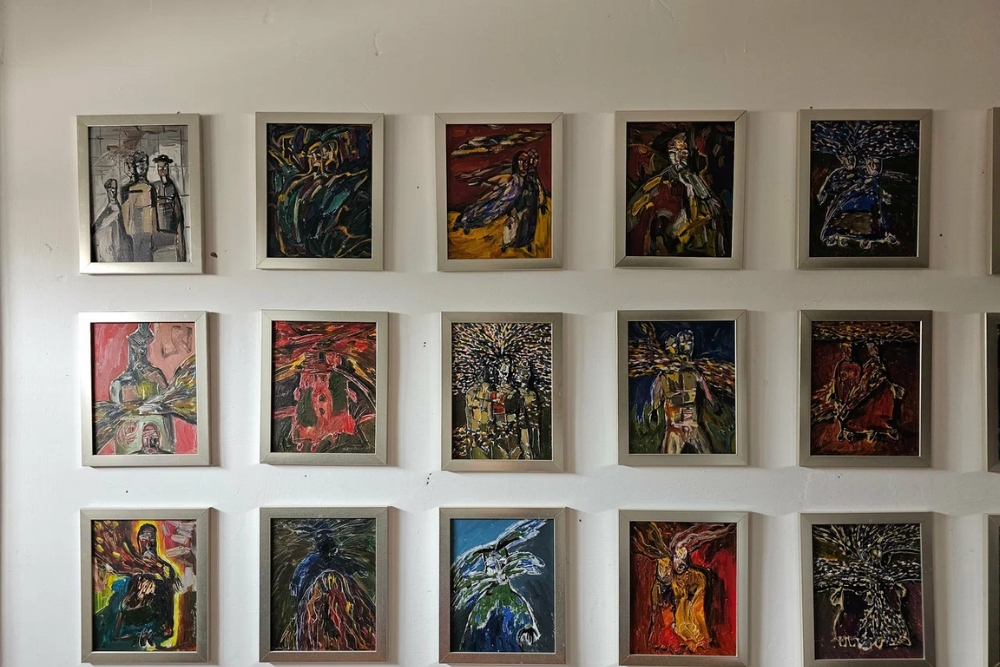
Gallery-Workshop of Serekeyev Bakhtyar
Bazarbay Serekeev’s family preserved his studio as a museum after his death in 2017, adding a modern gallery space showcasing his paintings and distinctive painted gourds. His son Bakhtiyar is now a leading contemporary artist, representing the “Nukus School” internationally. Visiting this working gallery connects you to Igor Savitsky’s living legacy—three generations of Karakalpak artists inspired by his vision. It’s proof that the Savitsky Museum’s impact extends beyond preservation into active artistic creation.
Address: Samanbay Village Residents’ Association, Ulgili Makan Neighbourhood Residents’ Association, Diydar Street, 10
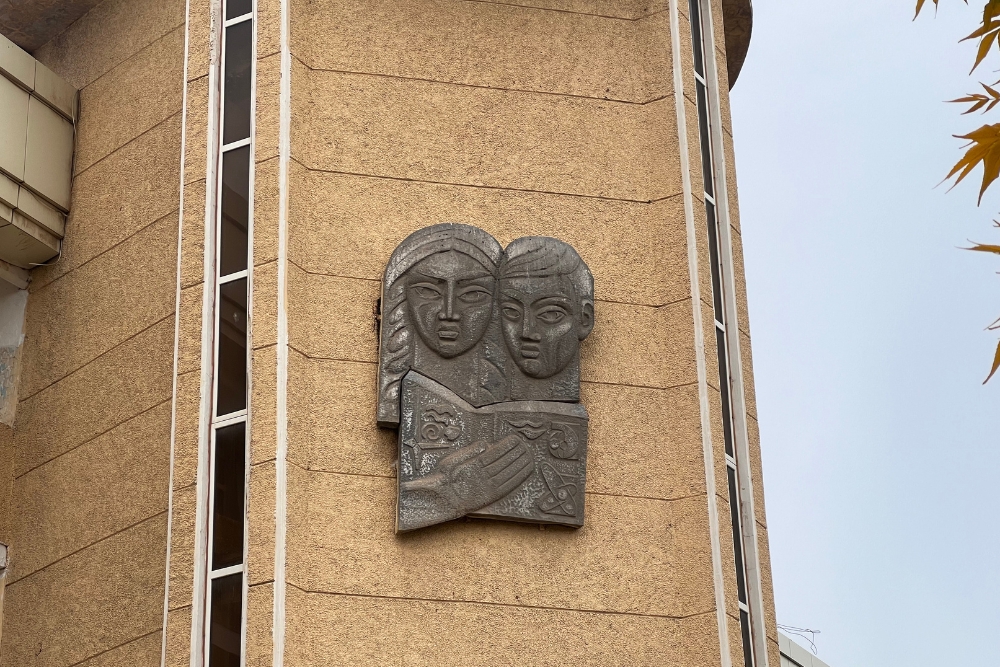
Library Wall Exterior
The city’s main library has an interesting Soviet-era exterior worth photographing if you’re into architectural details. It’s not a formal attraction, just another example of how Soviet design shaped the city’s visual character.
Soviet Architecture and Public Art in Nukus

Soviet Mosaics Throughout the City
The rain didn’t stop us from our Soviet mosaic hunt—it actually made the colors more vibrant. Nukus is a treasure trove for anyone interested in Soviet public art, and I spent the afternoon walking through residential areas with my boyfriend, photographing building facades while locals gave us curious looks.
For the detailed story of Nukus’s Soviet mosaics and dozens of photos, see my full article: Soviet Mosaics & Public Art in Uzbekistan.
What makes Nukus special for Soviet art is that the entire city is Soviet-planned—there’s no medieval core complicating the urban layout. Every building, every street, every public space comes from Soviet design philosophy. The mosaics here celebrate typical Soviet themes: space exploration (astronauts and rockets), agricultural progress (cotton especially), industrial development, and “friendship between nations” imagery that depicts Karakalpak culture through a Soviet lens.
Where I found the best mosaics:
- Music school – Beautiful facade mosaic
- Karakalpakstan University – Impressive educational-themed mosaics
- Residential buildings near Hotel Tashkent – Multiple apartment blocks with cotton harvest themes
- Astronaut mosaic – Celebrating Soviet space achievements
- Various apartment block entrances throughout the city
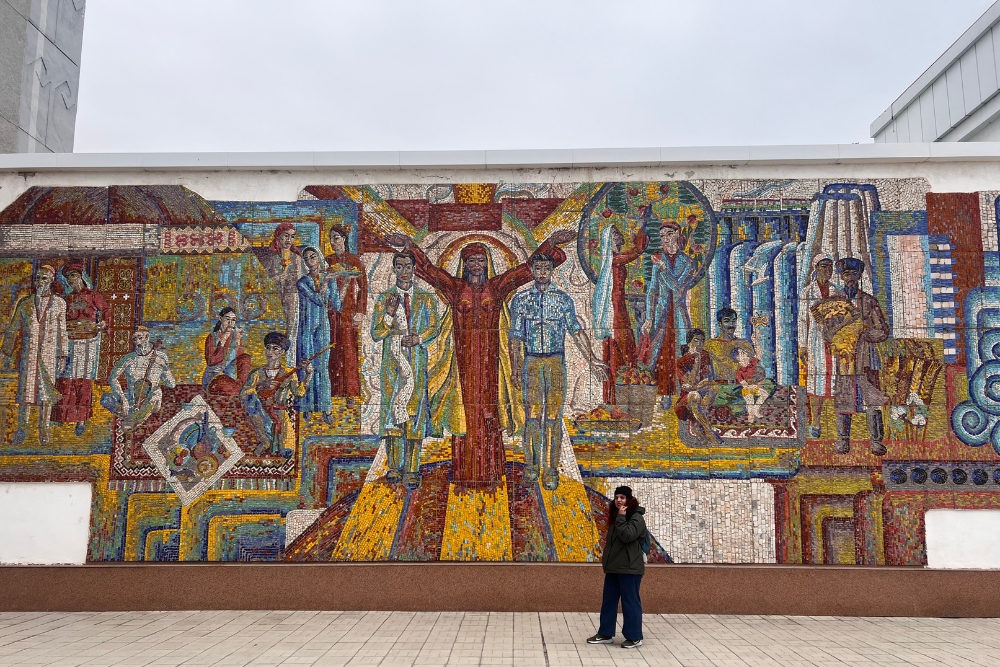
© Gayane Mkhitaryan, Mosaic panel Karakalpakstan near Hotel Tashkent in Nukus
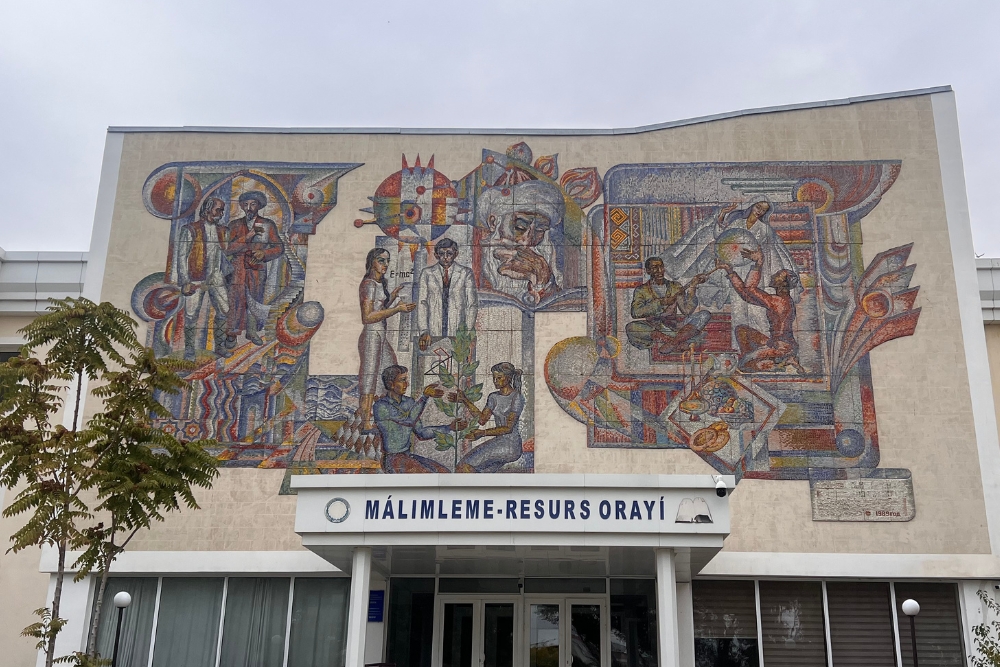
© Gayane Mkhitaryan, Karakalpakstan University Mosaic
Hotel Tashkent Panoramic Viewpoint
This was one of those spontaneous discoveries that made the day memorable. Hotel Tashkent is a classic Soviet-era hotel—functional, slightly dated, but with character. After photographing mosaics near the Karakalpak people mosaic on the hotel’s exterior, we got curious about the views from upstairs.
We walked into the lobby and politely asked if we could go up to the higher floors to see the city. The staff looked slightly confused but didn’t say no. From the upper floors, you get a surprisingly good panoramic view of Nukus—the wide Soviet boulevards, the grid system perfectly visible, residential blocks stretching toward the desert horizon, and the museums below.


Lake Kvadrat and Miniature Uzbekistan
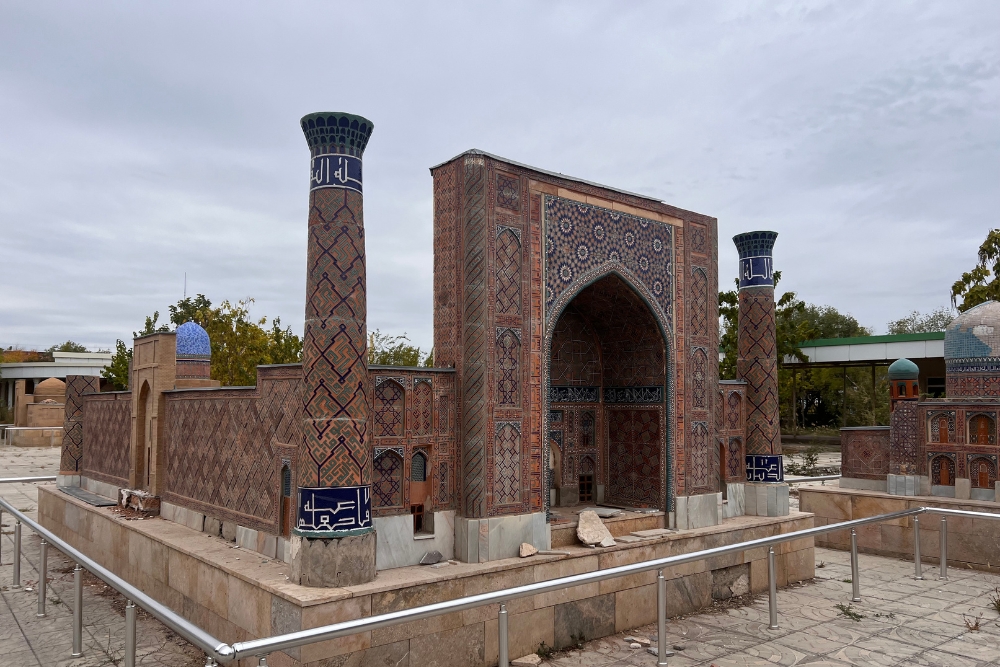
I had low expectations for this, and they were met. Lake Kvadrat is a Soviet-era artificial lake on the city’s edge, and next to it is what was once “Miniature Uzbekistan”—a cultural park featuring small replicas of famous Uzbek monuments.
When I visited, it was in horrible condition. The miniatures were neglected, with paint peeling, some structures damaged, and pieces missing entirely. The lake itself was pleasant enough; locals usually walk around it for exercise, but the Miniature Uzbekistan concept had clearly not survived into the post-Soviet era with adequate funding or maintenance.
Is it worth visiting? Only if you’re genuinely curious about failed Soviet-era tourism projects or need a walk outside the city center. The derelict state of the park tells its own story about what happens when ambitious cultural projects lose their funding and purpose.
Amu Darya River Boulevard/Parks
The Amu Darya runs right through Nukus, the same river that once fed the Aral Sea before Soviet irrigation diverted its waters. A riverside boulevard with parks offers pleasant walking paths where locals exercise and families stroll. It’s the lifeline of this desert region, though standing by its banks carries the weight of knowing these waters no longer reach their intended destination. The contrast between peaceful riverside calm and environmental catastrophe becomes impossible to ignore.

Day Trips from Nukus
Nukus is the gateway to some of the most powerful (and heartbreaking) destinations in Uzbekistan:
- Aral Sea Tour: It’s one of the worst environmental catastrophes in human history, and witnessing it firsthand changes how you think about human impact on the environment. You drive hours across desert roads to what was once the fourth-largest lake in the world.
- Mizdakhan Necropolis: An ancient cemetery and pilgrimage site, one of the oldest in Central Asia. The necropolis sits on hills overlooking the desert, with tombs and mausoleums spanning centuries. It’s about an hour from Nukus and makes a good day trip if you have extra time before or after your Aral Sea tour.
- Moynaq Ship Graveyard: If you don’t have time for the full Aral Sea tour, Moynaq is a closer option (about 200km from Nukus). This former fishing port now sits 150km from the nearest water, with rusted ships stranded in the desert. It’s less remote than the Aral Sea proper but still powerfully illustrates the environmental disaster.
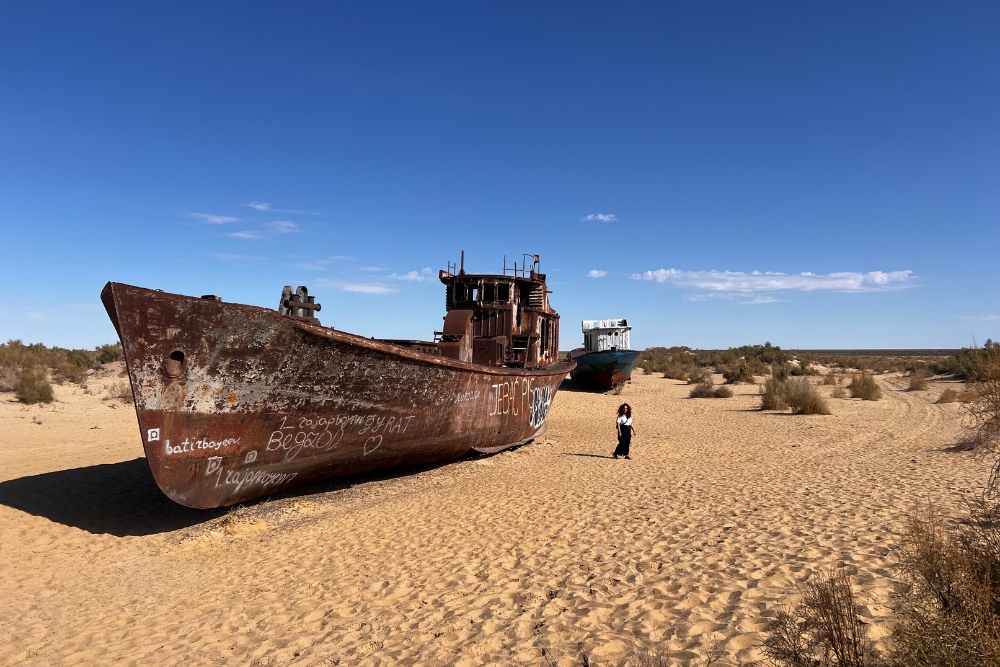
© Gayane Mkhitaryan, Uzbekistan – Moynaq/Aral Sea ship graveyard
Practical Information for Visiting Nukus
Best Time to Visit
I was in Nukus in late September, and the weather was pleasant—warm but not oppressive, perfect for walking around the city and visiting museums. The rain was unusual but actually made my museum days more enjoyable.
Ideal timing: Spring (April-May) and autumn (September-October) offer comfortable temperatures for exploring. Summer (June-August) is brutally hot in this desert region. Winter (November-March) can get quite cold, especially for camping on the Aral Sea.
Getting to Nukus
- By Air: Domestic flights from Tashkent take about 2 hours. This is how I returned to Tashkent after my Aral Sea tour—much faster than the alternative.
- By Train: Long-haul trains connect Nukus to other major Uzbek cities, though journey times are substantial. The train from Khiva to Nukus via Urgench takes 3-4 hours.
- By Shared Taxi: From Khiva or Urgench, shared taxis are available and faster than buses, though more expensive.
Getting Around Nukus
The city center is walkable, though distances between residential areas with interesting Soviet mosaics can be long. Taxis are cheap and readily available—most rides within the city cost 10,000-20,000 som (about $1-2 USD).
Pro tip: Download offline maps before arriving. Nukus isn’t heavily touristed, so navigation apps and translation tools are essential.
Why Nukus Stays With You
I came to Nukus because I had to—it’s the jumping-off point for the Aral Sea, and missing that environmental disaster would have left my Uzbekistan journey incomplete. I expected to pass through, maybe snap a few photos of Soviet buildings, and move on.
What I didn’t expect was spending a rainy day in museums that genuinely moved me, walking residential streets photographing artwork that residents barely notice, and slowly understanding that this unlikely city tells important stories the Silk Road tourism narrative conveniently skips. Stories about what the Soviet Union built and what it destroyed. Stories about art saved from censorship through one person’s stubborn courage. Stories about an entire sea drained by bad planning and worse priorities.
Nukus isn’t pretty. But it’s honest about the complicated layers that make modern Uzbekistan what it is—Soviet infrastructure enabling tourism to medieval monuments, Russian avant-garde art preserved in Central Asian remoteness, and environmental catastrophe shaping the futures of entire regions.
