
Traditional Uzbek Cuisine: A Food Lover’s Guide – National Dishes Explained
I spent two weeks exploring Uzbekistan, from Tashkent’s Soviet-era canteens to Samarkand’s tourist spots and roadside shashlik stands. I averaged about €25 per meal at tourist-friendly places, but enjoyed some of my best food for €5-10 at local spots where nobody spoke English, and the menu was whatever they made that day.
Here’s what you really need to know about Uzbek food—the must-try national dishes, the vegetarian reality nobody discusses, and why this cuisine will either completely win you over or leave you desperately googling “vegetarian or European restaurants near me.”
However, during those two weeks, it’s not that we only ate Uzbek food—because let’s be honest, if you’re not used to it, it can have a very specific taste due to the way it’s cooked, the spices, and so on. Sometimes we ate Italian dishes or fish because it wasn’t always possible to stick to Uzbek cuisine every day, with all due respect.
Uzbek food reflects exactly what you see in the architecture and history: layers of Silk Road trade influence, Soviet-era practicality, and fierce regional pride. This is hearty, meat-heavy cuisine designed for hard work and harsh winters, where hospitality means feeding guests until they can eat no more, and where recipes haven’t changed much in centuries because why fix what works?
Tea accompanies every meal—green tea (kok choy) in most regions and black tea in Tashkent—and bread is so sacred that you’ll never see it placed face-down on a table. The cuisine is deeply rooted in hospitality and tradition, featuring abundant use of meat (especially lamb and beef), seasonal vegetables, and distinctive spices. Expect communal eating, large portions, and food that’s meant to stick to your ribs.
Fair warning: if you’re vegetarian, Uzbekistan will be challenging for you, but if you eat meat and carbs, you’re about to have the time of your life.
Plov: The Dish That Defines a Nation
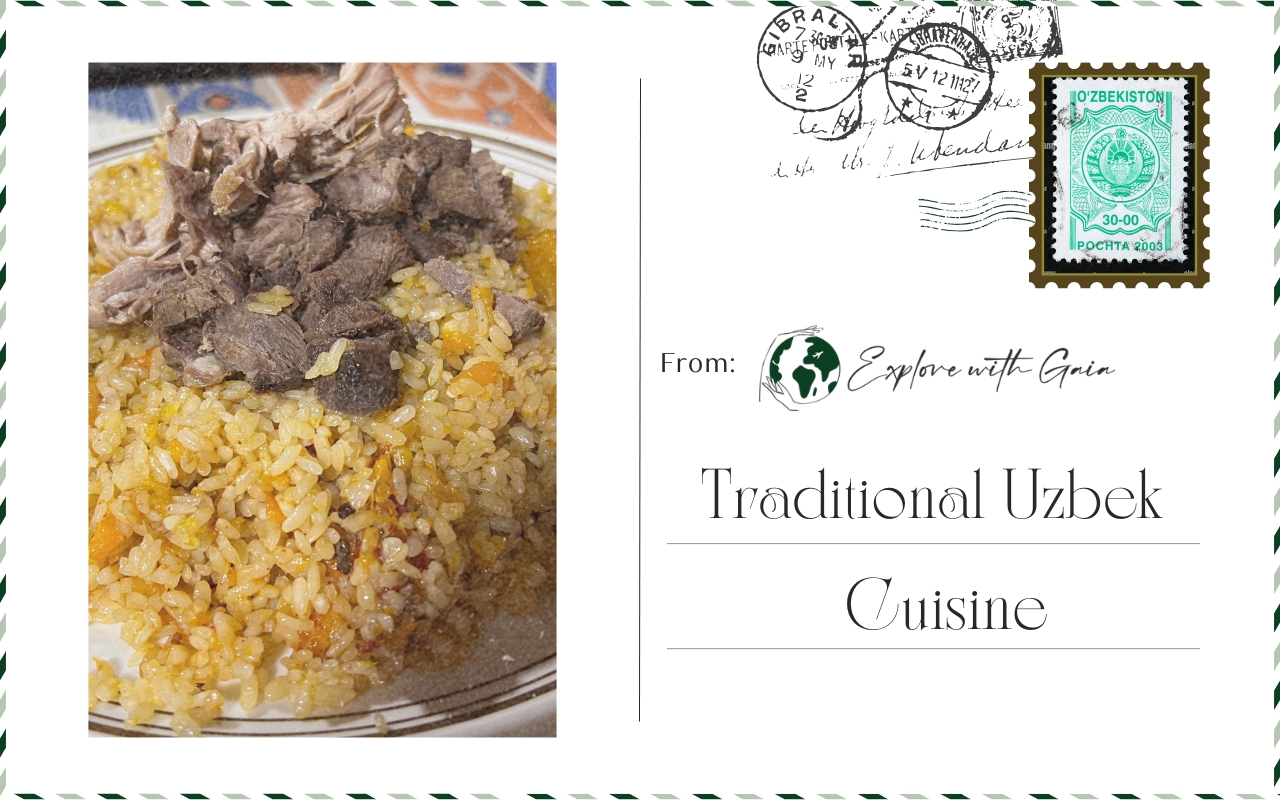
The national dish, plov is a rich, festive pilaf made in a large cast-iron cauldron (kazan) over an open fire. This isn’t just rice with stuff mixed in—it’s a UNESCO-recognized cultural phenomenon, a dish so important that Thursdays are unofficially plov day across Uzbekistan, when osh markazi (plov centers) fill with locals who wouldn’t dream of eating anything else.
Key ingredients are rice, chunks of meat (lamb or beef), grated carrots, and onions, often with additions like chickpeas, raisins, or horse meat sausage (kazy). The rice sits on top, fluffy and golden from lamb fat, while the meat and vegetables hide underneath. You mix it all together on your plate, and if you’re eating traditionally, you use your hands.
Each region has its own variation; for instance, Samarkand plov is known for its aromatic spices, while Tashkent plov often includes horse meat sausage and eggs. I tried both, and honestly? I didn’t like it that much as it was too greasy for me, and the meat smelled weird.
Budget reality: Street plov centers charge €3-5 for massive portions. Tourist restaurants charge €10-15 for smaller, less authentic versions. Go local.
Timing matters: Most osh markazi only serve plov from around noon until they run out, often by 3 PM. Show up late and you’re out of luck.
Vegetarian reality: Traditional plov is not vegetarian, and asking for it without meat gets confused looks. Some tourist restaurants offer “vegetable plov,” but it’s not the same dish.

© Gayane Mkhitaryan, Traditional Uzbek Plov
Non: The Bread That’s Basically Sacred
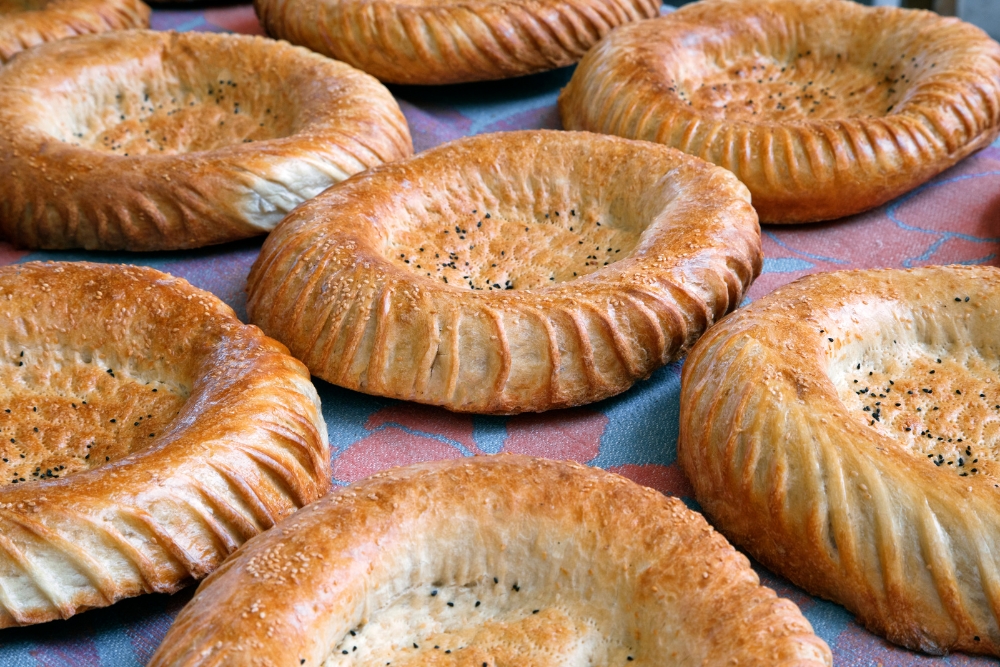
Round, flat, tandoor-baked bread is an essential part of every meal. The bread often features unique patterns stamped into the center and regional variations in flavor and texture.
The cultural rules around the non fascinated me: never place it face-down (sign of disrespect), always break it by hand (never cut with a knife), and if someone offers you bread, accepting it is accepting their hospitality. In Samarkand, the non is thinner and crispier. In Bukhara, it’s thicker and chewier. Both are excellent.
You’ll eat non with everything—dipping it in soup, using it to scoop plov, wrapping it around shashlik. By day three, I stopped thinking of it as bread and started thinking of it as an edible utensil.
© Canva
Shashlik: Grilled Meat Done Right
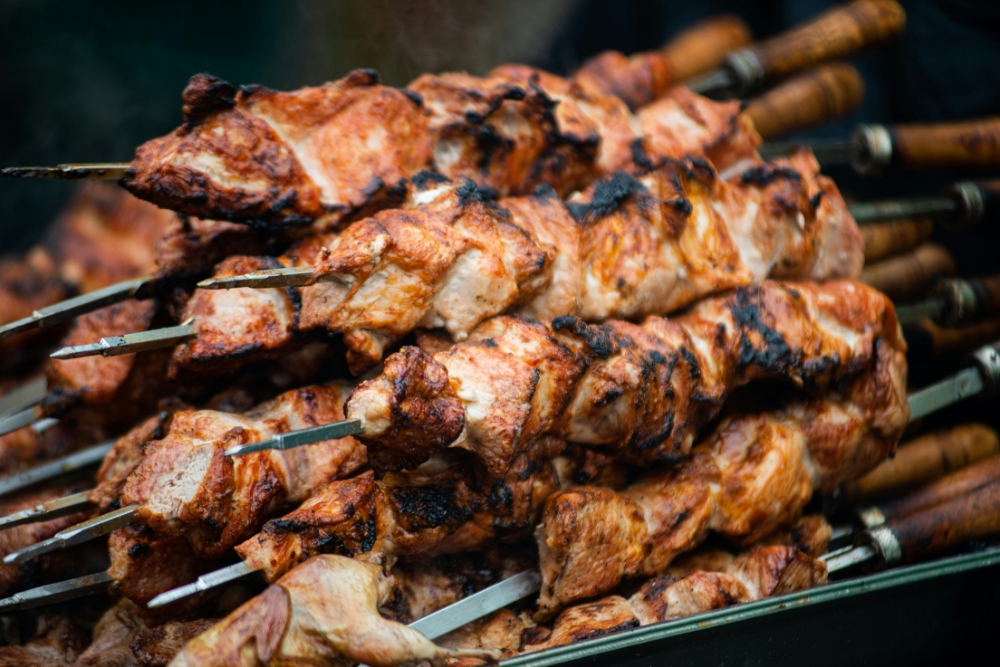
Skewered and grilled pieces of marinated meat (mutton, beef, or chicken) cooked over charcoal. They are typically served with thinly sliced pickled onions and fresh bread. Every city has dozens of outdoor grill spots where you can watch your shashlik cook over coals, fat dripping and smoking, the meat charring perfectly at the edges.
I ate shashlik probably ten times during my trip, ranging from €3 street versions to €8 sit-down restaurant versions. The best came from a roadside stand in Samarkand, where the cook spoke no English but understood exactly how I wanted my mutton—crusty outside, still juicy inside, with enough fat pieces between the meat to keep everything moist.
The pickled onions served alongside aren’t garnish—they cut through the richness of the meat, making it possible to eat multiple skewers without feeling overwhelmed. Trust the system.
Pro tip: Order jigarnon if you see it—grilled liver that’s surprisingly delicate and not at all the intense organ meat experience you might fear.
© Canva
Lagman: The Noodle Dish That Became My Backup Plan
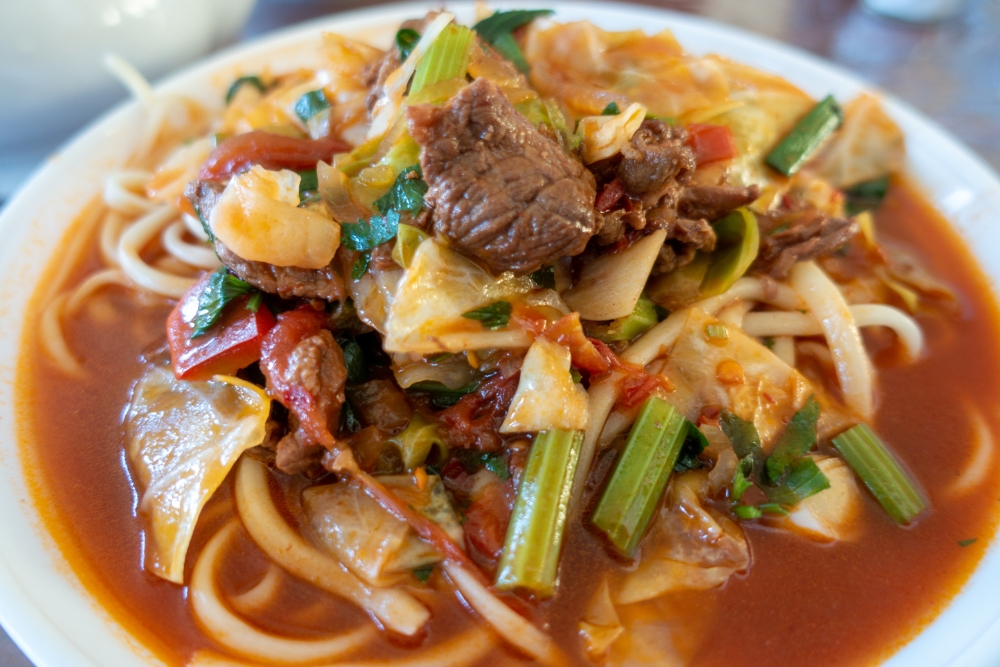
A hearty noodle dish, it can be served as a soup in a rich, spicy broth, or stir-fried as a main course (qovurma lagman). It features hand-pulled noodles with meat (beef or lamb) and a variety of vegetables like bell peppers, carrots, and onions.
Lagman saved me multiple times when I was tired of plov and couldn’t face another pile of rice. The soup version became my comfort food—hand-pulled noodles swimming in a spicy broth with chunks of beef and plenty of vegetables. I paid €4-7, depending on the restaurant, and portions were always generous enough for dinner.
The stir-fried version (qovurma lagman) is less common but worth trying if you see it—the noodles get slightly crispy edges, and the whole dish has more concentrated flavors than the soup.
Vegetarian potential: This is one of the few dishes you can request a vegetarian version of. The vegetables and noodles carry it well enough without meat, though you’ll still need to specifically ask.
Manti: Dumplings That Demand Respect
These are large, steamed dumplings typically filled with minced meat (beef or lamb) and onions, seasoned with spices. Vegetarian versions with pumpkin or potato are also available. Manti are often served with katyk (a sour fermented milk product, similar to yogurt) or a tomato-based sauce.
These aren’t delicate Chinese dumplings—Uzbek manti are substantial, each one about the size of your palm, steamed in traditional multi-tiered steamers. I ordered them in Samarkand and got five enormous dumplings for €6 each, each packed with spiced meat and onions. The katyk served alongside was tangy and cool, perfect for cutting the richness.
The pumpkin manti I tried in Tashkent was surprisingly good—sweet pumpkin balanced by onions and butter, actually satisfying as a vegetarian main course. If you’re struggling to find vegetarian food, manti with pumpkin or potato filling can be a reliable option.
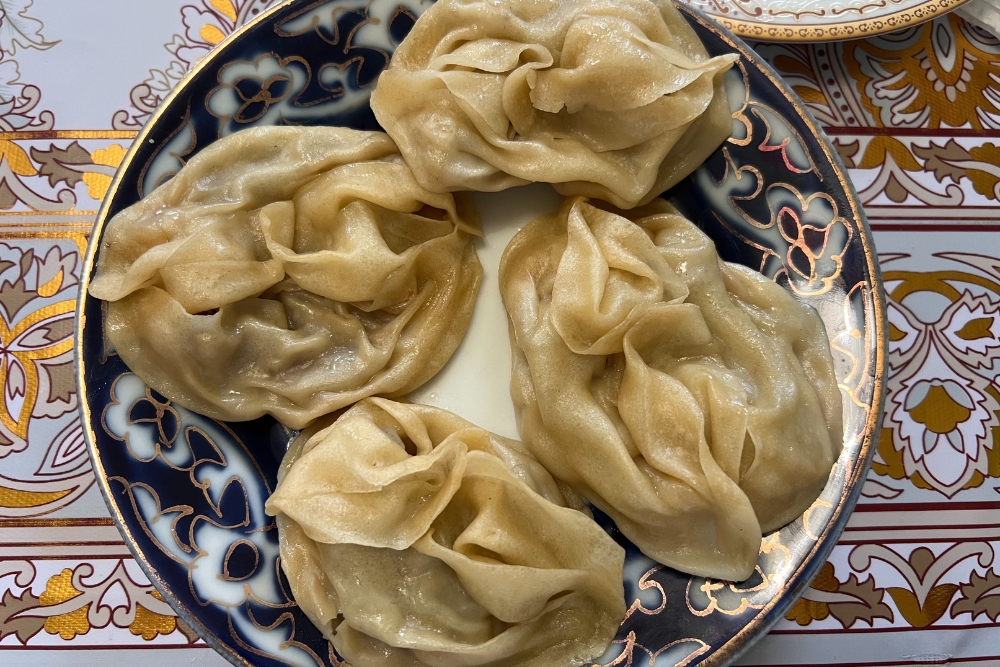
© Gayane Mkhitaryan, dumplings filled with seasoned meat
Samsa: Perfect Street Food
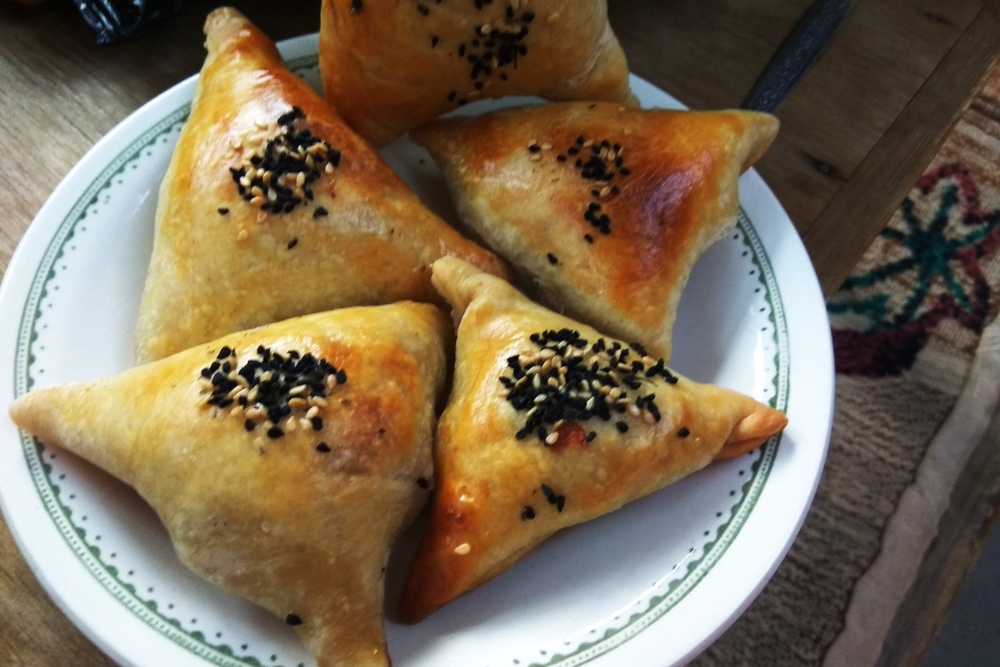
A popular street food, samsa are savory pastries baked in a traditional clay oven (tandoor), giving them a crispy, flaky crust. They are usually filled with minced meat, onions, and spices, but pumpkin, potato, or chicken fillings are also common.
I ate samsa constantly—it became my breakfast routine on trains. For €0.50-1 per samsa, you get a palm-sized triangle of flaky pastry with a meat filling that’s somehow both juicy and well-cooked. Tandoor baking gives the crust an incredible texture that’s impossible to replicate in a regular oven.
The trick is timing: samsa are best when they’re fresh from the tandoor, still warm. Ask when the next batch is coming out and wait if you can. Bazaars and train stations always have samsa vendors, making them perfect for travel days.
Pumpkin samsa is naturally vegetarian and legitimately delicious—the pumpkin gets sweet and caramelized, seasoned with just enough spice to keep it interesting.
Soups: The Category Nobody Talks About
Shurpa
A rich, clear soup made with large chunks of fatty meat (usually lamb) and fresh vegetables like potatoes and carrots. Different variations might include peas or noodles. This is comfort food—the kind of soup that makes you understand why people survive Central Asian winters. The fatty meat makes the broth rich, and the vegetables are cooked until they’re falling apart. Perfect for cool September evenings.
Dimlama
A slow-cooked meat and vegetable stew, popular as a harvest meal. Meat (lamb or beef), potatoes, carrots, onions, and other seasonal vegetables are layered in a pot and simmered in their own juices until tender. I only encountered dimlama once, at a family-run guesthouse outside Muynak. Still, it left an impression—everything cooked together until the flavors merged completely, no broth needed because the vegetables released enough liquid.
This isn’t restaurant food, typically—it’s home cooking, the kind of meal families make on weekends. If you’re invited to someone’s home or see it on a menu, order it.

© Gayane Mkhitaryan, Beef soup with vegetables
Halva and Sweets: Sugar and Nuts
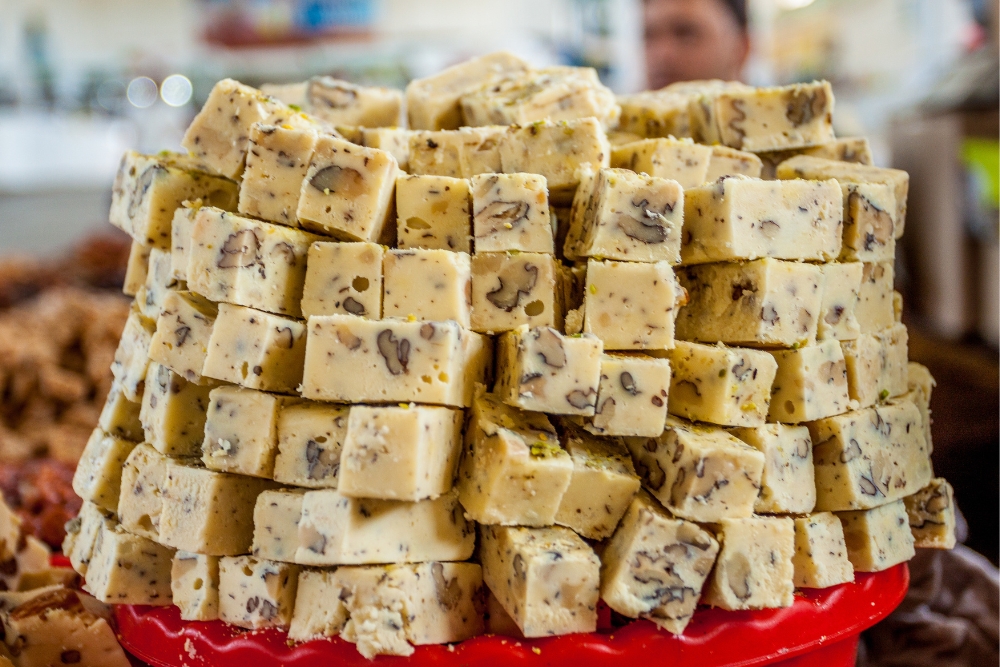
The most famous Uzbek sweet, available in many varieties, is often made with nuts, sugar, and flour, or with sesame paste. Other popular sweets include navat (crystallized sugar), chak-chak (fried dough pieces with honey), and dried fruits.
Uzbek desserts are serious business. Every bazaar has vendors selling multiple varieties of halva—some crumbly and nut-based, others smooth and sesame-forward. The reality? Uzbek sweets are very sweet. They pair beautifully with the endless green tea everyone drinks, cutting through the richness, but they’re intense on their own. Fresh fruit—incredible melons, grapes, and pomegranates in September—functions as the real dessert in most meals.
© Canva
Tea Culture: Every Meal Begins and Ends Here
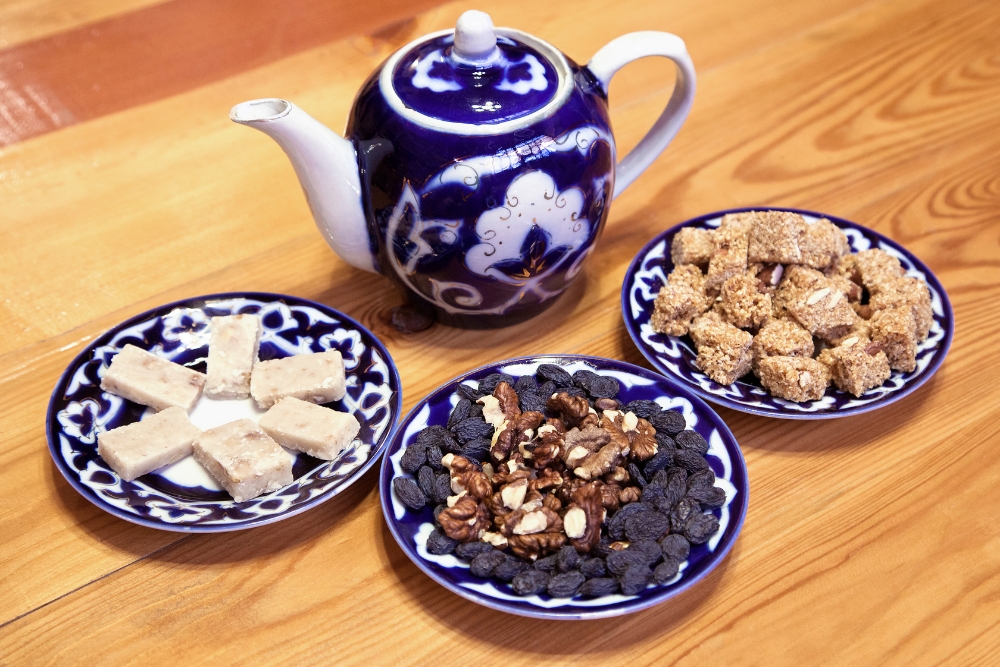
The national hot beverage, tea, accompanies every meal. Green tea (kuk choy) is the most popular, though black tea is preferred in Tashkent. Teahouses (chaikhanas) are central to the culture.
Learning to drink tea properly became part of my daily ritual. You never fill your own cup—someone else pours for you, and you pour for them. The tea arrives in a pot, and you’re expected to drink multiple cups slowly, talking and relaxing between meals.
Chaikhanas became my favorite spots to rest during long days of sightseeing. They’re social spaces where locals gather to talk, play cards, and drink endless cups of tea. Tourist-friendly chaikhanas in Samarkand and Bukhara charge €3-5 for tea service with sweets and bread. Local spots charge €1-2 and are even better for people-watching.
© Canva
Where to Actually Eat: From Street Stalls to Tourist Restaurants
- Osh markazi (plov centers): Open only around midday, serving one thing—plov. Prices: €3-5. No English, just point at the pot and they’ll serve you. These are where locals eat, where the food is best, and where you’ll feel most like you’re experiencing authentic Uzbekistan.
- Chaikhanas: Traditional teahouses serving plov, shashlik, manti, and tea. Prices: €5-15 depending on location. The experience matters here—sitting on platform beds (tapchans), eating slowly, soaking in the atmosphere.
- Tourist restaurants: Concentrated in Samarkand, Bukhara, and Khiva’s old towns. English menus, higher prices (€15-30 per meal), and more comfortable but less authentic. I used these when I was tired and wanted predictability. No shame in that.
Bazaars: Fresh samsa, fruits, and snacks for €2-5 total. Perfect for breakfast or lunch when you’re sightseeing and don’t want a sit-down meal.
The Vegetarian Reality Check
Let me be direct: if you’re vegetarian, Uzbekistan will challenge you. The cuisine is deeply tied to hospitality and tradition, featuring abundant use of meat (especially lamb and beef), and meat isn’t seen as optional—it’s central to most dishes.
That said, you won’t starve. Focus on: fresh non from bazaars, achichuk salad (tomatoes, onions, herbs), pumpkin or potato manti, vegetable lagman (request specifically), pumpkin samsa, and Korean-style vegetable salads (Soviet legacy). Fresh fruit from bazaars. Tea and more tea.
Tashkent has the most vegetarian options due to more international influence. Smaller cities struggle. Budget-wise, vegetarian food isn’t cheaper—you’ll still pay restaurant prices for limited options.
Budget Reality: What I Actually Spent
My €25 average per meal included tourist restaurants and occasional splurges. Breaking it down:
- Ultra-budget (€10-15/day): Bazaar breakfasts (€2-3), osh markazi plov (€4), street samsa and fruit (€3-5), local chaikhana dinner (€6)
- Mid-range/my approach (€20-30/day): Mix of local spots and tourist restaurants, splurging on nice dinners
- Comfortable (€40-50/day): Tourist restaurants for most meals, guided food tours, no price anxiety
The beauty of Uzbek food is that the best dishes are cheap. You don’t sacrifice quality by eating like locals—you improve it.
My Honest Take
Uzbek cuisine won’t win awards for innovation or Instagram aesthetics. It’s not fusion, it’s not modern, and it makes zero apologies for being meat-heavy and carb-forward. But it’s honest food that reflects genuine hospitality, and when you’re eating fresh plov at an outdoor table while locals argue about whose grandmother makes it best, you’ll understand why this cuisine hasn’t changed in centuries.
Come for the turquoise domes, but stay for the plov. Just maybe skip Uzbekistan if you’re vegan—some travel destinations aren’t built for every diet, and that’s okay.
