
Uzbekistan for First-Time Visitors: Mistakes to Avoid
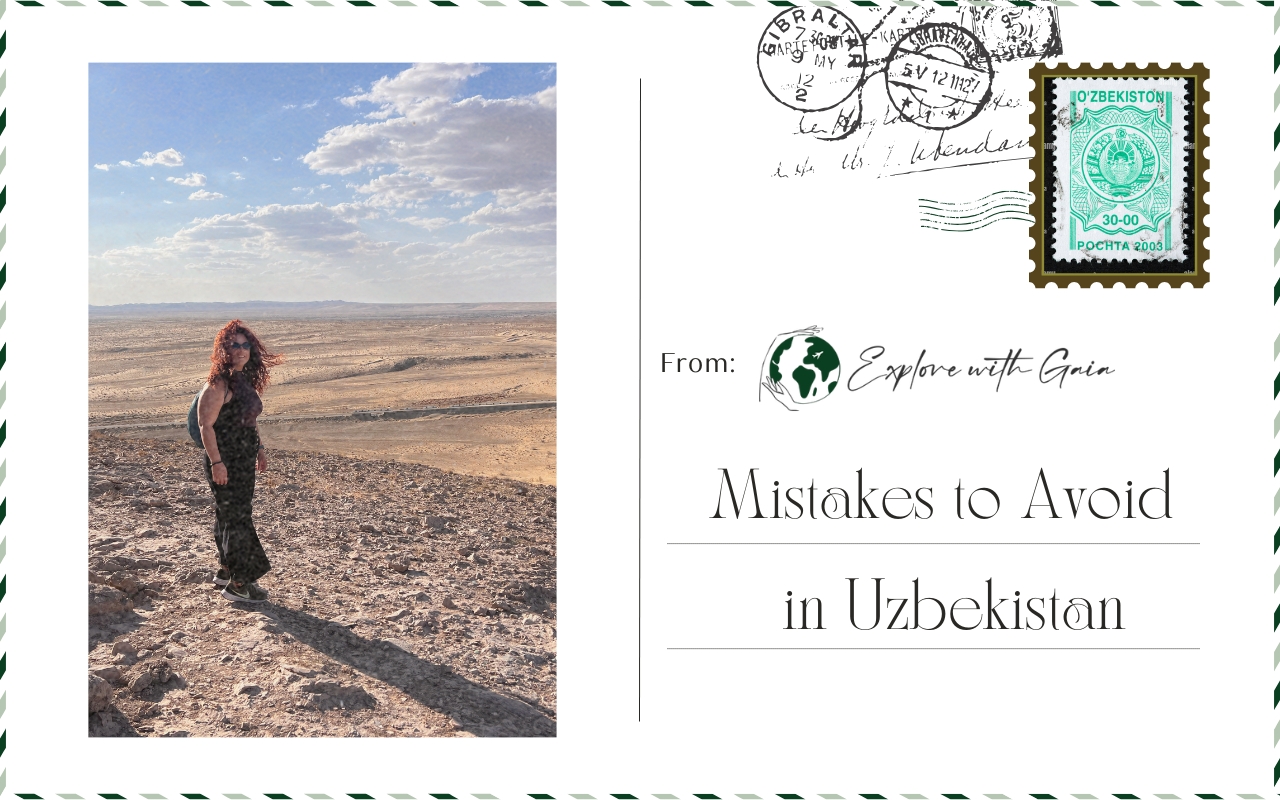
Standing on what was once the seabed of the Aral Sea, surrounded by rusted fishing boats that haven’t touched water in decades, I realized something: every stupid mistake I’d made over the previous ten days had been worth it.
I spent two weeks traveling through Uzbekistan in September 2025, following the classic Silk Road route from Tashkent through Samarkand, Bukhara, and Khiva, then pushing further to Nukus for that life-changing Aral Sea tour. I spent around €3,500 total, made more mistakes than I’d like to admit, and came home with stories that matter more than any perfectly executed itinerary ever could.
Here are the mistakes I made—and the ones I watched other travelers make—so you don’t have to. And why, even with all of them, was Uzbekistan absolutely worth it?

© Gayane Mkhitaryan, Nasaf (Regional Express Train)
Ignoring Hotel Registration (Propiska) Requirements
Uzbekistan requires foreign visitors to register their stay if they’re in the country for more than 3 days. Hotels typically handle this automatically, but smaller guesthouses, hostels, and private accommodations sometimes “forget” or don’t bother. You’re supposed to collect registration slips from each place you stay and present them when leaving the country.
Most travelers pass through customs without issues, and enforcement is inconsistent. But technically, you need these registration slips, and the fine for not having them can be steep—or worse, cause significant delays when you’re trying to catch a flight home.
The bigger hotels and mid-range places I stayed at handled registration automatically. I didn’t even think about it until one of my friends reminded me to ask the reception for my copy.
How to avoid this: Always ask your accommodation if they’ll provide registration (propiska). Get a physical slip or printout for each place you stay longer than three days. Keep these slips with your passport. If a guesthouse seems dodgy about registration, consider staying somewhere more official, especially if you’re risk-averse about legal paperwork.
Misunderstanding Visa-Free Entry Limitations
Many nationalities (including EU, US, and UK citizens) can enter Uzbekistan visa-free for up to 30 days as of 2025. That sounds straightforward until you realize the 30-day clock starts ticking the moment you enter, not when you start your actual travels.
There’s also the issue of onward travel. If you’re planning to visit multiple Central Asian countries, visa-free entry may have specific requirements about entry/exit points or onward tickets. Some travelers have been questioned at borders about their plans and asked to show proof of onward travel or accommodation.
How to avoid this: Before booking flights, verify current visa requirements for YOUR specific nationality—rules change and vary by country. Count your travel days carefully, including arrival and departure days. Have proof of onward travel (flights, train tickets) and at least your first night’s accommodation booking ready to show at entry. Don’t assume visa-free means zero documentation requirements. And always, always check the official websites.
Changing Money with Random Guys in Bazaars
Uzbekistan’s currency situation has improved significantly since the exchange rate was liberalized, but black market money changers still operate, especially in tourist areas and bazaars. They offer “better rates” and prey on travelers who don’t want to deal with banks or ATMs.
The thing is, official exchange rates are now reasonable. ATMs are widely available in cities and give fair rates. Banks and official exchange offices are legitimate. There’s simply no reason to risk getting scammed by random guys in bazaars who approach you speaking English and promising better deals.
How to avoid this: Only exchange money at banks, official exchange offices, or withdraw from ATMs. Never exchange currency with people who approach you in bazaars, on the street, or near tourist sites. Count your money immediately in front of the exchanger if you must use an exchange office. Better yet, just use ATMs in cities—the rates are fair and the process is straightforward.
Communication and Cultural Mistakes
Failing to Learn Even Basic Russian or Uzbek Phrases
English is spoken in the main tourist areas by younger people and tourism workers. Outside those bubbles? Russian is the common language among older Uzbeks, while Uzbek is the official language. Many signs are in Cyrillic. Menus in local restaurants have no English. Taxi drivers don’t speak English. The woman selling bread at the bazaar definitely doesn’t speak English.
Learning even ten words of Russian or Uzbek transforms your experience. People’s faces light up when you attempt their language. They’re more helpful, more patient, more willing to go out of their way for you. You’ll also get better prices, better recommendations, and more genuine interactions.
How to avoid this: Learn at least basic greetings, thank you, please, numbers 1-10, and “How much?” in Russian before you go. Download Google Translate with offline Russian and Uzbek language packs. Consider learning the basics of the Cyrillic alphabet—it helps with reading signs and menus. Even attempting a few words shows respect and makes your journey infinitely smoother.
Not Understanding That Russian Still Dominates Daily Life
Russian is everywhere—spoken by older generations, used on many signs, and often the common language between people from different regions. This is Soviet legacy in action. Older Uzbeks were educated in Russian. Russian was adopted as a common language among speakers whose native languages differed during Soviet times. Many ethnic Russians still live in Uzbekistan, especially in Tashkent. While Uzbek is the official language and younger generations increasingly use it, Russian remains crucial for travelers.
How to avoid this: Prioritize learning Russian over Uzbek if you can only choose one. Yes, Uzbek is the national language, but Russian is more widely spoken in tourist contexts. If you know Russian from other travels or studies, you’ll navigate Uzbekistan much more easily than someone who only knows English.
Practical Safety and Health Mistakes
Traveling Without Travel Insurance
Uzbekistan is generally safe, and medical costs are relatively low by Western standards. But accidents happen. Food poisoning is common, believe me. You might need emergency dental work. You could slip on those gorgeous but uneven cobblestones in Bukhara’s old town and break something. The Aral Sea tour involves rough roads and camping, so injuries are possible.
Beyond medical emergencies, travel insurance covers trip cancellations, lost luggage, and theft. When you’ve spent €3,500 on a two-week trip, protecting that investment with €50-80 of insurance seems obvious in hindsight.
How to avoid this: Buy comprehensive travel insurance before you leave home. Make sure it covers medical evacuation, which is crucial if you need serious care—Uzbekistan’s medical facilities are adequate for basic issues but not for complex emergencies. Keep insurance documents and emergency numbers accessible on your phone and in physical form.
Drinking Tap Water or Not Taking Food Safety Seriously
The tap water in Uzbekistan is not safe to drink for foreign travelers. I knew this and stuck to bottled water religiously. Bottled water is cheap (less than €1 per large bottle) and available everywhere. There’s simply no reason to risk it. Beyond water, be cautious about ice in drinks, fresh salads washed in tap water, and street food from questionable vendors—especially in summer heat.
I ate street food carefully and had some issues, I will not lie. I avoided fresh salads at cheaper places. I watched for busy vendors (high turnover means fresher food). But I also watched multiple travelers get sick from being too adventurous or careless.
How to avoid this: Only drink bottled water. Brush your teeth with bottled water. Avoid ice in drinks unless you’re at a high-end hotel that uses filtered water. Be selective about street food—look for busy vendors with high turnover. Skip fresh salads at budget restaurants. Carry hand sanitizer and use it before eating. These precautions sound paranoid, but they kept me healthy for two weeks.
Disrespecting Local Customs and Dress Codes
Uzbekistan is Muslim but relatively relaxed compared to neighboring countries. That doesn’t mean anything goes. I watched tourists in Samarkand wear shorts and tank tops into mosques, causing visible discomfort among locals who were there to pray.
Women need to cover their shoulders and knees at religious sites. A scarf for your head is essential—some mosques provide them, many don’t. Men need long pants and covered shoulders. Everyone removes shoes before entering prayer halls. Taking photos during prayer times is disrespectful. Photographing women without permission is inappropriate.
Outside religious sites, Uzbekistan is casual. Locals in cities dress in modern clothing, but in more conservative areas and smaller towns, modest dress is appreciated. Extremely revealing clothing attracts unwanted attention and marks you as an ignorant tourist.
How to avoid this: Pack modest clothing options even if you mostly plan casual wear. Bring a lightweight scarf for mosque visits if you’re a woman. Watch what locals do and follow their example at religious sites. Ask before photographing people, especially women. Remove shoes when entering homes or prayer halls. Show respect for the culture you’re visiting—it’s not complicated, and locals appreciate the effort.
Transportation and Money Mistakes (My Personal Disasters)
The Bukhara Taxi Nightmare I Should Have Seen Coming
September 24th, 6:30 AM. I needed to catch a train from Bukhara to Khiva at 7:12 AM. I’d arranged a taxi the night before, confirmed the time, and felt completely prepared. What I didn’t account for was Bukhara’s old town layout—a maze of narrow alleys where modern cars simply cannot drive.
When my taxi arrived, it couldn’t get within 400 meters of my guesthouse. I had to drag my backpack and small luggage through cobblestone streets while my phone kept recalculating the route to where the driver was actually waiting. By 6:50 AM, I was sweating through my shirt and genuinely panicking.
How to avoid this: When booking taxis in old towns (Bukhara, Khiva), ask your guesthouse host to show you EXACTLY where the taxi will wait. Walk to that spot if you have time. Add 30-45 minutes to whatever Google Maps suggests. Consider staying outside the old town walls if you have an early departure.
Not Booking Train Tickets Far Enough in Advance
We always bought our tickets to the next destination one or two days in advance, assuming tickets would be available. But from Samarkand to Bukhara it was nearly sold out. I managed to get one of the very last seats, which meant my boyfriend and I were seated in separate wagons. As a result, we spent the entire journey in the wagon-restaurant.
These trains (Tashkent, Samarkand, Bukhara, Khiva) are popular with tourists and locals, especially during peak season (September-October and April-May). The Uzbekistan Railways website is glitchy and crashes frequently.
How to avoid this: Book train tickets at least 3-5 days in advance during peak months. If the website frustrates you, go to the station in person. Bring your passport (required) and have train times written in Russian.
Underestimating the Aral Sea Journey’s Physical Demands
The two-day Aral Sea tour was my most powerful experience. It’s also physically demanding—rough desert roads for hours, camping in basic conditions, and significant nighttime temperature drops.
I packed a light jacket. I should have packed proper warm layers. September temperatures were perfect during the day but cold at night. I spent one night shivering in my yurt.
How to avoid this: Treat the Aral Sea tour like a camping expedition. Pack warm layers regardless of the season. Bring sun protection (hat, sunscreen, sunglasses). Download entertainment for long drives. This isn’t comfortable tourism—manage expectations accordingly.
Not Understanding Real Daily Costs Beyond Budget Guides
Every budget guide said you could eat in Uzbekistan for €5-10 per meal. That’s technically true—if you eat only at local chaikhanas where no English is spoken and the menu is entirely plov variations.
I averaged €25 per meal at tourist-friendly restaurants with English menus and varied options. Hotels averaged €140 per night for mid-range comfort, not the €30-50 budget guides suggested. Entrance fees (€3-5 per site) add up quickly when visiting 5-6 sites daily.
My total spend for two weeks: roughly €3,500 including flights, hotels, food, transport, and tours.
How to avoid this: Be honest about your comfort level. If you value comfort, good locations, and varied meals, budget €150-200 per day beyond flights. You’ll enjoy the journey more without constantly stressing about costs.
Not Carrying Enough Cash for Rural Areas
ATMs in major cities are plentiful and reliable. For example, Tashkent and Samarkand are not a problem, but Khiva has fewer options, and Nukus has limited ATMs.
Daily withdrawal limits can be annoying. Cards work in nicer hotels and restaurants, but bazaars, small shops, and local transport are cash-only.
How to avoid this: Withdraw extra cash whenever you see a reliable ATM in major cities. Don’t assume you’ll find one easily in smaller towns. Carry a cash buffer—better to have too much UZS than to be scrambling for a nonexistent ATM. I exchanged 300 USD for UZS, and it was totally okay for the whole trip.
Technology and Planning Mistakes
Not Downloading Offline Maps and Translation Apps
I got cocky in Samarkand with reliable data and figured I’d continue with the same setup. Then I got to rural areas with spotty data coverage. In Khiva, I spent twenty minutes trying to find a specific minaret because my map wouldn’t load.
How to avoid this: Download offline maps for every city before you arrive. Download Google Translate’s Russian and Uzbek language packs for offline use. Get a local SIM card at Tashkent airport—data is cheap and coverage is decent in cities.
Not Backing Up Important Travel Documents Digitally
I’m meticulous about this, so I didn’t make this mistake—but I met travelers who did.
One traveler had their passport stolen (rare, but it happens) and didn’t have copies of the identification pages or their registration slips. Getting temporary travel documents was significantly more complicated without proof of identity.
How to avoid this: Before leaving, scan or photograph your passport, visa (if applicable), travel insurance documents, credit cards, and any booking confirmations. Email them to yourself, store them in cloud storage, and keep physical copies separate from originals. This takes 20 minutes and can save you days of stress if something goes wrong.
Over-Planning Every Single Day Without Flexibility
Uzbekistan rewards flexibility. That unplanned extra hour in Bukhara led me to a tiny store with incredible silver jewelry crafted from natural stone. Getting “lost” in Khiva meant discovering a workshop where artisans hand-carved wooden doors. The best moments often happen when you’re not rushing to the next scheduled activity.
How to avoid this: Plan your major moves (cities, trains, tours) but leave days flexible. Don’t book every single activity in advance; skip something if you’re tired or discover something more interesting. Build buffer time for delays, rest, and spontaneous discoveries. Travel shouldn’t feel like a forced march through obligations.
Itinerary and Experience Mistakes
Trying to See Everything Without Realistic Travel Time
On a map, the Silk Road cities appear close together. Reality: trains take time. Tashkent to Samarkand is 2.5 hours. Samarkand to Bukhara is 3.5 hours. Bukhara to Khiva is 7-8 hours. Those are just train times—they don’t include getting to stations, waiting, and getting to your hotel afterward.
I initially tried to plan five cities in eight days. By day three, I realized I’d spend more time on trains than exploring. I extended it to two weeks, which was perfect.
How to avoid this: Give yourself more time than you think you need. Two weeks for the classic Silk Road route, plus the Aral Sea, is comfortable. If you only have one week, focus on Tashkent-Samarkand-Bukhara and skip Khiva and the Aral Sea.
Expecting Only Instagram-Perfect Silk Road Architecture
I came for the turquoise domes and expected beautiful Islamic architecture, Silk Road history, and ancient mosques. What I didn’t expect was Soviet apartment blocks, brutalist architecture, massive public squares designed for military parades, and metro stations covered in propaganda mosaics.
Initially, this felt disappointing. I was here for the Silk Road, not Soviet relics. But I realized the Soviet legacy is as much a part of authentic Uzbekistan as medieval mosques. The most powerful moment wasn’t perfect tilework in Samarkand—it was standing on the Aral Sea’s former seabed, understanding that Soviet irrigation projects drained an entire sea.
How to avoid this: Adjust expectations before you go. Uzbekistan isn’t a preserved medieval theme park. It’s a modern country shaped by both Islamic history and Soviet intervention. The complicated, layered reality is what makes Uzbekistan meaningful.
Thinking I Could Skip Soviet Heritage for “Authentic” Silk Road
I initially planned to skip Tashkent’s Soviet-era sites because they felt less authentic than medieval architecture. This was stupid.
The Tashkent metro is genuinely beautiful—each station decorated with elaborate murals and marble. Chorsu Bazaar was rebuilt after the 1966 earthquake in a Soviet-style design. Nukus’s incredible Savitsky Museum holds Soviet-era art hidden from Moscow censors.
If I’d skipped all this to focus only on Silk Road sites, I would have missed half of what makes Uzbekistan fascinating.
How to avoid this: Embrace both layers of history. Visit the Tashkent metro stations. Walk through Soviet residential areas. Don’t dismiss 20th-century history as less worthy than medieval history.
Not Researching the Aral Sea Tour Before Arriving
The Aral Sea tour was my most memorable experience. It’s also not something you can do spontaneously—at least not well.
I researched operators while already in Armenia and ended up booking a tour that was fine but not exceptional. Tours cost around €350-400 per person—quality varies significantly. I booked via GetYourGuide for security, but honestly, I’d rather book directly with Aral Sea Discovery.
How to avoid this: Research Aral Sea tour operators before your trip. Read recent reviews. Book in advance through GetYourGuide or directly with reputable companies. This is a major highlight—it deserves planning.
Why These Mistakes Don’t Actually Matter
Here’s the truth: I made many of these mistakes, and Uzbekistan was still one of the most meaningful trips I’ve ever taken.
The mistakes are part of the story. They’re what happens when you travel independently, when you’re figuring things out as you go. Perfect trips make for boring stories. Messy trips—where you run through cobblestone streets with your backpack, where you shiver in a desert tent, where you stand in front of an ATM trying to withdraw enough cash—those become the memories you actually treasure.
The mistakes taught me things: plan transportation carefully, budget realistically, pack properly, learn basic phrases, get travel insurance, and respect local customs. Those are valuable lessons, but they didn’t ruin anything. They just made the triumphs sweeter.
Go to Uzbekistan. Make some of these mistakes if you want—they’re survivable and educational. Or learn from mine and others’ experiences and have a smoother journey. Either way, you’ll come home changed by a country that’s far more complex, beautiful, and meaningful than any guidebook can capture.
