
Things to Do, See, and Experience in Tashkent, Uzbekistan
Tashkent, the vibrant capital of Uzbekistan, is a captivating blend of ancient Silk Road heritage and modern Central Asian dynamism. Once an important trading hub where caravans packed with precious goods crossed paths between East and West, today’s Tashkent stands as the largest city in Central Asia, seamlessly weaving together Soviet-era architecture, Islamic monuments, and contemporary urban energy. Its tree-lined boulevards, busy metro stations, and bustling bazaars create an atmosphere that’s both cosmopolitan and deeply rooted in tradition.
Absolutely, yes! Tashkent serves as the perfect gateway to exploring Uzbekistan’s rich cultural heritage and makes an excellent base for discovering the legendary Silk Road cities of Samarkand, Bukhara, and Khiva. The city offers a refreshingly authentic Central Asian experience, free from the overwhelming tourist crowds often found in other regional capitals.
What makes Tashkent special is its unique blend of stunning Islamic architecture and modern character, complemented by beautiful parks, fountains, nice restaurants, and a fantastic metro system. The city is incredibly safe for travelers, with a new tourist police force making it even more welcoming for international visitors. Most younger locals speak English, and the hospitality is genuinely warm.
When is the Best Time to Visit Tashkent?
The best time to visit Tashkent is between March and June, when temperatures range from 15 °C to 30°C, making it perfect for exploring outdoor attractions, scenic parks, and vibrant bazaars. Summer months can be quite hot, while winters are mild but can be cool in the evenings.
Tashkent Must-See Attractions: My Recommendation
Tashkent’s top attractions showcase its fascinating blend of ancient heritage and modern development. Here are the essential landmarks you shouldn’t miss:
- Hazrat Imam Complex (Hast-Imam) – Religious heart of Tashken, including one of the world’s oldest Quran copies, featuring beautiful Islamic architecture with geometric patterns and peaceful courtyards
- Chorsu Bazaar – Vibrant traditional market with fresh produce, spices, local delicacies like kurt cheese, and maze-like outdoor stalls with souvenirs and crafts
- Tashkent Metro – Underground network with elaborately themed stations showcasing Soviet-era art, architecture, and captivating mosaics
- Independence Square (Mustakillik Maydoni) – Central square featuring beautiful fountains, the Eternal Flame memorial, and a representation of Uzbekistan’s independence
- Amir Timur Square – Historic square with revered equestrian statue of the famous Central Asian conqueror, surrounded by lush gardens and notable Soviet-Uzbek architecture
- Tashkent TV Tower – The tallest structure offering panoramic city views and a revolving restaurant experience
- Minor Mosque – Beautiful white marble mosque built in 2014, located in a picturesque setting
- Kukeldash Madrasah – 16th-century Islamic educational institution featuring traditional Uzbek architecture and rich historical significance
- Museum of Applied Arts – Showcasing over 7,000 pieces demonstrating traditional Uzbek heritage, including musical instruments, silk making, embroidery, and jewelry
- State Museum of History of Uzbekistan – One of Central Asia’s oldest museums with over 250,000 exhibits covering Uzbek history from prehistoric times to the present
- Assumption Cathedral – Beautiful Russian Orthodox church featuring stunning architecture and serene surroundings
- Monument of Courage – Powerful memorial commemorating Tashkent citizens’ resilience after the devastating 1966 earthquake
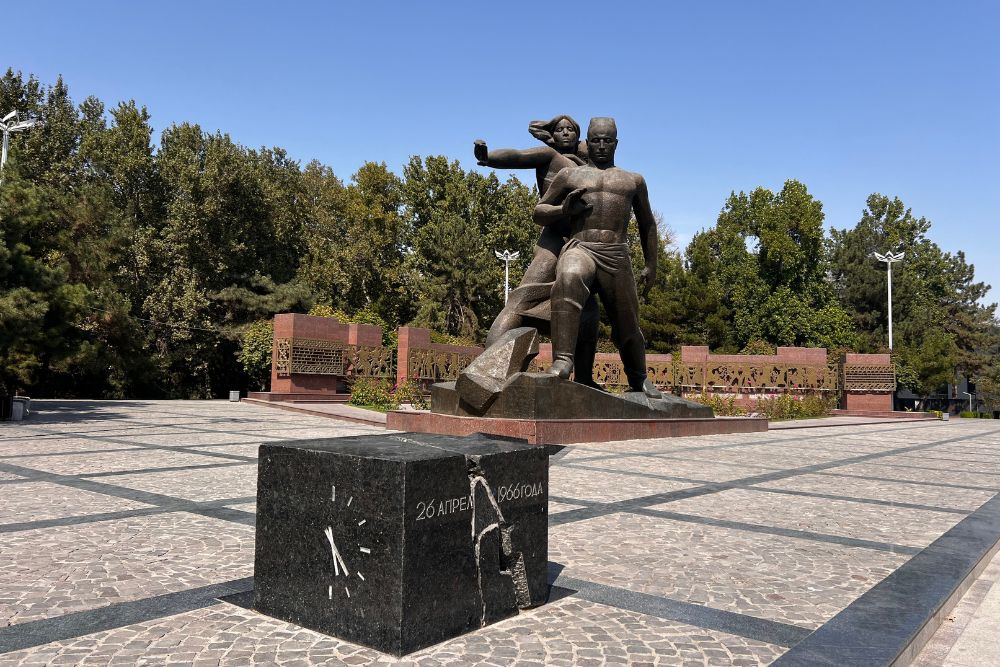
© Gayane Mkhitaryan, Monument of Courage, 1966 earthquake
Crazy/Weird Things to do in Tashkent
- Underground metro palace hopping – Photography was once forbidden for over 40 years due to the metro’s secret role as a nuclear bomb shelter, but now you can snap away at these underground palaces showcasing Soviet-era artistry at stations like Kosmonavtlar, Alisher Navoi, and Pakhtakor.
- Hunt for the Hotel Uzbekistan’s top floor views – Classic Soviet hotel architecture with stunning panoramic views over Amir Timur Square from the upper floors
- Try kumys (fermented mare’s milk) – Traditional Central Asian drink that’s definitely an acquired taste, but culturally significant.
- Explore the Pumpkin House Museum – A private house where friendly hosts showcase painted pumpkins of all sizes with different patterns. At the same time, you can wear traditional Uzbek clothes and enjoy puppet theatre performances.
- Search for Soviet space-age aesthetics – Hunt for brutalist architecture and Soviet modernist buildings spread throughout the city, including the Palace of Concerts and Sports.
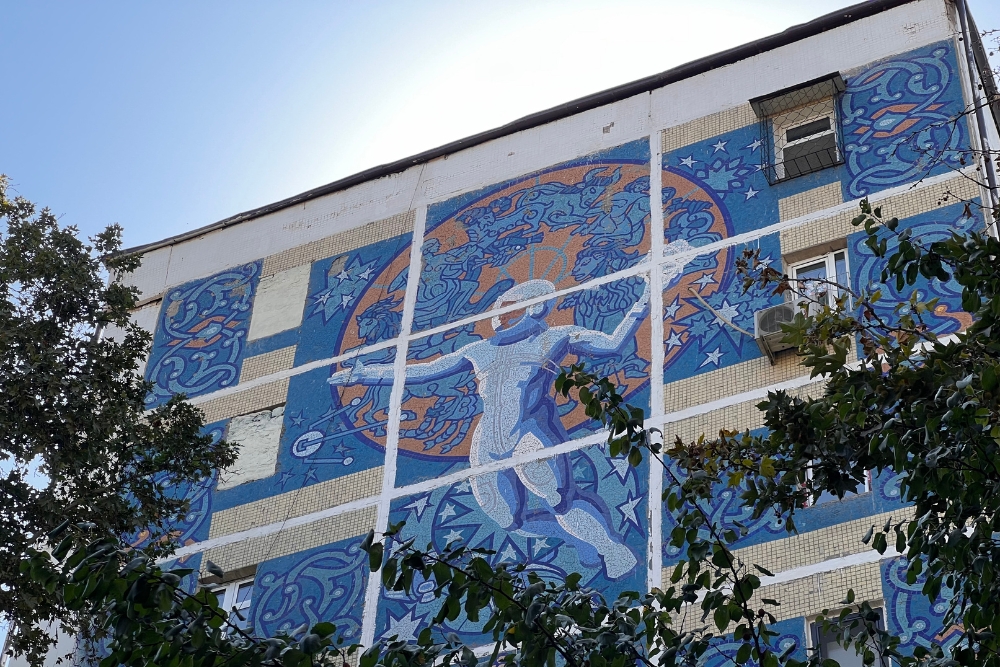
© Gayane Mkhitaryan, soviet mural on a residential building
Places to Visit in Tashkent
Tashkent’s attractions span from ancient Islamic architecture to Soviet-era monuments, creating a unique urban landscape. The city’s well-preserved historical sites sit alongside modern developments, offering visitors a comprehensive view of Uzbekistan’s evolution through the centuries.
Historical Places and Landmarks
Tashkent’s historical sites tell the story of a city that has witnessed empires rise and fall, from ancient Silk Road trading posts to Soviet influence and modern independence. Each landmark offers insight into the cultural layers that make this city so fascinating.
This beautiful Islamic site contains the Uthman Quran, one of the oldest copies of the Quran in the world. The complex comprises Tillya Sheikh Mosque, Barak-Khan Madrasah, and the Imam Al-Bukhari Islamic Institute. The intricate geometric patterns in the floor tiles and peaceful courtyards create an atmosphere of spiritual tranquility.
Tips: Visit early morning to avoid crowds, dress modestly with covered shoulders and legs
Among all the places to see in Tashkent, Chorsu Bazaar is one of the most lively and colorful places that will please your eyes. The chaotic network of stalls, outdoor food stands, and wholesalers is everything you would expect from a Central Asian bazaar at the centre of the old Silk Road.
- Location: Near Chorsu metro station (blue line)
- Best time: Morning for freshest produce and authentic atmosphere
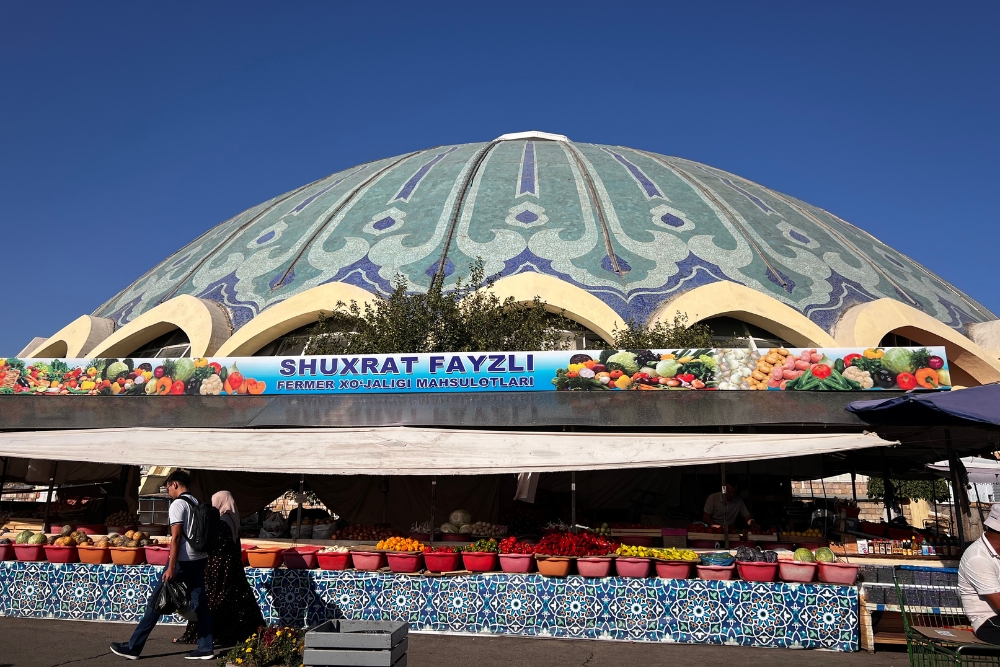
© Gayane Mkhitaryan, Chor-Su Ovqat Bozor, Tashkent
The Kukeldash Madrasah is an architectural landmark and one of the best-preserved sites of the 16th century in Tashkent. This Islamic educational institution showcases traditional Uzbek architectural elements and provides insight into the scholarly traditions of the region.
- Historical significance: One of the few surviving examples of medieval Islamic education architecture in Tashkent
- Website: https://kukaldosh.uz/
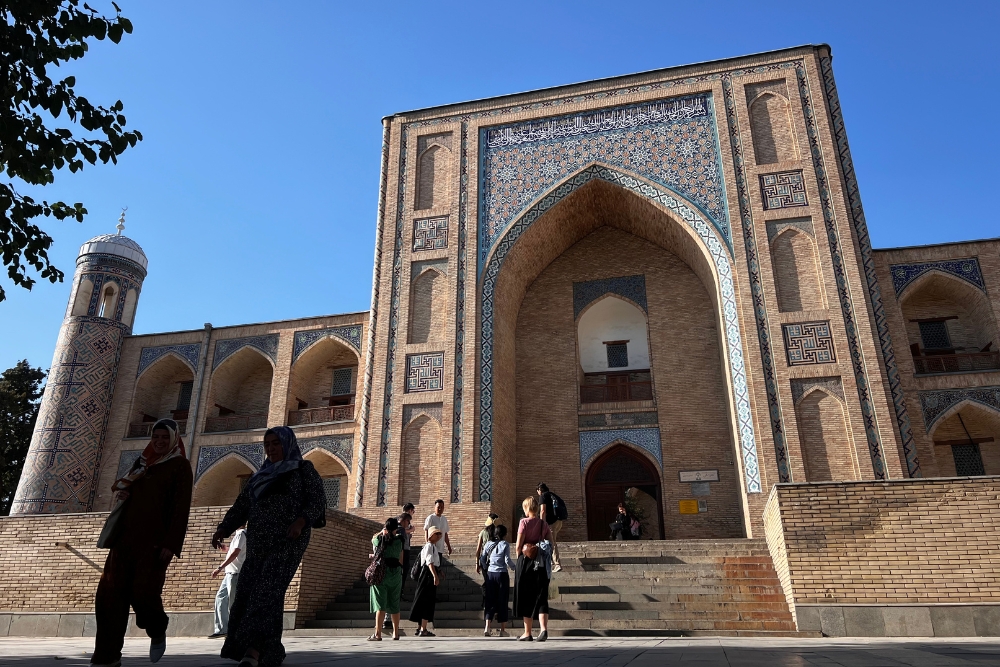
© Gayane Mkhitaryan, Kukeldash Madrasah
Being one of the most famous sights in Tashkent, Independence Square represents Uzbekistan’s independence. The square has marvelously executed monuments, beautiful fountains, and the Eternal Flame in honor of those who struggled for freedom.
- Best viewing time: Evening when fountains are illuminated, sadly, a part of the square is closed to the public
- Metro access: Mustaqilik Maydoni station (red line)
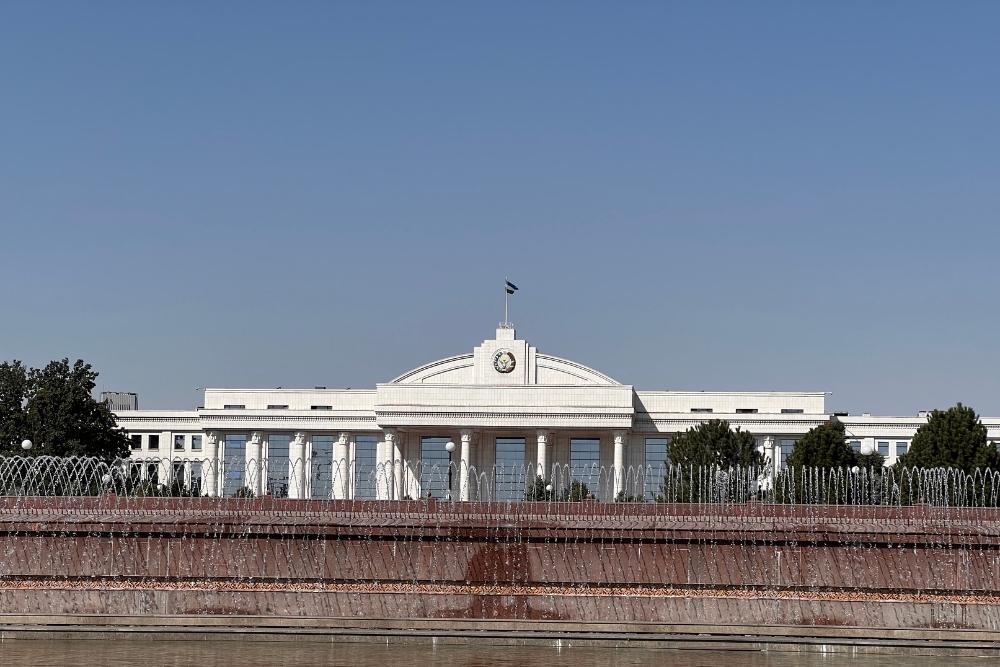
© Gayane Mkhitaryan, Senate of the Republic of Uzbekistan
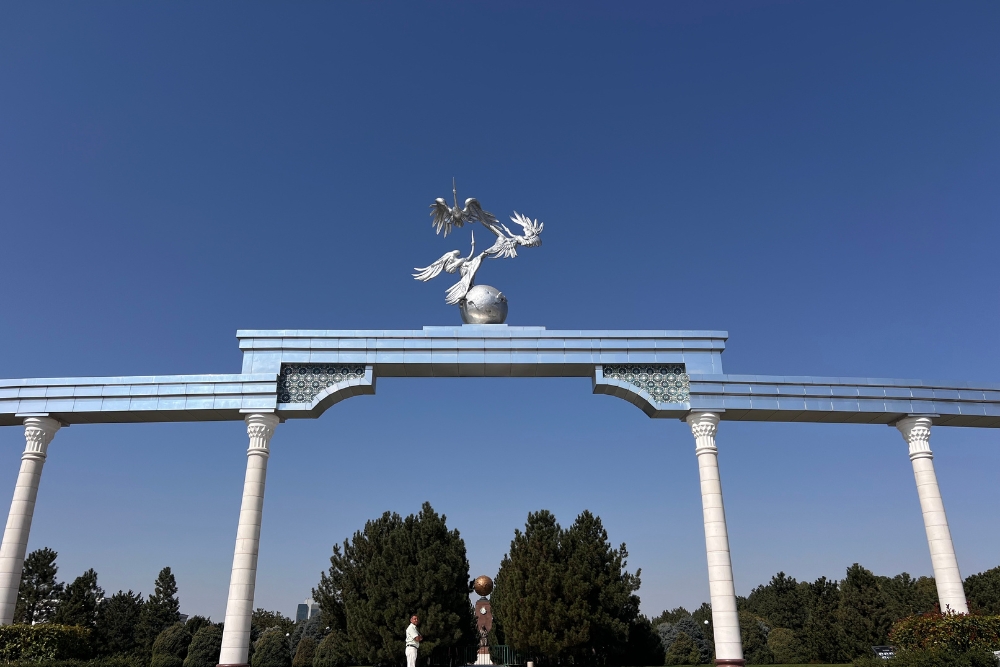
© Gayane Mkhitaryan, Independence Square, also known as Mustaqillik Maydoni, in Tashkent, Uzbekistan
Most Beautiful Churches, Mosques and Religious Landmarks
Tashkent’s religious architecture reflects the city’s diverse spiritual heritage, featuring a mix of Islamic monuments and Orthodox churches, which showcases the tolerant, multicultural character that has defined the city for centuries.
The Minor Mosque was built in 2014 and was immediately liked by all residents and guests of the capital. It is made of white marble and situated in a picturesque location. The modern design respects traditional Islamic architectural principles while incorporating contemporary elements.
- Architecture: White marble construction with traditional Islamic design elements
- Significance: Symbol of Uzbekistan’s religious renaissance
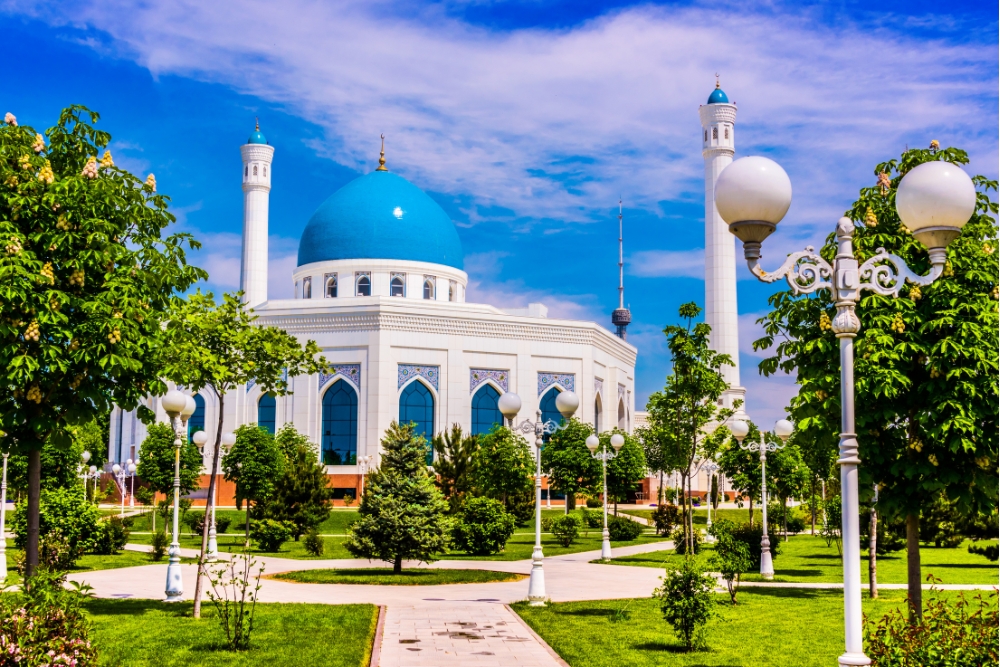
© Canva
Part of the Hazrat Imam Complex, this mosque houses precious Islamic manuscripts and represents the spiritual center of Tashkent. The mosque’s traditional architecture and religious significance make it a must-visit for anyone wanting to understand Uzbek Islamic culture.
- An entry fee is required for the manuscript museum section
- Opening hours: Daily except during prayer times
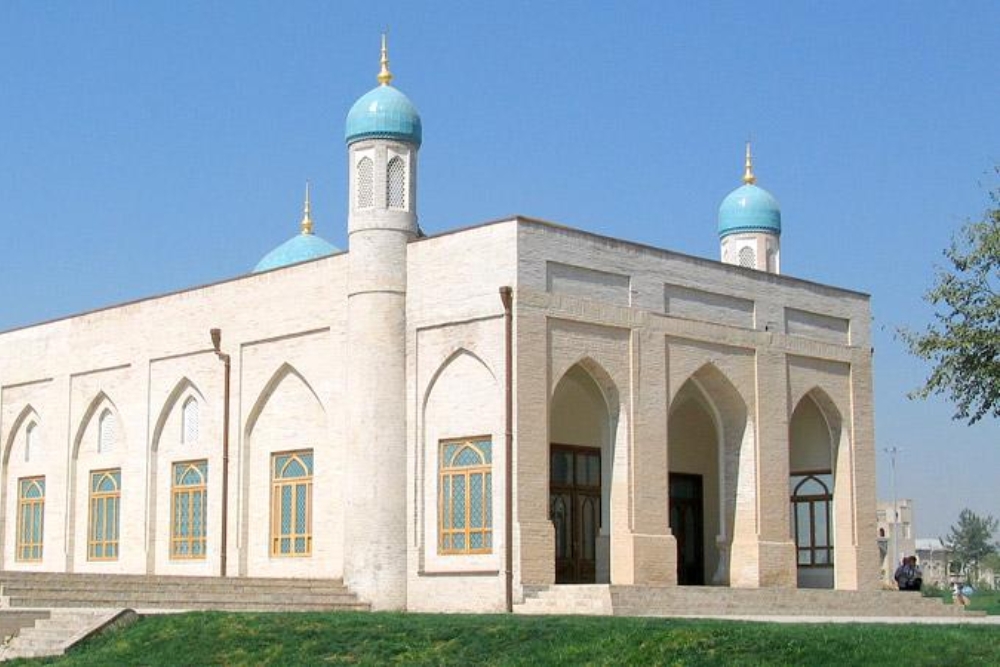
© Uzbek Travel, Tillya Sheikh Mosque
The Sacred Heart of Jesus Cathedral is a Catholic church in Tashkent, also known as the city of the “Polish Catholic Church”. This is one of the few Catholic Church buildings in Uzbekistan.
- Architectural style: European Catholic design adapted to the Central Asian setting
- Community: Serves the small but vibrant Catholic community in Tashkent
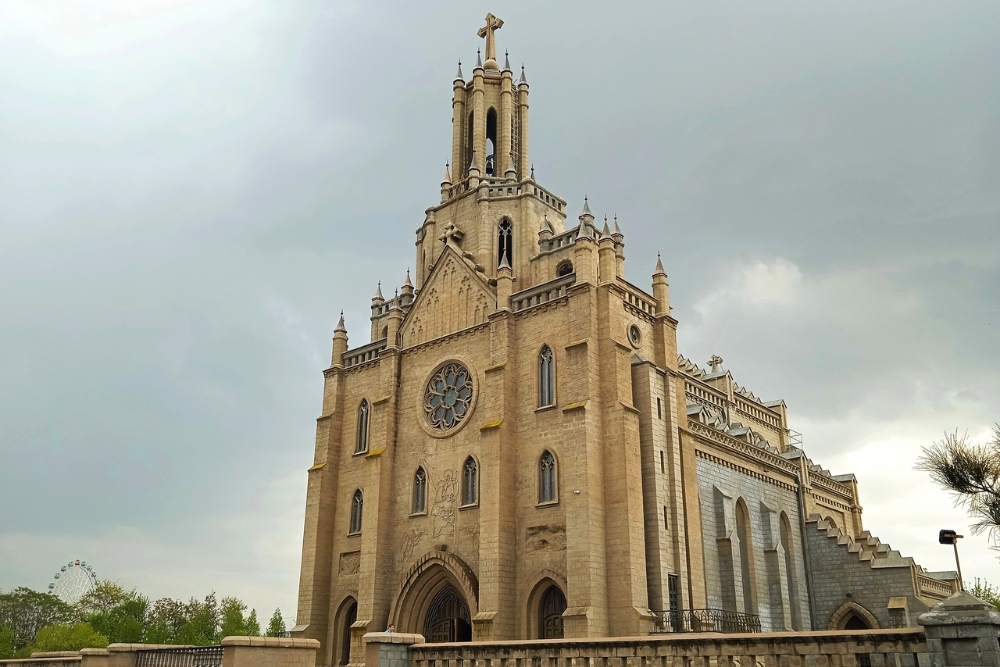
© Wikipedia, Sacred Heart of Jesus Cathedral
A beautiful Russian Orthodox church in Tashkent, featuring stunning architecture and serene surroundings. The cathedral serves the Orthodox community and showcases Russian architectural influences in Central Asia.
- Cultural significance: Represents the multicultural and multi-religious character of modern Tashkent
- Website: https://pravoslavie.uz/
Best Museums & Cultural Sites
Tashkent’s museums provide in-depth insights into Uzbek culture, history, and art, ranging from ancient Silk Road artifacts to Soviet-era collections and contemporary artistic expressions.
The State Museum of History of Uzbekistan, previously known as the National Museum of Turkestan, was founded in 1876 and is one of the oldest museums of Central Asia. The museum’s fund lists over 250,000 exhibits, including more than 60,000 archaeological, over 80,000 numismatic, and 16,000 ethnographic items.
- Highlights: Very well preserved alabaster Buddha relief found from Fayaz Tepe in Termez, numerous fragmentary remains of Buddha heads and decorative motifs
- Website: https://history-museum.uz/
- Entry fee: Approximately 50,000 som
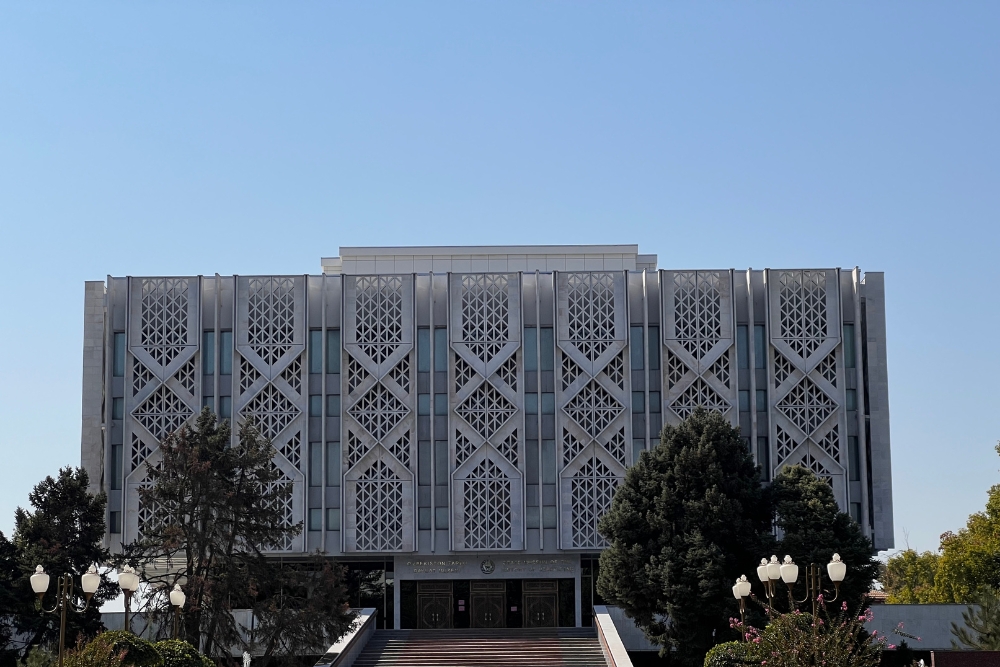
© Gayane Mkhitaryan, State Museum of History of Uzbekistan
The museum collection includes several thousand pieces of art, which collectively illustrate the history of craft development in Uzbekistan, including chasing, jewelry, Uzbek suzani, carpets, skullcaps, miniatures, paintings on wood, woodcarving, and ceramics. Housed in the former home of Imperial Russian diplomat Alexander Polovtsev, who was an enthusiastic collector of handicrafts.
- Special features: Masterclasses in applied arts are often held here, unique items for sale in gift shop, little cafe and courtyard
- Entry fee: 40,000 som (as of 2025)
- Website: http://www.artmuseum.uz/
The State Museum of History of Timurids opened in Tashkent in 1996 for the 660th anniversary of Amir Timur and stands in the very center of Tashkent in the shape of a 3-story dome, by the style of famous local landmarks. The museum celebrates the legacy of Central Asia’s most famous conqueror.
- Architecture: Distinctive blue dome design reminiscent of Samarkand structures
- Collection: Artifacts and exhibits related to the Timurid Empire and Central Asian history
- Website: http://temurid.uz/
The museum has collected memories from the darker pages of Uzbekistan’s history, particularly from the period of Central Asian colonization by the tsarist Russia to the political repressions of the 1930s. You will be able to identify this beautiful and traditionally decorated building by its open mosaic patterns and its two celestial blue domes.
Unique Experiences and Guided Tours
Discover Tashkent through specialized experiences that go beyond typical sightseeing, offering deeper cultural immersion and unique perspectives on the city’s heritage and contemporary life.
- Traditional Uzbek Cooking Classes – Learn to prepare plov, manti, and samsa with local families
- Soviet Tashkent Walking Tours – Explore Tashkent’s Soviet architectural heritage and urban planning
- Silk Road Historical Tours – Trace ancient trade routes and learn about Tashkent’s role in connecting East and West
- Metro Architecture Tours – Guided tours of the world’s most beautiful underground stations, each with unique Soviet-era artistic themes
- Handicraft Workshop Visits – Observe traditional crafts like silk weaving, woodcarving, and ceramic making
- Tashkent Food Tours – Sample local specialties from traditional tea houses to modern restaurants
- Photography Walks – Capture the contrast between old and new Tashkent with local photography guides
Booking: Local tour operators through uzbekistan.travel/en or hotel concierges. On GetYourGuide, you will find numerous interesting options as well.
Free Things to Do
Experience Tashkent without spending a som! The city offers numerous free attractions and activities that showcase its rich culture, fascinating history, and stunning natural beauty.
- Explore Amir Timur Square and gardens – The area surrounding the square is home to restaurants, cafés, and in the evening comes alive with inline skaters and fairground stalls.
- Walk through Independence Square – Marvel at executed monuments, beautiful fountains especially beautiful at night when illuminated.
- Wander the Old City (Eski Shahar) – This is the oldest area, dating back to medieval times, severely damaged inthe 1966 earthquake, but still atmospheric.
- Visit local parks and gardens – Enjoy Tashkent’s reputation as one of the greenest capitals in Central Asia.
- Metro station hopping – Underground network with elaborately themed stations showcasing Soviet-era art and architecture.
- Browse Chorsu Bazaar – Experience the authentic market atmosphere even if you don’t buy anything.
- Enjoy the fountain shows – admission is free to view the fountain show and lights, with many places to purchase food and snacks.
- Street art hunting – Discover murals and graffiti around the city center.
- People watching in central squares – Experience daily life in Tashkent’s public spaces.
Outdoor Activities and Nature
Despite being a major urban center, Tashkent offers surprising opportunities to connect with nature and enjoy outdoor activities throughout the year.
- Chimgan Mountains day trip – 80km from Tashkent, perfect for hiking, skiing (winter), and mountain fresh air
- Charvak Reservoir – Popular destination for swimming, water sports, and lakeside relaxation
- City park cycling – Rent bikes and explore Tashkent’s numerous green spaces and tree-lined avenues
- Botanical Garden visits – Tashkent Botanical Garden hosts thousands of plant species, perfect for walks and picnics
- Jogging along Ankhor Canal – Scenic running routes through the city following the canal system
- Picnicking in Alisher Navoi Park – Large central park perfect for outdoor relaxation
- Winter activities – Ice skating at seasonal rinks and enjoying Tashkent’s mild winter climate
- Photography walks in green areas – Capture Tashkent’s reputation as Central Asia’s greenest capital
Best seasons: Spring (March-May) and autumn (September-November) for comfortable outdoor temperatures
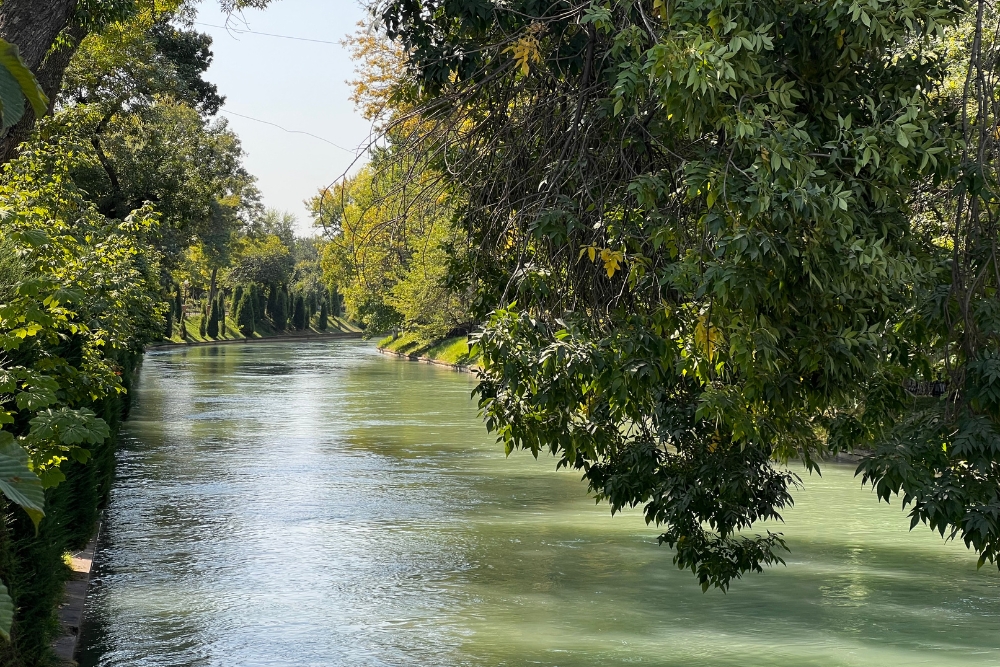
© Gayane Mkhitaryan, Chirchiq River near the parliament in Tashkent
Best Metro Stations
Tashkent Metro was the first underground system in Central Asia, opening in 1977. Originally classified as a military facility and nuclear bomb shelter, photography was banned for over 40 years until 2018. Each of the 50 stations is designed around a particular theme, showcasing a unique blend of Soviet and traditional Uzbek artistic elements.
Metro Information:
- Operating hours: 5:00 AM – 12:00 AM daily
- Ticket price: 1,700 Uzbek som (2025)
- Payment: Credit/debit cards (Visa/Mastercard) accepted
- Website: atto.uz for ATTO card information
Here are the most spectacular stations to visit:
Probably Tashkent’s most famous station, it celebrates the country’s scientific achievements with portraits of famous astronauts, including Yuri Gagarin and Valentina Tereshkova, who emerge in bas-relief from tinted walls mimicking the depths of outer space. The walls fade from black to blue to white to represent the appearance of Earth’s atmospher,e and the dangling glass ceiling lights give passengers the feeling of gazing up at the Milky Way.
- Line: Blue (O’zbekiston)
- Theme: Soviet space exploration achievements
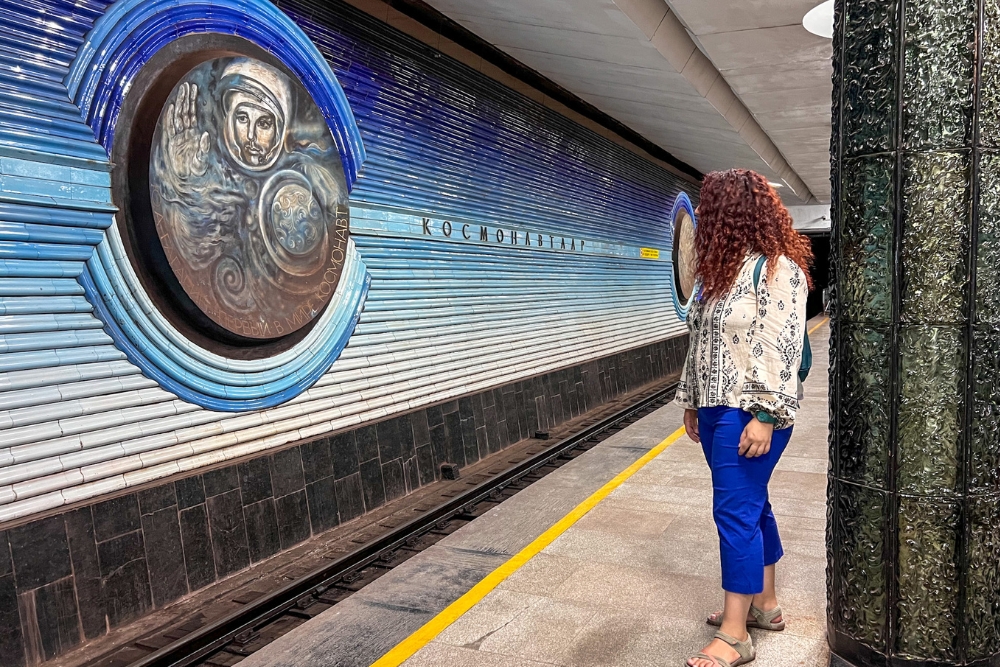
© Gayane Mkhitaryan, Kosmonavtlar (Космонавтлар) – The Space Station
One of the most beautiful metro stations in Tashkent, named after the famous 15th-century Uzbek writer considered the founder of Uzbek literature. The turquoise images on the walls show scenes from his stories, while the domed ceiling reflects the style of mosques and madrasas built during his time.
- Line: Blue (O’zbekiston) – Transfer station
- Theme: Classic Uzbek literature and Islamic architecture

© Gayane Mkhitaryan, Alisher Navoiy (Алишер Навоий) station
The walls are covered in traditional-looking green and blue mosaics of flowering cotton plants, celebrating Uzbekistan’s position as one of the world’s leading cotton producers. The industry has played an essential role in Uzbekistan’s economic development.
- Line: Red (Chilonzor)
- Theme: Cotton industry and agricultural heritage
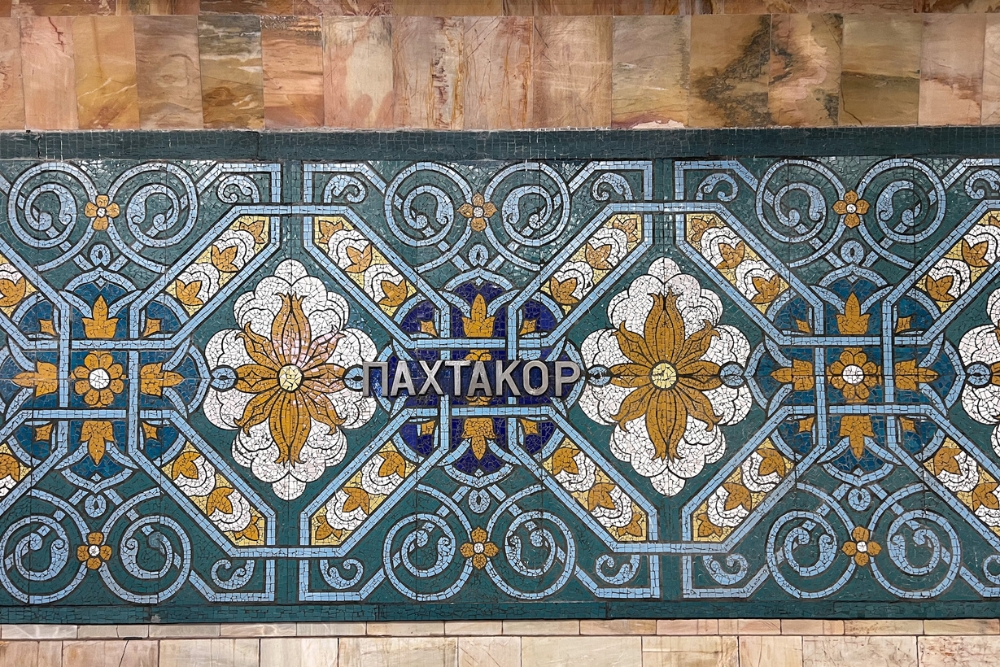
© Gayane Mkhitaryan, Pakhtakor (Пахтакор) – Cotton Picker
Silk Road Heritage Sites
Tashkent’s position on the ancient Silk Road made it a crucial hub for trading, connecting East and West. While the city has undergone significant modernization, traces of its Silk Road heritage remain visible throughout the capital.
This unique cultural center, opened in 2002, serves as both a museum and a scientific center dedicated to studying Silk Road history. The name reflects the historical caravanserais, which served as resting places for traders and travelers, where cultural exchange between the East and West took place.
- Features: Library with Silk Road book collections, conference hall, exhibition halls, laboratory, scientific workshop, and Friendship Garden with trees planted by political figures
- Significance: Organizes archaeological expeditions and attracts international research centers
- Website: https://caravanserai.uz/
One of the longest established and most impressive traditional markets, Chorsu Bazaar in Old Tashkent has been serving traders for centuries. While the turquoise domes you see today date from Soviet times, the trading tradition remains unchanged from Silk Road days.
- Silk Road Connection: Continuing the ancient tradition of Central Asian bazaars where merchants gathered to trade goods from across the known world
- Modern Role: Still serves as the primary marketplace for local produce, spices, and traditional crafts
Soviet Era Legacy
Tashkent bears unique witness to the Soviet era in Central Asia, offering visitors insight into how communist ideology blended with local traditions to create a distinctive urban landscape.
Soviet Architecture & Urban Planning
Hotel Uzbekistan
A typical Soviet hotel architecture example, during the Soviet Union every big city had a state-run hotel. The architecture of these communist-era hotels is impressive, featuring huge scale designs that now serve as upmarket accommodations.
- Historical Role: Symbol of Soviet hospitality and state control over tourism
- Current Status: Successfully transformed into one of Tashkent’s best hotels
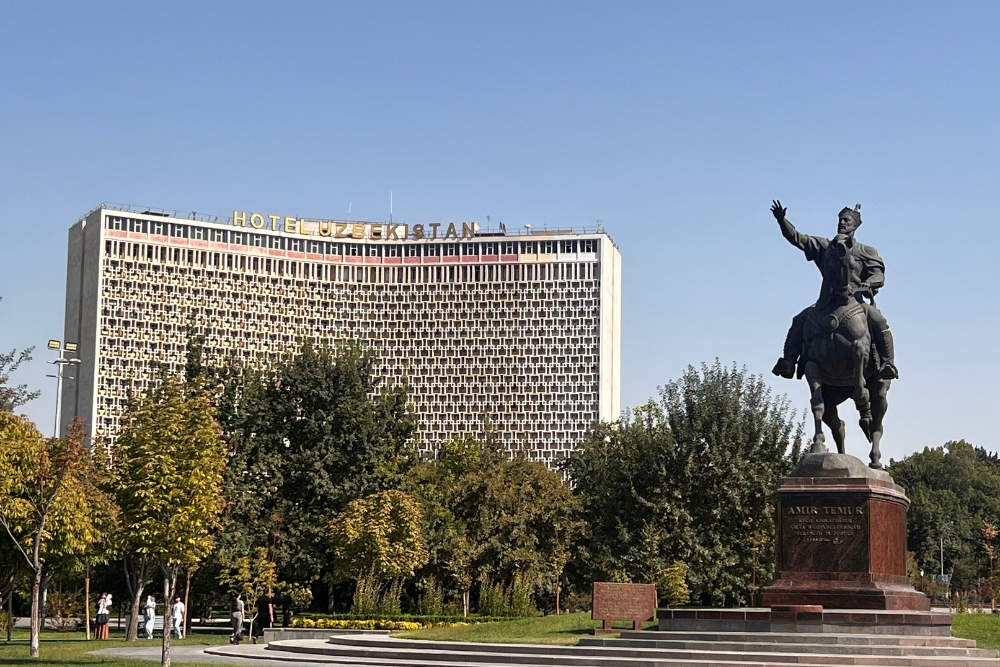
© Gayane Mkhitaryan, Hotel Uzbekistan and Amir Temur
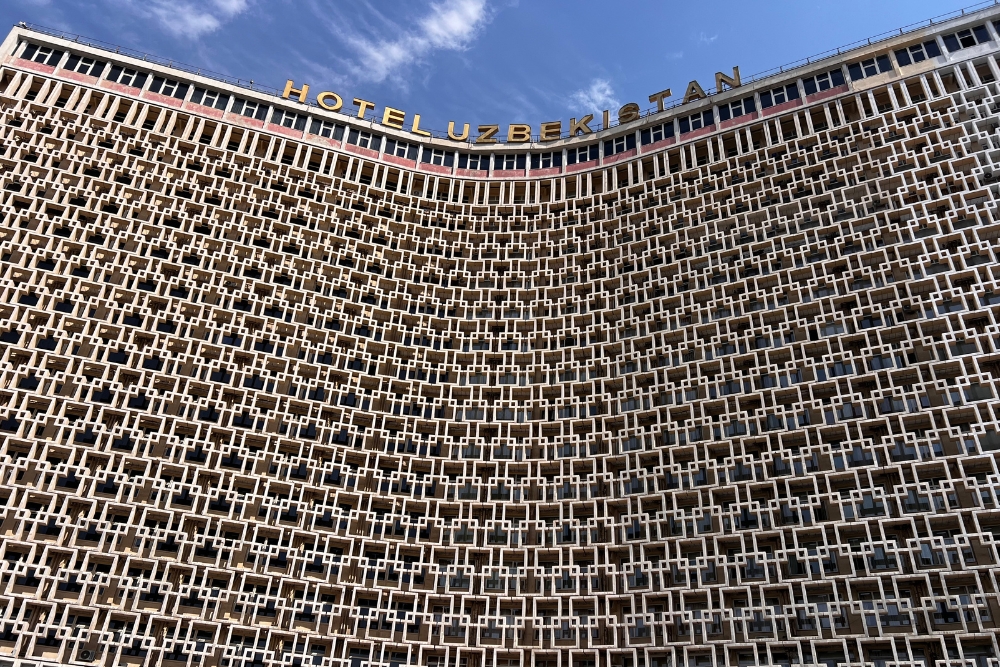
© Gayane Mkhitaryan, Hotel Uzbekistan
Soviet Modernist Buildings
- Palace of Concerts and Sports – Brutalist architecture representing Soviet cultural ambitions
- Former House of Scientists – Modernist design showcasing Soviet scientific priorities
- Microrayons (Chilanzar District) – Soviet urban planning with standardized residential blocks
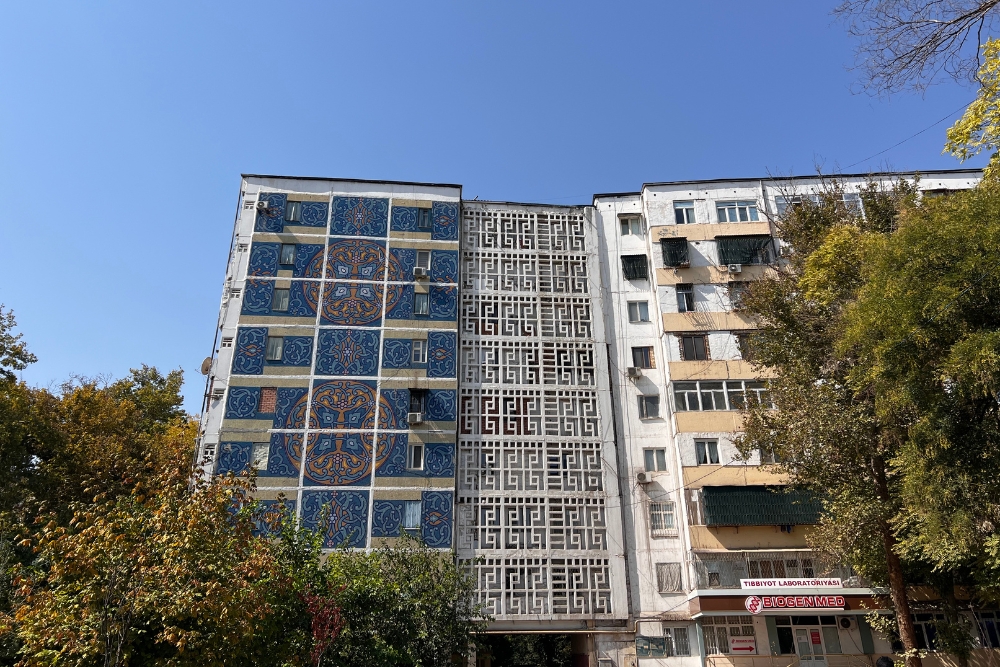
© Gayane Mkhitaryan, soviet mural on a residential building
Peoples’ Friendship Palace
A grand cultural venue built during the Soviet period, the Peoples’ Friendship Palace hosts concerts, theatrical performances, and major public events. Its architecture reflects Soviet monumentalism with spacious halls and ornate decorations. The palace continues to serve as an important cultural institution in modern Tashkent, accommodating everything from classical music performances to contemporary exhibitions, maintaining its role as a gathering place for diverse cultural expressions.
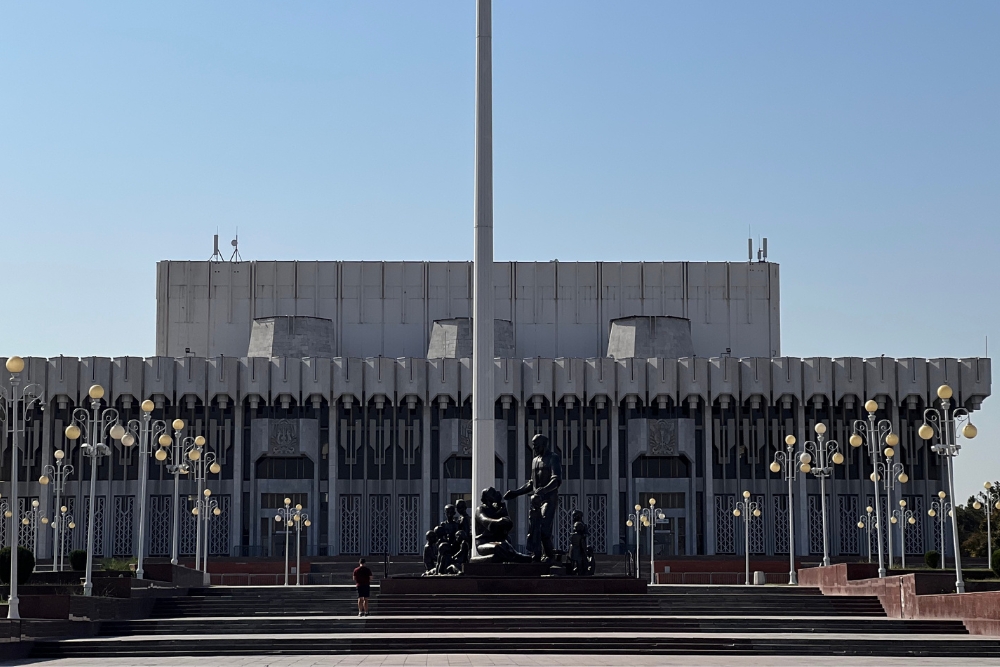
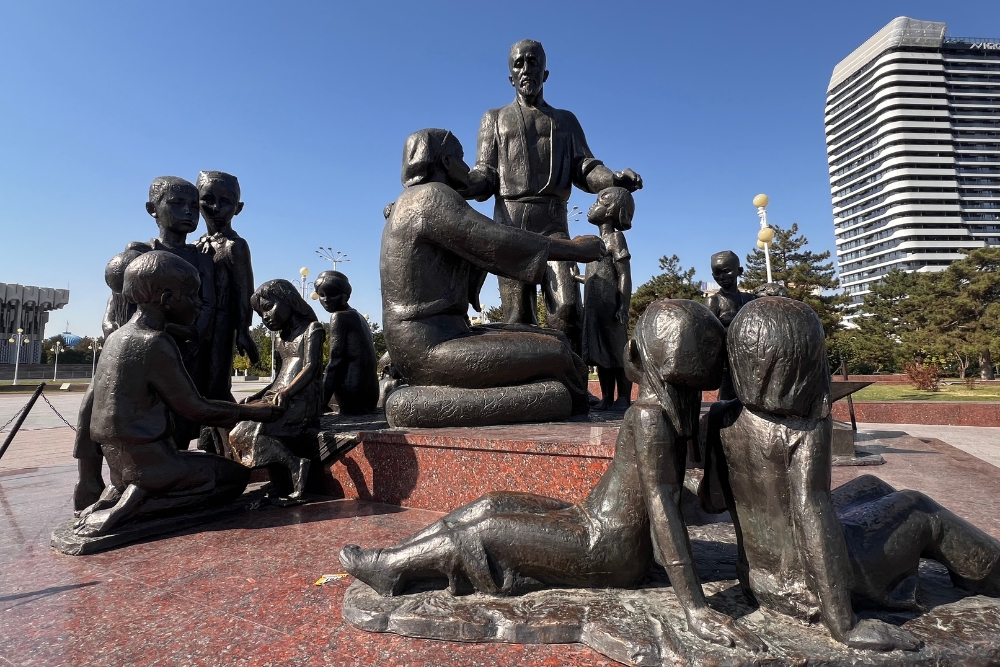
Monument of Friendship
This monument celebrates the international solidarity shown to Tashkent after the 1966 earthquake. It recognizes the contributions of various Soviet republics and nations that assisted in rebuilding the devastated capital. The memorial stands as a testament to cooperation and brotherhood during times of crisis, representing the multicultural effort that transformed Tashkent into a modern city within just a few years.
Palace of Culture for Aircraft Workers
This Soviet-era cultural center was built to serve employees of the Tashkent Aircraft Production Corporation. The palace functioned as a community hub offering theatrical performances, concerts, educational lectures, and recreational activities for workers and their families. It exemplifies the Soviet system’s approach to providing cultural amenities for industrial laborers, combining entertainment with ideological education in an architectural setting typical of mid-20th century Soviet design.
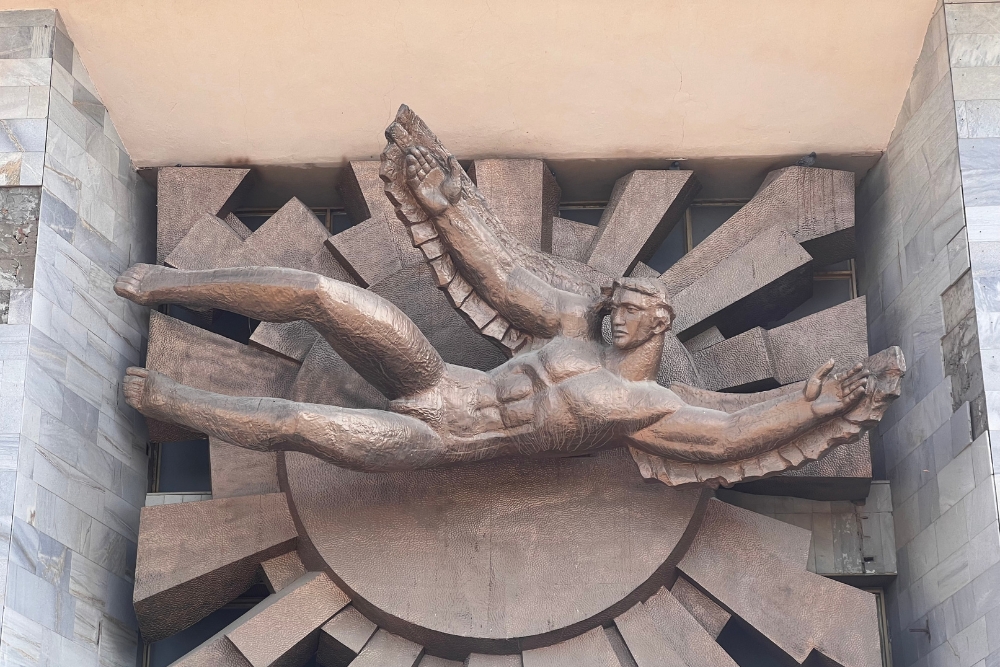
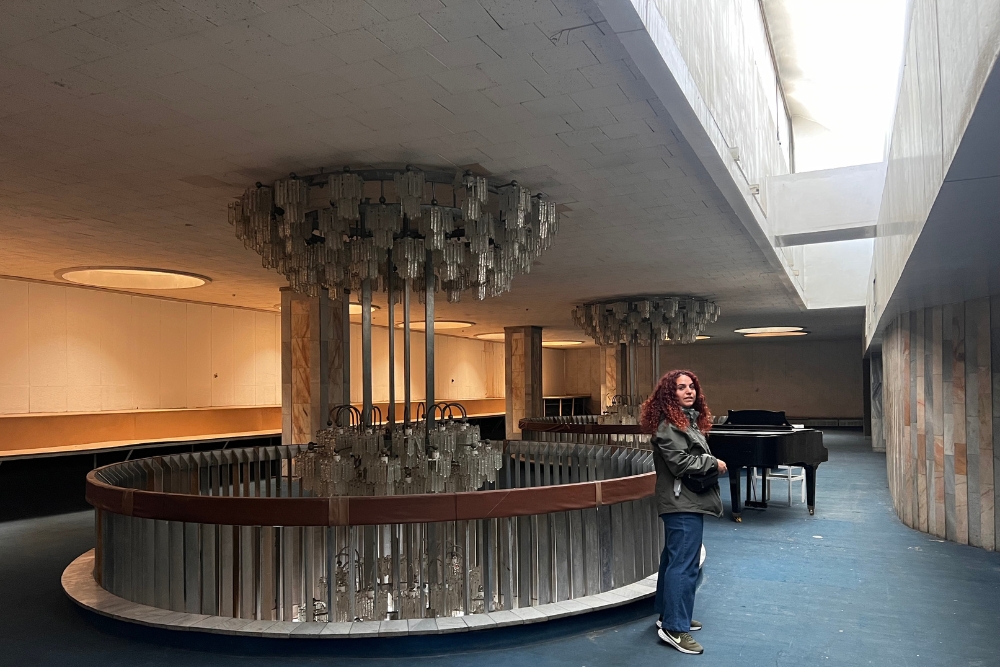
© Gayane Mkhitaryan, Palace of Culture for Aircraft Workers in Tashkent, Uzbekistan
Turkiston Palace (Turkistan Concert Hall)
This prominent cultural venue hosts classical concerts, opera performances, and theatrical productions. The palace features elegant architecture with excellent acoustics, making it a premier destination for performing arts in Tashkent. Named after the historical Turkestan region, it serves as home to various musical ensembles and theatrical companies, offering a diverse program that ranges from traditional Uzbek music to Western classical performances, enriching the capital’s cultural landscape.
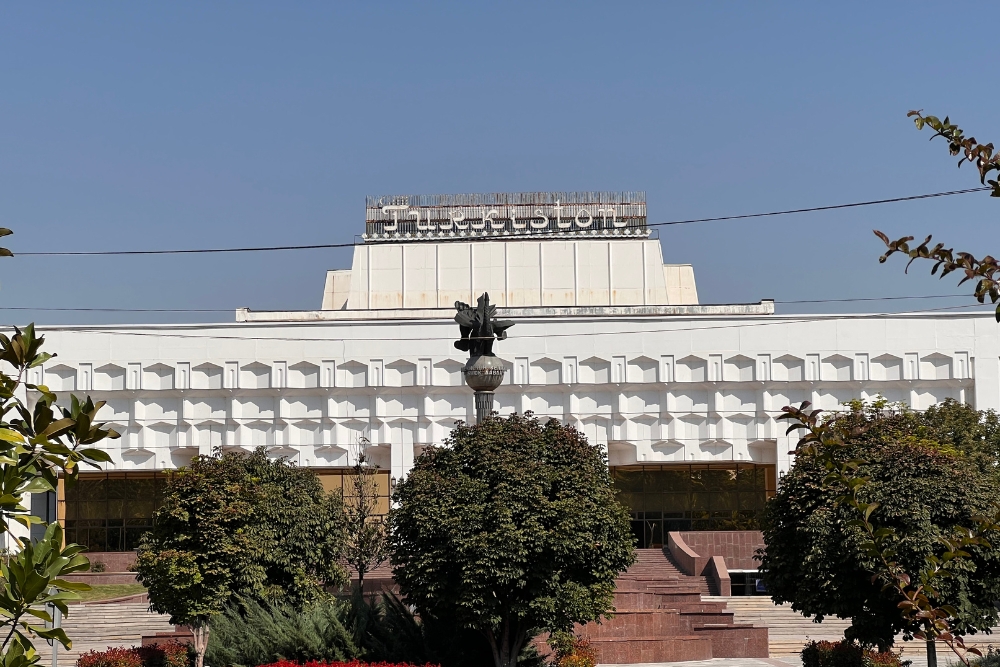
© Gayane Mkhitaryan, Turkiston Palace (also known as Turkistan Concert Hall) in Tashkent, Uzbekistan
Tashkent Sirk (Circus)
The Tashkent Circus is a beloved entertainment venue offering acrobatic performances, animal acts, and comedy shows. Built in Soviet times, it represents the traditional Russian circus culture that spread throughout Central Asia. The circular building features distinctive architecture with a domed roof. Modern performances blend classical circus arts with contemporary elements, attracting families and tourists seeking traditional entertainment in the heart of Uzbekistan’s capital.
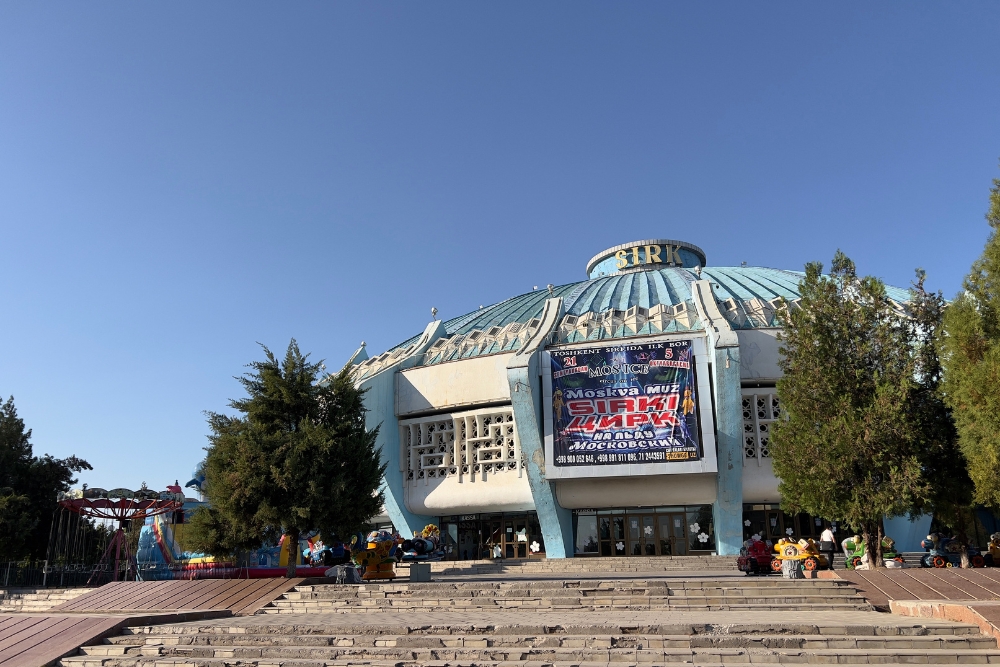
© Gayane Mkhitaryan, Tashkent Sirk/Circus
Metro as Soviet Cultural Project
The Tashkent Metro was built with personal supervision by Communist Party leader Sharaf Rashidov, who made 18 trips between Tashkent and Moscow to secure permissions. He wanted each station to display Uzbek national art while maintaining Soviet ideology.
Unique Characteristics:
- Each station was designed by individual artists to honor cultural heroes, writers, composers, and scientists while incorporating traditional Uzbek designs
- The system employed more than 4,200 staff and was built to resist earthquakes of magnitude 9.0
- Unlike typical Soviet propaganda art, Tashkent’s metro art glorified Uzbek people and culture rather than communist ideology
Post-Soviet Transformation
After 1991, Tashkent underwent “decommunization”:
- Many metro stations were renamed to remove references to Communism
- Lenin monuments replaced with independence symbols
- Soviet street names changed to honor Uzbek historical figures
- State buildings repurposed for modern democratic institutions
Soviet Heritage Sites to Visit:
- Independence Square (former Lenin Square) – Shows transition from Soviet to independent Uzbekistan
- Memorial to Victims of Political Repression – Honors those who suffered under Soviet rule
- Various Microrayons – Experience Soviet residential planning still housing thousands of families
Best Neighborhoods to Explore
Each district of Tashkent offers a different perspective on the city’s character, from historic quarters to modern business districts and traditional residential areas.
- Old City (Eski Shahar) – Medieval atmospheric area with traditional architecture, though severely damaged in 1966 earthquake
- Mirabad District – Modern commercial center with shopping malls, restaurants, and contemporary architecture
- Chilanzar – Large residential district showcasing Soviet-era urban planning and microrayons
- Shaykhantakhur – Mixed neighborhood with both historical sites and modern developments
- Yunusabad – Upscale area with parks, modern housing, and the TV tower
- Sergeli – Industrial and residential area offering glimpse into working-class Tashkent life
- Mirzo Ulugbek – Academic district home to several universities and research institutions
- Yakkasaray – Business district with modern office buildings and international hotels
Getting around: Use the efficient metro system or Yandex Taxi for convenient neighborhood hopping
Famous Movie and TV Locations
Tashkent’s diverse architecture and well-preserved Soviet-era buildings have made it an attractive filming location for international productions seeking authentic Central Asian and Soviet settings.
- Soviet-era apartment blocks – Used in various international films depicting USSR-era life
- Hotel Uzbekistan – Classic piece of Soviet design featured in several documentaries about Central Asia
- Metro stations – Once forbidden to photograph, now featured in films showcasing Soviet underground architecture
- Independence Square – Frequently used for establishing shots in documentaries about post-Soviet states
- Old City quarters – Traditional Central Asian architecture featured in Silk Road documentaries
- Tashkent TV Tower – Iconic structure appearing in films about modern Uzbekistan
Film tourism tip: The metro stations are particularly photogenic and were once off-limits to cameras, making them especially interesting for photography enthusiasts
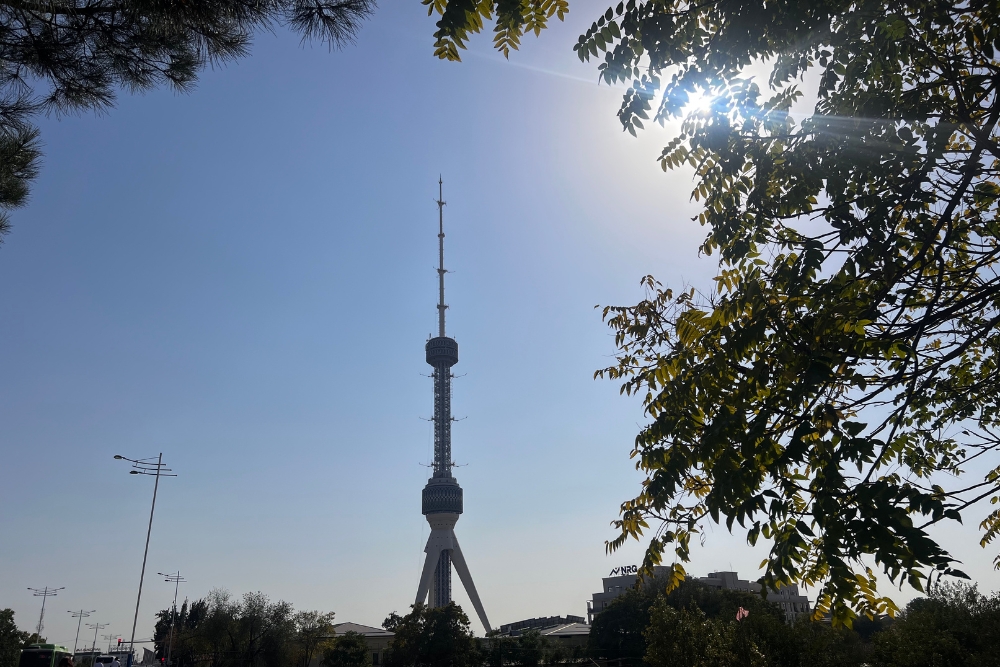
© Gayane Mkhitaryan, Tashkent TV tower
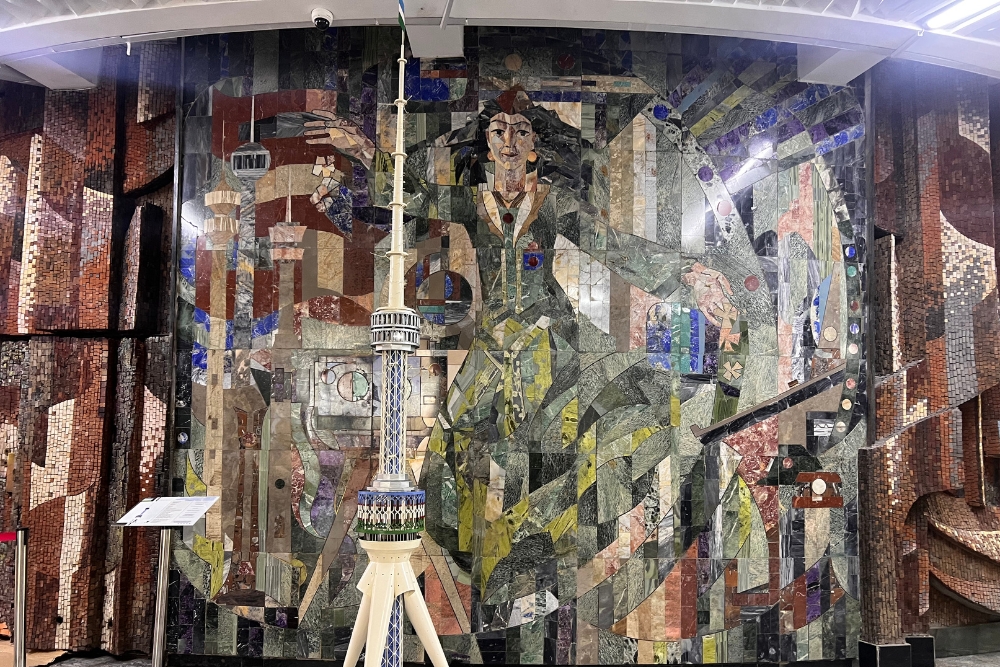
Best Panoramic Viewpoints in Tashkent
Experience Tashkent from above at these spectacular vantage points offering sweeping views of the capital’s unique blend of ancient and modern architecture.
- Tashkent TV Tower observation deck – The tallest structure in Lithuania, offering panoramic city views witha revolving restaurant experience at 165 meters
- Hotel Uzbekistan upper floors – Beautiful view over Amir Timur square from the classic Soviet hotel’s top floor
- Kukeldash Madrasah rooftop – Traditional architectural perspective over the old city (when accessible)
- Metro bridge viewpoints – Elevated metro lines provide unique urban perspectives
- Park hilltops – Natural elevated areas in Tashkent’s numerous parks
- Intercontinental Hotel Ember restaurant – Rooftop dining with city views from the 22nd floor
Best times: Sunset and evening when the city lights create magical urban landscapes
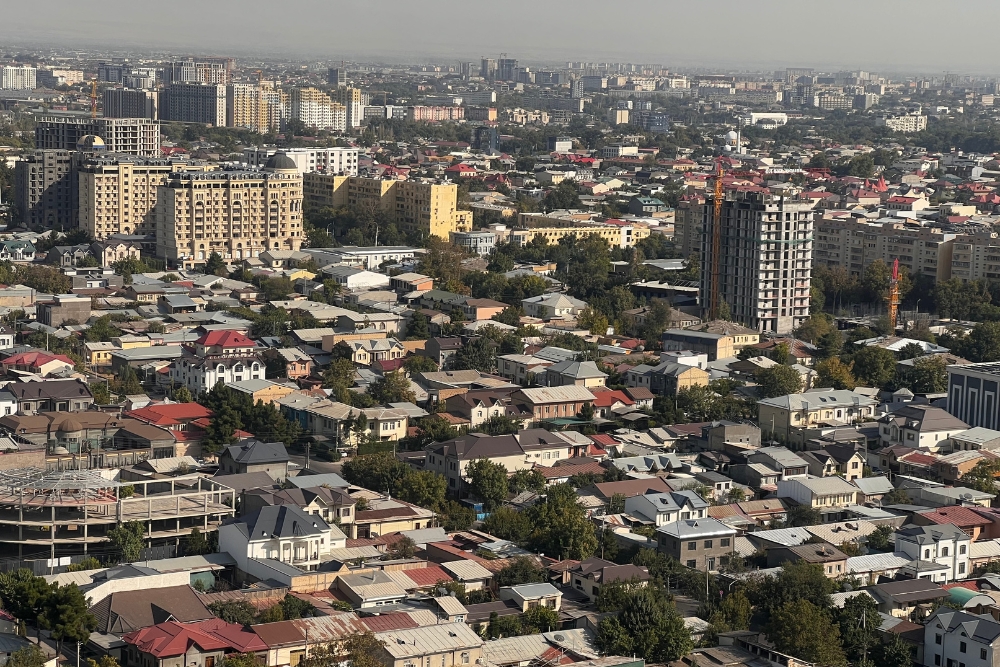
© Gayane Mkhitaryan, view from Tashkent TV tower
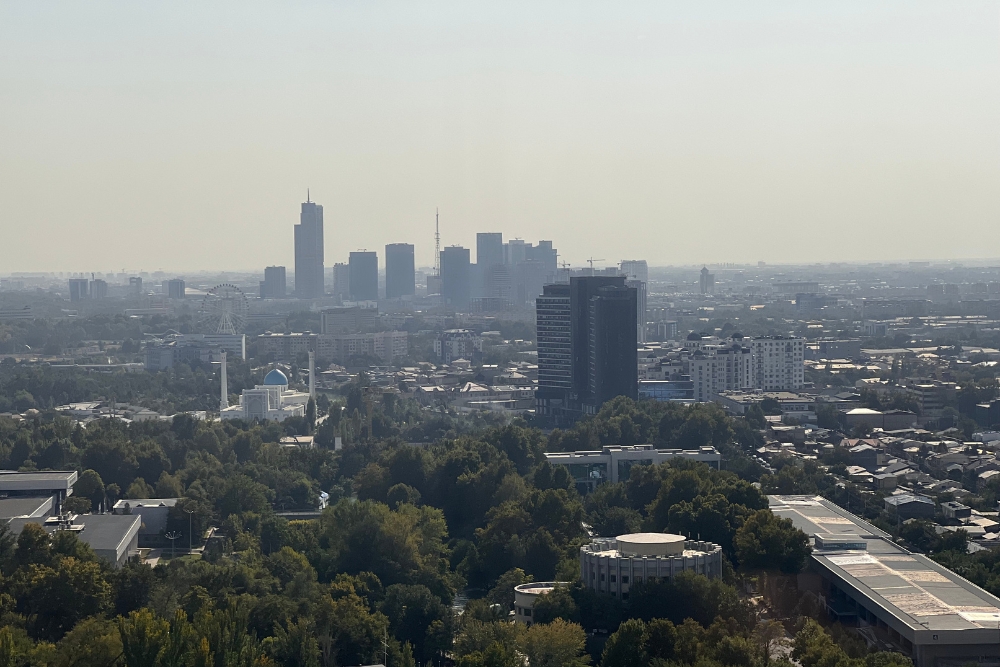
© Gayane Mkhitaryan, view from Tashkent TV tower
Traditional Uzbek Souvenirs and Where to Buy Them
Take home authentic pieces of Uzbek culture with these traditional crafts and specialties available throughout Tashkent’s markets and specialty shops.
- Silk products and suzani embroidery – Handwoven silk scarves, traditional decorative wall hangings (Chorsu Bazaar, Museum of Applied Arts shop)
- Uzbek ceramics and pottery – Traditional blue and white Fergana ceramics, decorative plates (Local craft shops, Sayram market)
- Traditional musical instruments – Doira drums, rubab string instruments (Specialized music shops near conservatory)
- Uzbek skullcaps (doppi) – Traditional embroidered caps in various regional styles (Chorsu Bazaar, Old City shops)
- Spices and dried fruits – Saffron, cumin, dried apricots, nuts, traditional sweets (Chorsu Bazaar spice section)
- Handwoven carpets – Traditional Central Asian patterns and designs (Carpet shops in old city)
- Silver jewelry – Traditional designs with turquoise and other local stones (Jewelry quarter near Chorsu)
- Miniature paintings – Traditional Islamic art depicting local legends and history (Art galleries, museum shops)
- Best shopping areas: Chorsu Bazaar for authentic market experience, Museum of Applied Arts for quality crafts, Sayram and other local markets
Bargaining: Expected in bazaars, but fixed prices in museum shops and galleries
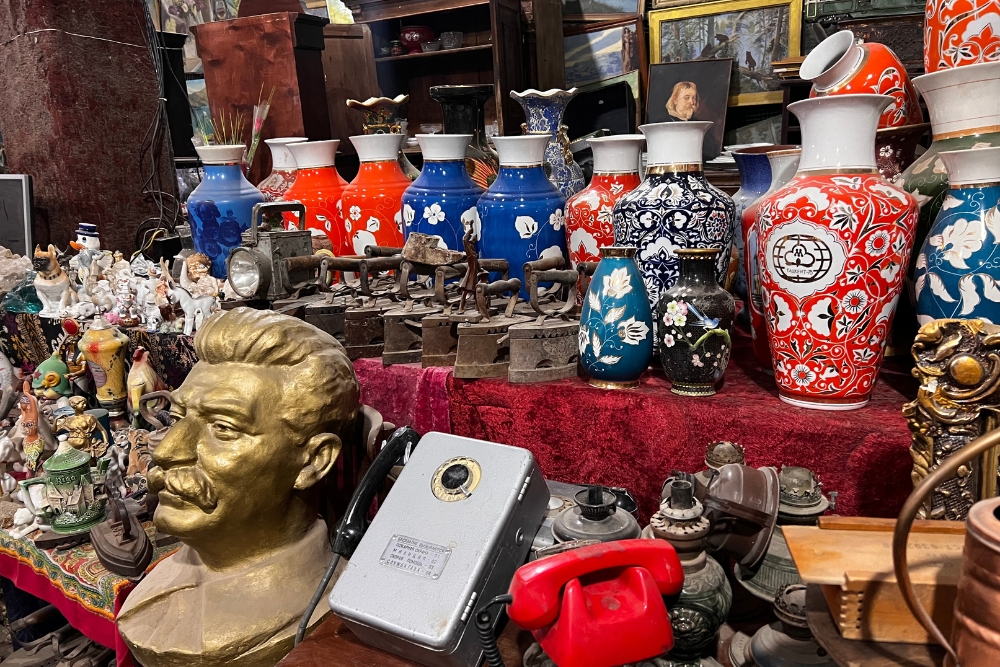
© Gayane Mkhitaryan, Antique store Tashkent
Bonus: Traditional Food & Drink + Best Places
Uzbek cuisine is one of Central Asia’s most sophisticated culinary traditions, blending influences from the Silk Road with local ingredients and time-honored cooking techniques.
Must-Try Traditional Dishes
- Plov (Pilaf) – Rice with carefully cooked meat and sweet carrots, considered the national dish. Besh Qozon offers three variations ranging from 36,000 to 40,000 som, typically topped with horse meat though lamb may be available
- Manti – Large steamed dumplings filled with meat and onions, served with sour cream
- Samsa – Crisp, golden pastry with filling of hand-chopped beef or chicken, seasoned with exquisite spices, baked to perfection
- Lagman – Long, springy hand-pulled noodles in rich, flavorful broth with fresh vegetables and chunks of meat
- Shashlik – Grilled meat skewers with onions, a Central Asian barbecue staple
- Non bread – Traditional Uzbek bread with golden, crispy crust and soft, airy interior, adorned with traditional patterns and sesame seeds
- Dimlama – Uzbek stew of meat, potatoes, onions, carrots and other vegetables, everyone in the region has its own version.
Best Traditional Restaurants
- National Food – The best place to try Uzbek food that is different from the usual plov or shashlik, serves extensive menu of local recipes to hundreds of people per day, most prepared right in front of you
- Besh Qozon – Famous for authentic plov with three variations, typically serves with horse meat though lamb available, avoid rush hours for best seating
- Khiva Restaurant – At Hyatt Regency Tashkent serving traditional dishes like plov, shashlik, and manti in a polished environment with traditional obi non bread baked fresh
- Afsona Restaurant – Modern Uzbek restaurant marrying contemporary design with traditional elements, featuring national clay ovens and budget-friendly authentic dishes
Traditional Drinks
- Green tea (kok choy) – Served throughout the day, essential part of Uzbek hospitality
- Black tea with traditional sweets – Often served with navat (rock sugar)
- Fresh fruit juices – Made from local melons, grapes, and pomegranates
- Ayran – Fermented dairy drink, refreshing and cooling
- Traditional fermented beverages – Including kumys (fermented mare’s milk) for the adventurous
Where to Experience Traditional Food Culture
- Chorsu Bazaar food stalls – Local canteens offer cheap, authentic meals
- Traditional tea houses (chaikhanas) – Authentic settings for experiencing Uzbek hospitality
- Family-run restaurants in old city – Often unmarked but serving the most authentic home-style cooking
Food culture tips: Meals are communal experiences, bread is sacred (never place it upside down), and tea ceremony is an important social ritual. Most traditional restaurants are very affordable, with hearty meals costing 30,000-80,000 som per person.
FAQs: The Answers I Needed Before Planning My Trip
How many days are enough in Tashkent?
2 days are enough for each city. Khiva and Tashkent are usually given 1 day each, according to experienced travelers. However, I’d recommend 2-3 days to properly explore the metro stations, visit Chorsu Bazaar, see the old town, and take a day trip to nearby mountains without rushing.
What is Tashkent famous for shopping?
Tashkent’s main shopping attractions include Chorsu Bazaar, the largest market in Uzbekistan for traditional goods, spices, and crafts, as well as modern malls like Tashkent City Park and Mall. You’ll find everything from Soviet-era antiques to handmade carpets and traditional pottery.
Can you drink in Tashkent?
Yes, alcohol is available in Tashkent. Bla Bla Tashkent was great and had vibrant nightlife. Good music and great ambience. Had a live dj and tables, so dancing is encouraged. You can find bars, restaurants serving alcohol, and nightlife venues, though it’s less prominent than in non-Muslim countries.
Can I wear shorts in Tashkent?
Women and men can dress as they please. The weather is extremely hot this time of year, so wearing shorts and a t-shirt is recommended. However, dress modestly when visiting religious sites, such as mosques.
Do I need cash in Tashkent?
Not always. Visa credit cards are widely accepted. Even in small convenience stores and fast food restaurants, they’d assume I’d pay with card. However, bring enough small bills to pay for public transport and Yandex as these still require cash.
How does the Tashkent Metro work and how much does it cost?
One ride costs 3,000 soum (approximately US$0.25) when paid with cash, regardless of the distance traveled or the number of transfers. Buy a token at the station for 1,200 som. This is good for as far as you want to go until you leave the station. The metro runs from 5 AM to midnight, and you can take a tour of unlimited stations for the price of a single ticket, provided you don’t exit the system (the same way I do in Yerevan).
How do I get from Tashkent airport to the city center?
The cheapest option is using the Yandex taxi app – you’d only pay around UZS 15,000-20,000 (approximately $ 1-1.50 USD), depending on where you’ll be staying in the city. Buses run 06:00-22:00: buses 47, 11 (northbound), and 9 take 40 minutes to the city centre. Official airport taxis cost significantly more, ranging from 60,000 to 130,000 UZS.
Is Tashkent safe for solo female travelers?
Very safe. In Uzbek culture, men don’t tend to approach foreign women very often. However, it is very much a male-dominated society, driven by religion and culture, so dress modestly, if you don’t want issues.
Do I need to register my stay in Tashkent?
Yes, registration is still required for stays over 3 days. Most hotels handle this automatically, but if you’re staying in private accommodation, such as Airbnb, you’ll need to register at the local OVIR office or have your host assist you.
Can I use US dollars in Tashkent?
You can take dollars or GBP to Uzbekistan. You can change the currency to Uzbek sums at the airport or at any nearest exchange office. The exchange rate is the same everywhere, set by the Central Bank of Uzbekistan.
Are credit cards accepted in Tashkent?
Yes, Visa credit cards are widely accepted. Even in small convenience stores and fast food restaurants, they’d assume I’d pay with a card. This makes travel much more convenient than in many other Central Asian countries.
Where can I exchange money in Tashkent?
You can change the currency to Uzbek sums at the airport or at any nearest exchange office. The hotels also have exchange points. The good news is that banks and official exchange points offer the same rates set by the central bank.
How do I buy train tickets from Tashkent to other cities?
I recommend purchasing tickets online for convenience, although I had a lot of difficulties. It doesn’t matter if you are buying online or in person, as they have access to the same database in the train stations. You can book through the official Uzbekistan Railways website or at the station. To be on the safe side, try to arrive 30 minutes before departure; sometimes a big queue forms at the various security checks.
Can I take photos in Tashkent Metro stations?
Yes! Despite the metro’s wide range of artistic and architectural features, it was notably illegal to take pictures and/or video inside the metro (due to its secret second role as a nuclear bomb shelter. The ban was lifted in 2018, allowing photos of its chandeliers, marbles, and Soviet memorials.
Final Thoughts on Visiting Tashkent
Tashkent surprised me in the best possible way. While others rush straight to Samarkand’s famous domes, I found something equally compelling here: a city where Soviet grandeur meets Central Asian soul, where you can explore the world’s most beautiful metro stations for pocket change, then feast on incredible plov for under $3. It’s not the Silk Road fantasy you might expect, but it’s something better—authentic, affordable, and refreshingly real. Don’t just pass through Tashkent; give it the time it deserves. This underrated capital will show you a side of Uzbekistan that guidebooks rarely capture, and your wallet will thank you for it.
