
Things to Do in Schengen, Luxembourg: The Village That Named Your Visa

A few weeks before I stood on the banks of the Moselle in Schengen, I’d just obtained my three-year multi-entry Schengen visa. So visiting the actual village that gave that visa its name felt a little surreal, like meeting the place a word comes from. I went in December 2024 with my boyfriend, as part of a winter loop that took us from Belgium up to Clervaux, down to Luxembourg City, and finally out to this quiet corner where Luxembourg, France, and Germany meet.
Here’s my honest take before you plan anything: Schengen is tiny. The part most people come for, the monument, the pillars, the museum, sits in one compact riverside spot you can see in an hour or two. But standing at the exact place where Europe agreed to open its borders is one of those small moments that stays with you. If you’ve ever crossed a European border without showing your passport, it’s worth the trip.
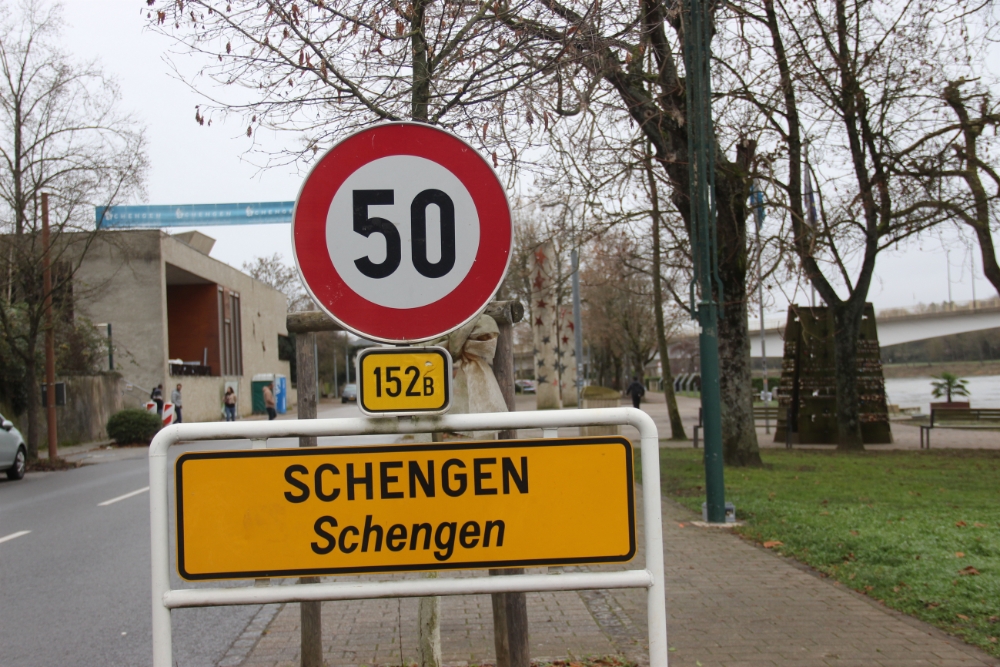
Short answer: yes, but go in with the right expectations. This isn’t a city break. It’s a village of a few thousand people with one very famous claim to fame, so if you’re hoping for a full day of attractions, you’ll run out of village quickly. What you get instead is symbolism, a pretty stretch of the Moselle, and the strange satisfaction of standing somewhere that shaped how millions of people travel. Pair it with Luxembourg City or the Moselle wine route, and it becomes a lovely half-day rather than a long detour.
Some visitors find the monument area a bit plain up close, and I understand why. For me, the meaning carried it.
Why a Tiny Wine Village Named Your Visa
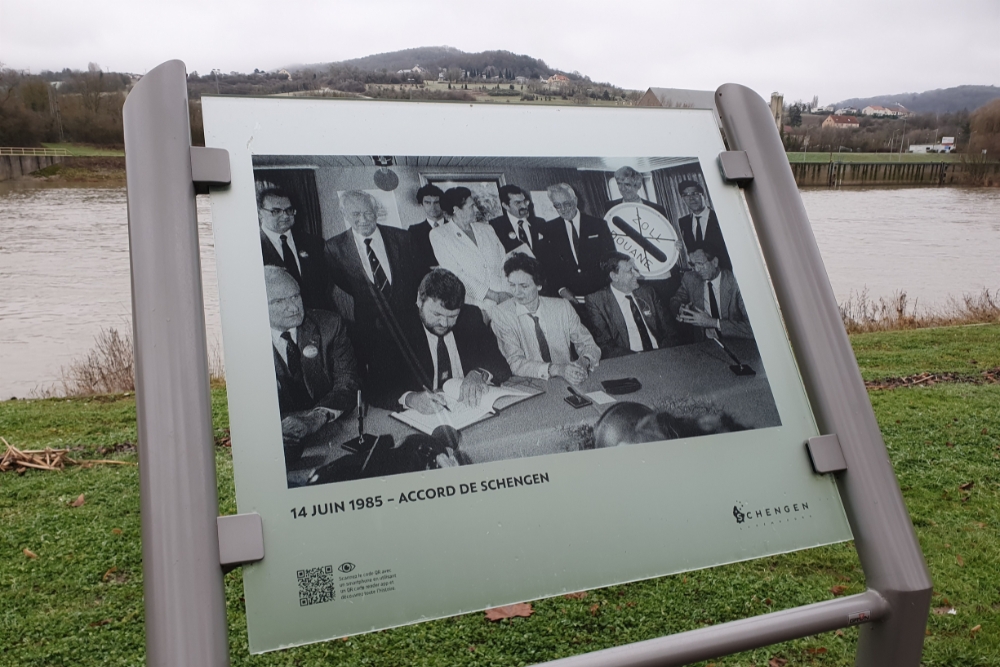
On 14 June 1985, representatives from five countries signed the Schengen Agreement aboard the Princesse Marie-Astrid, a boat moored on the Moselle here. The location wasn’t an accident. Schengen sits at the tripoint where Luxembourg, France, and Germany meet, so signing on neutral water, at the meeting point of three nations, was the whole symbolic point.
The agreement set in motion the gradual removal of border checks between member countries, and over the decades, it grew into the passport-free Schengen Area we know today. That’s how a sleepy village of vineyards ended up lending its name to a visa, a zone, and a whole idea of open Europe.
Things to Do in Schengen Village
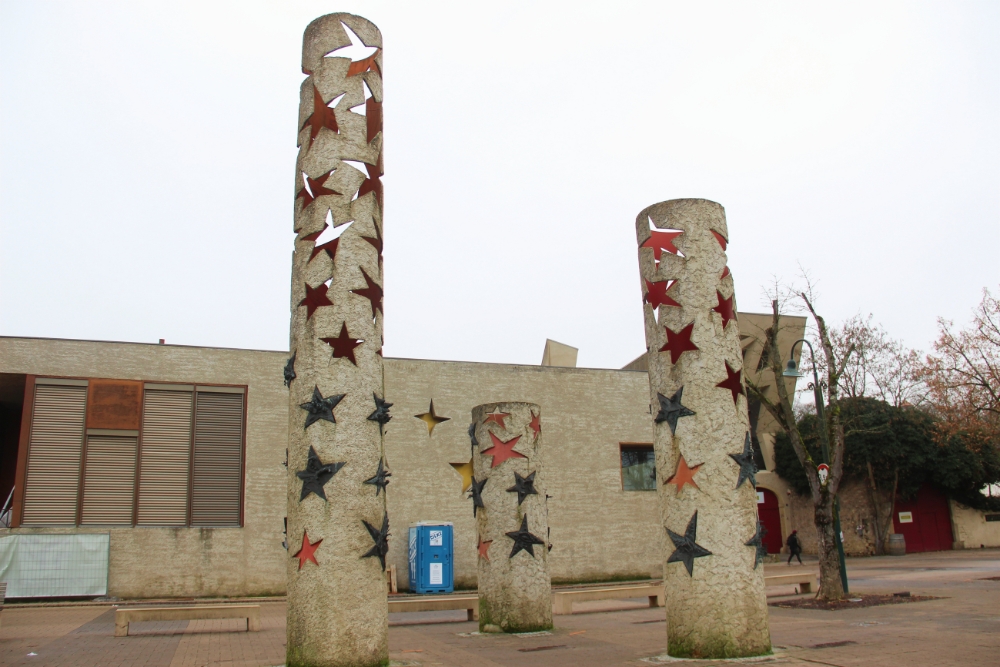
Almost everything worth seeing clusters around the Place des Étoiles (Square of Stars), right by the river. Here’s what’s actually there.
The Nation Pillars (Columns of Nations)
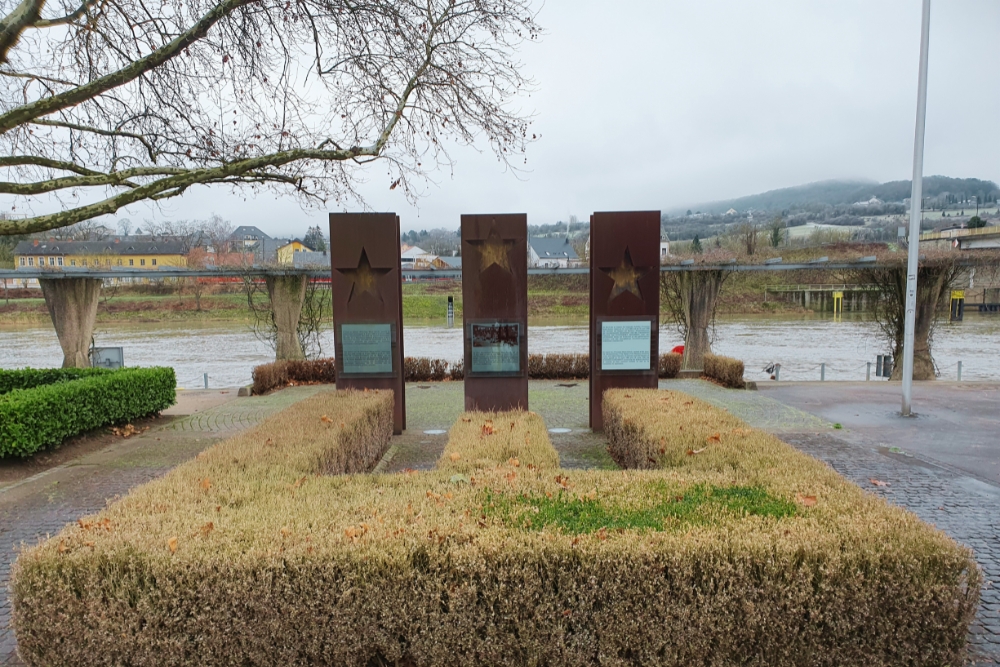
These are the photos you’ve probably seen. Three tall metal pillars stand on the square, studded with 26 stars, one for each country that made up the Schengen Area when the monument went up. Each star carries little symbols of its country: Belgium’s Atomium and Manneken Pis, France’s Eiffel Tower, Greece’s Parthenon, Finland’s moose. It turns into a small game of finding your own country (or your favorite one), and some are much harder to spot than others. The 26 national flags fly right beside them.
One note: the Schengen area now has 29 member states after Bulgaria and Romania fully joined, so the 26 stars are a snapshot of the moment the monument was installed rather than a current count. I found that gap kind of moving, a frozen picture of a Europe that’s still growing.
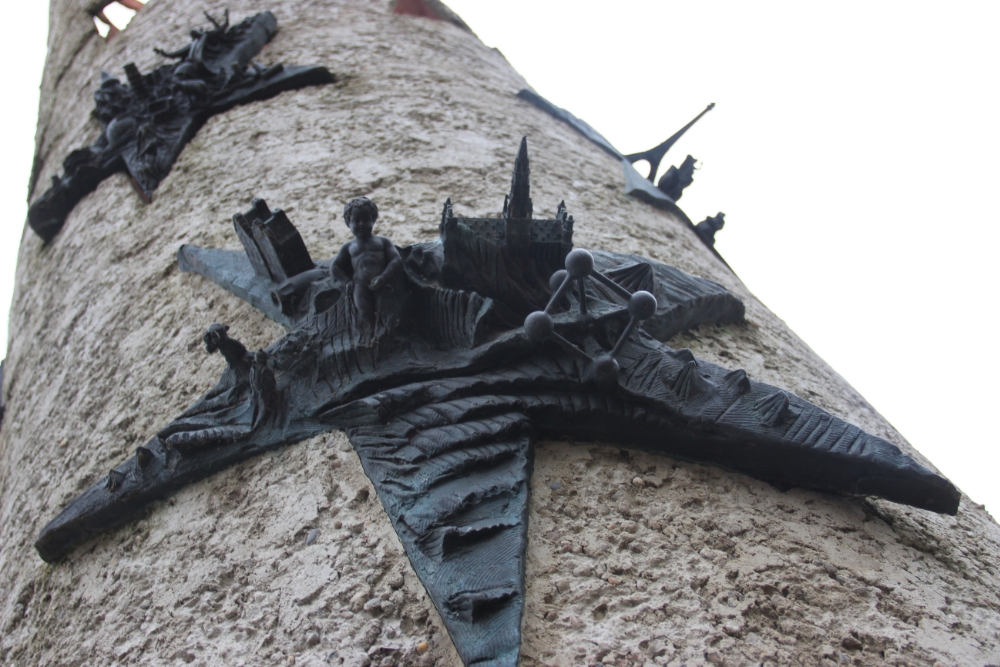
© Gayane Mkhitaryan, Belgian symbols Schengen, Luxembourg
The Schengen Agreement Monument and the Boat
A few steps away, the Europe Monument marks the historic signing, and the original boat where it all happened, the Prinzessin Marie-Astrid Europa, is now anchored a short walk along the river and open to visitors. Down by the water, there’s a big colorful “Schengen” sign that everyone stops to photograph, and a marker out in the Moselle shows the exact spot where the three countries meet.
The Berlin Wall Segments
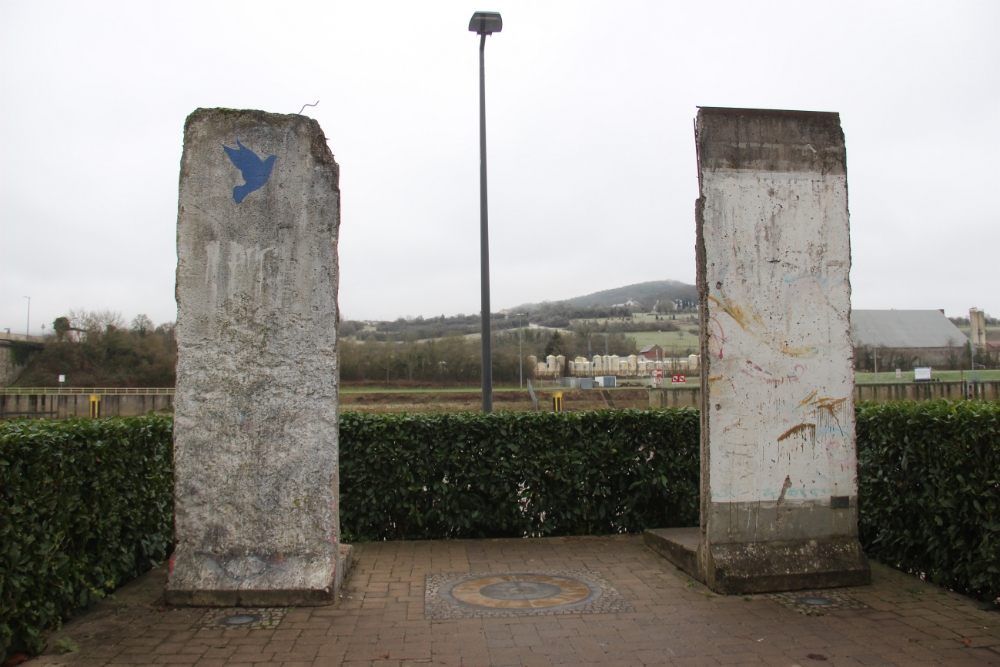
Right in the heart of the square stand two original pieces of the Berlin Wall. One was a gift from the Berlin Senate in 2010; the second, added in 2015, is painted with a dove of peace and a portrait of Mikhail Gorbachev. Seeing them here, at the place that opened borders, beside fragments of the wall that came to define a closed one, is the most quietly powerful thing in Schengen. There’s also a peace pole nearby, inscribed with “May there be peace on earth” in twelve languages, and a sculpture where ambassadors have left padlocks for their countries.
The Schengen Museum
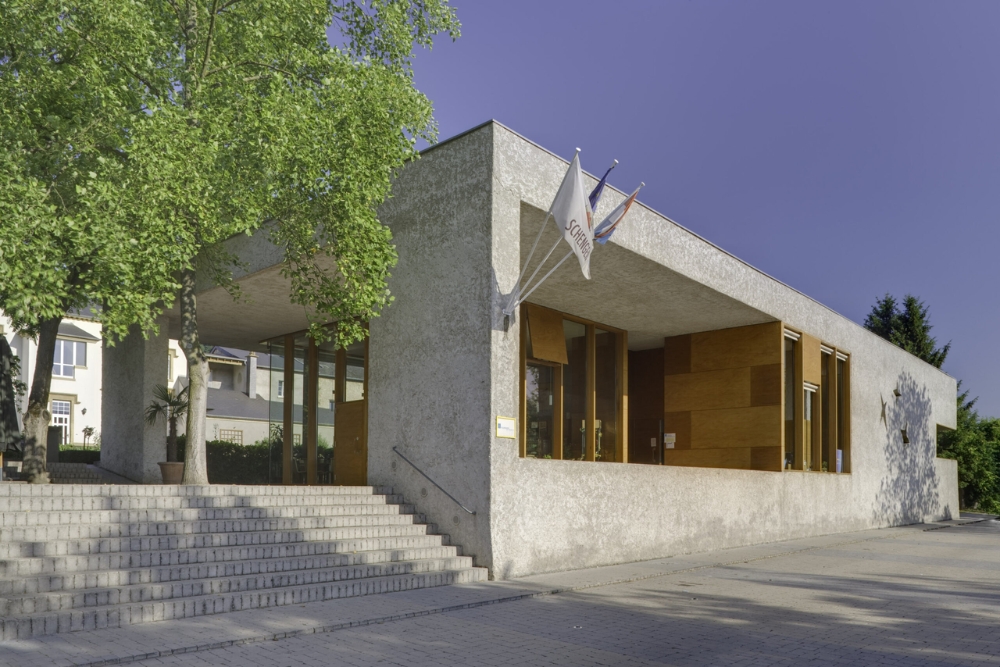
When I visited in December 2024, the museum was closed for a major renovation, so I only saw the outdoor monuments. The good news for you: the brand-new Schengen Museum reopened in June 2025 and is open daily from 10:00 to 18:00. It’s small but fully interactive and multilingual. You check in with your name, country, and language on a card, then use it to activate the exhibits, and you leave with a printed personal “Schengen passport” as a souvenir. There’s a modest entry fee that also gets you onto the historic boat, and most people spend an hour or two inside.
© Schengen Museum
Schengen Castle
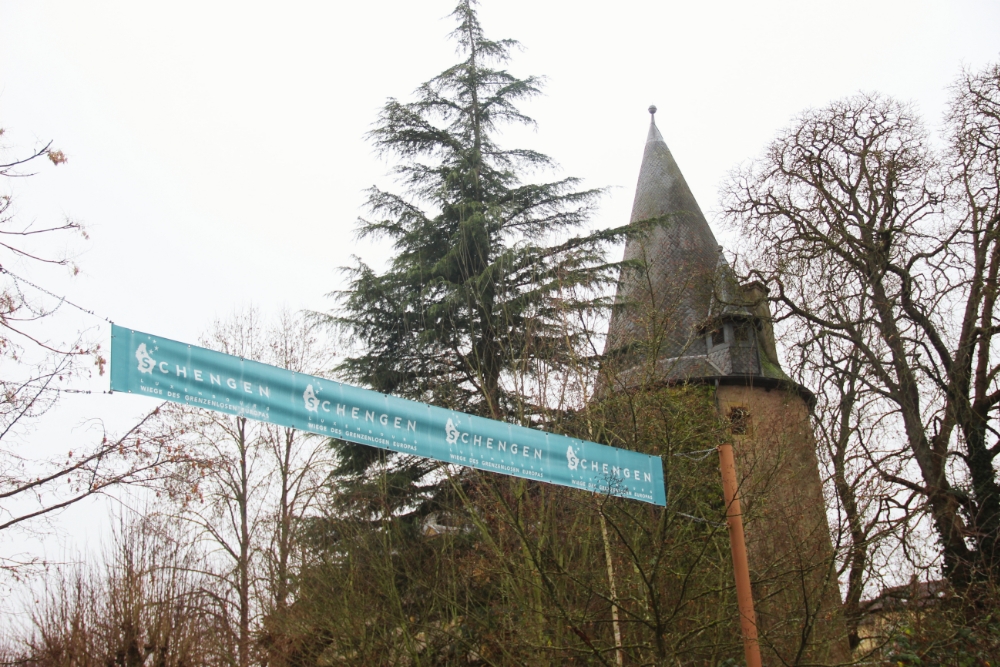
Just up from the river, Schengen Castle (Château de Schengen) dates back to the 13th century and was originally a moated castle. Today, it operates as a hotel and event venue with a bar open daily, so you can step inside for a drink even if you’re not staying. The grounds and park are open to visitors, too, a nice, quiet add-on if you have time.
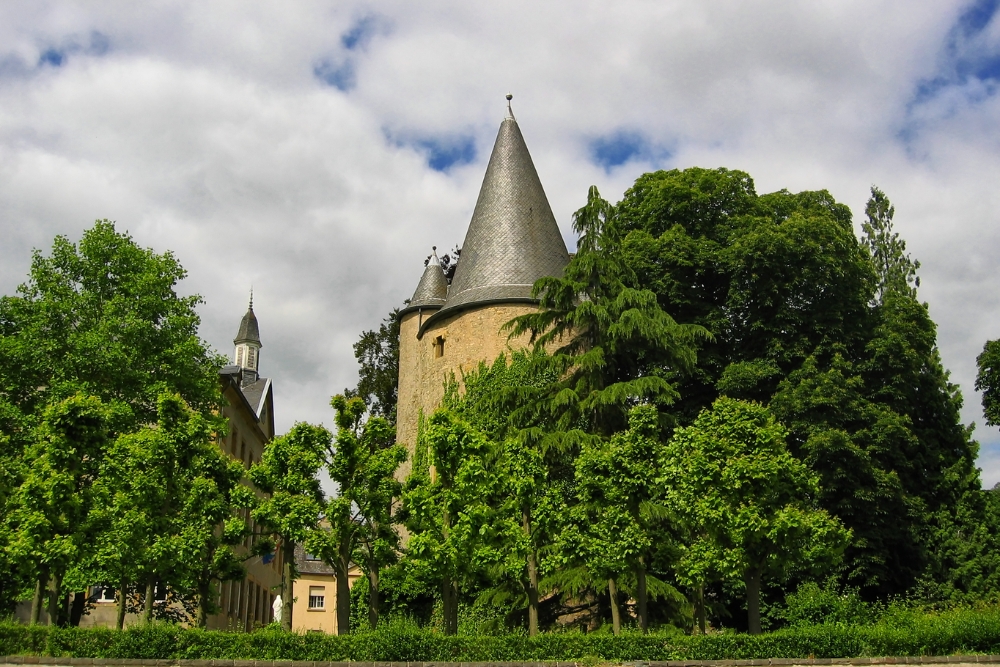
© Wikipedia
Beyond the Village: Wine, Nature, and Views
If you come in the warmer months, Schengen opens up a lot. In December, most of this was shut or out of season, so I’m passing these on as researched recommendations rather than things I did myself.
- The surrounding Moselle valley is wine country, and family cellars like Domaine Henri Ruppert offer tastings.
- For nature, the Biodiversum reserve at Haff Réimech is a striking modern visitor center set among wetlands and birdlife.
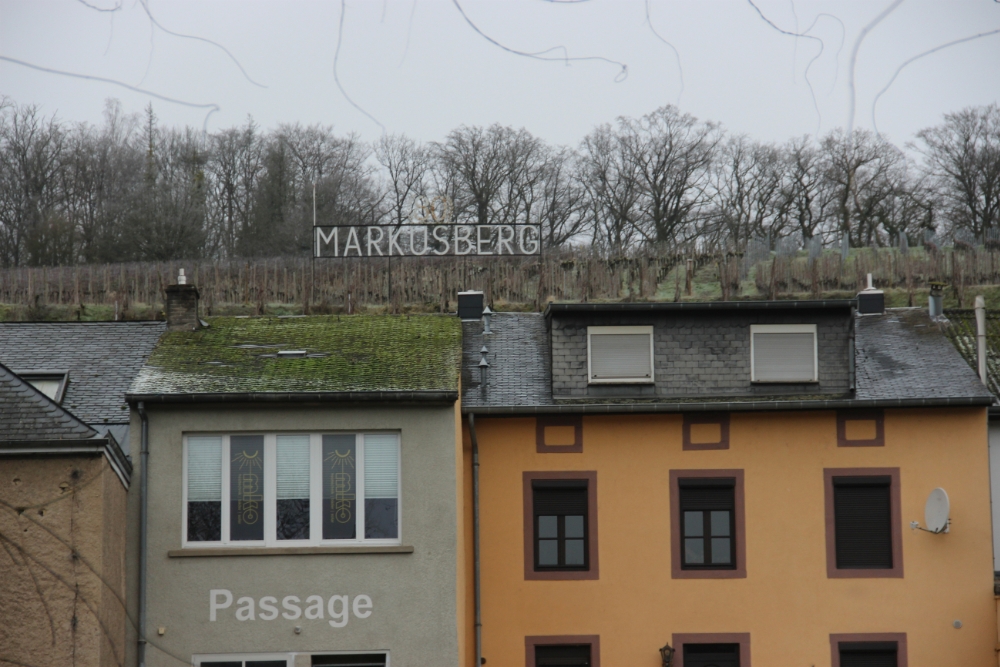
- In spring and summer, the Baggerweier ponds at nearby Remerschen become a proper swimming beach, and there are hillside viewpoints around Markusbierg over the vineyards and river. All of it is best from late spring through early autumn, perfect for summer and frustrating in the cold.
How to Get to Schengen (and Why It’s Free)
Here’s a genuinely brilliant thing about Luxembourg: all public transport, buses, trains, and trams, is free for everyone. So getting to Schengen costs nothing once you’re in the country.
We took a public bus and got off at the SCHENGEN, Koerech stop, served by lines 432, B08, D11, E11, and L06. From there, it’s about a five-minute walk to the monuments. My one real warning, learned the cold way: rural buses here can arrive a little early or late, and they don’t run often, sometimes only every hour or two, and even less on Sundays. Be at the stop a good ten minutes early. There’s no shelter, and in December that wait was genuinely freezing, so dress for it.
To reach Luxembourg from Belgium, Germany, or further afield, I usually book trains and buses through Omio, which I find easiest for cross-border routes. Driving works too: there’s parking near the village, and Schengen sits right off the A13.
Final Thought
Standing in Schengen with a fresh visa in my passport, I kept thinking about how a single afternoon in a quiet wine village in 1985 ended up shaping how I travel today. It’s not a big place, and it won’t fill a whole day. But for the simple feeling of standing where Europe decided to open its doors, it earned its spot on our winter loop.
