
Things to Do and Experience in Honolulu: History, Beaches, and Real Costs
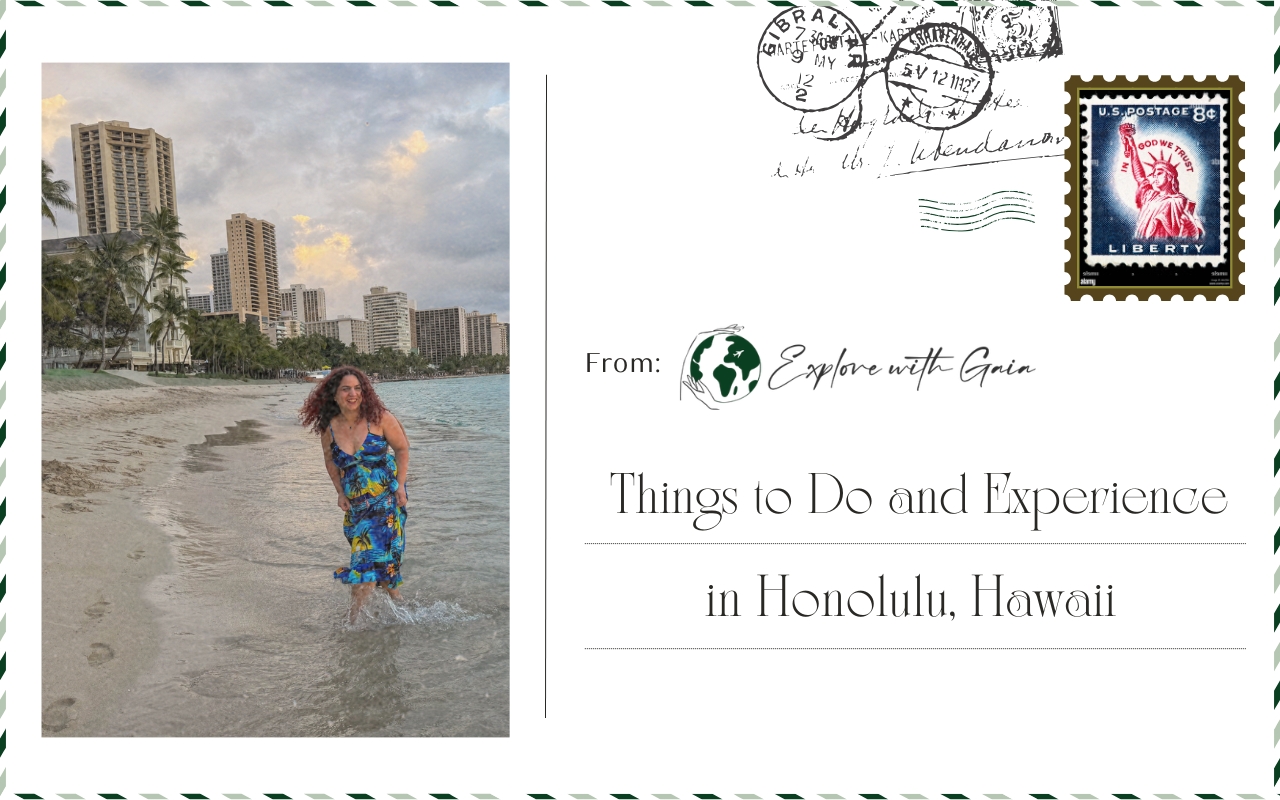
Hawaii was the dream stop. When my boyfriend and I were planning the back half of our two-week Mexico–US trip, we knew San Francisco was happening, and then it came down to one choice: Las Vegas or Honolulu. We checked the numbers, and Hawaii was clearly the more expensive call. But when the decision is between Vegas and Hawaii, there’s only one right answer for us. Some places you just have to see once, even if your wallet disagrees.
So we flew from Mexico City via Los Angeles into Honolulu, landed in early May, and I behaved like a kid who’d never seen the sea before. I took what felt like a thousand photos before we’d even left the airport. It honestly didn’t look like it belonged on this planet.
We based ourselves near Waikiki (more on that beach scene in my separate Waikiki guide), but Honolulu is a real city beyond the resort strip, with a downtown most holidaymakers never bother with. This is the honest version of what’s worth doing across the wider city, such as Pearl Harbor, the historic core, the museums, and Ala Moana (what it costs, and the parts nobody puts on a postcard).
Yes, absolutely, but there are a few things to consider.
The first is cost. Honolulu is not a budget destination, and pretending otherwise would be dishonest. Beachfront hotels run into the thousands per night, food is expensive, and almost everything popular now needs a paid reservation. We didn’t book a fancy place, stayed a short bus ride back from the sand, and still had the trip of a lifetime — so it’s doable, just not cheap.
The second is something I knew from others’ travel experiences but wasn’t ready for: there’s a visible homeless population around Waikiki and the downtown parks. In our experience, the people we passed were harmless, but it’s worth knowing going in, so it doesn’t catch you off guard.
Neither of those changed my answer. I’d choose Honolulu again tomorrow, and one day I’ll be back for sure.
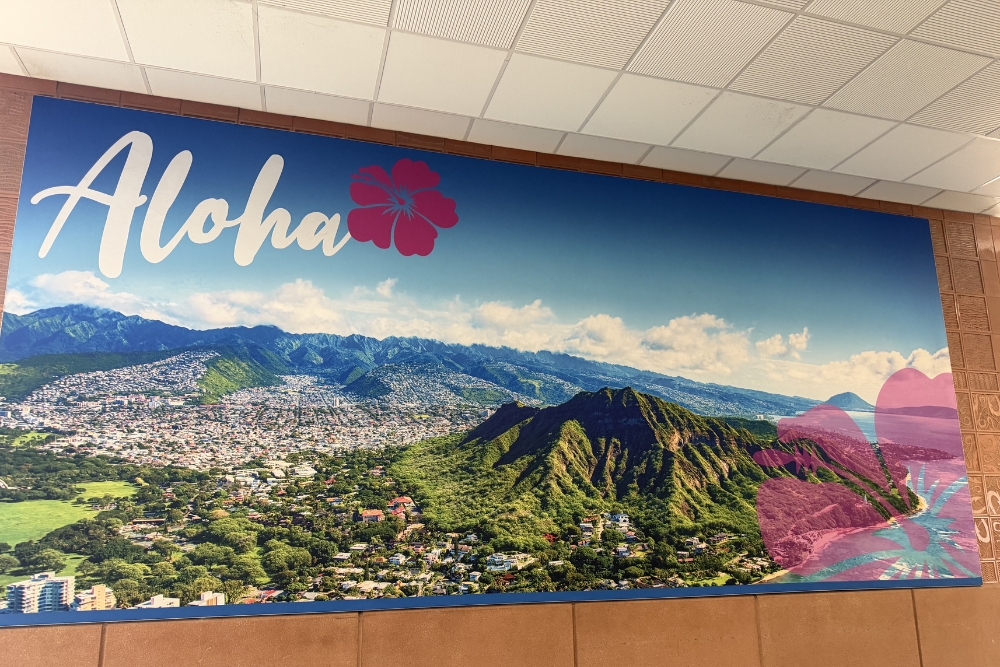
Must-See Highlights: My Quick List
If you only skim one part of this guide, here it is:
- Pearl Harbor and the USS Arizona Memorial: the one piece of history you shouldn’t skip.
- The downtown historic core: Iolani Palace, Honolulu Hale, and the old civic district.
- Bishop Museum: the place to actually understand Hawaiian history.
- Ala Moana: beach park and the open-air mall, both worth an afternoon.
- Kakaako murals: free street art and the city’s most photogenic walls.
- Waikiki: the beach and sunset everyone comes for, covered in full in its own guide.
Details on all of these are below, sorted by what kind of day you’re in the mood for.

© Gayane Mkhitaryan, Duke’s Waikīkī Beach Honolulu Hawaii
Historic Sites and Landmarks
Honolulu carries a lot of history for a city its size — the only royal palace on American soil, the harbor that pulled the US into a world war, and a compact downtown you can walk in a morning. Most of them sit within a short bus ride of each other, so you can string several of these together in a day.
Pearl Harbor and the USS Arizona Memorial
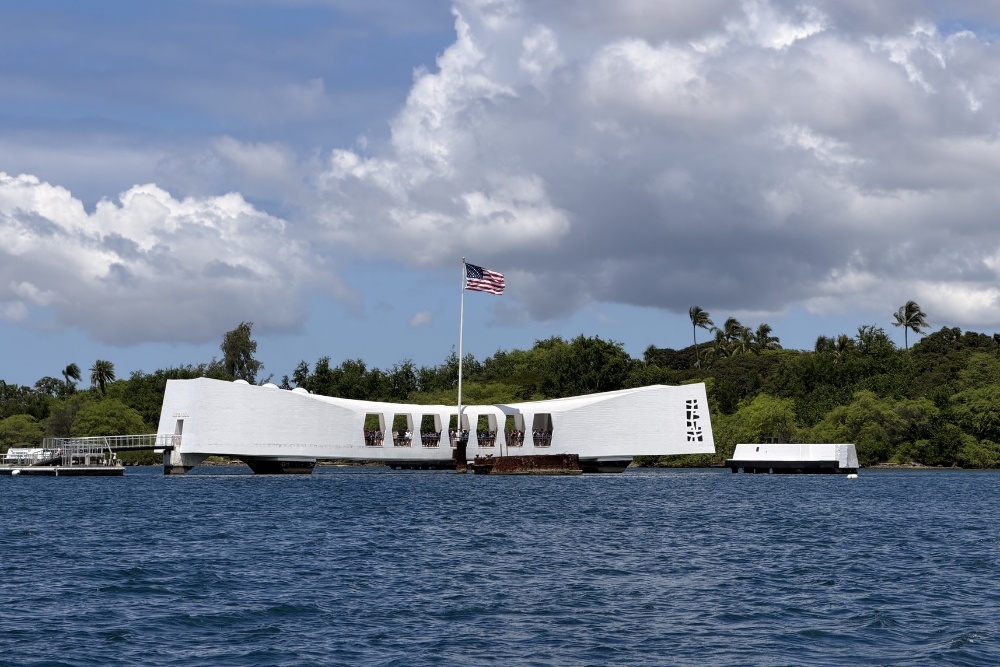
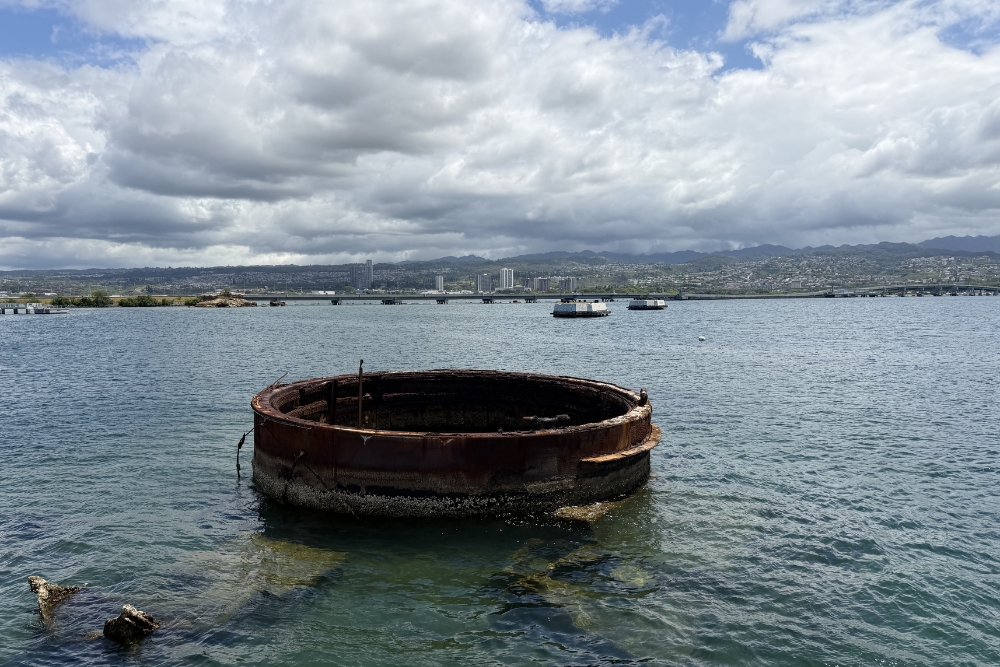
This was our first proper stop, and it’s the one I’d tell anyone to prioritize. We’d registered for a time slot online but missed it — and it didn’t matter. The standby line only took about fifteen minutes, just long enough to look around the souvenir shop before our number came up.
A few practical things I wish I’d fully understood beforehand. The USS Arizona Memorial program itself is free; the only charge is a $1 reservation fee per ticket on Recreation.gov, and that’s non-refundable. Tickets are released 56 days in advance, with a small next-day batch, and they sell out fast, so book early if you want a guaranteed slot. The visitor center and grounds are free to walk. There’s a strict clear-bag rule — basically, a wallet and your phone are all you can carry in. Everything else goes into a paid locker ($7 small, $10 large), so travel light that morning. If you drive, parking is $7 for the day. Plan to arrive about an hour before your slot.
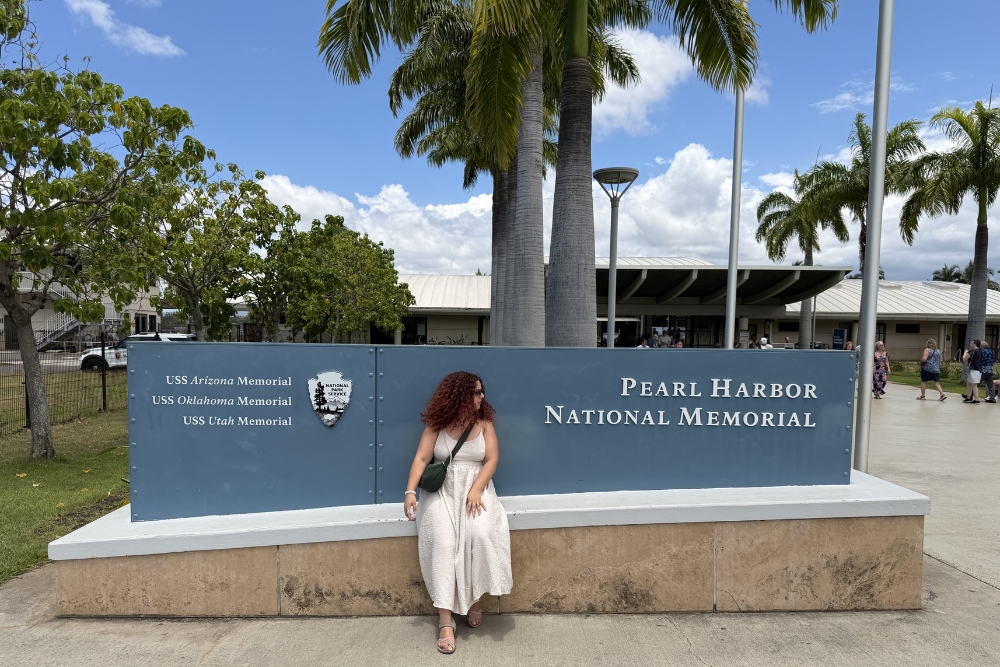
The ride out to the memorial passes the airport, and you’ll see the Hawaiian Airlines planes lined up along the water. The whole site is clean, calm, and handled with great care. It’s a heavy place, but it’s the kind of thing you remember for the rest of your life.
We stuck to the free memorial, but there are three more sites at Pearl Harbor that do charge, and if you’re a history person, they’re worth budgeting for:
- Battleship Missouri (around $38, the deck where WWII formally ended)
- Pearl Harbor Aviation Museum (around $30, in the original hangars that still carry bullet holes from the attack)
- Pacific Fleet Submarine Museum with the USS Bowfin (around $24).
- If you want all four, the Passport to Pearl Harbor bundles them for about $100 over two days — though note it still doesn’t include the Arizona reservation, which you book separately.
A free shuttle loops between the sites, so you don’t need a car once you’re there.
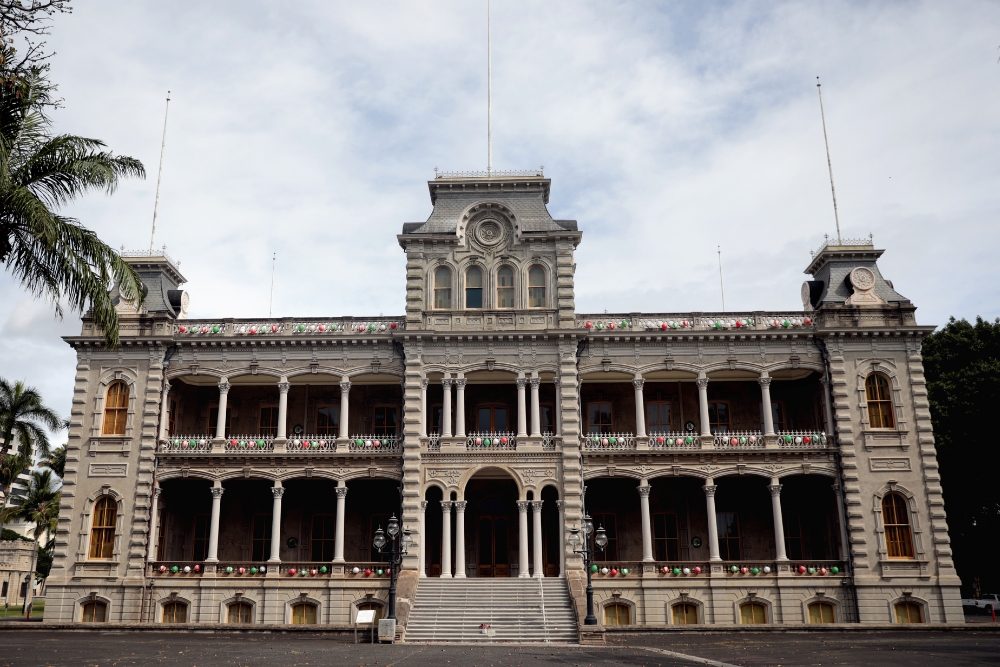
Iolani Palace
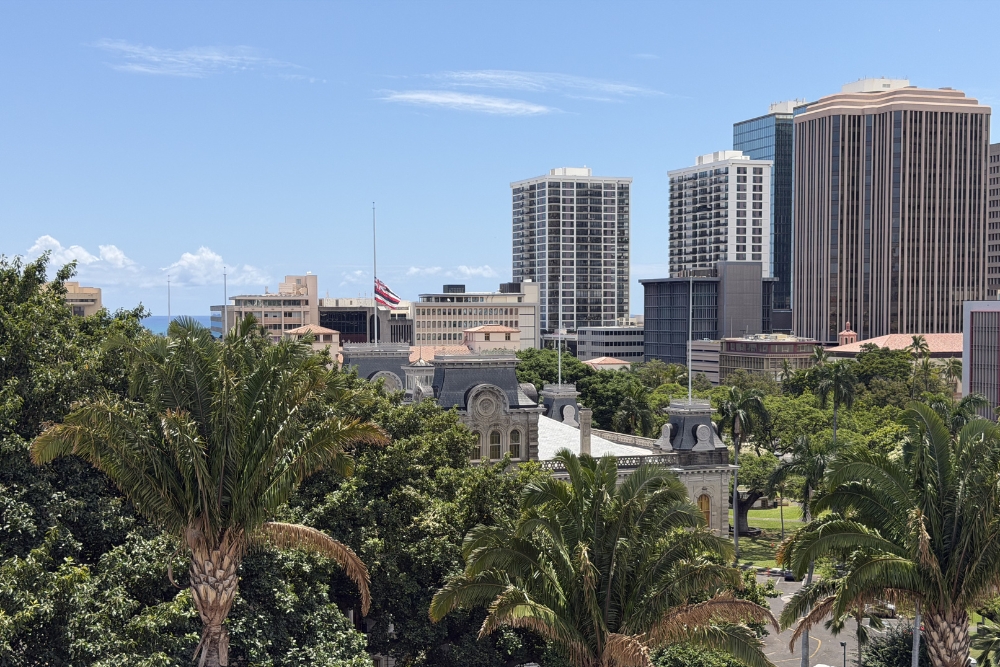
We didn’t go inside this one as we didn’t have much time but you should know that Iolani Palace is the only royal palace ever used as an official residence by a reigning monarch on US soil, which makes it genuinely unusual. The grounds are free to walk, and the guided interior tour runs around $27. If royal history is your thing, it’s the downtown stop to build your morning around.
© Wikipedia
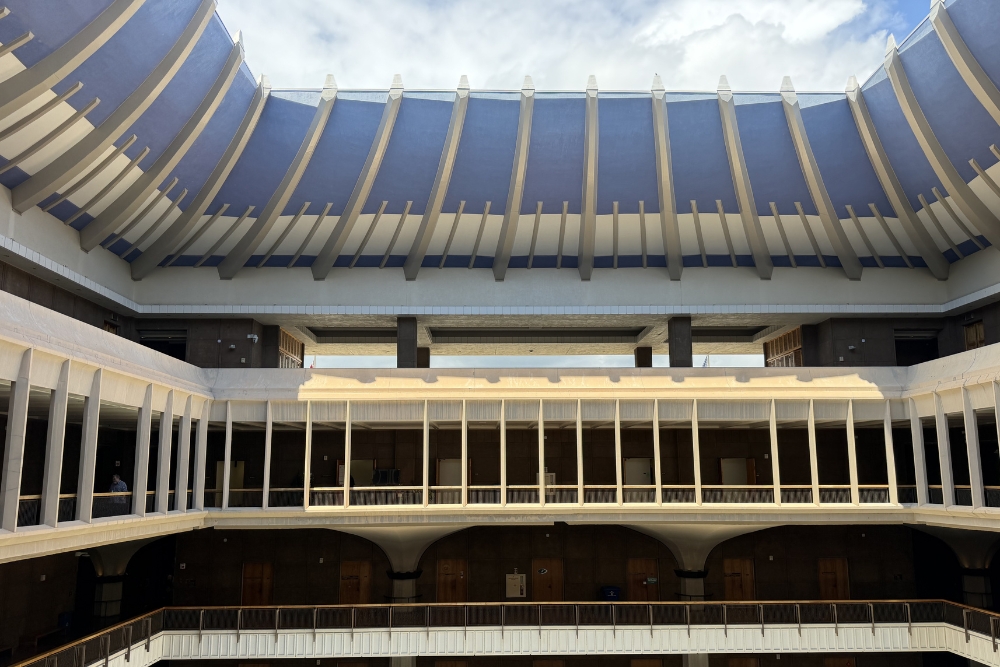
Honolulu Hale (State Capital)
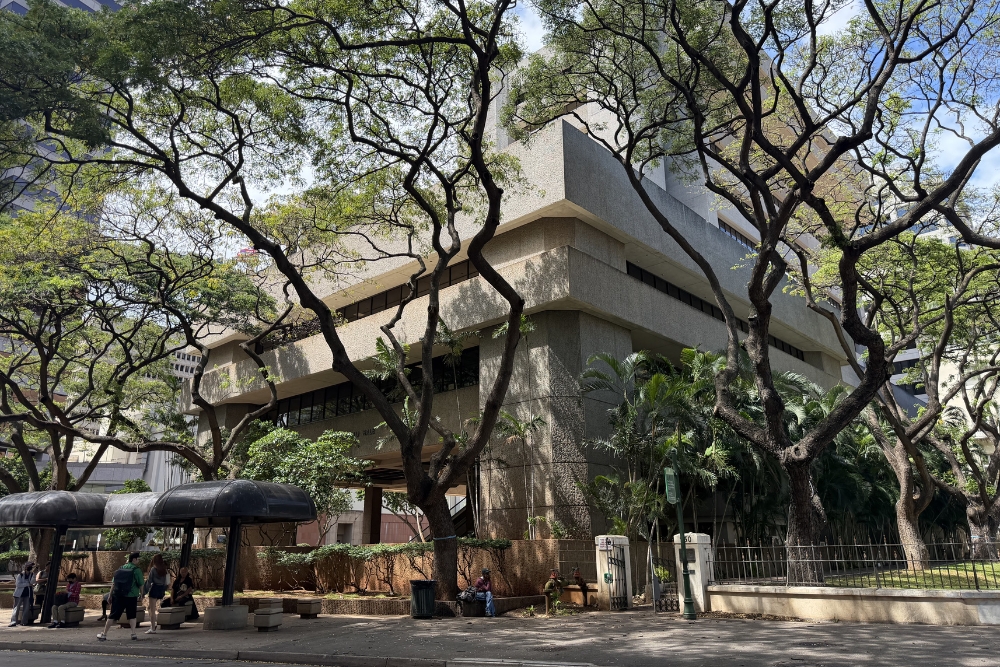
Honolulu Hale surprised me. We had a short tour inside and went up to the top, and the building itself — open Spanish-mission courtyard, painted ceilings, that quiet government-building hush — is far prettier than a state capital has any right to be. It’s free, it’s central, and almost nobody on a holiday thinks to go. Pair it with the library and the surrounding civic district for an easy, no-cost morning in downtown.
Punchbowl (National Memorial Cemetery of the Pacific)
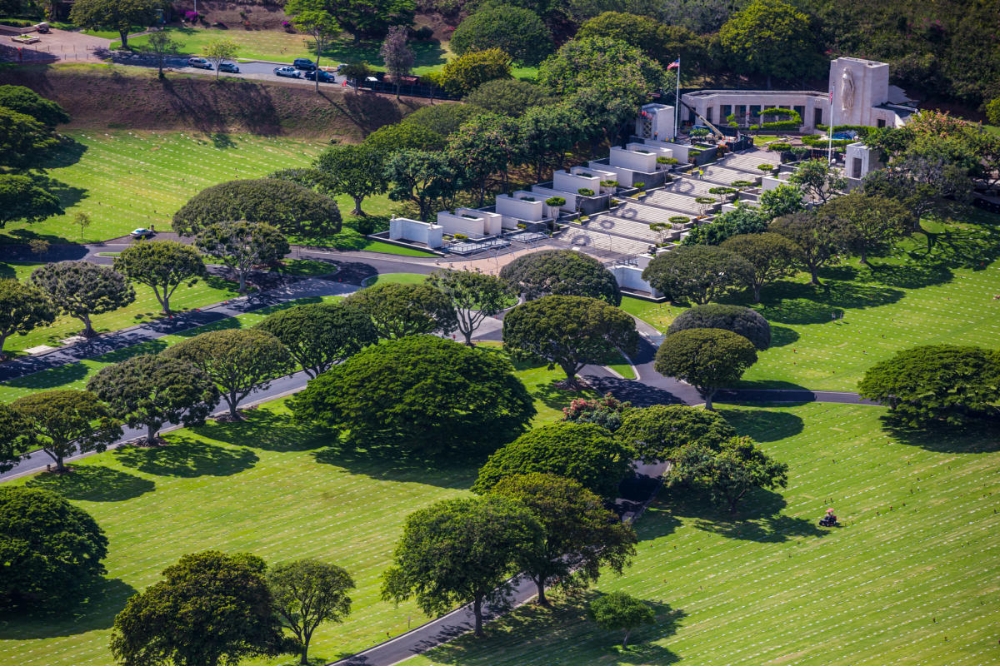
We didn’t make it up here, but it’s the spot I’d add if I were going back. Set inside an extinct volcanic crater above downtown, the National Memorial Cemetery of the Pacific is the resting place of thousands of service members, many from Pearl Harbor and the wider Pacific war. It’s free, it’s quiet, and the lookout near the top gives you one of the best free views over Honolulu and out to the ocean. It pairs naturally with a Pearl Harbor day if WWII history is your reason for coming.
© Hawaii Visitors & Convention Bureau
Beautiful Churches and Religious Landmarks
Honolulu’s historic churches sit right in the downtown core, so they’re easy to fold into a morning of palace-and-civic-district walking. A quick warning learned the hard way: hours can be short and unpredictable, so check before you cross town for any specific ones.
Cathedral of Saint Andrew
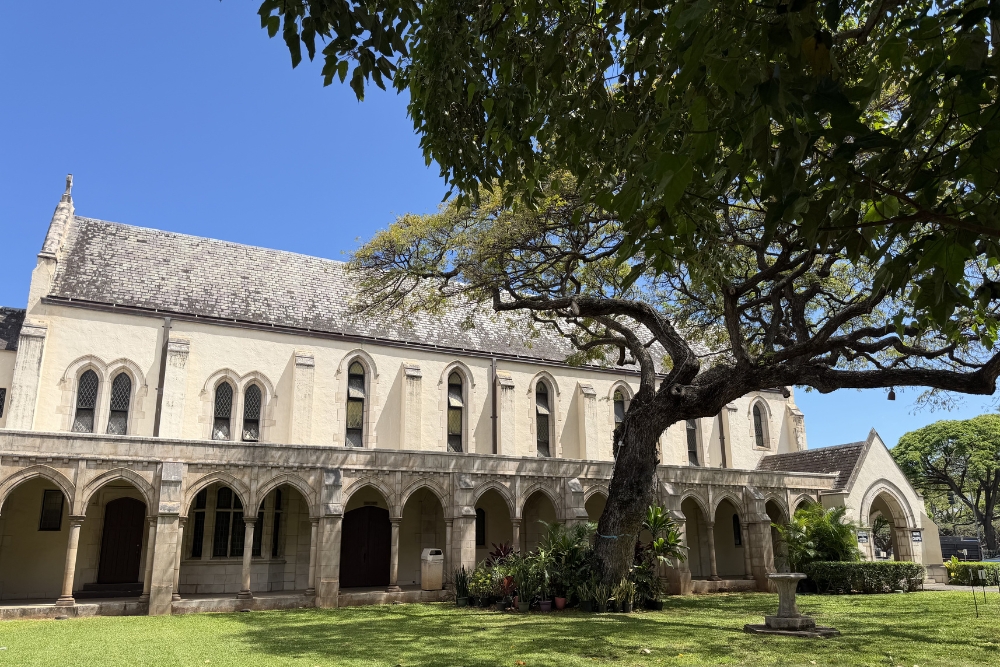
I’d planned to step inside the Cathedral of Saint Andrew, and to my surprise, it was shut when we arrived. So we walked the grounds instead and moved on. I’m including it anyway, partly because the Gothic-revival exterior is lovely and partly as a real-world reminder: check opening hours before you cross town for a specific building. We didn’t, and the church won.
Kawaiahao Church
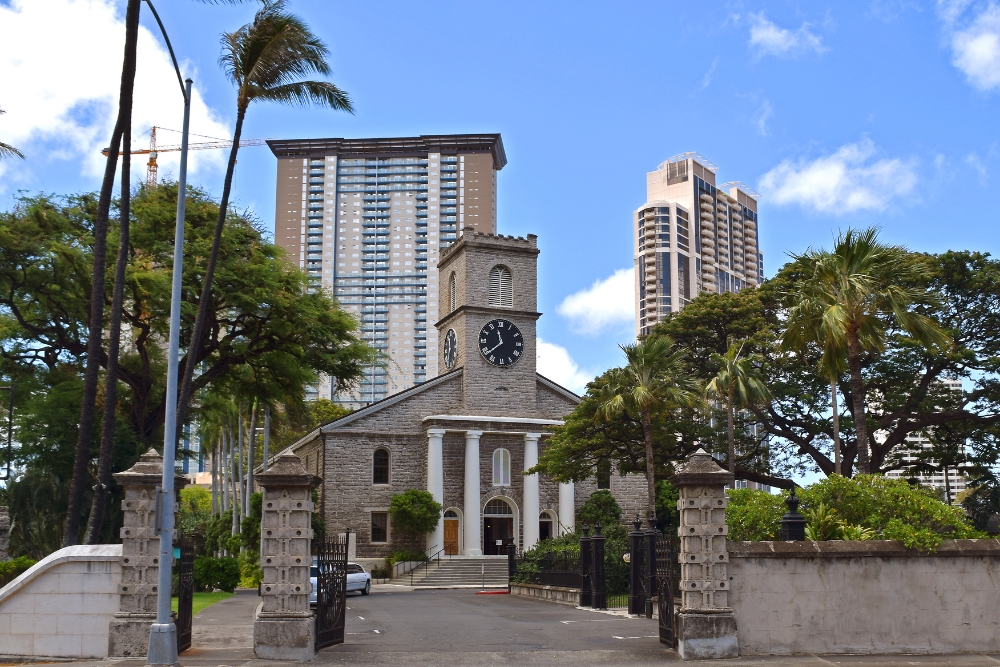
Another one I’d flag rather than review, since we didn’t make it inside. Kawaiahao Church is built from thousands of coral blocks cut from the reef and is often called Hawaii’s royal church. It’s a short walk from the palace, so if the cathedral’s closed like it was for us, this makes a good substitute.
© Wikipedia
Best Museums and Cultural Sites
If you want to understand Hawaii beyond the beach, this is where you do it. The range runs from a free historic library you can wander into off the street to the island’s flagship culture and natural history museum, so there’s something for whatever your budget and attention span.
Hawaii State Public Library
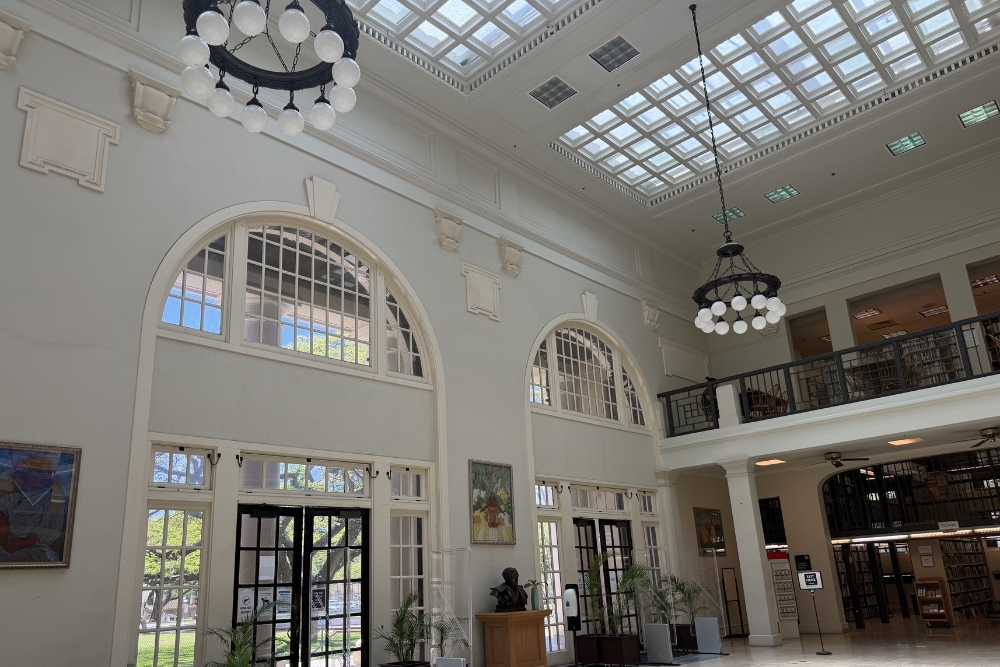
This is a small, free, slightly nerdy recommendation, but I loved it. The historic main library downtown has an open central courtyard that’s genuinely calm in the middle of the city. You can walk straight in, sit for a bit, and it costs nothing. If you like beautiful old public buildings, it’s a five-minute detour that’s worth it.

Bishop Museum
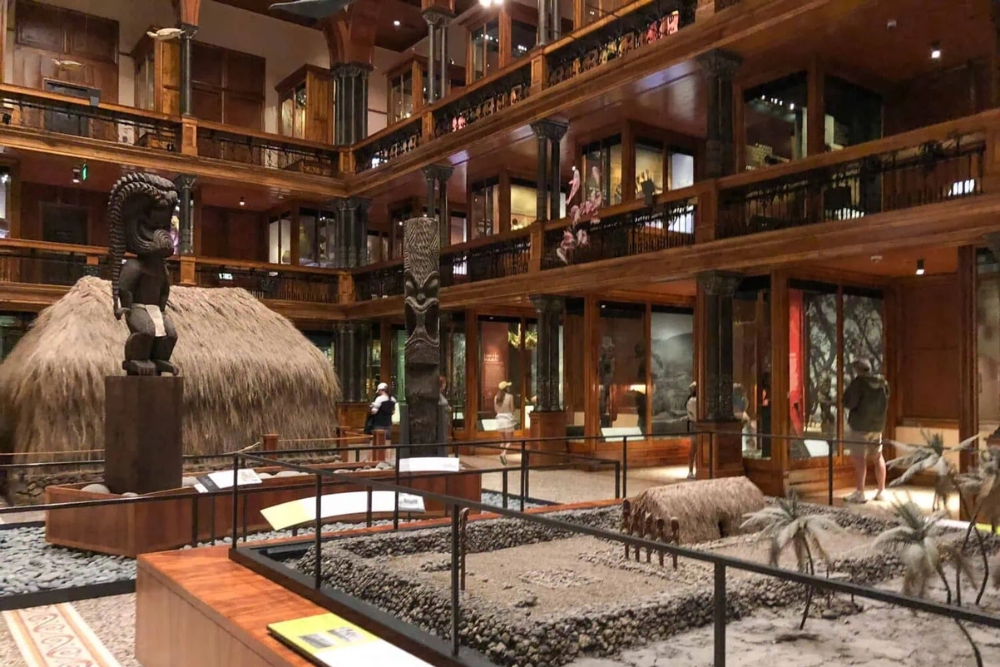
The main museum for Hawaiian and Pacific culture, with a vast collection spanning the islands’ history, royalty, and natural sciences. It sits outside the downtown core, so factor in the travel time. We didn’t get there on this trip, but it’s the one locals point to when you ask where to go to actually understand Hawaii.
© Tourist Pass
Honolulu Museum of Art
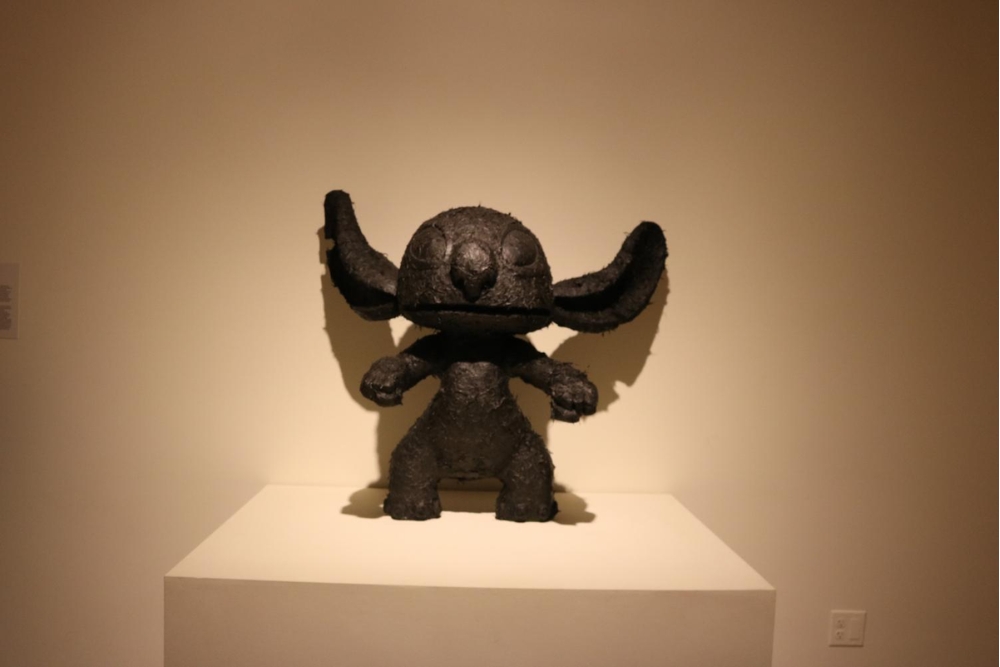
A strong, broad art collection near downtown with a pretty courtyard café. Modest entry compared to most island attractions, and a good rainy-afternoon fallback. Again, a recommendation rather than a personal review — we just didn’t have a spare half-day.
© The Pinion
Ala Moana: Beach Park and the Mall
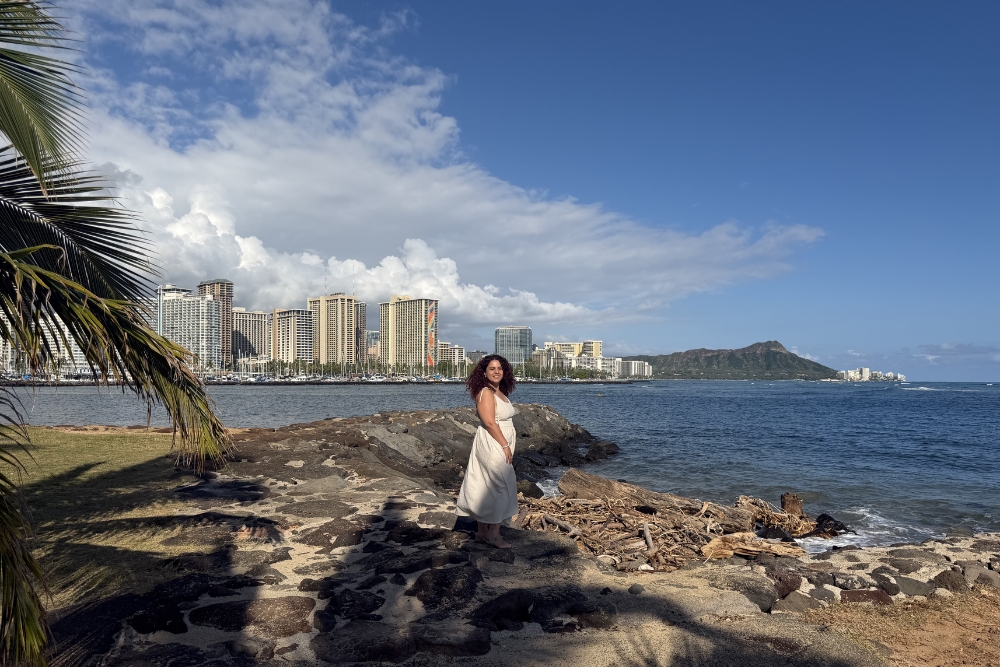
We spent time at Ala Moana, and I’d recommend the beach park over Waikiki for an actual swim. It’s calmer, flatter, more local, and far less of a scene — a long protected stretch that’s easy to relax on without dodging surfboards.
Right next door is Ala Moana Center. I’m not usually a mall person on holiday, but this one is worth the trip — a huge open-air shopping center, breezy rather than enclosed, which makes for a natural beach-then-shopping afternoon. The pairing is one of the easier no-stress days in the city. It’s also the best single place for souvenirs, with everything from local Hawaiian brands to the big department stores under one open roof.
Chinatown and Downtown Walks
Honolulu’s Chinatown is one of the oldest in the United States, and it’s a different side of the city entirely — markets, lei stands, old storefronts, cheap and excellent plate-lunch spots, and a growing cluster of art galleries and murals. It’s free to wander, and it’s where I’d send anyone who’s tired of the resort polish and wants somewhere with a bit more grit and character. Go in daylight; like many city centers, it’s livelier and more comfortable during the day than after dark.
If you want a view to go with the walking, the lookout along Tantalus and Round Top Drive, up in the hills behind the city, offers a sweeping panorama of Honolulu — a popular spot for sunsets, though you’ll want a car or a tour to get up there.
Free and Cheap Things to Do
Honolulu’s reputation is expensive, but a surprising amount of the good stuff is free:
- The Pearl Harbor visitor center and grounds (only the Arizona reservation costs anything, and that’s $1)
- Hawaii State Public Library’s courtyard
- Honolulu Hale’s interior and courtyard
- Walking the downtown civic district, palace grounds, and parks
- Ala Moana Beach Park
- The Kakaako neighborhood murals — a big concentration of street art that’s free to wander and great for photos
- Walking through Chinatown and its markets
- The Punchbowl crater looks over the city
- Sunset on a beach: Waikiki, Diamond Head, or Duke’s
Paid Activities and Tours
We kept this trip fairly lean and stuck mostly to the free sites, so the following are recommendations rather than personal reviews — the things I’d spend on if I were going back with a bit more room in the budget.
Guided Pearl Harbor tours
This is the obvious splurge if history is your focus. A guided tour takes the logistics off your hands — hotel pickup, a guaranteed Arizona Memorial reservation so you skip the standby line, and narration on the drive. The two best-known local operators are Roberts Hawaii, whose Pearl Harbor tour also folds in the Punchbowl cemetery and a downtown Honolulu drive, and E Noa Tours, a locally owned company with a long track record. Half-day versions sit around $80–100; full-day combos that add the Battleship Missouri, Aviation Museum, and submarine, often with lunch, run higher. As always, check the most recent reviews before booking — service quality varies trip to trip, even with the big names.
Hanauma Bay snorkeling
East of the city, Hanauma Bay is a protected cove where you can snorkel over the reef with green sea turtles and reef fish. It’s a nature preserve, so it’s reservation-only with a non-resident entry fee (around $25, plus a few dollars for parking), and it’s closed Mondays and Tuesdays. You can do it independently, or book a tour that bundles transport and gear if you’d rather not sort the early-morning reservation scramble yourself.
Booking tip: you can book directly with local operators, but resellers like GetYourGuide, Viator, and Tiqets are worth checking for the same tours — they bundle free cancellation (often up to 24 hours before), verified reviews, standardized descriptions of what’s actually included, and mobile tickets. I’d search GetYourGuide first to compare options and prices, then decide whether to book there or directly.
Waikiki: The Resort Heart of Honolulu
Most visitors base themselves in Waikiki, and we did too. It’s where the famous beach, the sunset crowds, the surf lessons, Diamond Head, and most of the eating and shopping happen — enough that it gets its own full guide rather than a paragraph here. If you’re planning your beach days, where to eat, and the Diamond Head hike, head to my dedicated Waikiki article.
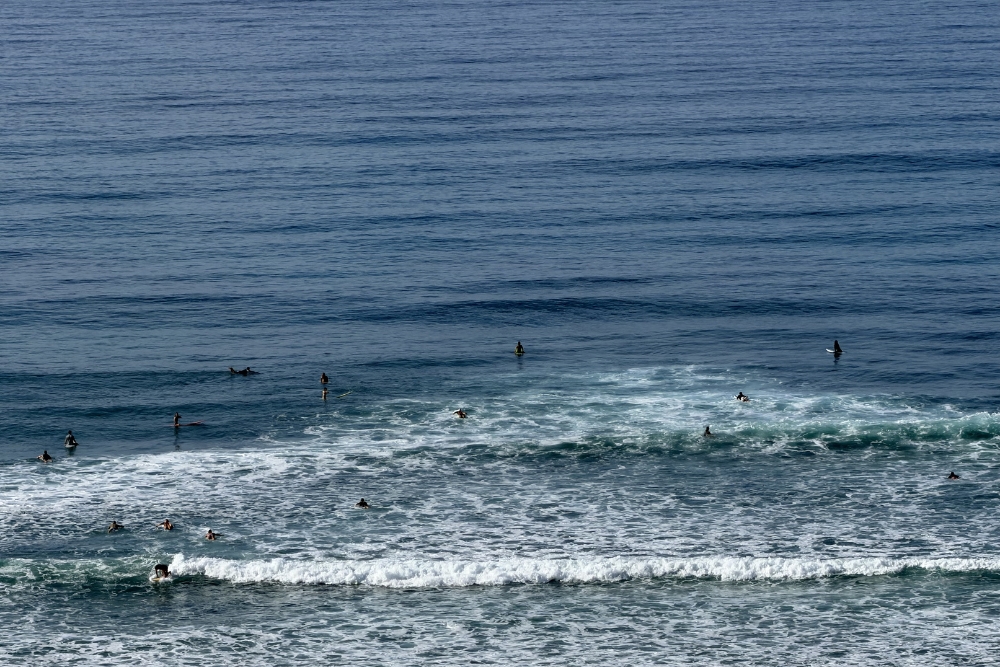
© Gayane Mkhitaryan, surfers in Diamond Head beach park
Getting Around (The Short Version)
I’m keeping this brief because Honolulu’s transport deserves its own article. The quick version: from the airport we took the free Wiki Wiki shuttle, then TheBus into Waikiki, then the new Skyline rail toward Pearl Harbor — passing the airport on the way, which was weirdly fun. You’ll want an HOLO card (a couple of dollars to buy) to tap on both the bus and the rail. Daily spending caps out at $7.50, so once you’ve ridden a few times the rest of the day is effectively free, which is what happened to us. Full transport guide coming separately.
FAQs: Questions I had Before my Trip
What should you not miss in Honolulu?
Pearl Harbor and the USS Arizona Memorial, the downtown historic core, and a sunset on Waikiki Beach.
What are the top 5 things to do?
Pearl Harbor, the downtown historic core (Iolani Palace, Honolulu Hale, the library), Bishop Museum, Ala Moana for beach plus shopping, and Waikiki for the beach and sunset.
Is $1,000 enough for a week in Hawaii?
For one person, it’s very tight — likely only realistic if your flights are already paid, you’re on a budget, or you’re sharing lodging, cooking some meals, and using the bus. For most people, a week needs more than this once accommodation is in.
Is $5,000 enough for a trip to Hawaii?
For most couples on a one-week trip, yes — that’s a comfortable range covering decent lodging, eating out, and a few paid experiences, though it disappears quickly if you choose a beachfront resort.
How much cash should I take to Hawaii for 7 days?
Card works almost everywhere, so you don’t need much cash — enough for the odd market stall, tips, and exact-change bus fare if you skip the HOLO card. A couple of hundred dollars in cash is plenty for a week for most people.
What is the cheapest month to go to Hawaii?
Generally, the shoulder seasons — roughly late April to early June and September into October — tend to bring lower flight and hotel prices, avoiding the summer and winter-holiday peaks. We went in early May, and the weather was great with thinner crowds.
Can you wear red in Hawaii?
Yes. There’s no rule against it — this question usually comes from mixing Hawaii up with other Pacific cultures. Wear whatever you like; just dress respectfully at memorials and religious sites.
